Table of Content


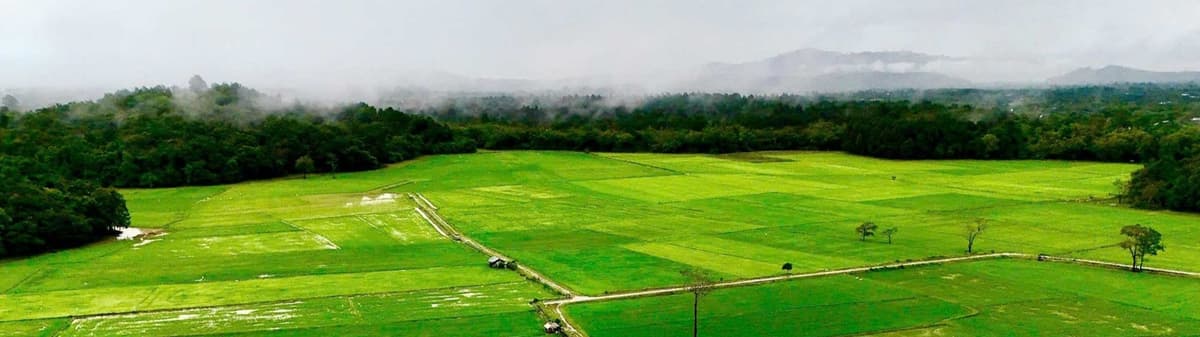
Cat Tien National Park stretches across 2 provinces: Dong Nai and Lam Dong. It is not only a stronghold of rich biodiversity but also a long-standing cultural landscape shaped by local communities. For generations, ethnic groups such as the Ma, S’Tieng, and other related peoples have lived alongside the forest, rivers, and wildlife, forming a shared human story within the great jungle.
Located in the buffer zone of Cat Tien National Park, Ta Lai Commune, Dong Nai Province, is home to the Ma ethnic group, who have long lived along the banks of the Dong Nai River. For a long time, their lives depended closely on the forest through shifting cultivation and seasonal movement. However, as conservation efforts expanded and the region began to develop more sustainably, Ta Lai has undergone major changes. These changes have deeply influenced how the Ma people live, work, and interact with their surroundings.
In this article, Katien Safari will introduce the Ma people in Ta Lai, looking at their traditional way of life in the past and how they have gradually moved toward settled living, stable farming, and community-based tourism today.
The Ma ethnic group (or Chau Ma) is one of the oldest indigenous communities in the southern Central Highlands and Southeast Vietnam. For generations, they have lived mainly in Lam Dong Province, especially in Bao Lam, Bao Loc, Da Huoai, Da Teh, and partly in Dong Nai and Binh Phuoc, including the buffer zone of Cat Tien National Park.
They belong to the Mon–Khmer language group and are divided into local subgroups such as Ma Ngan, Ma To, and Ma Krung. The Ma people do not have an official written script; their language has been passed down orally through generations.
In Ta Lai Village ( Dong Nai province), the Ma people live close to nature and side by side with other ethnic groups. The Ma people are not newcomers to Ta Lai. They have lived in the Dong Nai River basin for centuries. Historically, Ma communities, together with the S’Tieng and Cho Ro, played a vital role during the resistance war of the Vietnamese.
In 1941, local people sheltered and guided revolutionary prisoners who escaped from Ta Lai prison, helping them survive the harsh forest environment. This history confirms that the Ma were true masters of the land, deeply familiar with its terrain long before modern settlement.
Traditionally, the Ma society followed a patriarchal system. The basic residential unit was the “bon” (village), led by a “Quang bon” (village head). In the past, the Ma lived in longhouses, usually 20–40 meters in length, made entirely from bamboo and forest materials. These houses reflected communal living and close family bonds.
Spiritual life remains important. The Ma believe in Yang (the Sky or Supreme Spirit), along with the Rice Spirit and Forest Spirit. In the past, large communal rituals such as buffalo sacrifice and new rice festivals were central events. The Forest Spirit Thanksgiving Ceremony (Yang Bri) is still preserved in Cat Tien. This ritual reflects respect for nature and strengthens community bonds.
Cultural expression remains rich through gong ensembles, stone lithophones, gourd flutes, bamboo flutes, and buffalo-horn trumpets. The Ma also preserve a strong tradition of oral literature, including legends, folktales, epics, and lyrical folk songs. Traditional clothing reflects simplicity and identity: men wear loincloths (with a longer back flap), while women wear long wrap skirts and fitted pullover tops.
Before 1975, the Ma people relied mainly on hunting, gathering, shifting cultivation, and small-scale livestock raising. Their livelihoods depended heavily on nature and the forest.
Handicrafts, especially brocade weaving, reached a high level of skill. Although the back strap loom is simple, it allowed them to create highly detailed patterns. Traditionally, a fine brocade cloth could be exchanged for a buffalo. Men commonly practiced basket weaving, while women produced pottery in some areas.
After 1975, and more strongly since the 1990s, Ma livelihoods changed gradually under new policies and conservation efforts around Cat Tien National Park. Agriculture remains the economic base, but farming methods have shifted. Hunting is no longer allowed, so households now raise fish, buffalo, cattle, and poultry for income.
Weaving has become a key livelihood, with many women using ready-dyed yarn to save time and increase output. With training support from the park and partner organizations, Ma textiles are now sold to visitors and wider markets, improving incomes while reducing pressure on forest resources.
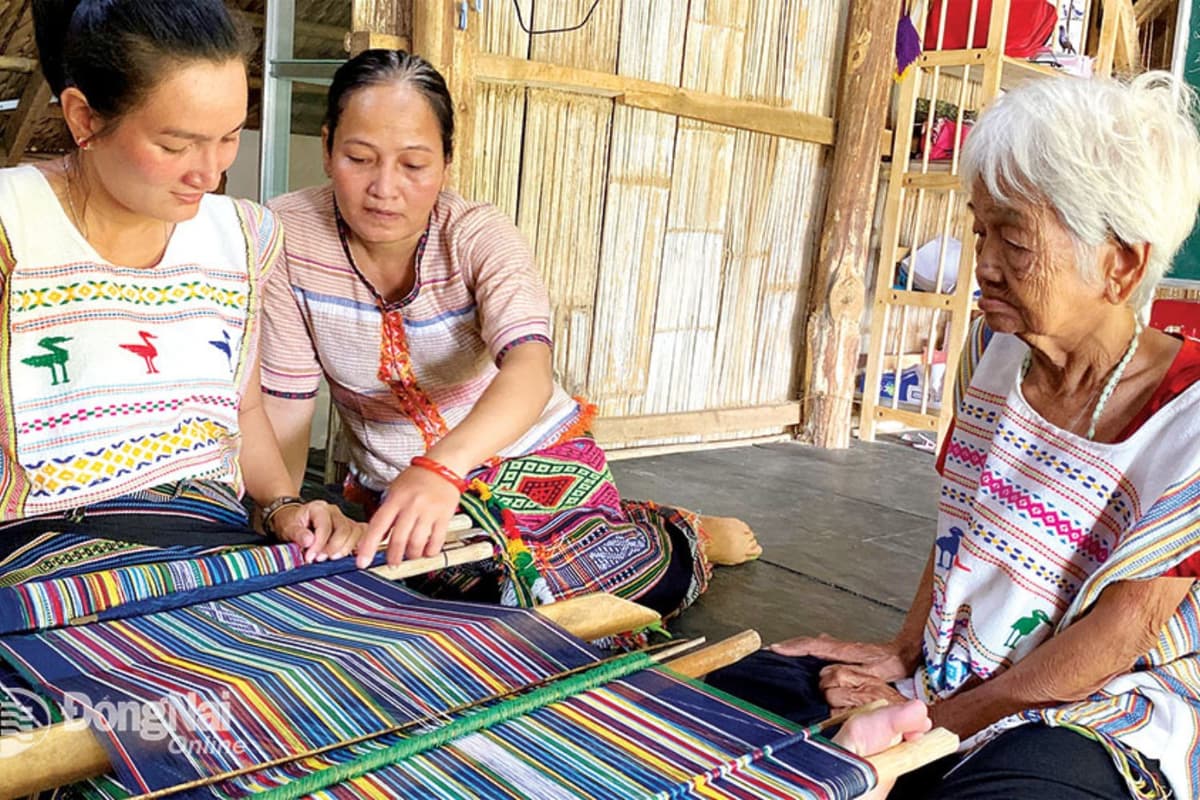
Ma women reached a high level of skill in brocade weaving. (Source: Dong Nai Online)
In 2008, under the National Program for Ecotourism Development around protected areas om Vietnam, Cat Tien National Park launched a community tourism project. It features a traditional Ma longhouse, located near the Vam Ho dam and surrounded by a beautiful natural forest landscape. This setting attracts visitors who love culture and nature. From this point, tourism has opened a new economic path for the Ma people.
The Ma people directly run the community tourism model. They take part in management, cooking, guiding, cultural performances, and handicraft production. One key figure in this process is Ka Huong, a young Ma woman who grew up in Ta Lai and now manages daily operations, coordinating tours, services, and cultural activities.
The Ma community has developed many hands-on tourism experiences that allow visitors to engage with local life. At cultural events, the Ma perform gong music, traditional dances, brocade weaving demonstrations, and cultural displays. Handicraft products such as brocade and bamboo baskets are sold to visitors, creating income while preserving community identity.
Within Cat Tien National Park, visitors can join nature tours led by local guides. Popular routes include the Ta Lai commune – Bau Sau wetlands and visits to Vam Ho Lake and nearby forest landscapes. Visitors can watch Ma women weave brocade, learn basic weaving skills, and better understand daily life along the Dong Nai River.
Through these diverse experiences, the Ma people use tourism not only to earn income, but also to share their cultural stories while protecting forests and local heritage. By linking tourism with indigenous culture, many traditional practices have been maintained and strengthened, especially brocade weaving and gong performances. Skilled artisans pass their knowledge to younger generations and help revive gong teams, dance groups, and weaving collectives for visitors.
As a result, household incomes have clearly improved. Brocade weaving alone provides many families with a stable income of about 4–8 million VND per month.
Alongside cultural preservation, the Ma community has invested in education and training for the future. To support local people in Ta Lai, the Oxalis Foundation funded English classes for 15 adult Ma learners. The goal is that after 6 months, they can communicate with international visitors and introduce gong culture, longhouses, ruou can, and the values of Cat Tien National Park to join local tourism activities.
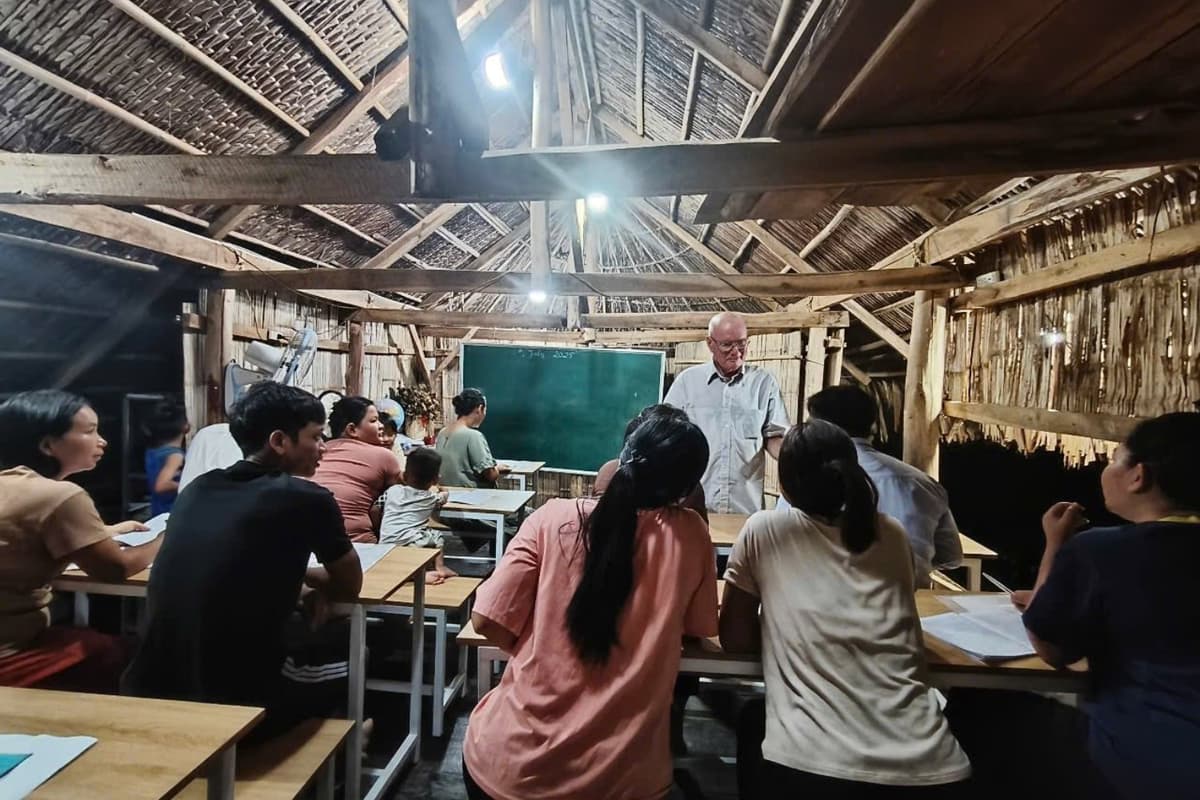
Oxalis funded English classes for 15 adult Ma learners in Ta Lai.
The community tourism project of Cat Tien National Park also sponsors one ethnic minority student to attend university and return to serve the community. These efforts help the Ma gradually shift away from forest exploitation toward tourism that supports nature conservation and cultural preservation. From a poor buffer-zone commune, Ta Lai is becoming a strong example of community-based tourism, where the Ma people do tourism not only to make a living, but also to protect and share their cultural heritage with the world.