Did you know a small animal can fight and even beat venomous snakes? This is the mongoose. It belongs to the Herpestidae family and looks a bit like a weasel. Known as the “snake enemy,” the mongoose has super-fast reflexes and can resist deadly snake venom at a molecular level. Mongooses live in social groups, show clever survival skills, and have interesting behaviors. Small but brave, they are one of nature’s most surprising creatures.
Join us as we explore the fascinating facts of the mongoose, its diet, habits, and remarkable abilities.
| Common name | Mongoose |
|---|
| Scientific name | Family Herpestidae |
|---|
| Taxonomy
|
Kingdom: Animalia
Phylum: Chordata
Class: Mammalia
Order: Carnivora
Family: Herpestidae
|
| Weight / Size | Body length: 24–58 cm, depending on species; Weight: about 320 g to 5 kg. |
|---|
| Lifespan | Wild: about 6–10 years. Captive: up to 15 years. |
|---|
| Population | Varies by species; some populations are stable, while others are declining. |
|---|
| Habitat | Forests, savannas, grasslands, shrublands, wetlands, deserts, farmland, and forest edges. |
|---|
| Range | Africa, South Asia, Southeast Asia, southern Europe
Introduced to Hawaii and the Caribbean. |
|---|
| Diet | Omnivorous – small mammals, snakes, reptiles, insects, crabs, fish, eggs, fruits, and berries. |
|---|
| Conservation status | From Least Concern to Endangered, depending on species. |
|---|
Physical Characteristics of Mongoose
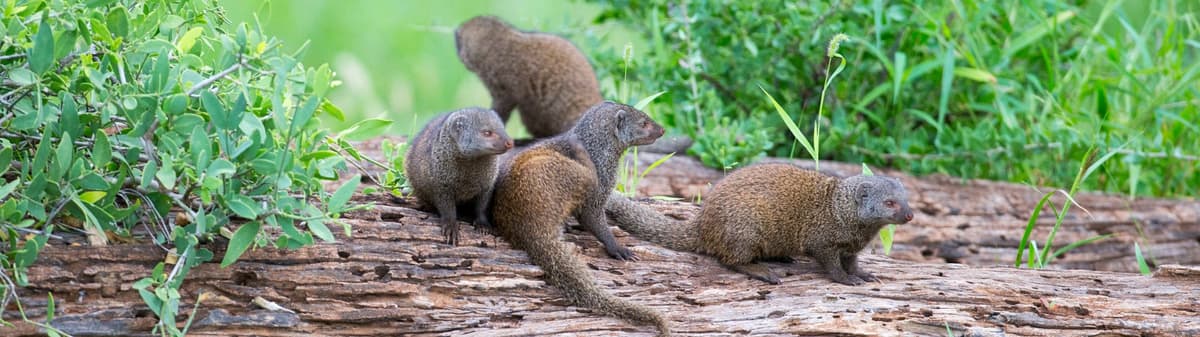
A mongoose has a weasel-like appearance with a long, slim body. Its body shape is flexible and low to the ground, which helps it move fast and easily. The head and body length usually ranges from 24 to 58 cm, depending on the species. The weight can vary from 320 grams to about 5 kg.
A mongoose has short legs and a long, thin tail. The tail often has a similar length to the body and becomes narrower toward the tip. This long tail helps with balance when running or turning quickly.
The ears are small and round, while the snout is pointed and narrow. Compared to a meerkat, a mongoose has a longer snout and no dark eye mask around the eyes. Its eye pupils are narrow and oval-shaped, which is common in animals active during the day.
The fur color is usually gray or brown, sometimes with spots or mixed patterns. A mongoose also has non-retractile claws, meaning the claws cannot pull back. These strong claws are useful for digging and searching for food.
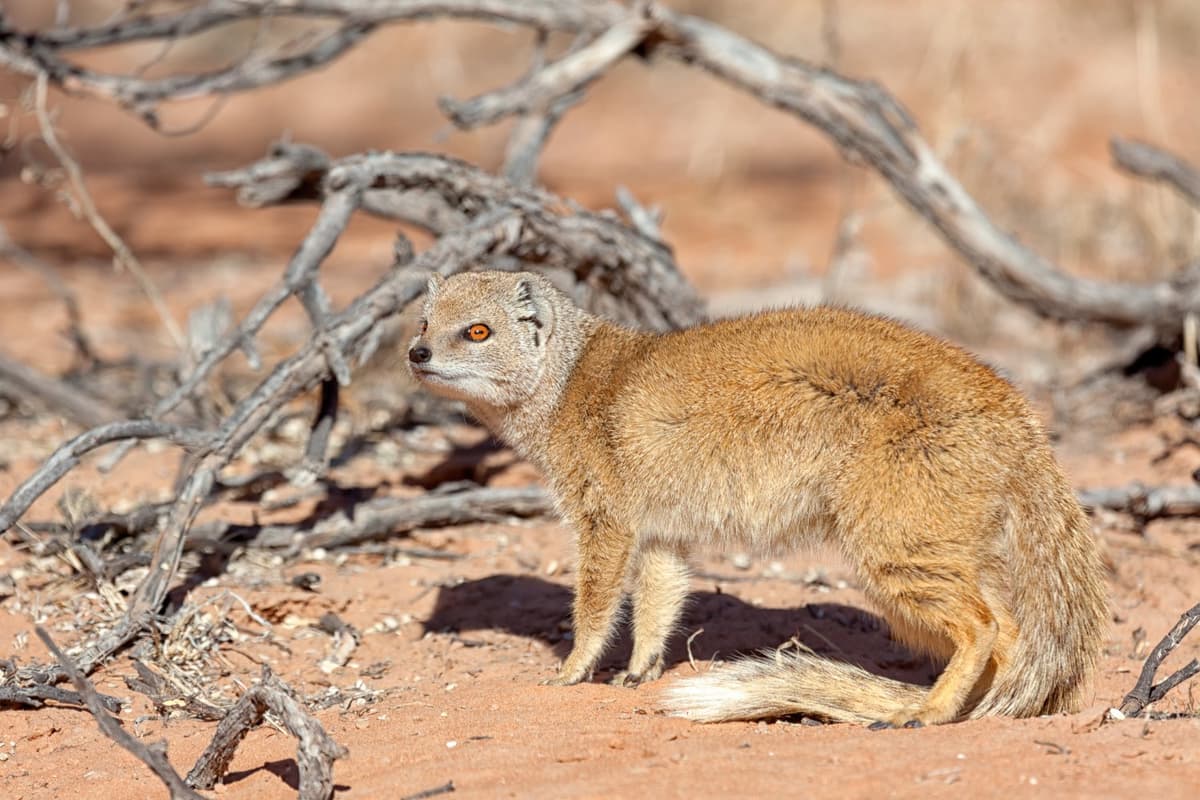
Mongooses have slim bodies, short legs, and thick protective fur.
Habitat and Distribution
A mongoose is a highly adaptable animal. It can live in many different habitats. These include dense forests, savannas, shrublands, grasslands, wetlands, and deserts. This wide habitat range shows how flexible the mongoose is in different environments.
Mongooses do not live only in deep forests. They are also common in forest edges, open areas, farmland, plantations, orchards, and even suburban or residential areas. Some species prefer places near water, such as rivers and streams, where food is easier to find.
Many mongoose species live in complex underground burrows. These burrows help them escape extreme heat, especially in desert areas, and control body temperature. Mongooses usually hunt on the ground. They often dig in soil to find insects, small animals, or other food.
Distribution Range
The mongoose family (Herpestidae) has a wide geographic distribution, mainly in Africa and South Asia.
- Asia: Several species are found across mainland Southeast Asia, southern China, and islands such as Java and Sumatra.
- Africa: This continent is home to many species, including the meerkat, which lives in southern Africa and the Kalahari Desert, and the Egyptian mongoose.
- Europe: The Egyptian mongoose is the only mongoose species found naturally in Europe. Its range is limited to the southwestern parts of the Iberian Peninsula.
- Introduced regions: Some species, especially the Small Indian mongoose, were introduced by humans to control rats. These introductions happened in places like Hawaii (in 1883), Puerto Rico, Jamaica, and Fiji. However, the mongoose later became an invasive species, causing serious damage to local ecosystems.
Mongoose in Vietnam
In Vietnam, common mongoose species are widely distributed across the country, from northern mountain regions to lowland areas.
They are especially common in the U Minh mangrove forests and the Mekong Delta. In U Minh, mongooses are often seen in banana-growing areas around the forest. Some species also live across mountain ranges, from the Hoang Lien Son Range in the north, along the Truong Son Range, and down to the Central Highlands.
This wide distribution shows that the mongoose is well adapted to many Vietnamese habitats, from wetlands to forests and mountains.
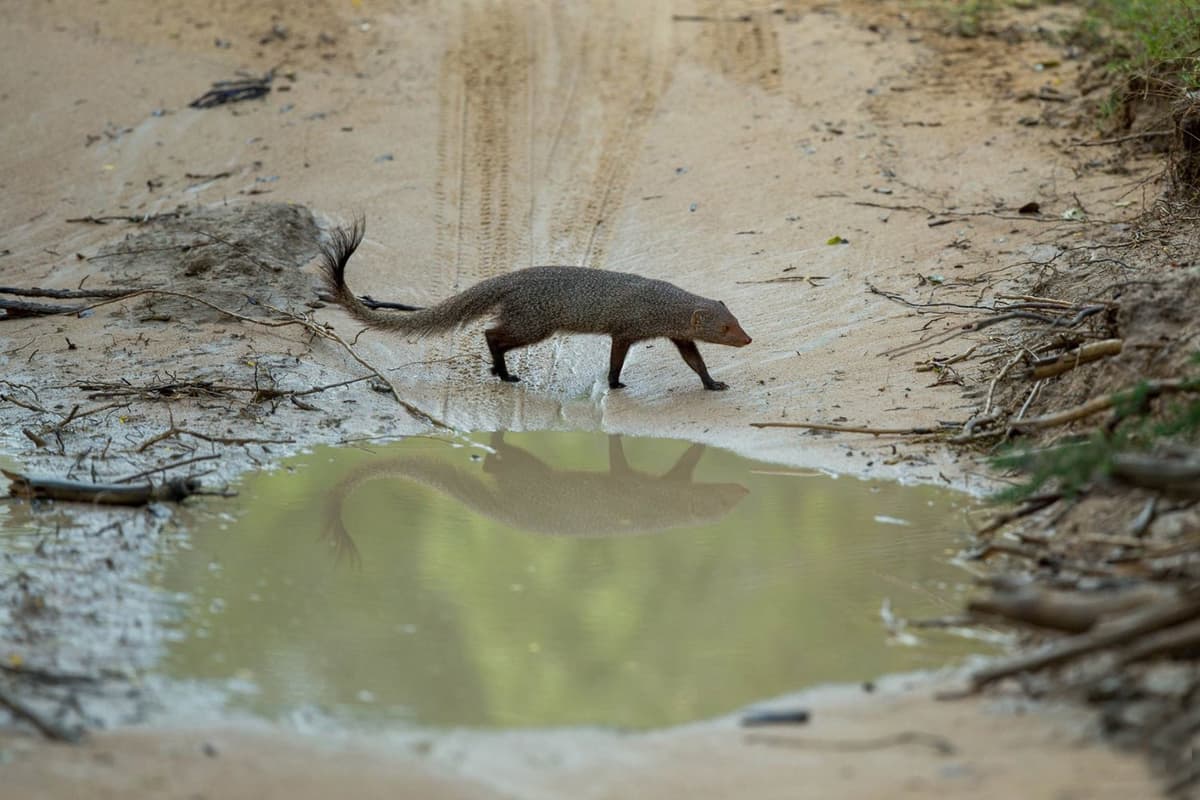
They live in forests, grasslands, and rocky areas across Asia and Africa.
Mongoose In Cat Tien National Park
In Cat Tien National Park, mongooses are present but their population size is still unclear. Two species have been confirmed through direct sightings and technical reports: the Small Asian Mongoose (Herpestes javanicus) and the Crab-eating Mongoose (Herpestes urva).
Records show that these species are mainly found in South Cat Tien, especially in the eastern part of the park. Camera-trap studies from 2019–2020 and earlier field reports confirm their regular presence, although exact numbers remain unknown.
Subspecies of Mongoose
The mongoose family (Herpestidae) includes about 34 living species. Scientists divide them into two main subfamilies, based on their biology and social behavior. This classification helps explain why some mongooses live alone, while others live in large groups.
Herpestinae – Solitary Mongooses
This subfamily includes around 23 species. They are found in Southern Europe, Africa, and Asia. Common genera in this group include Herpestes, Urva, Atilax, Bdeogale, Cynictis, and Ichneumia.
Most species in this group live alone or in pairs. Their body size ranges from medium to large. They usually hunt by themselves and defend their own territory.
Mungotinae – Social Mongooses
This subfamily has 11 species, and they are found only in Africa. Well-known genera include Suricata, Mungos, Helogale, Crossarchus, Liberiictis, and Dologale. These mongooses are highly social animals. They live in large groups and work together to find food, protect the group, and raise young.
Common Mongoose Species
- Banded Mongoose (Mungos mungo): This species lives in Africa and is famous for its strong social behavior. It lives in large groups and shares the care of young. Baby mongooses often beg for food from adult members of the group.
- Egyptian Mongoose (Herpestes ichneumon): This is the only mongoose species found naturally in Europe, mainly in the Iberian Peninsula. It is omnivorous, eating rabbits, reptiles, insects, and other small animals.
- Small Indian Mongoose (Urva auropunctata / Herpestes javanicus): This species is common in Asia, including Vietnam. It adapts very well to human environments and is often found near farms and villages.
- Crab-eating Mongoose (Urva urva / Herpestes urva): This mongoose is found in Southeast Asia and Vietnam, with records in Cat Tien National Park and Phong Nha – Ke Bang. It has a distinct white stripe on the neck and often lives near water. It is a strong swimmer and hunts crabs and fish.
- Meerkat (Suricata suricatta): The meerkat is the most famous mongoose species in popular culture. It lives in southern Africa and is known for its guard behavior, standing on its back legs to watch for danger and warn the group.
Diet of Mongoose
What does Mongoose eat?
A mongoose is mainly a carnivorous animal, but it has a very flexible and opportunistic diet. This means it eats many types of food, depending on the habitat and species.
Mongooses hunt small animals such as rats, mice, rabbits, snakes, lizards, frogs, birds, and eggs. The amount of reptiles in their diet often increases in spring and summer, when these animals are more active.
They also eat many invertebrates, including beetles, grasshoppers, spiders, scorpions, earthworms, and centipedes. These foods are especially important for smaller mongoose species or when fruit is not available.
Some species have a more specialized diet. For example, the crab-eating mongoose mainly eats crabs, fish, and snails. The Egyptian mongoose has also been observed catching fish in shallow streams.
In addition to animal food, mongooses also eat plant matter. Their diet may include fruit, berries, mushrooms, and roots, which help them survive during food shortages.
Foraging Behavior
Mongooses are opportunistic hunters with strong foraging skills. They use their non-retractile claws to dig into the ground. This helps them find hidden food such as insect larvae, underground insects, or even dig into burrows to catch young rabbits or reptiles.
Unlike many carnivores, many mongooses are active during the day. Daytime activity allows them to use their good eyesight to detect prey more easily.
Some mongoose species are not afraid of water. They can dip their heads underwater or swim to catch fish and crabs in shallow water areas.
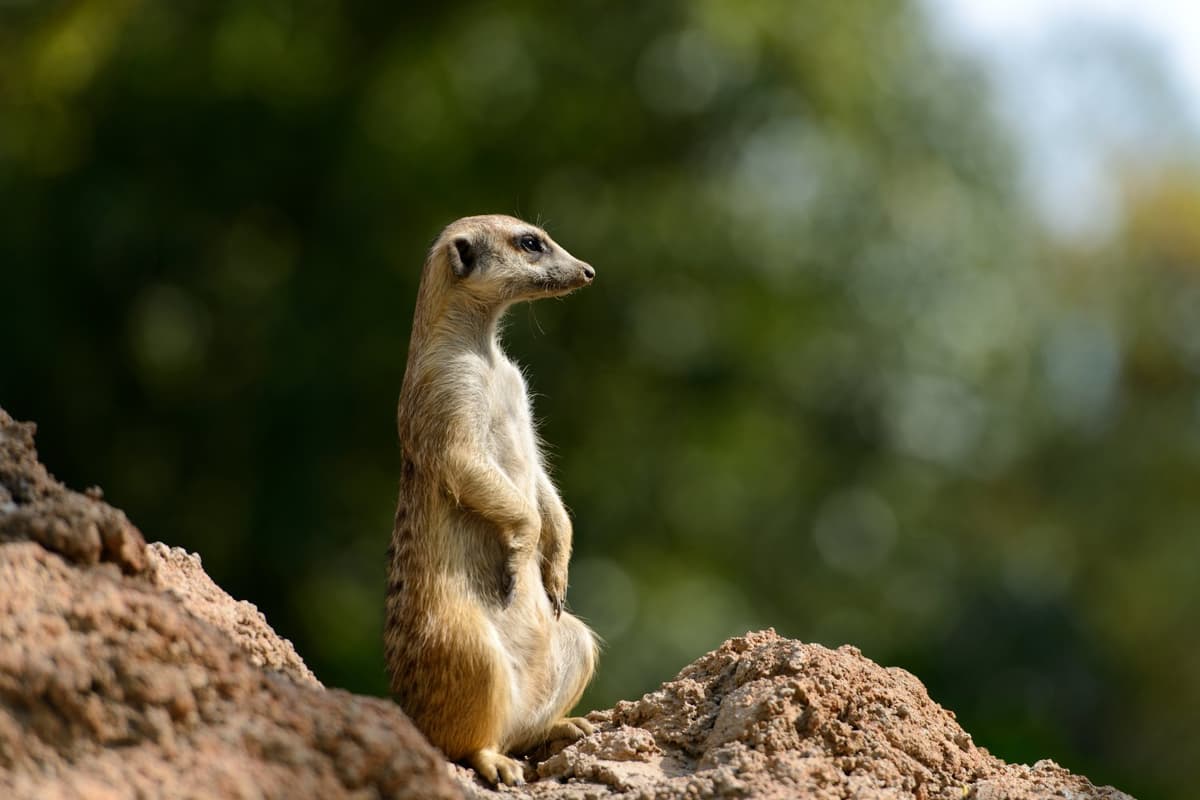
Mongoose hunt insects, reptiles, and small mammals during the day.
Mongoose vs Snake
Mongooses are famous for their ability to fight and eat venomous snakes, including cobras. Their success is not only due to speed and quick movement, but also a special biological defense. Mongooses have a natural resistance to snake neurotoxin.
Scientists have found that the nicotinic acetylcholine receptors in a mongoose’s body have evolved. In most animals, snake venom attaches to these receptors and causes muscle paralysis. In mongooses, key amino acids in the receptor have changed. This change blocks the venom, so it cannot bind effectively.
However, this does not mean mongooses are invincible. They can still die if bitten by a snake with a large amount of venom, or if attacked by large constrictor snakes.
In the wild, mongooses also face threats from larger predators, such as leopards, clouded leopards, Asian golden cats, and dholes.
Habit and Behavior
The behavior of a mongoose varies widely by species. The biggest difference is between solitary mongooses and social mongooses that live in groups. Below is a clear overview of their social structure, daily behavior, and communication methods.
Social Structure
The answer to whether a mongoose lives alone or in a group depends on the species. Scientific studies show that mongooses can be divided into two main behavioral groups.
Highly Social Mongooses (Cooperative Breeders)
Well-known examples include meerkats and banded mongooses. These species live in stable family groups with complex social rules.
In meerkat groups, only the dominant female usually has the right to reproduce. Other members act as helpers, helping to feed, protect, and raise the young. This system is called cooperative breeding.
Social behavior also includes task sharing. For example, one mongoose may act as a sentinel, standing upright to watch for predators while others forage.
However, high social living also brings strong competition. In some cases, the dominant female may kill the young of lower-ranking females to reduce competition for food and care.
Solitary or Small-Family Mongooses
Many species in the Herpestes and Urva groups, common in Asia, usually live alone or in pairs.
There are exceptions. The Egyptian mongoose, once thought to be solitary, has been observed in family groups in Spain. These mongooses sometimes show cooperative hunting, working together to catch larger prey such as rabbits.
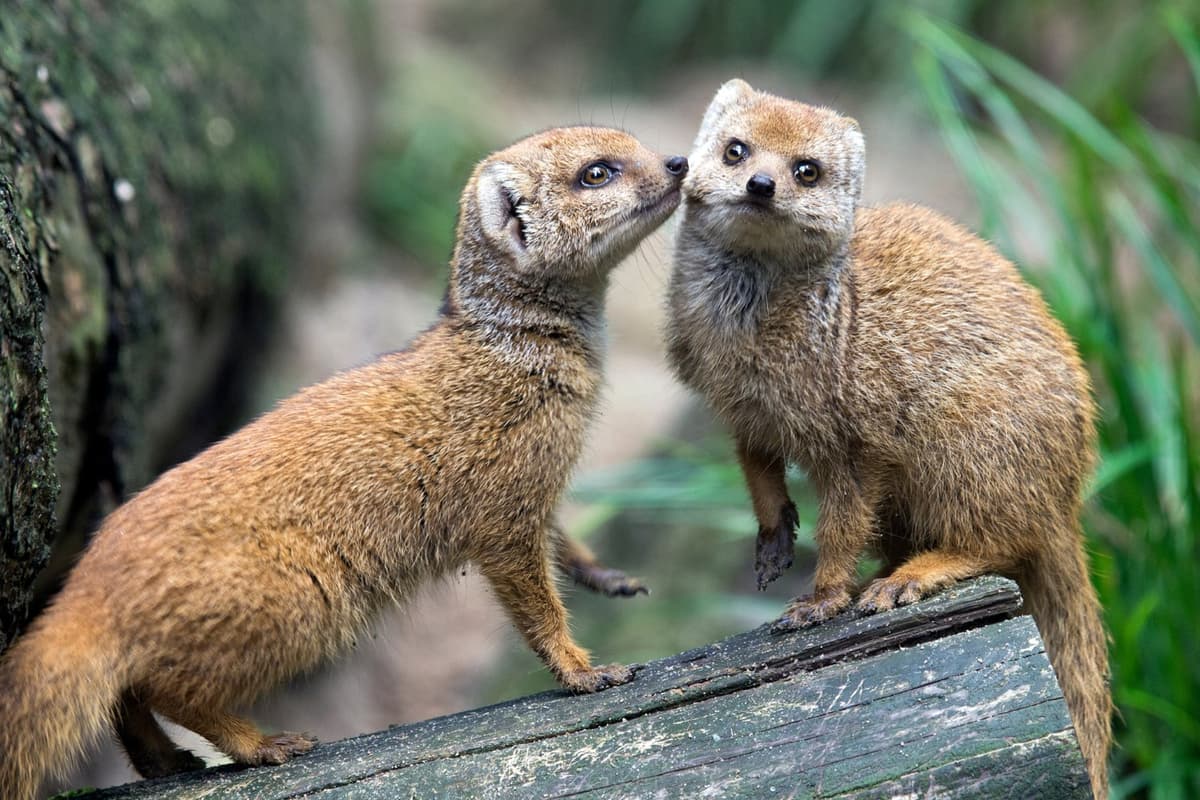
Some species of mongooses live alone, while others form small family groups.
Vocal communication
Communication in mongooses uses both sound and scent, but the level of complexity depends on how social the species is. Social mongooses use a wide range of vocal sounds.
Scientists have identified up to 12 different call types. These include alarm calls that change depending on whether danger comes from the air or the ground, calls used to guide group movement, and soft contact calls that help group members stay close while foraging. Young mongooses also use special sounds to beg for food from adults.
Scent communication is also very important. Most mongooses have large anal scent glands, which they use to mark territory and share information about identity and breeding status. They mark by dragging this gland across surfaces such as rocks or logs. For more solitary species, scent marking is often the main form of communication, more important than vocal sounds.
Reproduction of Mongoose
Mongoose reproduction is strongly affected by the environment, especially rainfall and food supply. In many areas, timing is vital for young survival. In social species, the dominant female usually becomes pregnant in mid-winter so the first litter is born when early rains arrive around September and October, a time of better food availability. If the rainy season comes late, the first litter often does not survive.
Mongooses follow singular cooperative breeding, meaning only the dominant female usually reproduces, while other group members help raise the young. She can produce up to four litters a year, with two to seven pups each. In species like meerkats, helpers feed, guard, and teach the pups, greatly improving survival.
Young mongooses become nutritionally independent at about 90 days. During this time, helpers provide most protection and food. Mothers are also very sensitive to threats and may move or even kill their pups if disturbed by humans.
Threats and Conservation
Most species in the mongoose family (Herpestidae) are now listed as Least Concern (LC) on the IUCN Red List. This means their populations are still stable at a global level. However, this overall mongoose conservation status does not show the full picture.
In many regions, local populations are declining, and several endangered Herpestidae species face serious risks due to human activities and environmental change.
Threats to Mongoose Population
One of the main threats to mongoose populations is illegal hunting and trade. In India, around 10,000 mongooses are killed each year for fur, with 50 needed for just one kilogram. They are also hunted for bushmeat or traditional medicine.
In Southeast Asia, including Vietnam, non-selective wire snares kill many small ground animals, including mongooses, even in protected areas. Habitat loss from farming and urban expansion further reduces their living space, especially for rare species like the Liberian and Grandidier’s mongooses.
In some regions, mongooses are invasive, such as in Hawaii and the Caribbean, where they prey on native birds and turtle eggs and are trapped or poisoned to protect ecosystems.
Conservation Efforts
Efforts to protect mongooses happen at many levels, from research to law enforcement. In Africa, projects focus on rare species, such as the Liberian mongoose in Taï National Park, Côte d’Ivoire, supported by IUCN SOS to update population data, study threats, and raise community awareness.
Long-term research on meerkats in the Kalahari helps plan future conservation, while Botswana’s CARACAL center studies banded mongooses. In India, mongooses are protected under the Wildlife Protection Act and CITES, and a new forensic tool helps identify paint brushes made from mongoose fur.
In Vietnam, monitoring and rescue actions in Cat Tien and Phong Nha–Ke Bang National Parks confirm the presence of the small Indian mongoose and crab-eating mongoose, and rescue centers care for and release wildlife.
Spotting Mongooses at Cat Tien National Park
Katien Safari works with Cat Tien National Park to offer small-group tours that allow visitors to observe rare animals responsibly, including mongooses. While sightings are not guaranteed, guests have a chance to see the Small Indian Mongoose and Crab-eating Mongoose in their natural forest habitat, especially in the park’s southern and eastern areas.
Tips for visitors:
- Move quietly and avoid sudden noises to prevent scaring wildlife.
- Follow guides’ instructions and keep a safe distance from the animals.
- Early morning or late afternoon tours offer better chances to spot active mongooses.
- Photography is allowed, but avoid using flash.
This approach ensures a safe, ethical, and rewarding wildlife experience while supporting conservation efforts.
5 Interesting Facts about Mongoose
1. The word “mongoose” comes from Indian languages. It is derived from muṅgūs in Marathi or mungisa in Telugu. Because of pronunciation, early English speakers changed the ending to “-goose”, even though mongooses are not related to geese.
2. In the 19th century, mongooses were brought to Hawaii and the Caribbean to control rats, but they became invasive and harmed native birds and sea turtles.
3. Some dominant female mongooses kill the young of other females to reduce competition.
4. The cusimanse mongoose breaks eggs by throwing them backward onto hard objects.
5. Mongooses are also famous from “Rikki-Tikki-Tavi” in The Jungle Book, where a brave mongoose fights cobras.
Reference
- Murphy, D., & Phan, T. (2002). Mammal observations in Cat Tien National Park [Technical report]. WWF.
- Thorley, J., Duncan, C., Gaynor, D., Manser, M. B., & Clutton-Brock, T. (2025). Disentangling the effects of temperature and rainfall on the population dynamics of Kalahari meerkats. Oikos, 2025(5), e10988. https://doi.org/10.1111/oik.10988
- Antaky, C. C., Sugihara, R. T., Leinbach, I. L., Siers, S. R., Ruell, E. W., & Hess, S. C. (2023). Development and evaluation of prototype toxicant-delivery bait stations for the control of the small Indian mongoose. Management of Biological Invasions, 14(4), 775–791. https://doi.org/10.3391/mbi.2023.14.4.12
- Barchan, D., Kachalsky, S., Neumann, D., Vogel, Z., Ovadia, M., Kochva, E., & Fuchs, S. (1992). How the mongoose can fight the snake: The binding site of the mongoose acetylcholine receptor. Proceedings of the National Academy of Sciences, 89(16), 7717–7721. https://doi.org/10.1073/pnas.89.16.7717
- Dhal, A., Rout, S., & Kumar, S. (2020). Mongooses of India and their conservation (Version v2). Zenodo. https://doi.org/10.5281/zenodo.17531236
- Delibes, M., Aymerich, M., & Cuesta, L. (1984). Feeding habits of the Egyptian mongoose or ichneumon in Spain. Acta Theriologica, 29(16), 205–218.
- Naha Nature Conservation Office, Ministry of the Environment, & Nature Conservation Division, Department of Environmental Affairs, Okinawa Prefecture. (2013). Phase 2 mongoose control plan for the northern part of Okinawa Island (FY 2013 to 2022).