“Not all heroes wear capes, some wear scales”. In the quiet of the night, a small creature moves through the forest floor, its body shimmering like tiny shields of bronze. This is the pangolin, scientifically known as manidae — the world’s only scaly mammal and one of nature’s most secretive animals.
Pangolins (manidae) roam the forests and grasslands of Africa and Asia, from lush rainforests to arid savannas. Yet today, all eight known pangolin species are listed as Critically Endangered, Endangered or Vulnerable on the IUCN Red List and are protected under CITES. Hunted for their meat and scales, they now stand on the edge of extinction. Their story is a gentle reminder that even the smallest, quietest creatures deserve a place in the wild and a chance to survive.
| Common name | Pangolin |
|---|
| Scientific name | Manidae |
|---|
| Taxonomy |
Class: Mammalia
Order: Pholidota
Family: Manidae
Genera: Manis, Smutsia, Phataginus
|
| Weight / Size | Length: 1.14m to 1.37m; Weight: 1.8 kg to 32.7 kg |
|---|
| Lifespan | Little data, estimated up to 20 years |
|---|
| Population | Unknown, decreasing population trend |
|---|
| Habitat | Pangolins live in many different habitats, including rainforests and grasslands |
|---|
| Range | Africa and Asia |
|---|
| Diet | Insectivorous |
|---|
| Conservation status | Critically Endangered in the IUCN Redlist;
Appendix I (threatened with extinction) in the Convention on International Trade in Endangered Species of Wild Fauna and Flora (CITIES) |
|---|
Physical Characteristics of Pangolin
Size, Weight and Lifespan
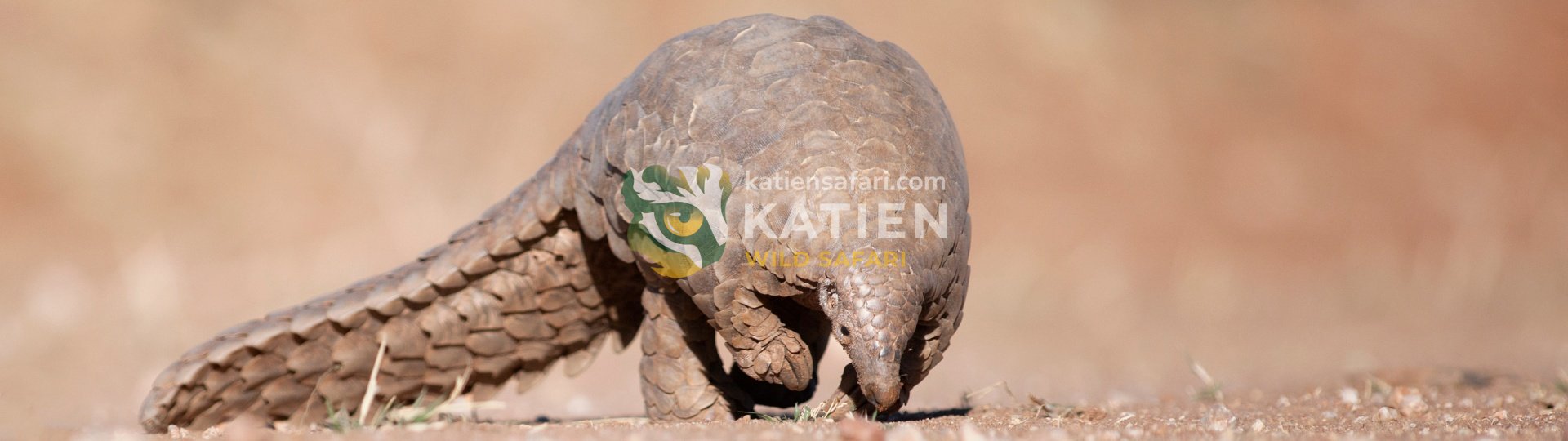
The pangolin average size is that of a house cat and its body is covered in overlapping yellow-brown scales that shine softly under the light. Their small heads and long, narrow snouts give them a curious, almost gentle look, while their thick tails help them balance as they move through forests or dig into termite mounds. Each scale is made of keratin—the same protein found in human hair and nails. As the animal grows, these overlapping scales harden and form into a natural suit of armor that few predators dare to challenge.
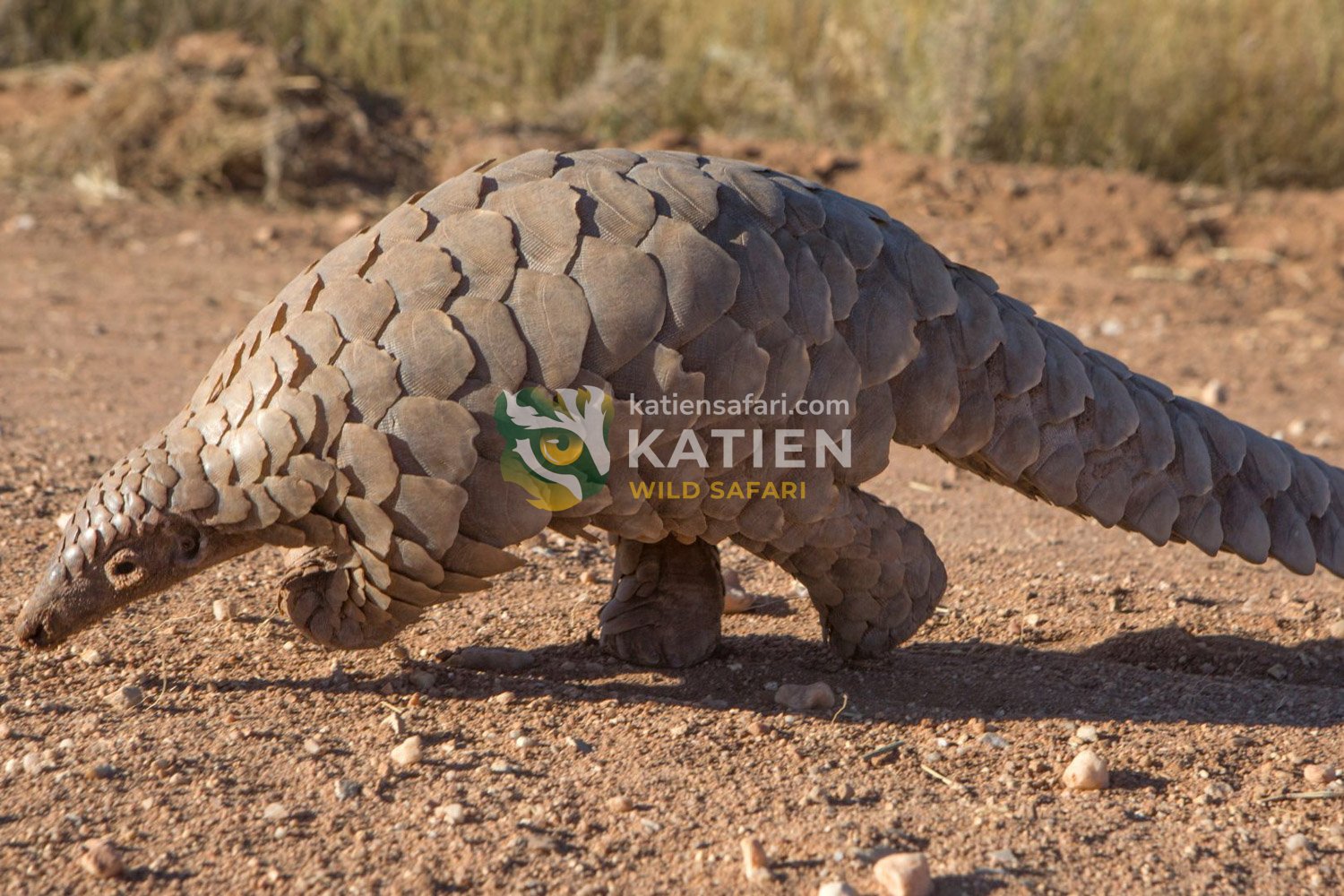
A pangolin walks slowly on the ground
Not all pangolins are the same. Each pangolin species has its own size and shape, shaped by the landscapes they call home. Some are small and light, barely the size of a house cat, while others grow large enough to fill a human’s arms. Most range from about 1.14 to 1.37 meters in length, with their tails adding balance and agility.
Tree-dwelling pangolins have long, flexible tails that help them climb and hang from branches. The black-bellied pangolin, for instance, has a tail nearly twice the length of its body. In contrast, the giant ground pangolin of Africa is a true heavyweight among the Manidae family, reaching up to 33 kilograms and walking with a slow, powerful grace.
Distribution and Habitat
Global Range
Pangolins (manidae) are native to both Africa and Asia, living in forests, grasslands, and open savannas. The pangolin habitat type varies widely from the humid jungles of Vietnam to the dry plains of Tanzania, they can survive in many kinds of environments as long as ants and termites are near.
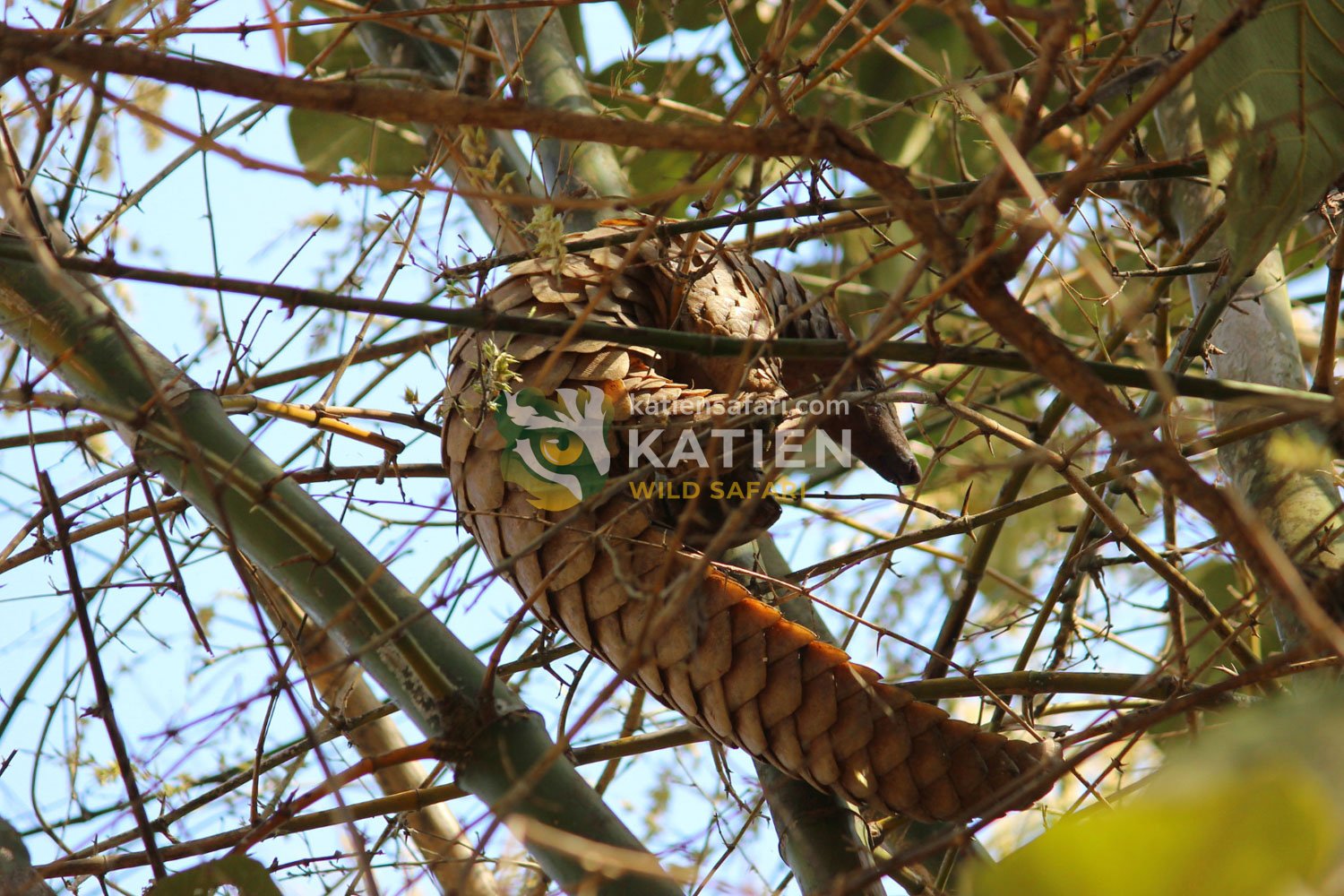
A pangolin gracefully climbs from branch to branch
Some pangolin species spend their lives in trees, curling up inside hollow trunks or climbing from branch to branch. Others live on the ground, digging deep burrows where they rest during the day and care for their young.
Whether in trees or underground, pangolins are shy, quiet animals that prefer places with shelter and soft soil. They are active mostly at night, following the scent of insects and living close to the hidden heartbeat of the wild.
Pangolin in Vietnam
In Vietnam, pangolins (manidae), affectionately known as “Tê Tê”, are classified as Group IB species and in the Vietnam Red Data Book as critically endangered. These rare forest mammals are completely protected by law, and all forms of hunting, trading, or use are prohibited.
Vietnam is also home to two pangolin species: the Chinese pangolin (Manis pentadactyla) and the Sunda pangolin (Manis javanica), both now facing a serious risk of extinction.
The Chinese pangolin lives in the cooler forests of northern Vietnam, from the mountain provinces down to Nghe An. The Sunda pangolin, on the other hand, ranges from Nghe An southward, inhabiting tropical forests and lowland areas.
Once common across the country, these quiet insect-eaters are now rarely seen in the wild. Their shrinking numbers tell a painful story of a gentle creature struggling to survive in the only home it has ever known.
Pangolin in Cat Tien National Park
Cat Tien National Park, one of Vietnam’s most important wildlife reserves, is home to many rare and endangered species, including the Sunda pangolin. Among all surveyed areas of the Truong Son mountain range, Cat Tien shows the highest chance of pangolin presence, suggesting a healthy and stable population still survives here.
Dense forests and abundant insects make Cat Tien an ideal Pangolin habitat. Conservation programs in the park are helping protect this shy scaly mammal, offering one of the few safe refuges where pangolins can feed, breed, and live free from poaching.
Subspecies of Pangolin
There are eight living Pangolin species in the world — four in Africa and four in Asia. Though they share the same armored design, each species has adapted beautifully to the forests, grasslands, and savannas they call home.
In Africa, the four species are the black-bellied pangolin (Phataginus tetradactyla), the white-bellied or tree pangolin (Phataginus tricuspis), the Temminck’s ground pangolin (Smutsia temminckii), and the giant ground pangolin (Smutsia gigantea). The first two species are more arboreal, spending most of their time in trees, while the latter two are primarily ground-dwelling.
In Asia, the four species are the Indian pangolin (Manis crassicaudata), the Chinese pangolin (Manis pentadactyla), the Sunda pangolin (Manis javanica), and the Philippine pangolin (Manis culionensis). These species inhabit forests and grasslands across the region, from India and China to the Philippines and Southeast Asia, including Vietnam.
In recent years, scientists have unveiled a potential new pangolin species, the Indo-Burmese pangolin (Manis indoburmanica), adding to the growing field of Pangolin information. Showing a considerable taxonomic distinction from other Asian pangolin species.
Behavior and Diet
Pangolin behavior patterns
Pangolins (manidae) are solitary animals and usually live alone. They spend most of their lives searching for food and resting in burrows or hollow trees. Each individual has its own territory, which it marks with scent from glands near the tail.
Pangolins only meet others of their kind during the breeding season. After mating, the male and female separate again, and the female raises the young on her own. A single baby is born after a few months, protected by soft scales that harden as it grows.
Are pangolins nocturnal?
Yes. Pangolins are nocturnal animals, meaning they are active at night and rest during the day. Their behavior is quiet and secretive, which makes them very hard to observe in the wild. They have poor eyesight but rely on an excellent sense of smell and hearing to find ants and termites in the dark.
Like skunks, pangolins can release a strong-smelling secretion from glands near the base of their tail. This odor helps them mark their territory and may also deter predators. While most pangolins live on the ground, some species, such as the black-bellied pangolin, are skilled climbers and spend much of their time in trees.
Pangolin diet analysis
Pangolins are often called “scaly anteaters,” and the name fits perfectly. Their diet mainly consists of ants, termites, insect larvae, flies, worms, and crickets. Using their long, curved claws, pangolins tear open termite mounds or anthills.
They have no teeth, so they use a sticky, elongated tongue that can reach up to 42 centimeters to catch insects and swallow them whole. The small stones in their stomachs help grind the food, aiding digestion. This specialized feeding behavior makes pangolins important to their ecosystems, helping control insect populations and maintain a healthy balance in forests and grasslands.
Among the many fascinating pangolin facts, their poor eyesight makes them rely on their strong sense of smell to locate insect nests, usually at night. Once they find a nest, they use their sharp, curved claws to tear it open. To protect themselves from bites or stings, pangolins can close their nostrils and ears tightly while feeding.
Predators
In the wild, pangolins have very few natural enemies. Their tough, overlapping scales act as strong armor, protecting them from most predators. However, large carnivores such as leopards and hyenas have been known to attack them when given the chance.
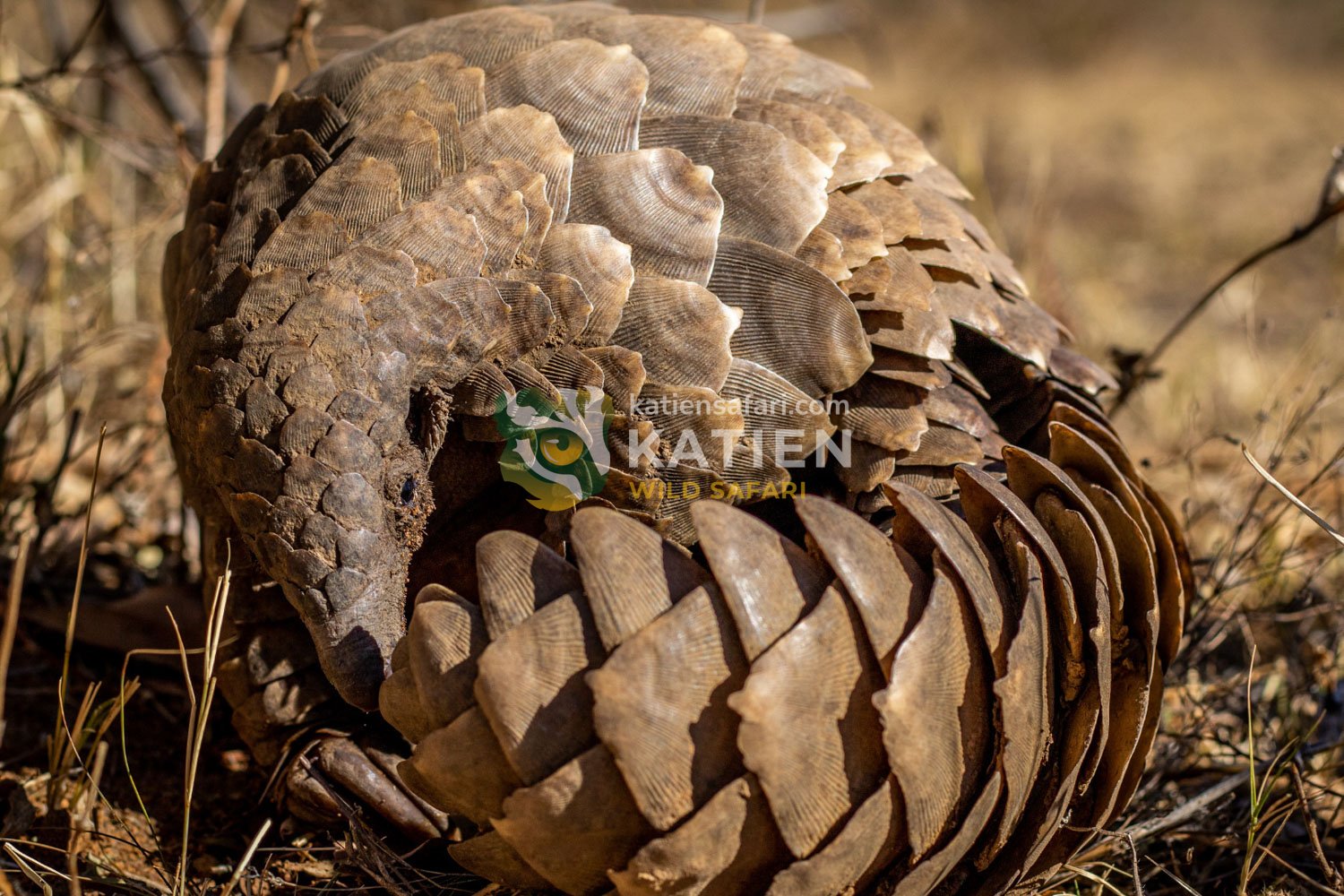
A pangolin curls into a ball
When threatened, a pangolin curls tightly into a ball, covering its soft belly with hard scales. Even powerful animals find it difficult to break through this defense.
Sadly, the great threat does not come from nature, but from humans. Hunting and illegal trade for their meat and scales have pushed all Pangolin species to the brink of extinction, making pangolin conservation one of the most urgent wildlife challenges today.
Reproduction and Life Cycle
Pangolins (manidae) are placental mammals and they do not lay eggs. Pangolin mating season only occurs once a year, and the female gives birth between one or three live offspring, called pangopups. The gestation period varies by species, lasting from about 70 to 140 days.
Newborn pangolins are about 15 centimeters long and weigh between 0.08 and 0.45 kilograms. Their scales are soft and pale at birth but begin to harden within two days. For the first few weeks, the baby stays curled against the mother’s belly or rests safely in her burrow.
As the young pangolin grows, it begins to ride on its mother’s back or tail while she searches for insects. The baby starts tasting termites at around one month old and continues nursing for about three to four months before becoming independent. If danger appears, the mother immediately curls around her baby, using her armored body as a living shield — a quiet but powerful act of protection.
Conservation and Threats
Here is the latest information from the IUCN on the condition of each species:
- Sunda pangolin: critically endangered, with a decreasing population trend
- Philippine pangolin: critically endangered, with a decreasing population trend
- Chinese pangolin: critically endangered, with a decreasing population trend
- White-bellied pangolin: endangered, with a decreasing population trend
- Indian pangolin: endangered, with a decreasing population trend
- Giant ground pangolin: endangered, with a decreasing population trend
- Black-bellied pangolin: vulnerable, with a decreasing population trend
- Temminck’s pangolin: vulnerable, with a decreasing population trend
Conservation
Pangolins are believed to be the most heavily trafficked mammals on Earth. In China alone, the estimated demand reaches around 150,000 pangolins each year, creating a market worth more than 176 million dollars (Pantel & Chin, 2009). Across Africa and Asia, about 100,000 pangolins are taken from the wild annually, the equivalent of one animal captured every five minutes.
Today, three species: the Chinese pangolin, Philippine pangolin, and Sunda pangolin are listed as Critically Endangered on the IUCN Red List. Despite international protection under CITES Appendix I, illegal trafficking continues to be the greatest threat to their survival.
From 1975 to 2000, an estimated 776,000 pangolins were legally and illegally traded across borders during that period. Between 2000 and 2019, more than 1,400 seizures were recorded worldwide, representing roughly 895,000 pangolins trafficked. And in April 2020, a single shipment of 25 tons of African pangolin scales equal to about 50,000 individuals was intercepted. These numbers tell a heartbreaking story of a quiet, ancient creature pushed to the edge by human demand.
In recent years, stronger wildlife laws, rescue centers, and awareness campaigns have helped protect remaining populations. However, pangolins reproduce slowly and struggle to recover once their numbers decline. Their future depends on reducing demand, ending the illegal trade, and protecting the forests that still shelter them.
Threats
The biggest threat to pangolins is over-exploitation for domestic and international trade. Every year, tens of thousands of pangolins are illegally captured and trafficked, making them the most heavily traded mammals in the world.
Their scales are highly prized in traditional Chinese medicine, believed to have healing properties despite the lack of scientific evidence. This demand has fueled widespread hunting and smuggling, pushing pangolin populations to dangerously low levels across Africa and Asia. Even though there is no scientific evidence that they are efficacious in medicine. As a result, this relentless demand has driven all eight species toward extinction.
Meeting Pangolin
Pangolins are critically endangered, among the most trafficked and threatened mammals on Earth.
If you are lucky enough to see one in the wild, please remember:
- Do not touch or disturb it. Observe quietly from a distance.
- Do not buy or consume any products made from pangolin meat or scales.
- Never post a pangolin 's exact location on social media to protect it from poachers.
- Report any suspicious activity to local authorities or wildlife protection agencies.
Every pangolin’s life matters — your respect can help protect an entire species.
Katien Safari is currently working closely with the Cat Tien National Park Management Board to develop a monitoring and protection system for the pangolin population. We are also exploring small-group safari tours, giving visitors a chance to see these rare animals in their natural habitat in the near future.
The project aims to promote responsible eco-tourism, where visitors can enjoy nature while learning about Pangolin conservation and supporting wildlife protection efforts.
Interesting Facts about Pangolin
- Pangolins are evolutionarily unique. They belong to their own order, Pholidota, which split from carnivores about 77 million years ago, making them one of the most distinct mammal lineages on Earth.
- Pangolins are nocturnal animal but have poor eyesights.
- These animals close their ears and nostrils to keep out insects while eating.
- A pangolin’s scales make up about 20 percent of its weight.
- Pangolins are the only mammals with scales.
- When threatened, pangolins roll into a ball like an armadillo, making them less than half their normal size.
- Pangolin are solitary creatures.
![]()
Reference
- Challender, D. W., Heinrich, S., Shepherd, C. R., & Katsis, L. K. (2020). International trade and trafficking in pangolins, 1900–2019. In pangolins (pp. 259-276). Academic Press.
- Chin, S. Y., & Pantel, S. (2009, June). Pangolin capture and trade in Malaysia. In Proceedings of the workshop on trade and conservation of pangolins native to South and Southeast Asia (Vol. 30, pp. 144–162).
- Heinrich, S., Wittmann, T. A., Prowse, T. A., Ross, J. V., Delean, S., Shepherd, C. R., & Cassey, P. (2016). Where did all the pangolins go? International CITES trade in pangolin species. Global Ecology and Conservation, 8, 241–253. https://doi.org/10.1016/j.gecco.2016.09.007
- Heighton, S. P., & Gaubert, P. (2021). A timely systematic review on pangolin research, commercialization, and popularization to identify knowledge gaps and produce conservation guidelines. Biological Conservation, 256, 109042. https://doi.org/10.1016/j.biocon.2021.109042
- Heighton, S. P., Allio, R., Murienne, J., Salmona, J., Meng, H., Scornavacca, C., ... & Gaubert, P. (2023). Pangolin genomes offer key insights and resources for the world’s most trafficked wild mammals. Molecular Biology and Evolution, 40(10), msad190. https://doi.org/10.1093/molbev/msad190
- Save Vietnam’s Wildlife. (n.d.). SVW — Save Vietnam’s Wildlife. Retrieved October 28, 2025, from https://svw.vn/
- United Nations Office on Drugs and Crime. (2020). World Wildlife Crime Report: Pangolin fact sheet. https://www.unodc.org/documents/wwcr/2020/Wildlife_crime_Pangolin_UNODC.pdf
- Wang, B., Yang, W., Sherman, V. R., & Meyers, M. A. (2016). Pangolin armor: Overlapping, structure, and mechanical properties of the keratinous scales. Acta Biomaterialia, 41, 60–74. https://doi.org/10.1016/j.actbio.2016.05.028
- Willcox, D., Nash, H. C., Trageser, S., Kim, H. J., Hywood, L., Connelly, E., ... & Challender, D. W. (2019). Evaluating methods for detecting and monitoring pangolin (Pholidata: Manidae) populations. Global Ecology and Conservation, 17, e00539. https://doi.org/10.1016/j.gecco.2019.e00539
- World Wildlife Fund. (n.d.). Pangolin. World Wildlife Fund. https://www.worldwildlife.org/species/pangolin/
- Xu, L., Guan, J., Lau, W., & Xiao, Y. (2016). An overview of pangolin trade in China. TRAFFIC briefing paper. https://www.pangolinsg.org/wp-content/uploads/sites/35/2018/06/Xu-et-al_-2016_An-Overview-of-Pangolin-Trade-in-China.pdf