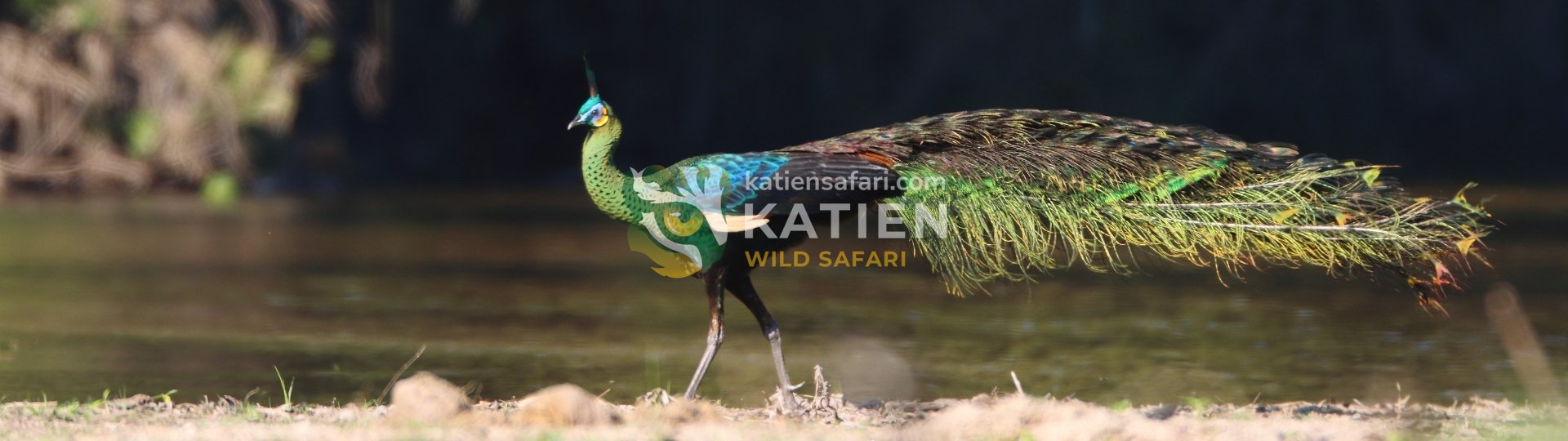
The Green Peafowl (Pavo muticus) is a large bird from the pheasant family. The male is a peacock, and the female is a peahen, but people usually use “peacock” to refer to the whole species in everyday language. It is known for its bright feathers, long shining tail, and elegant walk. This bird lives mainly in Southeast Asia and has long been a symbol of beauty, pride, and spirit in many cultures.
Sadly, the peacock is now endangered because of hunting and the loss of its natural home. Read on to learn more about its looks, behavior, and the efforts to protect this beautiful creature.
| Common name | Peacock (Peafowl) |
|---|
| Scientific name | Pavo muticus |
|---|
| Taxonomy | Bird, Order Galliformes, Family Phasianidae |
|---|
| Weight / Size | Peacocks: 180 – 250 cm (train up to 1.6 m), 4 – 6 kg; Peahens: 90 – 110 cm, 2.5 – 4 kg |
|---|
| Lifespan | 15 – 20 years (longer in captivity) |
|---|
| Population | Green Peafowl is endangered (5,000–10,000 left), Indian Peafowl is common, Congo Peafowl is rare. |
|---|
| Habitat | Forests, grasslands, and rainforests near water. |
|---|
| Range | India, Sri Lanka, Myanmar, Thailand, Cambodia, Vietnam, Indonesia (Java), and the Congo Basin in Central Africa. |
|---|
| Diet | Omnivorous – seeds, fruits, leaves, insects, frogs, small reptiles |
|---|
| Conservation status | Endangered (IUCN Red List); CITES Appendix II |
|---|
Size, Weight, and Lifespan
The peafowl is one of the most beautiful birds in the world. It has a slim body, long neck, tall legs, and a slow, graceful walk. Both peacock and peahen have a small feather crest on the head and shiny feathers that reflect light.
A peacock can grow 1.8 – 2.5 meters long, with a tail up to 2 meters. The peahen is smaller, about 90–110 cm. The wingspan of a peacock is 1.3 – 1.6 meters, while the peahen’s is 0.8 – 1.3 meters. Peacocks weigh around 4–6 kg, and peahens 2.5 – 4 kg.
On the head, the crest stands upright like a small fan. It is taller and thinner in peacocks and shorter and wider in peahens. The face has white or pale blue bare skin with a dark line around the eyes. Their large, round eyes help them stay alert and find mates.
Most peacocks are bright blue, turquoise, or golden-green. The neck feathers are arranged like tiny scales that shine under sunlight. Females have duller colors, often brown or bronze, to help them blend into their surroundings.
The peacock’s body is long but strong, allowing short flights when needed. The wings show shades of blue, green, black, and brown. Their legs are tall, straight, and gray or light brown. Each foot has three toes in front and one behind, helping them walk firmly and even climb trees.
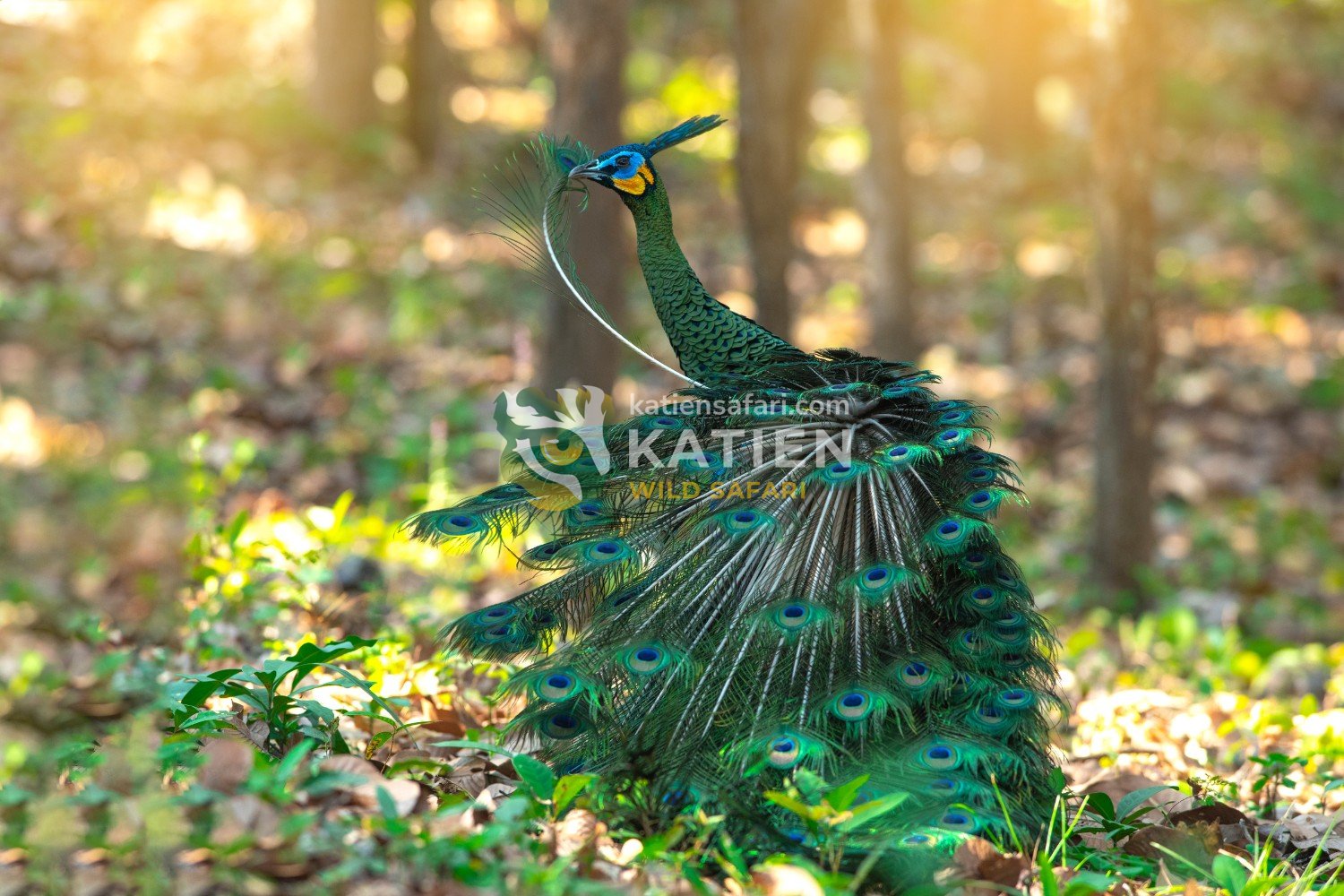
Adult peacocks grow up to 2.3 m and live around 20 years.
Diet, Feeding Habits, and Predators
The peafowl is an omnivorous bird, mainly feeding on the ground. It eats a wide variety of plants, seeds, flowers, and small animals, and sometimes even crops grown by humans.
Diet
Peacocks' main food sources are grasses and shrubs, forming the bulk of their diet. The Java Green Peafowl has been recorded eating more than 36 plant species, including wild grasses, garden plants, and palms. They also eat leaves, flowers, and ripe seeds that fall to the ground. About six types of trees and palms are part of their food list. Common foods include Java grass (Polytrias amaura), cocoyam grass (Cyperus rotundus), and shrubs like Sida acuta and Amaranthus spinosus.
They also feed on insects, frogs, reptiles, and small rodents. Favorite animal foods include ants, crickets, and termites. Adults enjoy eating buds, petals, and berries, while chicks feed on smaller prey like insects and snails. Peacocks are opportunistic feeders, eating whatever is available, especially during the rainy season when food is abundant.
Special Feeding Behaviors
Peacocks often forage in open areas such as savannas, grasslands, and forest clearings about 10 – 20 hectares wide. During the dry season, they may move closer to water or forest edges in search of food. In the rainy season, when plants and insects are plentiful, they feed more actively.
Green peafowls also play an important ecological role in seed dispersal, helping plants grow across savanna habitats. In some regions of India, the Indian Peafowl (P. cristatus) can damage crops like beans and chili, showing how adaptable and resourceful these birds are.
Peacocks usually feed in the early morning (5:30 – 9:30 AM) and late afternoon (14:00 – 17:30 PM). During the hottest hours, they rest under trees or in shaded forests. They scratch through leaf litter to find insects or seeds while walking slowly and carefully.
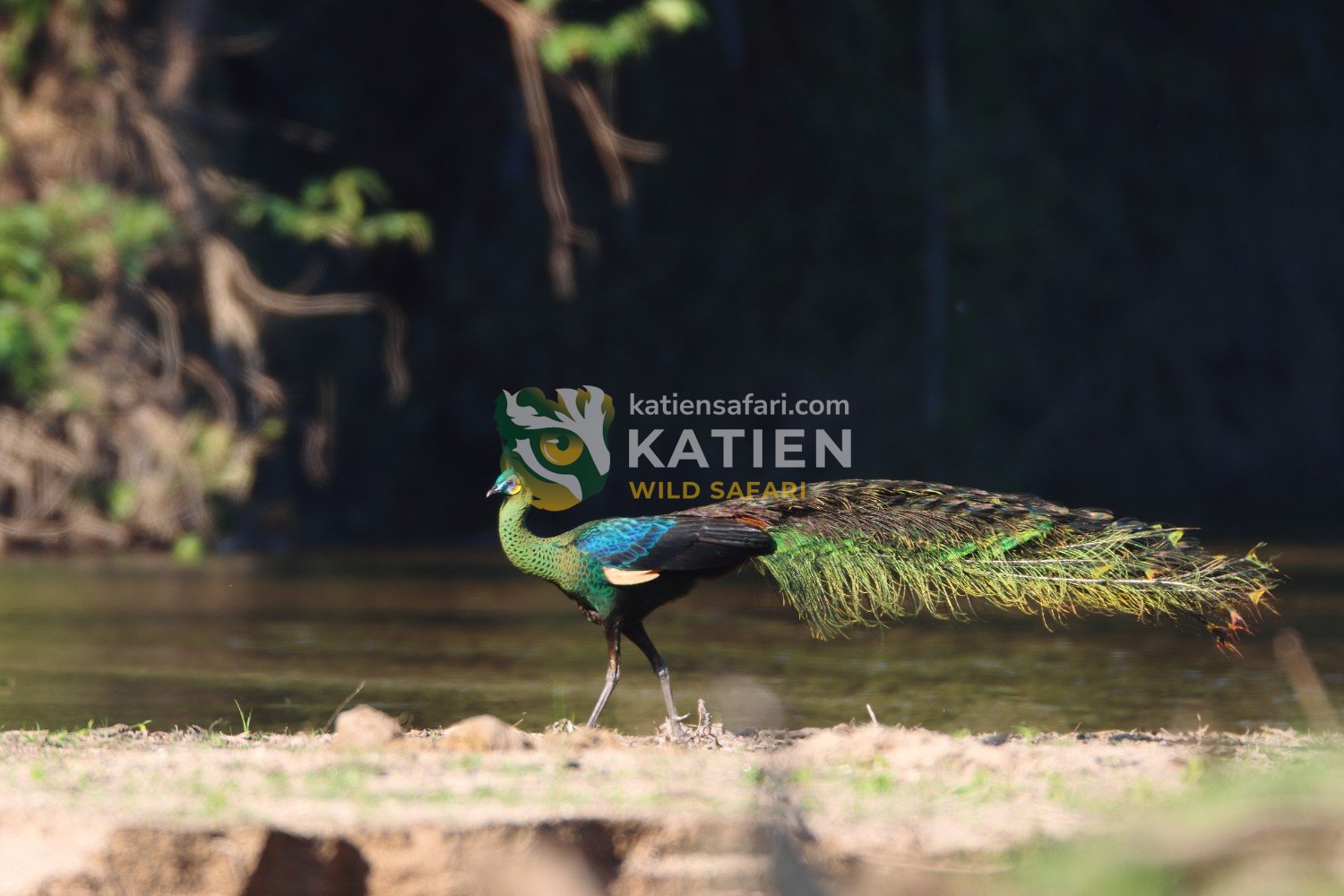
They feed on seeds and insects while avoiding lurking predators.
Predators
Peacocks face many natural predators since they spend much of their time on the ground. Common predators include leopards, tigers, Asiatic golden cats, civets, and small jungle cats. Domestic and stray dogs are also dangerous, especially near villages and farms, where they often attack wildlife.
Peacocks sleep on high trees at night to avoid ground predators. When chased, peacocks can shed their long tail feathers, helping them escape. Their sharp eyesight allows them to spot predators early and give loud alarm calls that warn other animals. Chicks face higher risks on the ground, so mothers often lead them into dense bushes or forest areas for safety.
Interestingly, Green Peafowls are sometimes seen feeding near gaur. This behavior may help them stay safe, as the large animals can alert them to danger.
Subspecies and Key Differences
The peafowl has three main subspecies, each recognized by scientists around the world. They differ in color, body shape, and where they live.
Green Peafowl (Pavo muticus)
The Green Peafowl is native to Southeast Asia and has three subspecies with slightly different colors and ranges.
- Java Peafowl (P. m. muticus) lives only on Java Island. It is the most colorful type, with a golden-green neck and bright blue wings. Because it lives alone on an island, its genetic diversity is lower.
- Indochinese Peafowl (P. m. imperator) is the most common, found in Vietnam, Cambodia, Laos, Thailand, and Myanmar. It has a green-blue body and is the focus of most conservation work.
- Burmese Peafowl (P. m. spicifer) lives mainly in Myanmar and western Thailand. It has darker blue-green feathers and a violet crest, giving it a strong but elegant look.
Indian Peafowl (Pavo cristatus)
The Indian Peafowl, or Blue Peafowl, is the national bird of India. The peacock shines with bright blue and green feathers and spreads its long train decorated with eyespots to attract females. Peahens are brown and smaller, which helps them hide while nesting. In Hindu culture, the eyes on the tail symbolize the eyes of the gods, showing how deeply peafowl in culture and symbolism connect with spirituality.
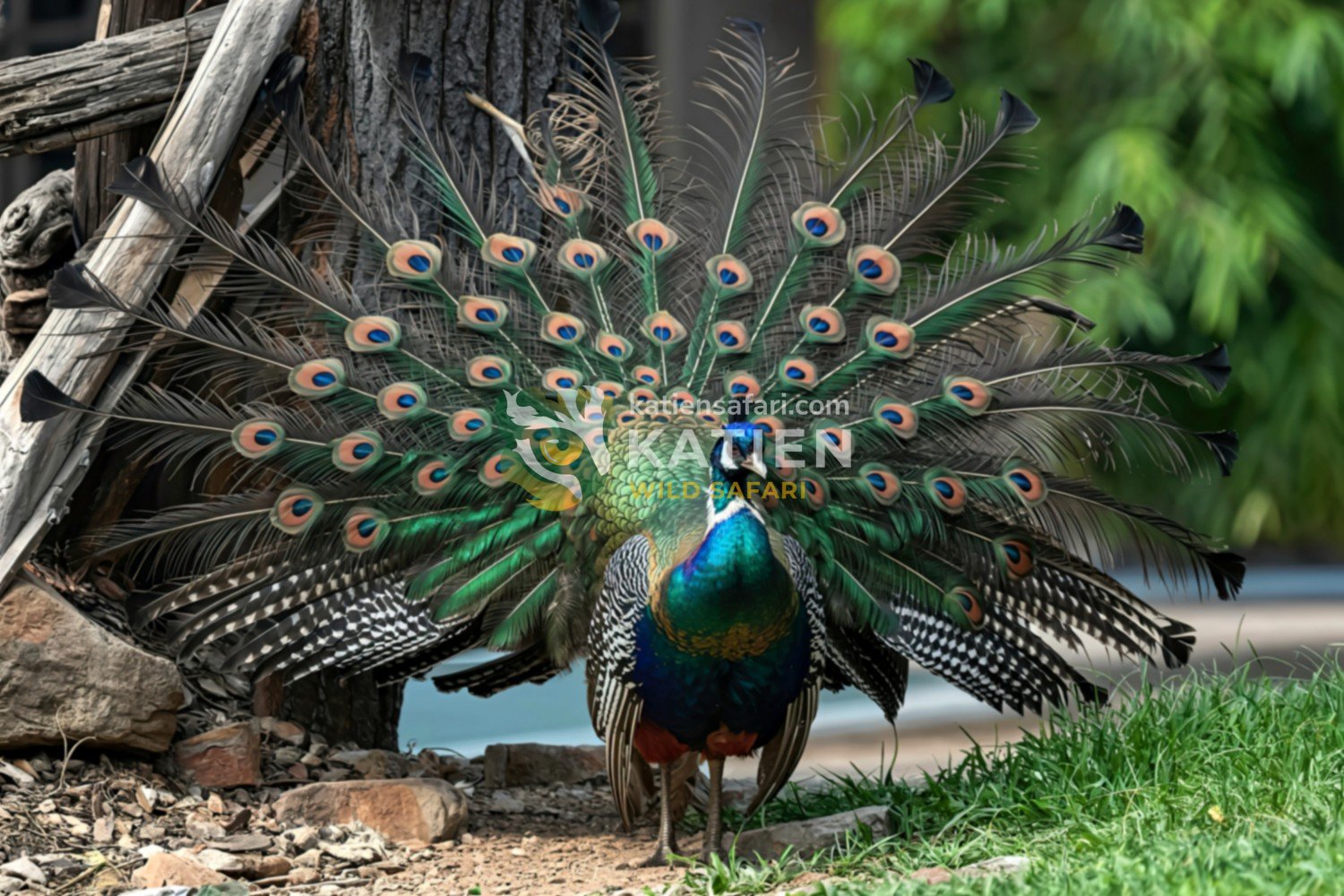
Native to India, this species is famous for its brilliant blue neck.
Congo Peafowl (Afropavo congensis)
The Congo Peafowl is the only peafowl from Africa. It lives in the rainforests of the Congo Basin. Unlike Asian peacock, it does not have a long train. Peacocks display their short real tail feathers instead. Their colors are dark blue and green, while peahens are brown or gray. It is a rare and shy species, showing the diversity of the peafowl family.
Habitat and Distribution
Global Distribution
Peafowls are found in South Asia, Southeast Asia, and Central Africa, with each species living in a different region. The Indian Peafowl (Pavo cristatus) is native to South Asia, mainly in India, Sri Lanka, and Pakistan, where it remains the most common and widespread species.
The Green Peafowl (Pavo muticus), native to mainland Southeast Asia, has lost most of its range and now survives in small populations across Myanmar, Thailand, Cambodia, Vietnam, southern China (Yunnan), and Java Island in Indonesia.
The Congo Peafowl (Afropavo congensis) is found only in the Congo Basin of Central Africa, living deep within tropical rainforests. These areas represent the last natural strongholds of wild peafowls in the world today.
Distribution in Vietnam
In Vietnam, peacocks once lived across most of the country, except for the wet rice plains. In the early 20th century, they were found in Lai Chau, Son La, Hoa Binh, Nghe An, Ha Tinh, and Quang Binh. However, the population has sharply declined. Now, only small groups remain in the Central Highlands and Southeast region.
Two main areas still support peafowl populations in Vietnam. In Dak Lak Province, they are found in Ea Sup, Buon Don, Cu Jut, and Ea Kar districts near Yok Don National Park and along the Serepok, Dak Rue, and Ea H’Leo rivers. Cat Tien National Park in Dong Nai Province hosts the most important southern population in the country.
Over the last 30 years, peacocks have disappeared from most of northern and central Vietnam, surviving only in scattered forest reserves. In Yok Don National Park, the population has dropped sharply, while in Cat Tien, the number of calling males was estimated to be higher in 2013 than 15 years earlier.
Habitat in Cat Tien National Park
Cat Tien National Park, located between the Da Lat Plateau and the Mekong Delta, is one of the last strongholds of Green Peafowls in Vietnam. The habitat here includes evergreen and semi-deciduous secondary forests, bamboo forests, and seasonally flooded grasslands. Semi-evergreen lowland forests dominate the landscape, with trees shedding their leaves in the dry season.
Peacocks are often seen in open grasslands and wetland areas where water is available year-round. They prefer areas close to rivers, ponds, and swamps, where food is abundant and cover is easy to find. Around Crocodile Lake (Bau Sau) in central Cat Tien, surveys in 2013 estimated a high density of 4 - 5 calling peacocks per square kilometer, showing the park’s key role in the species’ recovery.
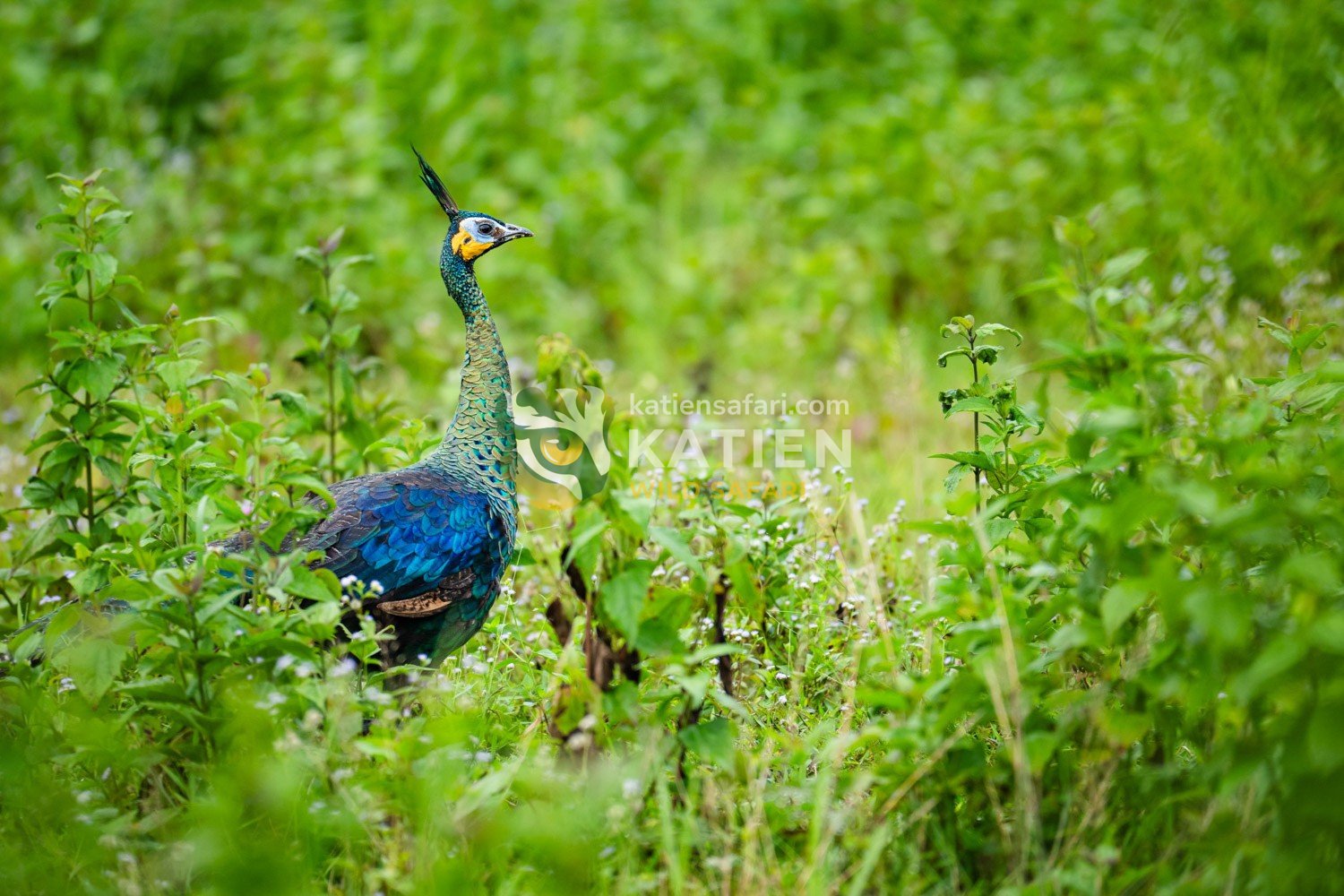
Cat Tien’s grasslands and rivers provide ideal shelter for peacocks.
Behavior, Movement, and Daily Activities
The peacock is a diurnal bird, meaning it is active during the day. It usually forages and walks around in the early morning and late afternoon when the temperature is cooler. Studies in Myanmar show that males call most often between 6:00 – 8:00 AM and 4:30 – 6:30 PM during the breeding season. At night, they sleep high in trees to stay safe from predators.
Peacocks spend most of their time on the ground, feeding, displaying, and resting. They walk slowly and peck at food as they move – this calm walking behavior is typical of the species. Although their bodies are large, they can fly short distances using strong flapping flight rather than gliding. When they fly, the soft reddish or buff color of their wing feathers becomes visible under sunlight, creating a striking look.
In the wild, Java Green Peafowls often live in small groups of 2 to 4 birds, usually led by an adult peahen. Peacocks use loud, long calls to communicate and attract mates. These calls become more frequent during the breeding season and help researchers estimate population numbers.
When their feathers get wet, peacocks spend 30 minutes to 3 hours sunbathing to dry off. While sunning, they also preen – using their beaks to clean and arrange their feathers.
Peacocks perform courtship displays in open or lightly shaded areas. They fan out and vibrate their long tail feathers to impress females, a behavior known as lekking. Displays usually happen in the morning or late afternoon when sunlight enhances their shimmering colors.
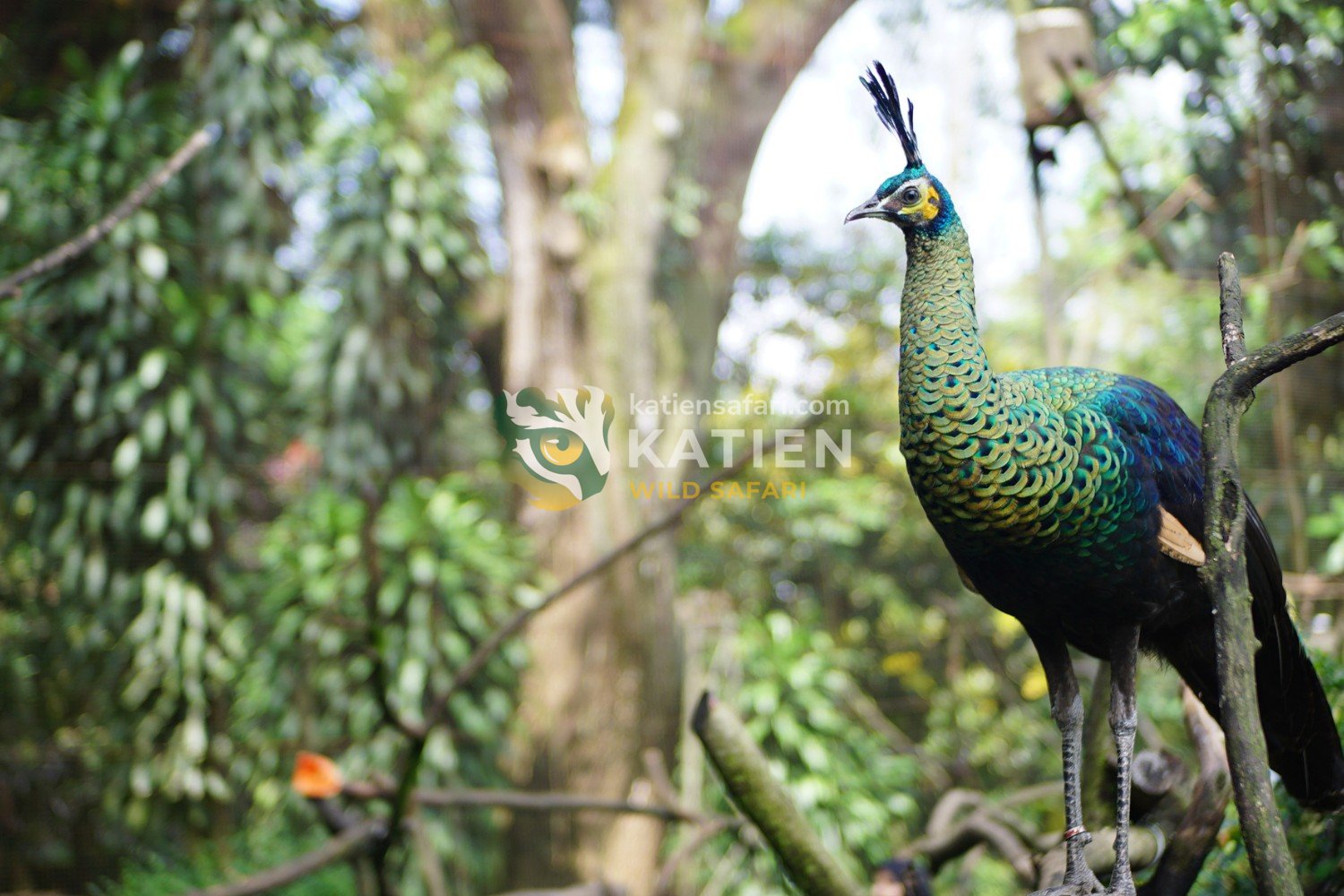
A majestic peacocks perches gracefully on a tree branch, scanning the forest below.
Peafowl Breeding, Nesting, and Reproductive Cycle
The Peafowl breeds mainly during the dry season, from December to March, sometimes lasting until May. During this time, peacocks call loudly and display their feathers more often, especially in the early morning and late afternoon. Their calls echo across open fields and forest edges as part of their effort to attract females.
Peacocks perform elaborate courtship displays, spreading their long, colorful tail feathers in open grasslands or lightly wooded areas where sunlight can make their feathers shine. They also shake and vibrate the feathers to create a glittering effect. Green Peafowls live in a polygynous system, meaning one peacock mates with several peahens, often around 1 male for every 4 females. Peacocks are usually solitary and only join peahen groups during the breeding season.
Nesting and Egg Laying
Peahens build nests on the ground, choosing areas with low grass or scattered bushes to hide from predators. The nest is a simple, shallow scrape, lined with dry leaves and grass, usually close to a feeding area. After mating, the peahens lay and incubate the eggs alone. She becomes very quiet and cautious during this time to protect the nest.
Each clutch usually contains 3 to 6 eggs, though sometimes as few as two or as many as eight. The eggs are pale green or light brown in color. The incubation period lasts 26 – 30 days. Peahens stay close to the nest during this period and rarely leave except to feed or drink water.
Rain and weather can strongly affect breeding success. Heavy rainfall can flood nests or reduce hatching rates.
Peachicks and Parental Care
After hatching, young chicks can walk and feed themselves within a day, but they are still very vulnerable. It takes about two weeks before they can fly short distances and sleep safely on low tree branches. They usually huddle beside their mother, who covers them with her wings at night for warmth and safety.
By four weeks, chicks start to grow small crests on their heads, and by two months, they look almost like the female but are only about half her size. The mother alone takes care of them until they become independent. On average, only two out of six chicks survive to join adult groups.
Breeding Behavior and Feather Development
Peacocks begin to grow their long train feathers in their second year, but these early feathers lack the bright eyespots (ocelli) seen in adults. Their full, colorful tail develops around five to six years old and is shed once a year after the breeding season.
Compared to the Indian Peafowl, Green Peafowls are less social during breeding. Peacocks do not gather in large leks. Instead, they defend territories and display individually. In captivity, however, some pairs can form monogamous bonds if kept together without competition.
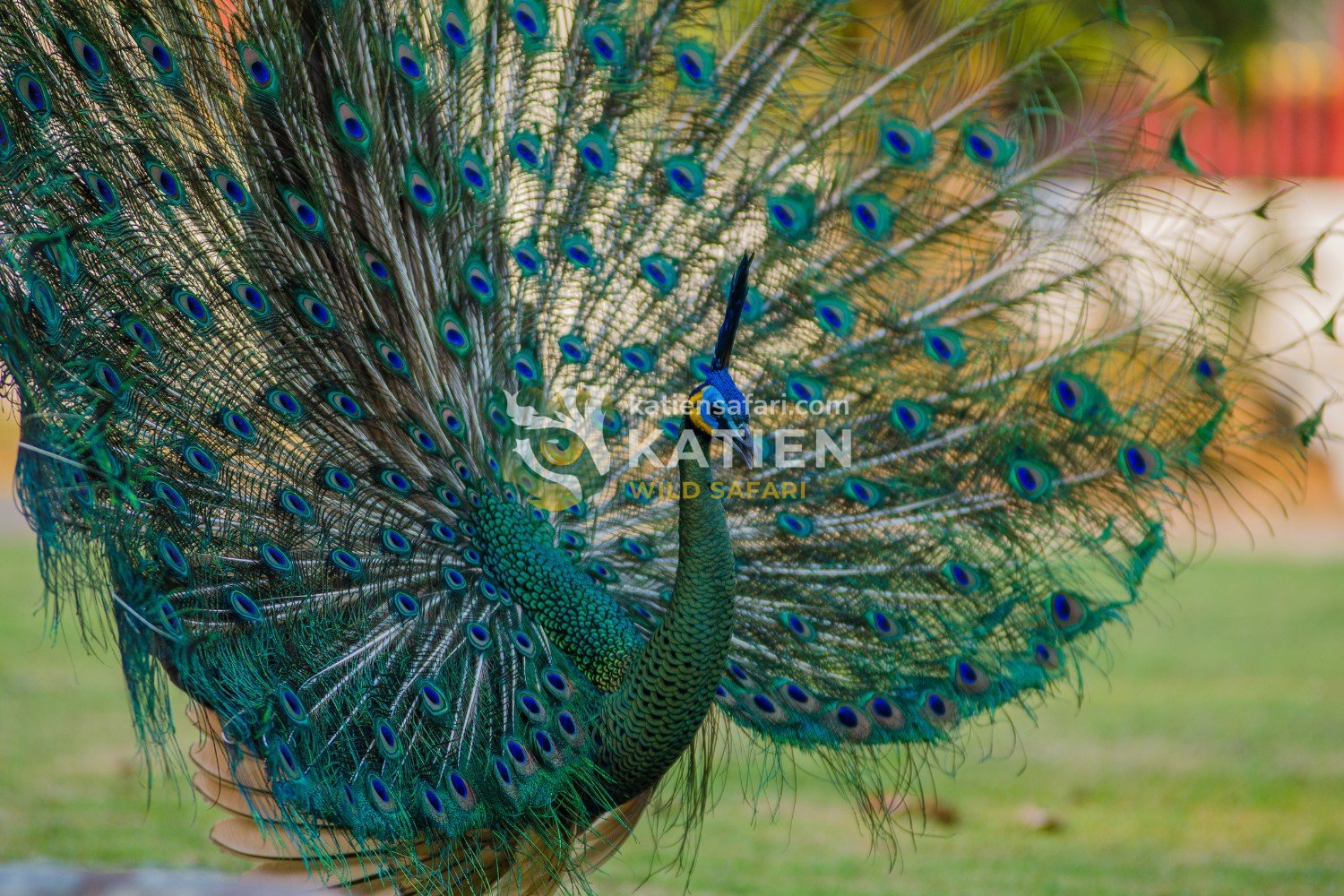
The Peacock fans out his dazzling tail feathers to attract a mate.
Threats and Conversation
The Peafowl is listed as Endangered by the IUCN Red List and BirdLife International. Today, it lives in less than 16% of its old range in mainland Southeast Asia. The main green peafowl endangered reasons are hunting, habitat loss, and human disturbance, which continue to threaten its survival in Vietnam, Cambodia, Thailand, and Indonesia.
Main Threats to Peafowl Populations
The main threats to peafowl populations come from both direct hunting and gradual habitat decline. Poaching for meat, eggs, and especially the illegal trade of peafowl feathers has caused dramatic reductions in wild numbers. In some areas, feathers are sold as ornaments or used in traditional ceremonies, increasing hunting pressure.
Another major danger for peacocks is habitat loss. The main peafowl habitat loss causes are forest clearing for farms, road building, and logging. These destroy feeding areas and make it easier for hunters to reach the birds.
Conflicts between people and peacocks are also growing. Villages and livestock areas near forests bring free-roaming dogs that often attack adult birds or chicks. Heavy grazing disturbs nesting spots. Another problem is hybridization with the Indian Peafowl (Pavo cristatus), which causes genetic mixing and threatens the purity of wild Green Peafowl populations.
Peafowl Conservation Efforts
Many peacock conservation efforts are being carried out across Southeast Asia to save the remaining populations. These projects to protect Green Peafowl focus on stopping poaching, restoring forests, and involving local communities. Rangers now patrol both day and night, use camera traps, and set up hotlines for people to report illegal hunting.
Reforestation programs aim to bring back dry forests with permanent water sources - the best homes for Green Peafowls. Scientists also track peacock calls and map habitats to find key conservation zones. Meanwhile, education and eco-tourism help raise awareness and create new jobs for locals, reducing hunting and protecting these beautiful birds for the future.
Projects to Protect Green Peafowl
Vietnam
Conservation projects in Cat Tien and Yok Don National Parks are among the most important projects to protect Green Peafowl. Authorities are expanding protection zones, closing illegal logging roads, and restoring grassland ecosystems. Anti-poaching patrols and bans on illegal fishing along rivers have been strengthened. New survey programs are being developed in Gia Lai and Kon Tum to locate remaining wild groups.
Indonesia (Java)
In Baluran and Alas Purwo National Parks, efforts focus on removing invasive Acacia nilotica, restoring native grasslands, and reintroducing rescued peafowls. These parks showcase successful recovery through strong law enforcement and community-led eco-tourism.
Thailand
In Huai Kha Khaeng Wildlife Sanctuary, peacock populations are rebounding due to effective management. Key actions include dog control, forest corridor restoration through light-use plantations, and cross-border protection with Myanmar’s Salawin Basin.
Cambodia
The Srepok Wildlife Sanctuary holds one of the largest known populations, with over 1,100 calling peacocks. Ongoing projects there improve waterholes, increase patrols, and promote wildlife-friendly farming. Similar initiatives in Mondulkiri and Ratanakiri aim to establish new reserves in suitable habitats.
China (Yunnan)
In Yunnan, fewer than 500 wild peacocks remain. The government classifies the species as Class I Protected, banning hybrid breeding and Indian Peafowl farming near wild habitats. Genetic testing helps maintain pure breeding lines for reintroduction.
Tips for Observing Wild Peafowl Safely and Responsibly
Observing wild peacocks can be one of the most beautiful wildlife experiences in Southeast Asia. However, responsible travelers should follow a few key practices to reduce disturbance and support conservation. Here are some tips for responsible human interaction with peacocks:
- Avoid approaching too closely, use binoculars to enjoy their beauty without stress or disturbance.
- Visit recognized peafowl tourism destinations such as Cat Tien National Park (Vietnam), Baluran National Park (Indonesia), or Huai Kha Khaeng Sanctuary (Thailand) where observation is regulated and safe for both birds and visitors.
- Always keep a respectful distance from nesting sites. Peacocks build simple ground nests, so stepping into dense grass or bushes can harm chicks or scare the parents away.
- Reduce noise, avoid playback sounds, and never chase or feed the birds. Quiet observation supports ethical peafowl viewing and helps preserve their natural behavior.
- Report any illegal hunting or trade of peafowl feathers to authorities. Staying alert during tours helps protect these endangered birds and ensures that future travelers can still admire them in the wild.
In the near future, at Cat Tien National Park, small guided groups can join with Katien Safari to quietly observe wild Green Peafowls in their natural habitat. This responsible eco-tour promotes wildlife protection, limits disturbance, and offers visitors a rare chance to see these magnificent birds displaying their colorful tails.
5 Interesting Facts about Peafowl
Here are some fun and surprising things you might not know about peacocks — the true icons of beauty and grace in the bird world:
- The famous peacock's tail isn’t really a tail at all. The dazzling feathers that form the peacock’s fan are called trains or upper tail coverts. These can reach up to 1.6 meters long, making the Green Peafowl one of the longest wild birds in existence.
- Peacocks also enjoy dust baths. Rolling in fine dry soil helps them remove parasites and keep their plumage shiny. You can often see this funny habit in the open savannas of Indonesia.
- Those long feathers may look risky, but they’re actually smart protection. If a predator grabs the train, the feathers detach easily, letting the peacock escape by flying away — fashion and function in one move!
- Peacocks are serious about personal space. Two adult Peacocks never share the same roosting tree, keeping their royal distance even at bedtime.
- A peafowl in culture and symbolism, the Indian Peafowl is India’s national bird. In Hindu belief, its eye-like spots symbolize the eyes of the gods, representing beauty, wisdom, and watchfulness.
Reference
- Anwar, M., Mehmood, A., Rais, M., & Qureshi, B. U. D. (2015). Population Density and Habitat Preference of Indian Peafowl (Pavo cristatus) in Deva Vatala National Park, Azad Jammu & Kashmir, Pakistan. PAK J ZOOL.
- Brickle, N. W. (2002). Habitat use, predicted distribution and conservation of green peafowl (Pavo muticus) in Dak Lak Province, Vietnam. Biological Conservation, 105(2), 189–197. https://doi.org/10.1016/S0006-3207(01)00182-3
- Brickle, N. W., Cu, N., Quynh, H. Q., Cuong, N. T. T., & San, H. V. (1998). The Status and Distribution of Green Peafowl Pavo muticus in Dak Lak Province, Vietnam. BirdLife International - Vietnam Programme.
- Dharmawan, A., Suhadi, S., Ashoffi, A. M., & Retnaningtyas, R. (2020). Feed preference based on faeces composition analysis green peafowl (Pavo muticus Linnaeus, 1766) in Bekol Savanna Baluran National Park (Conference Paper).
- Dowell, S., Sukumal, N., & Savini, T. (2019). Modelling occurrence probability of the Endangered green peafowl Pavo muticus in mainland South-east Asia: applications for landscape conservation and management.
- Grainger, M. J., Sukumal, N., & Savini, T. (2019). Lower levels of human disturbance correspond with longer-term persistence of Endangered Green Peafowl Pavo muticus populations.
- Hernowo, J. B., Alikodra, H. S., Mardiastuti, A., & Kusmana, C. (2011). Population analysis of the javan green peafowl (Pavo muticus muticus Linnaeus 1758) in Baluran and Alas Purwo National Parks, East Java. Biodiversitas, 12, 99–106.
- Hernowo, J. B., Kusmana, C., Alikodra, H. S., & Mardiastuti, A. (2018). Analysis of The Javan Green Peafowl (Pavo muticus muticus Linnaeus 1758) Habitat in Baluran and Alas Purwo National Park, East Java. HAYATI Journal of Biosciences, 25(3), 101–114. https://doi.org/10.4308/hjb.25.3.101
- Ling, S., & Polet, G. (2004). Protecting mammal diversity: Opportunities and constraints for pragmatic conservation management in Cat Tien National Park, Vietnam. Oryx, 38(2), 186–196. https://doi.org/10.1017/S003060530400033X
- McGowan, P. J. K., Duckworth, J. W., Wen Xianji, Van Balen, B., Yang Xiaojun, Mohd. Khan Momin Khan, Yatim, S. H., Thanga, L., Setiawan, I., & Kaul, R. (1999). A review of the status of Green Peafowl Pavo muticus and recommendations for future action. Bird Conservation International, 9(3), 331–348.
- Sukumal, N., McGowan, P. J. K., & Savini, T. (2014). Change in status of green peafowl Pavo muticus (Family Phasianidae) in Southcentral Vietnam: A comparison over 15 years. Global Ecology and Conservation, 3(C). https://doi.org/10.1016/j.gecco.2014.10.007
- Tuong, N. X., & La, T. V. (2012). Species composition of birds from the Cat Tien national park, Dong Nai province. TAP CHI SINH HOC, 28(1). https://doi.org/10.15625/0866-7160/v28n1.830