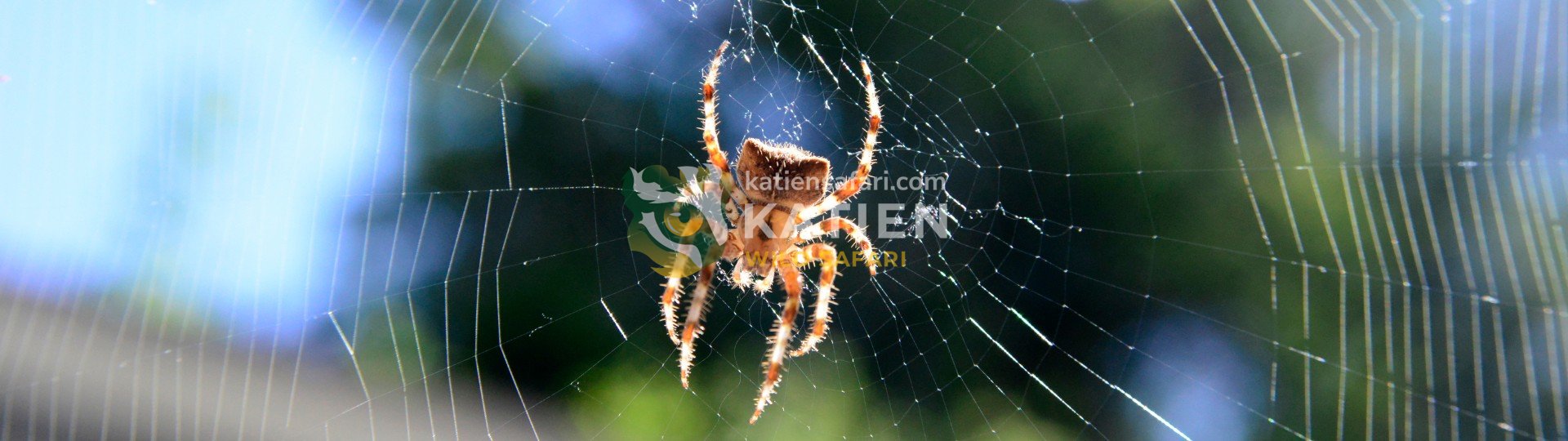
Few creatures craft with the elegance and precision of spiders. Often overlooked or feared, these eight-legged architects quietly design some of the most sophisticated structures in the natural world. Found on every continent, spiders (araneae) have mastered an incredible range of habitats, from sun-baked deserts and lush rainforests to misty caves and even the corners of our own homes. Classified under Arachnida and belonging to the order Araneae, they have diversified into more than 51,000 known species, each uniquely adapted to its own ecological niche.
What makes spiders truly fascinating is how much remains undiscovered. Many species measure only fractions of a millimeter and were first identified as recently as the 1980s, hinting at a hidden world still waiting to be explored. Most spiders live just one to two years, yet evolving remarkable traits, venom tailored to subdue prey with precision, and highly specialized hunting strategies rivaling the skills of top predators. To understand spiders is to glimpse nature’s ingenuity at its finest, and the deeper we look, the more extraordinary these small creatures become.
| Common name | Spider |
|---|
| Scientific name | Araneae |
|---|
| Taxonomy
|
Class: Arachnida
Order: Araneae
Family: Araneidae, Salticidae, Lycosidae,...
Genus: Argiope, Phidippus, Lycosa,...
Species: Argiope bruennichi, Phidippus audax, Lycosa tarantula,...
|
| Weight / Size | Body length from 0.5 to about 90 mm. |
|---|
| Lifespan | 1-3 years. |
|---|
| Population | Unknown, more than 51,000 species. |
|---|
| Habitat | Forests, grasslands, deserts, wetlands, caves, and even urban environments. |
|---|
| Range | All continent. |
|---|
| Diet | Carnivorous. |
|---|
| Conservation status | Not Assessed by IUCN. |
|---|
Physical Characteristics of Spider
Size, Weight and Lifespan
Overall Size Range
Spiders (Araneae) vary in sizes across the world, with most species measuring from 0.5 mm to about 90 mm in body length. The largest spiders are the Hairy mygalomorphs that thrive in warm climates, especially in the Americas. Among them, the Goliath bird-eater (Theraphosa blondi) is the largest spider in the world. On the other hand, the smallest spiders belong to several tropical families, many of which were only discovered in the 1980s, showing how little we still know about these tiny creatures.
Body structure and Proportion
A spider’s body is divided into two main parts: the cephalothorax and the abdomen. The cephalothorax holds the brain, stomach, and all eight legs, and is protected on top by a hard plate called the carapace. The underside features the sternum and a small front part known as the labium. The abdomen contains the heart, digestive system, reproductive organs, and silk glands, which produce the silk used for webs, egg sacs, and movement.
Lifespan and Growth
Like other arthropods, spiders grow by molting, shedding their outer skin several times during their lives. Their lifespan differs among major suborders. Mesothelae can live for several years while Mygalomorphs, such as tarantulas, grow slowly and may live from 10 to 25 years. In contrast, most araneomorphs, the group that includes the majority of common house and garden spiders, usually live for one to three years. This diversity in lifespan reflects the wide range of habitats and survival strategies found across spider groups.
How many eyes does a spider have?
Most spiders have eight eyes, though some species may have fewer. Their eyes are arranged in two groups: the main or direct eyes, and the secondary eyes. The main eyes have light-sensitive parts called rhabdoms facing the lens, while in the secondary eyes, the rhabdoms face inward. Each spider family has a unique eye pattern and structure, and scientists often use eye arrangement as a key feature to identify species in the field or in research labs.
Distribution and Habitat
Global Range
Spiders live on every continent and have adapted to an incredible range of environments. They thrive in hot deserts, cool mountain forests, grasslands, wetlands and even inside homes. Some species survive at altitudes of up to 5,000 meters (16,400 feet) in the Himalayas, where temperatures drop low and oxygen is thin. Most spiders live in tropical areas because of the warm temperatures, high humidity, and dense vegetation provide lots of food and shelter. This explains why tropical forests around the world hold thousands of species.
One of the most remarkable spider species is the water spider (Argyroneta aquatica), which spends most of its life underwater. It lives in slow-moving freshwater and builds a “diving bell” of silk filled with air, allowing it to breathe beneath the surface. A few other spider species can be seen running across ponds or even living along the edges of saltwater coasts, showing how flexible and resilient spiders can be.
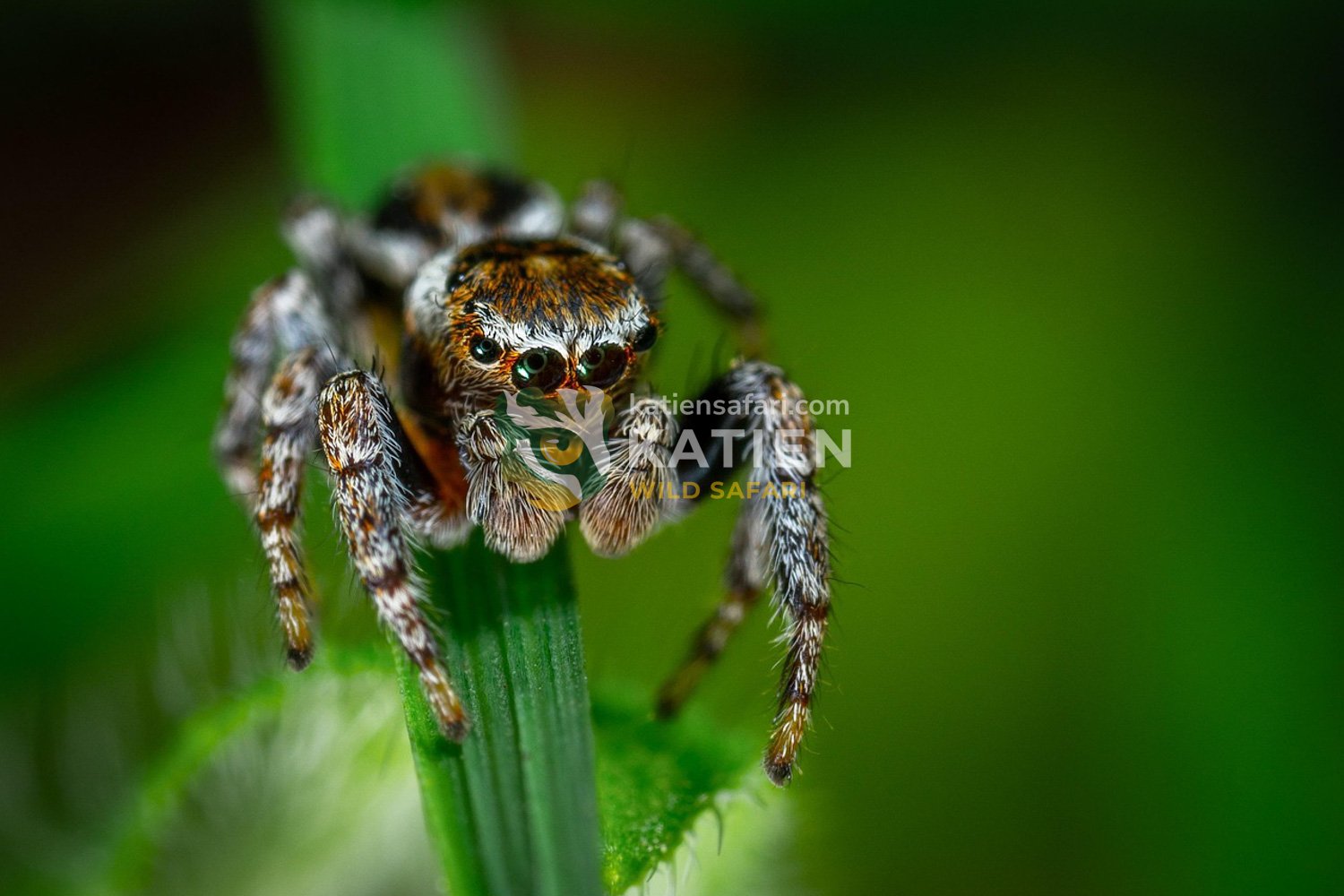
A spider perches on a leaf.
Spider in Vietnam
Vietnam’s tropical climate and rich mosaic of habitats make it a hotspot for spider diversity. From lowland evergreen forests and misty mountains to mangroves and limestone caves, the country offers ideal conditions for many species. Current records list at least 583 spider species in Vietnam, but researchers believe this number is only a fraction of the true diversity. Many species remain unstudied, especially those hidden in caves, forest canopies, and remote mountain ranges.
Spider in Cat Tien National Park
Cat Tien National Park, famous for its gibbons, elephants, and birds, also protects a fascinating community of spiders. Although less visible than larger animals, it also harbours a diverse array of spider species, many of which remain understudied. The species Althepus dongnaiensis, found only in Dong Naii province, was first recorded in this park. Another species, Psiloderces cattienensis, was also discovered here and is believed to be restricted to this region. These findings show that Cat Tien is not just home to common species, but also to specialised, possibly range-restricted spiders.
Subspecies of Spider
More than 51,000 spider species have been scientifically described so far, grouped into around 132 families found across nearly every habitat on Earth. This number continues to grow as researchers discover new species each year, especially in tropical forests, caves, and remote mountain regions where scientific exploration is still limited. Many species remain unnamed or unstudied, and experts believe the true global number may be much higher.
Behavior and Lifestyle
Spider behavior patterns
Spiders display a wide range of behaviors that help them survive in diverse environments. Many species build webs to catch prey, carefully weaving silk into different shapes such as orbs, sheets, funnels, or tangled webs depending on their hunting style. Others do not rely on webs at all and instead hunt actively, using speed, stealth, or ambush tactics to capture insects.
Communication between spiders happens mainly through vibrations and body signals, which they use to detect danger, locate prey, or send courtship messages during mating.
Most spiders are solitary creatures and prefer to live and hunt alone, only coming together briefly for reproduction.
Are spiders nocturnal?
Yes. Many spider species are nocturnal, becoming most active at dusk and during the night, when temperatures are cooler and more insects are available.
Spider diet analysis
Nearly all spiders are carnivores and feed mainly on insects and other small arthropods, helping to keep insect populations in balance. Their diet usually includes flies, mosquitoes, beetles, ants, and even other spiders when food is limited. Larger species, such as tarantulas, are capable of taking down bigger prey and have been known to eat small birds, lizards, and frogs. This wide range of feeding habits shows how spiders play an important role in ecosystems, acting as natural pest controllers in forests, grasslands, farms, and even urban environments.
Feeding behavior
Spiders use different feeding strategies depending on their species and habitat. Many hunting spiders stalk their prey with patience and precision, waiting for the right moment to strike with speed. Web-building spiders rely on their silk to catch food, spinning carefully designed webs that act as traps for flying or crawling insects. Spider silk is known as the toughest natural fiber in the world, strong enough to withstand force while remaining incredibly light. Once prey is captured, spiders inject digestive enzymes to liquefy the tissues, allowing them to suck up the nutrient-rich fluid. This unique feeding method helps spiders consume prey larger than their mouthparts would normally allow.
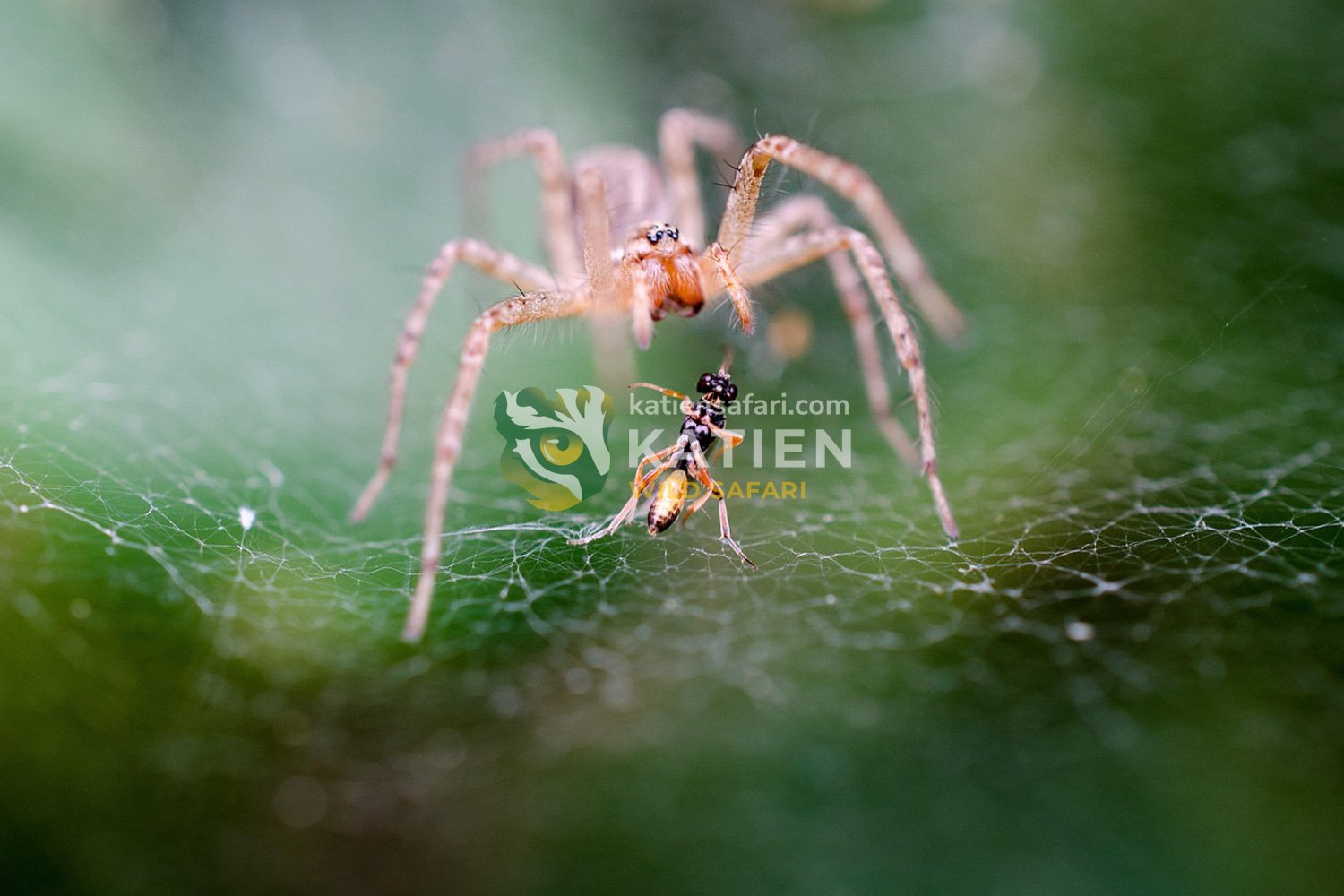
A spider captures an insect trapped in its web.
Predators
Despite their hunting skills, spiders are prey for many animals in the natural world. Birds are among their most common predators, often spotting spiders on webs or foliage. Reptiles and amphibians, such as lizards, frogs, and toads, also feed on spiders, especially in forests and gardens. Many insects and other arthropods, including wasps, ants, and larger spiders, can attack and eat them as well. Small mammals like shrews and rodents sometimes include spiders in their diet. Humans may not eat spiders regularly, but they often kill them out of fear or misunderstanding. With so many predators, spiders rely on camouflage, speed, venom, and silk for defense and survival.
Top Deadliest Spiders
All spiders are predators and play a key role in controlling insect populations, but only a small number have venom considered dangerous to humans. Below are some of the most notable deadly spider specieS and the key symptoms their bite might cause:
- Black Widow Spider (Latrodectus mactans): Severe pain, muscle cramps, and sweating.
- Brown Widow Spider (Latrodectus geometricus): Muscle stiffness, pain, and left a red mark.
- Red Widow Spider (Latrodectus bishopi): Pain, nausea, cramping.
- Redback Spider (Latrodectus hasselti): Causes systemic symptoms if untreated, nausea.
- Brown Recluse Spider (Loxosceles reclusa): Destroys skin tissue and may lead to ulceration if not treated promptly.
- Brazilian Wandering Spiders (Phoneutria fera and P. nigriventer): Extremely venomous; can cause severe pain, rapid heart rate, muscle paralysis, breathing difficulty, and can be life-threatening.
- Yellow Sac Spider (Cheiracanthium inclusum): Cause pain, skin irritation, and mild necrosis in some cases.
- Wolf Spiders (Family Lycosidae): Cause fear, painful bite, effects are usually mild.
- Australian Funnel-web Spiders (Family Atracidae): Can be life-threatening.
Note: Severe bites from these species are rare, and modern medical care significantly lowers the risk of serious outcomes.
Reproduction and Life Cycle
When mating season begins, the male prepares by building a small “sperm web.” He places a drop of sperm on the web and then draws it into his pedipalps, a process called sperm induction. He may do this before searching for a mate or after finding one, and must repeat the process if he mates more than once.
Male spiders show a remarkable level of mate selection. In laboratory studies, males consistently chose to approach the webs of virgin females rather than those of previously mated females, suggesting that they can distinguish between the silk produced by each. This preference is believed to be guided by contact pheromones embedded in the female’s silk, allowing males to detect reproductive status before risking courtship.
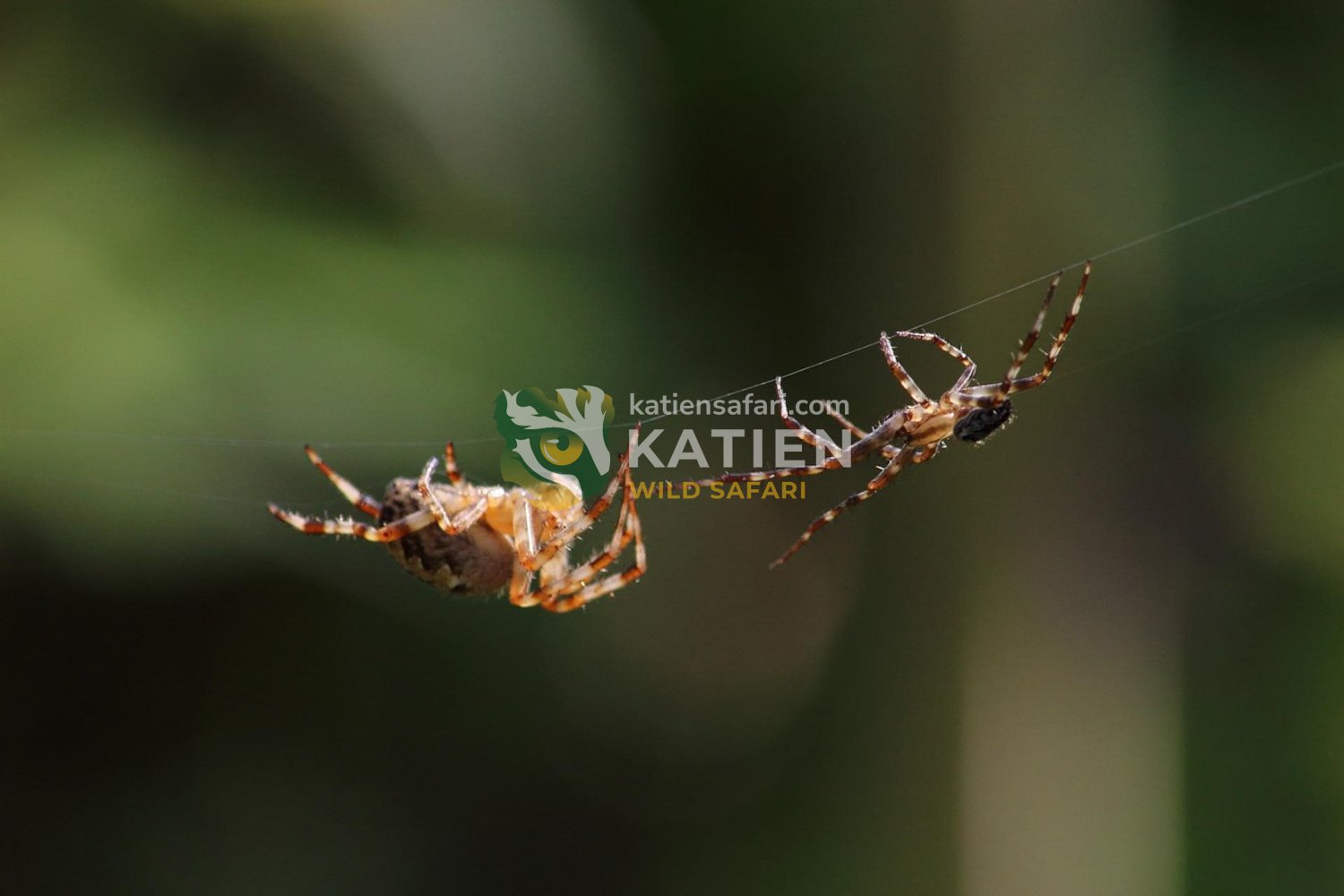
Two spiders meet on a silk line.
Male spiders usually travel more than females and often follow silk trails left behind to locate them. Once he reaches the female, the male transfers sperm using his pedipalps, inserting them into her reproductive opening. After mating, the sperm is stored inside the female until eggs are ready to be fertilized.
Mating can last only a few seconds in some species but may take hours in others. Males usually die shortly after mating, and in a few species, the female may eat the male — a behavior known as sexual cannibalism, though it is not common.
To prevent rival males from approaching their mate, some male spiders, such as Linyphia litigiosa and Latrodectus mactans will deliberately destroy the female’s web after mating. By doing so, they remove the silk-borne pheromones that attract other males, reducing the chances of competition and increasing their own reproductive success.
Female spiders lay their eggs in silk egg sacs. Some species produce only one sac with hundreds of eggs, while others produce several smaller sacs. In many species, the female dies after producing her final egg sac, but some stay alive to guard their young for a short time.
Certain spiders provide remarkable care for their offspring. For example, wolf spiderlings ride on their mother’s back for about ten days before leaving to live on their own. In a few species, the female even pre-digests prey and shares the liquid food with her young, ensuring they have a strong start in life.
Conservation Status and Threats
Conservation
Most spider species are not considered endangered, but many remain understudied because of their small size and secretive lifestyles.
In Vietnam, spiders are not currently included on the national endangered species list, though scientists highlight the need for continued research and monitoring. Conservation efforts often focus on protecting natural habitats, restoring forests, and reducing pesticide use to support healthy arthropod populations.
National parks such as Cat Tien, Phong Nha - Ke Bang, and Cuc Phuong play an important role by safeguarding forest ecosystems and supporting research on native spider species. Community science projects and responsible eco-tourism also help raise awareness and encourage people to value spiders as part of a balanced ecosystem.
Threats
Spiders face several threats in the wild. Deforestation, urban growth, and farming expansion are shrinking their natural habitats, leaving many species without shelter or enough food. Pesticides and chemical pollution also harm spider populations, either by killing them directly or reducing the insects they rely on, and by affecting their growth and reproduction.
Climate change is also a rising threat. Changing temperatures and rainfall patterns disrupt prey sources, web-building, and seasonal behavior. As conditions shift too quickly, some species are forced to move, and some disappear from their habitats. Media exaggeration and human fear make the problem worse as many people kill spiders on sight, even though most are harmless and help control pests.
Invasive species and habitat fragmentation add more pressure. Non-native plants and insects can disturb food webs, while fragmented landscapes make it difficult for small spider populations to survive and reproduce. Together, these threats show why continued research, education, and habitat protection are essential for spider conservation.
Meeting Spider
Spiders can be found almost everywhere, from tropical forests and open fields to the quiet corners of your home. In Vietnam, they are especially common in national parks such as Cat Tien, Phong Nha - Ke Bang, and Cuc Phuong, where the warm and humid environment provides ideal conditions for web-building species.
Remember these safety tips:
- Avoid touching spiders with bare hands, especially markings, brightly colored or unfamiliar species.
- Do not destroy webs or disturb spiders in their natural habitat.
- If a spider enters your room, gently relocate it using a cup or container and never crush it.
- When exploring the forest, wear long pants, closed shoes, and carry a small flashlight for night observation.
In Vietnam, no fatal spider bites have ever been recorded, but it is still wise to admire wild spiders from a respectful distance and avoid direct contact.
How To Tell If a Spider Is Venomous?
It is important to understand that, with the exception of two small groups, nearly all spider species possess venom glands connected to their fangs (chelicerae). This venom is primarily designed to subdue prey, not to harm humans. In fact, the vast majority of spiders do not bite people, and aside from a limited number of medically significant species, their venom poses little to no threat to humans or other mammals. Although more than 51,000 species of spiders have been identified worldwide, only a very small fraction are capable of causing serious harm. Even among these, defensive bites are rare, as most spiders prefer to flee rather than confront a perceived threat.
One of the few exceptions is the infamous Sydney funnel-web spider of Australia, known for its potent venom and its unusual tendency to act defensively even without provocation. Some of the world’s most medically important venomous spiders are found in Latin America, including species of Phoneutria (often referred to as “banana spiders”), which are known for their strong neurotoxic venom. In most regions, however, encounters with dangerously venomous spiders are uncommon, and severe envenomation remains extremely rare.
Determining whether a spider may be venomous can often be guided by observing certain physical traits. such as: distinctive color patterns, markings, body shapes, or web structures. While these features vary between species and regions, learning a few key characteristics of these venomous spiders can help you recognize potentially harmful spiders and avoid unnecessary fear or accidental contact:
- Black Widow Spider (Latrodectus mactans): Red hourglass-shaped marking on the underside of the abdomen, shiny, jet-black body with a smooth, hairless appearance.
- Brown Recluse Spider (Loxosceles reclusa): Violin-shaped marking on the upper surface of its cephalothorax, six eyes arranged in pairs (unlike most spiders, which have eight).
- Hobo Spider (Eratigena agrestis): Subtle grayish chevron-like patterns along the abdomen, legs lack distinct banding.
- Brazilian Wandering Spider / “Armed Spider” (Phoneutria nigriventer): Long, strong legs and highly defensive posture, hide in banana bunches during transport.
- Funnel-web Spider (Atrax robustus): Shiny, dark brown to black spiders with finger-like spinnerets (silk-spinning organs) at the end of their abdomen.
- Tarantula (Family: Theraphosidae): Large, hairy bodies (typically brown or black) and a body length of up to 3 inches or more.
What to Do If You’re Bitten by a Spider?
Spider bites should be taken seriously. Delaying treatment can increase the risk of severe complications, and in rare cases, may even be life-threatening. While most spider bites cause only mild symptoms, bites from highly venomous species require prompt medical attention and, in some cases, the use of antivenom.
For patients who are critically ill or suspected of being bitten by a spider with strong neurotoxic or cytotoxic venom, treatment typically includes supportive care alongside antivenom administration when available and medically indicated.
First Aid and Safe Transport
The following first-aid steps are recommended:
- Apply a Firm Pressure Bandage: Use an elastic bandage to wrap the affected limb. This helps slow the spread of venom through the lymphatic system.
- Immobilize the Limb: Keep the bitten limb still using a splint or sling to reduce venom circulation.
- Seek Medical Help Immediately: Transport the patient to the nearest hospital or emergency care center as quickly and safely as possible. Do not allow the patient to walk or exert themselves.
Essential Supportive Care
Supportive care plays a vital role in stabilizing the patient before and during hospital treatment:
1. Respiratory Support: Ensure the patient is breathing properly and assist ventilation if signs of respiratory distress appear.
2. Monitoring Hemodynamic Status: Continuous monitoring of blood pressure, heart rate, and overall circulation is crucial to detect early signs of shock or systemic envenomation.
Interesting Facts about Spider
- Spiders Are Not Insects: Spiders aren’t insects, they’re arachnids. They have eight legs, no antennae, and a two-part body: the cephalothorax and the abdomen.
- Spider Silk is the toughest natural fiber: Spider silk is one of the toughest natural materials known five times stronger than steel of the same thickness, yet light and flexible. Some spiders produce up to seven different types of silk for various purposes: building webs, wrapping prey, or protecting eggs.
- Most Spiders Have Eight Eyes or less, but with poor vision: While spiders usually have eight simple eyes, their vision is often limited. Only a few families, such as jumping spiders (Salticidae), possess excellent eyesight.
- Female Spiders Are Often Bigger Than Males: In many species, females can be two to three times larger than males. This size difference, known as sexual dimorphism, helps females produce and guard more eggs and sometimes even leads to the male becoming her post-mating snack!
- Spiders Help Humans More Than You Think: Scientists estimate that spiders consume between 400 - 800 million tons of insects globally each year, making them silent allies in maintaining ecological balance.
- Male Spiders are Surprisingly Picky When it Comes to Mates: They are most attracted to adult virgin females and subadult females nearing their final molt, as these choices offer the highest chance of successful reproduction.
- Male Spiders Sabotage Webs: In some species, males will damage or cover a female’s web after mating to remove pheromone signals and prevent rival males from finding her.
Reference
- Chang, W. J., & Li, S. (2020). Fourteen new species of the spider genus Psiloderces Simon, 1892 from Southeast Asia (Araneae, Psilodercidae). ZooKeys, 902, 61.
- Elias, D. O., Andrade, M. C., & Kasumovic, M. M. (2011). Dynamic population structure and the evolution of spider mating systems. In Advances in insect physiology (Vol. 41, pp. 65-114). Academic Press.
- Haupt, J. (2005). Taxonomy of spiders. Toxin Reviews, 24(3-4), 249-256.
- Herberstein, M., Schneider, J., & Elgar, M. (2002). Costs of courtship and mating in a sexually cannibalistic orb-web spider: female mating strategies and their consequences for males. Behavioral Ecology and Sociobiology, 51(5), 440-446.
- Li, F., Liu, C., Wongprom, P., & Li, S. (2018). Sixteen new species of the spider genus Althepus Thorell, 1898 (Araneae: Ochyroceratidae) from Southeast Asia. Zootaxa, 4471(3), 401-445.
- Pham, D. S. (2009). Six new spiders from caves of northern Vietnam (Araneae: Tetrablemmidae: Ochyroceratidae: Telemidae: Symphytognathidae).
- Rahmani, F., Khojasteh, S. M. B., Bakhtavar, H. E., Rahmani, F., Nia, K. S., & Faridaalaee, G. (2014). Poisonous spiders: bites, symptoms, and treatment; an educational review. Emergency, 2(2), 54.