| Common name | Squirrels |
|---|
| Scientific name | Sciuridae |
|---|
| Taxonomy
|
Class: Mammalia
Order: Rodentia
Family: Sciuridae
|
| Weight / Size | ~13 grams in weight; 7 to 13 centimeters in length. |
|---|
| Lifespan | Varies by species. |
|---|
| Population | Unknown. |
|---|
| Habitat | Forests, wooded areas, grasslands, deserts. |
|---|
| Range | Almost every continent, except Oceania and Antartica. |
|---|
| Diet | Omnivores. |
|---|
| Conservation status | Not assessed by IUCN. |
|---|
What is a squirrel?
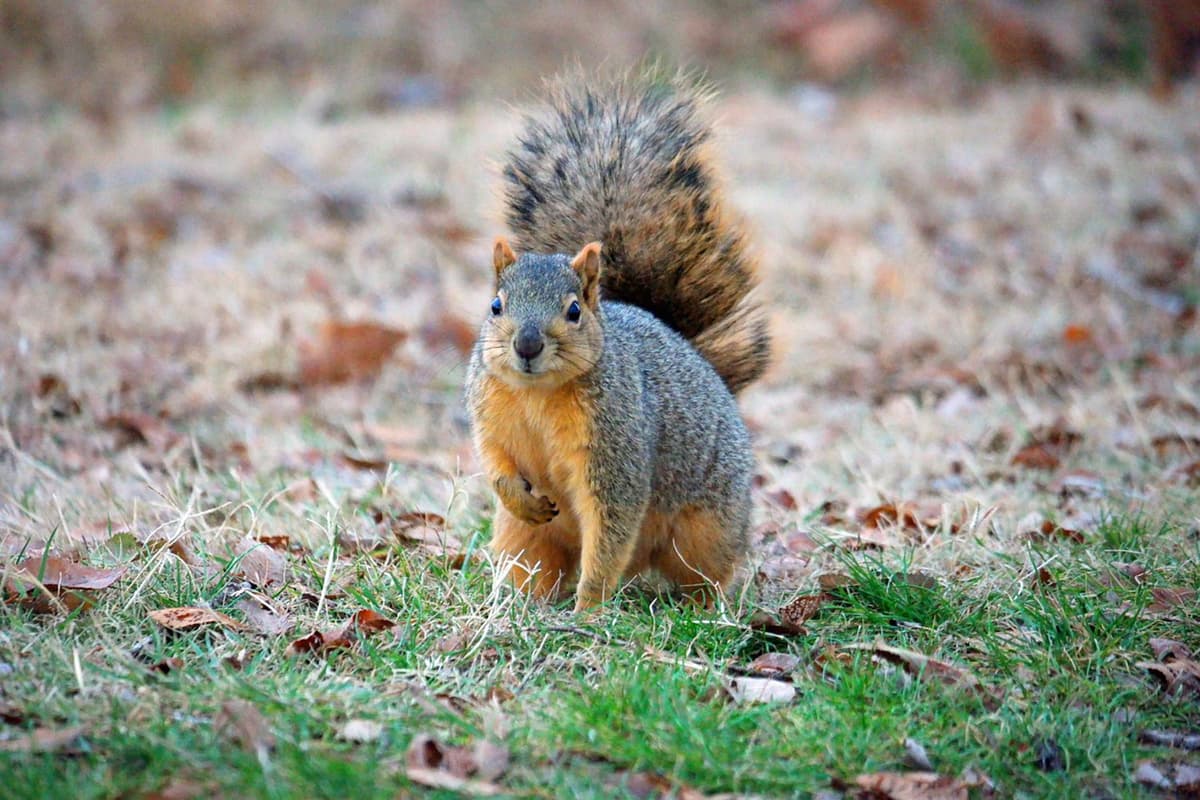
Squirrel forages on the grass floor.
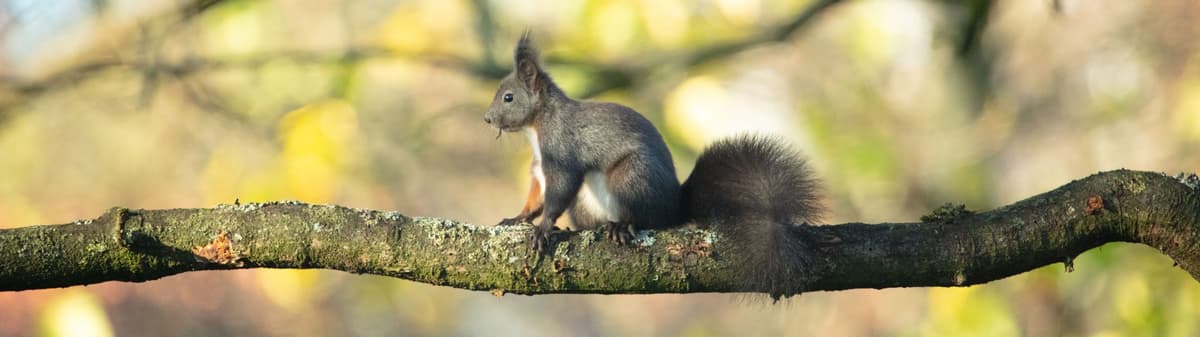
Squirrels are small to medium-sized rodents known for their quick movements and bushy tails. They live in many parts of the world, from forests and grasslands to city parks and suburban neighborhoods.
They belong to the Sciuridae family, a large group of rodents that also includes prairie dogs, chipmunks, and marmots. Although these animals look different from one another, they share similar traits, such as strong hind legs, sharp claws, and constantly growing front teeth.
There are more than 200 species of squirrels worldwide. In Australia, they were not naturally present in the wild.
According to the Integrated Taxonomic Information System (ITIS), squirrels are divided into three main types:
- Tree squirrels: spend most of their time in trees
- Ground squirrels: live in burrows underground
- Flying squirrels: glide between trees using a thin membrane stretched between their legs
General features
Squirrels have four front teeth that never stop growing, which helps them cope with constant gnawing on nuts, seeds, and wood. Their large, bushy tails are one of their most recognizable features. The tail helps them balance while climbing and jumping, keeps them warm in cold weather, and can be used to signal danger.
Their fur is usually soft and dense. Most species are brown or gray, but some have stripes or more colorful coats, especially in tropical regions. This variation allows squirrels to adapt to different environments.
Tree squirrels have slender bodies, strong limbs, and sharp, curved claws that help them grip bark and branches. Their flexible ankle joints allow them to climb down trees headfirst. Large eyes, sensitive whiskers, and rounded ears help them stay alert and aware of their surroundings.
How big are squirrels?
Squirrels vary greatly in size because of having so many species. The smallest squirrel species is the African pygmy squirrel. It measures just 2.8 to 5 inches (7 to 13 centimeters) long and weighs around 0.35 ounces (10 grams). It is small enough to fit in the palm of your hand.
At the other end of the scale is the Indian giant squirrel, the largest known squirrel species. It can grow up to 36 inches (1 meter) in length and weigh as much as 4 pounds (1.8 kilograms). It lives in the forests of India and is known for its striking colors and long, powerful tail.
Average lifespan
The average lifespan of a squirrel varies between the species and depends on what kind of environment they live in and what threats they face. Here are some approximate lifespans for the three main types of squirrels:
- Tree squirrels can live between 6 and 12 years in the wild. In captivity, they can live up to 18 years or more.
- Ground squirrels can live between 3 and 6 years in the wild but live longer in captivity.
- Flying squirrels can live up to 10 years in the wild and up to 15 years or more in captivity.
Many factors affect how long squirrels live. Predators, limited food, harsh weather, and lack of shelter can shorten their lifespan. Human activities such as habitat destruction and road traffic accidents also pose significant risks to wild squirrel populations.
Where do squirrels live?
Squirrels live in a wide range of habitats, depending on their type. They can be found in forests, grasslands, deserts, and even busy cities, as long as there is enough food and shelter:
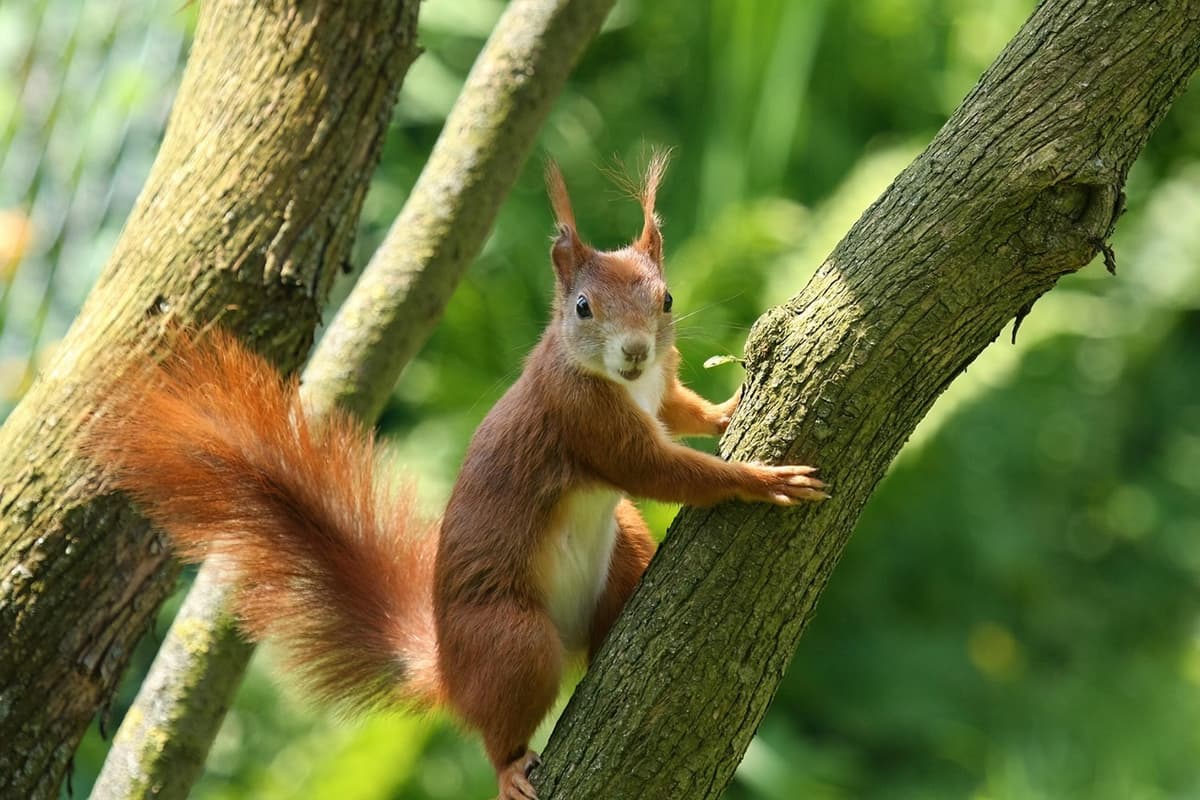
Tree squirrel holds on to a branch.
- Tree Squirrels: This type of squirrel lives in forests, woods and even urban areas where there are plenty of trees for them to forage and nest in.
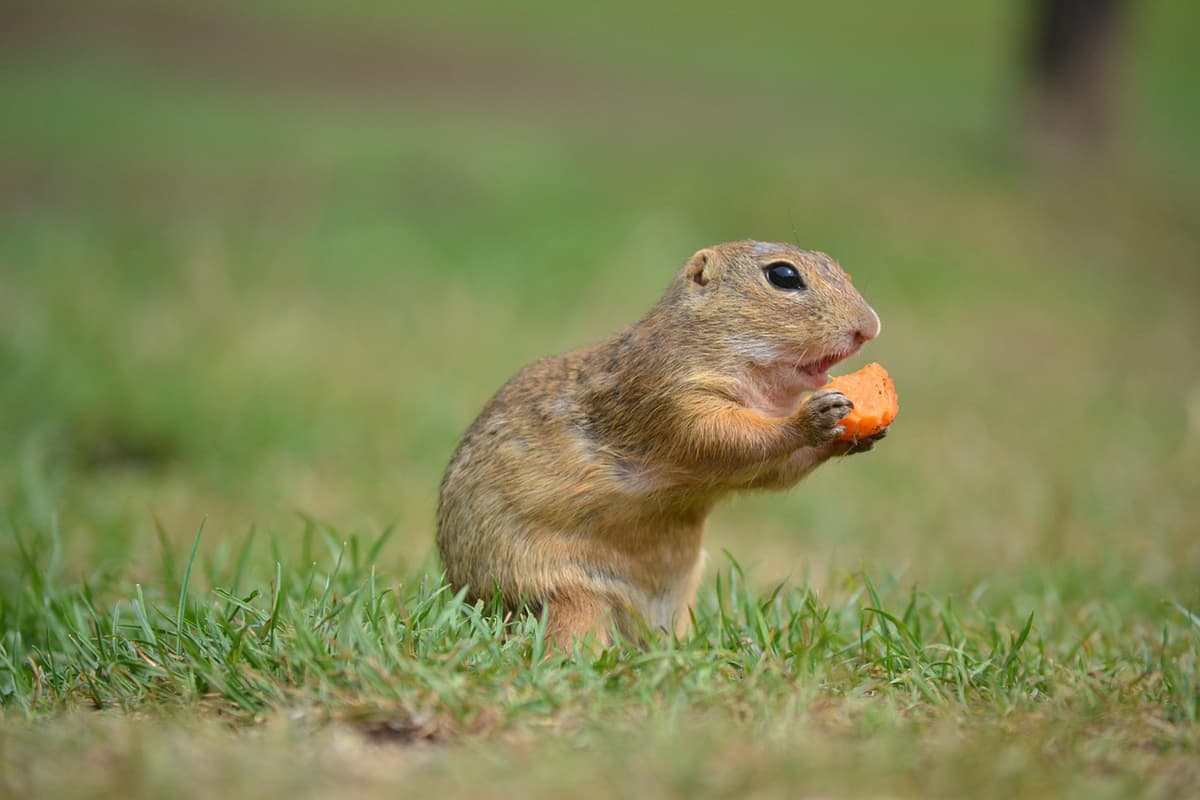
Ground squirrel munches on food.
- Ground Squirrels: This type of squirrel can be found in grasslands, deserts and other open areas where they live in burrows. They often live together in colonies.
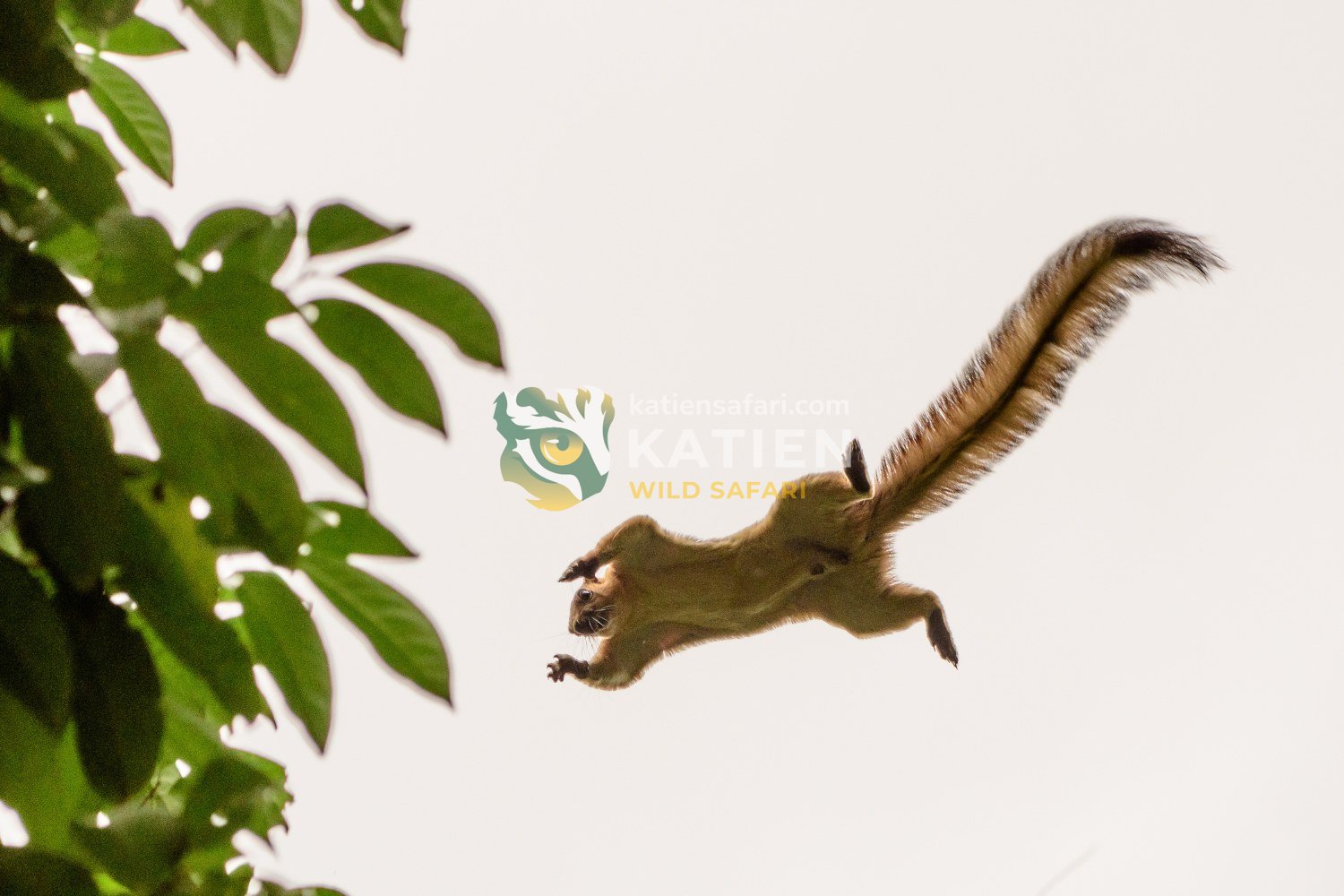
Flying squirrel gliding between trees in the forest.
- Flying Squirrels: Found in forests and wooded areas, flying squirrels are nocturnal animals and can glide from tree to tree using a membrane that extends from their wrists to their ankles. Read our full article about flying squirrels to learn more about their behavior, habitat, and unique ability.
Squirrel species found in Vietnam jungles
Vietnam is one of the most biodiverse countries in the world, with a wide range of ecosystems from lowland forests to high mountain regions. This rich natural environment supports many species of small mammals, including a diverse group of squirrels from the Sciuridae family.
Squirrels are commonly found in Vietnam’s mountainous and forested areas. In recent years, researchers even identified a new species on Hon Khoai Island, now known as the Hon Khoai Squirrel, highlighting how much remains to be discovered in the country’s wildlife.
Some notable squirrel species in Vietnam include the Red and White Giant Flying Squirrel (Petaurista elegans), the Red-cheeked Flying Squirrel (Hylopetes spadiceus), the Black-and-white Flying Squirrel (Hylopetes alboniger), and Pearson’s Flying Squirrel (Belomys pearsonii). These species are mainly found in forest habitats, where they glide between trees and remain active high above the forest floor.
Squirrels in Cat Tien National Park
Cat Tien National Park is one of Vietnam's most biodiverse protected areas, home to a wide variety of plant and animal species, including several native squirrel species.
The park is home to species such as the red-bellied squirrel (Callosciurus erythraeus) and the Indochinese striped squirrel (Tamiops rodolphii), both commonly seen moving through the forest canopy.
Squirrels behavior
- Social: Most squirrels, especially tree squirrels, are solitary. However, some ground squirrels share burrows and live in groups.
- Communication: Squirrels use chattering, barking, and high-pitched calls to communicate. They also move their tails to signal danger or alert others.
- Territorial: Some squirrels mark their territory with scent. Conflicts may occur, especially between males during mating season. Squirrels also flick their tails to warn others, distract predators, or show agitation.
- Memory: Squirrels remember many of the places where they bury food for winter. Forgotten nuts often grow into new plants and trees.
- Acquiring nuts: In autumn, squirrels collect and store nuts and seeds. They use their strong front teeth to crack hard shells.
- Acrobatic jumping: Squirrels can leap long distances between branches. Their strong hind legs and tail help them balance and move quickly.
- Nest building: Squirrels build nests called dreys from leaves and twigs, usually in trees, to rest and raise their young.
Are squirrels diurnal?
Although squirrels are primarily diurnal, several species are crepuscular or nocturnal meaning they are most active at dawn, dusk, or during the night.
What do squirrels eat?
Squirrels are omnivores, meaning they eat both plant and animal matter. Most of their diet consists of seeds, nuts, fruits, and fungi. These foods provide the energy they need to stay active throughout the year.
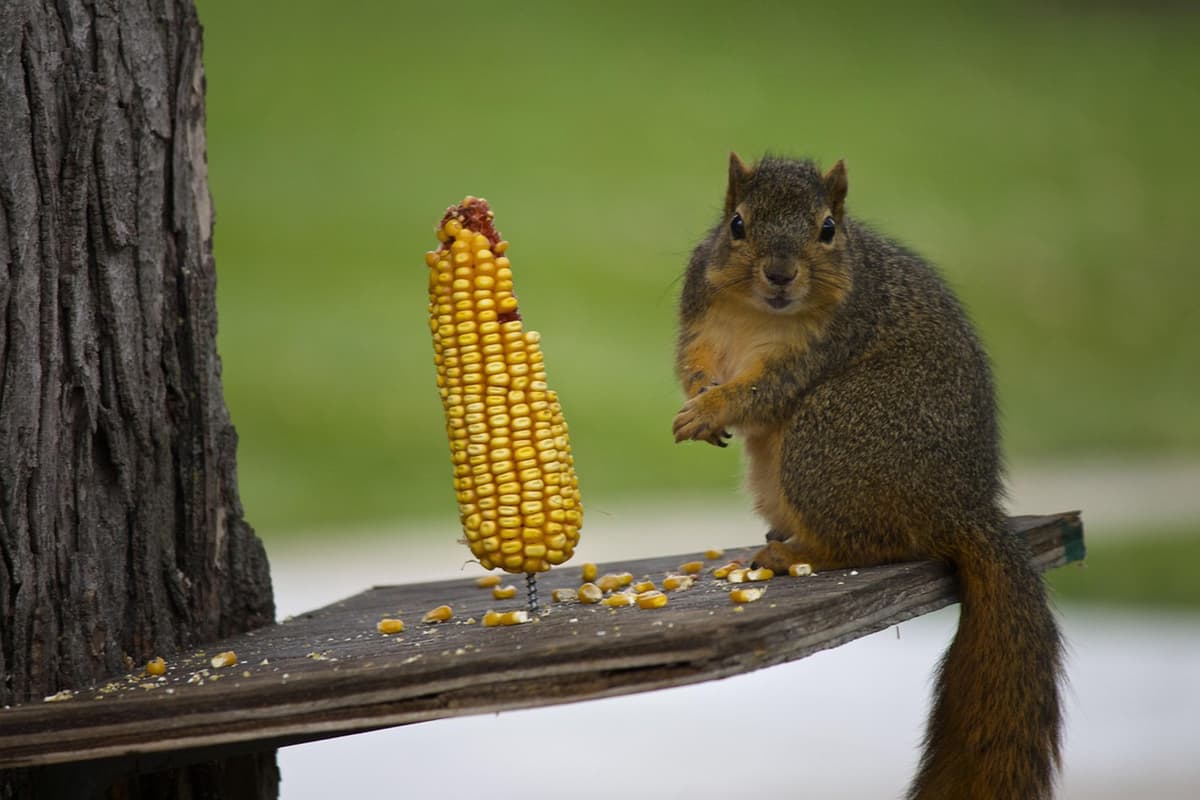
Squirrel eating corn on a wooden feeder platform.
They also eat small insects, caterpillars, eggs, and occasionally small animals. This flexible diet helps squirrels survive in different environments and seasons.
On average, a squirrel eats about one pound (around 0.45 kilograms) of food per week, depending on its size and the availability of food.
Did you know that squirrels eat meat?
Although squirrels are best known for eating nuts and seeds, some species also eat meat. In fact, squirrels are considered facultative predators, meaning they mainly eat plants but will hunt animals when the opportunity arises.
Field observations of the Western gray squirrel show that it can stalk prey such as small birds. It may move in a low, crouched position, sometimes making noise while walking through dry leaves, before suddenly leaping to catch its target. One early hypothesis by Klugh (1927), suggested that this repeated stalking behavior might cause prey to become used to the squirrel’s presence, lowering their guard and allowing for a surprise attack.
Meat provides important nutrients such as protein, calcium, and phosphorus, which are especially valuable for pregnant or nursing female squirrels. In some cases, meat consumption may also occur during territorial disputes or competition, where a killed rival becomes an easy source of energy.
Overall, while squirrels are primarily plant-eaters, hunting is a natural and occasional part of their behavior, helping them meet their nutritional needs when necessary.
Reproduction and life cycle
Squirrel breeding and mating seasons
Most squirrel species actually have two mating periods. Mating seasons vary by climate and species but typically the first is in winter till spring, and another late spring till it becomes summer. The gestation period lasts about 44 days. After giving birth, the female squirrel raises the young on her own.
Squirrels usually have two litters each year, most often in spring and summer when food is more available. The timing can vary slightly depending on the species and climate.
Offsprings
A baby squirrel is called a kit or a pup. Female squirrels usually give birth to two to five young at a time, depending on the species.
Newborn squirrels are born blind and completely dependent on their mother. They rely on her for warmth, protection, and milk during their first weeks of life.
Young squirrels are weaned at around eight weeks old. They often stay with their mother for several more weeks before becoming independent.
Threats and Conservation of Squirrels
Threats to Squirrels
As a smaller mammal, squirrels have a number of natural predators in the wild. Here are some common predators of squirrels:
- Birds of prey such as hawks and owls.
- Snakes, which often attack small or younger squirrels.
- Mammals like foxes, coyotes, weasels, raccoons, and even domestic cats.
- Some larger mammals like bears and bobcats, which may occasionally prey on squirrels when the opportunity arises.
Conservation status
Even though not assessed by IUCN, some squirrel species are considered to be endangered while others are more commonly sighted.
Some squirrels face threats of habitat loss due to urbanisation and deforestation to expand farmland. This can impact their populations and cause the amount of food available to shrink.
The introduction of some non-native species (e.g. the grey squirrel to the UK) has caused competition between different species. The grey squirrels in the UK threaten the red squirrel populations as they are larger and spread diseases which red squirrels aren’t immune to.
Meeting Squirrels with Katien Safari
Katien Safari collaborates with Cat Tien National Park to launch new wildlife conservation and eco-observation programs. These will allow small visitor groups to observe animals including squirrels while supporting biodiversity protection and sustainable tourism in Vietnam.
Notably, Katien Safari operates a system of live wildlife cameras inside Cat Tien National Park, allowing viewers to follow real-time forest activity from a distance. These live views bring you closer to Vietnam’s wildlife while raising awareness for conservation. Each stream helps protect endangered species and inspires love for nature’s untouched harmony.
Interesting facts about Squirrels
1. Squirrels are not naturally present in the wild in Australia.
2. Squirrels have four front teeth that constantly grow throughout their lives.
3. Squirrels don’t just eat nuts they also eat meat.
4. Squirrels can be left or right handed.
5. Most species of squirrels are diurnal.
6. Squirrels often run in a zigzag pattern when being chased by predators to confuse them.
Reference
- Bradford, A. (2022, May 3). Squirrels: Diet, habits & other facts. Live Science. https://www.livescience.com/28182-squirrels.html
- Callahan, J. R. (1993). Squirrels as predators. The Great Basin Naturalist, 137-144.
- Smith, C. C., & Follmer, D. (1972). Food preferences of squirrels. Ecology, 53(1), 82-91.