Did you know that there’s a creature that spends up to 7 years hiding in the darkness beneath the soil, only to emerge for a few short weeks to enjoy the sunlight? This is the fascinating life of the stag beetle. Known scientifically as Lucanus cervus, stag beetles are renowned for their impressive size and the large mandibles of the males, which resemble antlers. Despite their intimidating appearance, these beetles are harmless and play a crucial role in the ecosystem. Read on to learn more about their life cycle, habitat, and the unique behaviors that make them such captivating creatures.
| Common name | Stag Beetle |
|---|
| Scientific name | Lucanus cervus (European stag beetle); Prosopocoilus giraffa (Giraffe stag beetle) |
|---|
| Taxonomy
|
Kingdom: Animalia
Phylum: Chordata
Class: Insecta
Order: Coleoptera
Family: Lucanidae
|
| Weight / Size | Body length: 12–120 mm depending on species. Males are typically larger than females, with some species having males almost twice the size of females. |
|---|
| Lifespan | Larvae: 3–7 years. Adult: a few weeks to a few months. |
|---|
| Population | Varies by species |
|---|
| Habitat | Deciduous woodlands, tropical and subtropical forests, particularly where decaying wood is abundant. |
|---|
| Range | Found across Europe, Southeast Asia, and parts of North America, particularly in forests with decaying wood. |
|---|
| Diet | Larvae: Feed on decaying wood. Adults: Feed on tree sap, nectar, and fermented fruits. |
|---|
| Conservation status | Near Threatened (IUCN) |
|---|
Physical Characteristics of Stag Beetles
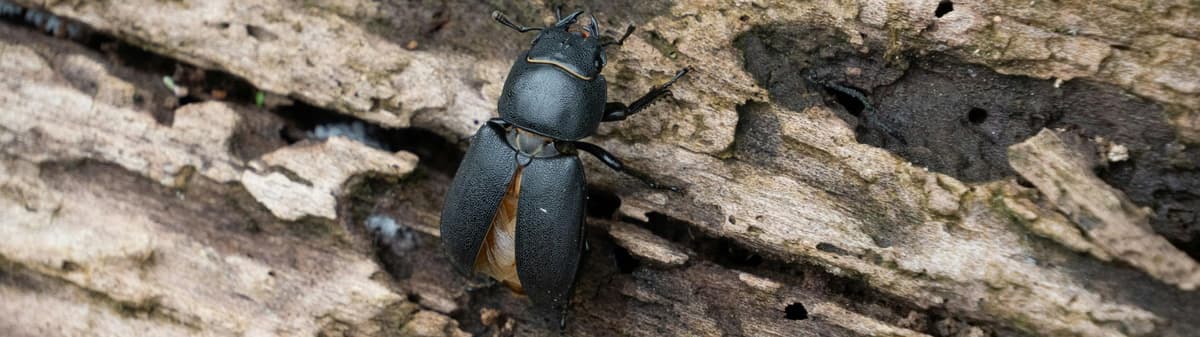
Stag beetles (family Lucanidae) are known for their large, antler-like mandibles, especially in males. These mandibles are used for fighting over territory or mates, not for feeding. Females have smaller, but stronger, mandibles, which are more suited for digging and reproduction.
The size of stag beetles varies greatly depending on species and the nutrition they receive during the larval stage. Most species are around 5 cm long, but some can reach over 12 cm. Males are usually much larger than females, with some species having females that are only about half the size of the males.
Their color is typically dark brown to black, with a glossy outer shell. Some rarer species can be metallic or brightly colored. The antennae are distinctive, bent at a sharp angle, and the end of the antennae is swollen, resembling a club.
Prosopocoilus giraffa is one of the largest stag beetles, with males measuring between 60–120 mm and having long, slender bodies and large mandibles. The smallest species, Platycerus caraboides, has males that only measure 12–20 mm and females around 10–15 mm. The length of the male's mandibles is a key factor in their success during fights.
Adult stag beetles typically have a dark brown or black head and thorax, while the larvae are creamy white, shaped like the letter "C," with orange-colored heads and legs.
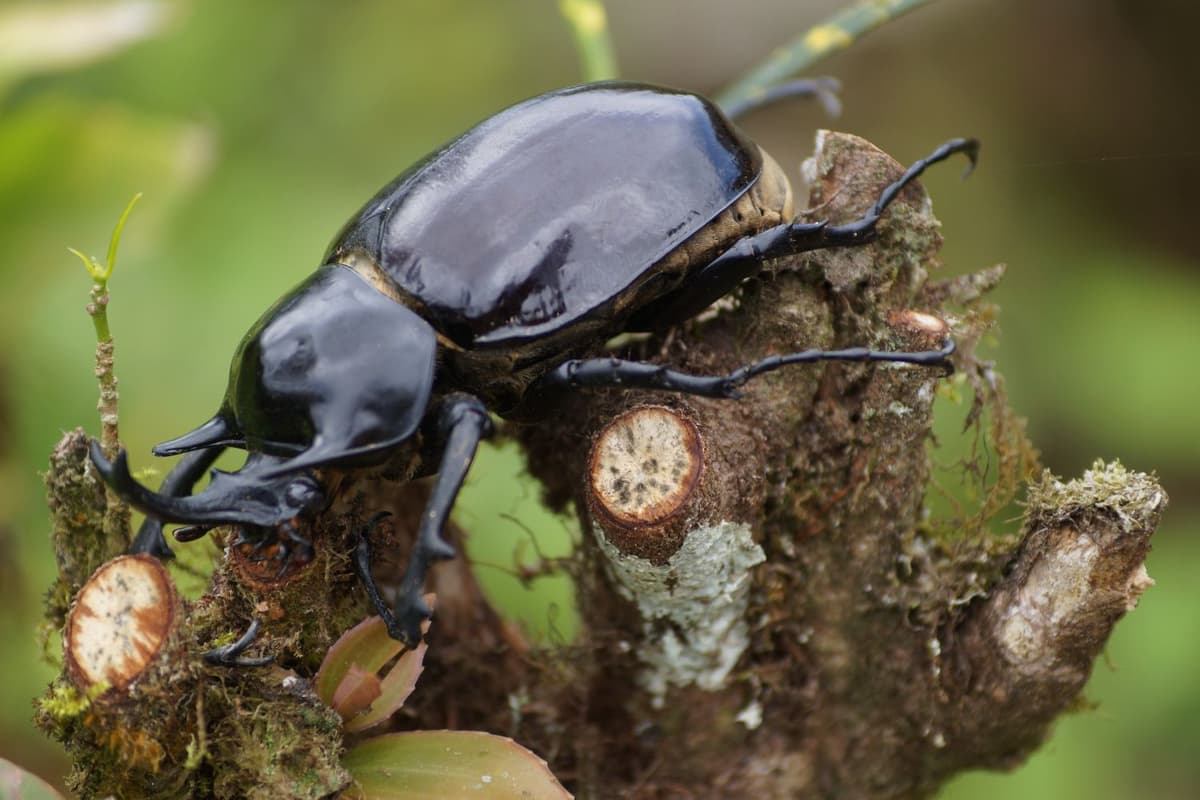
Stag beetles have large jaws and shiny dark bodies.
Habitat and Distribution of the Stag Beetles
Stag beetles thrive in forest ecosystems, especially where there is abundant decaying wood. Most species prefer deciduous woodlands and moist hardwood forests, which provide the right conditions for their larvae. In Southeast Asia, species like Dorcus titanus and Prosopocoilus giraffa flourish in tropical rainforests with high humidity and plenty of fallen trees.
Some species, like Lucanus maculifemoratus, prefer oak and beech forests in high-altitude regions. The larvae are saproxylic, meaning they feed on decaying wood for 3–7 years, depending on species. Broadleaf trees like oak and beech, decomposed by fungi, provide both nutrients and moisture for the larvae.
In Europe, Lucanus cervus is found in urban parks and gardens, where decaying wood is left behind. The presence of rotting stumps and logs is essential for their survival.
Global Distribution
The Lucanidae family includes over 1,200 species worldwide, with the highest concentration in tropical and temperate regions. In Asia, particularly East and Southeast Asia, species like Prosopocoilus giraffa and Dorcus titanus are widespread, from India to the Philippines. Species with metallic or bright colors, like Cyclommatus metallifer, are common in Southeast Asia.
In Europe, Lucanus cervus is common but declining. North America has 24 stag beetle species, including the giant Lucanus elaphus, found in the eastern United States' humid lowlands.
Distribution in Vietnam
Vietnam is home to around 21 species of stag beetles, with notable species such as L. dongi, L. fujitai, and L. vitalisi. Recent discoveries also include new Prosopocoilus species in the southern part of the country, like Prosopocoilus wangae.
The northern highlands of Vietnam, particularly areas like Yên Bái and Hà Giang, are rich in endemic species, with discoveries made at altitudes over 2,000 meters. Lucanus ludivinae flavipes, found in 2024 at altitudes of 2,300–2,440 meters, is one such newly described species. Other species like Odontolabis pareoxa vietnamensis have also been recorded in northern Vietnam.
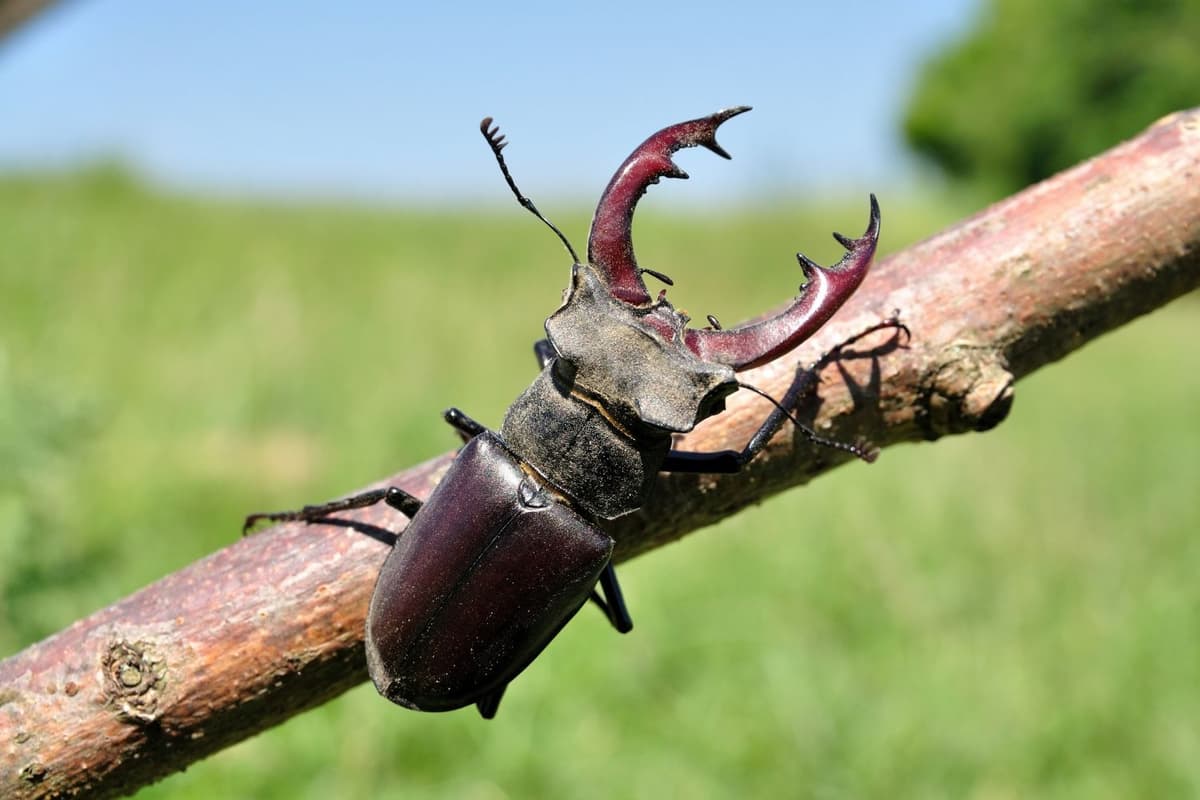
Stag beetles live in forests, woodlands, and old tree areas.
Stag beetles in Cat Tien National Park
Cat Tien National Park is an ideal habitat for stag beetles due to its rich tropical forest ecosystem and abundant decaying wood. At Cat Tien, visitors and researchers have recorded the presence of some of the largest and most impressive stag beetle species, including:
- Prosopocoilus giraffa (giraffe stag beetle): Known for its extremely long mandibles.
- Dorcus titanus (giant stag beetle): A large and powerful species.
These beetles are most commonly observed during the warmer months of the year. They are typically found in dense forest areas, either clinging to tree trunks or crawling on the forest floor. Their survival is highly dependent on decaying wood, where their larvae develop.
Diet and Natural Predators
Diet
The diet of stag beetles varies significantly between the larval and adult stages. In the larval stage, stag beetle larvae primarily feed on decaying wood. They prefer wood from broadleaf trees, such as oak, beech, maple, ash, and fruit trees like apple and cherry. These larvae cannot consume fresh wood, but rely on wood that has been decomposed by fungi, particularly white rot fungi, which break down the fibrous structure and make it easier to digest.
As adults, stag beetles do not eat solid food. Their large mandibles are used for fighting and mating, not for eating. Instead, they feed on liquids using a feathery tongue. Their diet includes tree sap from wounds in trees, nectar, and the juice from overripe or fermented fruits like mango, banana, apple, and peach.
Nutrient Cycling
Stag beetles play a crucial role in forest ecosystems. Their larvae, as saproxylic organisms, help decompose dead wood. By feeding on and burrowing through decaying wood, they accelerate the breakdown process, returning essential nutrients to the soil. This not only benefits soil health but also creates favorable conditions for the growth of fungi and other small insects, enriching the forest ecosystem.
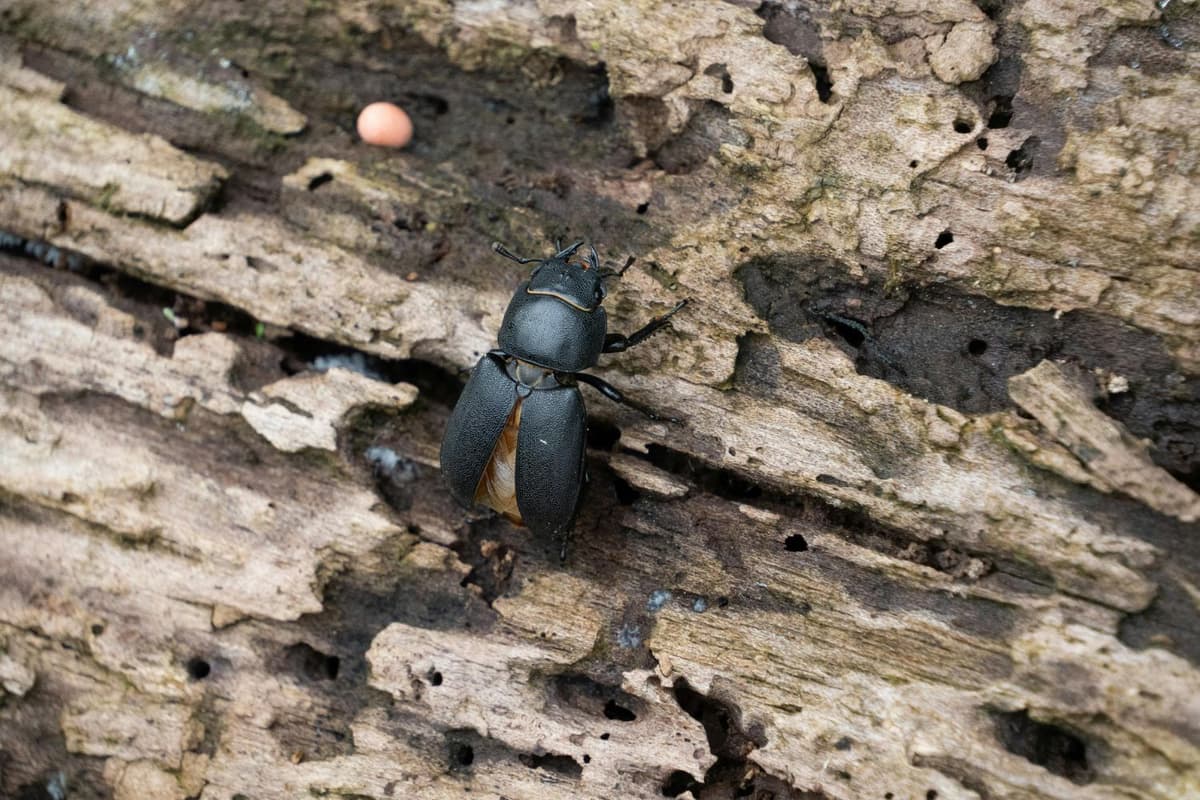
Stag beetles are often found on dry tree trunks and dead wood.
Predators
Stag beetles face a variety of natural predators throughout their life stages. Birds, particularly crows, magpies, kestrels, and owls, are the primary threats to adult beetles. They typically attack when the beetles are flying or on the ground during mating season, often eating the softer body parts while leaving behind the hard head and wings.
Stag beetles are also at risk from amphibians such as frogs and toads, as well as lizards. Lastly, human activity poses a significant danger; many beetles are killed by vehicles while crossing roads or by people who mistakenly think they are harmful.
Stag beetles rely on several defense mechanisms to protect themselves. Males use their large mandibles as a warning signal and in fights with rivals, pinning or unbalancing them. Although their pinch is not harmful to humans, females can deliver a stronger, painful bite when threatened.
To appear larger, males sometimes stand on their hind legs with mandibles raised. Their dark colors help them blend into the environment, while species like Lamprima aurata use iridescence for camouflage. Adults hide during the day in tree bark or decaying wood, and larvae live underground for years. Unlike some insects, stag beetles do not use chemical defenses.
Life Cycle Stages of Stag Beetles
Stag beetles undergo a complete metamorphosis (holometabolism) with four life stages: Egg, Larvae, Pupa, and Adult. The entire life cycle typically lasts 3–7 years, with the majority of time spent underground in the larval stage.
- Larval stage:This is the longest stage, lasting at least 3–4 years underground. The length depends on temperature and food availability.
- Pupal stage: Lasting around 6 weeks in autumn, the beetle stays underground through the winter before emerging in the following spring or summer as an adult.
- Adult stage: The adult stage is very short, lasting only a few weeks to a few months. Males typically appear from mid-May to late July and die by the end of August.
Compared to the larvae, which live for several years, the adult stage exists primarily for mating and reproduction, lasting only a short time.
Reproduction of Stag Beetles
The main objective of adult stag beetles is to find a mate and reproduce before they die. Males are particularly active in the evening and night, using their large mandibles to fight other males for access to females or prime tree sap spots. The males often display courtship behaviors by circling the female with their mandibles raised.
Once mating occurs, females seek out decaying wood, dead tree stumps, or leaf litter to lay their eggs. They often return to the site where they were born if it still has suitable decaying wood. In Vietnam, species like Prosopocoilus giraffa and Dorcus titanus rely entirely on decaying wood for their reproduction.
The size of adult stag beetles is directly linked to the nutrition they receive during the larval stage. The more decomposed the wood is, the faster larvae can digest it, leading to better growth.
Cold weather can slow larval development, while warmer temperatures help speed up the process of pupation and adult emergence. For successful development, larvae require moist environments, as dry or excessively flooded wood is unsuitable for their growth.
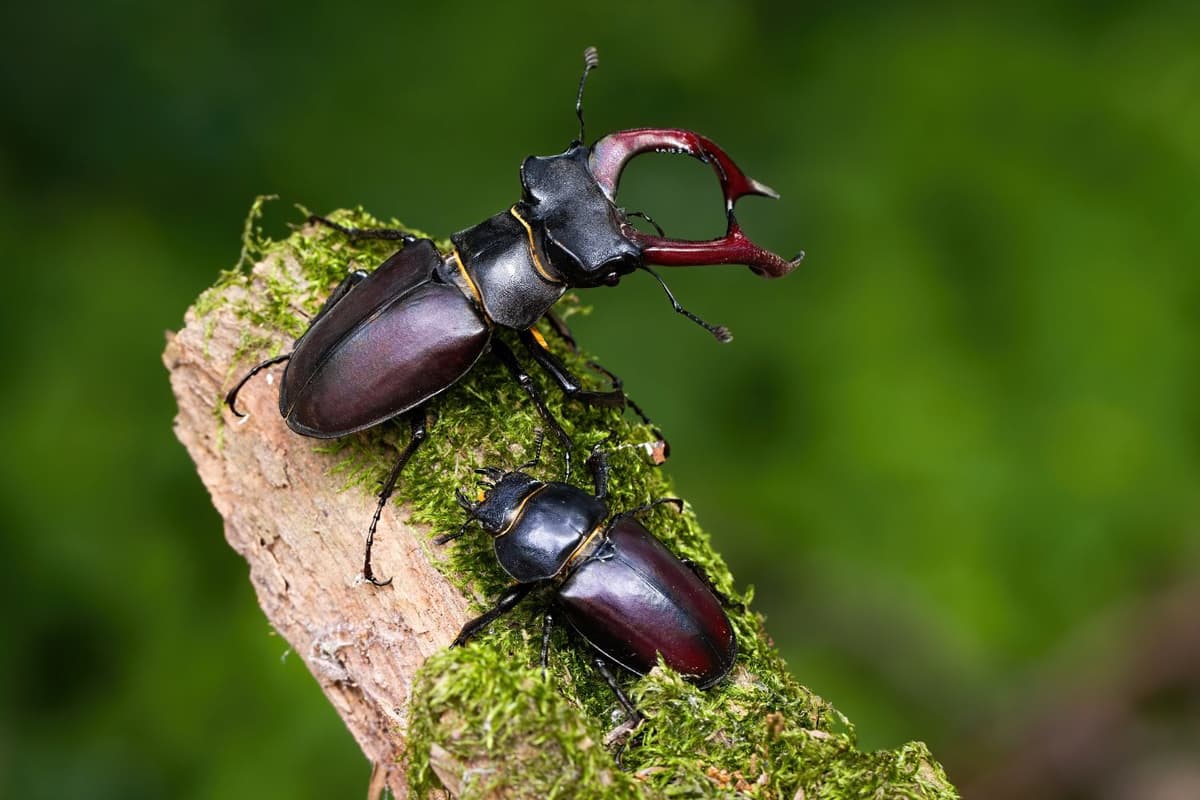
A pair of stag beetles face each other on a tree trunk.
Threats and Conservation of the Stag Beetles
Threats
The greatest threat to stag beetles is habitat loss. The removal of forests, parks, and even backyard gardens has destroyed the decaying wood that larvae depend on for survival. Without dead tree stumps or logs, saproxylic insects like stag beetles cannot develop.
The lack of decaying wood is a critical issue for species that rely on it. Furthermore, human activities and traffic pose risks to adult beetles, as they are often attracted to warm asphalt, making them vulnerable to being run over.
Misunderstandings about their nature also contribute to their decline. Many people kill stag beetles because of their “aggressive” appearance, even though they are harmless. Hunting and trading in pets and specimens, particularly in East Asia, also puts pressure on their populations.
Climate change affects soil and decaying wood moisture levels, disrupting stag beetle development. Heavy rain and strong winds can also interfere with adult beetles' ability to fly and find mates.
Conservation Status
Many stag beetle species are seriously threatened. In Europe, about 30% of saproxylic insects are at high risk. Lucanus cervus is classified as Near Threatened in the IUCN Red List and is legally protected in the UK.
Conserving habitats is the top priority. Preserving dead tree stumps and decaying wood in forests, parks, and gardens is crucial for maintaining the species' life cycle. Additionally, creating artificial habitats like piles of decaying wood or burying wood chips can encourage female beetles to lay eggs.
Community education plays an important role in reducing the unnecessary killing of stag beetles. People are encouraged to move beetles off the road rather than kill them.
Long-term research and monitoring, such as citizen science programs and genetic analysis, are essential for understanding the ecological needs of each species. In Vietnam, the discovery of new species in natural forests and Cat Tien National Park underscores the urgent need to protect forest biodiversity.
See Stag Beetles in Cat Tien Nation Park
Cat Tien National Park is an ideal environment for stag beetles, thanks to its rich tropical forest ecosystem and abundant decaying wood. Currently, Katien Safari is working closely with the park’s management to safely guide small groups of visitors into the forest, offering a responsible and exciting experience for beetle enthusiasts.
For the best chance to observe stag beetles, we recommend joining nocturnal wildlife tours or exploring the forest. Look closely in areas with damp, decaying wood, as these spots attract stag beetles.
Additionally, visitors can learn more about stag beetles and other insect species at the Cat Tien Park Museum, where fascinating exhibits bring the park’s biodiversity to life.
Interesting Facts about Stag Beetles
1. Male stag beetles fly clumsily to find mates on warm nights. Their heavy mandibles force them to fly with their bodies vertical to stay balanced.
2. A male stag beetle's head can move for days after being detached, which led ancient people to believe the beetles were connected to life and death.
3. The oldest known stag beetle fossil, Juraesalus, was found in Inner Mongolia, China, and dates back to the late Jurassic period, coexisting with dinosaurs.
4. The European stag beetle (Lucanus cervus) is the largest land insect in Europe, surpassing even the great Capricorn beetle.
5. In ancient Rome, stag beetle heads were worn as amulets to protect children from illness, believed to hold magical or healing powers.
Reference
- European Stag Beetle Monitoring Network. (n.d.). Magical and medicinal practice with stag beetles in Roman times.
- Fedorenko, D. N. (2021). Stenaptinus (Coleoptera: Carabidae: Brachininae) of Vietnam. Note 3. Russian Entomological Journal, 30(3), 252–263. https://doi.org/10.15298/rusentj.30.3.02
- Fremlin, M. (2022). The life cycle of the European stag beetle Lucanus cervus is three years minimum in the field (Coleoptera: Lucanidae). Entomologische Berichten, 82(4), 138–144.
- Hendry, L. (n.d.). Stag beetles: Facts about the UK's largest beetle and where to see it. Natural History Museum.
- Xin, F.-Y., He, H., Zhong, X.-T., Zhang, Y.-F., & Qi, Z.-H. (2024). Lucanus ludivinae, a newly recorded stag beetle from Vietnam, with a description of a new subspecies (Coleoptera: Lucanidae: Lucaninae). Faunitaxys, 12(39), 1–7. https://doi.org/10.57800/faunitaxys-12(39)