Table of Content


Cat Tien National Park is one of the last and most important strongholds for the gaur (Bos gaurus) in Vietnam and mainland Southeast Asia. Thanks to its rich natural environment and effective conservation work, Cat Tien provides one of the safest places for this powerful wild cattle species to survive.
The park offers gaurs an almost perfect home with open grasslands and dry forests for feeding, lakes and wetlands for drinking, and most importantly strong protection in key areas such as Bau Sau. These conditions allow gaurs not only to survive but to continue breeding in the wild.
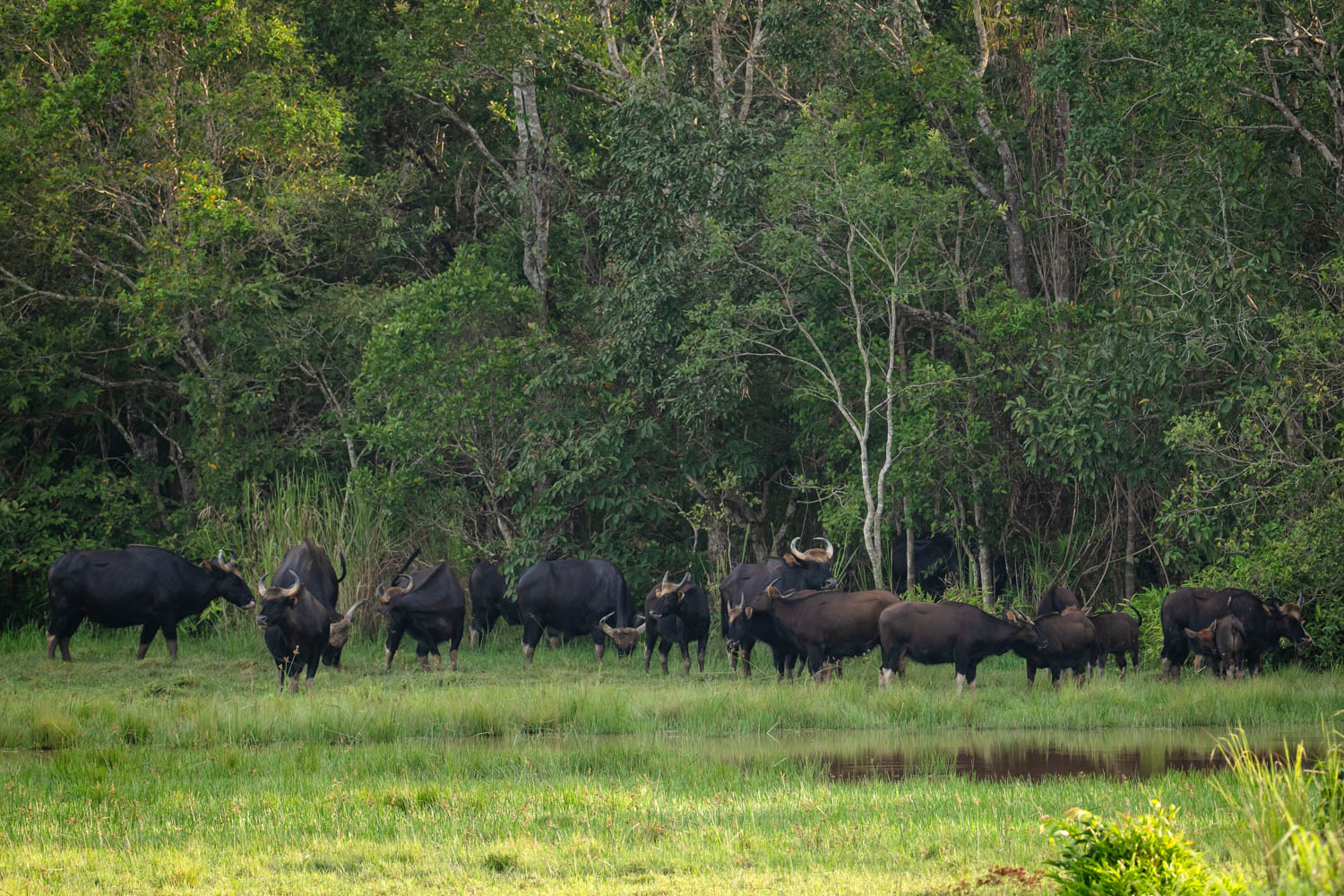
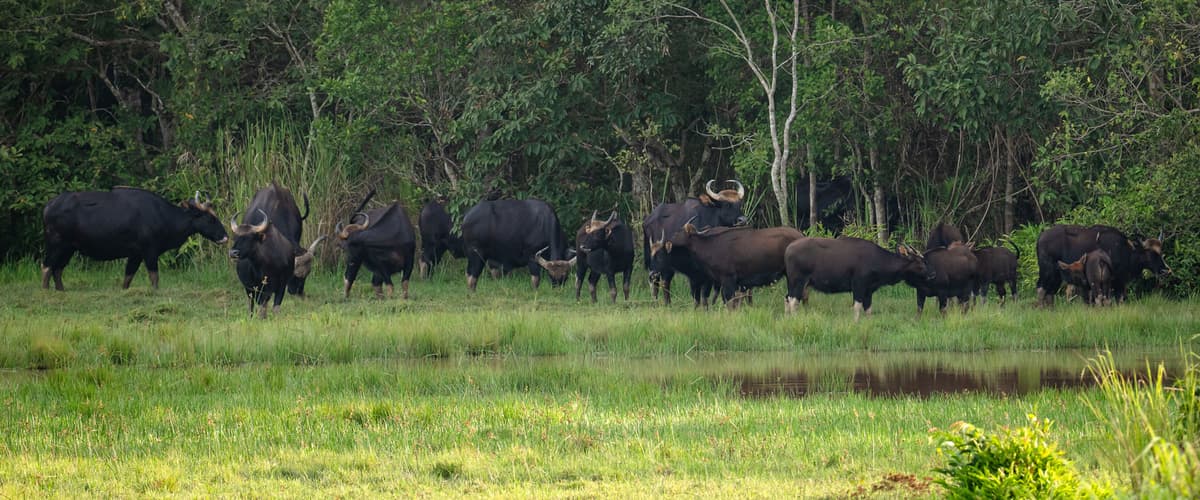
Vietnam now has just over 300 gaurs, and about 110 to 120 individuals live inside Cat Tien National Park, forming 19 to 22 herds. This is the largest and most stable gaur population in the country, with young animals regularly recorded, showing that the herds are still reproducing.
This article will give you a clear look at the gaur and its behavior, explain why Cat Tien is ideal for gaurs, share real sightings from the park, and provide practical tips for photographing gaurs in Cat Tien with Katien Safari.
A powerful herd of Gaur grazing in the lush grasslands of Cat Tien National Park.
The gaur (Bos gaurus) is one of the largest wild cattle species in the world, but it has become rare across Southeast Asia because of poaching, forest loss, and competition with livestock. Today, only a few strongholds remain, and Cat Tien National Park is one of the most important of them.
Gaurs in Cat Tien National Park are most active during the cool hours of early morning and late afternoon, when they come out to feed and move between forest and grassland. Their main feeding times are usually 6:30 to 8:30 in the morning and 4:00 to 6:45 in the evening. Live camera data also shows that some herds appear again around 9:00 p.m., especially near open grasslands and water sources.
You can read more about its characteristics and habit in this article: Gaur (Bos gaurus): Asia’s Largest Wild Bovine
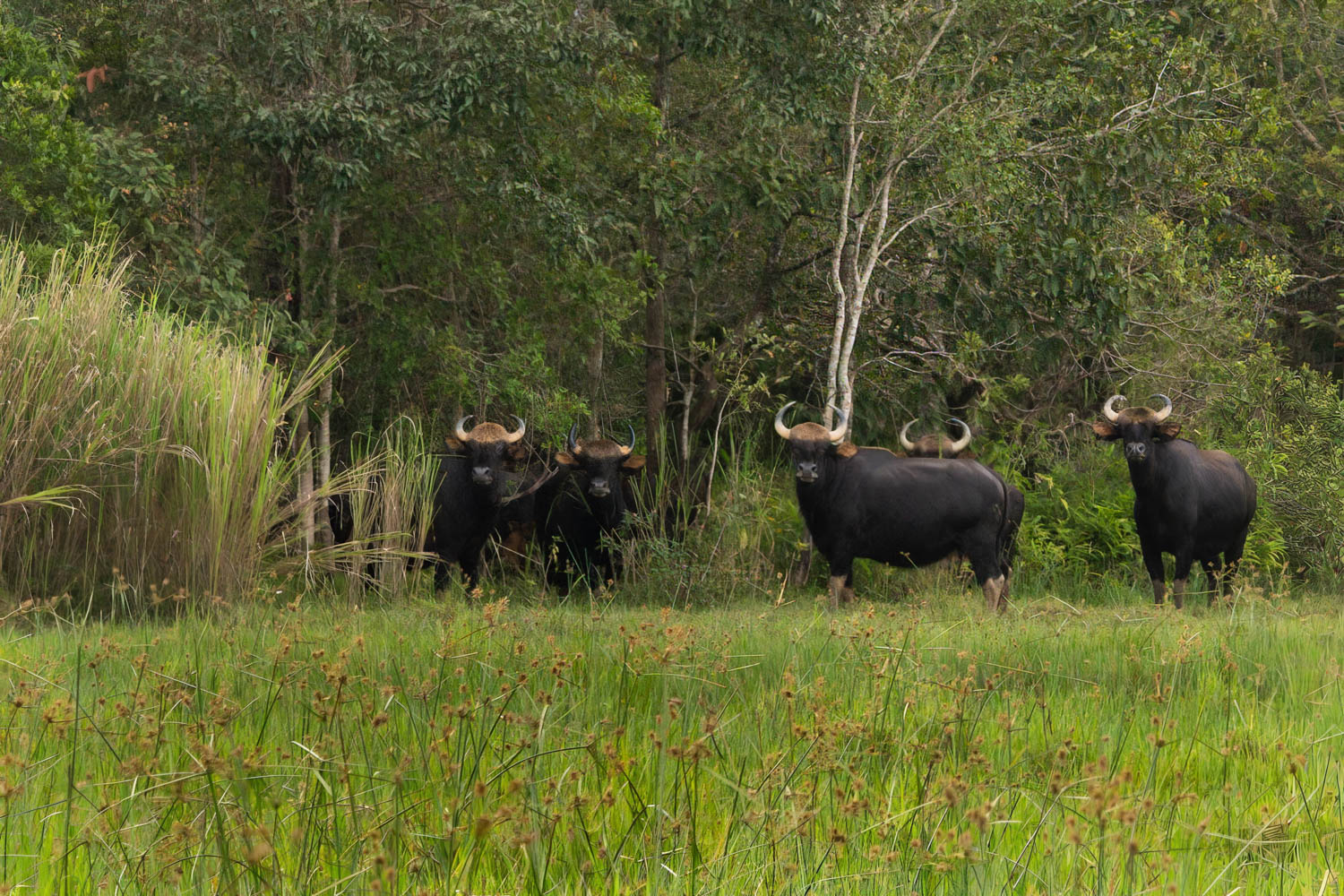
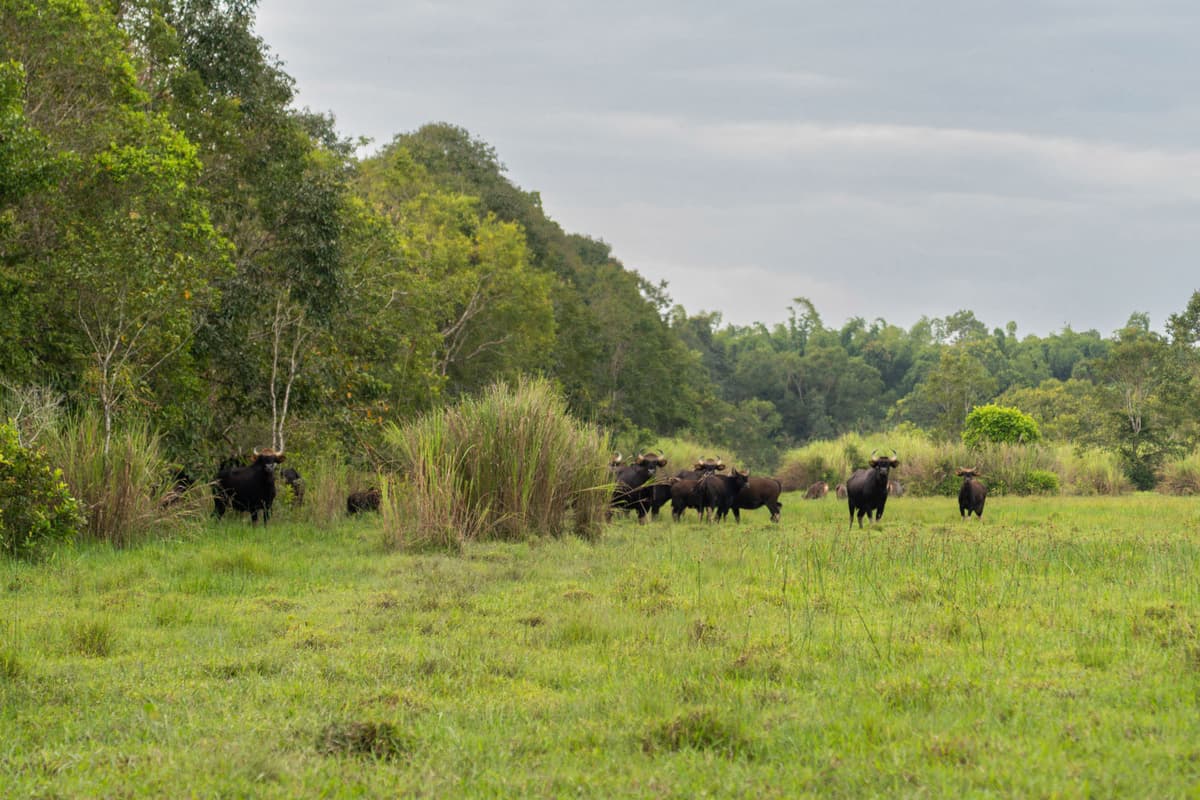
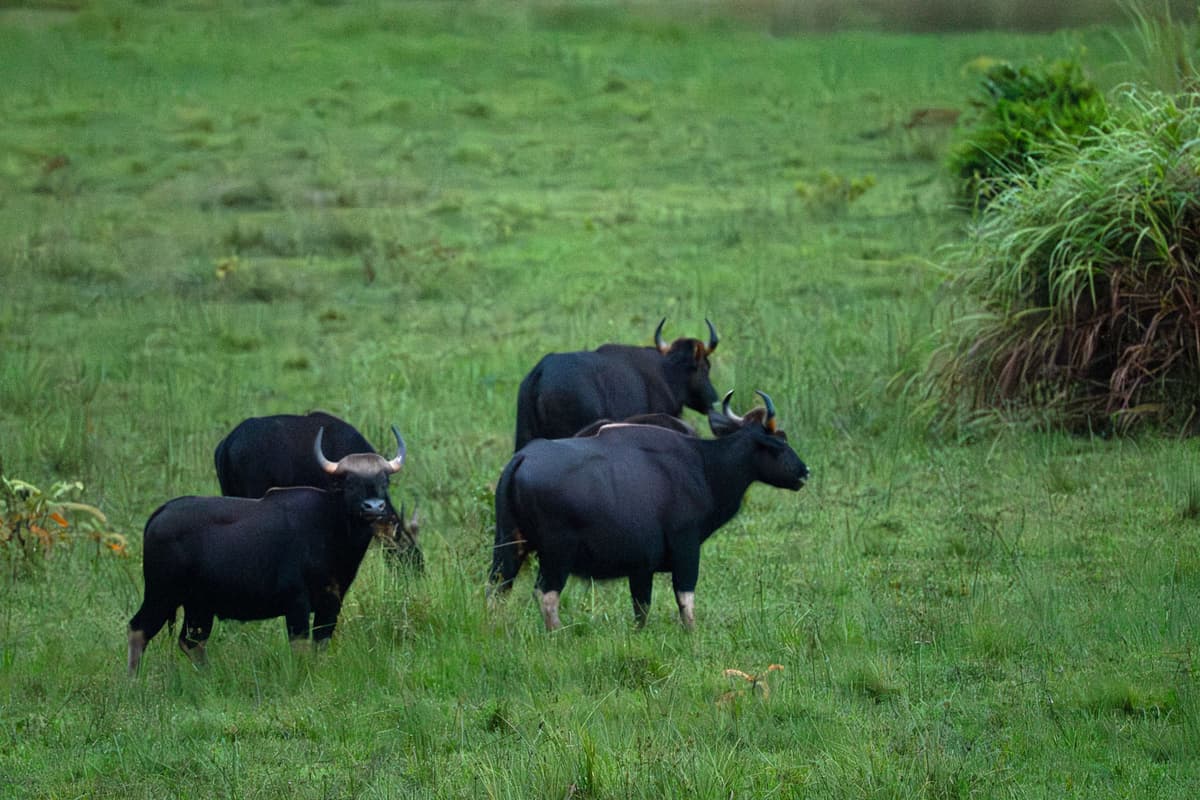
Witnessing the sheer strength and beauty of the Gaur.
The reason Cat Tien still supports a large and stable gaur population is not by chance. It provides everything gaurs need to survive and reproduce.
Gaurs need both forest for shelter and open grasslands for feeding. Cat Tien has large seasonal floodplain grasslands connected to dry deciduous and semi evergreen forests, especially around Bau Sau and Nui Tuong. These wide open areas give gaurs plenty of food and space for large herds to grow.
Gaurs must drink every day. Cat Tien has an extensive network of wetlands, lakes, and streams, including Bau Sau, Bau Trau, and the Dak Ken and Dak Na streams. These water sources allow gaurs to survive even during the long dry season.
In many places, gaurs are forced to hide deep in the forest and split into small groups to avoid people. In Cat Tien, the opposite happens. Gaurs are often found near ranger stations such as Nui Tuong and Bau Sau. This is because strong law enforcement and ranger presence create safe zones where hunting pressure is low, allowing herds to stay together and recover.
Although the buffer zones around Cat Tien face pressure from farming and people, the park still has large core areas far from villages and farmland. Gaurs are most often found in central areas such as Dak Lo stream, Hang Doi, and Forest 503 in Cat Loc, far from settlements like Phuoc Cat II and Tien Hoang. This distance reduces conflict and keeps gaurs safe from hunters.
Even though Cat Tien is one of the last strongholds for gaurs in Vietnam, seeing one in the wild still requires great patience and luck. Gaurs are naturally shy and careful, often moving quietly between forest and open areas.
One wildlife photographer, Tang A Pau, spent almost two years waiting in the forest to photograph gaurs. His success came at the Nui Tuong Gaur Conservation Station in the C3 protected forest, where he finally found a herd of about 14 gaurs, including adults and calves.
Another important record comes from April 2004, when two Dutch visitors, Inapecge and Gecpolet, filmed a 15 minute video of more than 20 gaurs crossing a main road. The footage showed young calves without horns, proving that the herd was actively breeding in Cat Tien.
The most recent sighting was on July 17, 2023, during the rainy season. A herd of over 20 gaurs was photographed as it moved back into the forest to escape a storm. Rangers also continue to record gaurs regularly in the park, confirming that Cat Tien remains one of the best places in Vietnam to see this majestic wild cattle in the wild.
Seeing a wild gaur in Cat Tien National Park is an unforgettable experience, but it also requires serious respect and caution. These are powerful animals, and one wrong move can be dangerous for both you and the herd.
Never approach a gaur closer than 20 m. Professional wildlife photographers usually shoot from 150 to 200 m, and only move closer by about 50 m if the animals are calm. Even then, they stay extremely careful. A gaur that feels surprised or trapped may charge without warning.
Always go with a guide or park ranger. They know how to read warning signs such as snorting sounds, head position, and horn movement. Going alone may be quieter, but it is not safe.
Gaurs have excellent smell and hearing. If the wind carries your scent toward them, they will either run away or become nervous. Always stay downwind, so your smell does not reach the herd. They are also very sensitive to sound. Even a small branch snapping can alarm them. Wear camouflage or dark clothing, walk slowly, and reduce camera shutter noise as much as possible.
Gaurs are most active during early morning (6:30 to 8:30) and late afternoon (4:00 to 6:45). They may also appear around 9:00 p.m. The night wildlife tour from 7:00 to 9:00 p.m. is one of the best chances to see gaurs feeding on open grasslands.
A telephoto lens is essential. Use at least 300 mm, and ideally 400 to 600 mm, so you can take close photos from a safe distance. At night, use park vehicle lights or soft flashlights. Avoid sudden bright light, which can scare the animals.
__638956911583828696.jpg)
Spotting Gaurs on a Night Safari.
Cat Tien has many leeches and insects. You should wear leech socks, proper hiking boots, and insect repellent. Do not shout, throw objects, or make noises to get a better photo. This is dangerous and causes stress to wildlife.
Katien Safari is also working closely with the management of Cat Tien National Park to bring visitors into the forest in small, controlled groups as part of a gaur conservation project. This program helps monitor herds, reduce disturbance, and support long-term protection of this rare species.
For a safe and responsible wildlife experience, Katien Safari offers guided tours that follow strict conservation rules, allowing you to enjoy the beauty of wild gaurs while protecting both people and animals.
Stay tuned for more updates on this special conservation-based wildlife experience in Cat Tien.