Table of Content
Stories & Updates From THE WILD WORLD

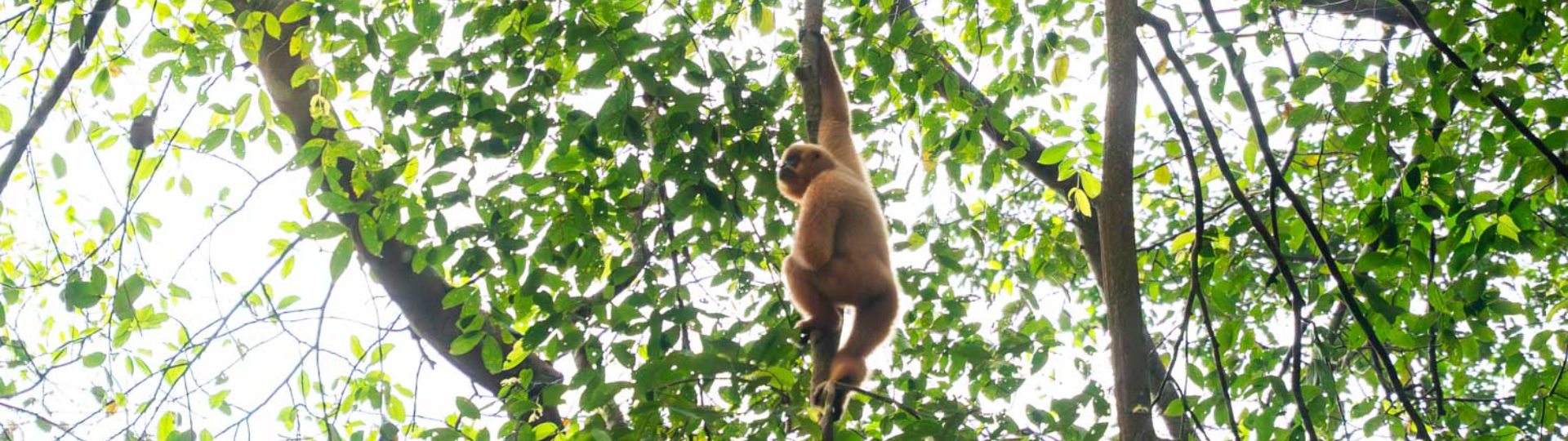
Dao Tien Endangered Primate Species Centre, also known as Dao Tien Primate Rescue Centre, is an important conservation facility in southern Vietnam. It is located on a 56 hectare island in the Dong Nai River, right next to Cat Tien National Park in Dong Nai Province.
This centre specializes in rescuing, rehabilitating, and releasing endangered primates that were illegally traded or kept in captivity. For travelers visiting Cat Tien National Park, understanding Dao Tien means understanding one of Vietnam’s most serious wildlife conservation efforts.
Dao Tien Endangered Primate Species Centre is located on a peaceful 56 hectare island in the Dong Nai River, near Cat Tien National Park in southern Vietnam. The centre was established in 2008 through cooperation between Cat Tien National Park, Monkey World Ape Rescue Centre from the UK, and the Vietnam Ministry of Agriculture and Rural Development, with support from the Endangered Asian Species Trust EAST.
The idea behind Dao Tien came from an urgent problem. Illegal wildlife trade was pushing many Vietnamese primates close to extinction. Animals such as golden cheeked gibbons, pygmy slow lorises, black shanked doucs, and silvered langurs were captured for the pet trade and kept in very poor conditions. Many were injured, stressed, and unable to survive in the wild.
Dao Tien was created to respond directly to this crisis. The centre provides a safe place for confiscated and rescued primates. They receive medical care, proper food, and time to recover from trauma caused by years of captivity.
Beyond rescue, rehabilitation is the core mission. The team helps the animals regain natural behaviors such as climbing, social bonding, and searching for food. When they are strong enough, they are released back into protected forests to support wild populations. For those that cannot return to nature, lifelong care is provided.
Over the years, Dao Tien has successfully rehabilitated and released many individuals back into the wild. At the same time, it works with local authorities and communities to raise awareness and strengthen wildlife protection.
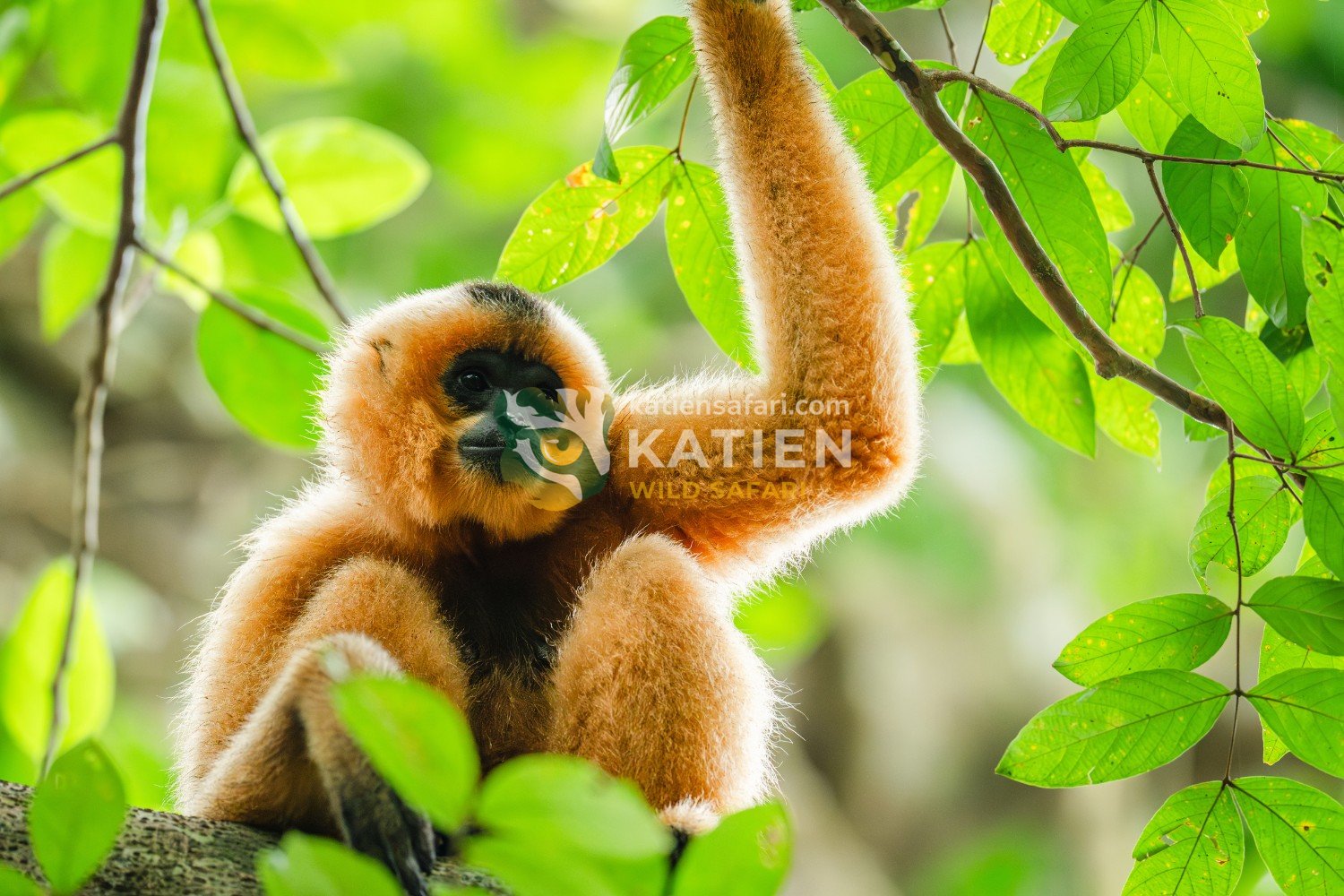
The Cat Tien yellow-cheeked gibbon is a rare primate species living in the tropical forests of southern Vietnam.
Dao Tien Endangered Primate Species Centre focuses on the rescue, care, rehabilitation, and release of four endangered primate species native to southern Vietnam. Each species requires different medical treatment, diet, and behavioral training before they can return to the wild.
Dao Tien has successfully rescued and released 12 golden cheeked gibbons back into protected forests. After release, many individuals are fitted with radio or GPS collars to monitor survival, movement, and territory formation.
This species has the widest distribution among gibbons in Vietnam, found across ten southern provinces. Important populations live in Cat Tien National Park, Dong Nai Culture and Nature Reserve, Bu Gia Map National Park, and the Langbiang plateau forest system.
The centre has rescued and released 10 black shanked doucs. Orphaned infants are especially difficult to care for because they have very sensitive digestive systems and require strict medical supervision.
In the wild, this species occurs in southern Vietnam and northeastern Cambodia. In Vietnam, they are found in forests such as Cat Tien and Bu Gia Map National Parks. The total population in Vietnam is estimated to be fewer than 5000 individuals.
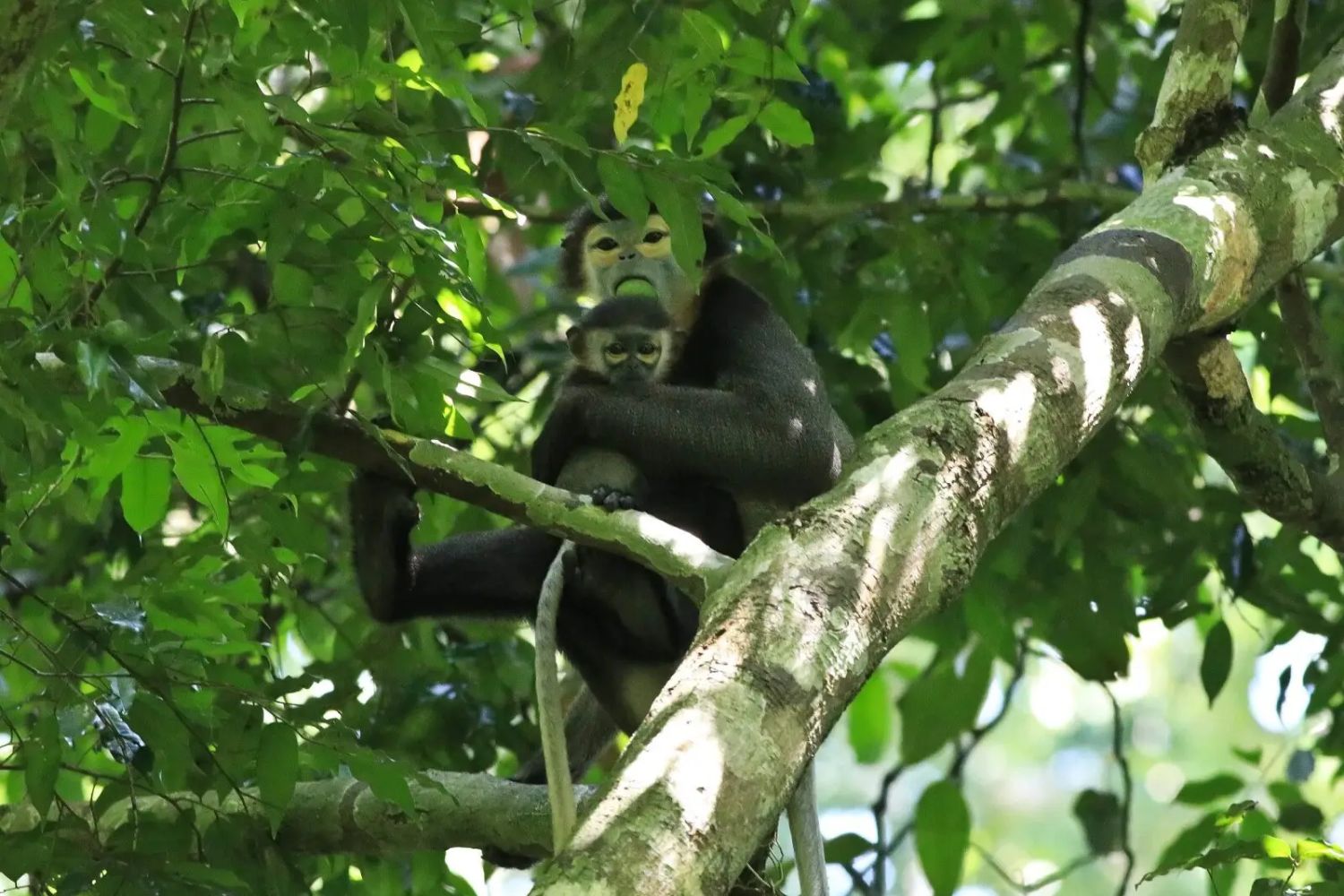
The black-shanked douc langur is known for its bright face and dark legs.
This is the most frequently released species at Dao Tien, with 120 individuals successfully returned to nature. Many are victims of the illegal pet trade and arrive with injuries or removed teeth.
Pygmy slow lorises live in forest habitats across Vietnam and are classified as Critically Endangered in the strictest protection group. In the south, they are recorded in areas such as Bu Gia Map National Park.
Although there is no separate total release number reported for this species, Dao Tien regularly rescues and forms stable social groups for silvered langurs. One notable case involved a newborn confiscated from illegal trade in Kien Giang and transferred to the centre for long term care.
In the wild, this species is found in southern Vietnam, including Bu Gia Map National Park and provinces in the Mekong Delta region.
As of the most recent reports between 2023 and 2025, beyond the individuals already released, Dao Tien continues to care for and rehabilitate approximately 50 to 70 endangered primates. Some have even reproduced successfully within the semi wild environment of the island, showing positive signs for long term conservation efforts.
At Dao Tien, rescue is only the beginning. The ultimate goal is not just to save one animal, but to restore wild populations in a responsible and scientific way. The rehabilitation and release process follows five clear steps, designed under strict international standards.
Step 1: Rescue and Health Checks
Most primates arrive in very poor condition after being confiscated from illegal trade. Many are severely underweight, sometimes only half of their natural body weight. Some suffer from bone problems due to long periods in small cages without sunlight. Others have serious injuries from traps, including infected or damaged limbs.
Quarantine is extremely strict. Each animal is tested carefully to prevent diseases such as tuberculosis from spreading to other individuals at the centre or to wild populations in the future. Only when they are medically stable can they move to the next stage.
Step 2: Nutrition Recovery and Social Grouping
Proper diet is essential. Each species has very specific food requirements. For example, black shanked doucs mainly eat leaves and unripe fruits. Feeding the wrong food can cause serious digestive problems or even death. The team slowly reintroduces natural forest foods to rebuild strength.
Social recovery is equally important. Primates are highly social animals. When kept alone for too long, they often develop stress behaviors such as rocking, hugging themselves, or self harm. Careful pairing and group formation help them rebuild social bonds, learn grooming behaviors, and regain confidence.
Step 3: Semi Wild Rehabilitation
When individuals show stable physical and social behavior, they are transferred to a 20 hectare semi wild forest area on Dao Tien Island. Here they can climb freely, search for food, and move naturally, while still being monitored by staff.
One critical lesson at this stage is learning to avoid humans. Animals must pass a final survival assessment, showing that they can find food, recognize danger, and behave independently. For some gibbons, this process can take many years.
Step 4: Pre Release and Soft Release
Before release, each primate undergoes a final full health check under anesthesia, including blood tests and tuberculosis screening. They are fitted with lightweight VHF or GPS collars, designed to detach automatically after a period of time.
Instead of being released immediately, they are placed in a large temporary enclosure at the actual release site for several days or even over a week. This soft release method allows them to adapt to the new forest environment, sounds, and climate before full freedom.
Step 5: Post Release Monitoring
The work does not end when the cage door opens. Rangers and conservation staff track signals from the collars daily, sometimes trekking through forest and streams for months. Monitoring ensures that the animals can find food, establish territory, integrate into wild groups, or even reproduce successfully.
Animal welfare remains the top priority. If an individual is too dependent on humans or has permanent injuries that prevent survival in the wild, the centre provides lifelong care instead of forcing a release.
Visiting Dao Tien is very different from a normal tourist attraction. This is a working rescue and rehabilitation centre inside Cat Tien National Park, so conservation always comes first. If you are planning a trip, here is what you need to know.
Yes. Visitors can now join the Dao Tien Primate Rescue Center tour, one of the most unique wildlife experiences in the area. The guided tour departs daily at 8:30 AM, includes a short 5-minute boat ride followed by a 700-meter forest walk, and lasts approximately 2 hours. As the tour is limited to 30 visitors per day, advance booking before 7:30 AM is recommended.
Dao Tien is located about 5 minutes by boat from the main headquarters of Cat Tien National Park. The island sits in the middle of the Dong Nai River and is surrounded by natural forest, creating a quiet and controlled environment for rehabilitation work.
When the centre reopens or when special conservation tours are organized, visitors cannot explore freely. All visits are guided and focus on education and wildlife protection.
Trekking Tour to Dao Tien Rescue Centre
This is a short and easy forest walk of about 3 km, lasting around 2 hours. It is suitable for families, students, and older visitors. During the walk, guests can observe golden cheeked gibbons, black shanked doucs, and other primates from a safe distance. Guides explain rescue stories, medical care, and the rehabilitation process. Tours usually start at 8 am from the park headquarters.
Early Morning Wild Gibbon Watching Tour
This is a more special experience. The schedule normally begins from 5:00 to 7:30 AM, when visitors enter the forest to observe wild gibbon families searching for food in their natural habitat. After a short breakfast break, the group may continue to visit Dao Tien, depending on availability.
Tickets cost VND 100,000 for adults and VND 50,000 for children under 1.5 meters tall. If you only visit other areas of Cat Tien National Park, the entrance fee is 60,000 VND for adults, 20,000 VND for students, and 10,000 VND for children.
Due to strict conservation rules, access to Dao Tien can change at any time. Always contact the tourism department of Cat Tien National Park before your trip to check whether gibbon watching tours or Dao Tien visits are available during your travel dates.
Respecting these regulations helps protect endangered primates and ensures long term conservation success.