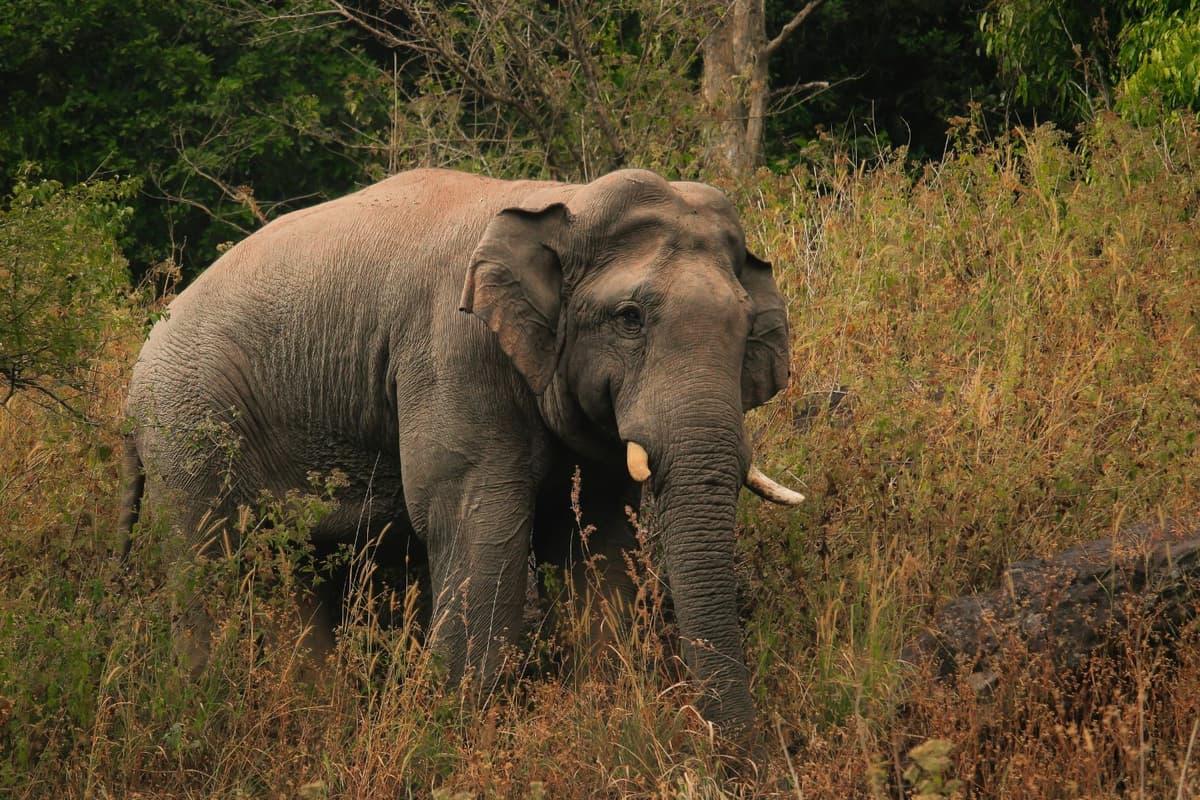
Have you ever imagined a creature that seems to have stepped out of the pages of mythology: with the graceful body of a deer, the four-toed legs of a pig, and the small face of a mouse? That’s the chevrotain (Tragulidae). Not only is it the smallest ungulate in the world, weighing just between 0.7 and 8 kg, but the chevrotain is also known as a "living fossil," preserving primitive traits that date back 34 million years, largely unchanged.
If you want to know more about this fascinating creature, keep reading to discover its unique characteristics and behaviors. Also, don't forget to check out Katien Safari for an up-close encounter with these remarkable animals!
| Common name | Chevrotain (Mouse-deer) |
|---|
| Scientific name | Family Tragulidae |
|---|
| Taxonomy |
Class: Mammalia
Order: Artiodactyla
Family: Tragulidae
Genera: Tragulus, Moschiola, Hyemoschus
Species: 10 extant species
|
| Weight / Size | Weight: around 0.7 - 8 kg. Body length: 40 - 75 cm. |
|---|
| Lifespan | In the wild: 8 - 12 years (approx). |
|---|
| Population | Varies by species; Silver-backed chevrotain is Endangered. |
|---|
| Habitat | Dense tropical rainforests, dry thorny forests. |
|---|
| Range | South/Southeast Asia, China, Central/West Africa. |
|---|
| Diet | Mainly fruit, leaves, shoots, herbs, and mushrooms. |
|---|
| Conservation status | According to the IUCN Red List, ranges from Least Concern to Endangered. |
|---|
Physical Characteristics of Chevrotain
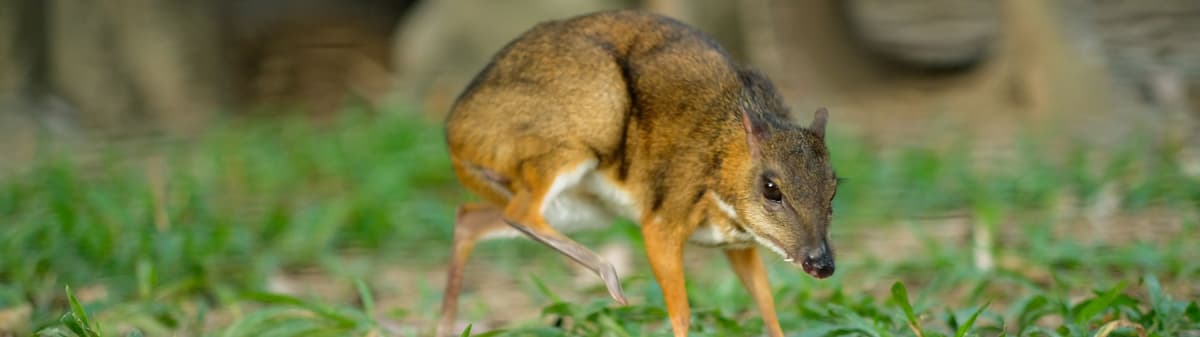
Chevrotains are the smallest ungulate species in the world, combining traits of both deer and pigs. They have a small, compact body with a curved back and slender legs, which are as thin as a pencil. Unlike true deer, they lack antlers or horns and have large eyes and a pointed snout.
Each foot has four toes, a primitive feature similar to pigs, while true deer typically have two. Chevrotains also possess the smallest red blood cells among mammals and can dive underwater for 4-5 minutes to escape predators.
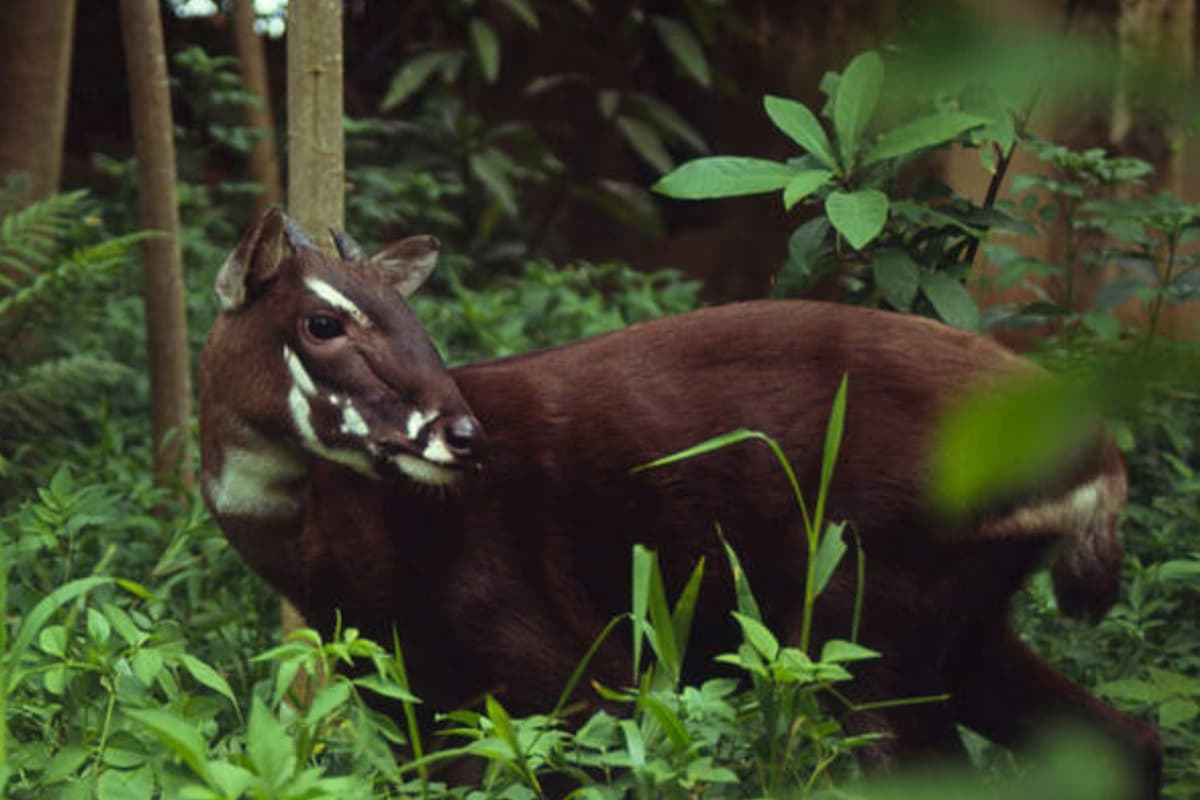
Their coat color varies by species, typically ranging from smooth reddish-brown to lighter spotted or striped patterns. The underside of their neck often has a white stripe, and their belly is lighter. The silver-backed chevrotain, a species endemic to Vietnam, is recognizable by its silver-gray back, contrasting with the reddish-brown front body.
Both sexes have upper canine teeth that protrude, particularly developed in males, and are used as weapons during fights. Asian chevrotains typically weigh between 0.7 and 8.0 kg, with body lengths ranging from 40 to 75 cm. The smallest species, the lesser chevrotain (Tragulus kanchil), grows up to 45 cm tall and weighs 1.5 to 2.2 kg. The largest, the African water chevrotain (Hyemoschus aquaticus), can weigh between 7 to 16 kg and reach 80 cm in length.
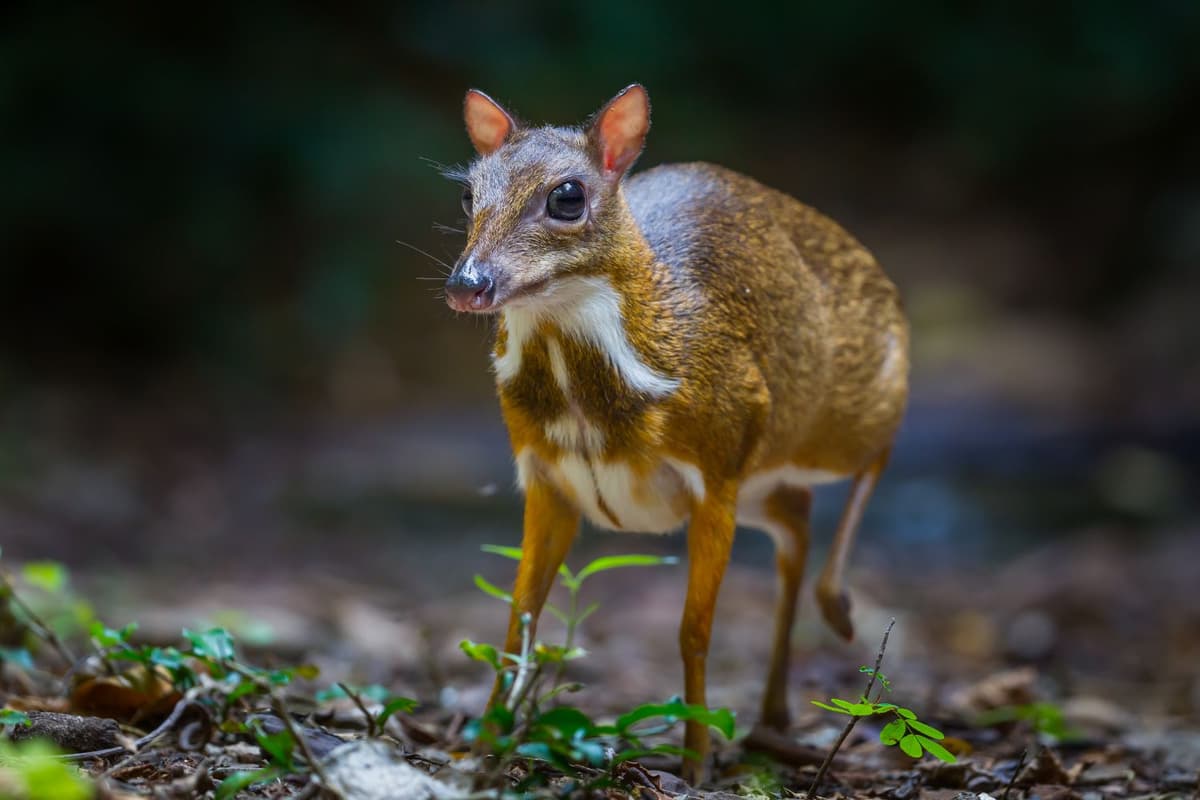
The mouse-deer is tiny, with slender legs and a spotted brown coat.
Global Range and Distribution
Chevrotains are primarily found in Asia, with a significant presence in South and Southeast Asia. They inhabit countries such as India, Sri Lanka, Myanmar, Thailand, Laos, Cambodia, Vietnam, Singapore, Brunei, Malaysia (including both the Malay Peninsula and island states), Indonesia (including Kalimantan, Sumatra, and Java), and the Philippines.
They are also found in the southern part of Yunnan province, China. In Africa, chevrotains are found in the tropical rainforests of Central and West Africa. Historically, the chevrotain family was much more widespread during the Oligocene (about 34 million years ago) to the Miocene (about 5 million years ago).
Chevrotain Habitat Types
Chevrotains prefer dense tropical rainforests with thick canopy cover, where they can use their small size and slender legs to quickly navigate through undergrowth. For example, the Java chevrotain lives in the dense rainforests of Java. They typically inhabit the lower layers of these forests, making use of their ability to move swiftly through thick bushes.
In Vietnam, the silver-backed chevrotain is found in dry, thorny forests with many vines and shrubs. Due to their inability to regulate body temperature effectively, chevrotains avoid hot or arid environments and are confined to more stable forest habitats. Some species, particularly the water chevrotain, are closely associated with water and can dive for long periods to escape predators.
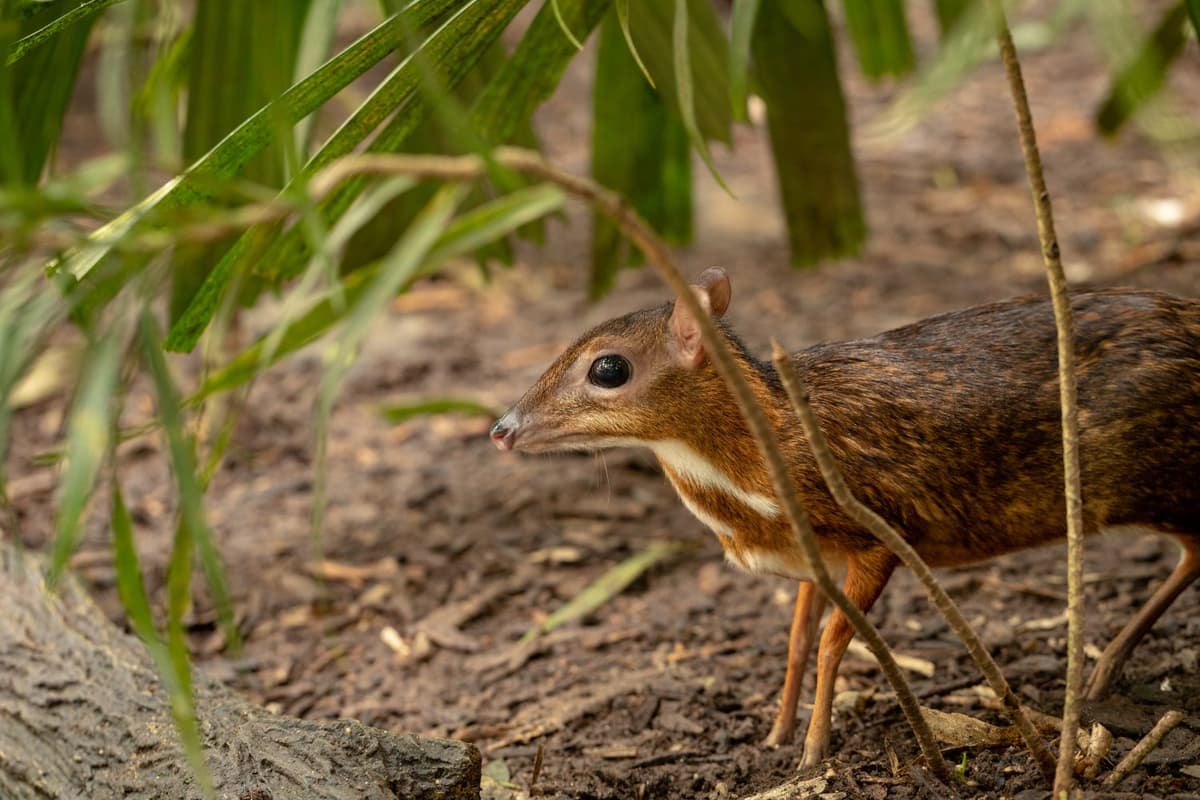
The mouse-deer is tiny, with slender legs and a spotted brown coat.
Chevrotain Distribution in Vietnam
In Vietnam, there are two main species of chevrotains: the small chevrotain (Tragulus kanchil), which is widely distributed across forested regions, and the silver-backed chevrotain (Tragulus versicolor), which is endemic to Vietnam.
After nearly 30 years without scientific confirmation, this species was rediscovered through camera traps in 2019 in the lowland forests of southern Vietnam, particularly in a small area of coastal dry shrub forests.
Chevrotain Cat Tien Habitat
In Cat Tien National Park, the species mentioned is the Javan chevrotain (Tragulus javanicus), the smallest of all hoofed mammals, weighing no more than 2 kg when fully grown. Cat Tien National Park has been actively involved in rescuing and re-releasing chevrotains, particularly those seized from illegal poaching.
The park received 18 chevrotains from the Da Teh Forestry Department, and these individuals were successfully reintroduced into suitable habitats within the park. The environment in Cat Tien, with its lower forest layers and variety of ecosystems, offers an ideal habitat for chevrotains, including secondary forests, shrublands, grasslands, and even planted forests.
Subspecies of Chevrotain
Chevrotains (family Tragulidae) currently consist of 10 extant species distributed across three genera. Initially, scientists recognized only four species, but after reclassification in 2004 and 2005, many subspecies were elevated to distinct species.
Genus Tragulus (Mouse-deer)
This genus is the most diverse, primarily found in Southeast Asia. Species in this group lack distinct spots or stripes on their upper bodies.
- Java chevrotain (Tragulus javanicus): Found on the island of Java, Indonesia. It is the smallest ungulate in the world.
- Small chevrotain (Tragulus kanchil): Widespread across Southeast Asia, including Vietnam, Laos, Cambodia, Thailand, Malaysia (both the peninsula and Sarawak), Singapore, Myanmar, Brunei, Indonesia (Kalimantan, Sumatra, and smaller islands), and southern Yunnan province, China.
- Large chevrotain (Tragulus napu): Found in Southeast Asia, this species has been split to recognize new species like T. nigricans and T. versicolor.
- Philippine chevrotain (Tragulus nigricans): Previously considered a subspecies of T. napu, it is found in the Philippines.
- Silver-backed chevrotain (Tragulus versicolor): Endemic to Vietnam. It was once considered a subspecies of T. napu until it was reclassified in 2004.
- Williamson’s chevrotain (Tragulus williamsoni): Split from T. javanicus in 2004.
Genus Moschiola (Chevrotain)
These species typically have light spots or stripes on their upper bodies.
- Indian spotted chevrotain (Moschiola indica): Found in India. It was separated from M. meminna in 2005.
- Sri Lankan spotted chevrotain (Moschiola meminna): Found in Sri Lanka.
- Yellow-striped chevrotain (Moschiola kathygre): Found in Sri Lanka. This species was also split from M. meminna in 2005.
Genus Hyemoschus (Water Chevrotain)
Water chevrotain (Hyemoschus aquaticus): The only species in the family found in Africa, specifically in the tropical rainforests of Central and West Africa.
Extinct Genera and Species
Several chevrotain genera, which were once widely distributed during the Miocene and Oligocene epochs, are now extinct:
- Dorcatherium: Fossils found in Pakistan and Central Europe.
- Dorcabune: Fossils found in Pakistan.
- Afrotragulus: Fossils found in Kenya.
- Siamotragulus: Fossils found in Thailand.
- Archaeotragulus: Fossils found in Thailand, dating back to the late Eocene.
- Krabitherium: Fossils found in Thailand.
Diet
Chevrotains are primarily herbivorous, feeding almost entirely on plant material. They forage on the forest floor for fruits, leaves, shoots, herbs, and mushrooms. Unlike many other ungulates, they do not consume grass. The water chevrotain (Hyemoschus aquaticus) occasionally supplements its diet with insects, crabs, or carrion, such as fish and meat.
Feeding habits of chevrotains are similar to those of ruminants, as they lack upper incisor teeth. However, they have long, sharp canine teeth, which are especially developed in males and used in fights.
Their stomach is divided into four chambers to ferment tough plant material, but the third chamber (the "leaf stomach") is often underdeveloped. Studies on the small chevrotain (Tragulus kanchil) show that its stomach consists of only three chambers: the grass stomach, the honeycomb stomach, and the starfruit stomach, with no distinct leaf stomach present.
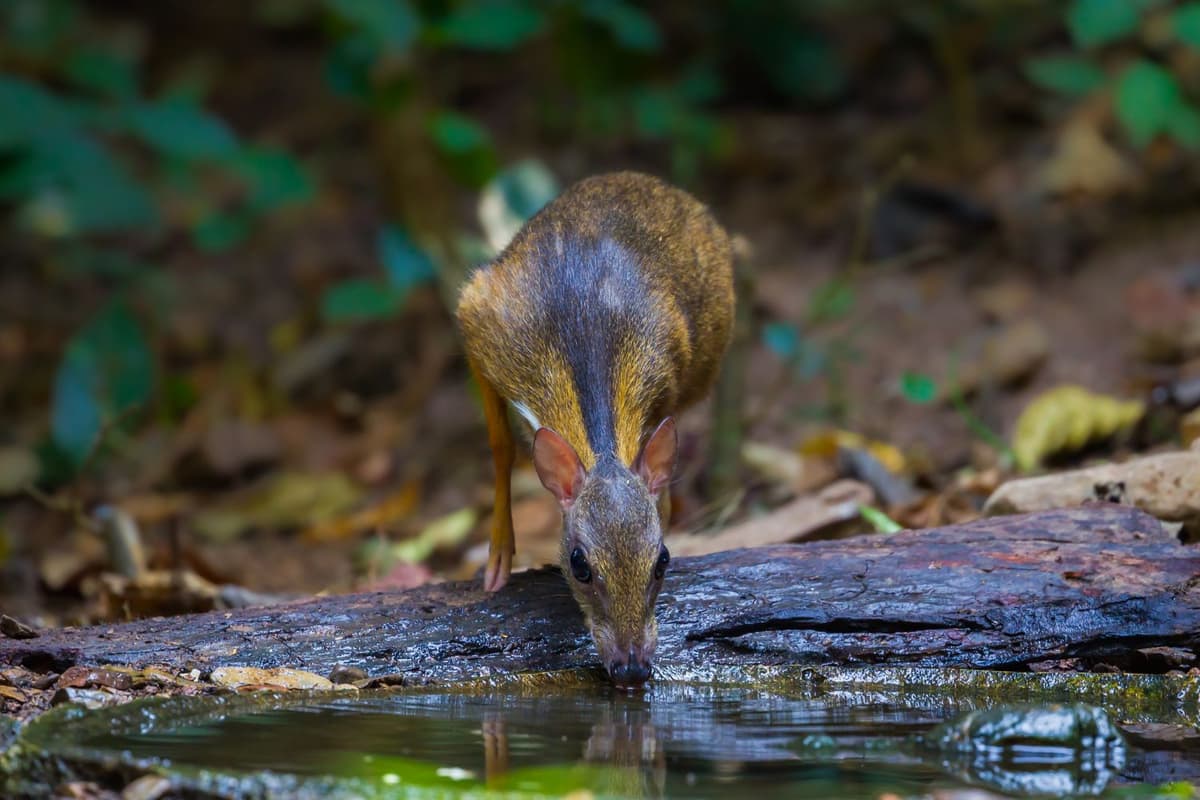
The mouse-deer is tiny, with slender legs and a spotted brown coat.
Habit and Behavior
Nocturnal Activity
Chevrotains are generally nocturnal, with species like the silver-backed chevrotain (Tragulus versicolor) being most active at night, making them easier to observe during evening hours. The Javan chevrotain is also known to be nocturnal and has excellent night vision.
In contrast, the small chevrotain (Tragulus kanchil) is diurnal, with peak activity during dawn (04:00-06:00) and dusk (18:00-19:00). Studies show that small chevrotains sleep in multiple phases throughout the day and night, adjusting to the needs of a small herbivore living in the tropical forest.
Solitary Behavior
Chevrotains are shy and solitary animals, often striving to remain hidden to avoid detection. They primarily live alone, although they may occasionally be found in loose pairs. Each individual's territory is relatively small, ranging from 13 to 24 hectares. Despite living in proximity, neighboring chevrotains tend to ignore each other rather than compete aggressively.
Unlike many other herbivores, chevrotains lack facial scent glands but have a chin gland to mark mates or rivals. The water chevrotain, in particular, also has anal and prostate glands used for marking territory.
Reproduction of Chevrotain
Chevrotains have relatively flexible reproductive cycles compared to many other ungulates. Females are capable of reproducing year-round, though most births tend to occur in May, November, or December. Typically, a female gives birth to a single offspring per litter.
Newborn chevrotains, known as "calves" or "fawns," are very small compared to their mothers. They can stand or rest in dense underbrush shortly after birth. Observations in the wild show that parental interaction is not particularly close. Care from the mother is limited, and the young are weaned by about 3 months of age.
As small and vulnerable prey animals, young chevrotains tend to hide in the lower forest layers or dense shrubs to avoid predators from an early age. Chevrotains reach sexual maturity at a very young age, typically between 5 to 10 months, depending on the species. Remarkably, female chevrotains can conceive just 90 minutes after giving birth.
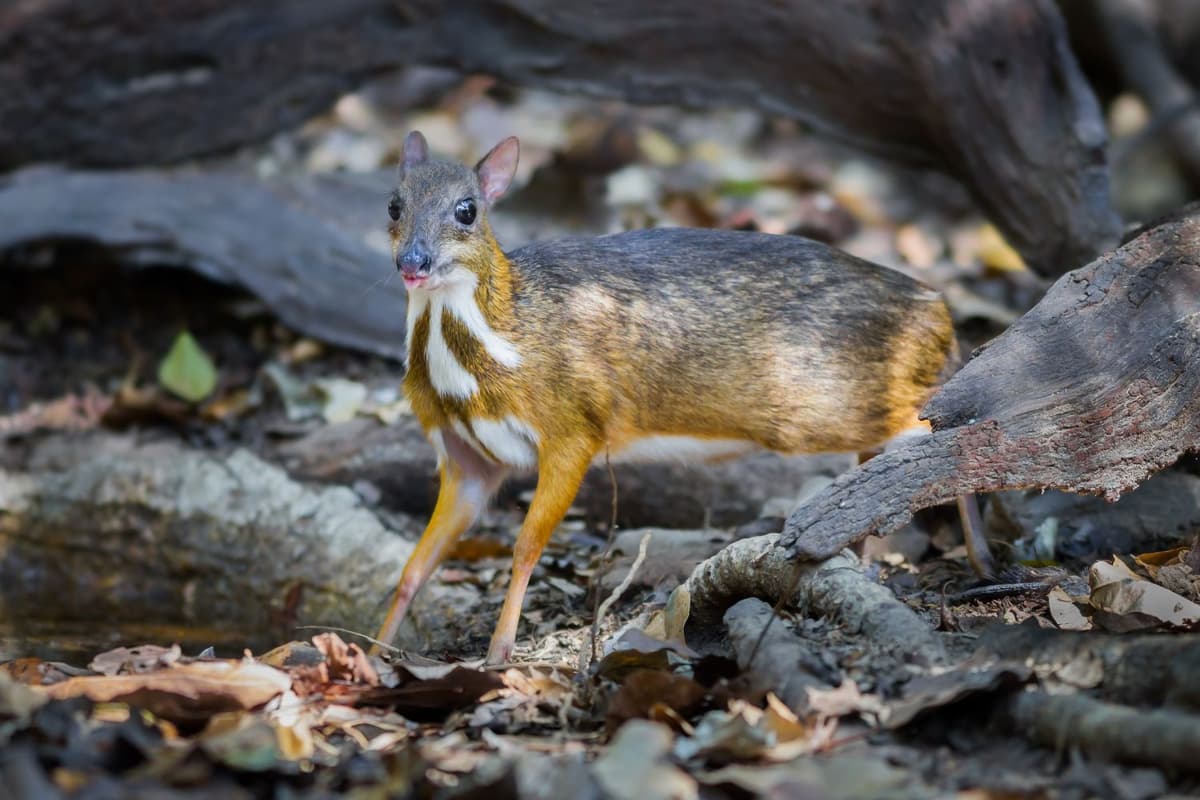
Female chevrotains are usually smaller and lack the long tusk-like teeth seen in males.
Threats and Conservation
Threats to Chevrotain survival
In the wild, chevrotains face significant threats from predators like leopards, wild dogs, and pythons. Feral dogs, in particular, pose a major risk to smaller chevrotain species in some areas. When threatened, chevrotains exhibit rapid foot stamping, reaching speeds of up to 7 times per second, and some species can dive underwater and stay submerged for extended periods to evade predators. Their small size and slender legs allow them to move swiftly through dense underbrush to escape danger.
Lacking antlers, male chevrotains use their long, sharp canine teeth, resembling those of a demon, as their primary weapon in fights. However, human activities are one of the biggest threats to their survival.
Poaching, especially for bushmeat, and the use of snare traps are prevalent in Southeast Asia. These traps are cheap, easy to make, and indiscriminate, often capturing all types of ground-dwelling animals. Even if chevrotains manage to escape, they frequently succumb to injuries or infections.
In addition to poaching, habitat loss due to deforestation, land conversion, and forest degradation has significantly reduced their natural habitat. Natural predators, including leopards and pythons, as well as feral dogs, further endanger their populations.
Conservation Status
The conservation status of chevrotains varies by species and region. The small chevrotain (Tragulus kanchil) is listed as Least Concern by the IUCN Red List. The silver-backed chevrotain (Tragulus versicolor), endemic to Vietnam, was once feared to be extinct due to nearly 30 years without scientific confirmation. However, it was rediscovered in 2019 and is now classified as Endangered. The silver-backed chevrotain also holds a special place in conservation efforts, having been listed in the "25 Most Wanted Lost Species" by Global Wildlife Conservation before its rediscovery.
Conservation Projects
Numerous initiatives are underway to protect chevrotains:
- Silver-backed chevrotain rediscovery: A collaboration between GWC, the Institute of Tropical Biology (Vietnam), and the Leibniz Institute for Zoo and Wildlife Research (Germany) used camera traps to confirm the presence of this species in southern Vietnam in 2019.
- Snare trap removal campaign: In protected areas like the Saola reserves in Hue and Quang Nam, forest rangers have removed over 127,057 snares from 2011 to 2019.
- Rescue and re-release at Cat Tien: Cat Tien National Park has successfully received and re-released 18 Javan chevrotains that were seized from illegal poaching operations back into suitable natural habitats.
- European Endangered Species Programme (EEP): ARTIS is collaborating on programs to maintain genetically healthy chevrotain populations in zoos, aiming for future reintroduction into the wild.
- Legal reform proposals: Experts are urging the government to strengthen laws, ban the possession of snare-making materials in protected areas, and increase penalties for wildlife poaching crimes.
Watch Chevrotain in Cat Tien National Park
If you're eager to spot chevrotains in their natural habitat, Cat Tien National Park is a great place to start. Though nocturnal by nature, they are most active during dawn and dusk, with peak times from 4:00-6:00 AM and 6:00-7:00 PM. Chevrotains prefer living near water sources and dense forests, especially secondary forests, where they can find plenty of food, such as shrubs and fallen fruits.
These shy animals sleep about 50% of the day, often with their eyes partially open to stay alert. Loud noises or sudden movements can cause them extreme stress, so it’s important not to attempt to capture or disturb them.
At Katien Safari, we've worked closely with the management of Cat Tien National Park to bring small groups of tourists deep into the forest to observe these elusive creatures in their natural environment. This initiative not only offers a unique wildlife experience but also supports conservation efforts to protect the chevrotain and other species in the park.
Interesting Facts about Chevrotain
1. Chevrotains are the smallest ungulates in the world, distinct from both mice and deer.
2. They can dive and walk underwater for up to 4-5 minutes, indicating an evolutionary link to whales.
3. Female chevrotains can conceive just 90 minutes after giving birth.
4. Chevrotains are known for having the smallest red blood cells of any mammal, making medical tests challenging.
5. Unlike deer, chevrotains lack antlers and instead have long canine teeth used for fighting.
Reference
- Center for Nature Conservation and Development. (n.d.). Bảo tồn cheo cheo lưng bạc và Hệ sinh thái rừng khô hạn ven biển của Việt Nam. [1–5]
- Coyne, J. (2009, July 7). The water chevrotain: almost like a whale. Why Evolution Is True. [289–302]
- Hazwan, M., Samantha, L. D., Tee, S. L., Kamarudin, N., Norhisham, A. R., Lechner, A. M., & Azhar, B. (2022). Habitat fragmentation and logging affect the occurrence of lesser mouse‐deer in tropical forest reserves. Ecology and Evolution, 12, e8745. https://doi.org/10.1002/ece3.8745 [72–138]
- Khao Sok National Park. (n.d.). Mouse deer. [168–177]
- Lyamin, O. I., Siegel, J. M., Evsigneev, R. V., Nazarenko, E. A., & Rozhnov, V. V. (2021). Characteristics of Sleep–Wakefulness Cycle and Circadian Activity in the Lesser Mouse-Deer (Tragulus kanchil). Doklady Biological Sciences, 500(1), 153–158. https://doi.org/10.1134/S0012496621050069 [6–43]
- Lyamin, O. I., Siegel, J. M., Nazarenko, E. A., & Rozhnov, V. V. (2021). Sleep in the lesser mouse-deer (Tragulus kanchil). SLEEP, zsab199. https://doi.org/10.1093/sleep/zsab199 [182–273]
- Re:wild. (n.d.). Silver-backed Chevrotain. [178–181]
- Rivas, A. (2018, March 9). Is it a Mouse? Is it a Deer? Wild View (Wildlife Conservation Society). [153–157]