The saola, often referred to as the “Asian Unicorn” (Pseudoryx nghetinhensis), is a rare and elusive mammal found nowhere else in the world except in the Annamite Mountains along the Vietnam - Laos border. First described by scientists in 1992, the species is notable for its extreme rarity, narrow distribution, and highly secretive nature, which have left much of its life still unknown. Saola are also particularly sensitive to disturbance, especially to dogs used in hunting, making them especially vulnerable in landscapes increasingly shaped by human activity.
| Common name | Saola |
|---|
| Scientific name | Pseudoryx nghetinhensis |
|---|
| Taxonomy
|
Kingdom: Animalia
Phylum: Chordata
Subphylum: Vertebrata
Class: Mammalia
Family: Bovidae
Genus: Pseudoryx
|
| Weight / Size | Weight: 80 to 100 kg |
|---|
| Lifespan | 8 - 12 years |
|---|
| Population | ~250 individuals |
|---|
| Habitat | Moist, dense evergreen forest |
|---|
| Range | Eastern Southeast Asia: Vietnam, Laos |
|---|
| Diet | Plant Foods |
|---|
| Conservation status | Critically Endangered (IUCN Red List) |
|---|
Physical Characteristics of Saola
The saola (scientific name: Pseudoryx nghetinhensis) is a rare wild mammal in the Bovidae family and the only species in the genus Pseudoryx. Often called the “Asian Unicorn,” the saola earned this nickname because of its striking appearance and its extremely rare sightings in the wild.
The saola has a small but strong body that helps it move easily through dense forests in the mountains. One special feature is its “parallel horns.” Both males and females have long, straight horns that run almost side by side and curve slightly backward. The horns are about 35 to 50 cm long and mostly smooth, with a few small ridges near the base. The saola weighs about 80 -100 kg. Unlike many other animals, it is hard to tell males and females apart just by looking at their horns.
The coat of the saola is one of its most striking features. The upper body is covered in short, fine hair that ranges in color from deep chestnut brown to almost black, while the underparts are lighter brown and softer in texture. The inner legs and rump are white, creating strong contrast with the darker body. A thin black stripe runs along the spine from the shoulders to the tail. The tail itself is clearly banded, with brown at the base, a white middle section, and a black tip ending in a small fluffy tassel.
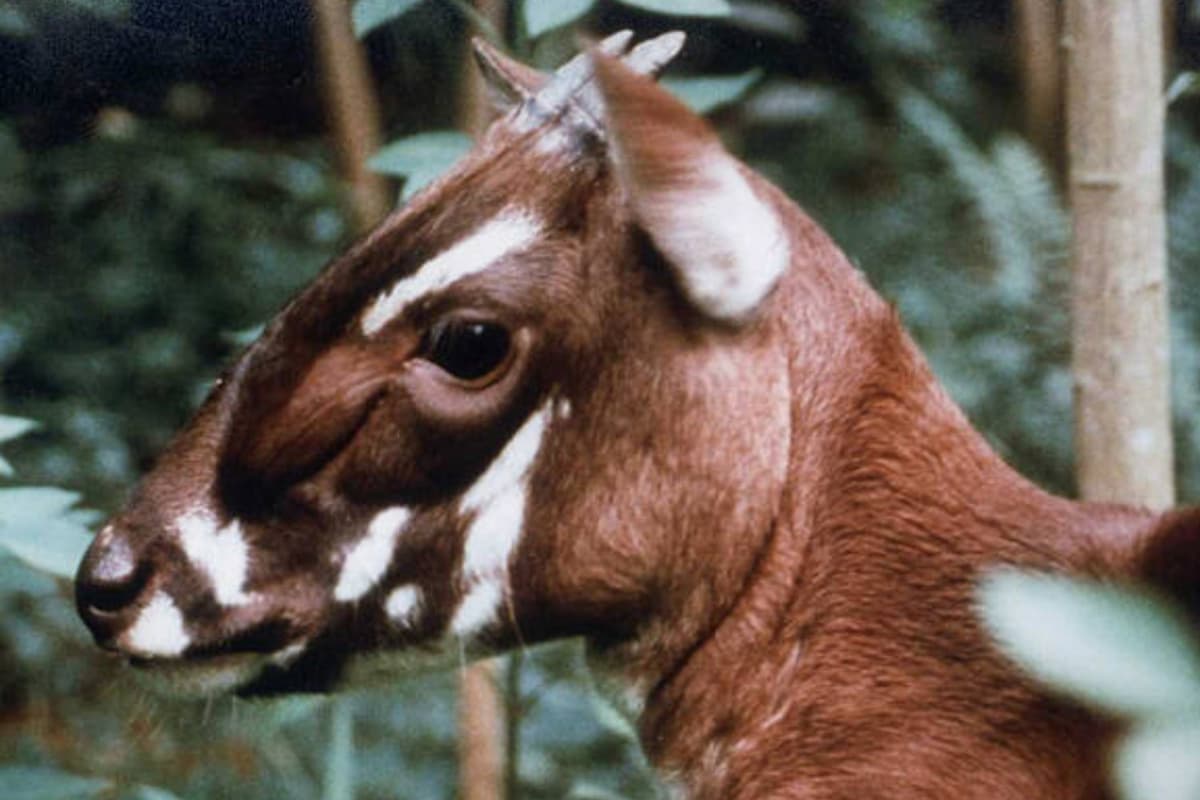
Saola has long, thin white stripes above each eye, resembling eyebrows. Photo: WWF
The saola’s face is highly distinctive. It has a narrow muzzle, small ears, and dark brown eyes. White markings form long, thin stripes above each eye, giving the appearance of eyebrows, along with additional pale patches on the cheeks and jaw. One of the most unusual features of the saola is its very large maxillary (preorbital) glands located in front of the eyes. These glands can release a strong-smelling secretion and are thought to play an important role in communication. This rare combination of elegant horns, bold facial markings, and unique scent glands makes the saola one of the most unusual and recognizable mammals in the world.
The Saola Population: A Race Against Extinction
The remaining forest within the saola’s historical range covers about 5,000 - 15,000 km², but much of this area is likely no longer occupied by the species. Today, saola are believed to survive in only 6-15 isolated subpopulations, each probably containing fewer than 50 individuals. As a result, the total population is certainly under 750, and likely much lower. The Annamite Range's Saola population is therefore considered extremely small and highly fragmented, increasing the risk of local extinction.
The saola is known as a “living ghost” because it is so rarely seen in the wild. This elusive creature is extremely difficult to find, and most evidence today comes from camera trap photos taken in remote forests. Local people have only reported a small number of sightings in the past decade, showing just how rare it is.
By 2003, these populations were thought to have declined by around 50%. Due to continued hunting pressure and habitat loss, the current saola population is now believed to be fewer than 250 mature individuals, placing the species among the rarest large mammals in the world.
Saola Global Distribution and Habitat
Saola Distribution
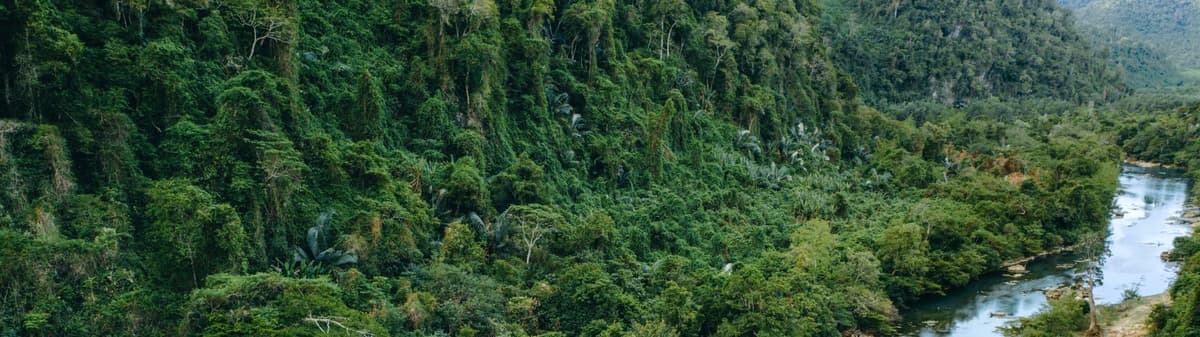
Saola lives only in the Annamite Mountains along the border of Vietnam and Laos. These areas are part of the Annamite Range moist forests, known for dense vegetation, high humidity, and limited human access. The species was first identified from a skull found in Vu Quang National Park, a historically important location that marked the scientific discovery of this rare animal.
In Vietnam, most records of saola Vietnam are found south of the Song Ca River, extending as far south as Quang Nam Province (now part of Da Nang). A small population of saola Vietnam has also been recorded north of the Ca River, especially in Phu Houng Nature Reserve.
In Laos, evidence of saola presence has been reported in several provinces, including Xieng Khouang, Bolikhamxay, Khammuon, Savannakhet, and Xekong. These locations are all within the Annamite mountain system and share similar forest conditions. This shows that the saola distribution in Vietnam and Laos is uneven and very localized.
Today, Saola - The Asian unicorn is believed to survive in fewer than ten large forest areas across both countries. Its total known living range is only around 4,000 km², while historical estimates suggest it may once have covered up to 15,000 km². Saola are rarely found in small or fragmented forests and mainly depend on large, well-protected forest blocks where hunting pressure is lower.
Saola Habitat
The saola is an endemic species of the Annamite Range and lives in a very specific environment. It mainly stays in wet evergreen forest and moist tropical areas along the Vietnam - Laos border. These forests are always humid, with little or no dry season and steady rainfall throughout the year. Most of this habitat is found on the eastern side of the mountains in Vietnam, where moist air brings frequent rain. In Laos, this type of forest is less common and only appears in certain valleys where enough moisture can reach.
Saola are usually found in a montane habitat at mid elevations, especially between 500 and 800 meters above sea level. They are rarely seen above 1,200 meters. The species prefers quiet, undisturbed places such as areas near streams, humid valleys, and connected forest paths. This shows that the saola depends strongly on very specific natural conditions.
Saola are shy and secretive animals that move through continuous forest landscapes rather than open or fragmented areas. They are extremely sensitive to habitat loss and forest fragmentation, making large, well-connected forest blocks essential for their survival.
Saola Diet and Behavior
Saola Diet
What do saola eat? The saola feed exclusively in the wild and rely entirely on natural forest vegetation. They browse on soft, leafy plants such as ferns, flowering plants, young leaves, fig leaves, and tender stems, most often found along rivers, streams, and forest trails within dense forests. The saola is a gentle and careful feeder. Observations of a captive female showed that she did not pull or tear plants strongly while feeding. Instead, she slowly chewed the leaf stems to separate the leaves before eating them.
Local villagers have also noted that saola often consume the medicinal plant Homalomena aromatica, which grows in moist forest areas. This behavior suggests that the species may naturally select specific plants that support both nutrition and overall health.
Saola Behavior
Very little is known about the behavior of the saola because it is extremely rare and difficult to observe in the wild. Most information comes from camera traps, local reports, and a small number of observations of captive individuals.
The saola is mainly active during the day, especially in the early morning and late afternoon. It may also be active at night, but it usually avoids moving when the sun is strongest. While resting, the saola often tucks its front legs under its body and stays very still.
The saola are mostly solitary animals. They usually live alone, although they are sometimes seen in pairs or small groups of two or three individuals. These small groups are often a mother with her young. Large groups are very rare. This shy animal prefers to move quietly through dense forests and avoids open areas. The saola strongly avoids humans and never enters farmland or agricultural land. It travels through thick vegetation and natural forest paths, which makes it very hard to detect in the wild. Because of this secretive lifestyle, sightings of saola are extremely rare.
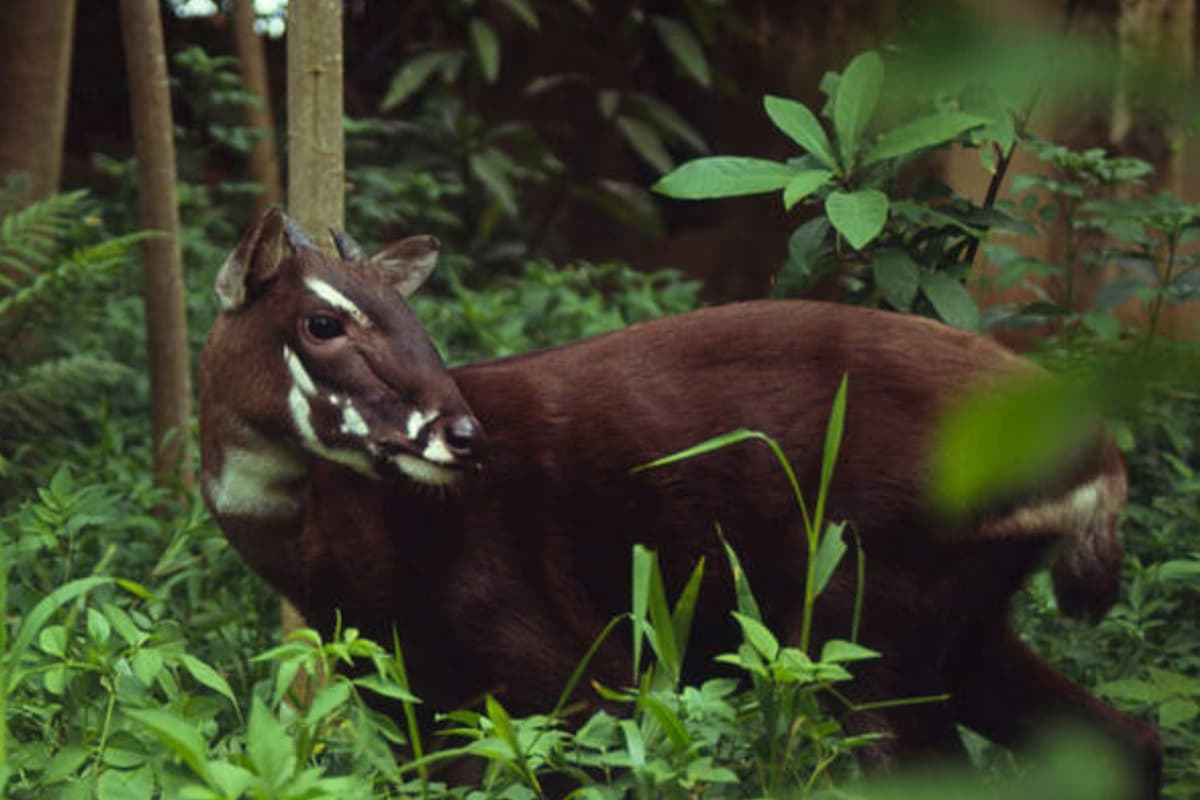
This shy animal quietly moves through dense forests, avoiding open areas. Photo: WWF
Communication in saola relies mainly on scent. The species has large scent glands on its face, which are used to leave scent marks and signal its presence to other saola. They may also break small branches or saplings with their horns as a way to mark paths or send social signals, rather than defending fixed territories.
When threatened, especially by dogs, the saola shows strong defensive behavior. It faces the danger directly, lowers its head, arches its back, and points its horns toward the threat. In the wild, saola are reported to run to nearby streams when chased and make a defensive stand there.
Grooming is an important daily activity. The saola use their long tongue to lick their face and body, especially to remove flies. They also clean their muzzle after feeding or drinking. The only known sound made by the saola is a soft, quiet bleat that lasts about one second.
Reproduction and Offspring
Saola reproduction and breeding is slow and limited, which makes the species especially vulnerable. Saola are mainly solitary animals, and only small groups of 2 or 3 individuals are sometimes observed. The Saola mating season is believed to occur between August and November. Females usually carry 1 calf at a time, as single-foetus pregnancy is the norm.
The gestation period of Saola is about 8 months, and they appear to breed once per year. Information on Saola calf development is very limited, but calves are thought to stay close to their mothers during early life. She feeds the calf with her milk, protects it from danger, and may also help keep it clean through grooming. There is no clear information about how long a young saola stays with its mother, but based on similar species in the same family, this period is thought to last about one year.
Saola Lifespan
Information about the Saola life cycle facts, especially lifespan, is still very limited. Little is known about how long Saola lives in the wild. In captivity, most individuals have survived less than five months, likely due to stress and the lack of a suitable natural diet.
No clear estimate of the species’ life expectancy is available. However, one adult female examined by Robichaud (1998) was estimated to be around 8 - 9 years old, suggesting that Saola may live much longer under natural conditions.
Threats to and Conservation of Saola
Threats to the Saola
The saola is listed as Critically Endangered on the IUCN Red List, the last step before extinction. Understanding why the saola is endangered means looking closely at the main pressures pushing this rare species toward disappearance.
The biggest threats to the saola come from hunting and poaching. Saola are not usually hunted on purpose, but they often become bycatch in snares set for other animals. These wire traps are widely used to supply the local wild meat trade and the international wildlife trade.
As demand for rare wildlife products grows in China and other Asian countries, more poachers enter saola habitats and set thousands of snares each year. This heavy pressure not only reduces the population but also increases the risk of a genetic bottleneck, making it harder for the species to survive in the long term.
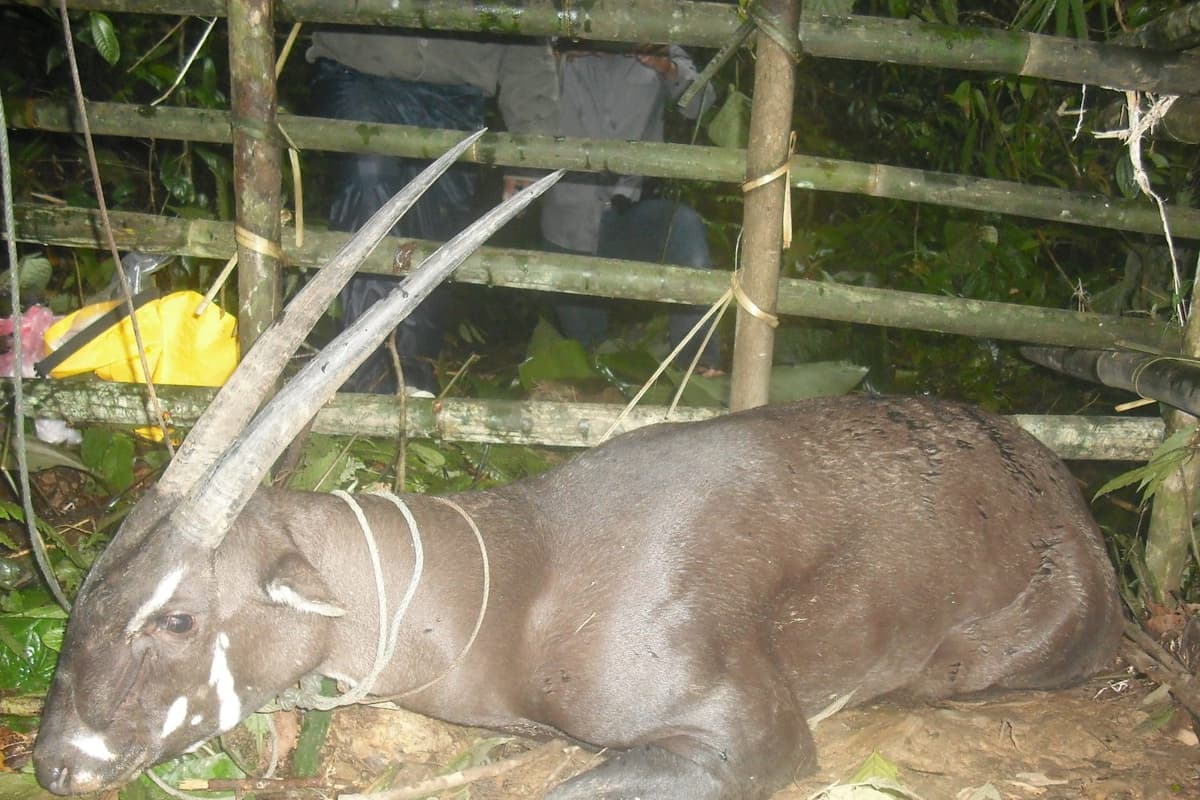
The saola is threatened by traps set by hunters targeting other animals. Photo: Bolikhamxay Provincial Conservation Unit
Habitat loss is another serious of the saola extinction threat. As human populations grow and roads expand, forests in Vietnam and Laos are being cut and divided. Major roads, such as the Ho Chi Minh Road, make it easier for hunters to reach deep forest areas and transport wildlife to markets. This destroys saola habitats and makes survival even harder for the species.
The saola’s natural predators include tigers, leopards, and dholes, but humans are the greatest threat to its survival. The Saola are especially afraid of dogs. While they are usually calm around people, dogs trigger a strong defensive response. When confronted by dogs, a saola will face the threat, arch its back, bring its feet close together, and lower its head so that the sharp horn tips point toward the attacker.
Together, intense hunting pressure and rapid habitat loss continue to drive the saola closer to extinction.
Conservation
Protecting the Asian unicorn requires both field action and long-term planning. In central Vietnam, forest protection is a key part of saola Vietnam conservation. In Thua Thien Hue, forest guards working with WWF and local communities have removed major hunting threats. By the end of 2015, more than 75,000 snare traps were taken out, and about 1,000 illegal hunting and logging camps were destroyed in Hue and Quang Nam Saola Nature Reserves.
Many forest guards were former hunters, so they are highly skilled at finding snares. After receiving training, they were offered more sustainable livelihoods that help protect the forest instead of harming it. This work was carried out under the Carbon and Biodiversity (CarBi) Project, with support from the German development bank KfW.
To strengthen habitat protection, Huế authorities established the Saola Nature Reserve in early 2025. Covering more than 19,000 hectares, the reserve helps protect natural forests in the Central Annamites and provides a safer environment for endangered species, including the Vietnam unicorn.
However, protecting saola in the wild is not enough. Conservationists are also developing captive breeding programs for saola. WWF-Viet Nam, together with ReWild, Wroclaw Zoo, the Asian Turtle Programme, and Bach Ma National Park, is building a conservation breeding centre. This centre aims to support the survival of saola and other rare species, with the goal of releasing them back into protected forests in the future.
At the international level, the Saola Working Group (SWG) was established in 2006 by the IUCN Species Survival Commission. The group brings together conservation experts working in Vietnam and Laos to coordinate research, protection, and conservation strategies for saola.
Despite many conservation efforts, the saola is still under serious threat. Illegal hunting, snare traps, and human activities continue to put pressure on the remaining population. Without continued and coordinated efforts, the saola remains at high risk of extinction.
Interesting Facts of the Saola
1. Although the saola is often called the “Asian unicorn,” this name can be misleading. The saola is not a mythical creature but a real species of wild cattle found only in the Annamite Mountains of Vietnam and Laos. Even more surprising, it does not have one horn, it has two long, straight horns, in both males and females. The nickname “Asian unicorn” actually refers to how rare and elusive the saola is. It is so difficult to find that no scientist has ever observed a saola directly in the wild..
2. The saola is considered one of the rarest large land mammals on Earth. Scientists believe that only a very small number remain in the wild, possibly just a few hundred or even fewer.
3. The Saola cannot survive in captivity. So far, at least twenty saola have been taken into captivity, but almost all of them died soon after. Only two saola survived and were later released back into the wild. Because of this, zoos and wildlife centers cannot keep or breed saola. This means the best way to protect the saola is to protect its natural habitat in the wild.
4. Saola lives only in the Annamite Mountains, along the border between Vietnam and Laos. They do not exist anywhere else in the world.
5. The saola is related to cattle, goats, and antelopes.
6. Saola horns never fall off. Unlike deer, their horns are hollow and stay for life.
7. The saola’s tongue is so long that it can lick its own eyes and the pores on its face.
8. The saola is very gentle around humans but extremely sensitive to stress. Many individuals have died just days after being captured due to severe stress.
Reference
- IdrWorld Wide Fund for Nature Asia. (2016.). Saving the saola: Saving the saola: A 20th century discovery, a 21st century challenge [PDF]. WWF Asia. https://wwfasia.awsassets.panda.org/downloads/saving_the_saola_brief_final.pdf
- Timmins, R. J., Hedges, S., & Robichaud, W. (2020). Pseudoryx nghetinhensis. The IUCN Red List of Threatened Species.
- Ultimate Ungulate. (2024). Pseudoryx nghetinhensis (Saola). Retrieved January 29, 2026, from https://www.ultimateungulate.com/Artiodactyla/Pseudoryx_nghetinhensisFull.html
- Helen Pidd (2010), “‘Asian unicorn’ dies after capture in Laos“, The Guardian.
- World Wide Fund for Nature. (2005). Introducing the saola (Pseudoryx nghetinhensis) [PDF]. https://wwfint.awsassets.panda.org/downloads/2gafactsheete.pdf