In the world of scaly reptiles, while crocodiles rule the waters, monitor lizards (Varanidae) can undoubtedly be crowned as the kings of the land. This family of lizards includes the largest carnivorous reptiles on Earth, with the Komodo dragon (Varanus komodoensis) being the most iconic example. Not only do they possess enormous size and continuously replace sharp teeth like sharks, but they are also formidable hunters, sitting at the top of the food chain in their habitats.
Curious about how these apex predators live and hunt? Read on to explore their fascinating behavior, habits, and unique characteristics that make them truly extraordinary creatures of the wild.
| Common name | Monitor lizards |
|---|
| Scientific name | Family Varanidae |
|---|
| Taxonomy |
Class: Reptilia
Order: Squamata
Family: Varanidae
Genus: Varanus
|
| Species | About 80 extant species |
|---|
| Weight / Size | Length: 20 cm – over 3 m depending on species.
Weight: from a few hundred grams to about 90–100 kg (Komodo dragon). |
|---|
| Lifespan | In the wild: about 10 – 30 years depending on species. |
|---|
| Population | Varies by species; some species stable while others are declining. |
|---|
| Habitat | Tropical forests, savannas, wetlands, mangroves, riverbanks, and deserts. |
|---|
| Range | Africa, South and Southeast Asia, Australia, and parts of Oceania. |
|---|
| Diet | Carnivorous or omnivorous; eat insects, fish, birds, eggs, reptiles, mammals, and carrion. |
|---|
| Conservation status | Most species: Least Concern, but some like the Komodo dragon are Endangered according to the IUCN Red List. |
|---|
Physical Characteristics of Monitor Lizards
Monitor lizards are a diverse group of reptiles, ranging in size from 20 cm to over 3 meters. The largest species, the Komodo dragon (Varanus komodoensis), is the world's biggest living lizard, growing beyond 3 meters in length and weighing between 90 to 100 kg. In contrast, the smallest species, Varanus sparnus, only reaches about 20 cm when fully grown.
These reptiles grow rapidly. Within just 4 months, a monitor lizard can weigh 2–4 kg. After a year, a juvenile lizard weighing around 1 kg can increase to 9–13 kg. Their growth is closely tied to the shedding of their skin, which boosts their growth rate after each molt.
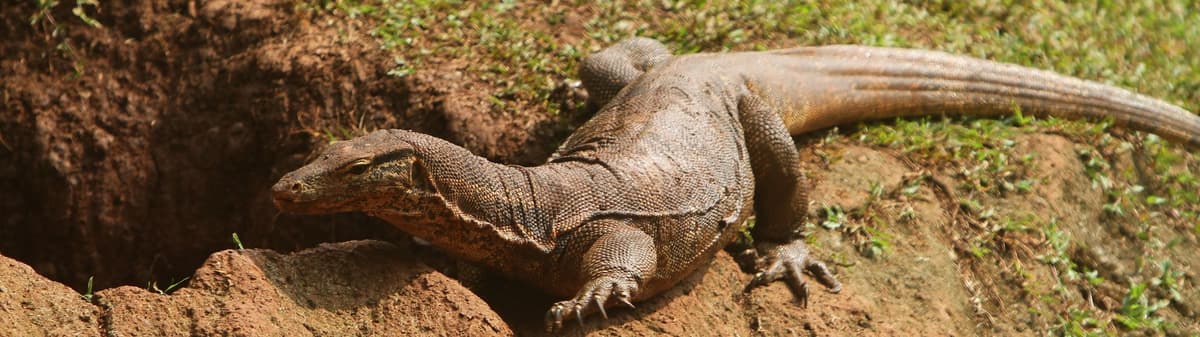
Monitor lizards are characterized by long necks, strong bodies, and powerful tails. Their legs are sturdy, with five toes on each foot, equipped with sharp claws. Their heads are triangular, with pointed snouts. Unlike most reptiles, monitor lizards have a well-developed septum in their heart, which divides the pulmonary and systemic blood flow, a trait they share with mammals. This adaptation enhances their active hunting abilities. Their unique respiratory system, with unidirectional airflow and air sacs, resembles that of birds.
Young monitor lizards have bright, high-contrast patterns, such as black bodies with yellow spots. As they mature, these patterns fade, and they typically turn a more subdued brownish-yellow or gray. Additionally, monitor lizards can change their skin color slightly, helping them blend into their surroundings for protection against predators or prey.
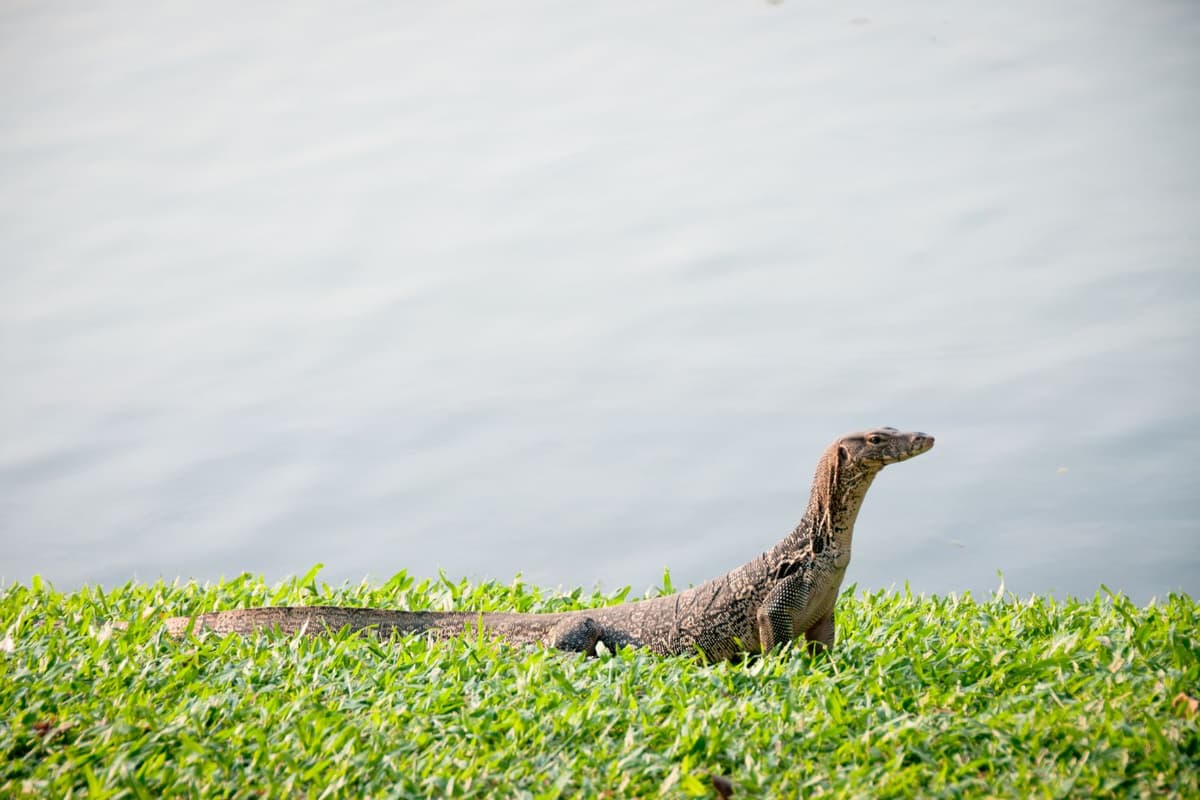
Monitor lizards have long bodies, powerful tails, and sharp claws.
Subspecies of Monitor Lizards
The Varanus genus, which encompasses all monitor lizards, is divided into several ecological groups. Here are the most notable ones:
- True Monitors (Varanus): These are the largest and strongest species. The Komodo dragon (Varanus komodoensis) is the largest living lizard, found in Indonesia. The Perentie (Varanus giganteus) is the largest in Australia.
- Water Monitors (Soterosaurus): Common in Southeast Asia, they live near rivers and streams. The Water Monitor (Varanus salvator) is the most widespread and second-largest species.
- Asian Tree Monitors (Empagusia): These species are primarily terrestrial and found in South and Southeast Asia. The Bengal Monitor (Varanus bengalensis) is common in India and Southeast Asia.
- Australian Pygmy Monitors (Odatria): The smallest species. The Ackie Monitor (Varanus acanthurus) is popular in the pet trade, while the Short-tailed Monitor (Varanus brevicauda) is the smallest of all monitor lizards.
- African Monitors (Polydaedalus): The Nile Monitor (Varanus niloticus) is the largest African species, and the Savannah Monitor (Varanus exanthematicus) thrives in the savannah.
- Tree Monitors (Hapturosaurus): These species are arboreal, such as the Green Tree Monitor (Varanus prasinus).
- Special Monitors: Unique species like the Crocodile Monitor (Varanus salvadorii) with the longest tail, and the Philippine Fruit-eating Monitor (Varanus olivaceus), which is one of the few fruit-eating monitors.
Monitor Lizard Habitats and Distribution
Monitor lizards are highly adaptable and live in various environments across Africa, Asia, and Oceania. Some species, like the Komodo dragon, live in dry, hot places such as grasslands, savannas, and tropical forests. They dig burrows 1-3 meters deep to escape the heat and stay warm at night.
Other species, like the Green Tree Monitor and Salvadori’s Monitor, live in the treetops of tropical forests and mangroves, using their strong claws to climb and hunt prey. Some monitors, like the Mertens' Water Monitor, live near water and use their keen sense of smell underwater to find food.
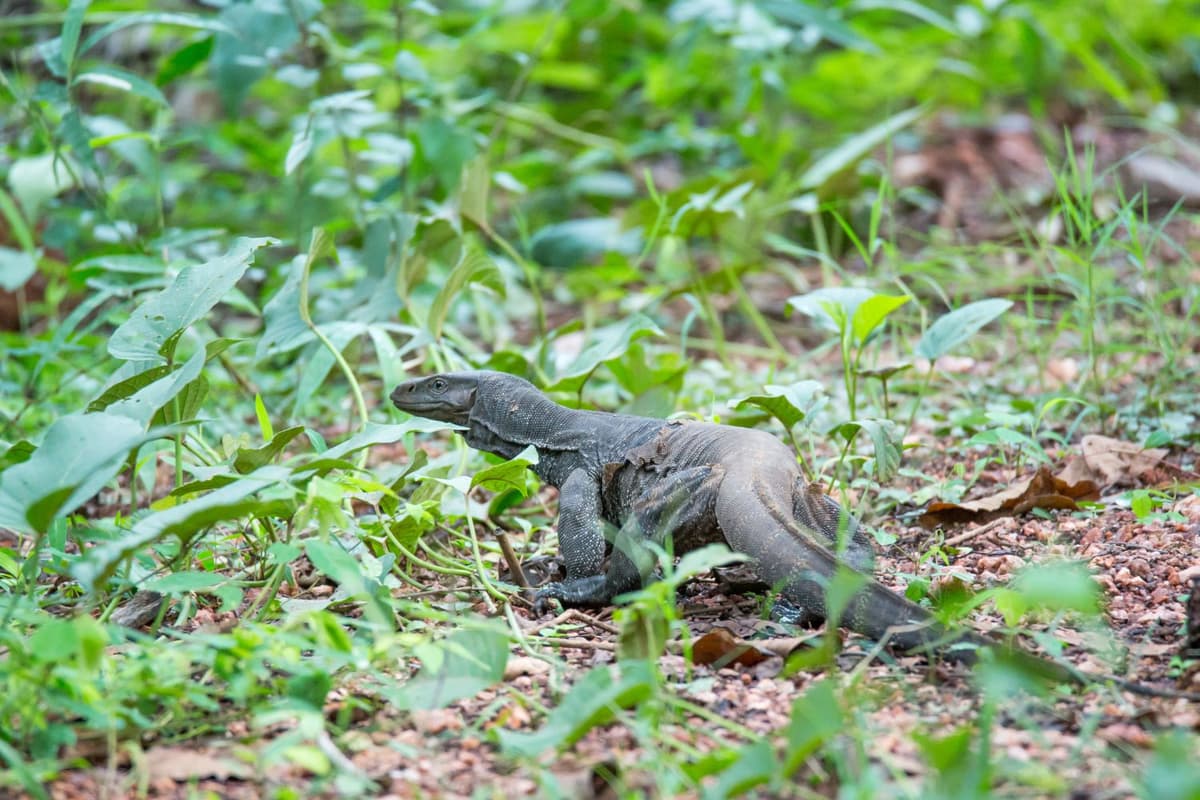
They live in forests, savannas, wetlands, and riverbanks across Asia and Africa.
Asian Water Monitor Distribution
The Water Monitor (Varanus salvator) has one of the widest distributions, found from the Indian subcontinent to southern China and throughout Southeast Asia, including Thailand, Malaysia, Indonesia, the Philippines, and New Guinea. It favors mangrove forests, swamps, wetlands, and tidal channels but is also commonly found near agricultural fields and human settlements.
Monitor Lizards in Vietnam
Vietnam is home to about 10% of the world's monitor lizard species, including rare ones like the Bengal monitor and the Water monitor. Areas such as Cat Tien National Park and the Central Highlands provinces, like Gia Lai, are hotspots for reptile biodiversity.
Vietnam is also home to two native species: the Bengal Monitor (Varanus nebulosus) and the Water Monitor (Varanus salvator). Both species face significant conservation challenges and are found in the southern region.
Conservation Status:
- The Bengal Monitor is classified as Endangered (EN) in Vietnam's Red List and is in Group IB (protected from commercial exploitation).
- The Water Monitor is also classified as Endangered (EN) and is listed in Group IIB.
Monitor Lizards in Cat Tien National Park
Cat Tien National Park is home to at least two monitor lizard species: the Bengal monitor and the Water monitor, both of which are rare and listed in Vietnam's Red Book.
The park offers diverse habitats for these species. The broadleaf forest, particularly the dipterocarp forest, is the preferred environment for the Bengal monitor. This area is rich in large trees and dense vegetation, providing ample opportunities for the lizards to hide. Meanwhile, the Bau Sau wetland, a Ramsar-listed area along the Dong Nai River, offers an ideal habitat for water-loving reptiles like the Water monitor and Siamese crocodiles, where they can easily find food and thrive in the wetland ecosystem.
Diet and Behavior
Monitor lizards are carnivorous and omnivorous, feeding on insects, crustaceans, spiders, small mammals, fish, amphibians, reptiles, birds, eggs, and decaying animal carcasses. Larger species like the Komodo dragon hunt big prey such as deer, water buffalo, and wild pigs, while the Water monitor prefers crabs, fish, frogs, and eggs. Smaller species mainly eat insects and small lizards. Some tree monitors from the Philippines are frugivorous, eating fruit and leaves.
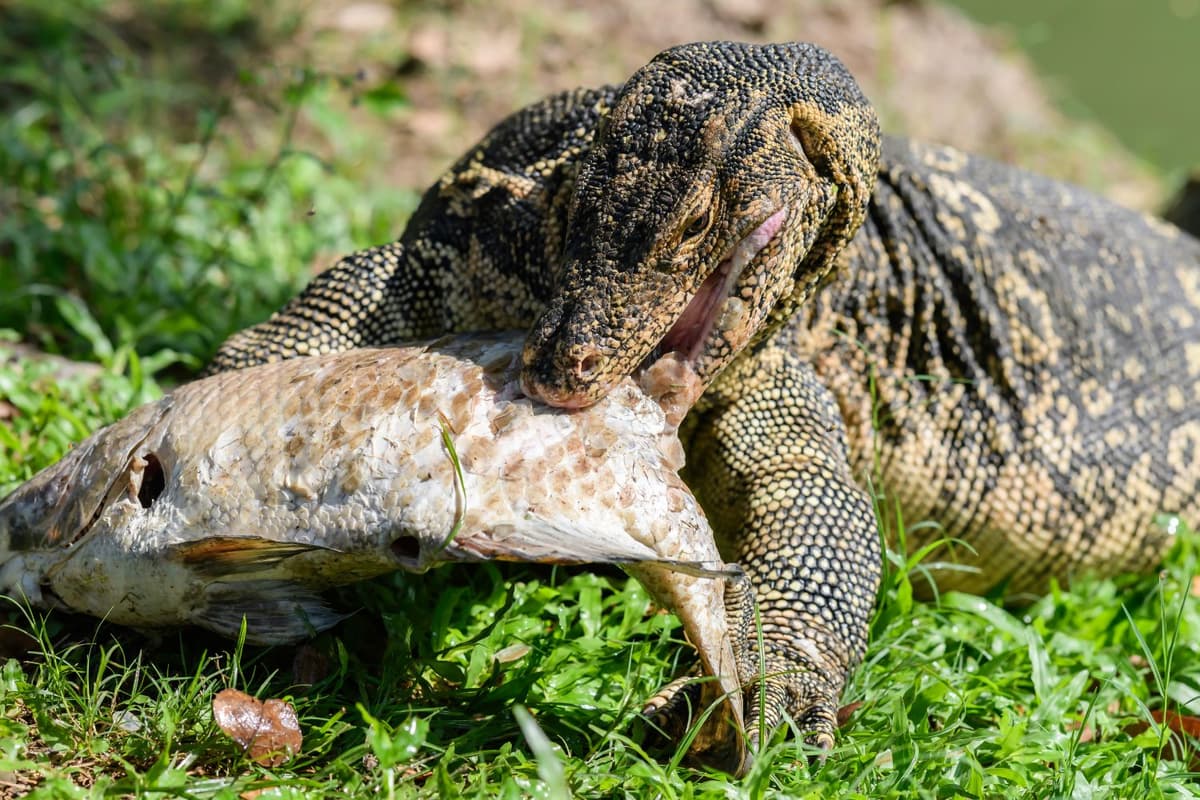
Their diet includes insects, fish, birds, eggs, and small mammals.
Are monitor lizards venomous?
Most monitor lizards are venomous, with venom secreted from glands in their lower jaw. Their venom often contains anticoagulants that prevent blood clotting, causing wounds to bleed uncontrollably. Some species, like the Komodo dragon, also have neurotoxic venom that causes paralysis.
Monitor lizard hunting behavior
As hunters, monitor lizards use their forked tongue to detect prey from a distance. They are skilled hunters, capable of running fast (up to 36 km/h for species like the Perentie) and swimming excellently. They use their sharp teeth to bite and thrash their prey, often targeting the head of dangerous animals. Some species, like the Nile monitor, work together while hunting, such as one luring a crocodile away to steal its eggs.
Reproduction & Life Cycle
Monitor lizards are egg-laying reptiles, with clutch sizes varying by species. The Nile monitor can lay up to 60 eggs, while the Komodo dragon typically lays around 20 eggs, and other species range from 7 to 38 eggs per clutch.
Mating seasons vary by location. In Australia, mating occurs during spring and summer, while Komodo dragons mate from May to August. Some Australian species dig into termite mounds to lay their eggs, where the termites rebuild the mound around the eggs, providing a stable temperature and protection. About 60% of Komodo dragons lay their eggs in abandoned megapode bird nests.
Egg incubation lasts 7 to 8 months, typically hatching in April when insect populations are highest. Hatchlings are vulnerable and often stay in trees for the first few years to avoid predators, including adult lizards (which make up 10% of the Komodo dragon's diet). To escape hungry adults, baby monitor lizards may roll in feces to mask their scent.
Some species, like the Komodo dragon, can reproduce parthenogenetically, meaning a female can produce offspring without a male. In isolated islands, a single female can start a population by producing only males, which then mate with their mother to produce both males and females.
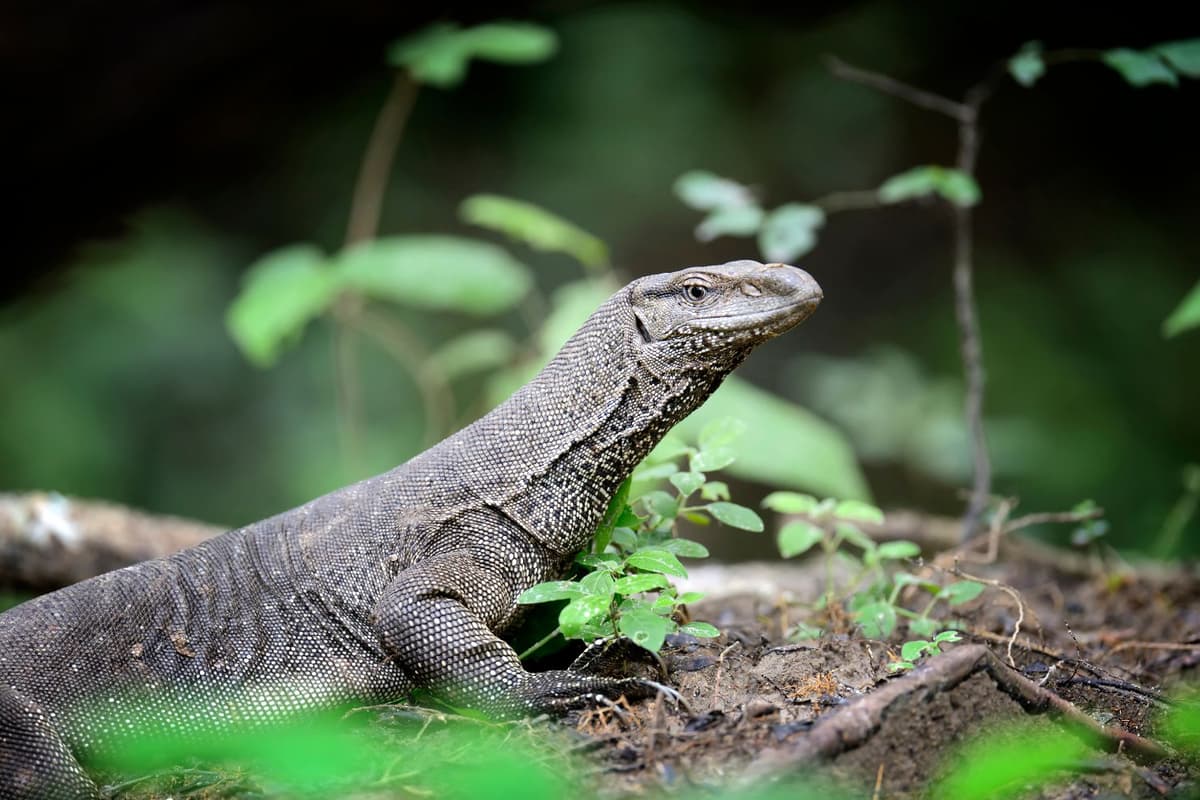
A forked tongue helps them sense prey through scent in the air.
Threats and Conservation
Threats
Deforestation for timber, land clearing for agriculture, and urbanization are major threats to monitor lizards' habitats. For species with limited ranges, such as the Komodo dragon, rising sea levels and droughts are expected to reduce suitable habitats by up to 71% by 2050. In Australia, the spread of the highly toxic Cane Toad has caused a significant decline in monitor lizard populations due to poisoning. Monitor lizards are also killed out of fear or retaliation for preying on livestock.
They are highly sought after in illegal wildlife trade: their skins are used in luxury leather goods or for traditional drums, their meat and eggs are considered delicacies or medicinal, and some species, like the Nile monitor, are popular exotic pets. In India, monitor lizards' genitalia (hemipenes) are sold as "Hatha Jodi" for superstitious beliefs, fetching high prices.
Conservation
Although many monitor lizard species are listed as Least Concern, their populations are declining globally. The Komodo dragon is classified as an Endangered species. All species in the Varanus genus are included in CITES appendices, with five species, including the Komodo dragon, listed in Appendix I (prohibiting international trade), while others are in Appendix II.
Conservation efforts include the establishment of Komodo National Park in 1980 to protect the Komodo dragon, and efforts by Bush Heritage Australia to preserve natural habitats. In India, the use of monitor lizard skin for drums has been banned, and several Indian states have strict anti-hunting laws. Successful breeding programs, such as at the Surabaya Zoo, and scientific research by the IUCN SSC aim to improve global conservation strategies.
See Monitor Lizards in Cat Tien National Park
Visitors to Cat Tien National Park can observe monitor lizards and other reptiles through eco-tourism activities that immerse you in the park's rich biodiversity. The park offers both walking trails through the forest and boat tours on Bau Sau, providing various ways to explore the natural habitat of these fascinating creatures.
The best time to spot monitor lizards is during the day when they are basking in the sun. However, night tours are also a great opportunity to observe other wildlife as they forage after dark. It’s recommended to travel with a local guide to ensure safety, increase your chances of spotting wildlife, and follow the park’s regulations that protect the natural environment.
As for safety, most monitor lizards in the wild tend to avoid human contact. Young lizards are especially timid and will quickly flee when they sense a person from a distance. However, if cornered, they can become aggressive, opening their mouths, hissing, or striking with their powerful tails.
To observe monitor lizards effectively, it’s important to understand their behavior. As ectotherms, they are most active during the day, basking on logs or rocks to regulate their body temperature.
Coming soon, Katien Safari will offer small group tours deep into the jungle, giving guests the chance to see not only monitor lizards but also other wildlife like deer, wild oxen, and peacocks in their natural habitat. Join us for an unforgettable adventure in one of Vietnam’s most biodiverse parks!
Interesting Facts of Monitor Lizards
1. Monitor lizards are considered one of the smartest lizard species. They can count up to 6 and recognize their keepers in captivity.
2. Unlike other lizards, monitor lizards are the only group that uses their tongue exclusively for sensory purposes, not for feeding.
3. Nile monitors have been observed exhibiting cooperative hunting behavior: one will distract a mother crocodile, while the other sneaks into the nest to steal eggs. The "decoy" then returns to enjoy the meal.
4. Some Australian monitor lizard species hibernate during the coldest months (typically from May to August) to conserve energy.
5. The Kol tribe of the Andaman Islands believes that monitor lizards are the ancestors of their people, and the residents of Komodo Island refer to the Komodo dragon as "sebae" (twin brothers), believing they share a spiritual mother.
Reference
- Bush Heritage Australia. (n.d.). Goannas (Monitor Lizards).
- Do, T. D., & Dang, P. H. (2023). New records and update species composition of the reptile (Reptilia) from Gia Lai province. TNU Journal of Science and Technology, 228(13), 184–192. https://doi.org/10.34238/tnu-jst.8223
- Dowell, S. A., Wood, J. P., Campbell, T. S., Kolokotronis, S.-O., & Hekkala, E. R. (2016). Combining genetic and distributional approaches to sourcing introduced species: A case study on the Nile monitor (Varanus niloticus) in Florida. Royal Society Open Science, 3(4), 150619. https://doi.org/10.1098/rsos.150619
- Koch, A., Ziegler, T., Böhme, W., Arida, E., & Auliya, M. (2013). Pressing problems: Distribution, threats, and conservation status of the monitor lizards (Varanidae: Varanus spp.) of Southeast Asia and the Indo-Australian Archipelago. Herpetological Conservation and Biology, 8(Monograph 3), 1–62.
- Nguyen, V. S. (2008). Wildlife trading in Vietnam: Situation, causes, and solutions. Journal of Science and Development, 99–111.
- Singhal, A. D. (2015, December 1). Ancestor, Sir Monitor Lizard. The Mythology Project.
- Vườn quốc gia Cát Tiên. (2021). Atlas Vườn quốc gia Cát Tiên. Nhà Xuất Bản Hà Nội.
- Waterman, J. O., McNally, R., Harrold, D., Cook, M., Garcia, G., Fidgett, A. L., & Holmes, L. (2021). Evaluating environmental enrichment methods in three zoo-housed Varanidae lizard species. Journal of Zoological and Botanical Gardens, 2, 716–727. https://doi.org/10.3390/jzbg2040051