Many people believe porcupines are aggressive and can “shoot” their quills. In fact, porcupines are calm animals that avoid conflict and use their quills only for defense.
Porcupines are plant-eating rodents with a spiny coat and a nocturnal lifestyle. Scientifically, they belong to the family Hystricidae in the Old World and Erethizontidae in the New World. Despite their tough look, porcupines play an important role in forest ecosystems.
Read on to learn how porcupines live, what they eat, where they are found, and why this often-misunderstood animal matters in nature.
Information Table about Porcupine
Common name
Porcupine
Scientific name
Family Hystricidae (Old World porcupines); Family Erethizontidae (New World porcupines)
Body length: ~38–90 cm (not including tail). Weight: ~1–30 kg, depending on species.
Lifespan
Wild: ~5–7 years (some up to 15–18 years). Captive: 20+ years (record over 30 years).
Population
Exact numbers unknown; some species common, others declining or threatened.
Habitat
Forests, savannas, rocky hills, scrublands, and mountains; some species live mainly on the ground, others in trees.
Range
Old World: Asia, Africa, Southern Europe. New World: North and South America, from Canada to Brazil.
Diet
Herbivorous – roots, shoots, leaves, bark, seeds, fruits, flowers; often gnaw bones for minerals.
Conservation status
Most species: Least Concern (IUCN). Some species: Vulnerable due to hunting and habitat loss.
Physical Characteristics of Porcupine
Porcupines are large rodents. They are the third largest in the world, after the capybara and the beaver. Their size and weight change by species and region.
Most porcupines weigh between 5 and 16 kg. Their body length is usually 60–90 cm, not including the tail. The tail is about 20–25 cm long. Some species are much larger or smaller. The North African crested porcupine can reach 90 cm in length, while the Bahia hairy dwarf porcupine is only about 38 cm long. African porcupines are among the largest, weighing 10–30 kg. The smallest species, Rothschild’s porcupine in South America, weighs under 1 kg.
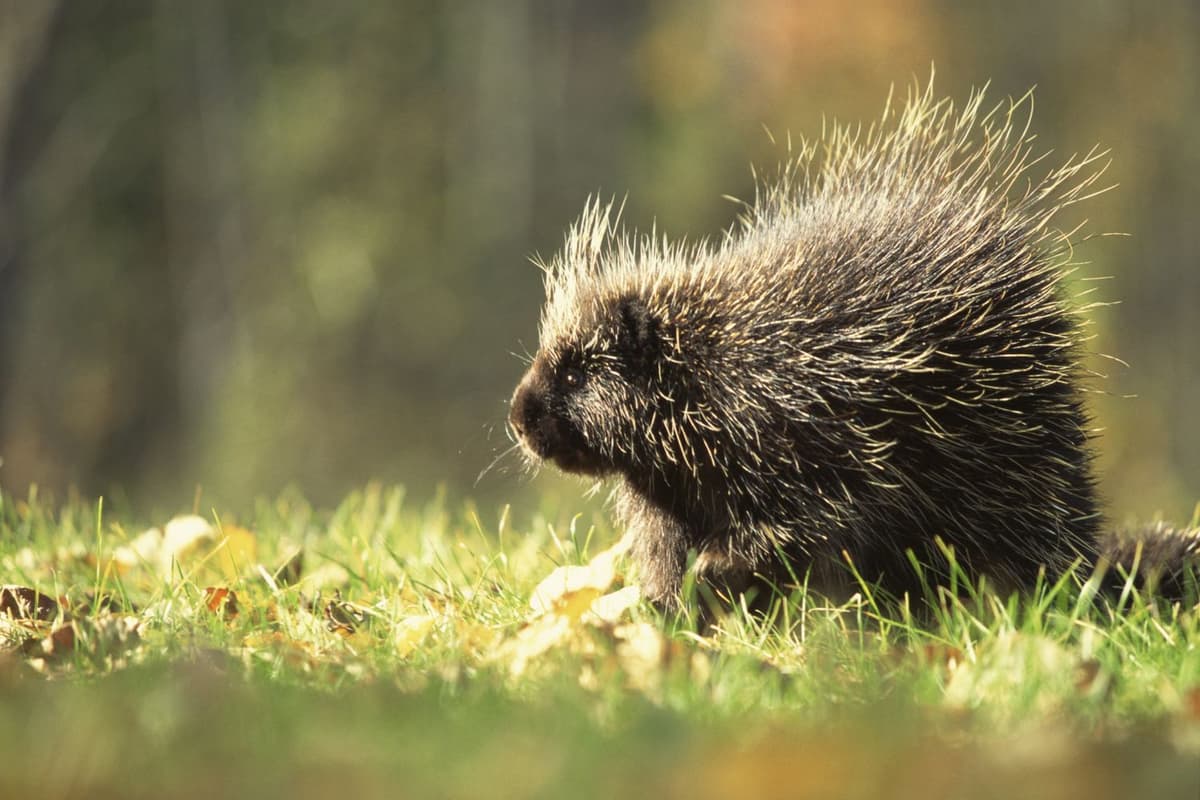
They have round bodies and move slowly. Their fur is usually brown, gray, and white. Their legs are short and strong, with long claws for digging or climbing. Their quills are modified hairs made of keratin. A North American porcupine can have about 30,000 quills, ranging from 2.5 to 35 cm long.
Porcupines have spiky quills for protection against predators.
Subspecies of Porcupine
From a scientific view, porcupines are divided into two main families. These families differ in their evolution and geography. Together, they include about 29 species. Porcupines are grouped mainly by where they live.
Old World Porcupines (Family: Hystricidae)
This group lives in Asia, Africa, and Southern Europe. They are mostly ground-dwelling and usually large in size. Common genera include:
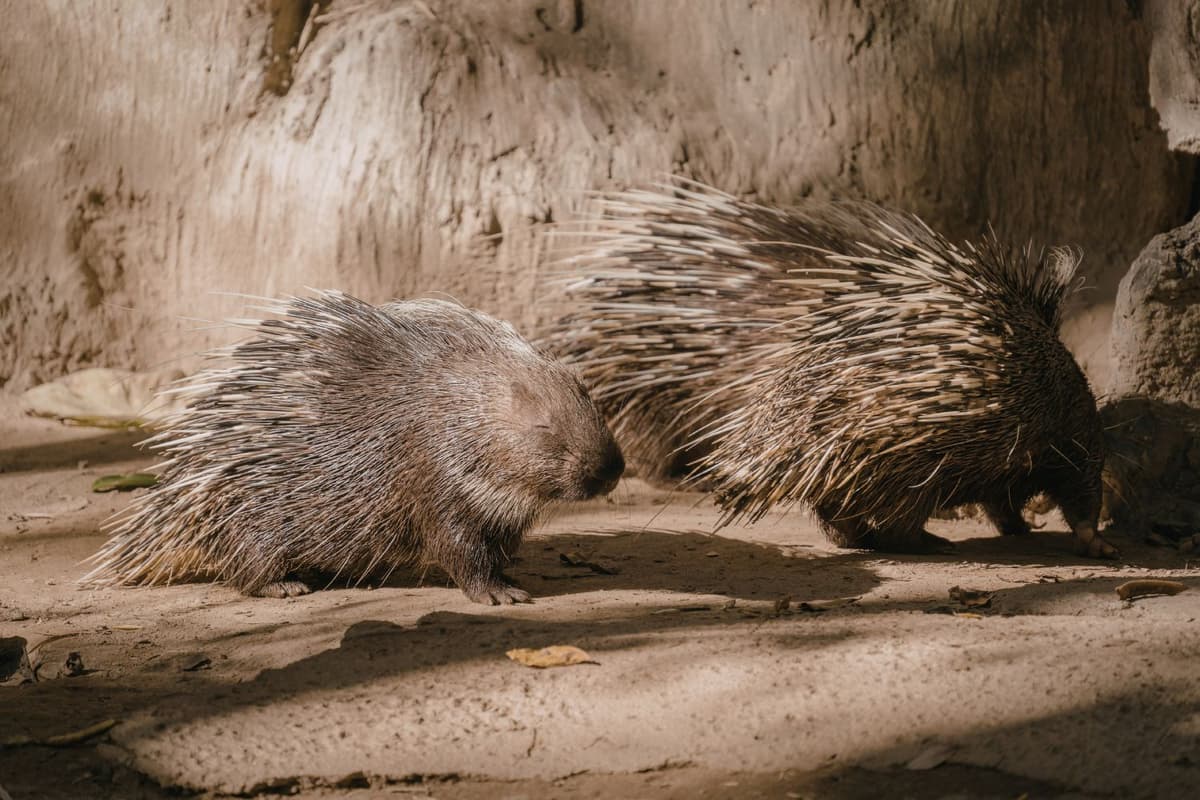
The Hystrix genus, also called crested porcupines. This group includes the North African crested porcupine, the Cape porcupine in southern Africa, the Indian, the Malayan or short-tailed porcupine found in Vietnam, as well as the Sunda and Sumatran porcupines.
The Atherurus genus, known as brush-tailed porcupines. It includes the African brush-tailed and the Asian brush-tailed porcupine, which is called “Don” in Vietnam.
Other Old World genera include Thecurus, such as the Borneo and Philippine porcupines, and Trichys, which includes the long-tailed porcupine.
New World Porcupines (Family: Erethizontidae)
This group lives in North and South America. They are excellent climbers, and many species live in trees. Key genera include:
The Erethizon genus, with the North American porcupine. It is one of the largest species and has around 30,000 quills.
The Coendou genus, also called tree or prehensile-tailed porcupines. This group includes the Brazilian porcupine, the bicolored porcupine, Rothschild’s porcupine, the Paraguayan hairy dwarf porcupine, and the black dwarf porcupine.
The Chaetomys genus includes the bristle-spined porcupine, a rare species from South America.
Habitat and Distribution
Habitat
Porcupines can live in many environments, from forests and deserts to high mountains, but the two main groups use habitats differently.
Old World porcupines in Asia, Africa, and Europe live mainly on the ground. They prefer rocky hills, grasslands, and open forests, and some can live up to 3,700 meters above sea level. They shelter in burrows, caves, or abandoned dens and often live in small family groups.
New World porcupines in the Americas are good climbers and spend much of their time in trees. They live in various forests and can also survive in tundra or scrublands. They rest in hollow trees, branches, wood piles, or rock shelters, and may hide under buildings in winter.
Porcupines have spiky quills for protection against predators.
Global Distribution
Porcupines have one of the widest distributions among rodents, ranking third after capybaras and beavers. They are present in both the Northern and Southern Hemispheres but are divided into two distinct families.
Old World porcupines occupy regions of Southern Europe, large parts of Africa, and areas of West and South Asia. New World porcupines range across the Americas, from Canada and Alaska in the north to countries such as Brazil, Colombia, and Peru in the south.
Porcupines in Vietnam
In Vietnam, porcupines belong to the Old World family. They live on the ground and do not climb well. There are two common types: the crested and the brush-tailed porcupine, also called “Don.”
The crested porcupine, also known as the Malayan or short-tailed porcupine, is mainly found in northern mountainous areas. It is large, and adults can weigh up to 25 kg. The brush-tailed porcupine lives mostly in southern regions. It has shorter quills and is much smaller, with an average weight of about 9 kg.
In Vietnam, porcupines prefer hills, forests, and rocky areas. They are nocturnal animals. During the day, they sleep in natural shelters such as burrows, rock holes, or abandoned dens. They may also enter remote farming areas to find food like roots, tubers, fruits, and crops.
Porcupines are also farmed for meat and this model has proven to be economically effective for many rural households in Vietnam. Porcupine farming is allowed as long as the breeder can clearly prove the legal origin of the breeding stock and obtain the required permits. Thanks to stable market demand and manageable investment costs, porcupine farming is considered a practical livelihood option in several parts of Vietnam.
Porcupines in Cat Tien National Park
Cat Tien National Park is an important site for wildlife conservation and reintroduction, including porcupines. The species recorded here is the Malayan porcupine.
The Cat Tien Bear and Wild Cat Rescue Station not only rescues bears but also cares for other wildlife species. According to recent records, the station has released 37 Malayan porcupines back into the wild within Cat Tien National Park.
Herbivorous Diet and Predators
Porcupines are herbivores. They eat many types of plants, such as roots, shoots, leaves, stems, seeds, berries, and flowers. Special bacteria in their digestive system help them break down plant material.
Their diet changes with the seasons. In spring and summer, they choose soft and nutritious food like fresh leaves, young shoots, herbs, clover, flowers, and aquatic plants. In winter, when green plants are limited, they eat harder food. This includes tree needles and bark. They chew through the outer bark to reach the nutrient-rich inner layer, especially from pine, fir, maple, oak, and aspen trees.
In Africa and Asia, including Vietnam, porcupines often dig for roots, tubers, and fallen fruit. They also feed on crops such as potatoes, cassava, peanuts, pumpkins, and melons, so they are sometimes seen as pests.
Porcupines need salt and minerals. They gnaw on bones to wear down their teeth and gain nutrients. They are also attracted to salty human items like tools, rubber tires, or plywood. Porcupines rest during the day and search for food at night, usually alone except for mothers with young.
Porcupines have spiky quills for protection against predators.
Natural Predators
Despite their sharp quills, porcupines are hunted by several predators. These animals often attack areas without quills, such as the face or belly.
In North America, predators include mountain lions, coyotes, bobcats, bears, wolves, wolverines, and large birds of prey. The fisher is the most specialized predator. It can flip a porcupine onto its back and attack the unprotected underside. In Africa and Asia, porcupines may be preyed upon by lions, leopards, large owls, and pythons.
Defense Mechanisms
When threatened, porcupines rely on warning displays before physical contact. They raise their quills to appear larger and more dangerous. They may stomp their feet, hiss, growl, or chatter their teeth to signal danger.
If the threat continues, porcupines turn their back toward the attacker and strike with their tail. Old World porcupines can shake their hollow tail quills, creating a rattling sound similar to a rattlesnake. They may also release a strong, unpleasant smell.
North American porcupine quills have tiny barbs at the tips. These barbs make the quills difficult and painful to remove, and the quills can move deeper into the wound over time. The quills are coated with fatty acids that have mild antibacterial properties, which may help reduce infection if a porcupine is injured by its own quills.
Reproduction of Porcupine
Porcupine reproduction differs clearly between Old World species in Asia and Africa, including Vietnam, and New World species in North America.
In North America, porcupines usually mate in autumn, mainly in October and November. Males compete for females. The dominant male sprays urine on the female during courtship. If she accepts, she lowers her quills and moves her tail aside so mating can happen safely. Males also use sounds and foot stamping to attract mates.
In Vietnam and other parts of Asia, females can return to estrus just 3 days after giving birth. This allows a new breeding cycle to start quickly. The estrus period lasts 1–2 days.
Porcupines have a longer pregnancy than most rodents. Gestation lasts 3–7 months, depending on the species. North American porcupines usually have 1 baby, while Old World species often have 1–3.
Newborn porcupines, called porcupettes, are well developed. Their quills are soft at birth and harden within a few hours to a few days. They are born with open eyes. North American porcupettes can climb trees within hours, while African young leave the den at about 2 weeks. They nurse for 6–8 weeks and stay with their mother for several months. In Vietnam, some females even nurse young that are not their own.
Porcupines have spiky quills for protection against predators.
Maturity and Lifespan
The age of sexual maturity depends on sex and species. Females usually mature at about 1.5 to 2 years old, while males mature later, between 2.5 and 4 years. Porcupines live longer than many rodents. In the wild, North American porcupines typically live 5 to 7 years, but some reach 15 to 18 years.
In captivity, well-cared-for porcupines can live over 20 years. One porcupine named Cooper lived for more than 32 years, making it one of the longest-living rodents on record.
Threats and Conservation Status
Human Impact & Threats
Human activities are the main reason for the decline of porcupine populations. In Southeast Asia, especially in Vietnam, porcupines are heavily hunted for their meat, which is considered a delicacy in some restaurants. Because of high profit, wild-caught porcupines are sometimes sold illegally and later claimed to be farm-raised.
In Africa, porcupines are also hunted for meat. Their quills are used to make jewelry or lucky charms. Some body parts are valued in traditional medicine. Its stomach is believed to treat stomach pain, and porcupine bile is used for massage after injuries. These beliefs increase illegal hunting.
Habitat loss is another serious threat. Deforestation and the expansion of farmland reduce living space for porcupines. In Africa and North America, they are sometimes killed because they damage crops or chew tree bark, which can kill timber trees. As a result, they are often seen as pests.
Conservation Status
According to the IUCN Red List, many common porcupine species are classified as Least Concern. These include the North American and the Malayan or short-tailed porcupine. Their wide distribution and strong ability to adapt help them survive.
However, some species face higher risk. The bristle-spined in Brazil and the Philippine porcupine are listed as Vulnerable due to habitat loss and illegal trade. Even species listed as Least Concern show population decline. In Southeast Asia, the Malayan porcupine population has dropped by at least 20 percent since 1990 because of rising demand for meat.
At the international level, organizations such as the African Wildlife Foundation work with local communities. Their projects focus on sustainable farming and land planning to reduce conflict between people and wildlife, including porcupines.
Night Wildlife Tours in Cat Tien National Park
Porcupines are a highlight of eco-tourism, especially in Vietnam, thanks to their slow movement and nocturnal behavior.
The best way to see them is on a night safari. Tours usually start between 6:30 and 7:00 p.m. and travel about 12 km through the forest in an open vehicle. Under the headlights, porcupines are often seen crossing roads or feeding in open grass areas. Other animals, such as sambar deer, muntjac, and gaur, may also appear.
The dry season, from December to May, offers the best viewing conditions. Even without direct sightings, porcupines can be identified by chewed tree bark, pellet-shaped droppings, footprints, fallen quills, and eye shine at night.
At Cat Tien, Katien Safari are working with park authorities to bring small groups into the forest safely and responsibly. This helps reduce stress on wildlife. Visitors can also watch live camera feeds that record animal activity, including porcupines, without disturbing their natural behavior.
Interesting Facts about Porcupine
1. Porcupines sleep in very relaxed positions. They often lie on their side with all four legs stretched out, and some even sleep on their back with their legs pointing upward.
2. Porcupines carry animal bones or shed antlers back to their dens. They store and gnaw on them to gain calcium and phosphorus and to keep their teeth worn down.
3. A porcupine’s front teeth grow continuously throughout its life. Without regular gnawing on bark, wood, or bones, the teeth can overgrow and stop the animal from eating.
4. Although they look calm, dominant male porcupines can be extremely aggressive. They may kill young males, even their own offspring, to remove future rivals and protect territory.
5. Porcupines have a very large liver and no separate gallbladder. Their bitter digestive system helps fight parasites, so they rarely suffer from digestive diseases.
Reference
Barkley, Y. C., & Schnepf, C. (n.d.). Porcupines (Wildlife No. 9). University of Idaho Cooperative Extension System.
Confederated Salish and Kootenai Tribes. (n.d.). North American porcupine: Living with wildlife [Brochure]. Division of Fish, Wildlife, Recreation & Conservation.
Phạm, N., Nguyễn, X. Đ., & Polet, G. (2001). Sổ tay ngoại nghiệp nhận diện các loài thú của Vườn Quốc gia Cát Tiên: Field guide to the key mammal species of Cat Tien National Park. WWF – Cat Tien National Park Conservation Project & Fauna & Flora International.
Quách, Đ. H. (2007). Nghiên cứu một số đặc điểm sinh học, sinh thái và kỹ thuật nhân nuôi loài nhím đuôi ngắn (Hystrix brachyura) tại Đăk Lăk [Master’s thesis abstract, Vietnam National University of Forestry].
Willcox, D., Trang, Q. P., Nguyen, V. T., Nguyen, V. N., Kempinski, J., & Roberton, S. (n.d.). The conservation status of small carnivores in the Ke Go – Khe Net Lowlands, Central Vietnam. Small Carnivore Conservation.
Information Table about Porcupine
Common name
Porcupine
Scientific name
Family Hystricidae (Old World porcupines); Family Erethizontidae (New World porcupines)