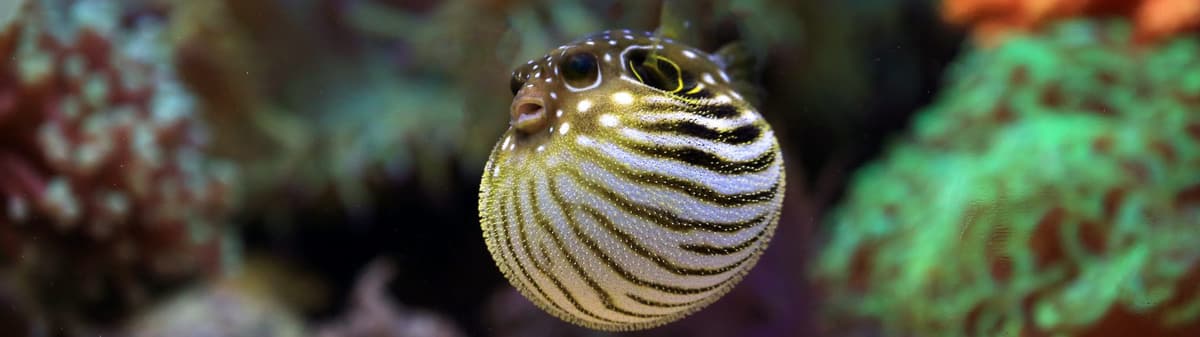
In Japan, pufferfish appears at luxury banquets under the name fugu, a dish that is both expensive and dangerous. Only licensed chefs are legally allowed to prepare it. Yet behind this famous delicacy is a remarkable marine animal that carries one of the most powerful toxins in the world. So what exactly is a pufferfish, and why is it considered both a prized food and a deadly threat? Join Katien Safari as we break down the biology, distribution, and safety of pufferfish and answer the key question: can it really be eaten.
| Common name | Pufferfish |
|---|
| Scientific name | Family Tetraodontidae |
|---|
| Taxonomy
|
Kingdom: Animalia
Phylum: Chordata
Class: Actinopterygii
Order: Tetraodontiformes
Family: Tetraodontidae
|
| Weight / Size | Body length: from a few cm to 50+ cm (largest species). |
|---|
| Lifespan | Wild: 5–10+ years. Captive: 10–15 years. |
|---|
| Population | Global numbers unknown; varies widely by species. |
|---|
| Habitat | Marine, brackish, and freshwater; mainly tropical and subtropical waters. |
|---|
| Range | Worldwide, in the Atlantic, Indian, and Pacific Oceans, and some species in rivers. |
|---|
| Diet | Omnivorous – mainly shellfish, crustaceans, mollusks, squid, and small fish. |
|---|
| Conservation status | Varies by species; many are regulated due to toxicity rather than population decline. |
|---|
Physical Characteristics of Pufferfish
Pufferfish have a short, thick, and rounded body with small fins and no pelvic fins. Instead of swimming fast, they move by gently waving their dorsal, anal, and pectoral fins. Their faces are also very distinctive, with large eyes that can move independently, giving them an appearance often compared to the movie character “E.T.”
One of the most important features of pufferfish is their four fused teeth, which form a hard, parrot-like beak. This strong beak allows them to crush the shells of mollusks and crustaceans. Pufferfish vary greatly in size. Tiny dwarf species can live in a 5-gallon aquarium, while giant species such as the Mbu puffer can grow over 50 cm long.
Many pufferfish have bright colors and bold patterns, such as green, yellow, or white spots. Some species can even change color or the intensity of their patterns in response to their surroundings, much like a chameleon. Their skin is extremely elastic and reinforced with collagen, especially around the belly.
Pufferfish do not have ribs, which allows them to inflate easily by pumping water or air into their stomach. Hidden beneath the skin are small spines that stand upright when the fish inflates, creating an effective defense. Their bright colors also act as a warning sign, telling predators that the fish contains tetrodotoxin (TTX), a powerful poison.
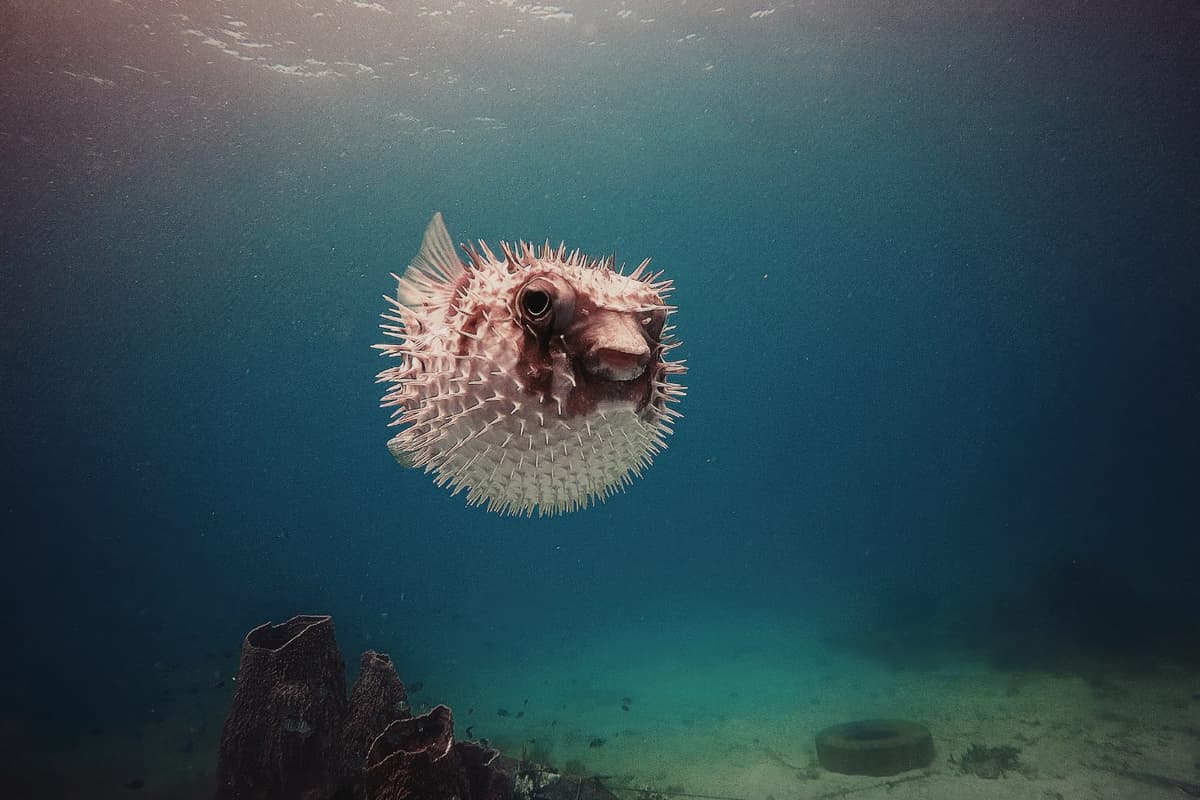
Pufferfish have round bodies, large eyes, and spiky skin when threatened.
Species of Pufferfish
The pufferfish family, Tetraodontidae, includes approximately 193–206 species in 27–28 genera.
Marine Pufferfish
The genus Takifugu, often called tiger pufferfish, includes Takifugu rubripes, the most famous species used to prepare the Japanese dish fugu. Other species in this group include Takifugu pardalis, T. vermicularis, and T. porphyreus.
Another important marine group is Lagocephalus. Lagocephalus sceleratus is a highly toxic and invasive species in the Mediterranean Sea. Lagocephalus spadiceus is common in Vietnam and may have edible flesh, though toxicity varies by region. Lagocephalus lunaris contains high levels of toxin and has caused many poisoning cases, while Lagocephalus inermis is found in southern Vietnam.
Freshwater Pufferfish
Freshwater species include the Mbu puffer (Tetraodon mbu), one of the largest freshwater pufferfish, and the dwarf puffer (Carinotetraodon travancoricus), a popular aquarium fish from India. Other genera include Auriglobus, Pao in Southeast Asia, and Colomesus in South America.
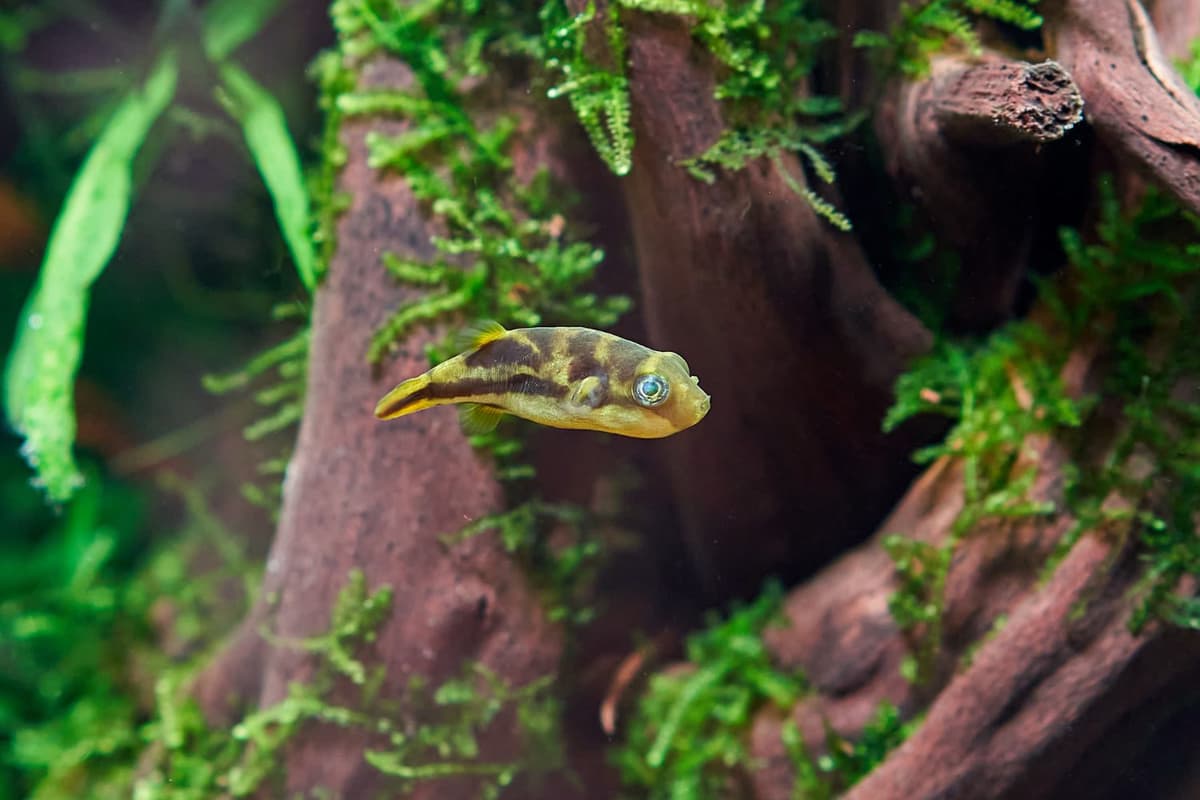
Freshwater Pufferfish are fascinating pets, known for their playful and unique behavior.
Habitat and Distribution
Pufferfish are mainly found in warm waters and are highly adaptable. Most species live in marine and brackish environments, especially shallow coastal waters in tropical and subtropical regions. They are often associated with coral reefs, seagrass beds, and estuaries. Some species live in deeper waters, reaching depths of up to 480 m, while others prefer sandy, muddy, or rocky bottoms.
Although most pufferfish are marine, about 35 species spend their entire life cycle in freshwater. These species are found in large river systems such as the Nile, Congo, Niger, Amazon, and rivers in Southeast Asia.
A small number of species, such as Lagocephalus lagocephalus, are pelagic and live in open ocean waters of the Atlantic, Indian, and Pacific Oceans.
Globally, pufferfish are distributed across tropical and subtropical regions. Some species have expanded their range and migrated from the Indian Ocean into the Mediterranean Sea through the Suez Canal.
Pufferfish in Vietnam
Vietnamese waters are rich in pufferfish diversity, with about 49 identified species found along the coast from Hai Phong, Da Nang, Vung Tau, to Kien Giang. Annual pufferfish biomass is estimated at around 37,000 tons, mostly from the genus Lagocephalus.
Since 2003, fishing, processing, and consumption of pufferfish have been banned in Vietnam due to the risk of poisoning. However, illegal harvesting and consumption still occur in some areas. Vietnam is currently cooperating with Japan on research to assess toxin levels and explore legal frameworks for safe pufferfish farming and processing.
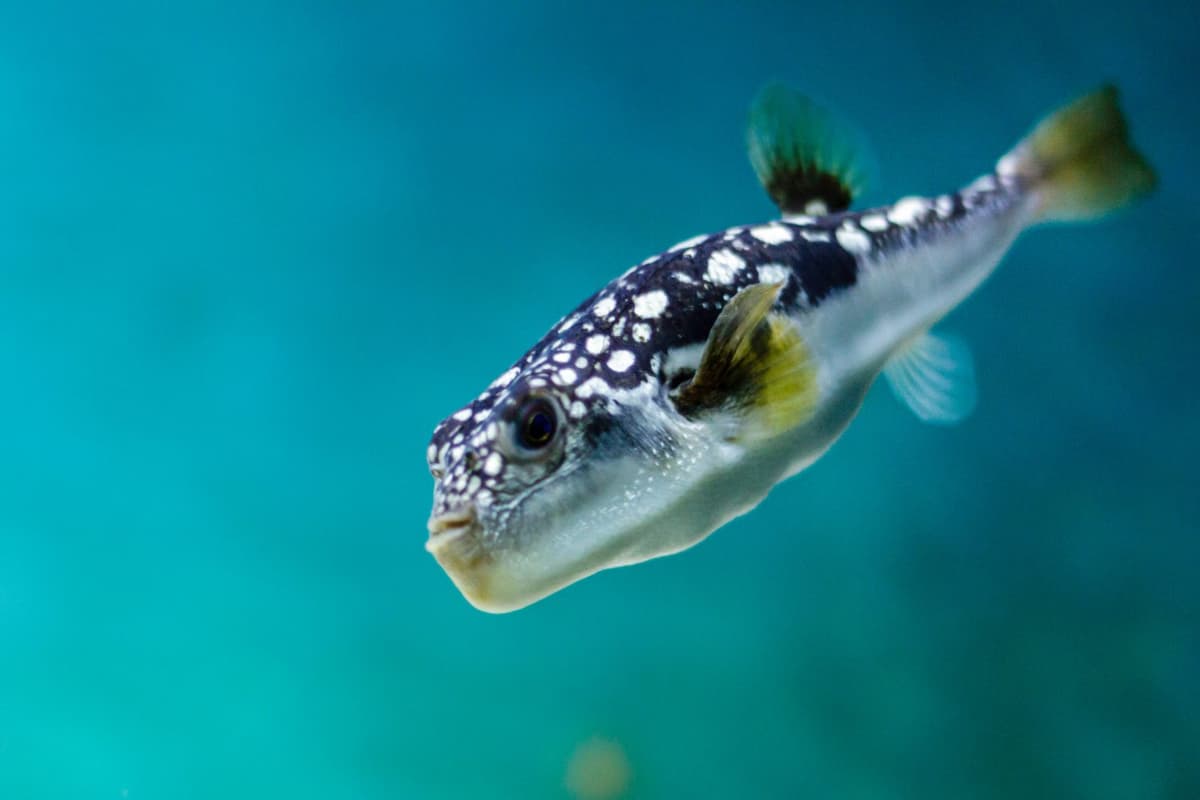
When not inflated, pufferfish appear as small, calm, and smooth creatures.
Pufferfish Diet and Predators
Pufferfish are omnivorous bottom feeders. Their diet mainly includes invertebrates such as crabs, shrimp, squid, snails, clams, and other shellfish. Their strong beak and jaw muscles allow them to crush hard shells efficiently. Some species, such as Lagocephalus sceleratus, are extremely aggressive feeders and even prey on octopus, competing strongly with other bottom predators.
Despite their toxins, pufferfish do have predators. Sharks and lizardfish are known to eat them. In freshwater, African clawless otters have been observed attacking Mbu puffers. When attacked, the pufferfish inflates into a hard, round shape, making it difficult to bite or swallow.
Dolphins display unusual behavior toward pufferfish. They have been filmed carefully handling them to trigger the release of small amounts of toxin, possibly to experience a mild intoxicating effect rather than to eat them.
Pufferfish have relatively few predators because they can inflate to 2–3 times their normal size, expose spines, and contain deadly toxins. Even pufferfish larvae carry toxins on their skin, forcing predators to spit them out.
Is Pufferfish poisonous? Is Pufferfish Eatable?
Yes. Pufferfish contain tetrodotoxin (TTX), one of the strongest natural poisons known. TTX is about 1,250 times more toxic than cyanide, and just 1–2 mg can kill an adult human. Some freshwater species also contain saxitoxin (STX).
Pufferfish do not produce toxins themselves. Instead, they accumulate toxins through the food chain from bacteria such as Vibrio, Pseudoalteromonas, and Shewanella. Farm-raised pufferfish fed toxin-free food can become non-toxic, but they regain toxicity if exposed to contaminated prey.
Toxins are most concentrated in the liver, ovaries, intestines, and skin. In some species, toxins can also be found in the muscle tissue.
Most pufferfish are extremely dangerous to eat. Poisoning symptoms include numbness of the lips and tongue, dizziness, vomiting, muscle weakness, paralysis, and death due to respiratory failure, often while the victim remains conscious. There is no specific antidote, and treatment relies on life support until the toxin is eliminated.
In Japan, pufferfish preparation is strictly regulated. Chefs must train for 2–3 years and pass licensing exams, with only about 35% passing. Pufferfish liver has been banned from restaurants since 1984 due to extreme toxicity. Despite strict controls, deaths still occur, mainly from home preparation.
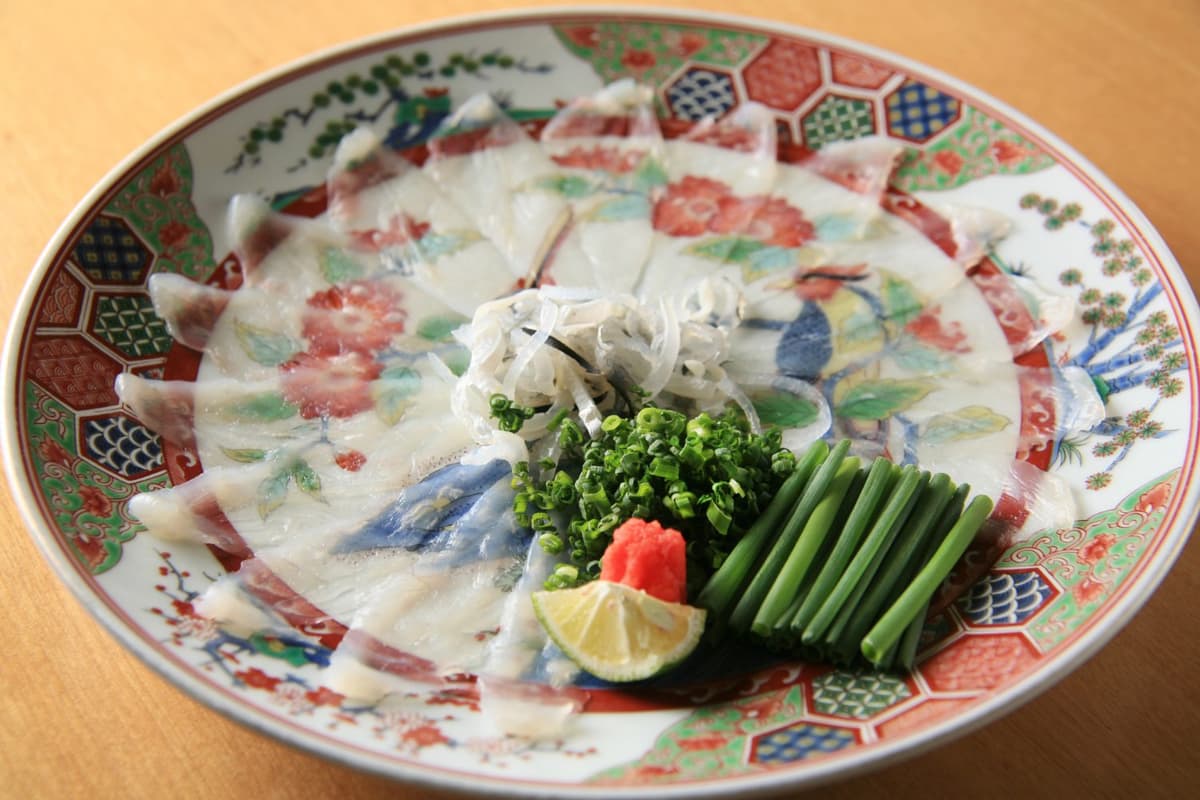
Fugu sashimi, made from pufferfish, is a delicacy requiring careful preparation.
Reproduction and Life Cycle
During the breeding season, male pufferfish create complex geometric structures on the sand to attract females and to provide a safe place for eggs. These circular patterns are so detailed that they are often described as artworks in the animal world. After building the structure, the male actively chases and courts the female, displaying raised crests or skin ridges to gain her attention. He then guides the female to a sheltered area where spawning can take place.
Mating usually occurs when the male gently pushes the female toward the water surface or joins females that are already present at the spawning site. Fertilization is external. In marine species, the eggs are often spherical and buoyant, floating freely in the water, while in freshwater species the eggs may stick to rocks, cave walls, or other hard surfaces. In Vietnam, the main breeding season typically lasts from April to July.
Some pufferfish species lay eggs inside caves or holes, while others use flat rocks or hard substrates. In many cases, the male guards the eggs and helps provide oxygen by fanning water over them. Marine pufferfish eggs usually hatch after about 4 days. The newly hatched larvae are extremely small but already have functional eyes and mouths and must begin feeding within a few days after hatching.
Pufferfish larvae are protected by chemical defenses, as tetrodotoxin (TTX) is present on their skin even at this early stage. Depending on the habitat, larvae may drift freely in the ocean or hide in freshwater environments. After the yolk sac is fully absorbed, they must feed on very small organisms to survive.
As pufferfish grow into adults, their front teeth fuse into a strong, beak-like structure. Over time, they accumulate tetrodotoxin through the food chain. This toxin becomes highly concentrated in the liver and ovaries, especially during the breeding season, making adult pufferfish particularly dangerous to predators and humans.
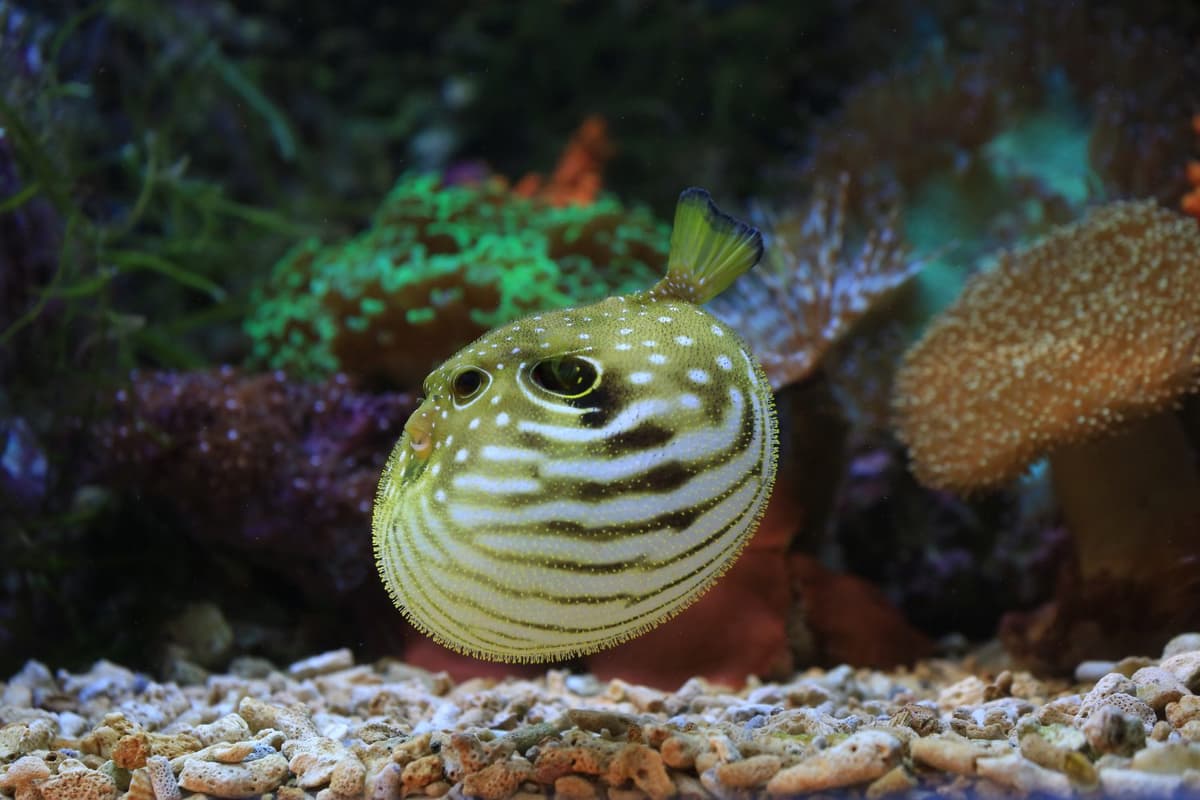
The yellow-striped pufferfish is easily recognizable by its vibrant golden markings.
Interesting Facts of Pufferfish
1. Fossils show that true pufferfish existed as early as the Early Eocene, about 50 million years ago.
2. Scientists believe the inflation mechanism evolved from a fish “coughing” behavior used to clear its gills.
3. Pufferfish appear in Minecraft, where eating them causes poison, hunger, and nausea effects.
4. The invasion of Lagocephalus sceleratus is considered an ongoing ecological disaster in the eastern Mediterranean.
5. Climate change and warming seas are allowing tropical pufferfish to expand northward toward Europe, including the UK and Ireland.
Reference
- Kanchanapongkul, J. (2001). Puffer fish poisoning: Clinical features and management experience in 25 cases. Journal of the Medical Association of Thailand, 84, 385-389.
- Nguyen, V. L., Nguyen, H. H., & Bui, T. T. H. (2006). Result of analyzing toxicity of puffer fish in VietNam Seawater. Research proceedings of marine fisheries research, 4. Agriculture Publishing House, Hanoi.
- Shotton, R., Turan, C., & Ünal, V. (2017, October 13-14). Symposium and panel summary report. International Symposium on Pufferfish, Bodrum, Turkey.
- Sykes, M. (2025, October 19). Inflation: Evolution, physiology, and welfare. Pufferfish Enthusiasts Worldwide.
- Vu, T. L. (2020). Researches on the establishment of pufferfish food culture in Vietnam [Jumonji University].
- Wainwright, P. C., & Turingan, R. G. (1997). Evolution of pufferfish inflation behavior. Evolution, 51(2), 506-518.