Home to one of the richest bird communities in Vietnam, Cat Tien National Park continues to attract birdwatchers from around the world with its remarkable diversity of forest and wetland species. From secretive ground-dwelling pheasants to brilliantly coloured pittas, kingfishers, and migratory songbirds, Cat Tien offers endless opportunities to encounter rare and fascinating birdlife in a truly wild setting.
In Part 2 of this series, we continue exploring 10 more stunning bird species that make Cat Tien one of Southeast Asia’s premier birdwatching destinations. Whether hidden within dense forest undergrowth or calling from the canopy above, these birds showcase the extraordinary biodiversity that thrives within the Park’s forests, grasslands, and wetlands. If you missed our first 10 feathered wonders, don't forget to check out Part 1 of our Cat Tien Birdwatching Guide. So, let’s dive right in!
Siberian Blue Robin (Larvivora cyane)
The slate blue robin is a small migratory songbird that winters in the forests of Cat Tien National Park. The adult male is unmistakable, featuring vivid blue upperparts and a snow-white belly divided by a bold black stripe extending from the eye to the wing bend. The female is warm brown with a bluish-tinged rump and pale whitish underparts, while the juvenile resembles the female but appears grayer.
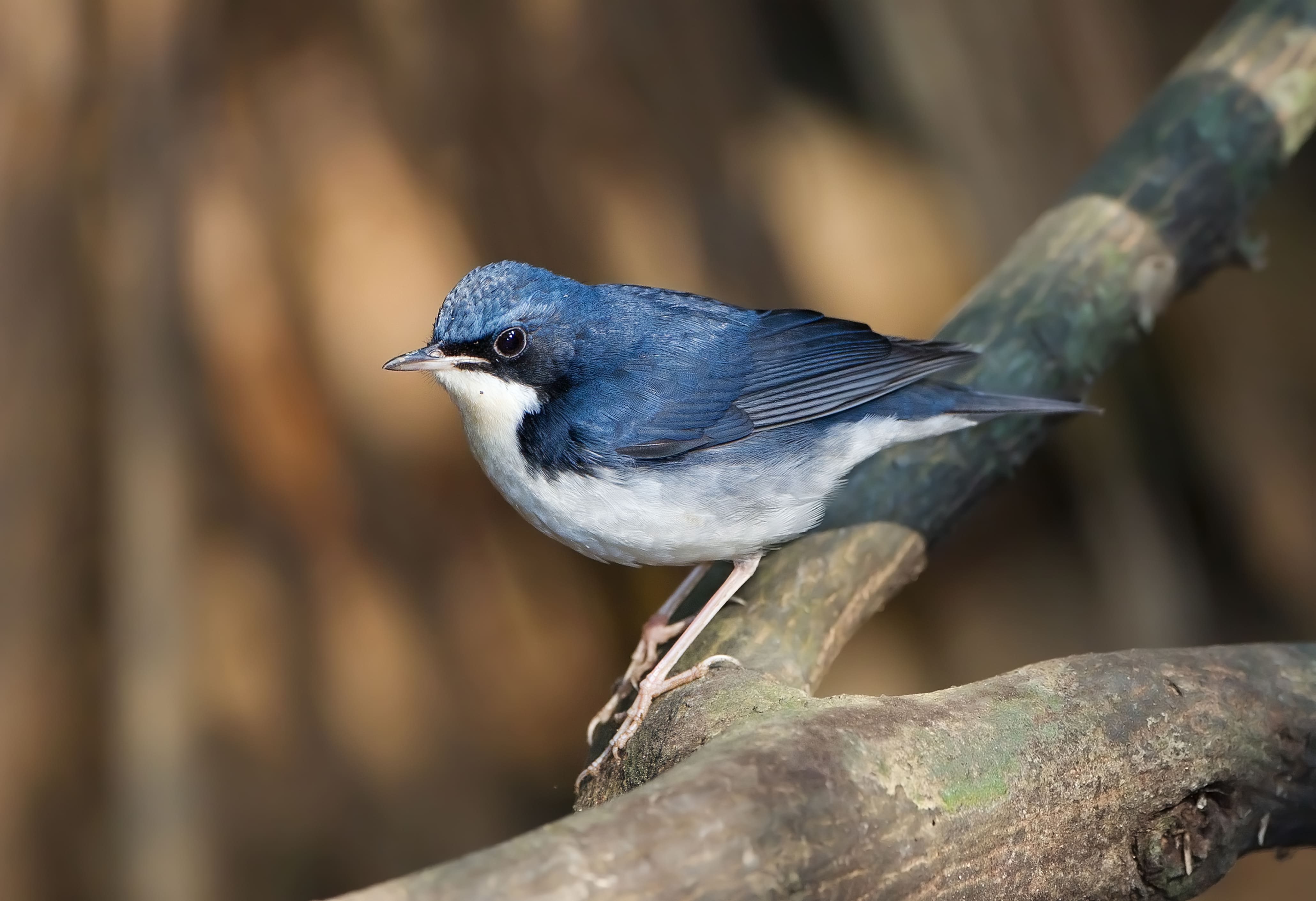
The Siberian blue robin is a small migratory bird that spends the winter months in the forests of Cat Tien National Park.
This elusive species is usually found in dense undergrowth and shaded forest floors, where it quietly searches for insects and other small invertebrates among leaf litter. Despite their colorful plumage, Siberian blue robins can be difficult to spot, often staying hidden beneath thick vegetation and moving cautiously through the forest.
Breeding across northeastern Asia before migrating south for the winter, their seasonal presence adds to the impressive diversity of migratory birds recorded in Cat Tien National Park.
In Cat Tien, birdwatchers occasionally encounter them around the Lagerstroemia and Ecological Trails near the Park’s headquarters, where thick leaf litter and low vegetation provide ideal foraging habitat for migratory forest birds. Because of their secretive behavior, early mornings in quieter forest sections tend to offer the best chances of spotting one.
Banded Kingfisher (Lacedo pulchella)
The banded kingfisher is one of the most striking forest kingfishers found in Cat Tien National Park. Males are easily recognised by their vivid blue upperparts, rich chestnut underparts, and distinctive red bill, while females display barred black-and-rufous plumage that provides excellent camouflage within the forest.
__639158344822352064.jpg)
Banded kingfishers tend to stay hidden within dense vegetation beneath the forest canopy.
Unlike many kingfishers associated with open waterways, the banded kingfisher prefers dense lowland forest and shaded streams deep beneath the canopy. In Cat Tien, they are most often found near forest creeks, wetter evergreen habitat, and quieter interior forest trails such as the Crocodile Lake route, where thick vegetation and nearby water provide ideal hunting grounds.
This elusive species usually hunts insects, small reptiles, and other prey from concealed perches low within the forest. Rather than sitting openly along riverbanks, banded kingfishers tend to remain hidden in dense vegetation and are often detected first by their sharp, echoing calls before briefly revealing themselves on branches near streams or small waterways.
Although widespread across Southeast Asia, the banded kingfisher is generally considered uncommon and can be difficult to observe, making any sighting in Cat Tien especially rewarding for birdwatchers.
Blue-rumped Pitta (Hydrornis soror)
The blue-rumped pitta is one of the most colourful and sought-after forest birds found in Cat Tien National Park. This shy, ground-dwelling species has a rounded, barrel-chested appearance and is recognised by its vivid blue rump and tail, mossy green back, warm buff-brown underparts, and flashes of bright turquoise and blue across the upperparts. Males display more extensive blue and green coloration, while females appear duller overall with subtler markings.
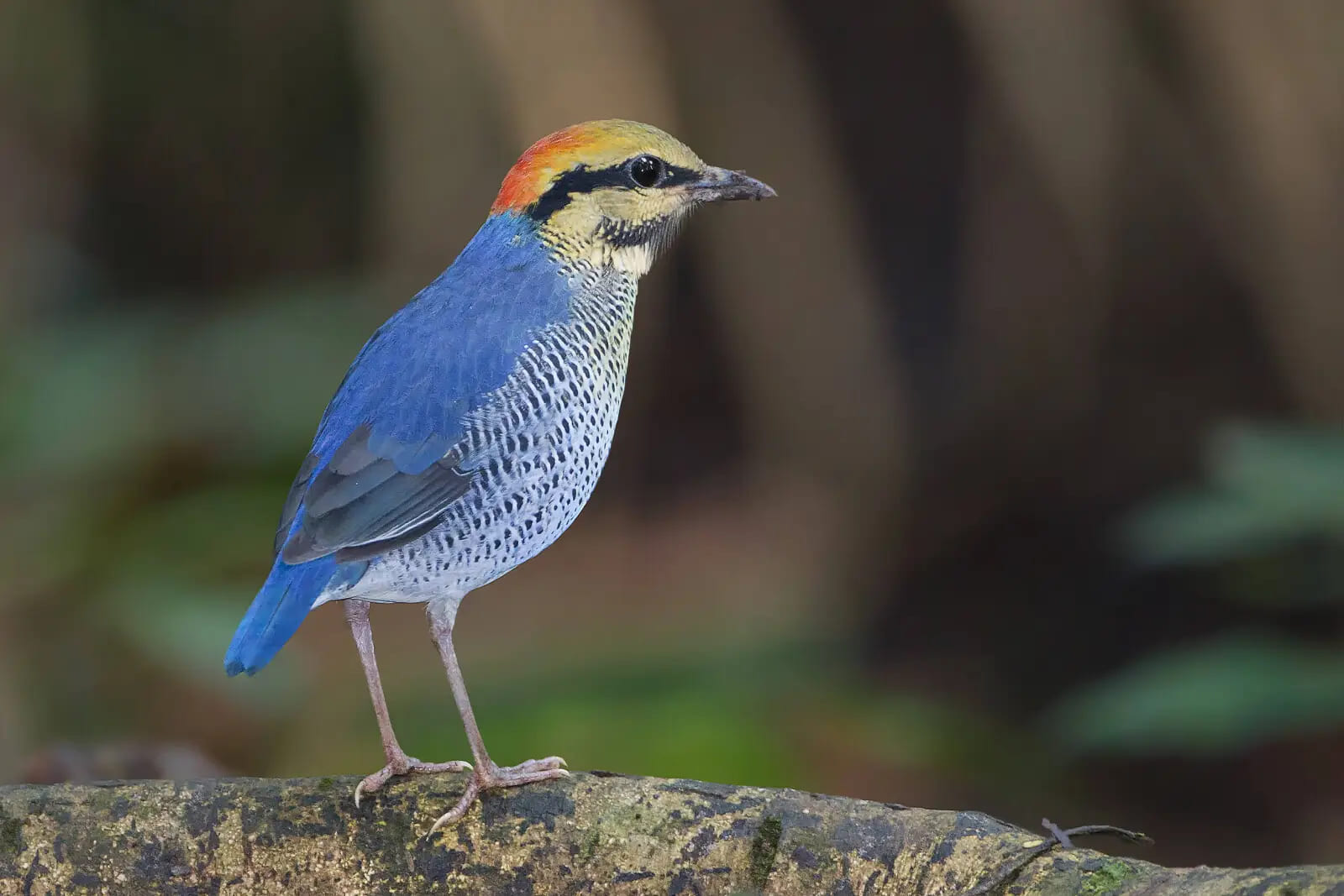
Blue-rumped Pittas can often be found in quieter sections of primary and semi-evergreen forest in Cat Tien National Park.
Typically found in dense lowland and semi-evergreen forest, blue-rumped pittas spend much of their time quietly moving through leaf litter in search of insects, worms, and other small invertebrates. Despite their brilliant plumage, they are often surprisingly difficult to spot, as they prefer to remain hidden beneath thick undergrowth and dense vegetation along shaded forest trails.
In Cat Tien, they are most often encountered in quieter interior forest areas with dense understorey cover, particularly during the early morning in the breeding season when their distinctive calls can be heard echoing through the forest. Their song consists of a simple series of widely spaced “choo” notes, reminiscent of a barbet, often revealing the bird’s presence long before it is seen.
Laced Woodpecker (Picus vittatus)
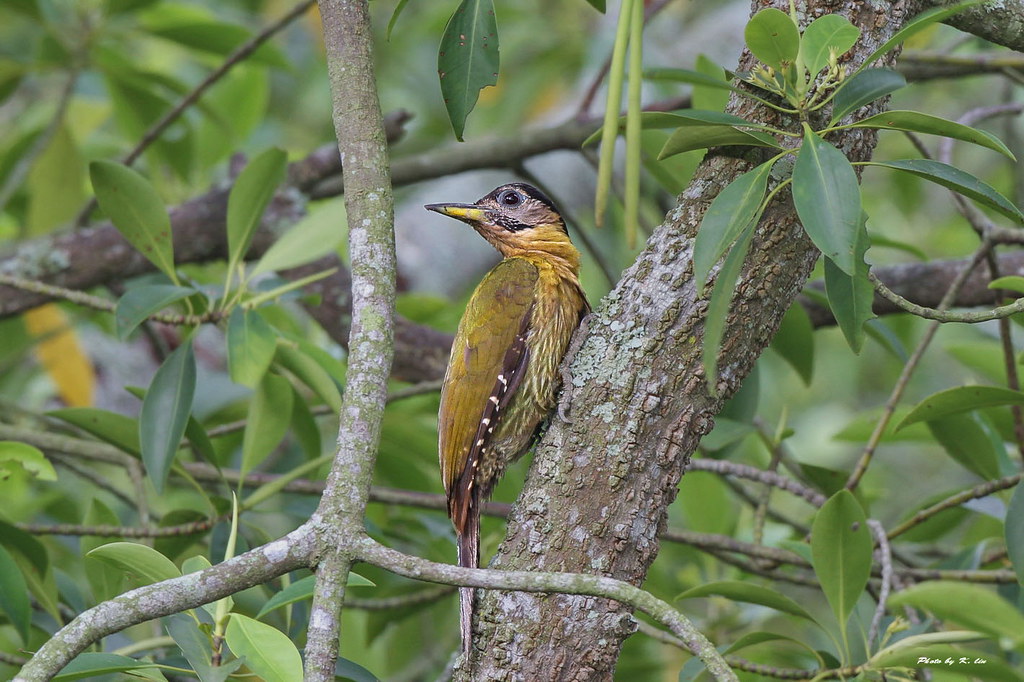
The laced woodpecker is a medium-sized forest woodpecker commonly found in Cat Tien National Park. It is recognised by its golden to tea-green upperparts, grayish face, bold black moustache stripe, and heavily marked underparts. Males display a bright red crown, while females have a darker black crown. Its strongly barred wings are especially noticeable in flight, adding to the species’ striking appearance as it moves through the forest canopy.
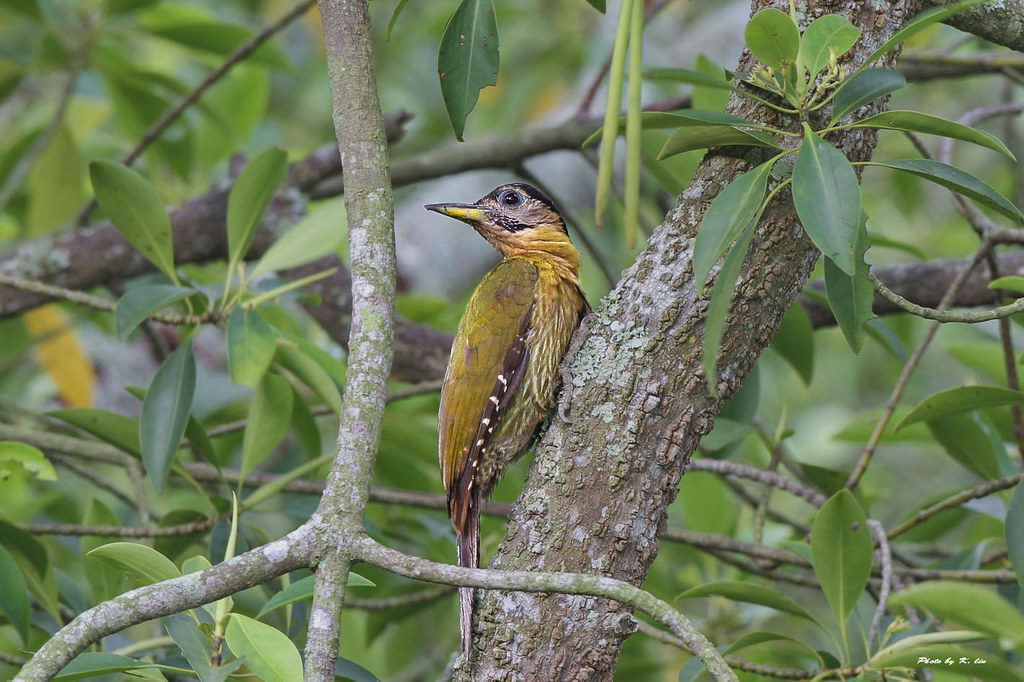
Laced woodpeckers are often seen climbing tree trunks or moving between branches with quick, energetic movements.
This active woodpecker is typically found in lowland forest, woodland edges, and secondary growth, where it feeds on ants, termites, and other insects by probing bark and decaying wood. Individuals are often seen climbing tree trunks or moving energetically between branches, sometimes joining mixed-species feeding flocks in the mid-canopy.
In Cat Tien, laced woodpeckers are regularly encountered along forest roads and shaded canopy trails, particularly in areas with mature trees and deadwood that provide ideal feeding and nesting sites. They are often easier to detect by sound than by sight, giving sharp “kip” calls, harsher two-note calls during territorial encounters, and rhythmic drumming that echoes through the forest.
Black-naped Monarch (Hypothymis azurea)
The black-naped monarch is a small but striking forest flycatcher found throughout the woodlands of Cat Tien National Park. Males are especially distinctive, with brilliant azure-blue plumage, a black patch across the nape, and a narrow black throat band, while females are slightly duller, with gray-brown wings and blue largely confined to the head. Both sexes show pale grayish-white underparts and dark feathers above the bill.
The woodlands of Cat Tien National Park are home to the black-naped monarch, a colourful and active forest flycatcher. (Source: Internet)
This agile insect-eating species inhabits a variety of forested habitats, from lowland woodland to wetter riverside forest and foothill areas. It is commonly seen moving actively through the mid-storey and lower canopy, where it hunts flying insects with quick aerial sallies from exposed perches, much like a flycatcher.
In Cat Tien, black-naped monarchs are frequently encountered along forest trails, secondary woodland, and shaded riverside vegetation. They are often seen alone, in pairs, or accompanying mixed-species feeding flocks moving through the forest. Their soft calls and constant movement can make them easier to hear than to follow among the foliage.
Red Junglefowl (Gallus gallus)
The red junglefowl is the wild ancestor of the domestic chicken and one of the most iconic ground birds found in Cat Tien National Park. Males are especially spectacular, with rich reddish, golden, and iridescent green-blue plumage, long curved tail feathers, and a bright red comb, while females are more cryptically coloured in mottled brown tones that provide excellent camouflage on the forest floor.
Male and female red junglefowls
Naturally shy and secretive, this adaptable species inhabits forest edges, bamboo thickets, grasslands, and secondary woodland across South and Southeast Asia. In Cat Tien, they forage for seeds, insects, fallen fruit, and other small food items, often scratching through leaf litter or emerging into open clearings and quiet roadsides during the early morning and late afternoon when they are most active.
Red junglefowls are commonly encountered around forest edges, grassland habitats, and trails near the Park’s headquarters. Their loud crowing call is a familiar sound throughout the forest, particularly at dawn, often revealing their presence before the birds themselves are seen.
Grey-faced Tit-babbler (Mixornis kelleyi)
Grey-faced Tit-babler
The grey-faced tit-babbler is a small and energetic forest bird found in the lowland woodlands of Cat Tien National Park. It is recognised by its grey face, warm brown upperparts, pale underparts, and constantly active behaviour as it moves through dense vegetation.
This social species is usually seen in small groups or mixed-species feeding flocks, where it searches for insects and other small invertebrates among leaves, vines, and tangled undergrowth. Grey-faced tit-babblers rarely stay still for long, frequently hopping between branches while giving soft contact calls to maintain group cohesion.
In Cat Tien, they are most often encountered along forest edges, secondary growth, and dense understorey vegetation beside woodland trails. Although not particularly colourful, their lively behaviour and constant movement make them an enjoyable species for birdwatchers to observe.
Black-and-buff Woodpecker (Meiglyptes jugularis)
The black-and-buff woodpecker is a small but distinctive woodpecker found in the forests of Cat Tien National Park. This compact species is recognised by its buff-coloured underparts, dark barred upperparts, contrasting facial markings, and unique patchy black-and-white plumage. Its triangular crest gives the bird a noticeably large-headed appearance, while males show a subtle reddish tinge near the base of the bill.

Black-and-buff woodpeckers feed on ants, termites, beetle larvae, and other insects hidden beneath bark and within decaying wood.
Typically inhabiting lowland evergreen forest and secondary woodland, the black-and-buff woodpecker favours open forest patches, edges, and mature woodland with abundant deadwood. It feeds mainly on ants, termites, beetle larvae, and other insects hidden beneath bark or within decaying wood.
In Cat Tien, these woodpeckers are often encountered quietly foraging alone or in pairs, moving methodically along slender branches and tree trunks while probing crevices and leaf clusters for prey. Their presence is often revealed first by their soft squeaky calls, high-pitched rattling trills, or gentle tapping sounds echoing through the forest canopy.
Germain's Peacock-pheasant (Polyplectron germaini)
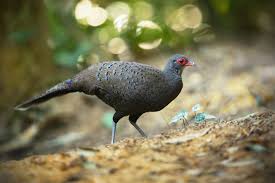
Germain’s peacock-pheasant is one of the most elusive and remarkable ground birds found in Cat Tien National Park. Endemic to southern Vietnam and parts of Cambodia, this near-threatened pheasant is admired for its rich brown plumage, vivid red facial skin, and shimmering sapphire-blue eye-like spots scattered across the wings and tail, which become especially striking in good light.
Early mornings and late afternoons offer the best chance of hearing their calls or briefly spotting one crossing a shaded forest trail in Cat Tien.
This shy and highly secretive species inhabits dense lowland evergreen forest, as well as foothill woodland with thick undergrowth, where it quietly forages along the forest floor for seeds, fallen fruit, insects, and other small invertebrates. Despite its beautiful appearance, Germain’s peacock-pheasant is notoriously difficult to observe clearly, relying on camouflage and dense vegetation to remain concealed.
In Cat Tien, they are occasionally encountered in quieter interior forest areas with minimal disturbance and dense cover. Early mornings and late afternoons usually provide the best chance of hearing their calls or briefly spotting one crossing a shaded forest trail before disappearing back into the undergrowth.
Woolly-necked Stork (Ciconia episcopus)
The woolly-necked stork is a large and distinctive wetland bird occasionally seen in the open habitats of Cat Tien National Park. It is recognised by its glossy dark-brown body with green-bronze iridescence across the wings and breast, contrasting white ruffled neck, white tail, and long dark bill tipped with salmon-pink, giving the species a striking appearance both in flight and while foraging on the ground.
Populations of Woolly-necked Storks in Asia are declining due to habitat loss and disturbance.
This species inhabits wetlands, flooded grasslands, riverbanks, lakeshores, and open grassy areas, where it feeds on fish, frogs, insects, reptiles, and other small vertebrates. Woolly-necked storks are most commonly seen alone, in pairs, or in small groups slowly walking through shallow water or open grassland while searching for prey, though larger gatherings may occasionally form when feeding conditions are especially favourable.
In Cat Tien, they are most often observed around seasonal wetlands, grasslands, and open areas near rivers and lakes, particularly during the dry season when water levels concentrate prey. Although still widespread across Asia, local populations are declining in many areas due to habitat loss and disturbance, making sightings increasingly rewarding for birdwatchers and wildlife enthusiasts.
In conclusion
From the vibrant Blue-rumped pitta to the elusive Germain’s peacock-pheasant and the elegant Woolly-necked stork, the birds of Cat Tien National Park highlight the incredible diversity of habitats found within the Park. Each species plays a role in the rich ecosystem that has made Cat Tien one of Vietnam’s most important wildlife refuges and a dream destination for bird enthusiasts.
Whether you are an experienced birder or simply a nature lover exploring the forest for the first time, every visit to Cat Tien offers the possibility of a memorable encounter with some of Southeast Asia’s most remarkable birds. With patience, quiet observation, and a bit of luck, the forests of Cat Tien will continue to reveal new surprises around every trail.
If you’d like the opportunity to spot these extraordinary birds in the wild, book a tour with us today and experience the magic of Cat Tien for yourself!