CAM002
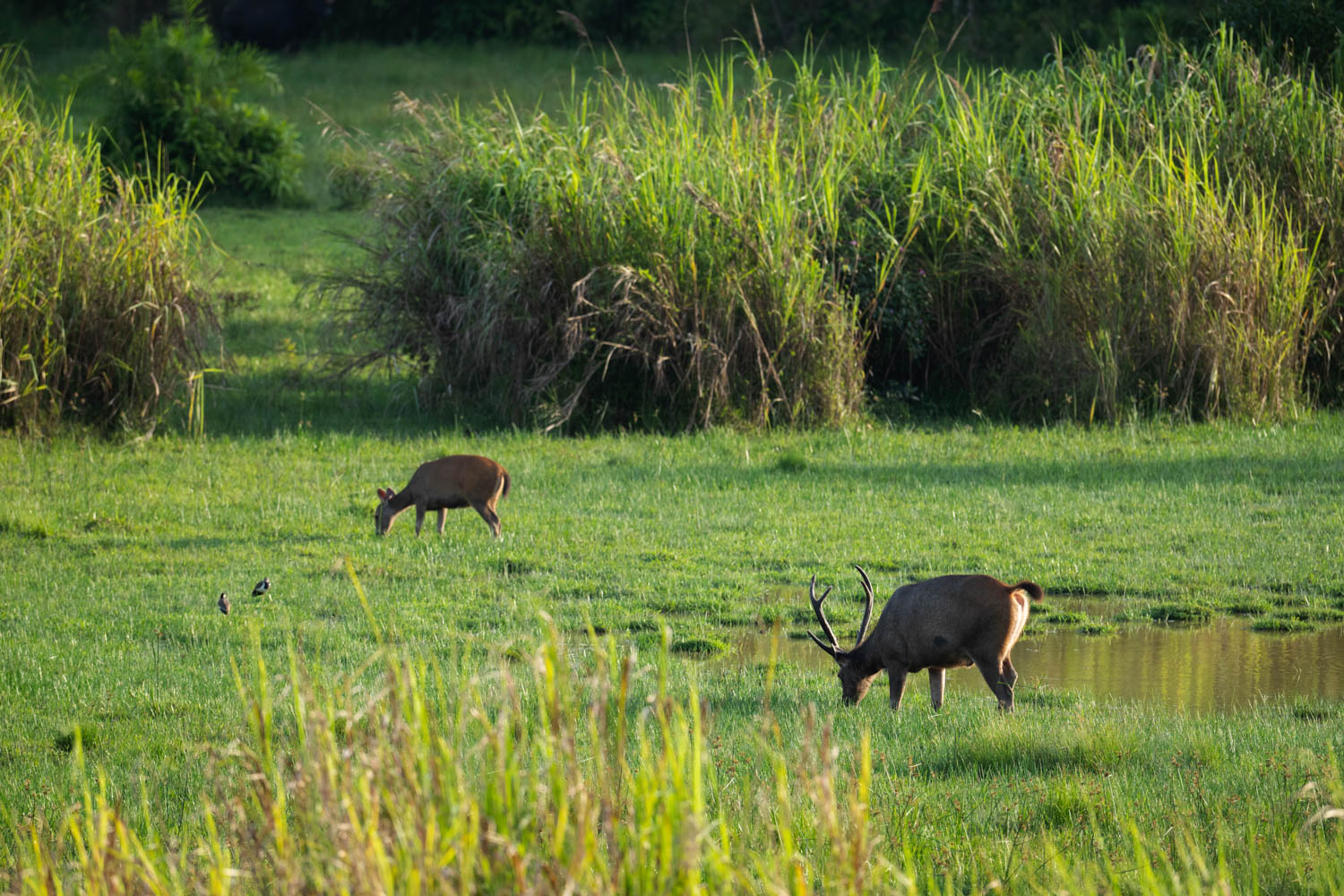
Data from CAM002 confirms that the window between 7 PM and 3 AM is the most active period for the park’s hoofed residents.

Step into the heart of Vietnam’s wilderness. This live camera, set deep within the protected zones of Cat Tien National Park, offers a raw, unfiltered glimpse into life in the jungle - 24 hours a day.
To protect wildlife and preserve these sensitive habitats, the exact location of the camera remains undisclosed. But through this lens, you can witness rare birds and mammals moving freely, revealing moments that are rarely seen by human eyes.
This is more than just a live feed. It’s part of a growing vision. In the near future, we will integrate Katien AI Sentinel - a real-time monitoring system powered by high-precision cameras, a dedicated AI server, with custom-built algorithms. Designed to support both conservation and research, the system will identify wildlife as it appears, helping track biodiversity while ensuring viewers never miss a moment. As you watch, animals will be automatically detected and labeled, contributing to an ongoing analysis of this unique ecological corridor.
From ranger patrols and field researchers to the occasional appearance of elusive species, what you’re seeing is Cat Tien as it truly is - wild, protected, and alive. Each moment captured plays a role in a larger mission:
A wild gaur is spotted foraging alone across the grassland of Cat Tien National Park in the late afternoon. As the temperature cools, it moves slowly through the grass, grazing as it makes its way across the open habitat.
While gaurs are often seen in herds, adult males may also spend time alone, moving between feeding areas. This solitary individual offers a quiet glimpse into the daily behavior of one of Cat Tien’s most impressive large mammals.
The gaur (Bos gaurus) is listed as Vulnerable on the IUCN Red List, with populations threatened by habitat loss, hunting, and human-wildlife conflict. Protecting Cat Tien’s forests and grasslands is therefore essential for maintaining a safe habitat for this iconic species.
As the afternoon heat begins to fade across the grasslands of Cat Tien National Park, a group of sambar deer emerges to forage in the open meadow. These large herbivores browse on fresh grasses and tender vegetation, making the most of the cooler temperatures before dusk. Feeding in groups allows them to stay vigilant, with multiple individuals scanning for potential danger while others continue grazing.
The sambar deer (Rusa unicolor) is the largest deer species in Southeast Asia and is listed as Vulnerable on the IUCN Red List due to habitat loss and hunting pressures across its range. Cat Tien National Park remains one of Vietnam's most important refuges for this iconic species, where healthy populations continue to thrive within protected forests, wetlands, and grasslands.
While many birds seek shade during the hottest hours of the day, this Greater Coucal (Centropus sinensis) was captured by Katien Safari's Live Camera quietly moving through the grassland at noon.
Unlike most cuckoos, the Greater Coucal builds its own nest and raises its own chicks rather than laying eggs in the nests of other birds. It spends much of its time on or near the ground, using its strong legs to forage through dense vegetation for insects, snails, lizards, frogs and even small snakes.
Although its deep, booming calls are more often heard than the bird itself is seen, moments like this offer a rare glimpse into the daily life of one of Cat Tien National Park's most distinctive residents.
As the first light reaches Cat Tien National Park, a group of Sambar deer quietly emerges into the open grassland. Cooler temperatures and fresh vegetation make the early morning one of the best times for these elusive herbivores to forage before retreating to the forest later in the day.
Captured by Katien Safari's Live Camera system, this peaceful moment offers a glimpse into the daily rhythm of one of Southeast Asia's largest deer species.
As the late afternoon cooled, a greater coucal (Centropus sinensis) emerged into the grassland of Cat Tien National Park. Moving slowly through the vegetation, the bird searched for insects, lizards, frogs, and other small prey hidden among the grasses.
Unlike many members of the cuckoo family, greater coucals build their own nests and raise their young instead of relying on other birds. Their secretive behavior and preference for dense vegetation often make them easier to hear than to see.
This moment offers a glimpse into the daily life of one of Cat Tien's most distinctive birds, recorded through Katien Safari's live wildlife camera network.
A male sambar deer is standing still on the grass and continuously looking about. This is a common cautious behavior that allows the deer to listen for sounds and detect potential predators or changes in their environment before deciding to move.
The deer can also save energy by remaining still when resting or after eating. It will either move on, continue grazing, or return the group once it decides the situation is safe.
Because of the regular shedding process, this individual's coat becomes dark and mottled rather than the usual brown of other sambar deer. Mature males also stand out from the rest of the group because they frequently have darker coats, particularly during the breeding season.
A peaceful mid-afternoon scene unfolds on the grasslands of Cat Tien National Park as two Woolly-necked Storks (Ciconia episcopus) forage along the edge of a wetland pond. Nearby, several sambar deer graze quietly, sharing the same habitat in a remarkable display of coexistence within one of Vietnam's richest wildlife landscapes.
The Woolly-necked Stork is a large wading bird recognizable by its striking white neck, glossy dark plumage, and long red legs. Distributed across South and Southeast Asia, the species inhabits wetlands, floodplains, grasslands, agricultural fields, and river systems, where it feeds on fish, frogs, crabs, insects, reptiles, and other small animals.
Unlike many stork species that gather in large colonies, Woolly-necked Storks are often observed alone, in pairs, or in small family groups. They are highly adaptable hunters, capable of foraging in both natural wetlands and human-modified landscapes. Recent studies have highlighted the importance of maintaining healthy wetland ecosystems and seasonal floodplains for the species' long-term survival.
As night falls over Cat Tien National Park, a group of sambar deer emerges onto the open grassland. Some pause to rest while others continue foraging, taking advantage of the cooler temperatures and abundant vegetation. Scenes like this highlight the importance of Cat Tien's grasslands, which provide essential feeding grounds for many of the park's large mammals.
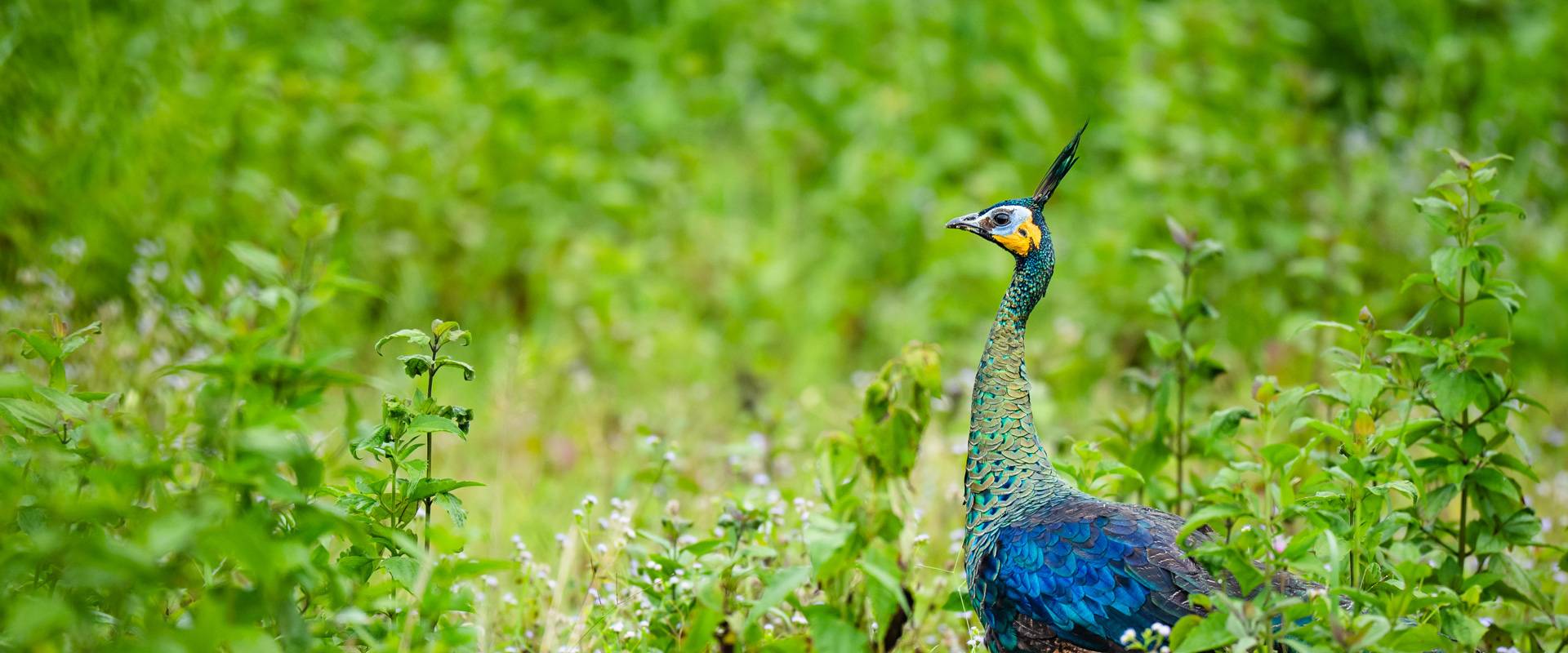
A small group of green peafowls can be seen foraging across the grassland during the early morning hours in Cat Tien National Park. As the day begins, the birds carefully search the ground for seeds, insects, shoots, and other food items hidden among the vegetation.
Green peafowls are typically most active during the cooler parts of the day, especially in the morning and late afternoon. Open grasslands such as this provide important feeding habitat, allowing the birds to forage while maintaining a clear view of their surroundings for potential predators.
Listed as Endangered on the IUCN Red List, the green peafowl has experienced significant population declines across much of its range due to habitat loss and hunting. Cat Tien National Park remains one of the species' important strongholds in Vietnam, offering vital habitat for their survival.
This peaceful morning scene offers a glimpse into the daily life of one of Southeast Asia's most striking and threatened bird species.
A peaceful late afternoon unfolds across the grassland and lake of Cat Tien as a group of sambar deer and green peafowls forage side by side. The deer move slowly through the grass in search of fresh vegetation, while the peafowls carefully pick through the ground for seeds, insects, and other small food items.
As temperatures begin to cool, many of Cat Tien's wildlife species become more active after the heat of the day. Open grasslands and wetlands like these provide important feeding grounds where different animals can often be observed sharing the same habitat.
Moments like this offer a glimpse into the rich biodiversity of Cat Tien and the natural rhythms that shape life in the park's grassland ecosystem.
Green peafowls often appear in grasslands during the early afternoon to continue feeding after the cooler morning hours.
At this time of day, insects and other small prey become more active in the warming grassland, creating good foraging opportunities. Open habitats also allow the birds to stay alert for predators while moving between feeding areas.
Outside of the breeding season - or when they are relaxed and focused on feeding - males may choose not to display their elaborate trains, conserving energy instead. This creates a calmer and more natural glimpse into their daily behaviour in the wild.
Early morning in the grassland brings one of Cat Tien National Park’s most charismatic and distinctive birds into view - the greater coucal.
A large bird that resembles a cross between a crow and a pheasant, the greater coucal is easily recognised by its glossy black plumage, distinctive rusty wings, long heavy black tail, and deep red eyes. Moving quietly through the vegetation at first light, this ground-dwelling cuckoo searches for insects, snails, frogs, lizards, and other small prey hidden within the grassland.
Often heard before it is seen, the greater coucal is known for its deep, resonant calls echoing across wetlands and open habitats as the forest begins to wake. Unlike many cuckoo species, it builds its own nest and raises its young rather than laying eggs in the nests of other birds.
Though capable of strong flight, the greater coucal spends much of its time on the ground or concealed in dense vegetation, relying on stealth and patience while foraging. As an active predator of insects and small animals, it also plays an important role in maintaining balance within the grassland ecosystem.
In many parts of Asia, the greater coucal is also associated with folklore and traditional beliefs because of its haunting calls and secretive behaviour, adding to the mystery of this remarkable bird of Cat Tien’s grasslands.
Two Sambar deer briefly clash, locking antlers before separating. These encounters are typically low-intensity and form part of dominance behavior, most often observed among males. Rather than causing serious injury, such clashes allow individuals to assess strength and establish rank within the group.
This behavior is closely linked to breeding dynamics. Dominant males gain greater access to receptive females, so short and controlled confrontations help maintain hierarchy while minimizing energy loss and risk. Outside peak mating periods, these interactions can still occur but are usually less frequent and less aggressive.
Nearby deer continue foraging, indicating that such encounters are routine and rarely escalate. As a primarily nocturnal species, sambar deer often feed and display social behaviors at night, using open grasslands where visibility and awareness of potential threats are higher.
Captured at night in Cat Tien National Park, two Sambar Deer can be seen grazing in an open grassland, while a porcupine forages nearby.
Both species are primarily nocturnal, taking advantage of the night to feed and avoid danger. While the deer focus on grazing, the porcupine searches for roots and fallen plant material, demonstrating how different wild animals coexist by utilizing different food sources within the same habitat.
Although porcupines are often seen in pairs or small family groups, it is not unusual for an individual to forage alone. Based on its size, this individual is likely an adult of the Malayan porcupine found in Cat Tien National Park, which can grow up to around 50-80 cm in body length and weigh over 10-15 kg.
Porcupines have a varied diet, feeding mainly on roots, tubers, fallen fruits, bark, and other plant material. They are also known to gnaw on bones to obtain essential minerals like calcium. This clip offers a glimpse into the quiet lives of nocturnal wildlife, where the forest remains full of activity throughout the night.
A calm morning scene unfolds in Cat Tien as a Green Peafowl stands quietly in the soft light in the early morning. Unlike the dramatic displays often associated with this striking species, the bird remains still and composed.
Nearby, a waterbird moves through the area, foraging for food. This suggests typical early morning feeding behavior, when many ground- and water-feeding birds are most active.
The clip captures a typical early morning moment in Cat Tien National Park, with different species active in the same space as they go about their routine.
A White-throated Kingfisher appears briefly in the morning, landing in an open grassland with what looks like a worm or small prey already held in its bill. Its vivid blue wings, chestnut body, and bright white throat stand out clearly against the landscape.
Unlike many kingfishers that stay close to water, this species is highly adaptable and often hunts across a variety of habitats, including open fields. In this case, it likely caught its prey elsewhere and chose this spot to handle and eat it. The entire moment is swift and efficient - within seconds, the bird finishes its meal and takes off again, disappearing just as quickly as it arrived.
Moments like this are easy to miss, but they reveal just how efficient and adaptable White-throated Kingfisher is. In places like Cat Tien National Park, even a brief landing can offer a small but vivid glimpse into wildlife in the grassland.
Read more about Kingfisher (Alcedinidae) - the colorful hunter of the jungle here.
The most prominent activity in the video features a group of Green Peafowl. Their upright crests and shimmering green-gold, scale-like neck feathers are clearly visible. Unlike the more familiar Blue Peafowl, both males and females of this species share this distinctive green plumage. Classified as Endangered, Cat Tien remains one of the last important strongholds for this species in Vietnam.
Species identification: At least five individuals are visible within the frame.
Behavioural observations:
Besides green peafowl, other bird species were also recorded:
This footage highlights a key aspect of dry season ecology. As natural water sources within the forest diminish, permanent or semi-permanent waterholes become essential gathering points for wildlife.
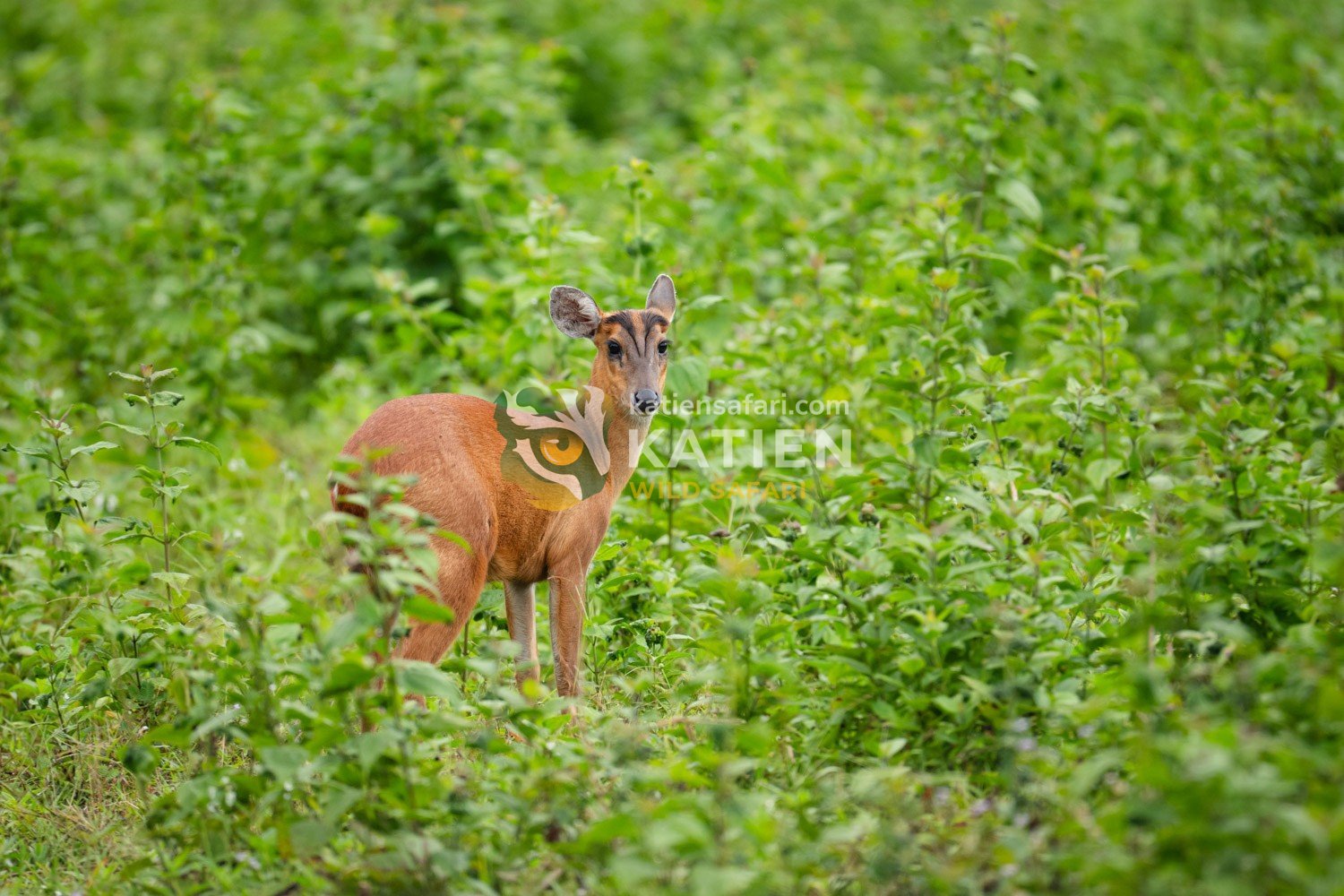
During the monitoring period, CAM001 captured a notable gathering of Barking deer. The footage shows a relatively high level of site use by a small group, offering insight into local activity patterns and nighttime foraging behaviour.
Behavioural observations: