Live Camera will be available soon. Check our daily updates below.
Wetland Margins and Open Woodlands:
Cat Tien Live Safari Cam005
Positioned strategically within the core zone of Cat Tien National Park, CAM005 monitors a vital ecological intersection where sparse woodlands meet seasonal wetlands. This vantage point offers an intimate look at a "natural crossroads," where wildlife converges to forage, engage in complex mating rituals, and navigate between protective cover and open feeding grounds.
Operating 24/7, CAM005 captures the raw, unscripted rhythms of the wild. These recordings serve as essential data for the Katien AI Sentinel system, which utilizes high-precision algorithms to track species population density and behavioral patterns, directly informing our conservation strategies.
This camera documents a key daytime foraging pattern along the wetland–woodland edge, where open ground meets soft, water-rich soil.
Species identification: A large, stork-like wading bird characterized by a dark grey back, white underparts, and a distinctive featherless, yellowish head and neck.
Behavioral insight: CAM005 frequently captures these birds using their massive bills to probe the soft earth for prey. A notable behavior recorded is vigorous wing-flapping, used either for balance while navigating uneven terrain or as a thermoregulation tactic under the midday sun. They are typically solitary foragers, showing remarkable patience in the tall grass.
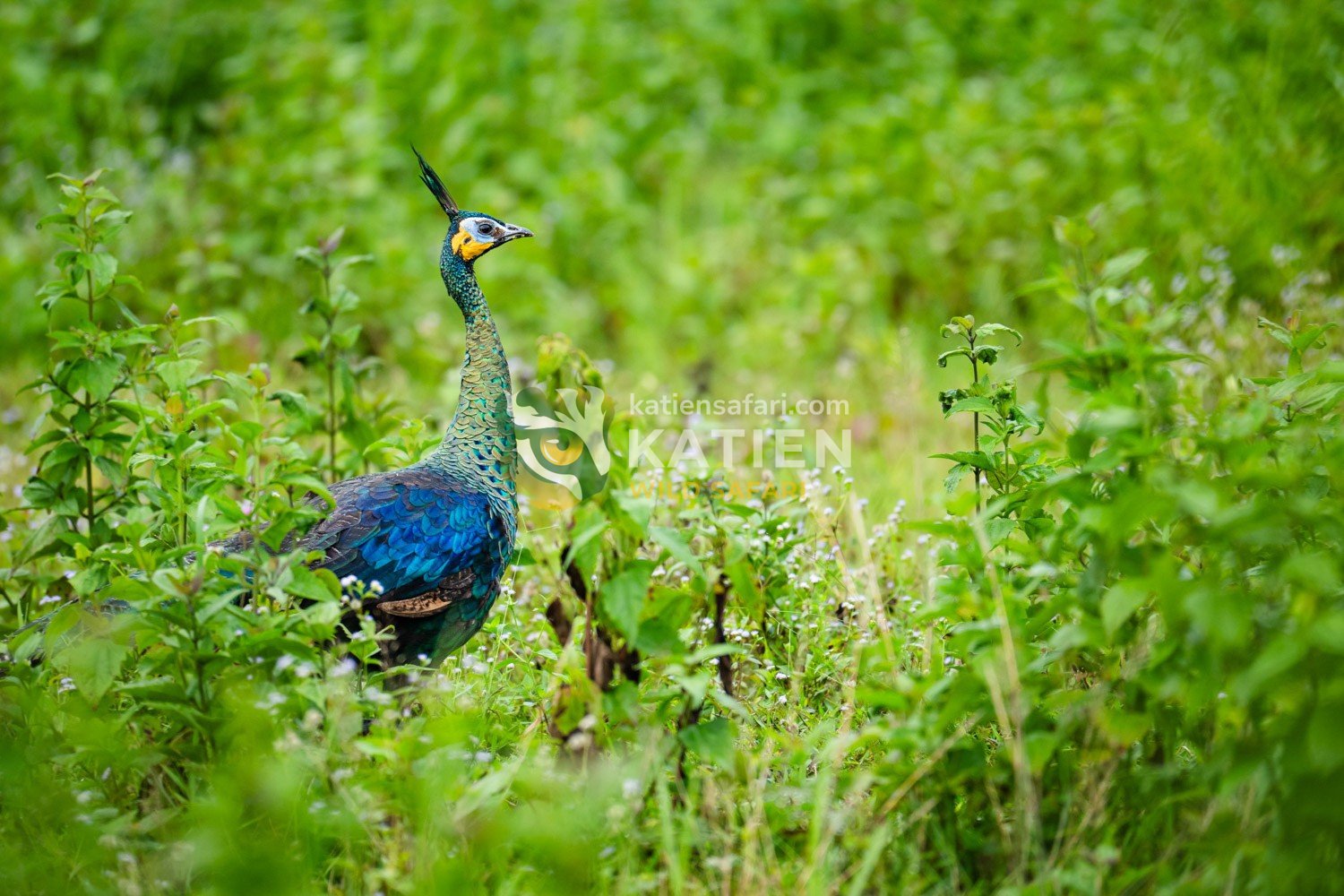
During low-light transition periods, the clearing becomes a stage for one of Southeast Asia’s most iconic species.
Species identification: Vietnamese Green Peafowl, characterized by iridescent green and bronze plumage and a tall, upright crest.
Behavioral insight: The most cinematic moments on CAM005 feature the male’s magnificent courtship display (fanning). By vibrating its elongated tail coverts (shivering), the peafowl creates a shimmering visual of "eye-spots" and a distinct rustling sound. This ritual is a vital display of genetic fitness and territorial dominance.
As night falls, the forest trail becomes an active movement corridor for nocturnal ground dwellers.
Porcupine activity: CAM005 captures a particularly striking sequence of three Malayan porcupines moving in single file along a narrow forest trail. Their heavy, waddling gait and close spacing create a rhythmic procession, offering a rare and visually compelling moment of coordinated movement.
Behavioral insight: The animals are observed foraging intermittently for fallen fruits and roots, frequently stopping to sniff the air. Their black-and-white quills form a high-contrast silhouette under infrared illumination, enhancing visibility and suggesting the trail functions as a preferred nocturnal transit route rather than a random crossing point.
In stark contrast to the porcupines, the civet appears as a fleeting presence within the same ecological corridor.
Civet activity: CAM005 records the civet moving with extreme agility and near-total silence, often entering and exiting the frame within seconds.
Behavioral insight: These small carnivores exploit low-light conditions to hunt or forage for ripe berries, navigating the undergrowth with fluid, ghost-like motion. Their brief, elusive appearances suggest opportunistic use of the area rather than prolonged foraging, reinforcing their role as highly mobile nocturnal predators.
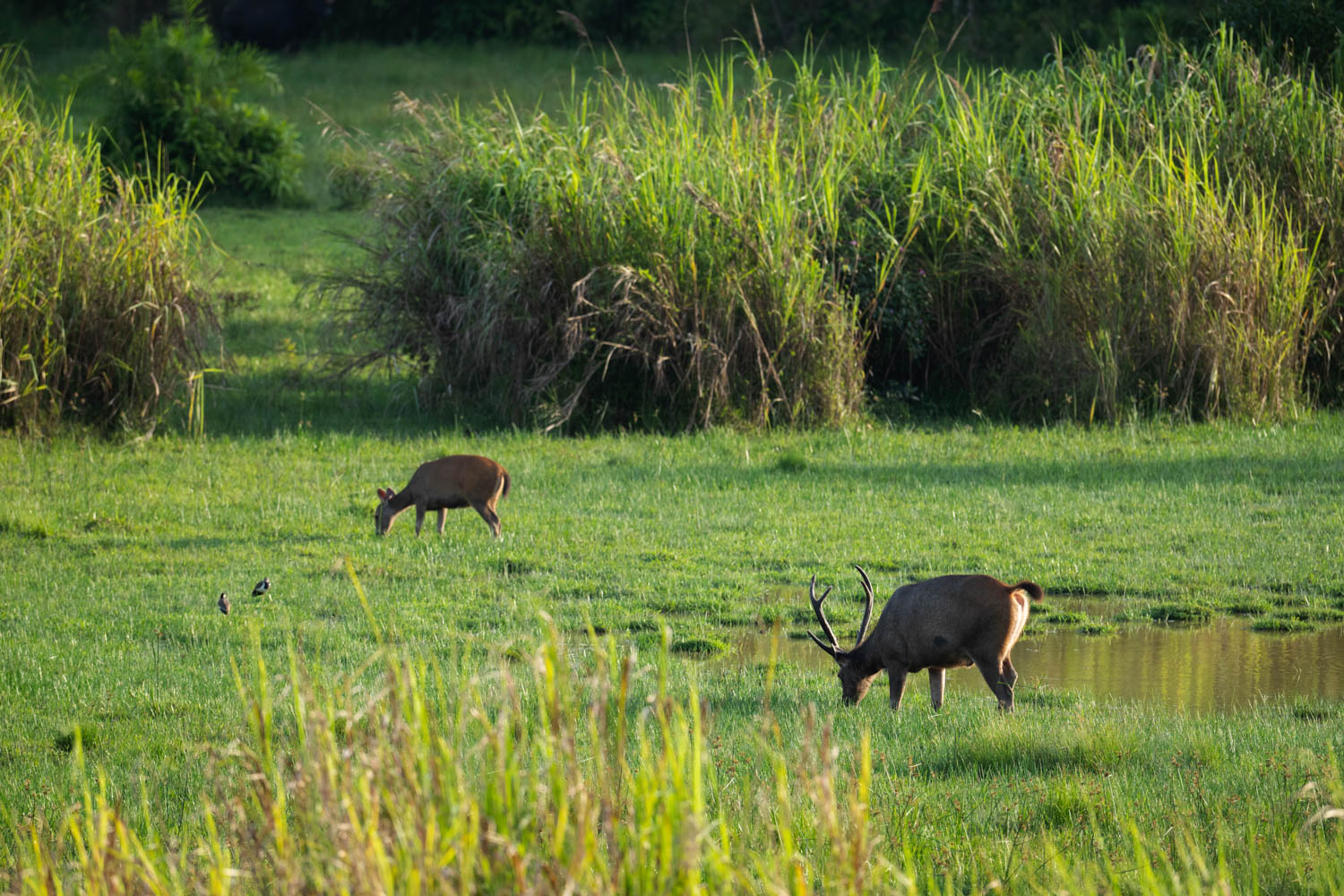
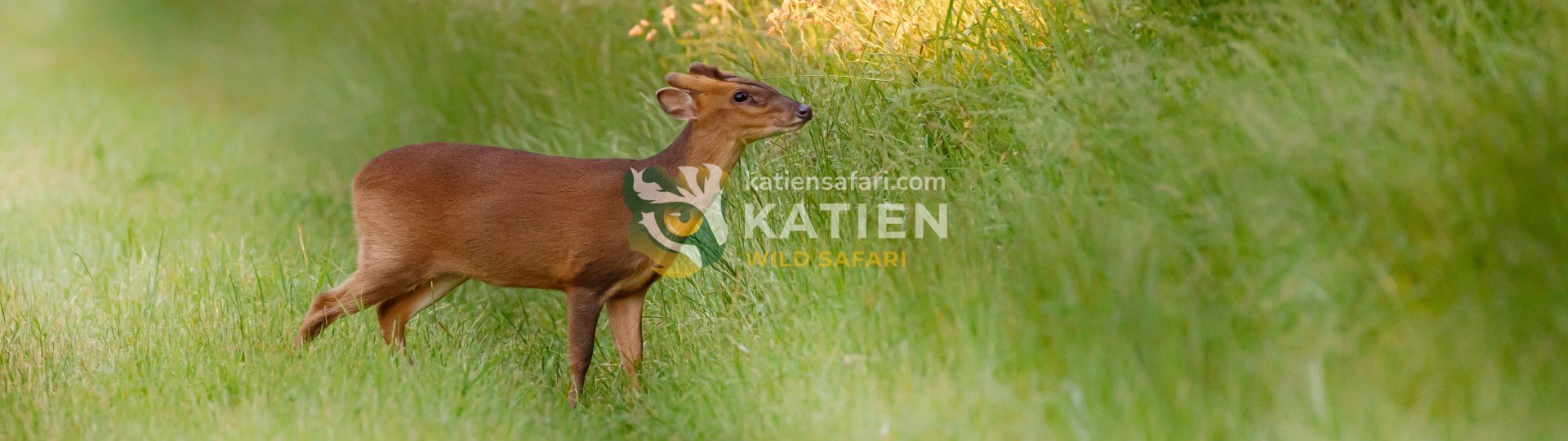
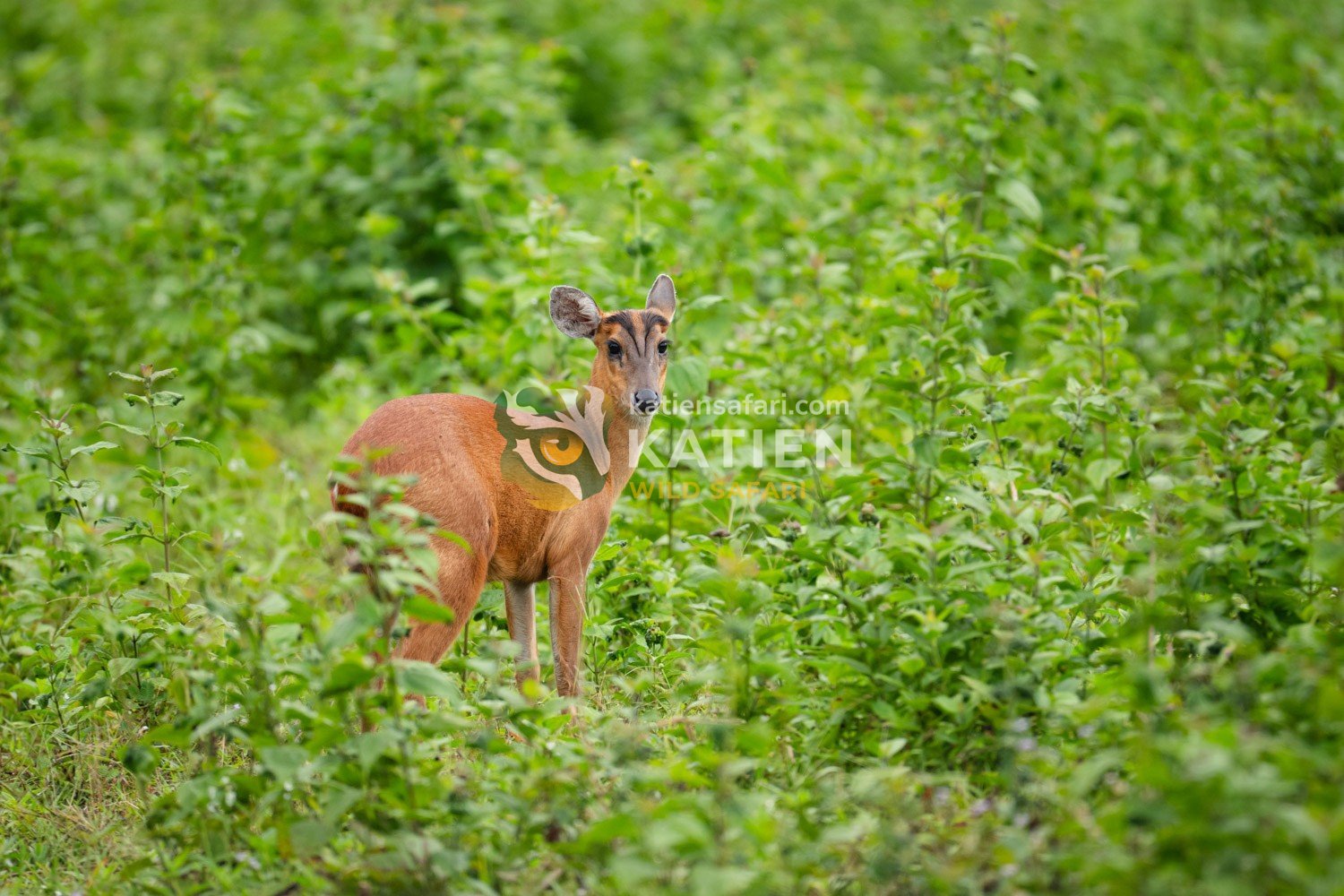
5. Sambar Deer & Muntjac (Barking Deer)
CAM005 | Monitoring hours: Early morning, twilight and late night
This location functions as a critical transition zone between cover and open feeding ground for large ungulates.
Sambar deer: The camera frequently records the heavy silhouettes of Sambar deer, particularly large males with formidable antlers. Muntjacs appear less frequently and typically pass through in small numbers, indicating short-term use rather than sustained foraging.
Behavioral insight: Footage reveals pronounced vigilance behavior. Observed individuals often remain motionless at the forest edge for several minutes, ears twitching and heads scanning before entering the clearing. This repeated pattern suggests CAM005 is positioned along a primary migratory corridor linking water sources with deep-forest bedding areas.
Every frame from CAM005 contributes to our growing database of Cat Tien’s biodiversity, helping us protect the delicate balance of this sanctuary.
CAM002
During the monitoring period, CAM002 recorded a significant gathering of barking deer.
CAM003
Watch deer and wetland birds move across this forest clearing