Although they are called “flying” squirrels, these small mammals do not actually fly like birds or bats. Instead, they glide through the air using a flexible membrane between their limbs, creating smooth, effortless flights from tree to tree. This unique ability makes flying squirrels some of the most intriguing creatures of the forest. Scientifically, they belong to the family Sciuridae and the tribe Pteromyini, which includes more than 50 species across Asia and North America. Each species carries its own charm and mystery, from large nocturnal eyes that shine in the dark to impressive glides that span dozens of meters.
| Common name | Flying Squirrel |
|---|
| Scientific name | Tribe Pteromyini (various genera: Glaucomys, Petaurista, Hylopetes, Belomys) |
|---|
| Taxonomy
|
Kingdom: Animalia
Phylum: Chordata
Class: Mammalia
Order: Rodentia
Family: Sciuridae
|
| Weight / Size | Small species: 20–28.5 cm; 38–90 g. Giant species: up to 40–60 cm; 1–3 kg; long bushy tail. |
|---|
| Lifespan | Wild: 3–6 years. Captive: up to 10–15 years. |
|---|
| Population | Varies by species; several Asian species are threatened. |
|---|
| Habitat | Deciduous, conifer, and mixed forests with tall trees and dense canopy. |
|---|
| Range | North America, Europe, northern Asia; highest diversity in South and Southeast Asia. |
|---|
| Diet | Omnivorous – fruits, nuts, fungi, insects, bird eggs, sap. |
|---|
| Conservation status | From Least Concern to Endangered depending on species. |
|---|
Physical Appearance of Flying Squirrel
Flying squirrels have a very distinct look, and their bodies are shaped perfectly for gliding. Flying squirrel size can vary a lot because there are nearly 50 species.
The southern flying squirrel (Glaucomys volans) is the smallest one, measuring only 20–28.5cm long and weighing about 38–90g. On the opposite end, the giant flying squirrel from the genus Petaurista, such as the Indian giant flying squirrel (Petaurista philippensis), can be as big as a house cat with a tail even longer than its body.
The overall flying squirrel appearance and characteristics are easy to recognize. The body is long, flexible, and built for smooth movement between trees. Both the front and back limbs are longer than those of non-gliding squirrels.
The most important feature is the patagium – a furry skin membrane stretching from the wrist to the ankle. This soft “parachute” lets them glide for 45–90m in a single jump. Their tail is long, fluffy, and very flexible, helping them balance, steer, and brake before landing.
Flying squirrels also have special bones. A styliform cartilage extends from the wrist to help spread the patagium, and the hands and feet have reduced surface area to limit air resistance. Their fur is another clear feature: soft, thick, and smooth.
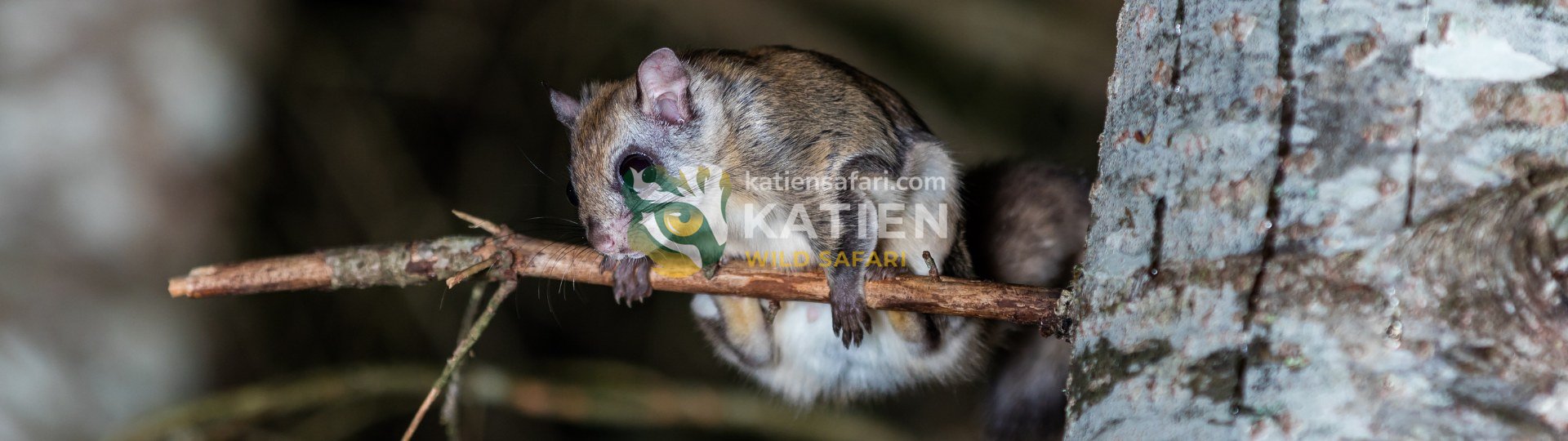
The flying squirrel coloration and fur pattern range from brown and gray to reddish tones, depending on the species. They blend well with forest canopies. The belly is usually white or pale gray, while the back is darker. In Glaucomys, the Southern species has a white belly, while the Northern one has gray roots on the underside. Their eyes are large, round, and completely black, perfect for night activity.
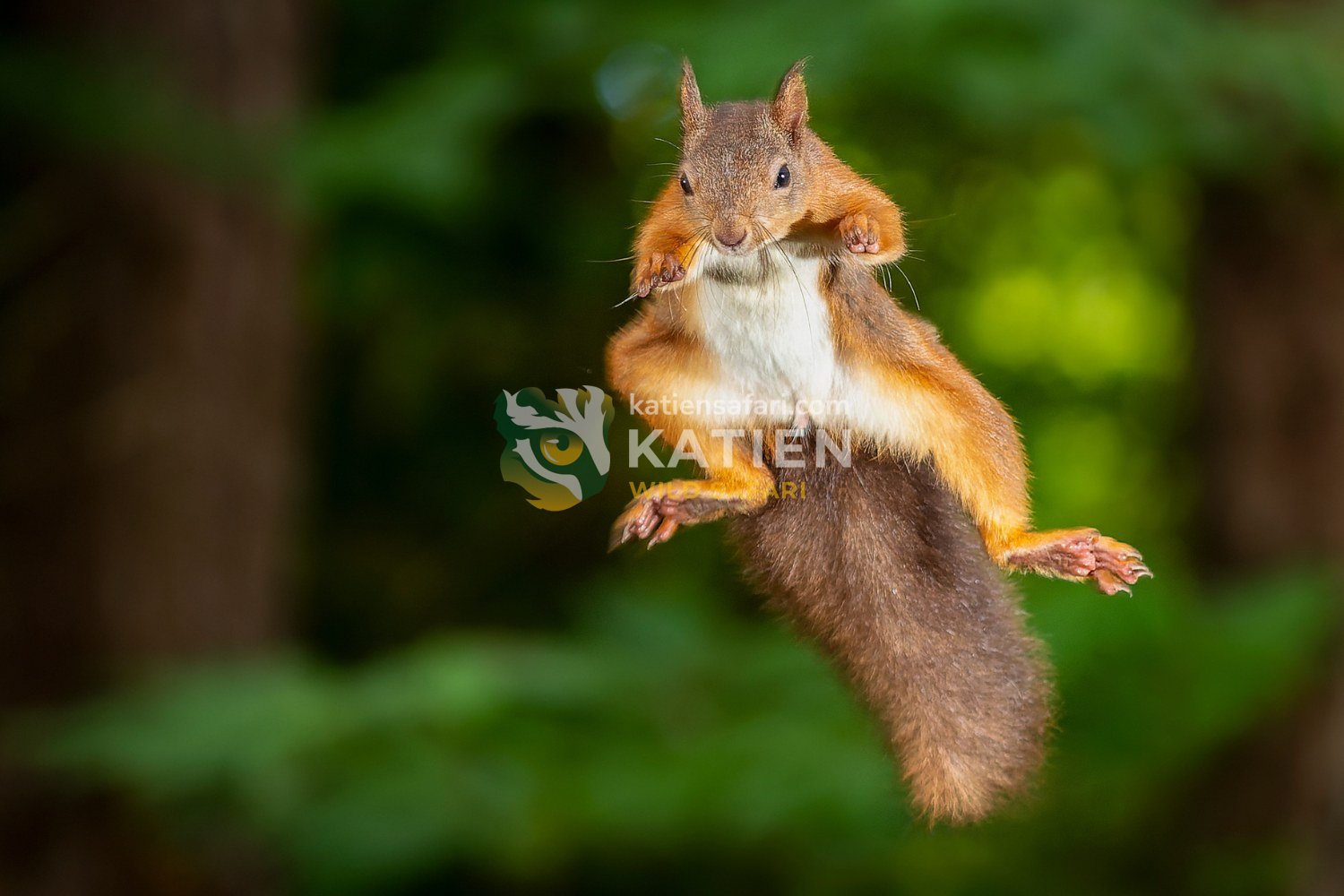
The flying squirrel has large eyes and soft, dense fur.
Subspecies and Size Groups
Flying squirrels form a tribe of about 50 species in two major geographic groups:
- New World flying squirrels (genus Glaucomys) in North America
- Old World flying squirrels (genera such as Petaurista, Hylopetes, Belomys) in Europe and Asia
Modern taxonomy places them into 15 genera divided between two subtribes: Glaucomyina and Pteromyina. The highest diversity is found in South Asia and Southeast Asia.
They also separate naturally into two main size groups:
- Small flying squirrels (Glaucomys, Hylopetes, Belomys) are light-bodied and glide short to medium distances (6–30 m).
- Large or giant flying squirrels (Petaurista, Eupetaurus, Biswamoyopterus) are much bigger and can glide over 90 m, sometimes several hundred meters.
The genus Petaurista contains the largest flying squirrels known.
Flying Squirrel Diet and Ecology
Diet of Flying Squirrels
Flying squirrels are omnivores with a very broad diet. They eat fruits, nuts, seeds, leaves, flowers, mushrooms, insects, spiders, snails, bird eggs and sometimes even baby birds. Northern species eat large amounts of truffle-like fungi; in summer, mushrooms appear in 78–98% of their droppings. Southern flying squirrels tend to be the most carnivorous, often eating eggs, nestlings and wood-boring insects.
Some species also lick tree sap from holes created by woodpeckers. Giant flying squirrels mainly feed on figs, old leaves and bark, with about 70% of their diet coming from only a few plant species.
Flying squirrels play an important ecological role. By eating fungi and spreading spores through their droppings, they help forest trees absorb water and minerals. When they bury nuts, they support natural forest regeneration. They are also a key food source for owls and mid-sized predators. Because they respond quickly to habitat changes, scientists often use them as indicators of forest health.
At night, they forage using their strong sense of smell. Many species store food in cavities or cracks for winter. Even though they are capable of long glides, they usually feed relatively close to their nest.
Foraging Behavior
Flying squirrels are active only at night. They search most strongly in the 1–2 hours after sunset and slow down again before sunrise. Gliding helps them save energy and move quickly between tall trees. They use their strong sense of smell to find food in the dark.
Many species store food for later. Southern flying squirrels begin hiding nuts in tree holes and cracks from November to prepare for winter. Even though they can glide far, they usually feed close to their nest. One species often searches within about 160m of its home.
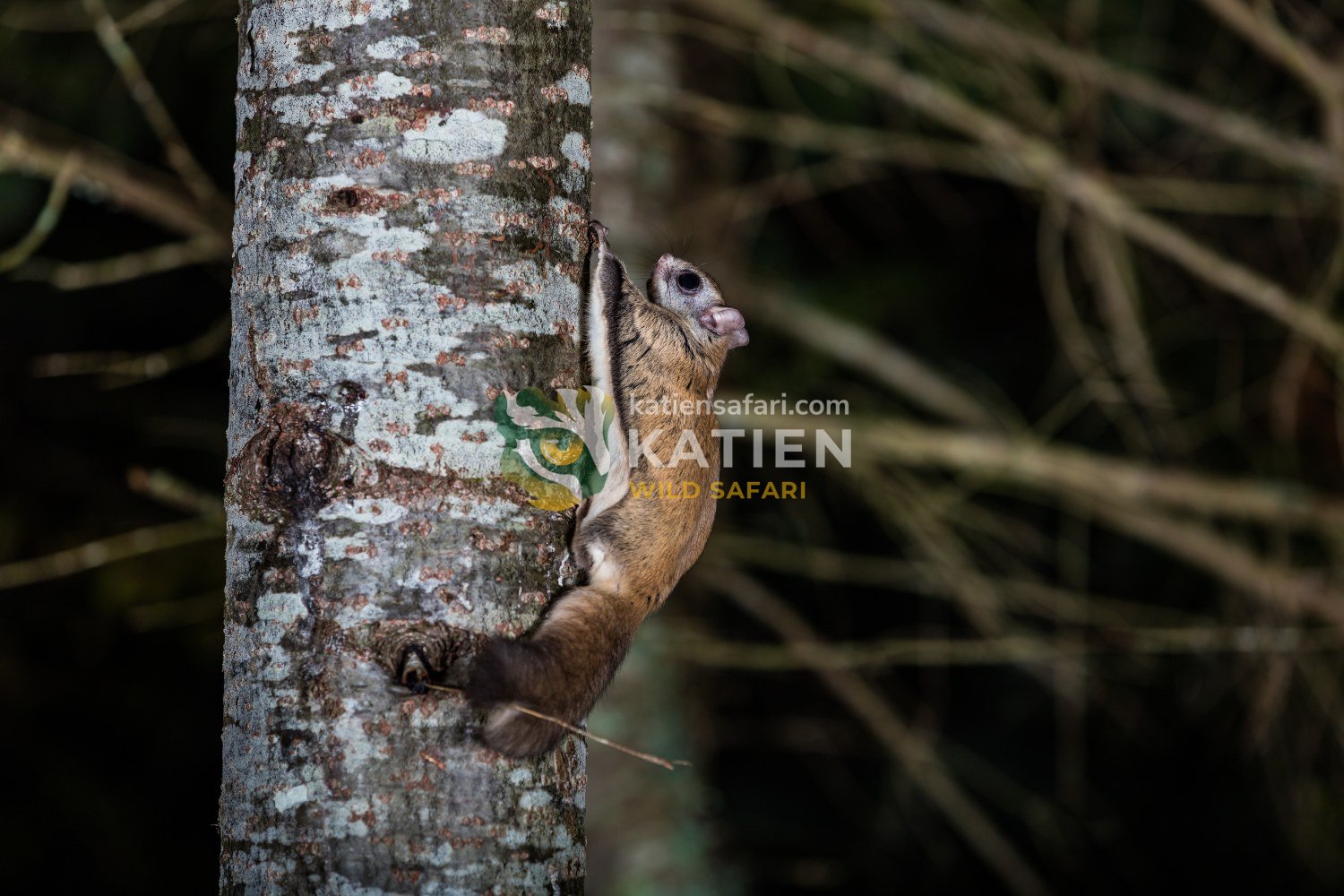
Strong limbs allow it to move quickly between trees.
Predators of Flying Squirrels
Flying squirrels are prey for many forest predators. Night raptors such as owls and hawks catch them during gliding. Tree-climbing mammals like martens, raccoons and lynx attack them near their resting sites. Arboreal snakes target young squirrels, and in towns, domestic cats are a serious threat.
To stay safe, they rely on camouflage from their brown-gray fur and use ultrasonic alarm calls that other squirrels can hear but many predators cannot.
Distribution and Habitat of Flying Squirrel
Flying squirrels depend entirely on forests because they need tall trees for climbing, gliding and nesting. They live in deciduous, conifer and mixed forests, but they thrive best in old, closed-canopy forests that are cool, moist and full of tree cavities.
Mature forests with tall trees, dense canopy and standing dead trees provide shelter and good gliding conditions. Decaying logs support truffle-like fungi, an important food source for many northern species.
Global and Asian Distribution
Flying squirrels live across North America, Europe and northern Asia.
All American species belong to the genus Glaucomys. One species ranges from the eastern United States to Canada and even reaches Honduras, with isolated subspecies in Mexico and Central America. Another species occurs in scattered northern forests across the Northeast, West Coast and Rocky Mountains.
In Eurasia, the Siberian flying squirrel ranges from Finland and Russia to Japan.
Asia has the greatest number of species. South Asia and Southeast Asia host many genera, including giant, tiny and medium-sized species. The Eastern Himalayas and Indo-Burma region is a global hotspot, with about 18 species recorded in northeastern India.
Distribution in Vietnam
Vietnam is one of the most diverse regions for flying squirrels in Indochina. Species occur from north to south, in limestone mountains, basalt mountains, lowland forests and high-elevation forests. The northern mountains and Central Highlands have the highest diversity.
- Small flying squirrels (Hylopetes, Belomys) prefer old forests with dense canopy and large trees. They occur in Hoang Lien Son, the Northwest, the Central Highlands and on islands such as Con Dao and Phu Quoc.
- Giant flying squirrels (Petaurista) are more adaptable and appear in evergreen and semi-evergreen forests across Vietnam. They can survive in secondary forests as long as tall trees remain.
Populations are strong in mountain ranges like Hoang Lien Son, Truong Son, the Central Highlands and southeastern forest regions. Some species are regionally unique, showing the high conservation value of Vietnam’s forests.
Flying Squirrels in Cat Tien National Park
Cat Tien National Park has confirmed the presence of the Indian giant flying squirrel. The number of individuals is not yet known, but sightings show they glide between tall trees along forest roads near Dat Do ranger stations. The habitat here is secondary evergreen forest mixed with shrubs, showing the species can persist outside old-growth forest.
These squirrels move using stable “tree-to-tree routes,” even in regenerating forests, which helps them find food and avoid predators at night.
Behavior and Communication
Flying squirrels are fully nocturnal. They are most active 1–2 hours after sunset and rest inside tree cavities during the day. In cold seasons, southern flying squirrels can enter light torpor, while northern species stay active even in freezing conditions.
They avoid the ground because it is dangerous. Most movement happens by climbing or gliding. Social behavior varies widely. Small species like Glaucomys volans are highly social and may sleep in large winter groups of 20–50 squirrels to stay warm. Giant species are mostly solitary except during breeding.
Females of some species defend territories strongly, while males have overlapping ranges. Flying squirrels communicate using high-frequency sounds, whistles, squeaks and sometimes ultrasonic calls during gliding.
Flying squirrels glide using their patagium, which spreads out like a parachute when they jump. The special cartilage at the wrist helps control the shape of the membrane. Their long, bushy tail acts as a steering tool and brake.
They can turn sharply, even up to 180 degrees, in mid-air by shifting their limbs, and they increase drag before landing to reduce impact. All flying squirrels glide only from high to low and cannot fly upward.
Small species usually glide 45–90 m. Giant species can glide more than 90 m, and some observations report glides of several hundred meters in tall forests. Gliding saves energy, helps them travel quickly between trees, find food and escape predators.
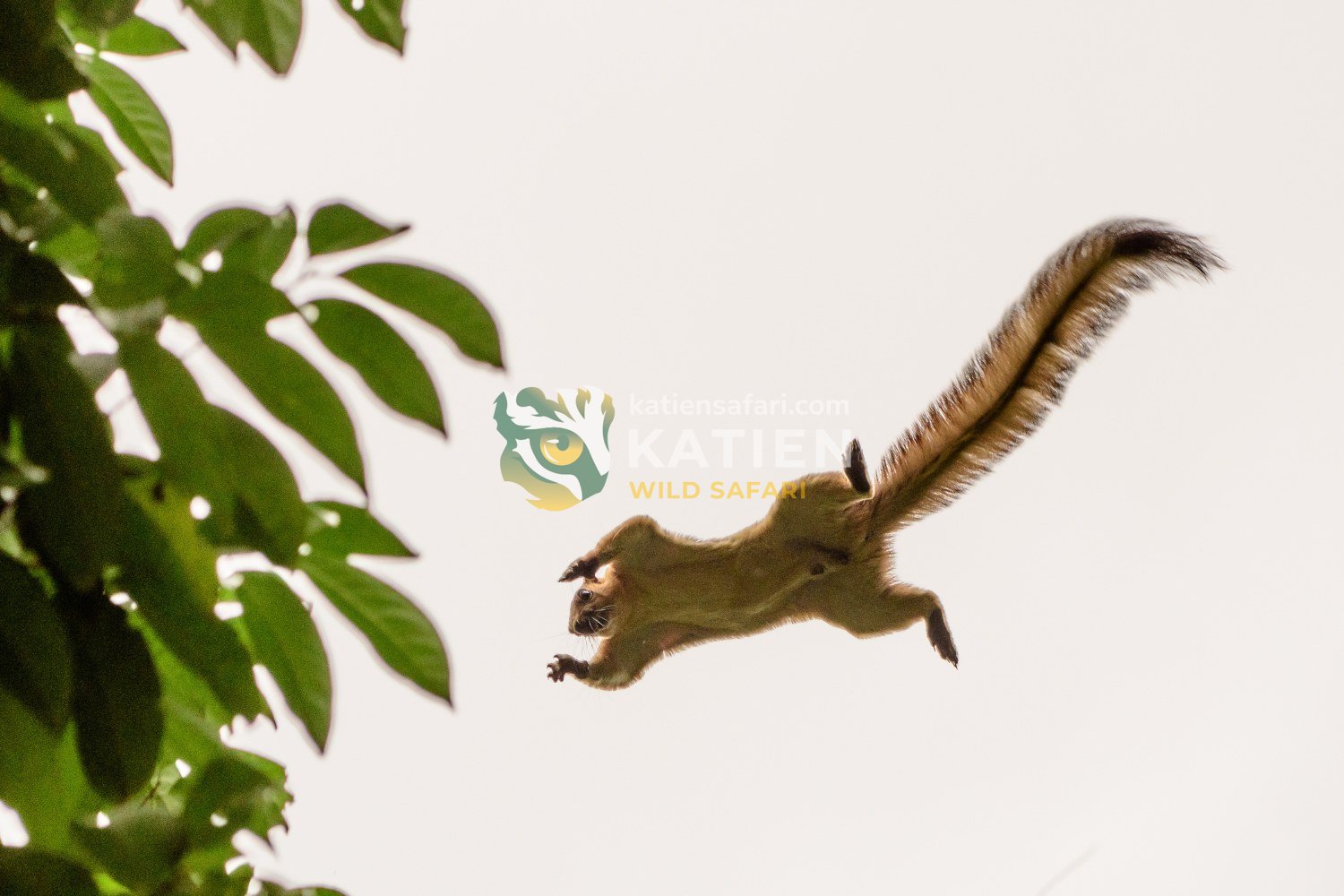
The animal glides smoothly from tree to tree at night.
Breeding Biology & Reproductive Patterns
Breeding seasons differ across regions, but many species in North America and Asia mate around February–March. Litter sizes vary greatly. Small species can have 1–7 young, usually 2–3 in spring and 4–5 in summer. Medium and large species such as Hylopetes and Petaurista usually have 1–2 young.
In small species, pregnancy lasts about 40 days. Females can breed at 6–8 months old, while males mature at around 11 months. Mating involves strong male competition.
Nests are inside tree cavities. As birth approaches, females become very protective. Males do not help raise the young. Babies are born hairless, with closed eyes and ears, weighing only 2.5–3.5 g. They develop rapidly, growing fur by week 3, opening eyes by week 3–4 and practicing small glides by week 5. At 10 weeks, they can glide well and begin independent life.
Lifespan in the wild is about 6 years, but small species often live only 3–5. In captivity, some individuals reach 10–15 years, even up to 19.
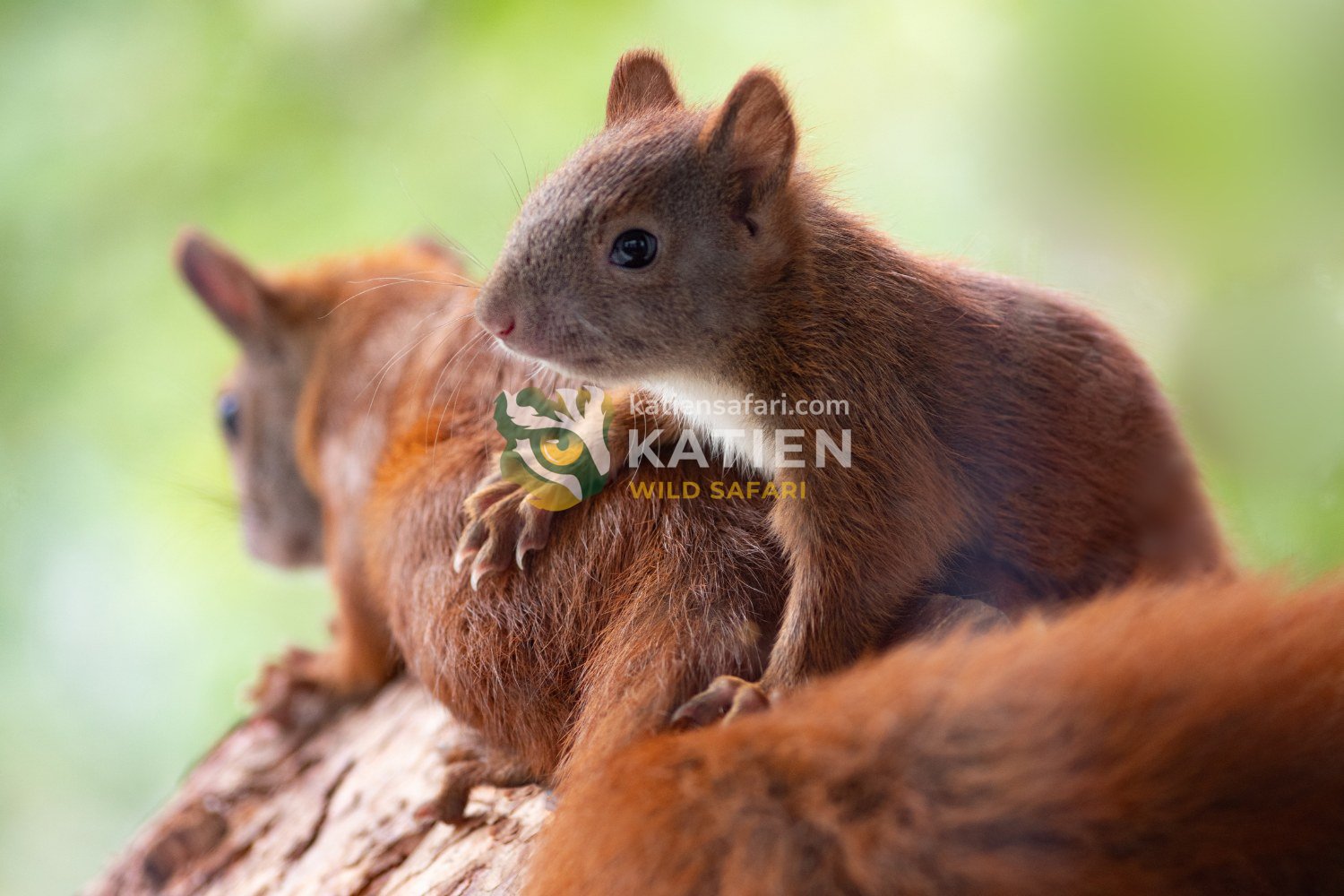
Parental care continues until the young can glide alone.
Conservation Status and Threats
Threats
Many species remain stable, but several are threatened. In Vietnam, some species are Critically Endangered or Endangered due to habitat loss. In North America, certain subspecies are protected because old forests have become fragmented.
The biggest threats are logging, loss of old trees, reduced forest complexity and declines in fungi that squirrels depend on. Heavy forest thinning can reduce populations dramatically. Climate change may remove up to 81–90% of suitable habitat for some Asian species. Hunting and accidental deaths also occur.
Conservation Priorities & Management
Protecting flying squirrels depends on keeping forests healthy and structurally rich. Dense canopy cover, old trees, standing dead trees and decaying wood are all important because they provide nest sites and support the fungi many species eat. Forests should not be thinned too heavily, and the ground should not be cleared too much. Preventing strong forest fires is also essential.
In Asia and Vietnam, conservation needs include protecting habitat corridors, improving cross-border cooperation and increasing field surveys to track populations. Large trees in squirrel habitat should not be cut, and hunting must be strictly controlled. Areas with high species diversity should receive stronger protection, and community outreach can help reduce trapping and raise awareness of the species’ ecological value.
Watching Flying Squirrels in the Wild
Flying squirrels are shy, nocturnal, and highly sensitive animals. If you’re lucky enough to spot one in its natural habitat, here are the key things to remember:
- Keep your distance, because flying squirrels scare easily and may abandon their glide path or feeding spot if approached too closely.
- Avoid using bright lights, as strong flashlights can damage their light-sensitive eyes and cause stress.
- Never try to touch or feed them, because human contact can transmit diseases and disrupt natural behavior.
- Do not block their glide path, especially when standing near open spaces or between trees.
- Observe from the side, not directly underneath, to avoid startling them during a glide or landing.
- Respect nesting sites, as mothers may relocate their young if disturbed.
- Do not chase or follow them, because this drains their energy and increases predation risk.
- Leave no food or waste behind, since altering their diet or attracting predators can harm local populations.
5 Interesting Facts of Flying Squirrel
1. Despite their name “Flying Squirrel”, they do not fly like birds or bats. They can only glide from higher branches to lower ones using a skin membrane between their limbs.
2. A single glide can reach 45 meters (150 ft), and some large species may glide up to 90 meters (300 ft). From a height of 100 feet, they can reach speeds of about 20 mph.
3. All three North American species show a pink or bright neon glow when exposed to ultraviolet light. Scientists still don’t fully understand why this happens.
4. Flying squirrels have a lineage that has existed for about 160 million years, dating back to the age of dinosaurs. They are an ancient group of mammals.
5. Flying squirrels seldom drink water directly because they obtain most of their moisture from fruits, tree sap, fungi, and natural sources like rain or dew.
Reference
- Abedin, I., Kamalakannan, M., Banerjee, D. and Kundu, S. (2025) ‘Gliding on the edge: The impact of climate change on the habitat dynamics of two sympatric giant flying squirrels, Petaurista elegans and Hylopetes phayrei, in South and Southeast Asia’, Diversity. Advance online publication.
- Abedin, I., Kamalakannan, M., Mukherjee, T. and Kundu, S. (2025) ‘Fading into obscurity: Impact of climate change on suitable habitats for two lesser-known giant flying squirrels (Sciuridae: Petaurista) in Northeastern India’. Advance online publication.
- Atwood, A. (2016) Glaucomys volans: Southern flying squirrel. Animal Diversity Web. Available at: https://animaldiversity.org/accounts/Glaucomys_volans/
- Carey, A.B. (1995) ‘Sciurids in Pacific Northwest managed and old-growth forests’, Ecological Applications, 5(3), pp. 648–661.
- Carey, A.B., Colgan, W., Trappe, J.M. and Molina, R. (2002) ‘Effects of forest management on truffle abundance and squirrel diets’, Northwest Science, 76(2), pp. 148–157.
- Carey, A.B., Kershner, J.K., Biswell, B.L. and Domínguez de Toledo, L. (1999) Ecological scale and forest development: Squirrels, dietary fungi, and vascular plants in managed and un-thinned forests. Wildlife Monographs, 142, pp. 1–71.
- Licht, D.S., Bubac, C. and Swedlund, J. (2012) Flying squirrel distribution and habitat use at Mount Rushmore National Memorial. Natural Resource Technical Report NPS/MORU/NRTR—2012/607. National Park Service.
- National Wildlife Federation (n.d.) Flying squirrels. Available at: https://www.nwf.org/
- Rajamani, N. and Parthasarathy, N. (2008) ‘Food habits of the Indian giant flying squirrel (Petaurista philippensis) in a rain forest fragment, Western Ghats’, Journal of Mammalogy, 89(6), pp. 1550–1556. https://doi.org/10.1644/08-MAMM-A-063.1
- Sullivan, K. (n.d.) Wild things in your woodlands: Flying squirrels. Fact sheet. Cornell University Cooperative Extension. Available at: https://blogs.cornell.edu/cerp/files/2014/05/Flying-Squirrels-1ulf1b3.pdf