Did you know that gibbons are the only apes that can truly “sing”? Every morning at sunrise, their loud and musical songs echo through the forest, sometimes traveling more than one kilometer. Some gibbons even sing duets with their lifelong partners, while mothers carefully teach their daughters how to sing correctly. With their long arms, acrobatic movements, and powerful voices, gibbons are not just animals of the forest canopy, they are some of the most fascinating primates in the world.
| Common name | Gibbon |
|---|
| Scientific name | Family Hylobatidae |
|---|
| Taxonomy
|
Class: Mammalia
Order: Primates
Family: Hylobatidae
Genera: Hylobates, Nomascus, Hoolock, Symphalangus
Species: About 20 recognized species
|
| Weight / Size | Weight: around 5 - 12 kg. Body length: 45 - 65 cm. |
|---|
| Lifespan | In the wild: 25 - 30 years. In conservation centers: up to 35 - 40 years. |
|---|
| Population | No exact total number for all gibbons. |
|---|
| Habitat | Tropical and subtropical forests, including rainforests and monsoon forests. |
|---|
| Range | Southeast Asia and southern China, including: Myanmar, Thailand, Laos, Cambodia, Vietnam, Malaysia, Indonesia, and southern China. |
|---|
| Diet | Mainly fruit, with leaves, flowers, shoots, and small insects. |
|---|
| Conservation status | According to the IUCN Red List, all gibbon species are threatened, with most listed as Endangered (EN) or Critically Endangered (CR), and only a few classified as Vulnerable (VU). |
|---|
Gibbons belong to the family Hylobatidae, which represents the gibbon scientific name group at the family level. In the Hylobatidae family taxonomy, this family is divided into four genera, based mainly on differences in their diploid chromosome numbers. These genera are Hylobates (44 chromosomes), Hoolock (38 chromosomes), Nomascus (52 chromosomes), and Symphalangus.
There are 21 living species of gibbons, classified into these four genera. Gibbons show a wide variety of coat colors, ranging from cream and brown to gray and black. In several species, males and females have different coloration, while in others they appear similar. In some species, infant coloration is different from that of adults and changes as the animal matures.
The genus Hylobates includes the smallest gibbon species and is characterized by relatively dense body hair. Species in this genus show variation in color patterns between sexes and across different life stages.
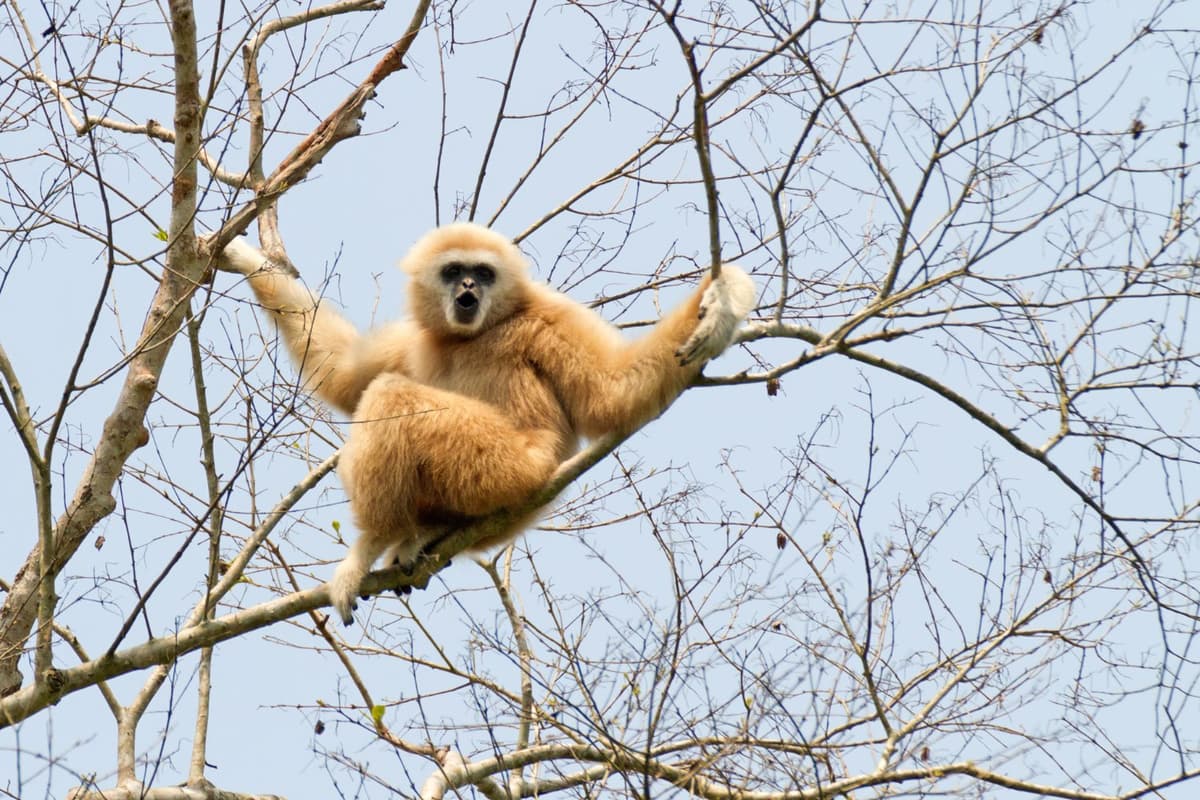
Lar Gibbon (White-handed Gibbon) belongs to the genus Hylobates.
The genus Nomascus, also known as the crested gibbons, is marked by strong sexual color differences in adults and distinct physical traits such as a crest of hair on males.
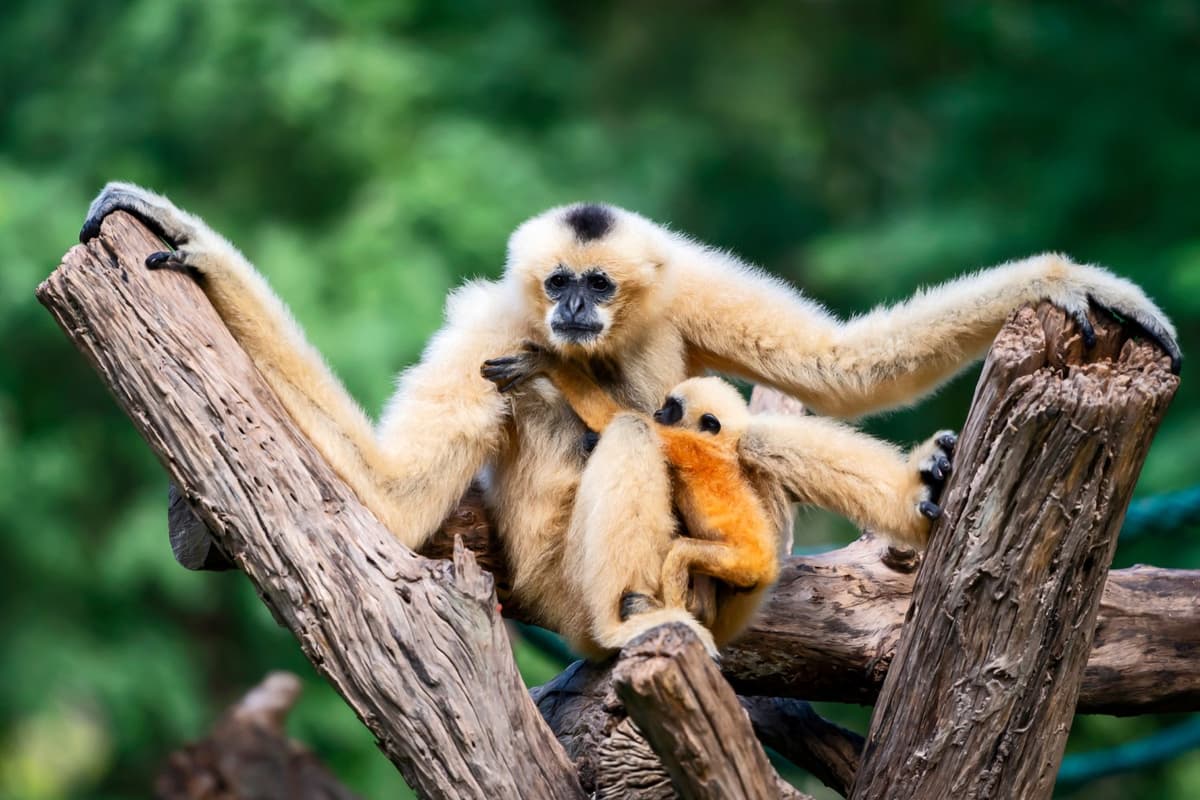
White-cheeked Gibbon belongs to the genus Nomascus, a crested gibbon group known for their striking facial markings.
The genus Hoolock contains species with noticeable sexual color differences and prominent throat sacs.
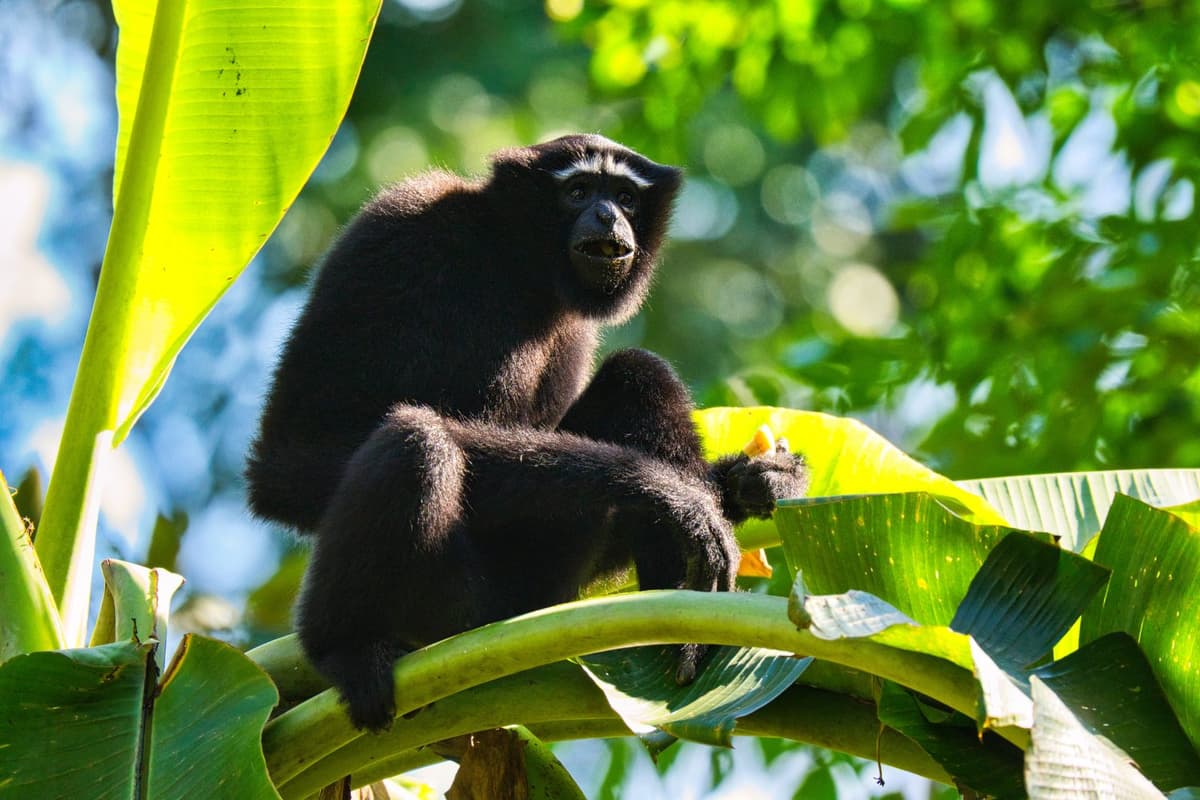
Hoolock Gibbon - the only ape species found in India, known for their expressive white brows.
The genus Symphalangus includes only one species, the siamang, which is the largest gibbon and is easily recognized by its large throat sac and entirely dark coloration. Together, these four genera form the complete taxonomic classification of all living gibbon species.
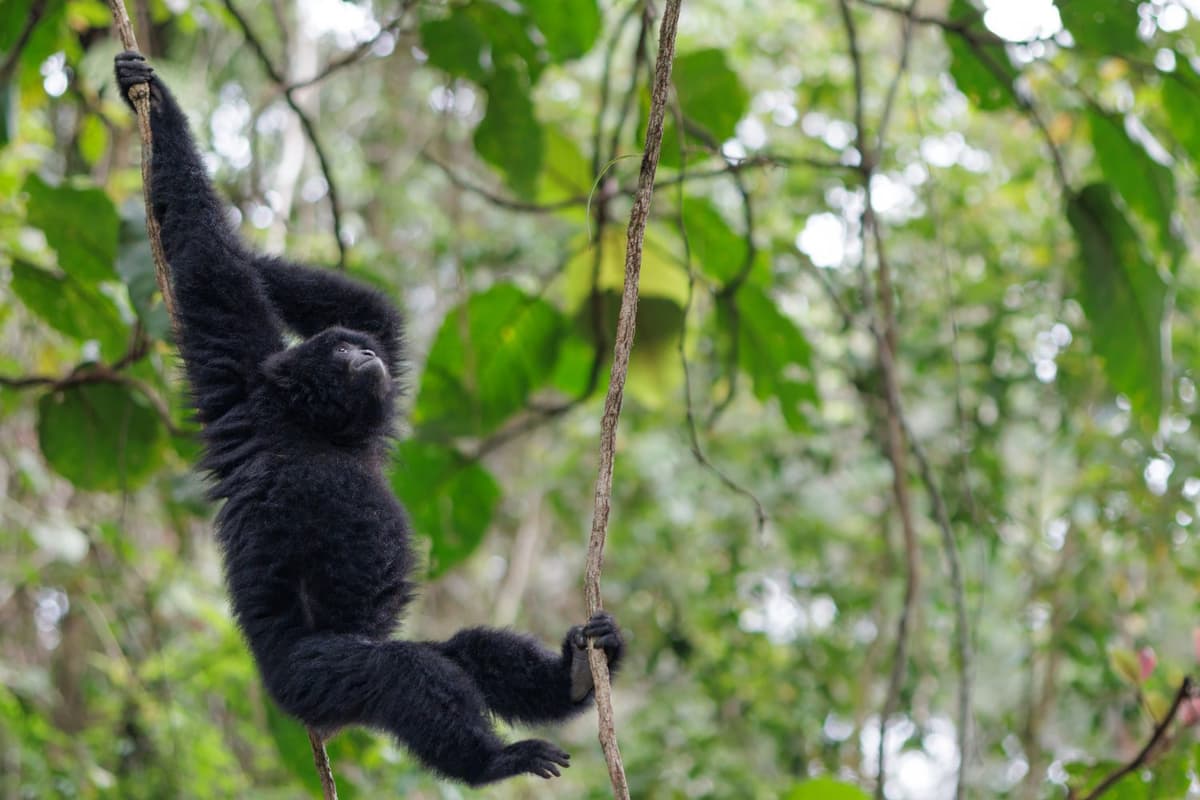
Siamang Gibbon - the largest of all gibbons.
Physical Characteristics of Gibbons
Gibbons are the smallest apes in the hominoid group. In terms of gibbon size and weight, they have a slender and lightweight body, much more delicate than great apes such as gorillas or chimpanzees. Their overall body shape is strongly adapted to life in trees, making them highly efficient climbers and swingers in forest canopies.
Most gibbon species have a head and body length of about 40 to 65 cm. The siamang is the largest gibbon species and can reach 74 to 90 cm, and in some cases almost 1 meter in length. In terms of weight, smaller gibbons usually weigh 4.4 to 7.6 kg, while white-cheeked gibbons average around 5.6 to 5.8 kg. Siamangs are much heavier, with females weighing about 10.5 to 10.7 kg and males about 11.9 to 12 kg. The siamang is the only gibbon species that shows a clear difference in body size between males and females.
One of the most striking features of gibbons is their very long arms, which are much longer than their legs. Their hands and feet are elongated, and the hands have a deep gap between the first and second fingers. Gibbons also have a highly specialized wrist joint that works like a ball-and-socket joint. This allows movement in many directions, reduces energy use, and lowers stress on the shoulders and upper body. These adaptations support brachiation, which is their main way of moving through the trees.
About gibbon's physical appearance, it is usually covered in black, gray, or brown fur, and many species have white markings on the face, hands, or feet. Fur color can vary between species and even between individuals. Some species, especially the siamang, have a large inflatable throat sac, which acts as a resonating chamber during vocalization. In some individuals, this sac can become almost as large as the head, allowing them to produce very loud calls. All gibbons also have ischial callosities, which are thickened skin patches on the buttocks that help them sit comfortably on branches. In addition, both male and female gibbons have long, well-developed canine teeth, which are important for territorial defense.
Compared to great apes such as orangutans, chimpanzees, and gorillas, gibbons are much smaller in size. However, despite their small bodies, they are known for their extremely powerful and far-reaching vocal abilities, which can travel long distances through the forest. In the wild, how long do gibbons live depends on species and environmental conditions, but many individuals can survive for several decades when protected from hunting and habitat loss.
Gibbons Global Distribution
Because gibbons live high in forest canopies and are shy animals, there is no exact global population number. However, population sizes vary greatly between species. Some species still number in the tens or hundreds of thousands, such as the white-handed gibbon (Hylobates lar) in Thailand, with around 110,000 individuals, and Muller’s gibbon in Indonesia, with an estimated 300,000 individuals. In contrast, the rarest species, the Hainan gibbon (Nomascus hainanus), has only about 42 individuals left in the wild, although this is an increase from fewer than 10 individuals in the 1980s.
Gibbons are distributed across a wide area of Asia, mainly in South Asia, Southeast Asia, and southern China. Their range includes countries such as China, India, Bangladesh, Myanmar, Thailand, Cambodia, Malaysia, and Indonesia.
Different gibbon species are found in different regions. In Indochina, several species of crested gibbons (genus Nomascus) occur. Lar gibbons are found in both mainland and island Southeast Asia, especially in Thailand, Malaysia, and Indonesia. In northeast India and Bangladesh, the native species is the Western Hoolock Gibbon.
On the island of Borneo, gibbons are represented by the Bornean white-bearded gibbon, which occurs in parts of central and western Kalimantan. Overall, gibbons have a broad but uneven distribution across Asia, with many species limited to specific regions.
Gibbons Distribution in Vietnam
Vietnam is a global stronghold for gibbons, supporting seven species, including six of the world’s seven crested gibbons (Nomascus). Most species are distributed in clearly separated regions along the country’s north-south forest belt, with each occupying a distinct ecological zone.
In the far northeast, the Cao Vit gibbon (Nomascus nasutus) survives in a single forest block in Cao Bang Province, with only about 74 - 135 individuals remaining. In the northwest mountainous areas of Yen Bai and Son La, the western black crested gibbon (Nomascus concolor) persists in very small, fragmented groups numbering fewer than 100 individuals.
Further south in the north-central region, the northern white-cheeked gibbon (Nomascus leucogenys) maintains its largest known global population around 455 individuals, while the southern white-cheeked gibbon (Nomascus siki) occurs in central provinces, though its groups are scattered and isolated.
From central Vietnam down to the Central Highlands and the southeastern region, yellow-cheeked gibbons dominate. The northern yellow-cheeked gibbon marks the transition in central areas, while the southern yellow-cheeked gibbon has the widest range and the most stable population, with several thousand individuals recorded in key protected forests such as Bu Gia Map and Cat Tien National Parks. The white-handed gibbon appears only in limited border zones near Laos.
Gibbons in Cat Tien National Park
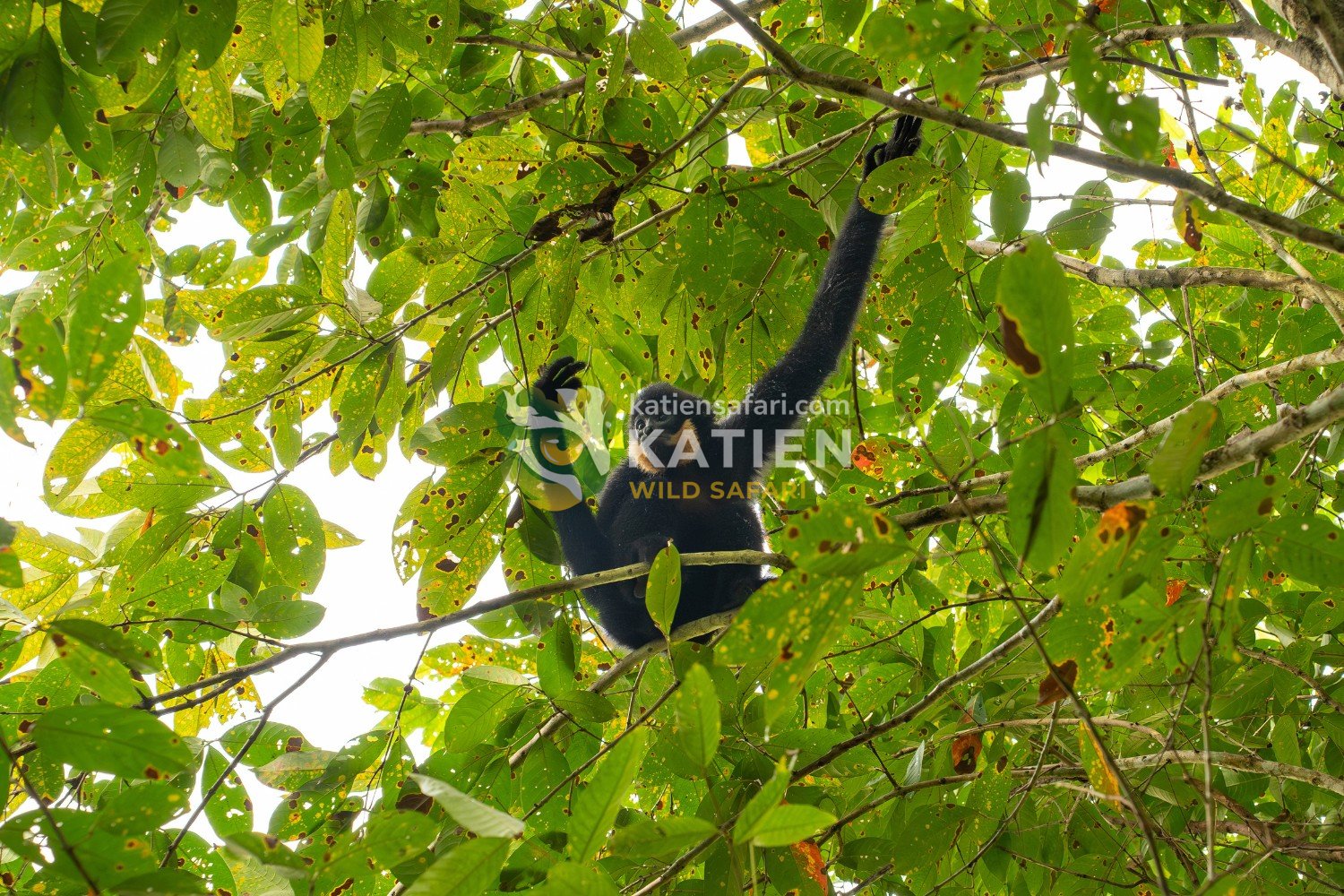
Cat Tien National Park is home to more than 500 yellow-cheeked black gibbons, making it one of the most important places for gibbon conservation in Vietnam. Visitors can easily observe gibbon families living in the wild, especially in the early morning when they are most active. Tourists may join a sunrise gibbon-watching tour with park rangers or local guides to see this rare primate, which is found only in Vietnam, Laos, and Cambodia. Watching yellow-cheeked gibbons in their natural habitat, as they search for food in the early hours of the day, is considered one of the most unique and memorable experiences at Cat Tien National Park.
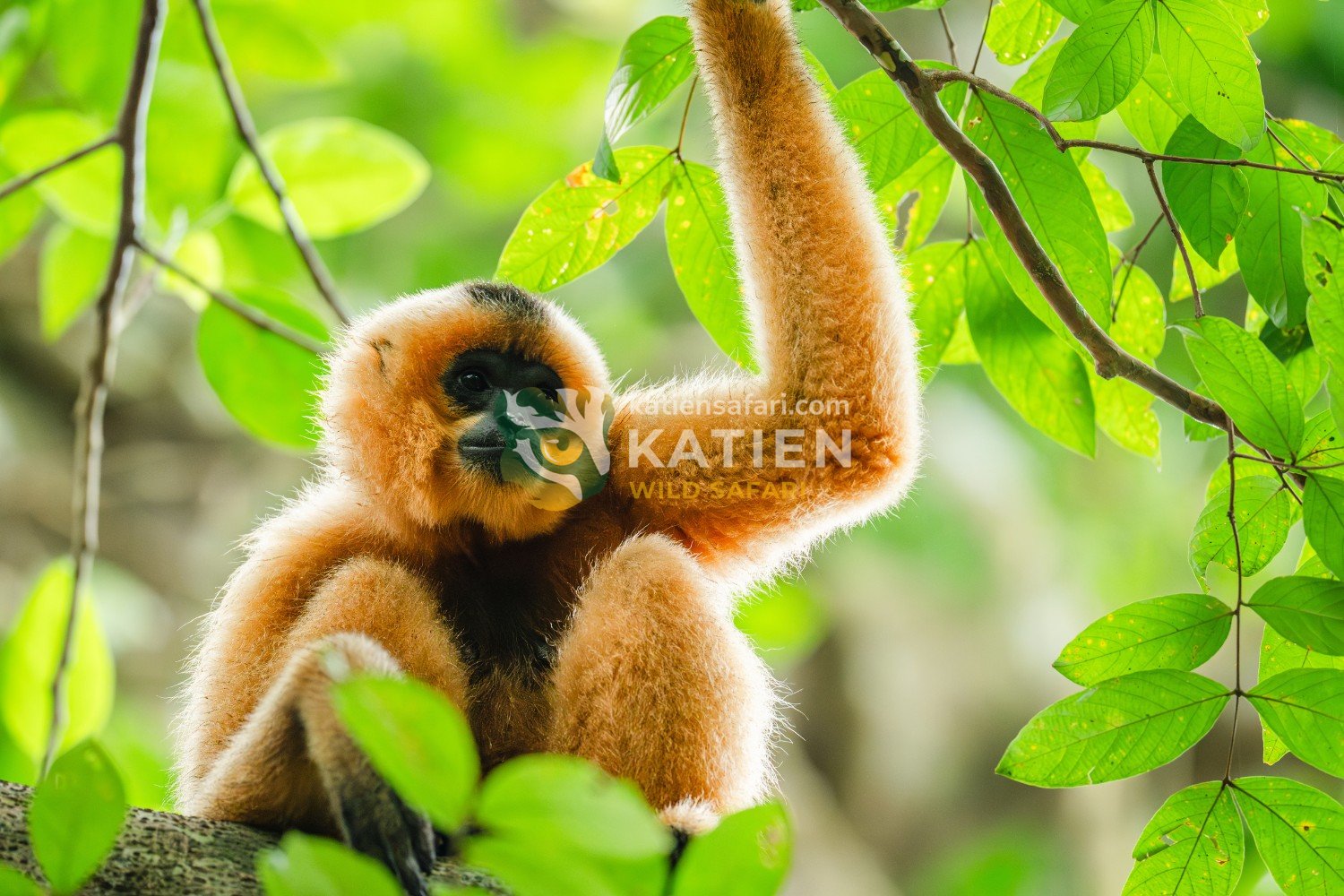
Yellow-cheeked black gibbon in Cat Tien National Park.
Gibbon natural habitat
Gibbons are native to the rainforests of South and Southeast Asia, where they live mainly in areas with dense tree cover. These rainforests are tropical or less seasonal forests, but many of them are rapidly shrinking, which has a strong impact on gibbon populations. Gibbons are arboreal primates, meaning they spend almost their entire lives in trees. They usually live high in the forest canopy and are rarely seen on the ground. Some gibbons can move and live at heights of up to 200 feet above the ground.
Gibbons live in a variety of forest types. They are commonly found in evergreen and semi-evergreen broadleaf forests, which provide dense vegetation and stable food sources. Some species also inhabit limestone (karst) forests, which offer a unique habitat and serve as an important refuge, especially for rare species such as the Cao Vit Gibbon. In addition, gibbons occupy a wide range of elevations, from lowland forests to montane forests, with some species living at altitudes of more than 1,500 meters above sea level.
To survive, gibbons require high-quality, relatively undisturbed forest habitats. These forests must have a closed canopy structure to create continuous pathways for movement and to support a diverse and reliable food supply. Without such conditions, gibbons cannot move efficiently, find enough food, or maintain stable populations.
Gibbons Diet and Behavior
Gibbons Diet
Gibbons are classified as omnivores; however, plant-based food makes up more than 70% of their daily diet. Fruits are their primary food source, accounting for about 60% of total intake, and they spend roughly 50 - 70% of their feeding time eating ripe fruits such as figs (Ficus species).
In addition to fruit, gibbons consume young leaves, shoots, flowers, insects, and occasionally birds’ eggs. Their diet varies depending on species, habitat, and seasonal fruit availability. During the wet season, when fruit is abundant, fruit consumption increases. In contrast, during the dry season or in high-altitude and seasonal forests where fruit is limited, gibbons, especially species in the genus Nomascus, rely more heavily on leaves.
Although gibbons are technically omnivorous, some species have diets that are almost entirely plant-based, feeding predominantly on fruits and foliage throughout the year.
Gibbons usually forage in the upper forest canopy, feeding while sitting or hanging from branches.
Gibbons Behavior
Gibbons' behavior is shaped by their social structure and strong territorial instincts. Gibbons are social and highly territorial primates that live mainly in small family groups.They are very active during the day and spend most of their time in the upper forest canopy. Each group occupies a clearly defined home range and strongly defends it from other gibbons. To protect their territory, gibbons use visual displays and especially loud vocal calls. Their well-known songs can be heard from distances of up to one kilometer and are usually performed in the early morning. These songs help mark territory, maintain social bonds, and communicate with neighboring groups. Each gibbon species has a unique call, and even the location of the group can often be identified by its song.
Gibbons are famous for their exceptional movement skills, especially their unique brachiation movement. They move through trees mainly by brachiation, swinging from branch to branch using their long arms. This allows them to travel quickly and efficiently through the forest canopy, making them the fastest and most agile non-flying mammals in trees.
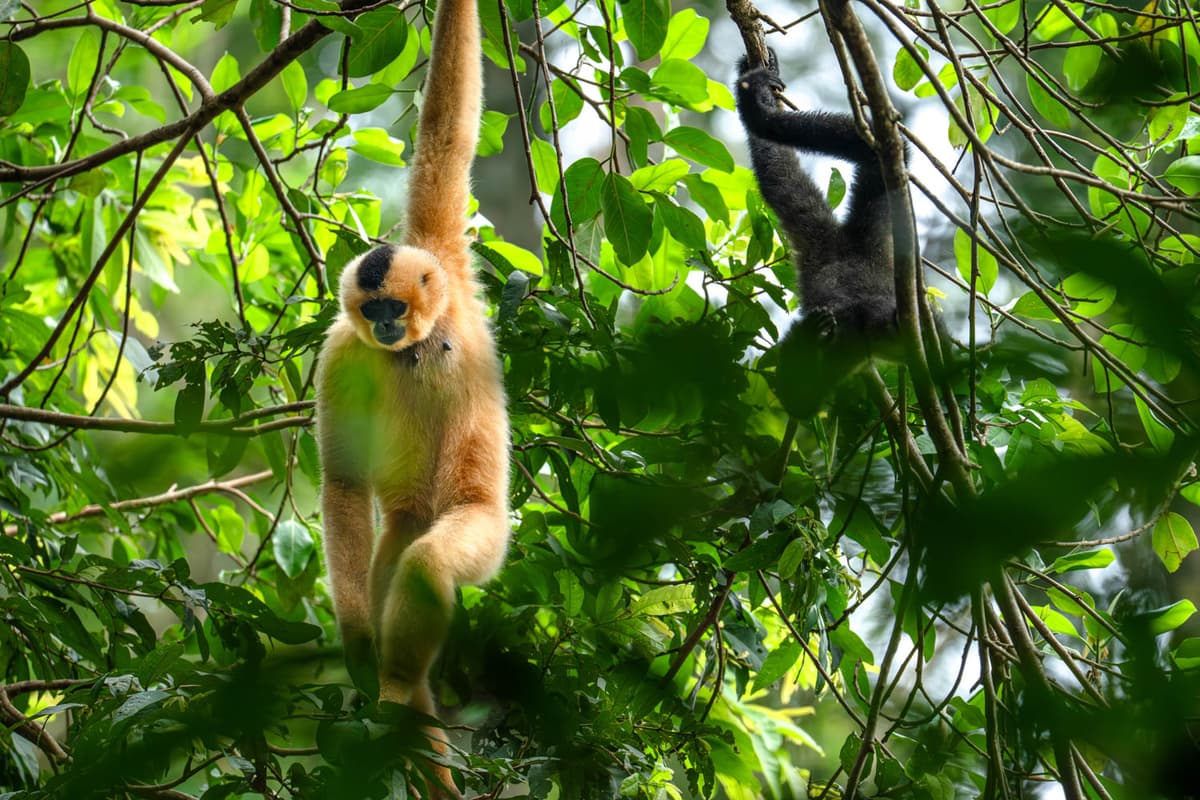
Gibbons are known for their amazing ability to move through the trees, swinging quickly and smoothly from branch to branch.
When they come down to the ground, gibbons often walk upright on two legs, using their arms for balance. Within their groups, gibbons also practice social grooming, which helps strengthen relationships and maintain group stability.
Reproduction and Offspring
The gibbon reproduction cycle is very slow, which makes gibbon populations especially vulnerable in the wild. A female gibbon usually gives birth to only one baby at a time, although twins can occur in rare cases. The gestation period lasts about 200 to 210 days. After birth, there is often a long gap before the next baby is born, and females typically produce one offspring every 3 to 4 years, with young usually spaced 2 to 3 years apart.
Gibbon baby care is characterized by strong parental investment, especially from the mother. Female gibbons play the main role in caring for infants. During the first year of life, a baby gibbon is fully dependent on its mother and is carried almost everywhere. In siamang gibbons, males also take on an important parenting role when the infant becomes older, helping to care for and protect the young.
As the baby grows, it slowly becomes more independent. By around 2 years of age, young gibbons begin to move on their own, but they still rely on their parents for learning essential skills. Juveniles usually remain with their family group for 5 to 6 years, reach full maturity at about 8 years, and leave their natal group between 8 and 10 years of age to find their own territory. Because gibbons reproduce slowly and take many years to mature, their populations recover very slowly after threats such as habitat loss or hunting.
Threats and Conservation of Gibbon
Threats to Gibbon survival
According to the IUCN Red List, all gibbon species are considered threatened. Most species are classified as Endangered or Critically Endangered, and only the eastern hoolock gibbon (Hoolock leuconedys) is listed as Vulnerable. Among them, crested gibbons (Nomascus) are the most threatened, with five out of seven species facing an extremely high risk of extinction. For this reason, gibbons are regarded as one of the most endangered groups of primates in the world.
The main threat to gibbons is habitat loss and degradation. Gibbons depend completely on continuous forest canopies to move, feed, and survive. However, tropical and monsoon forests in Southeast Asia are being rapidly destroyed due to deforestation, agriculture, and development. Habitat fragmentation makes it difficult for gibbons to find food, mates, and safe living space. In some areas, the situation is severe, for example, gibbons in China have already lost about 99% of their natural habitat. If tropical forests disappear, gibbons cannot survive.
In addition to habitat loss, gibbons are heavily affected by hunting, poaching, and the illegal wildlife trade. In many regions, gibbons are hunted for food or killed for their supposed medicinal value. The illegal pet trade is especially harmful, as young gibbons are popular pets. To capture an infant, hunters usually shoot the mother from the trees, and in many cases both the mother and the baby are killed.
Although some protected areas exist, poor management and weak law enforcement mean that gibbons remain at serious risk. As a result, several gibbon species now face imminent extinction, including the Hainan crested gibbon, the rarest ape in the world, with fewer than 30 individuals left in the wild.
Conservation
Gibbon conservation is very important because all gibbon species are now threatened with extinction. In Vietnam, international organizations such as Fauna & Flora International (FFI), Re:wild, and the Arcus Foundation work closely with the Vietnamese government to protect gibbons and their habitats. Many key actions have been taken, including the creation of special protected areas like the Cao Vit Gibbon Conservation Area, Pu Mat National Park, and Cat Tien National Park. Local community patrol teams help remove traps, prevent hunting, and monitor gibbon populations.
In addition, Oxalis Adventure has supported Cat Tien National Park by donating televisions and real-time camera systems, allowing park staff and visitors to observe gibbons remotely in their natural habitat without disturbing them. Modern technology, such as automatic sound recording devices and real-time cameras, helps researchers track gibbon songs, monitor behavior, and estimate group numbers more effectively. Alongside this, forests are restored by planting native food trees to reconnect fragmented habitats, and rescued gibbons are cared for and released back into the wild when possible.
5 Interesting Facts of the Gibbons
1. Unlike most other primates, gibbons often form long-term pair bonds, and some couples even stay together for life.
2. Gibbon calls are often called songs because of the way they change pitch. Gibbons sing solo and duet songs, and they usually start each day by singing at sunrise.
3. Gibbon mothers teach their daughters how to sing. Gibbons have loud, musical voices that can travel far through the forest. Male and female gibbons often sing duets, and sometimes the whole family sings together.
4. One gibbon species was only discovered in 2017, and it’s named after a Star Wars character. The Skywalker hoolock gibbon was found on the border between Myanmar and China. Scientists gave it the name “Skywalker” because it lives high in the forest canopy, moving gracefully through the trees.
5. Gibbons have arms that are longer than their legs. When they come down to the ground, they are the only apes that usually walk upright on two legs, lifting their arms up to help keep their balance, almost like little tightrope walkers.
Reference
- Wearn, O. R., Trinh-Dinh, H., Nguyen, D. T., Fan, P., Tran, V. D., Nguyen, M. H., Nguyen, D. D., Vu, T. T., Hoang, V. C., Kenyon, M., Hoang, M. D., & Tran, V. B. (2023). The conservation status of gibbons in Vietnam: Updated to 2023. Fauna & Flora - Vietnam Programme; IUCN Primate Specialist Group – Section on Small Apes.
- Gibbons Conservation Partnership. (n.d.). What is a gibbon? https://www.gibbonssp.org/what-is-a-gibbon
- Gray, T. N. E., Phan, C., & Long, B. (2010). Modelling species distribution at multiple spatial scales: Gibbon habitat preferences in a fragmented landscape. International Institute for Environment and Development. https://www.iied.org/sites/default/files/pdfs/migrate/G02746.pdf
- Facts and Details. (n.d.). Gibbons in Vietnam. https://factsanddetails.com/southeast-asia/Vietnam/sub5_9h/entry-9127.html
- Animal and Plant Health Inspection Service. (n.d.). Species factsheet – Primate group 6: Gibbon. U.S. Department of Agriculture. https://www.aphis.usda.gov/sites/default/files/ac-species-fs-gibbon.pdf
- Mootnick, A. R. (2006). Gibbon (Hylobatidae) species identification recommended for rescue or breeding centers. https://static1.1.sqspcdn.com/static/f/1200343/18197400/1337025573953/PC21.hylobatid.species.pdf
- Leakey Foundation. (n.d.). Five fun facts about gibbons. https://leakeyfoundation.org/five-fun-facts-about-gibbons/