Kingfishers are small, brightly colored birds found across much of the world, including Africa, Asia, Europe, the Americas, and Oceania. They belong to the family Alcedinidae and are commonly associated with rivers, lakes, wetlands, and coastal areas. Most kingfishers are compact in size, weighing around 40 grams and measuring 15–17 centimeters in length.
With over 114 species worldwide, kingfishers feed on a varied diet and play an important role in wetland ecosystems. The group is currently listed as Least Concern by BirdLife International, although some species face local threats due to habitat loss.
| Common name | Kingfisher |
|---|
| Scientific name | Alcedinidae |
|---|
| Taxonomy
|
Class: Aves
Order: Coraciiformes
Family: Alcedinidae
Family: Alcedo
|
| Weight / Size | 40 gram in weight; 15 - 17 cm in length. |
|---|
| Lifespan | 6 - 10 years. |
|---|
| Population | More than 114 species worldwide. |
|---|
| Habitat | Various inland and coastal wetlands. |
|---|
| Range | Africa, Asia, Central-America, Eurasia, Europe, North-America, Ocean, South-America. |
|---|
| Diet | Omnivore. |
|---|
| Conservation status | Least Concern (BirdLife International 2016). |
|---|
Kingfisher physical characteristics
Kingfisher identifying features
Most kingfishers share a distinctive set of physical traits, including a long, pointed beak, small legs, a compact, stocky body, and long, thick tail feathers. Their bodies are built for speed and precision, while their bright colors and bold markings make them stand out along riverbanks and wetlands. Kingfishers also have strong neck muscles, which help keep their heads steady as they scan the water for fish.
Males and females kingfishers look similar at first glance, however, subtle differences do exist. In many species, males are slightly larger and display brighter or more vivid plumage, especially on the chest, belly, or head. Females usually have more muted colors, a contrast that plays an important role in courtship and territorial behavior.
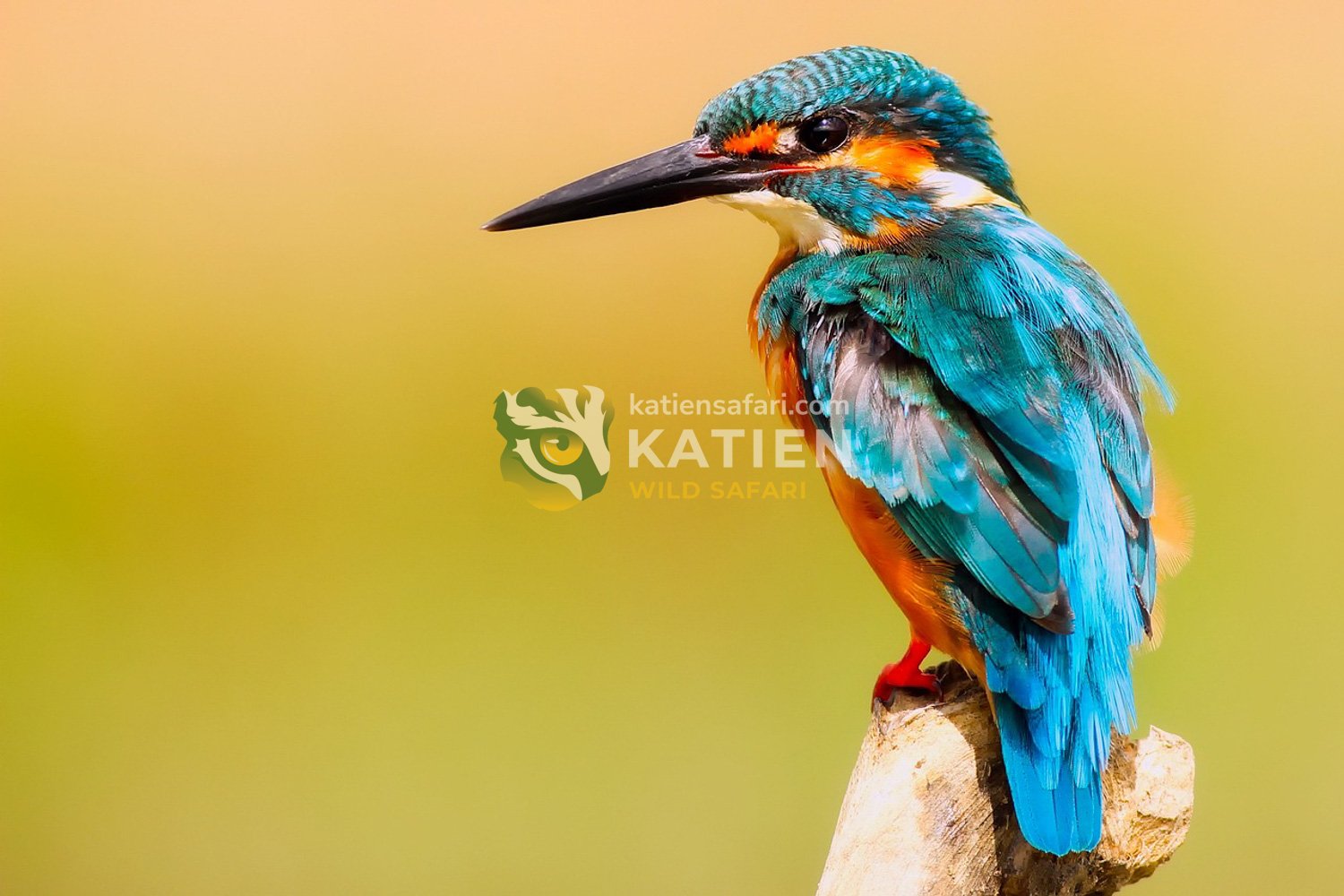
Kingfisher perched on a branch with bright blue and orange plumage.
Kingfisher Size, Weight and Lifespan
Kingfisher average size
Kingfishers vary widely in size depending on the species. Some of the smallest kingfishers measure around 10 centimeters in length, while the largest species can reach up to 46 centimeters. This size variation reflects their adaptation to different habitats and regions around the world.
Kingfisher body structure
Kingfishers have large heads that house strong jaw muscles, helping them catch and hold slippery prey. Their short but strong necks provide stability and allow for quick, precise movements, while their long, strong bills are sharp and pointed, perfect for diving into water and seizing fish and other prey.
The bright, vibrant colors of kingfishers are not just for show. These colors play an important role in communication, courtship, and territorial displays, helping birds recognize each other and attract mates.
Kingfisher lifespan
The lifespan of kingfishers varies by species, but most live around 6 to 10 years. In ideal conditions, some individuals may live longer. Factors such as predation, habitat quality, and food availability all play an important role in how long a kingfisher survives in the wild.
Distribution and Habitat
Global distribution of kingfishers
Kingfishers are highly adaptable birds found across Europe, North Africa, and much of Asia, as well as other regions worldwide. They are most commonly associated with freshwater habitats such as rivers, streams, lakes, canals, and marshes, especially areas with clear or slow-flowing water where fish are abundant.
While kingfishers mainly inhabit lowland wetlands, some individuals move to estuaries and coastal areas during winter. Thanks to their flexibility, they may also be seen in mangroves, forested waterways, and occasionally even garden ponds, as long as suitable food sources are available. This wide distribution reflects their strong ability to adapt to diverse environments.
Kingfisher species in Vietnam
There are more than 114 kingfisher species worldwide, and 12 species have been recorded in Vietnam. Among them is the rare and little-known Blyth’s Kingfisher (Alcedo hercules), a species listed in the Red Book. Most kingfisher species found in Vietnam are included in both the Vietnam Red Data Book and the IUCN Red List.
- Here are 12 kingfisher species in Vietnam:
- Common kingfisher (Alcedo atthis): Widespread worldwide and also in Vietnam.
- Blyth’s kingfisher (Alcedo hercules): Found in provinces such as Lai Chau, Lao Cai, Ha Tinh, and Gia Lai.
- Black-capped kingfisher (Halcyon pileata): Rare, distributed mainly in mangrove forests of Vietnam.
- Banded kingfisher (Lacedo pulchella): Distributed in Central and South-Central Vietnam, southern Vietnam, including Cat Tien National Park and Vinh Cuu Nature Reserve.
- Pied kingfisher (Ceryle rudis): Widely distributed across most regions.
- Crested kingfisher (Megaceryle lugubris): Recorded in Cao Bang, Lai Chau, Bac Thai, Lang Son, Hoa Binh, Nghe An, and Ha Tinh.
- Blue-eared kingfisher (Alcedo meninting): Recorded during a bird biodiversity survey conducted at Nui Ong Nature Reserve.
- Stork-billed kingfisher (Pelargopsis capensis/ Halcyon capensis): Very rare, found in Quang Tri, Thua Thien Hue, Quang Nam, Da Nang, Gia Lai, Kon Tum, Tay Ninh, Dong Nai and notably in Cat Tien National Park.
- Ruddy kingfisher (Halcyon coromanda): Distributed in northeastern, northern, and north-central regions Vietnam.
- Black-backed dwarf kingfisher (Ceyx erithacus): Recorded near the Vietnam – Cambodia border in Binh Phuoc Province, and also in Cuc Phuong National Park, Bach Ma National Park, and Vinh Cuu Nature Reserve.
- Collared kingfisher (Halcyon chloris): Found from Hai Van Pass southward to southern provinces such as Tra Vinh and An Giang.
- White-throated kingfisher (Halcyon smyrnensis): Found widely from lowland plains to mountainous regions.
Kingfishers in Cat Tien National Park
Cat Tien National Park is one of Vietnam’s key habitats for kingfishers. The park is home to several species, including the Black-capped kingfisher (Halcyon pileata), Black-backed kingfisher (Ceyx erithaca), Banded kingfisher (Lacedo pulchella), Pied kingfisher (Ceryle rudis), Blue-eared kingfisher (Alcedo meninting), and Ruddy kingfisher (Halcyon coromanda).
Subspecies of kingfisher
Encompassing approximately 114 species worldwide, here are some notable colorful kingfisher species:
- Common kingfisher: Found in Europe, North Africa, and parts of southern Asia, the common kingfisher is easily recognized by its brilliant, iridescent plumage.
- Belted kingfisher: A stocky bird found in North and Central America, this species has a large head with a shaggy crest and shows reverse sexual dimorphism, with females being more brightly colored than males.
- Laughing Kookaburra: The world's heaviest kingfisher species, found in Australia and New Guinea.
- Giant kingfisher: The largest kingfisher species, it is about the size of a crow and is found in sub-Saharan Africa.
- Crested kingfisher: One of the largest kingfishers in India, it is known for its bold black-and-white plumage and a distinctive shaggy crest.
- Stork-billed kingfisher: An eye-catching species with vivid blue-green plumage, a chestnut head and belly, and a prominent red bill, native to parts of Asia.
- Malachite kingfisher: One of the smallest kingfishers, this species has an alluring blue-green color.
- Buff-breasted paradise-kingfisher: Found in northern Australia and New Guinea, this bird is known for its long, white tail streamers.
- Guam kingfisher: Also known as the “sihek,” this rare kingfisher is native to the Mariana Islands and holds significant conservation importance.
Did you know the laughing kookaburra’s call is the iconic jungle sound in movies?
The distinctive call of the Laughing Kookaburra, the world’s heaviest kingfisher, has long been used as a stock sound effect in jungle scenes. Its laughing cry can be heard in classic films such as the Tarzan series of the 1930s and later in Jurassic Park (1997), even though the bird itself is native to Australia, not tropical jungles.
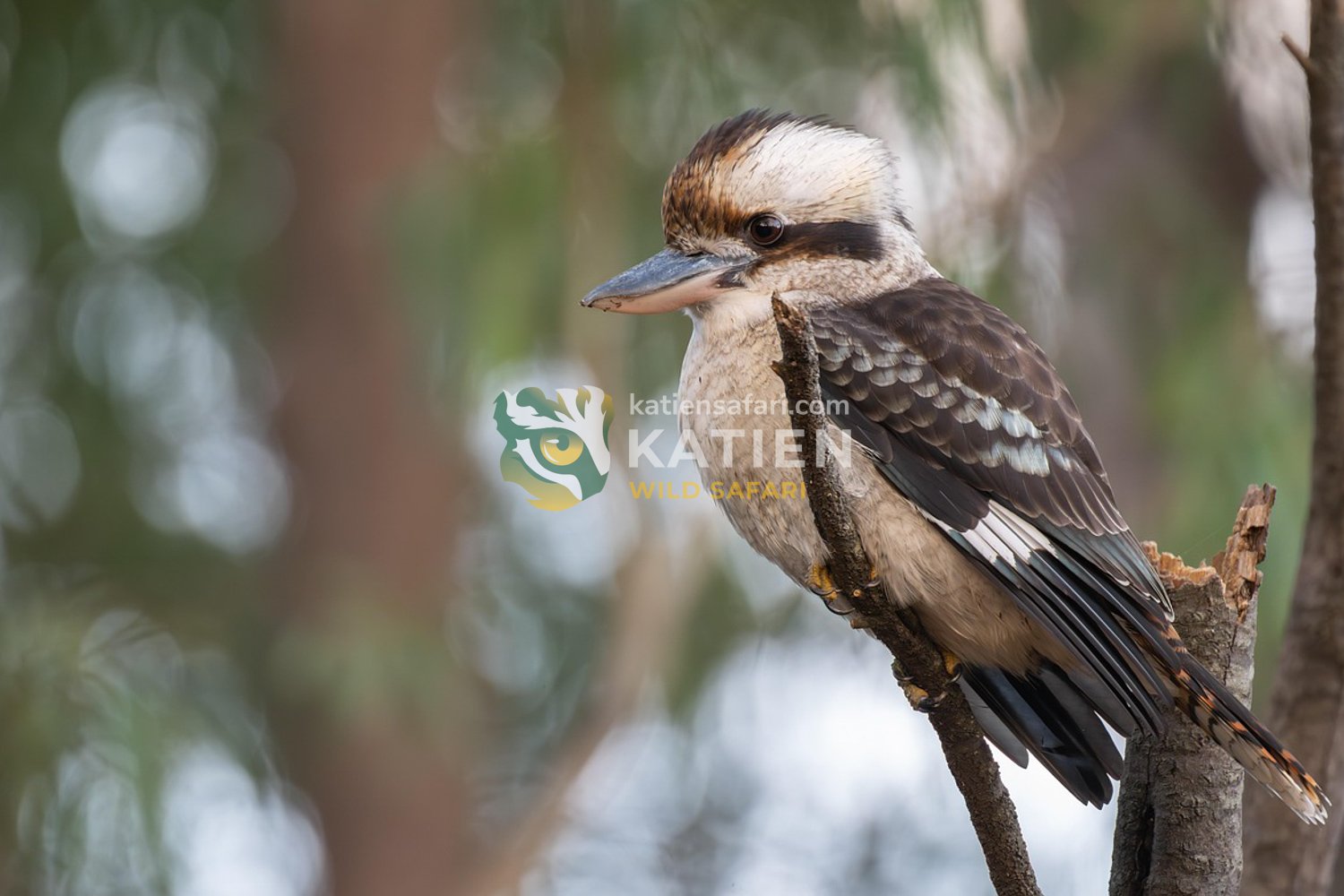
A laughing kookaburra resting on a branch.
Behavior and lifestyle
Kingfisher hunting techniques
Kingfishers are known for their impressive hunting skills, relying on sharp eyesight and precise dives to catch prey. They are considered opportunistic predators, meaning their diet changes depending on what prey is most abundant and accessible in their local environment.
Kingfisher feeding habits
Most kingfishers mainly eat fish, especially small species such as minnows and sticklebacks, making them almost fish-eating (ichthyophagous) predators. However, not all kingfishers rely on fish. For example, the Laughing Kookaburra rarely eats fish and instead feeds on worms, insects, small lizards, snakes, and even mice.

A kingfisher perched on a branch with a freshly caught fish.
Kingfishers are opportunistic predators, meaning their diet changes depending on what food is available. Besides fish, they have been observed eating dragonflies, water beetles, shrimps, crabs, tadpoles, and occasionally small snakes. This flexible feeding behavior helps kingfishers survive when fish are scarce or difficult to catch.
Did you know kingfishers helped reshape Japan’s bullet train?
Over 30 years ago, Japan’s bullet train created a loud boom when exiting tunnels at high speed. Engineers found the solution by observing the kingfisher, a bird that plunged toward the water with almost no splash.
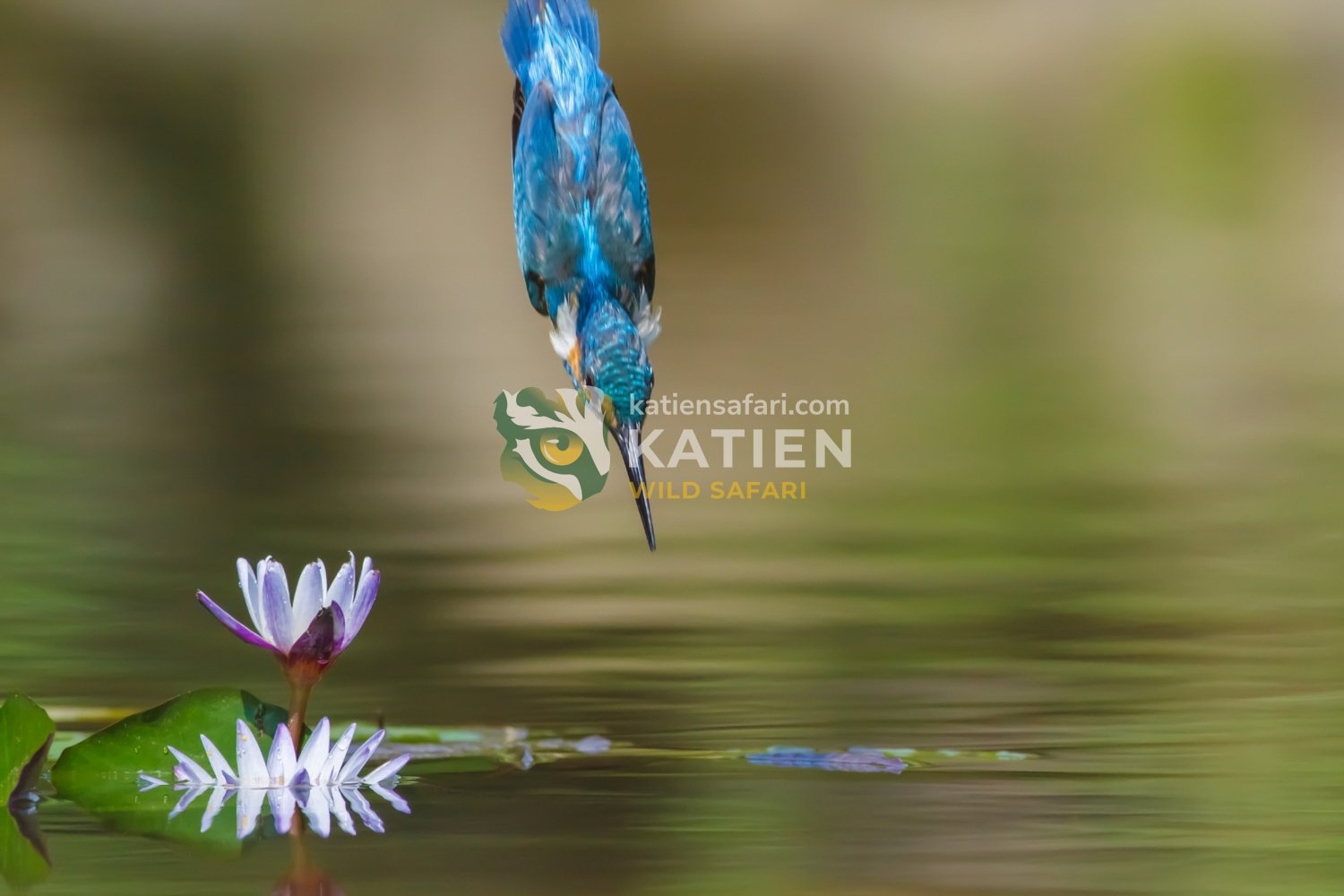
A kingfisher plunges toward the water in a perfect hunting dive.
The bird’s long, streamlined beak allows water to flow smoothly around it, reducing impact. By redesigning the train’s front based on this shape, engineers reduced noise, improved efficiency, and made the train faster.
Kingfisher reproduction
Kingfisher breeding season
The breeding season of kingfishers varies by species and location, but it usually coincides with times when prey is most abundant. Breeding typically begins after the birds have established and defended their territory.
Kingfishers usually breed near water, where food is easy to find. Their most common nesting sites are riverbanks, stream banks, and large tributaries, although they are also known to use man-made sites such as abandoned ballast pits.
In temperate regions, kingfishers usually breed from spring to early summer. In tropical areas, where conditions are favorable year-round, breeding may occur at different times depending on local environmental factors.
As the breeding season comes to an end, pair bonds begin to loosen. Kingfisher pairs rarely remain together beyond the summer, and by early autumn, mating behavior gives way to strong territorial instincts, often forcing former partners to part ways as competition for river space intensifies.

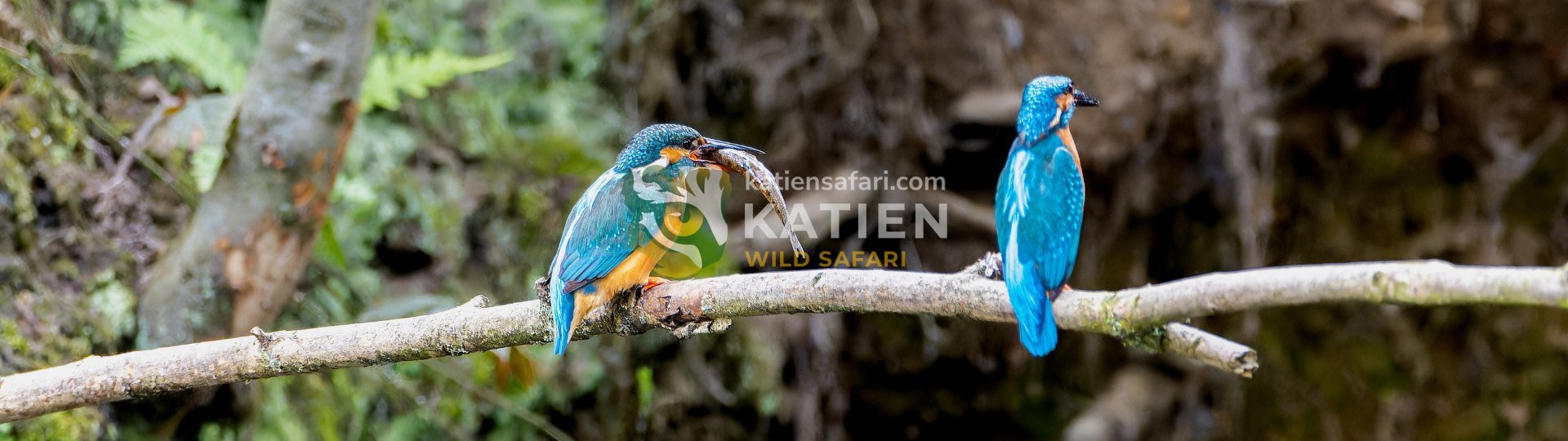
A pair of common kingfishers interacting during a feeding exchange.
Kingfisher clutch size
After mating, the female lays 3 to 7 white eggs in a nesting chamber at the end of the burrow. Both parents share incubation duties, and the eggs usually hatch after two to four weeks.
When nesting begins, both the male and female take part in digging the nest. Early attempts often fail, and a pair of kingfishers may dig several partial tunnels, sometimes up to six before successfully completing a single nest.
Conservation and threats
Most kingfisher species are classified as Least Concern on the IUCN Red List, as many such as the Common Kingfisher (Alcedo atthis) have large populations and wide geographic ranges. However, scientists have noted that some kingfisher species with specialized habitat requirements, particularly those native to Southeast Asia and tropical Pacific islands, are experiencing population declines. These trends highlight the importance of protecting fragile wetland and forest ecosystems that kingfishers depend on.
Conservation status
The conservation status of kingfishers varies by species and region. While many species remain relatively stable, others are increasingly threatened by habitat loss, water pollution, and human disturbance. Protecting wetlands, especially maintaining clean water and healthy riverbanks is essential for the survival of these birds.
Some species are highly endangered. The Marquesan kingfisher (Todiramphus godeffroyi) is among the most threatened kingfishers worldwide. In Europe, the Common kingfisher is considered a species of conservation interest and is protected under Annex I of the EU Birds Directive and Annex II of the Bern Convention. Due to population declines in northern and central Europe, it is listed as Vulnerable (VU) in Europe.
Kingfisher ecology
Ecologically, kingfishers are often seen as flagship and umbrella species. Protecting them also helps conserve freshwater ecosystems, benefiting many other species that share the same habitats.
Kingfisher threats
Kingfishers face a range of threats, many of which are closely linked to human activity and environmental degradation. They are particularly vulnerable to habitat loss and declining water quality, caused by pollution, poor watercourse management, agricultural runoff, industrial waste, and expanding urban development.
In colder regions, harsh winters can also reduce survival rates by limiting access to food. In addition, climate change is increasingly affecting kingfishers by altering water levels, prey availability, and the stability of wetland habitats they depend on.
Kingfisher ecotourism sites
Katien Safari will collaborate with Cat Tien National Park to launch new wildlife conservation and eco-observation programs. These will allow small visitor groups to safely observe animals like the kingfishers while supporting biodiversity protection and sustainable tourism in Vietnam.
Here are some tips for better kingfisher watching:
- Arrive at dawn when kingfishers are most active
- Use binoculars or a telephoto lens as kingfishers hunt at high speed
- Avoid approaching nests or leaning too close to riverbanks where they feed
- Watch the water, not the sky as kingfishers stay close to the water
Interesting facts about kingfisher
1. Both male and female kingfishers help dig the nest
2. Not all Kingfisher eat fish
3. The sound of Kingfishers are as diverse as their species.
4. The call of the the Laughing Kookaburra Kingfisher has been used as a stock sound effect in Jungle scenes and movies
5. Kingfisher helped reshape Japan’s bullet train
Reference
- BBC News. (2019, March 30). How a kingfisher helped reshape Japan’s bullet train [Video]. YouTube. https://www.youtube.com/watch?v=YVU6YBPaaB8
- Khám phá thiên nhiên. (n.d.). Khám phá vẻ đẹp của 12 loài chim bói cá đã phát hiện ở Việt Nam – Sách đỏ Việt Nam [Video]. YouTube. https://www.youtube.com/watch?v=HJW6kyZVHUU&t=154s
- Morgan, R., & Glue, D. (1977). Breeding, mortality and movements of Kingfishers. Bird Study, 24(1), 15-24.
- Nessi, A., Balestrieri, A., Winkler, A., Casoni, A. G., & Tremolada, P. (2021). Kingfisher (Alcedo atthis) diet and prey selection as assessed by the analysis of pellets collected under resting sites (River Ticino, north Italy). Aquatic Ecology, 55(1), 135-147.
- Shifa, C. T., Rubeena, K. A., Abbas, A., Jobiraj, T., Thejass, P., Nefla, A., ... & Aarif, K. M. (2024). Kingfisher in mangroves: unveiling ecological insights, values, and conservation concerns. In Mangroves in a Changing World: Adaptation and Resilience (pp. 111-123). Cham: Springer Nature Switzerland.
- Smyth, R. (2016, August 26). Kingfisher bonds will loosen as summer fades. The Guardian. https://www.theguardian.com/environment/2016/aug/26/kingfisher-bonds-loosen-summer-fades