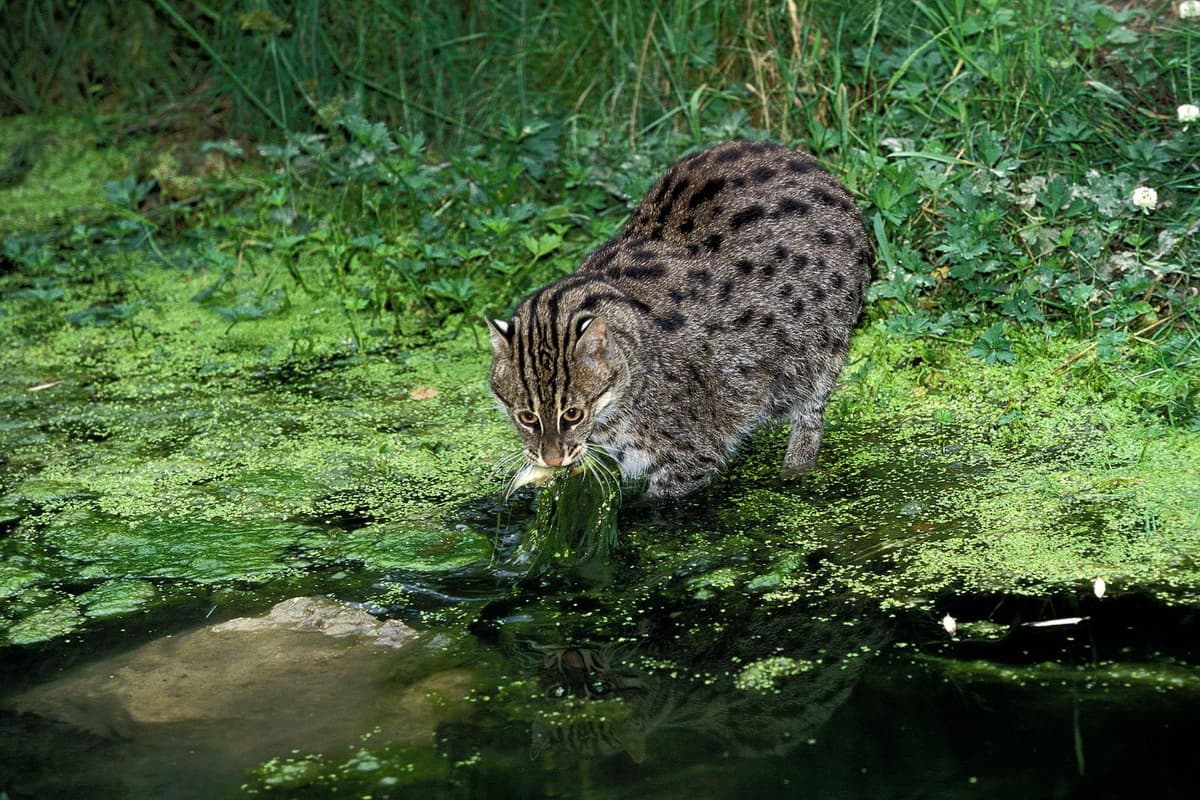
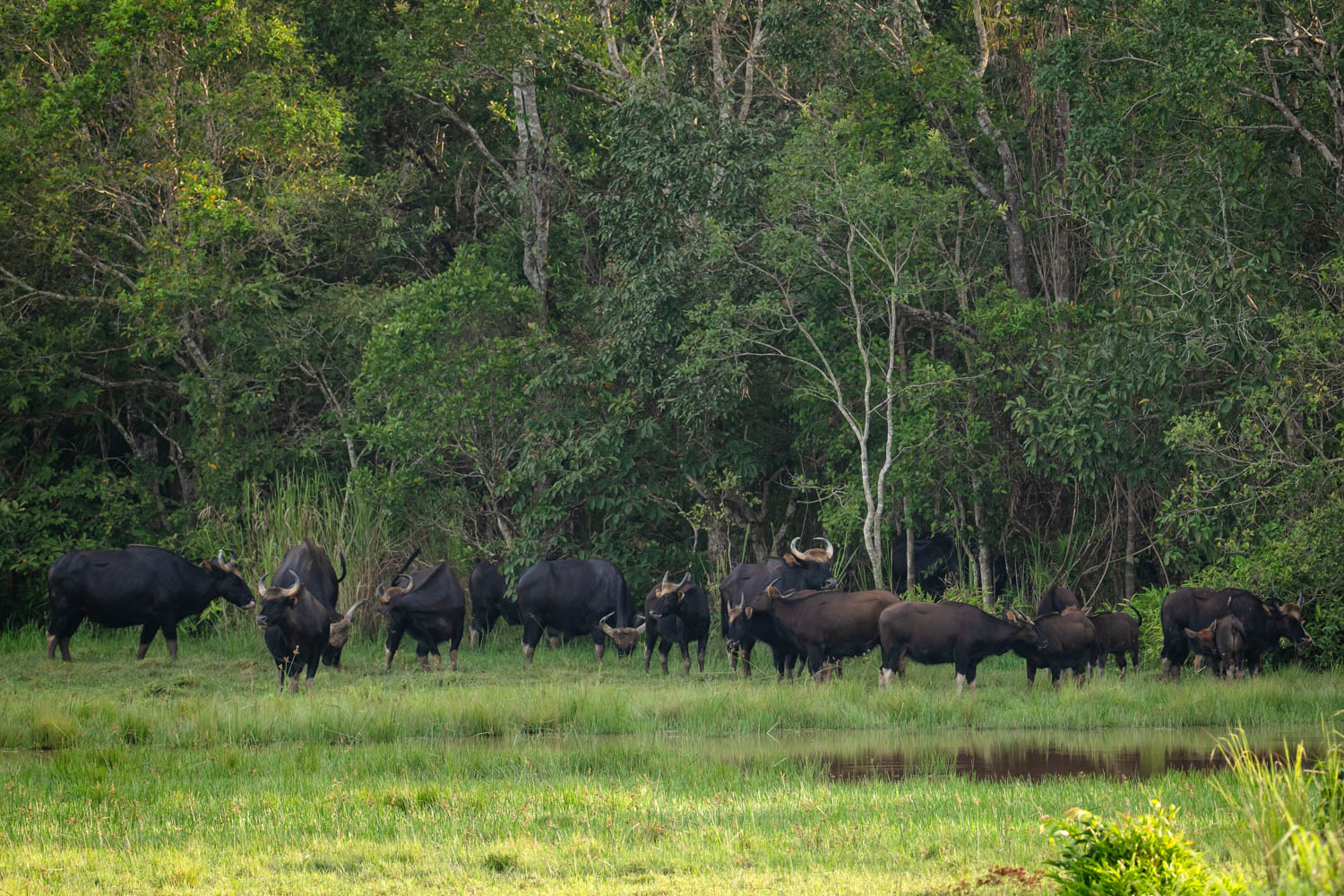
Leopard cat facts show that this small wild cat is an excellent climber and a strong swimmer. Belonging to the Felidae family, the leopard cat (Prionailurus bengalensis) is much more agile than it looks. These skills help it survive in different environments, from dense forests to wetlands. To discover more interesting facts about the leopard cat and its life in the wild, read the full article here.
| Common name | Leopard Cat |
|---|
| Scientific name | Prionailurus bengalensis |
|---|
| Taxonomy
|
Kingdom: Animalia
Phylum: Chordata
Class: Mammalia
Order: Carnivora
Family: Felidae
|
| Weight / Size | ~1.5 - 7 kg; body length ~ 45 - 65 cm; tail length of about 20-30 cm. |
|---|
| Lifespan | 12 - 15 years . |
|---|
| Population | Varies widely by species; many Asian species are declining. |
|---|
| Habitat | Tropical rainforests, evergreen forests, bamboo forests, and mixed woodlands. |
|---|
| Range | Species lives across South Asia, East Asia, and Southeast Asia. |
|---|
| Diet | Hunts birds, reptiles, amphibians, and insects. |
|---|
| Conservation status | Least Concern on the IUCN Red List. |
|---|
Physical Characteristics of Leopard Cat
The leopard cat has a slim and strong body that helps it hunt and climb easily. The average leopard cat size ranges from 45 to 65 cm in body length, with a tail length of about 20-30 cm. Adult individuals usually weigh between 1.5 and 7 kg. Leopard cat weight and body size can vary significantly depending on climate and geographic region.
In tropical areas, leopard cats are smaller and lighter. In northern regions like northern China and Siberia, they are larger and heavier. Some cats in cold regions can reach over 7 kg. Before winter, leopard cats often gain weight, then lose it again in spring. The leopard cat's lifespan in the wild is generally around 12-15 years.
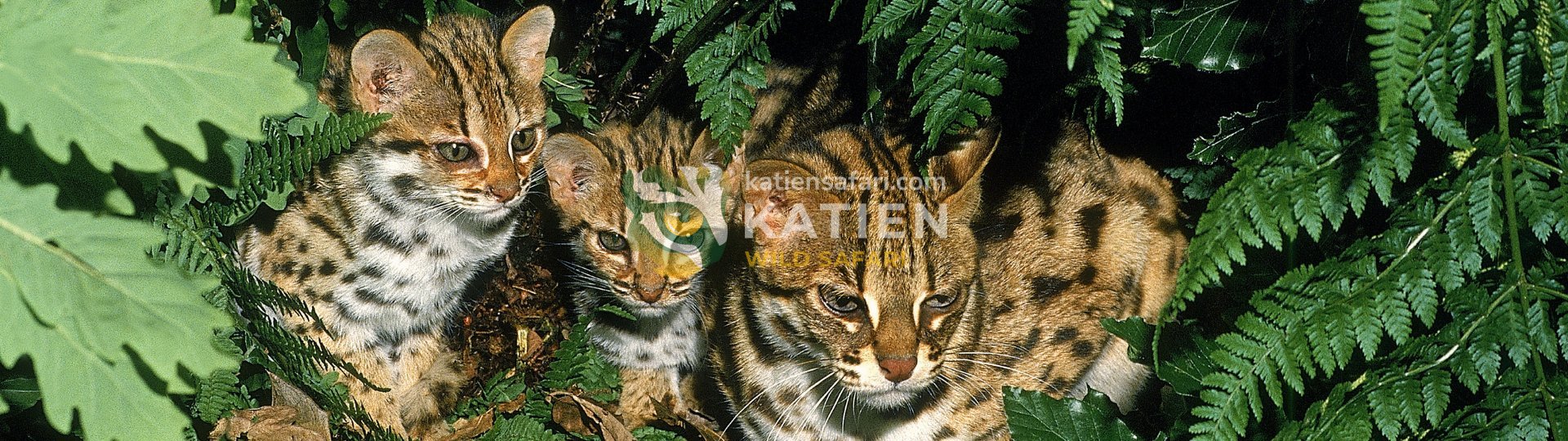
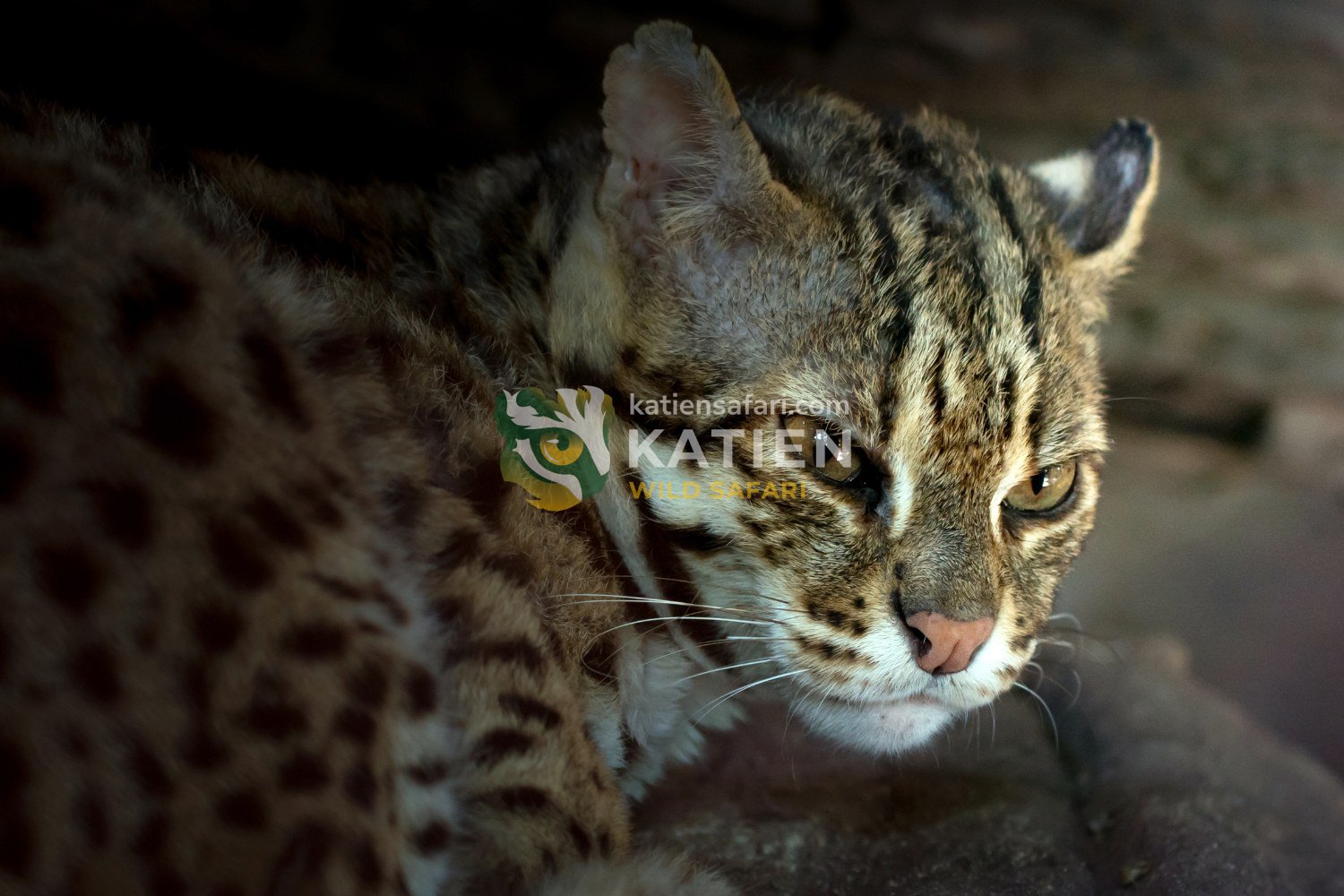
Leopard cats have long legs and strong, flexible paws. Some individuals have slight webbing between the toes, which helps with climbing and swimming. These physical traits are key leopard cat physical adaptations for hunting, allowing the animal to move easily across different types of terrain. In terms of appearance, the leopard cat has a round head, a short muzzle, and upright ears. The back of the ears is black with white spots, which is a common leopard cat appearance and identifying feature.
The leopard cat coat color varies across different regions. Most individuals have yellow-brown fur covered with black spots, while the chest and belly are usually white. In colder areas, the coat often appears pale grey or silver. The tail is about half the body length and shows faint rings near the black tip. Dark stripes along the head and neck help the animal blend in with forest surroundings.
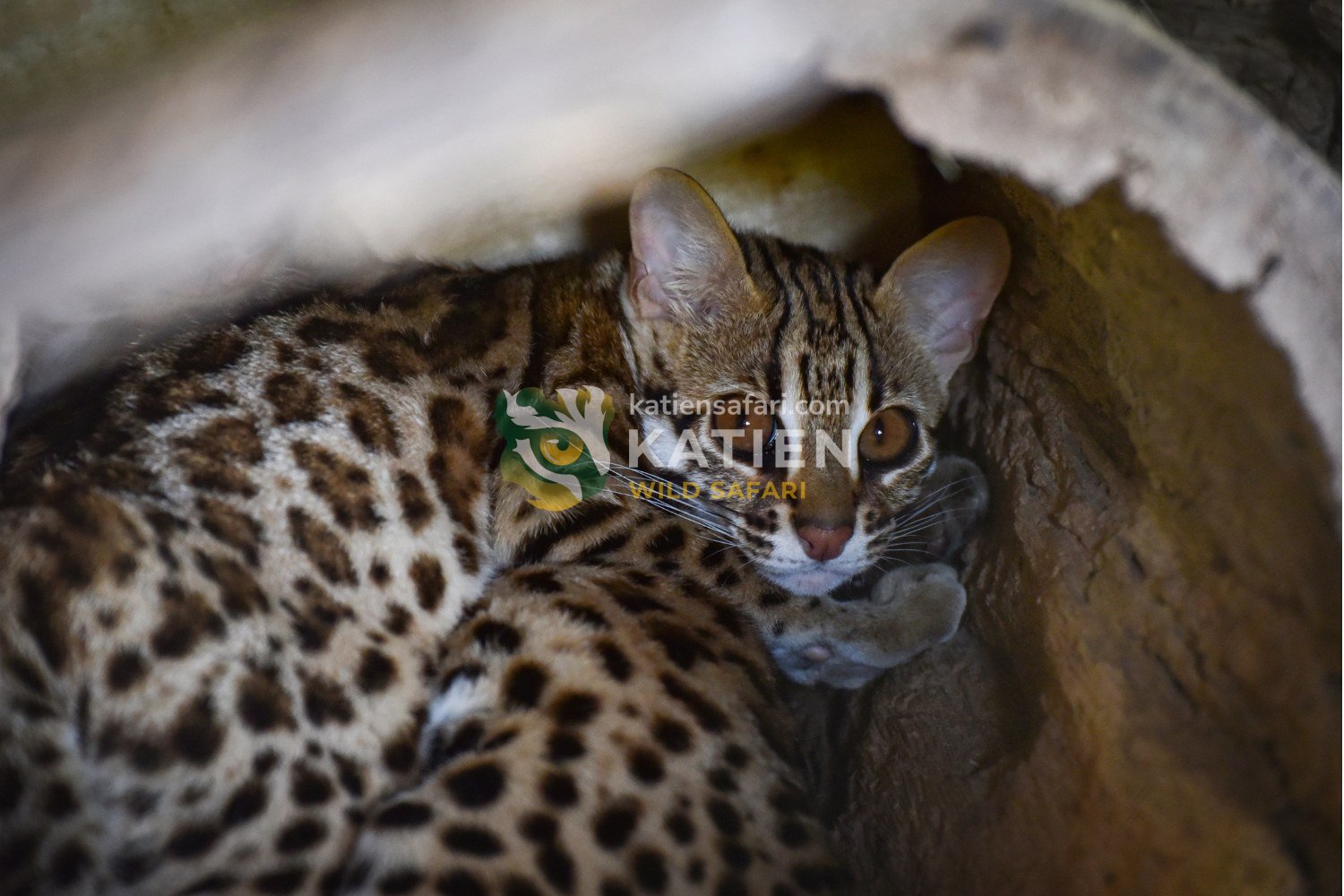
The leopard cat has a round head, short muzzle, upright ears, and black ear backs with white spots.
Global Distribution and Habitat
Global Distribution of the Leopard Cat
The leopard cat has one of the widest ranges among small wild cats. It is found on several small islands and mainland areas in Asia, including parts of Japan, South Korea, Sumatra, Thailand, Vietnam, China, and India.
Leopard cats are strong swimmers, which helps them reach islands and isolated habitats. They were once thought extinct in Singapore but were rediscovered in 1997. In Nepal, leopard cats have been recorded at high elevations above 3,200 meters. In some small areas, such as islands, the leopard cat population can still be relatively dense.
Leopard Cat Distribution In Vietnam
In Vietnam, leopard cats are widely distributed across the country. Camera-trap surveys and direct observations have recorded the species in many locations from north to south.
In northern Vietnam, leopard cats live in Pu Luong Nature Reserve and Mu Cang Chai Species and Habitat Conservation Area. They have also been found on small river islands of the Red River in Hanoi, close to the city center.
In central Vietnam, records come from Pu Mat National Park, Ke Go Nature Reserve, and several Saola Nature Reserves.
In southern Vietnam, leopard cats have been recorded in Cat Tien National Park. In some large camera-trap surveys, they were the only small carnivore found there. Leopard cats have also been recorded in U Minh Thuong and U Minh Ha National Parks.
Leopard Cat Distribution In Cat Tien National Park
Leopard cats also live in Cat Tien National Park. Their presence has been confirmed by camera-trap surveys. Each year, the Cat Tien Species Conservation and Rescue Center receives rescued wildlife from local people, government agencies, and NGOs. Some rescued leopard cats are rehabilitated. They are then released back into the park, helping the species continue to live in Cat Tien.
Leopard cats have been recorded in Cat Tien National Park through direct sightings and footprint evidence. Individuals were observed in areas such as Dak Lua Road and the route between the park headquarters and Nui Tuong.
In addition, small footprints believed to be from leopard cats were found near the park headquarters and along forest roads. This shows that the species can move freely between forest areas and open paths.
Cat Tien National Park provides suitable conditions for leopard cats thanks to its rich forest ecosystem. The park has tropical evergreen forests, secondary forests, and river habitats. These areas provide good cover and many hunting opportunities for leopard cats. A wide range of small mammals, birds, and reptiles also makes the area an ideal feeding ground for this adaptable predator.
Leopard Cat Habitat
The habitat of the leopard cat is very diverse. It mainly lives in natural forest environments such as tropical rainforests, evergreen forests, bamboo forests, and mixed woodlands. The leopard cat is highly adaptable. It can live and hunt in disturbed forests and areas changed by human activity, such as plantations and farmland. These places often have many rodents, which form an important part of its diet.
The leopard cat is found across many regions with very different natural conditions. In the northeastern parts of its range, it often lives near rivers, streams, valleys, and forested ravines. It usually avoids areas with heavy snow.. In dry regions with little vegetation, such as parts of Pakistan, the leopard cat is uncommon.
In many parts of Asia, especially in forested areas of Southeast Asia, leopard cats can live close to human settlements. This is possible when there is little hunting. On islands like Borneo, they live in tropical forests. They have also been recorded using large caves where food is available.
The leopard cat can also live at a wide range of altitudes. It occurs from sea level up to mountain areas above 3,000 meters. In the Himalayan foothills, the species is commonly found in forest habitats at elevations higher than 1,000 meters.
The leopard cat mainly inhabits tropical rainforests, evergreen forests, bamboo forests, and mixed woodlands.
Diet and Behavior
Leopard Cat Diet
The Asian leopard cat is a fully meat-eating wild cat. The leopard cat diet is highly flexible and changes depending on the region and available food. In many countries, such as Thailand, Singapore, and Japan, rats and other small rodents are the main prey. In addition, the leopard cat also hunts birds, reptiles, amphibians, and insects.
In the Russian Far East, their diet mainly includes small rodents during snow-free seasons. When winter arrives, leopard cats tend to add small hoofed mammals to their food intake. In some parts of India and China, pikas, rats, and voles play an important role as the leopard cat’s main prey species.
In contrast, in regions such as Inner Mongolia and Pakistan, small birds are more commonly hunted. On Iriomote Island in Japan, their diet mainly consists of frogs and toads, along with birds and fruit bats.
The leopard cat is a skilled hunter. It catches prey with a quick jump and a well-placed bite. Unlike many other small wild cats, it does not play with its catch. Instead, it keeps a firm hold until the animal is dead, which helps prevent escape.
Leopard Cat Behavior
It is an excellent climber and a strong swimmer, showing impressive movement and agility. The leopard cat is mainly active at night and usually rests during the day in a safe place, such as a tree hollow, a cave, or a rock crevice. Most of its activity happens at night or at dawn and dusk, although it can sometimes be active during the day, especially males.
The Asian leopard cat is also a good swimmer and can live on small islands near the coast. It often shows little fear of humans and may be found close to villages. In some areas, people keep leopard cats to help control rodents, even though the animals may sometimes attack poultry.
The leopard cat is a solitary animal and usually only meets others during the breeding season. It lives within a clear home range and shows strong leopard cat territorial behavior. The animal marks its territory using urine, feces, scratch marks, and by rubbing its head on tree trunks. Thanks to its climbing skills, it often rests in trees or hides in dense vegetation, using height and cover to stay safe and watch its surroundings.
Vocal Communication
Leopard cats use sounds similar to domestic cats. They may purr when calm, hiss when scared, and make short calls during the breeding season. Along with sounds, they use scent marks to communicate. These are important leopard cat communication methods for marking territory and avoiding conflict.
Reproductive Biology
Family Structure & Pair Bonding
In the wild, leopard cats may form short-term pairs during the breeding season. In some areas, males help defend the territory and sometimes support the female when the kittens are young.
Infant Care & Development
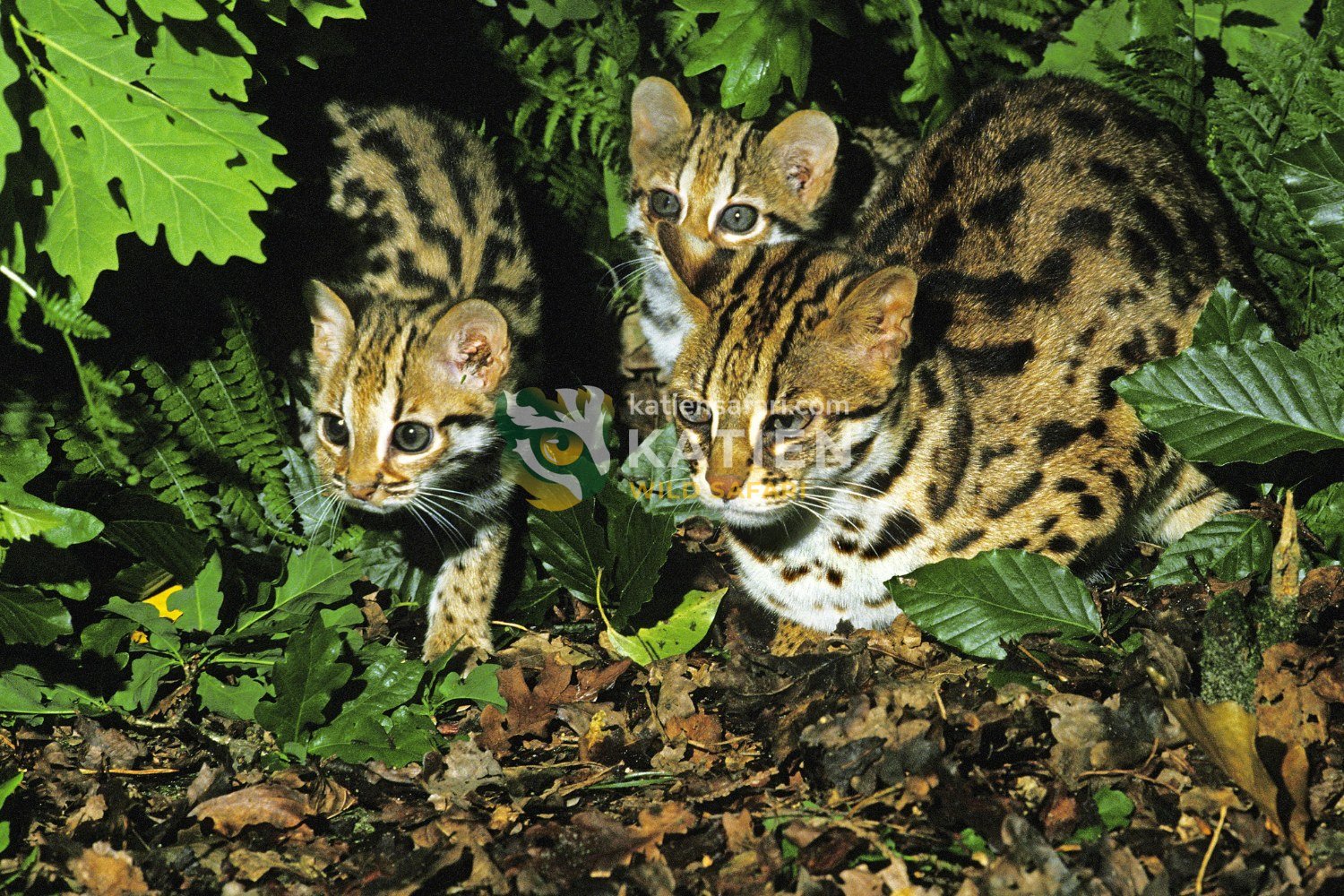
Leopard cat reproduction depends on location. In warm regions, breeding can happen year-round. In colder areas, the breeding season usually occurs in spring. After a gestation period of about 60 - 70 days, the female gives birth to a litter size of two to four kittens.
Kittens are born small and helpless and stay hidden for several weeks. The mother provides all care, showing strong maternal care. As they grow, kittens learn to hunt and eventually become independent, completing the leopard cat life cycle.
Threats and Conservation
Threats to the Leopard Cat
The main threats to leopard cat populations are hunting and poaching, which have put intense pressure on the species for decades.
In China, the species was once heavily hunted for its fur. Between 1984 and 1989, hundreds of thousands of leopard cat skins were exported each year.
After the European Union banned fur imports in 1988, Japan continued to import large numbers of skins for a short time. This history shows how serious the wildlife trade once was for leopard cats.
Although international trade has dropped a lot, leopard cats are still hunted in many areas. They are killed for their fur, for food, sold as pets, or used in traditional medicine. In rural areas, they are often killed because they attack chickens and enter farms. This has reduced leopard cat populations in many regions.
Besides hunting, habitat loss is also a major threat. Forest clearing, farming, and urban growth are breaking up natural habitats. Habitat loss has a serious impact on leopard cats because they need large areas to live and hunt. When forests shrink, their chances of survival decrease.
Road traffic accidents are another growing danger, particularly in forest landscapes cut by highways and rural roads. Many leopard cats are killed while crossing roads in search of food or new territory.
Hybridization with domestic cats is another serious threat to leopard cats. When leopard cats breed with domestic cats, it can weaken the natural genetics of wild populations.
Leopard cats are threatened by habitat loss, hunting, and illegal wildlife trade.
Conservation
The Asian leopard cat is considered Least Concern by the IUCN because it lives in many parts of Asia. Different countries use various measures to protect this species.
Hunting is banned in Bangladesh, Cambodia, Hong Kong, India, Japan, Malaysia, Myanmar, Nepal, Pakistan, Russia, Thailand, and Taiwan. In South Korea, Laos, and Singapore, hunting and trade are strictly controlled by national wildlife laws.
In some countries, such as Bhutan, China, and Vietnam, the leopard cat conservation status is weaker outside official reserves. To solve these problems, conservation efforts focus on stronger wildlife laws, reducing illegal trade, protecting forest habitats, and educating local communities. These actions help leopard cats survive in the wild and maintain healthy forest ecosystems.
Observe the Asian Leopard cat on a Safari Tour - Coming Soon
Katien Safari will partner with Cat Tien National Park to develop new wildlife conservation and eco-observation programs. Small visitor groups can safely and respectfully observe animals such as the leopard cat. At the same time, they help protect nature and support sustainable tourism in Vietnam.
Visitors may also have a chance to spot the leopard cat during guided wildlife activities in Cat Tien National Park, especially in forest edges and quiet areas near streams. As a shy and mostly nocturnal wild cat, sightings are rare, but this experience highlights responsible wildlife tourism while supporting leopard cat conservation and forest protection.
- Safety tips for visitors:
- Always stay with your guide and follow park regulations.
- Keep a safe distance and observe quietly if a leopard cat is seen.
- Avoid sudden movements, loud noises, or using flash photography.
- Never feed, chase, or attempt to approach the animal.
- Respect its natural behavior and habitat, especially at night.
- Leave no trash behind to help protect the forest ecosystem.
5 Interesting Facts of the Leopard Cat
1. Leopard cat facts show that they are excellent climbers and strong swimmers.
2. They have been recorded at elevations above 3,200 meters in Nepal.
3. Fossil evidence suggests that leopard cats once lived close to humans as natural “rodent controllers” in prehistoric times.
4. The popular Bengal cat breed originated from crosses between leopard cats and domestic cats.
5. Despite their resemblance to domestic cats, leopard cats cannot be domesticated and require large, wild habitats to survive.
Reference
- Nowell, K., & Jackson, P. (1996). Wild cats: Status survey and conservation action plan. IUCN Species Survival Commission Cat Specialist Group, in collaboration with Chicago Zoological Society, National Wildlife Federation, WWF International, WWF-Netherlands, and Oman IUCN/SSC Action Plan Fund. IUCN. https://portals.iucn.org/library/sites/library/files/documents/1996-008.pdf
- Shepherd, C. R., & Shepherd, L. A. (2018). A naturalist’s guide to the mammals of Southeast Asia: Brunei, Cambodia, Indonesia, Laos, Malaysia, Myanmar, the Philippines, Singapore, Thailand and Vietnam. John Beaufoy Publishing.
- Francis, C. M. (2019). Field guide to the mammals of South-East Asia. Bloomsbury.
- National Library Board Singapore. (n.d.). Leopard cat. Singapore Infopedia. https://www.nlb.gov.sg/main/article-detail?cmsuuid=d35cedf6-1471-4835-91c1-dc2b0f0d9f8b
- Felidae Conservation Fund. (n.d.). Leopard Cat. https://felidaefund.org/learn/cats/leopard-cat
- International Society for Endangered Cats. (n.d.). Leopard Cat. Wildcat Conservation. https://wildcatconservation.org/wild-cats/asia/leopard-cat/
- Tap chí Môi trường. (2025, October 29). Cá thể mèo rừng thuộc loài quý hiếm nằm trong Sách đỏ Việt Nam được thả về tự nhiên.
https://tapchimoitruong.vn/thien-nhien-va-moi-truong-viet-nam
- Felidae Conservation Fund. (n.d.). Leopard cat. https://felidaefund.org/learn/cats/leopard-cat
- Mandai Wildlife Group. (n.d.). Leopard cat. https://www.mandai.com/en/night-safari/animals-and-zones/leopard-cat.html
- Nguyen, T. V., Le, X. C., & Pham, D. T. (2019). Mammal observations in Cat Tien National Park.
- SNRD Asia. (2024). Cat Tien National Park (Booklet). https://snrd-asia.org/wp-content/uploads/2024/11/4-CatTien-booklet_EN.pdf
- Willcox, D. H. A., Tran, Q. P., Hoang, M. D., & Nguyen, T. T. A. (2014). The decline of non‑Panthera cat species in Vietnam. Cat News Special Issue 8, 53–61. https://www.researchgate.net/publication/282640359_The_decline_of_non-Panthera_cat_species_in_Vietnam