If you are walking through a quiet wetland and spot a tall figure that looks like an old farmer bending over his field, do not be surprised. It might just be the Lesser Adjutant. With its bald head, long legs, and serious expression, this quirky stork often appears like a grumpy elder checking his crops. Yet behind that funny look is a rare and important bird that plays a big role in keeping wetlands healthy.
The Lesser Adjutant has the scientific name Leptoptilos javanicus. It belongs to the family Ciconiidae, the group that includes large storks found across Asia and Africa. This species lives in wetlands, mangroves, and flooded forests in South and Southeast Asia. Despite its impressive size, it is now listed as Vulnerable on the IUCN Red List because its numbers are falling.
| Common name | Lesser Adjutant |
|---|
| Scientific name | Leptoptilos javanicus |
|---|
| Taxonomy
|
Kingdom: Animalia
Phylum: Chordata
Class: Aves
Order: Ciconiiformes
Family: Ciconiidae
Genus: Leptoptilos
Species: L. javanicus
|
| Weight / Size | Height 110–120 cm; body length 87–93 cm; wingspan ~2 m; weight 4–5.7 kg. |
|---|
| Lifespan | Wild: 15–30 years. Captive: up to ~35 years. |
|---|
| Population | ~5,000–10,000 mature individuals (declining). |
|---|
| Habitat | Freshwater wetlands, swamp forests, mangroves, rice fields, lakeshores, riverbanks, and open flooded grasslands. |
|---|
| Range | South & Southeast Asia – India, Nepal, Bangladesh, Sri Lanka, Vietnam, Myanmar, Thailand, Cambodia, Laos, , Malaysia, Indonesia. |
|---|
| Diet | Fish, frogs, reptiles, crustaceans, large insects, small mammals, carrion. |
|---|
| Conservation status | Near Threatened (IUCN Red List). |
|---|
Physical Characteristics of the Lesser Adjutant
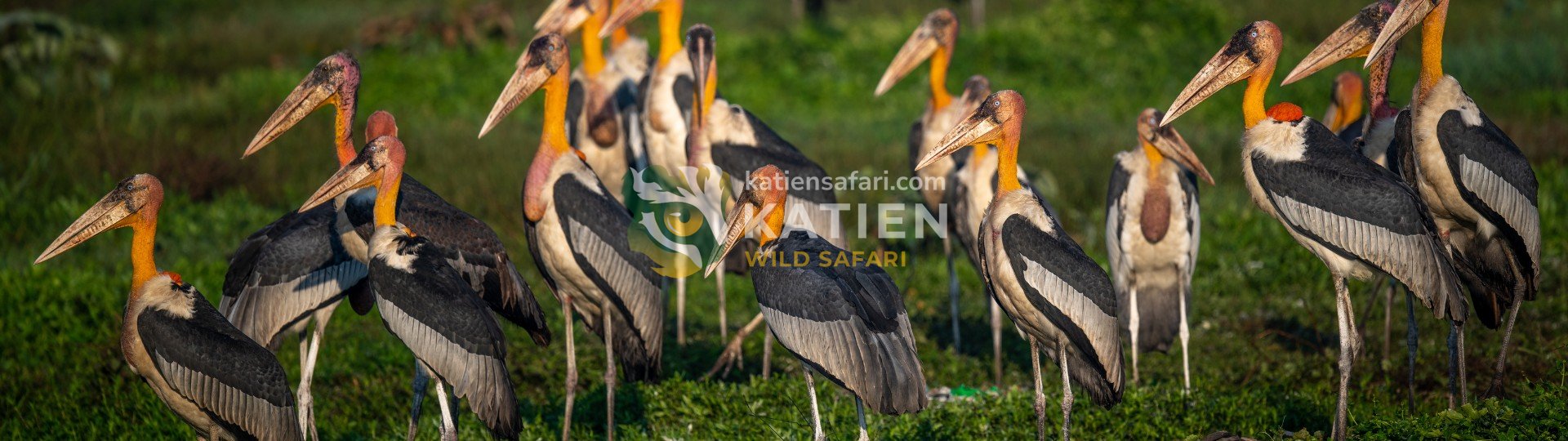
The Lesser Adjutant is a tall, slender stork that is easy to recognize. This species stands 1.1–1.2m tall, giving it a very striking look in wetlands. Its body length is 87–93cm, and the long, balanced shape helps it move and feed in shallow water.
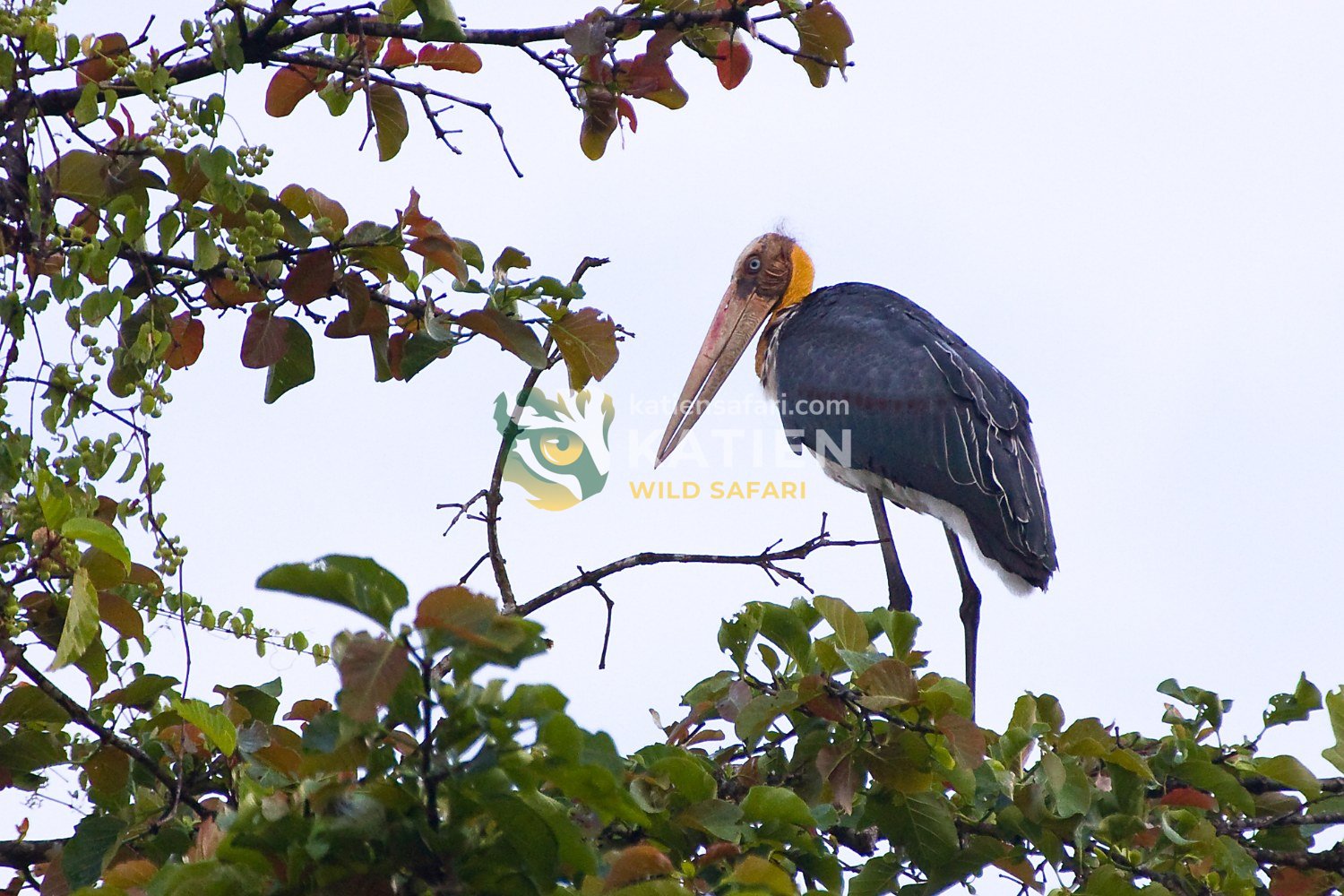
Compared with the Greater Adjutant, the Lesser Adjutant has a mildly hunched posture, but it is less hunched. The bill is large, straight, and pale yellow, measuring 25–31cm. This strong bill helps the bird catch fish, frogs, and other small prey. The head and neck are almost bare, with only a few thin hair-like feathers. This bare skin keeps the bird clean when feeding on carrion.
The skin on the head and neck appears yellow to pink, and it becomes brighter – orange or reddish-purple – during the breeding season. The back and wings are glossy black or dark grey, sometimes with a light metallic sheen. The middle wing feathers often show bronze-tipped spots, a rare pattern among storks. The belly and undertail are clear white, giving a strong contrast to the dark upper body.
The Lesser Adjutant has long, thin, dark grey legs with partly webbed toes. These legs help the bird walk on soft mud and the edges of lakes. Overall, its height, slender build, and black-and-white color pattern make it easy to identify in the field.
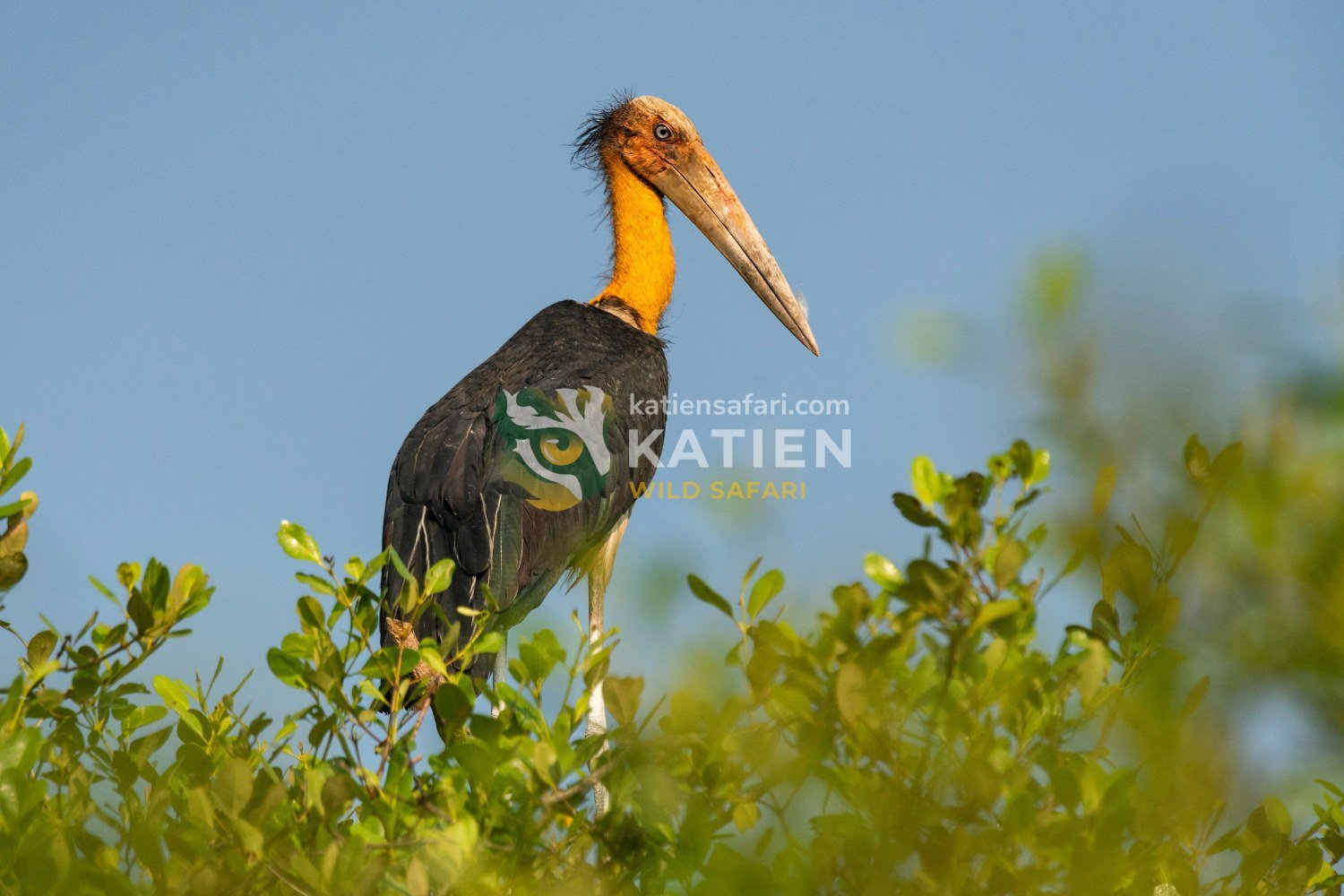
The stork shows a tall frame with a bald head and dark wings.
Distribution and Habitat
Global Distribution
Lesser Adjutant distribution ranges from India across Southeast Asia to the Greater Sunda Islands, including Java. The global population is estimated at 5,500–10,000 mature individuals, and numbers continue to fall due to rapid wetland loss.
India has the largest population, mainly in Assam, West Bengal, and Bihar, while the species is almost absent in the south. Cambodia supports 2,500–4,000 birds along the Mekong, especially between Kratie and Stung Treng – one of the most important breeding areas in the world. In Indonesia, especially in Sumatra and Java, the population once reached around 2,000 birds but continues to decline.
Smaller groups remain scattered across Vietnam, Nepal, Bangladesh, Sri Lanka, Myanmar, Laos, Malaysia, Thailand, and Brunei. The species is likely extinct in China and Singapore, though Singapore occasionally records birds flying in from Johor, Malaysia. These patterns reflect the broader picture of wetland birds in Asia, which depend heavily on stable floodplain ecosystems.
Habitat
The Lesser Adjutant habitat is strongly tied to wetlands, large rivers, natural lakes, and nutrient-rich marshes where food is abundant. In Southeast Asia, this stork is closely linked to mangrove forest birds, tidal mudflats, coastal swamps, and estuaries.
Lesser Adjutant also uses wet grasslands, rice fields, farmlands, and open savannahs, especially during the dry season when water levels drop. These areas match the birds' habitat requirements, providing them with access to fish, frogs, and small reptiles.
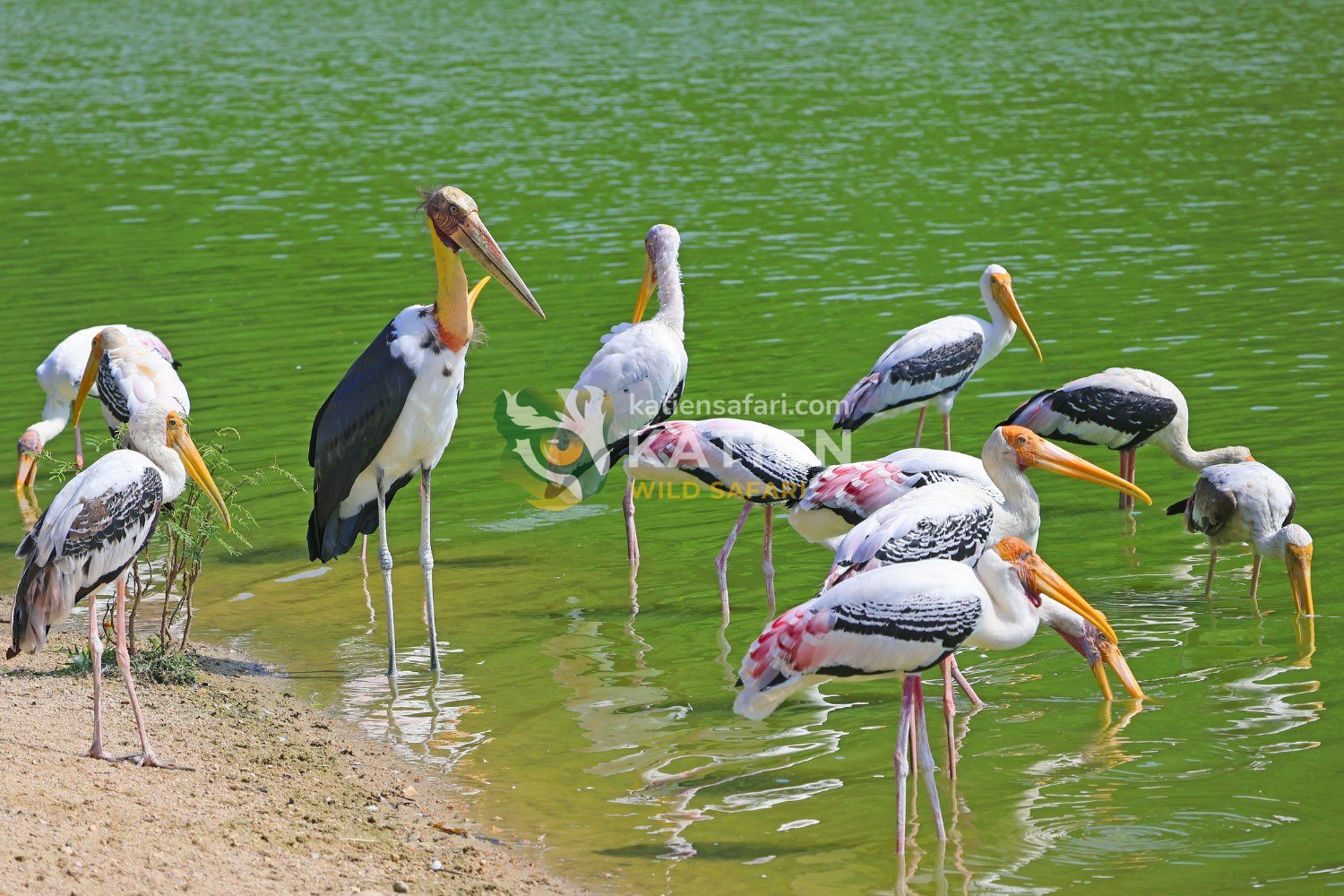
Its preferred home includes wetlands, marshes, and flooded forests.
Distribution in Vietnam
Lesser Adjutant in Vietnam is limited to the south-central and southern regions, mostly in lowland wetlands. The national population is very small, with around 50 individuals remaining in the wild. They are mainly seen in marshes, flooded grasslands, and open wetlands—areas that match their hunting behavior.
Because wetland loss is widespread, sightings have become rare, especially in former coastal habitats where they were once recorded more frequently.
Lesser Adjutant in Cat Tien National Park
Among the birds of Cat Tien National Park, the Lesser Adjutant is one of the most notable wetland species. Cat Tien is an important site in southern Vietnam where the species is still recorded regularly. A resident individual has been observed at Bau Sau, showing that this protected area still provides suitable conditions.
In Cat Tien, the storks use swamps, shallow wetlands, seasonally flooded grasslands, and river edges. These areas support rich food sources, making them ideal Lesser Adjutant wetland habitats. Beyond Cat Tien, a few scattered records exist in parts of the Mekong Delta, but numbers are low, and populations remain isolated.
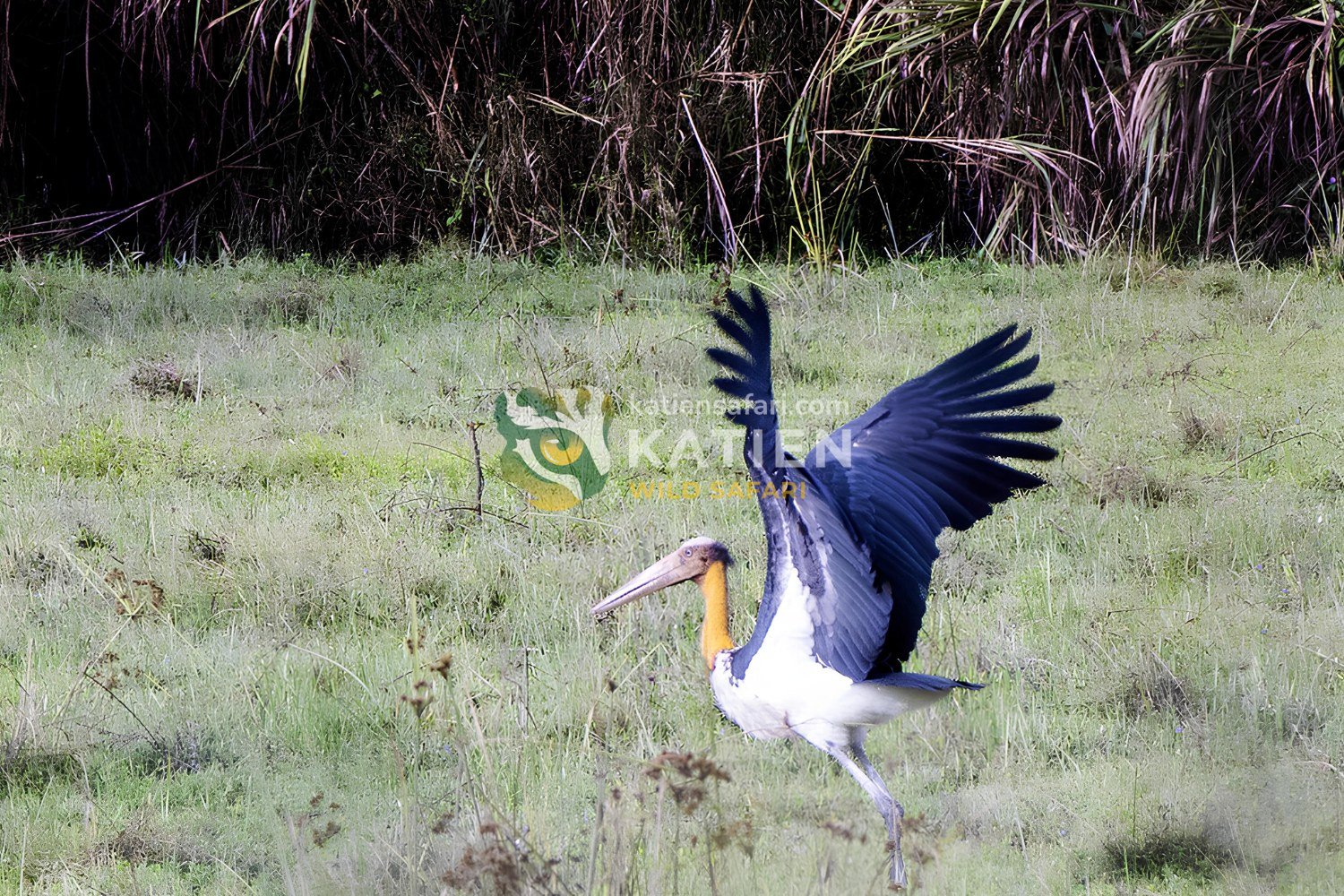
Cat Tien protects stable populations within its rich wetlands.
Diet and Predator
Diet
The Lesser Adjutant diet is shaped by its life in wetlands. This stork is an opportunistic feeder, searching for food in marshes, flooded fields, mudflats, and shallow water where fish and amphibians are plentiful. For anyone asking what Lesser Adjutants eat, their main prey includes fish, frogs, small reptiles, large insects, and freshwater invertebrates – foods that support their large body size.
They are also known for catching mudskippers, a common prey in coastal mudflats and estuaries. Besides their preferred diet, they may take crustaceans, locusts, rats, and occasionally small birds or rodents during the breeding season. They rarely eat carrion and take human food scraps only when available, showing much less scavenging behavior than the Greater Adjutant (Leptoptilos dubius).
As a major wetland predator, the Lesser Adjutant helps control populations of fish, frogs, and invertebrates, playing an important role in balancing the ecosystem.
Feeding Habits & Hunting Behavior
The Lesser Adjutant feeding habits center on slow, careful walking while scanning the water’s surface. When prey appears, the bird strikes quickly with its strong bill. These birds usually feed alone, and individuals on mudflats often keep a distance of about 50m from each other to avoid competition.
The Lesser Adjutant hunting behavior makes strong use of tidal cycles. When the tide drops and mudflats open, fish, shrimps, and bottom-dwelling animals become exposed, giving the storks easy access to food. In flight, the birds pull their necks back like other storks and use rising warm air to soar, saving energy while moving between feeding grounds.
There are no confirmed predators of Lesser Adjutant storks due to their size and strength. However, eggs and chicks may be taken by snakes, monitor lizards, raptors, or small carnivores.
When disturbed, the storks give a low, raspy hiss or grunt. Their most distinctive communication is bill clattering, a loud clicking sound made by striking the upper and lower bill together. When facing a threat or defending territory, they may stretch their necks, open their wings, sway their body, and snap their bill to warn off intruders.
The bird feeds on fish, frogs, insects, and carrion.
Habit and Lifestyle
The Lesser Adjutant daily activity patterns show that this species spends most of its time living alone in wide wetland areas. Each bird keeps a large distance from others to reduce competition and to reach feeding spots easily. They rarely form flocks, except in special periods such as the dry season, when water and prey become concentrated.
Lesser Adjutants prefer quiet spaces and often move deeper into remote wetlands if there is noise or human activity nearby. For resting, they choose tall trees near marshes or safe open areas where they can watch their surroundings and avoid disturbance.
During feeding hours, the birds walk slowly along the water’s edge, using a mix of still posture and careful steps to strike prey by surprise. They are strong fliers and can travel long distances between marshes, mudflats, and riverbanks. On hot days, they use warm rising air to soar, saving energy while moving across large landscapes.
In flight, they pull their necks back like herons and storks, creating a streamlined shape typical of the Leptoptilos genus. On the ground, they walk with steady, deliberate steps, keeping their back straight and neck raised - an upright posture that improves visibility and makes them appear larger.
Reproduction and Life Cycle
Breeding Season & Reproductive Timing
The Lesser Adjutant breeding season varies across its range. These storks usually live alone, but they gather at traditional nesting areas once breeding begins. Timing differs by region: Vietnam (October), southern India (February–May), northeast India (November–January), Sri Lanka during dry months (August–September and March–April), and in captivity in North America (May–June).
Clutches normally contain 2–4 eggs, most often three, laid 2–4 days apart to reduce pressure on the parents. The Lesser Adjutant reproductive cycle includes a 32–34-day incubation period shared by both adults—the male mainly incubates during the day, while the female covers the nest at night. Because the breeding phase demands a lot of energy, adults stay near the nest site for weeks before and after hatching to guard and monitor the area.
Nesting Sites & Nest Construction
During the breeding season, the species forms loose Lesser Adjutant nesting colonies, often on tall trees. Each tree may support one to five nests, depending on the site. Important nesting areas include the Mekong River stretch between Kratie and Stung Treng, with at least 31 confirmed nests, and Prek Toal, which has the highest nest density in Southeast Asia. Smaller groups appear in Bangladesh, Assam, West Bengal, and Bihar.
The Lesser Adjutant nesting behavior includes building large platform-like nests from sticks, placed high in the canopy on strong trees such as Bombax ceiba and Adina cordifolia. These nests can exceed 1m in diameter and nearly 1m deep, lined with leaves and fresh branches. Adults bring new materials frequently, test the nest size, remove unsuitable debris, and keep the platform stable.
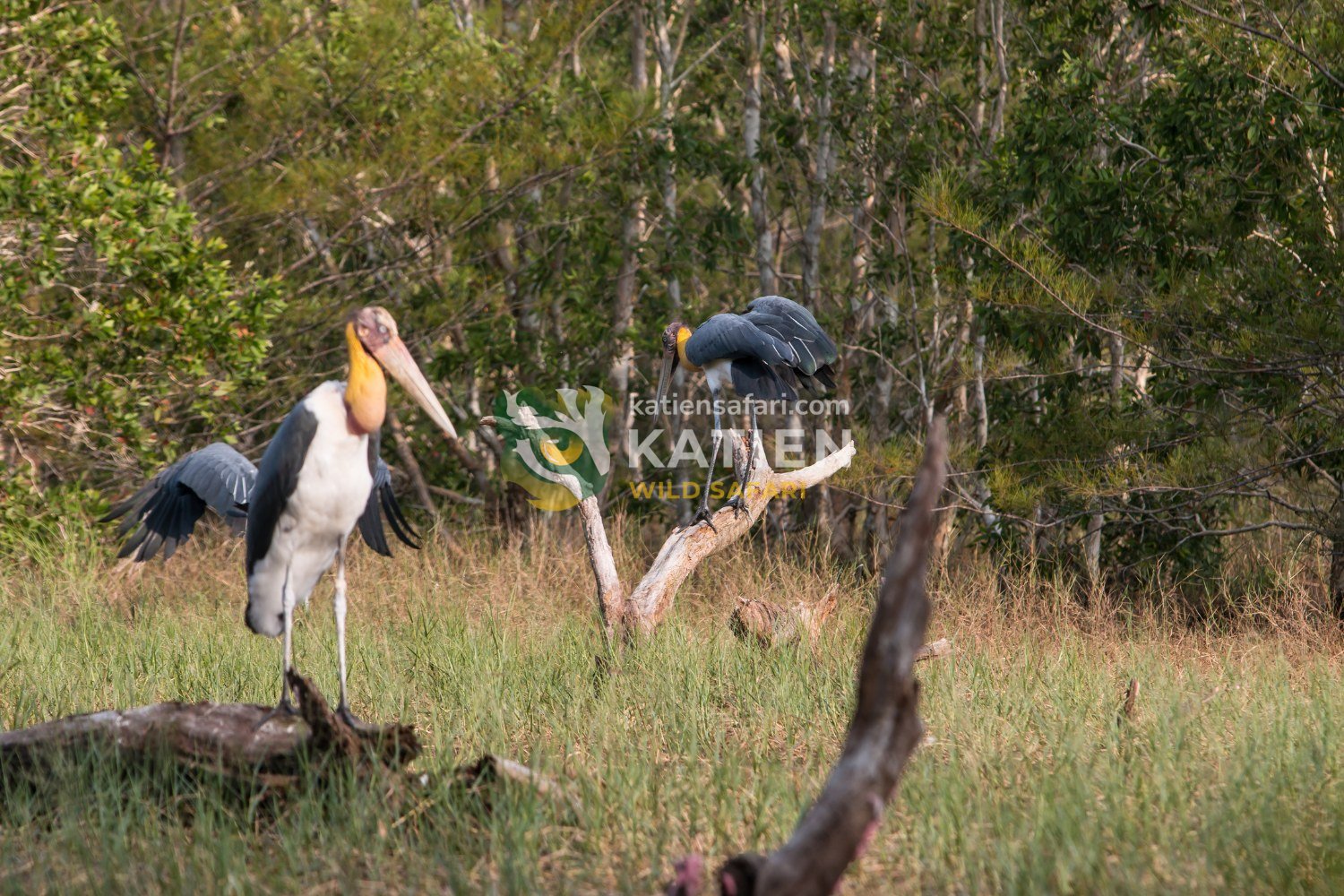
Young chicks rely on both parents for feeding and protection.
Chick Development & Life Cycle
How Lesser Adjutants raise their chicks is a slow but intensive process. Both parents feed their young with regurgitated food similar to the adult diet, sometimes with added calcium in captivity to support bone growth. Newly hatched chicks weigh around 180g, but grow rapidly, reaching about 2.5kg at one month old.
The fledgling stage begins at around 100 days, when chicks start short flights and gradually explore the area. Full adult plumage appears at 18–24 months, marking their transition to complete independence. After leaving the nest, young birds slowly establish their own feeding ranges, supporting the species’ naturally dispersed lifestyle.
In the wild, the Lesser Adjutant may live over 10 years, with even longer lifespans in protected conditions.
Threats and Conservation
The Lesser Adjutant IUCN status is currently listed as Vulnerable (VU), a position it has held globally since 1994 due to steady declines across its entire range. The global population is estimated at 5,500–10,000 adults, showing a clear downward trend. In several Asian countries, such as Bangladesh, the species was once “fairly common” but is now rare, reflecting the rapid loss of wetlands and long-term hunting pressure.
In Vietnam, the species is listed in the national Red Data Book under group IB, meaning it is strictly protected. The decline of the species also mirrors the broader endangered storks in Asia, many of which face similar habitat pressures. The bird is now considered locally extinct in China and Singapore, with occasional individuals in Singapore likely arriving from nearby Johor.
Main Threats
The threats to Lesser Adjutant storks center on habitat loss, human disturbance, and direct exploitation:
- Wetland degradation is the most serious issue. Drainage of marshes, conversion of wetlands to farmland, and urban or industrial expansion all contribute to the Lesser Adjutant wetland degradation issues.
- Nesting trees are being cut in many areas, especially in Assam, where village groves and large trees have been removed, directly reducing breeding opportunities.
- Hunting and egg collection still occur in several regions. Records include large-scale killings, such as the death of 47 individuals in one day in Riau, Indonesia (1990).
- Pesticides, polluted water, and fragmented habitats reduce prey availability and make wetlands unsuitable.
- Infrastructure development in Sri Lanka and other regions has increased disturbance, threatening small, isolated populations.
- Human impact on Lesser Adjutant populations remains one of the strongest drivers of decline through habitat conversion, resource extraction, and disturbance at nesting sites.
Conservation Actions & Recommendations
Current Lesser Adjutant conservation efforts focus on protecting key wetlands, nesting sites, and community engagement:
- In Cambodia, the Mekong stretch between Kratie and Stung Treng is the most important conservation hotspot. In 2012, WWF recorded 31 nests and launched a program hiring local people as nest guardians.
- In Sri Lanka, most records are inside protected areas, helping reduce hunting pressure and preserve essential habitat patches.
- Southeast Asian countries, including Vietnam, are strengthening wetland protection and listing the species under strict legal protection, supporting broader Bird Conservation Vietnam initiatives.
- Singapore is restoring habitat, including mangrove recovery and ecosystem connectivity, improving the chances of future recolonization.
The species has been recommended for CITES Appendix I, which would fully restrict international trade and support long-term, cross-border protection.
See Lesser Adjutant in Nature
Bàu Sấu is the best place in Cat Tien National Park to see the Lesser Adjutant in the wild. This large wetland combines open water and grasslands, creating ideal feeding habitat for the species. The area includes marshes, shallow pools, flooded grass, and forest edges - natural environments that the stork prefers when hunting.
Compared with other parts of Cat Tien, Bau Sau offers wide, open views. This makes it easier to spot the bird’s tall body, long neck, and slow movements while it feeds or rests. The best viewing times are early morning or late afternoon, when the birds leave their roosts or move to the water to search for food.
In the near future, Katien Safari will work closely with the Management Board of Cat Tien National Park to organize small-group tours. Visitors can reach Bau Sau by guided walk or park transport, but it is important to stay on designated trails to protect the quiet wetland habitat.
Observation notes and ethical birdwatching tips:
- The Lesser Adjutant is solitary and very sensitive to noise and close approach. Always watch from a safe distance to avoid disturbing its natural behavior.
- The species often stands still for long periods. Scan water edges, tree bases, and open banks to notice its upright posture and bare head.
- During the breeding season (around October in Vietnam), the birds are more easily stressed. Avoid moving closer if you see signs like hissing, body shaking, or walking away.
- Because the species is legally protected in Vietnam (Group IB, Red Data Book), any disturbance, chasing, luring, or forcing the bird to fly, is strictly prohibited. Observation must remain passive and respectful.
- Stay on marked trails, avoid loud talking, and do not use playback or loudspeakers. Noise in wetland habitats can cause birds to abandon feeding sites.
- For photography, use a telephoto lens (300 mm or more) so you do not need to get close. Binoculars are ideal for watching from a distance while keeping the habitat safe.
5 Interesting Facts about Lesser Adjutant
1. The Lesser Adjutant looks a bit like an old man because its head and neck are almost bald.
2. In the breeding season, its face turns red or purple, and its neck becomes bright orange or yellow.
3. It can share the same tree with honeybees. The bird builds its nest on top, and bees use the lower branches.
4. The Lesser Adjutant has long, dark legs and cools itself by letting liquid fall on its legs so the water can evaporate.
5. The Lesser Adjutant is a quiet bird, but it is important for wetlands because it helps control fish, frogs, and insects.
Reference
- BirdLife International. (2012, January 29). Species factsheet: Leptoptilos javanicus. http://www.birdlife.org
- Choudhury, P. (2022). Lesser Adjutant Leptoptilos javanicus sharing nesting trees with honeybees. Indian Birds, 19(3).
- Chowdhury, U. S., & Sourav, M. S. H. (2012, January). Discovery of Lesser Adjutant Leptoptilos javanicus breeding colony in Bangladesh. BirdingAsia.
- De Silva, T. N., Fernando, S., De Silva, H. B., & Tennakoon, P. (2015, November). Lesser Adjutant Leptoptilos javanicus Horsfield, 1821 (Ciconiiformes: Ciconiidae) in the dry lowlands of Sri Lanka: Distribution, ecology, and threats.
- Gyawali, N. (2004, January). Conservation fund reports of grant-assisted work: Population status and habitat preferences of Lesser Adjutant in Royal Chitwan National Park, Nepal. BirdingAsia, 1, 8–9.
- IUCN Bangladesh. (2000). Red book of threatened birds of Bangladesh. IUCN.
- Khan, A. R. (1987). Conservation of storks and other waterbirds in Bangladesh. [Unpublished manuscript].
- Pokorny, B. Y., Samaroo, L., Sheppard, C., Mahood, S., Hook, N., Raphael, B., & Oehler, D. A. (2016). The Lesser Adjutant Stork Leptoptilos javanicus: Its husbandry and conservation at the Wildlife Conservation Society. Avicultural Magazine, 122(3).
- Subaraj, R., & Lok, A. F. S. L. (2009, March 5). Status of the Lesser Adjutant Stork (Leptoptilos javanicus) in Singapore. Nature in Singapore, 2, 107–113.
- Vườn Quốc gia Cát Tiên. (2022, November 27). Già đẫy Java quý hiếm tại VQG Cát Tiên.
- WWF. (2012, February 10). Lesser Adjutant nests protected along the Mekong River. https://wwf.panda.org