When people hear about the Asian Palm Civet (Paradoxurus hermaphroditus), they often think of civet coffee, the famous drink made from coffee cherries that pass through its digestive system. But this small mammal is much more than a coffee myth. Belonging to the family Viverridae and the order Carnivora, the Asian Palm Civet is an important seed disperser, a skilled climber, and a key part of rainforest ecosystems across Asia. Found in countries like Vietnam, Indonesia, and Sri Lanka, it quietly helps forests regenerate and stay healthy. Understanding the species beyond coffee shows why the Palm Civet deserves real protection.
| Common name | Asian Palm Civet / Common Palm Civet / Toddy Cat |
|---|
| Scientific name | Paradoxurus hermaphroditus |
|---|
| Taxonomy
|
Kingdom: Animalia
Phylum: Chordata
Class: Mammalia
Order: Carnivora
Family: Viverridae
Genus: Paradoxurus
|
| Weight / Size | 2–5 kg; body length 48–71 cm; tail 40–66 cm. |
|---|
| Lifespan | Wild 15–20 years; Captive up to 22 years. |
|---|
| Population | Widespread; stable but declining in some areas due to hunting and farming. |
|---|
| Habitat | Tropical forests, secondary forests, plantations, and farmland edges. |
|---|
| Range | Across South and Southeast Asia, including Vietnam, India, China, and Indonesia. |
|---|
| Diet | Omnivorous: fruits, insects, small animals, and nectar. |
|---|
| Conservation status | Least Concern (IUCN). |
|---|
Physical Characteristics of Palm Civet
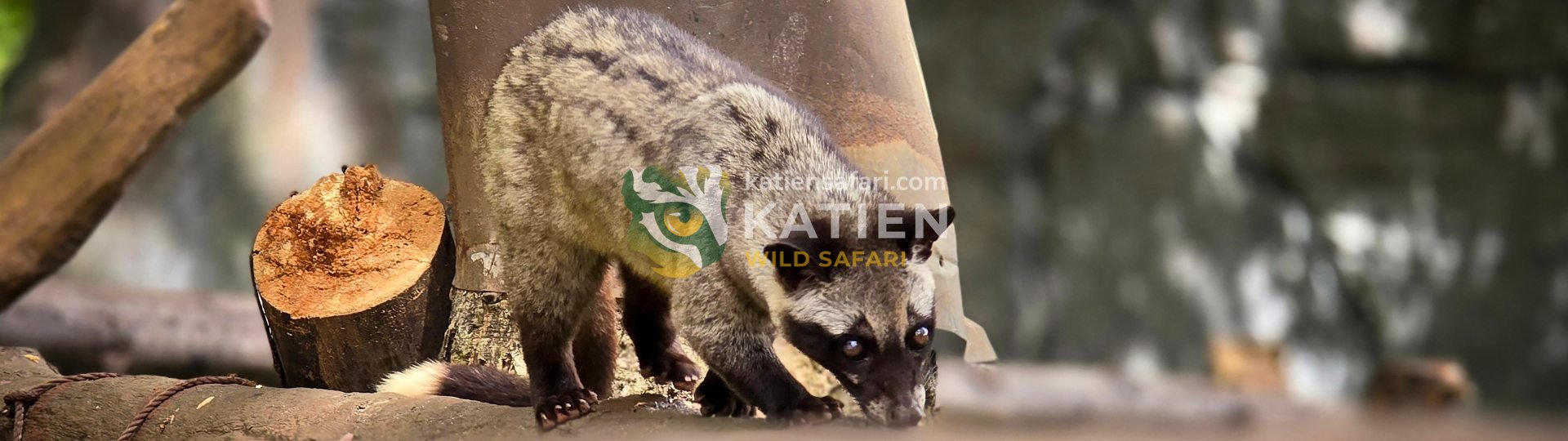
The Palm Civet has a slender body, short legs, and smooth movements, giving it a look between a cat and a small mustelid. This mixed appearance explains why Palm Civets are often called Toddy Cats. The Palm Civet's average size and weight are easy to recognize: the body is about 48 - 71cm long, the tail is 40 - 66cm, and adults usually weigh 2 - 5kg.
Its short and coarse fur can be grey, brown, or black, marked with stripes and rows of black spots on the sides. These patterns help Palm Civets stay hidden in forests and at night. One of the most distinguishing features of the Asian Palm Civet is the neck fur, which grows from back to front, unlike most civet species. The face is narrow with a pointed nose, large eyes for low light, and a pale mask around the eyes.
Palm Civets live in the wild across Asia and rely on their long tail for balance when climbing. Their plantigrade feet, partly webbed toes, and semi-retractable claws help them grip branches and wet surfaces. A strong scent gland at the base of the tail is used for marking territory and communication.
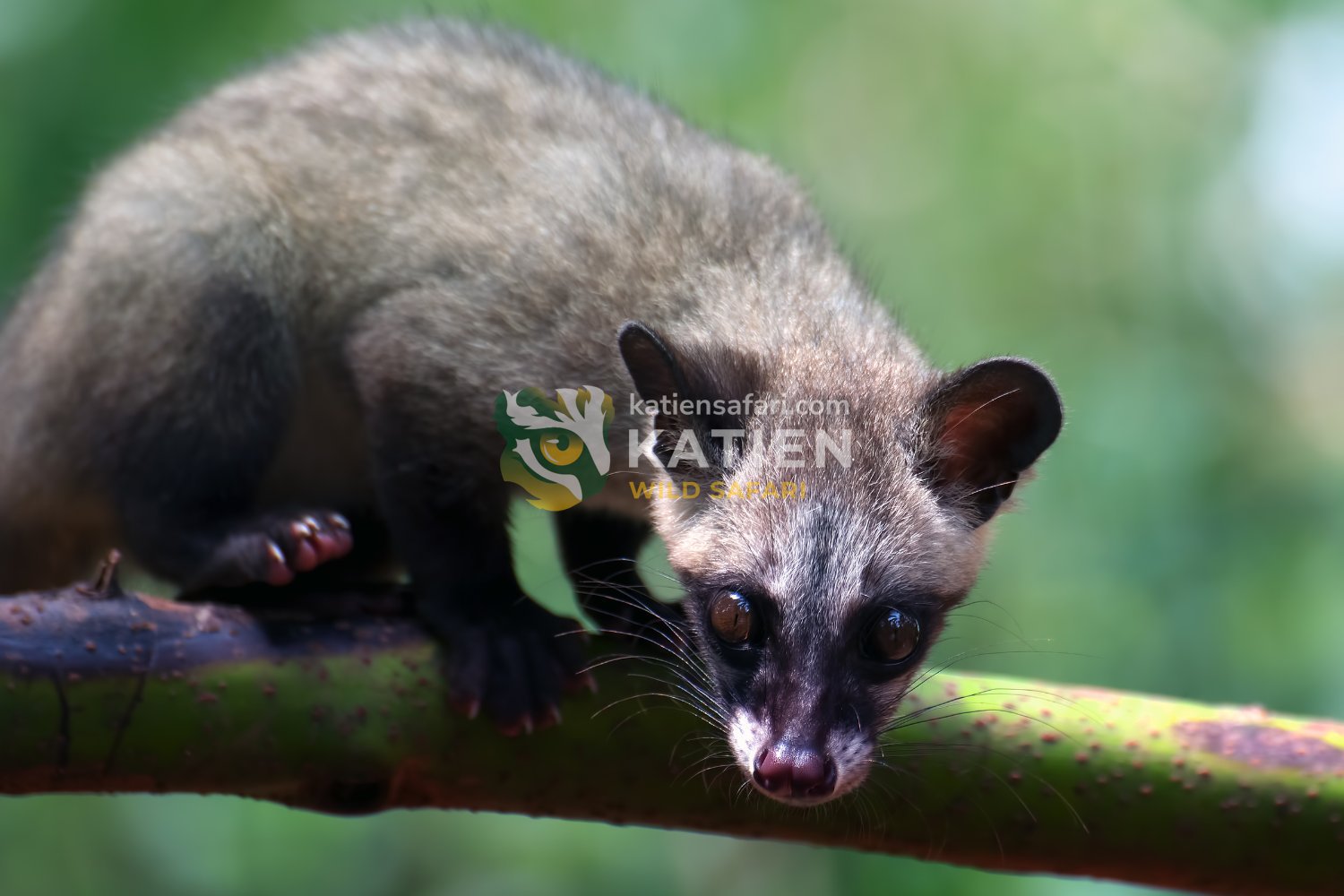
Palm civets show a slender body with short legs and a long tail.
Palm Civet Subspecies List
Modern research shows that the Asian Palm Civet is more complex than once believed. Instead of a single widespread species, scientists now recognize 3 major species groups, each with its own distribution range and subspecies.
Three Modern Species Groups
- Paradoxurus hermaphroditus: Found in India, Sri Lanka, southern China, Hainan, and mainland Southeast Asia above 200 meters. This group represents the classic Asian Palm Civet seen across hill forests.
- Paradoxurus musangus: Recorded in Peninsular Malaysia, Sumatra, Java, Bali, and the lowland parts of mainland Southeast Asia below 200 meters. Individuals in this group tend to live in warmer lowland forests.
- Paradoxurus philippinensis: Occurs in Borneo, the Philippines, and the Mentawai Islands. Island populations show clear genetic separation and strong local adaptation.
Historical Subspecies (Older Classification Systems)
These Palm Civet subspecies were once grouped under P. hermaphroditus. They show how broad the species’ range originally appeared before modern revisions.
- Indian Subcontinent and Sri Lanka: P. h. canescens, P. h. cochinensis, P. h. pallasii, P. h. hermaphroditus, P. h. lanka
- China and Hainan: P. h. dongfangensis, P. h. fuscata
- Indonesia and the Philippines: P. h. javanica, P. h. minor, P. h. musanga, P. h. kangeanus, P. h. sumbanus, P. h. philippinensis
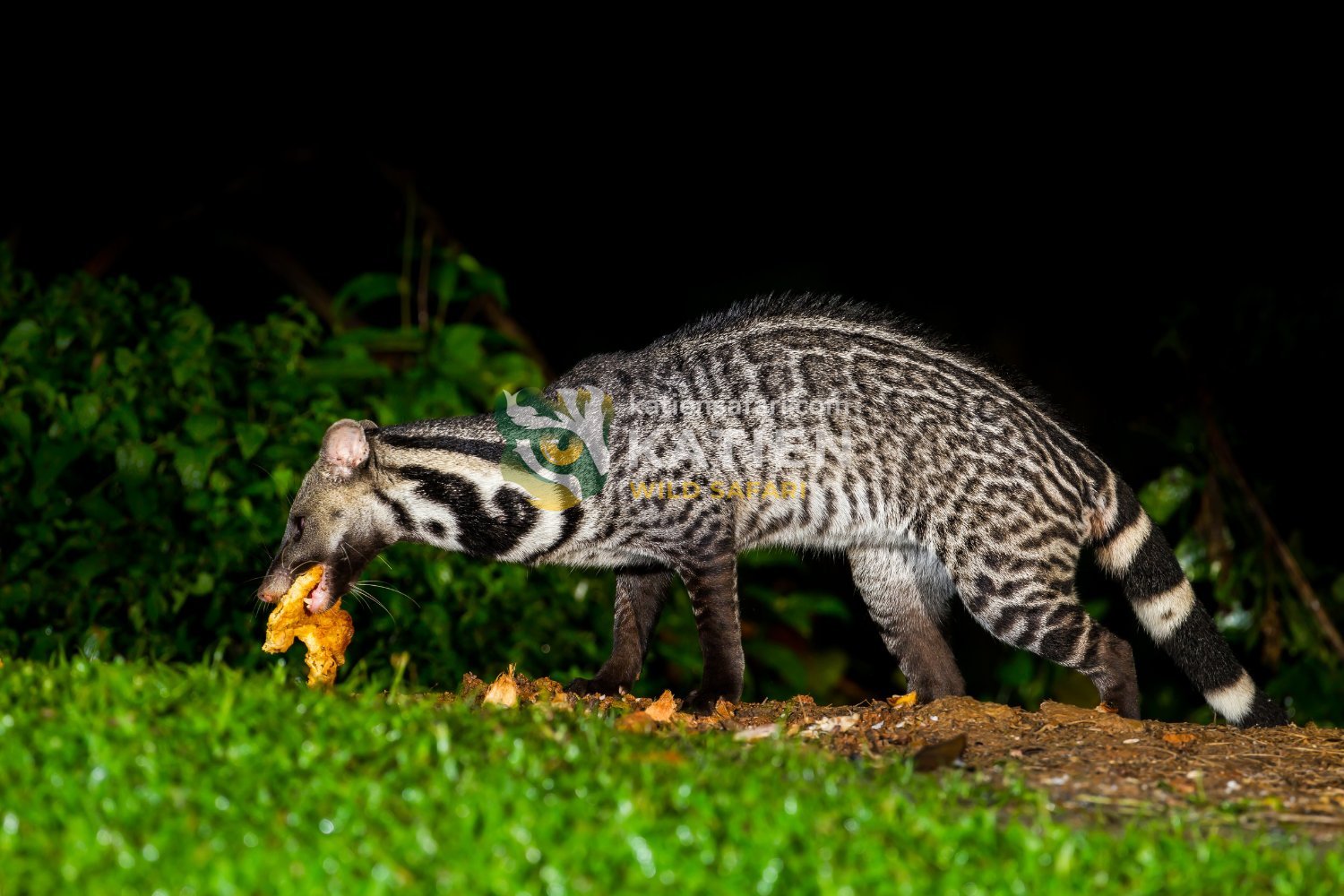
The large Indian civet hunts at night using sharp senses.
Subspecies With Uncertain Distribution
A number of names appear in older taxonomy but lack clear modern placement. These are considered subspecies with uncertain or unresolved distribution: P. h. bondar, P. h. laniger, P. h. nictitans, P. h. nigrifrons, P. h. nigripectus, P. h. pallens, P. h. parvus, P. h. pugnax, P. h. pulcher, P. h. sacer, P. h. scindiae, P. h. senex, P. h. setosus, P. h. simplex, P. h. vellerosus
Habitat & Global Distribution of Palm Civet
Habitat
The Palm Civet lives in a wide range of forest habitats. The species thrives in rainforests, evergreen forests, secondary forests, and even logged or disturbed woodland. As a mostly arboreal mammal, it sleeps in tree hollows or rock crevices during the day and becomes active at night.
Asian Palm Civet habitat flexibility allows it to survive from sea level to more than 2,200m. This adaptability also explains why the species often appears in orchards, plantations, and village edges. These diverse habitats form the core habitat of the Palm Civet in rainforests and beyond.
Global Distribution
The Palm Civet distribution range in Asia stretches widely across South Asia, Southeast Asia, and southern China. It is found in India, Nepal, Sri Lanka, and Bhutan through Myanmar, Thailand, Laos, Cambodia, and Vietnam, and across major islands such as Borneo, Sumatra, Java, and Bali. The species is also common throughout the Philippines.
Genetic studies show two main lineages: P. hermaphroditus in areas above 200m, and P. musangus in lowland forests below 200m.
Distribution in Vietnam
The Palm Civet in Vietnam is the most widespread civet species in the country. It occurs across all 3 regions and is native to the Indochinese peninsula. It is especially common in the southern provinces from Ninh Thuan to Long An.
In Vietnam, it uses many habitat types, primary forest, secondary forest, khop forest, tropical moist forest, and agricultural landscapes. Thanks to its tolerance of human-modified environments, it frequently appears in fruit gardens, farmland, and forest-edge villages.
Distribution in Cat Tien National Park
In Cat Tien National Park, the Palm Civet is recorded frequently, with 25 confirmed observations during the 2002 survey. Sightings came from many habitat types, including Bau Sau wetlands, forest along the Dak Lua road, and Nui Tuong grassland, showing its broad ecological tolerance.
Most individuals were active at night, but one was observed in daylight on a branch 3m above ground. Records also include a rare sighting of 1 adult with 4 juveniles, slightly above the usual litter size of 2 to 4. These observations highlight the species’ flexible use of both canopy and ground layers in Cat Tien’s diverse habitats.
Diet and Predator
Diet and Foraging Behavior
Palm Civets eat fruit as their main food source. They prefer ripe figs, palm fruits, sapodilla, mango, banana, rambutan, papaya, and even ripe coffee cherries.
What do Palm Civets eat besides fruit? They supplement their diet with birds, rodents, insects, eggs, small reptiles, snails, scorpions, and earthworms. In some regions like Singapore, grasshoppers make up a large part of their diet. Their teeth are not specialized for killing, which shows they are true omnivores rather than strict predators.
The Palm Civet hunting strategy is cat-like: they stalk prey quietly, hide in cover, then pounce. When feeding on fruit, they move through branches searching for ripe fruits at different forest levels. They may also dig for worms or feed on carrion when fruit is scarce.
Because they disperse seeds widely and help forest regeneration, Palm Civets are often considered an ecosystem indicator. Healthy civet populations usually reflect healthy fruiting forests and balanced nocturnal food webs.
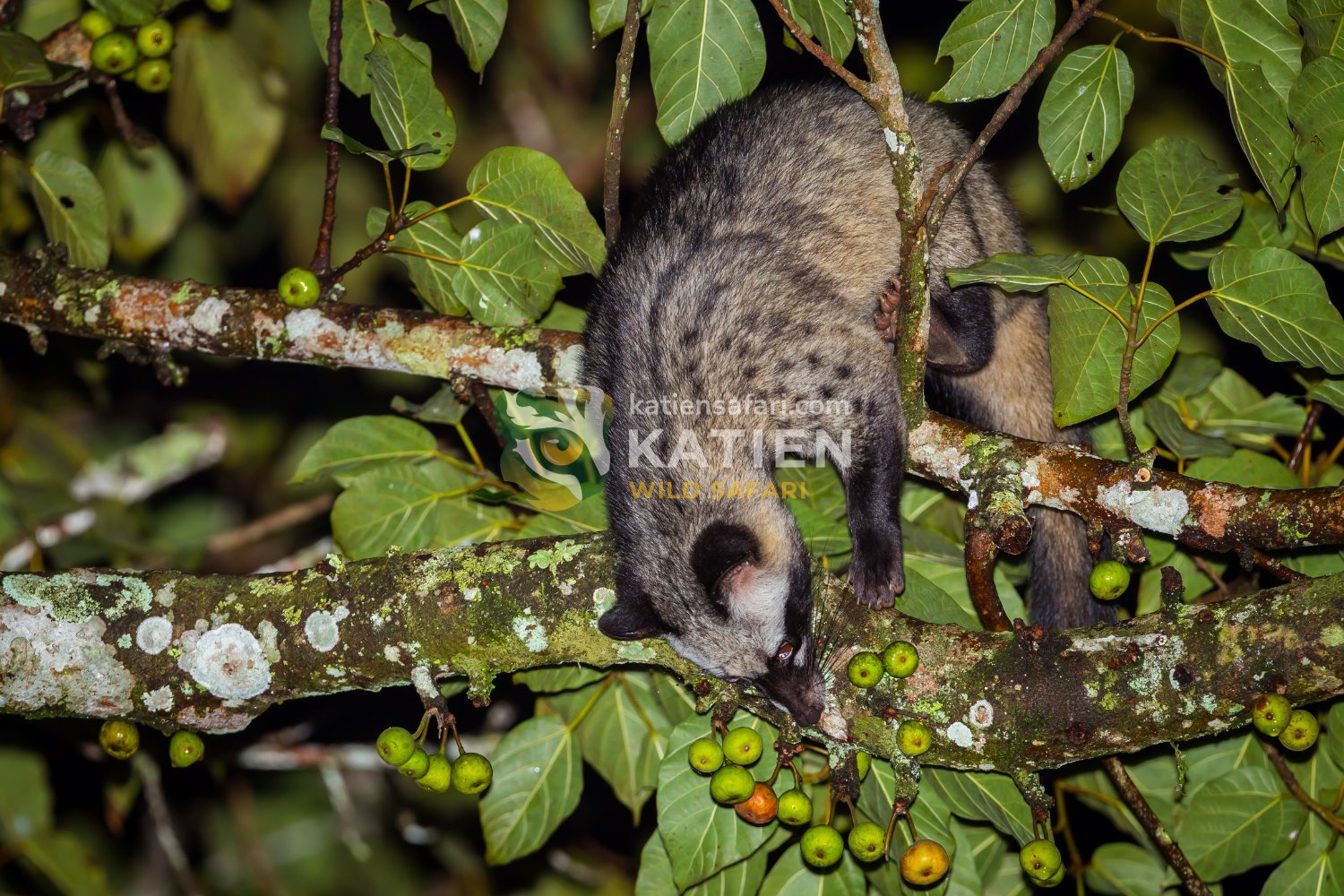
Palm civets feed on fruit, insects, and small animals in the wild.
Predators and Defense
Common predators of Asian Palm Civets include leopards, tigers, large snakes such as pythons, and tree-dwelling constrictors. In swamp forests, crocodiles pose an additional threat. Young civets are the most vulnerable due to their limited climbing ability.
Asian Palm Civets avoid danger mainly by staying in trees and being active at night, which helps them escape most ground predators. When threatened, they climb quickly to higher branches using their sharp claws.
Their strong perineal scent gland can release a sharp odor to keep predators away, and they rely on quiet, hidden movement to stay unnoticed. If approached too closely, they may curl their body to protect vulnerable areas and make soft growls or hisses as a warning.
Reproduction of Palm Civet
Reproduction
Palm Civet breeding season and cycle is flexible because the species can breed all year, although most young are born from October to December. The civet has an estrous cycle of about 82 days and may produce up to two litters each year. Pregnancy lasts around 60 days, and the female gives birth to 2 to 5 young in a tree hollow or rock crevice.
Palm Civets usually live alone, but during mating, they gather on one tree and may mate repeatedly for several days. Palm Civet territorial marking behavior plays an important role in reproduction. The scent gland at the perineal area helps individuals communicate information about sex, age, and readiness to mate. Palm Civet vocalizations and communication are simple; soft mewing or growling sounds often support scent marking during courtship.
Child Care
Palm Civet mother care for young is intense during the first weeks of life. The female gives birth in a safe cavity where the newborns remain hidden. The babies are born with closed eyes and weigh about 80 grams, so they depend entirely on the mother for warmth, protection, and milk.
They open their eyes after about 11 days and are weaned at around 2 months. Young civets only leave the den when they can climb safely. Although they reach physical independence at about 3 months, they are not sexually mature and continue to rely on the mother for some time.
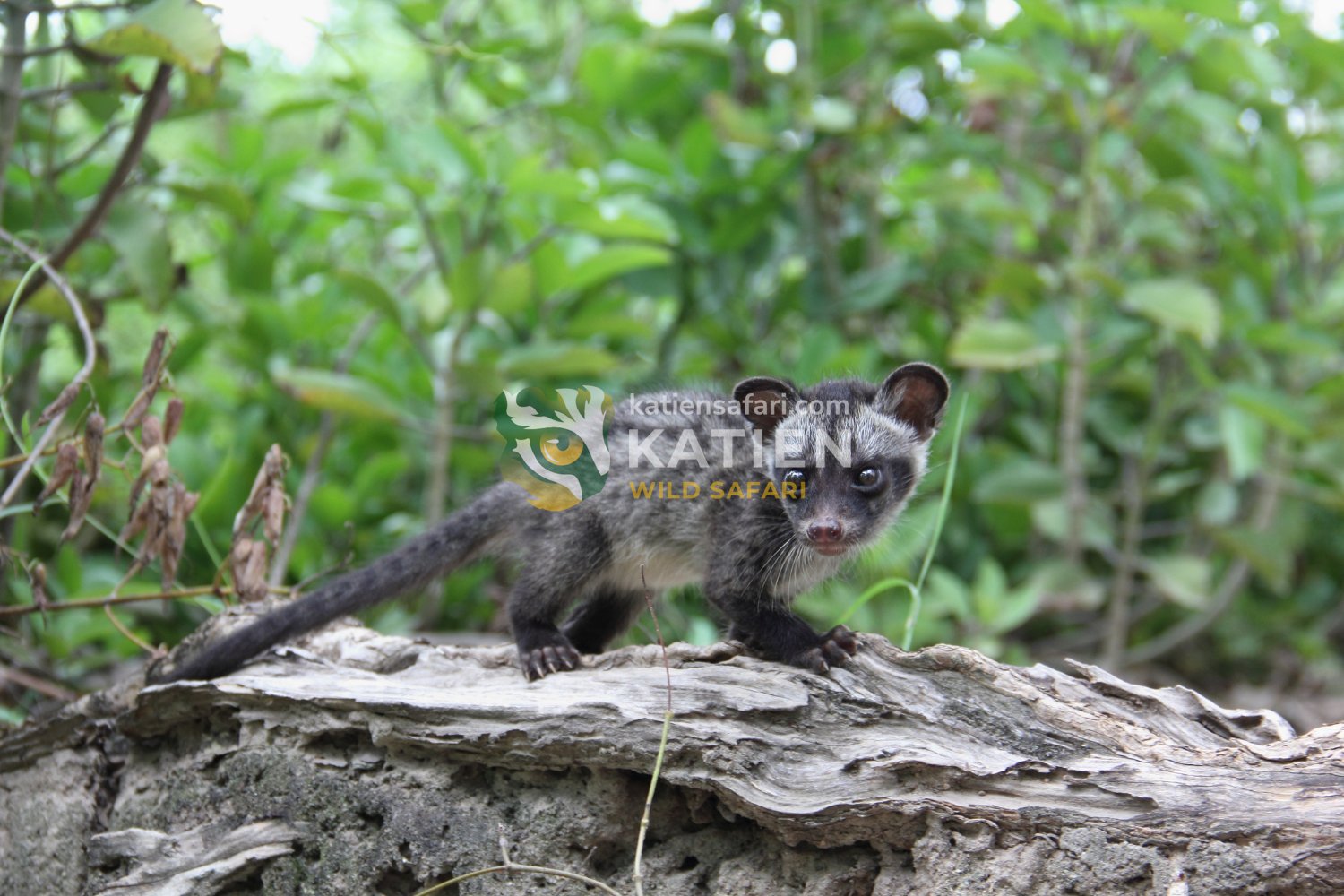
Baby civets open their eyes after several days of care.
Threat and Conservation
Conservation Status
The Asian Palm Civet is listed as Least Concern (LC) by the IUCN, mainly because it is widespread and highly adaptable. However, many local populations are declining due to human activities. Several conservation projects work to protect the species by studying wild civets, improving animal welfare, and educating communities about the risks of hunting and the kopi luwak industry.
In Indonesia, programs like the Little Fireface Project use camera traps to study civet behavior and teach local people about wildlife protection. Some centers test responsible captive breeding to reduce pressure on wild populations. In Cambodia, groups such as Wildlife Alliance rescue civets from illegal trade and release healthy individuals back into protected forests.
International campaigns also encourage travelers to avoid kopi luwak from captive civets and support stricter rules for animal welfare and wildlife trade.
Threats
The Asian Palm Civet faces several serious pressures despite being listed as Least Concern. The most serious threats to the Palm Civet population from farming come from the kopi luwak industry, illegal wildlife trade, and habitat loss.
Civet Coffee made by Palm Civets (Kopi Luwak) Industry
Kopi luwak started in the Dutch colonial period. Indonesian farmers were not allowed to pick coffee cherries from the plantations, so they collected the beans that palm civets dropped. These civets only ate the ripest and sweetest cherries, so the beans were already “hand-selected” by nature.
When the beans passed through the civet’s digestive system, enzymes and stomach acids reduced proteins that create bitterness. This made the beans smoother and more fragrant. After washing, roasting, and brewing, people discovered a special aroma and called it a “gift from the forest.”
Its unique taste comes from natural fermentation inside the civet’s stomach. Many people describe it as smoother, less bitter, and with notes of caramel, earth, or cocoa. The strange and rare origin, coffee beans, found after passing through a civet, also made it a curious, unforgettable story.
Because wild civet coffee is extremely rare, it became a luxury product with very high prices. Western media in the 1990s–2000s promoted it heavily, turning it into a “must-try” drink for travelers and coffee lovers.
However, its popularity led to mass farming. Many civets are kept in small cages and forced to eat coffee cherries, creating serious animal welfare problems. Today, about 90% of all kopi luwak on the market does not come from the wild, and some farms even mislabel their products to sell at higher prices.
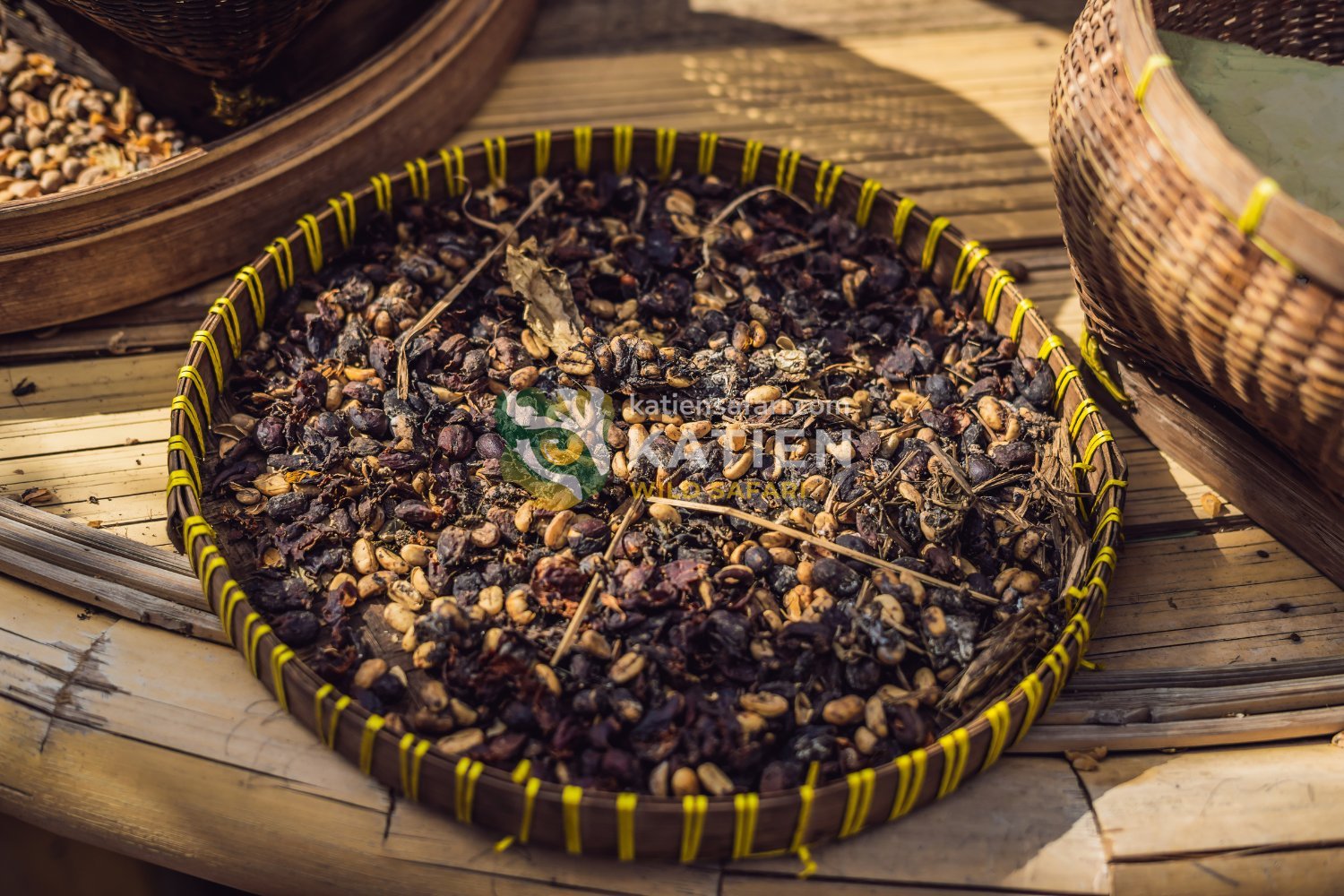
Kopi Luwak becomes famous because civets select the ripest cherries.
Illegal Trade
Palm Civet illegal trade and hunting are also major threats. Civets are taken from the wild for the pet trade, and many young animals are removed from their nests before they can survive on their own.
Habitat Loss
Deforestation and farmland expansion destroy natural forest habitat. In some areas, civets are also killed as pests when they enter orchards or farms.
Spotting the Asian Palm Civet in Cat Tien National Park with Katien Safari
Joining a small-group night safari with Katien Safari gives visitors a rare chance to see the Asian Palm Civet in its natural habitat. Small groups reduce noise, avoid forest disturbance, and help protect the delicate night-time ecosystem where this shy, nocturnal mammal lives.
With an experienced wildlife guide, you can observe the civet’s behavior from a safe distance, whether it is climbing between branches, foraging for fruit, or quietly moving through the canopy. Important notes when observing Palm Civets:
- Keep a respectful distance. Civets are easily stressed, so avoid getting too close or blocking their path.
- Use low-light or red-light settings. Bright flashlight beams can frighten or temporarily blind nocturnal animals.
- Stay quiet. Soft footsteps and low voices help increase your chances of seeing natural behavior.
- Do not use food to attract animals. Feeding wildlife can disrupt their diet and make them dependent on humans.
- Follow your guide’s instructions. They know the safe viewing spots and how to minimize impact on the forest.
- Leave no trace. Stick to the trail, avoid breaking branches, and bring back all trash.
Interesting Facts of Palm Civet
1. Although this coffee is called “weasel coffee,” the animal involved is actually the Asian Palm Civet, not a weasel.
2. Asian Palm Civets are also called “toddy cats” because they like to drink the sweet sap of sugar palm trees, which people use to make a fermented drink called toddy.
3. The scent they produce from their perineal gland smells like a mix of buttered popcorn and musk.
4. In many parts of Sri Lanka, Asian Palm Civets are seen as pests because they sometimes give birth and defecate on rooftops, and their loud calls at night can disturb people’s sleep.
5. Although they usually live alone, they gather on the same tree during the mating period and may mate continuously for 1 to 15 days.
6. Their brain has simpler folds than a dog’s, which fits their partly arboreal lifestyle and their habit of being active mainly at night.
Reference
- Amalo, F. (n.d.). The anatomy of Asian palm civet (Paradoxurus hermaphroditus) brain in Timor Island. Jurnal Riset Veteriner Indonesia (Journal of The Indonesian Veterinary Research). https://doi.org/10.20956/JRVI.V3I2.6690
- de Guia, A. P. O., Chavez, G. C. S., & Fernandez, D. A. P. (2020). Distribution and diet of the common palm civet (Paradoxurus philippinensis) in the Mt. Makiling Forest Reserve, Luzon Island, Philippines. Philippine Science Letters, 13(1).
- Rainforest Action Network. (n.d.). Wildlife Fact Sheet: Asian Palm Civet.
- Roberts, P. D. (2020). The Asian Palm Civet: Fundamental Baseline Findings in Ecology, Captive Husbandry and Effects of Trade in Civet Coffee.
- Wild Welfare. (n.d.). Asian Palm Civet: CFU Guide.
- Wildlife Alliance. (2025, February 19). The Asian Palm Civet: A Mysterious Nocturnal Mammal.
- Wozencraft, W. C. (2005). Order Carnivora. In D. E. Wilson & D. M. Reeder (Eds.), Mammal Species of the World (3rd ed.). Johns Hopkins University Press.