Did you know one of the world’s most loyal birds is the hornbill? These striking birds belong to the family Bucerotidae and live in sub-Saharan Africa, the Indian subcontinent, the Philippines, and the Solomon Islands. Naturalists admire them for their impressive size, bold colors, and unusual heavy bill. Hornbills are also famous for their extraordinary breeding behavior: the female seals herself inside a tree cavity while the male feeds her for months. With their loud calls, dramatic casques, and essential role as seed dispersers, hornbills remain one of the most fascinating species in tropical forests.
| Common name | Reticulated Python |
|---|
| Scientific name | Python reticulatus |
|---|
| Taxonomy
|
Kingdom: Animalia
Phylum: Chordata
Class: Reptilia
Order: Squamata
Family: Pythonidae
|
| Weight / Size | Usually 5–7 m; record 10 m; up to 75 kg. Hatchlings 40–50 cm. |
|---|
| Lifespan | Wild: 30–40+ years. Captive: up to 40+ years. |
|---|
| Population | Declining in many regions; Vietnam shows a drop of over 80% in 40 years. |
|---|
| Habitat | Tropical rainforests, evergreen forests, woodlands, grasslands; strongly tied to rivers, lakes, wetlands. |
|---|
| Range | South Asia; mainland Southeast Asia; Indonesia; Philippines; Singapore; Timor-Leste. |
|---|
| Diet | Rodents, birds, small reptiles; large adults eat civets, pigs, monkeys, goats, small deer. |
|---|
| Conservation status | CITES Appendix II; Critically Endangered in Vietnam. Least Concern (LC) (IUCN) |
|---|
Physical Appearance of Reticulated Python
The reticulated python is the longest snake in the world, usually 5–7 m, and the longest one ever found reached 10 m in 1912. It is the 3rd heaviest snake, reaching 75 kg, so it is lighter than both the green anaconda and the Burmese python, even though it is longer. This makes comparisons like reticulated python vs anaconda very common, especially when people talk about size and strength.
Female pythons grow larger than males. Males become mature at about 18 months and are usually 3 m long. Females need about 3 years and must reach at least 4 m. Hatchlings are small at only 40–50 cm, but they grow fast and can reach 3 m in their first year. This species can live for more than 40 years.
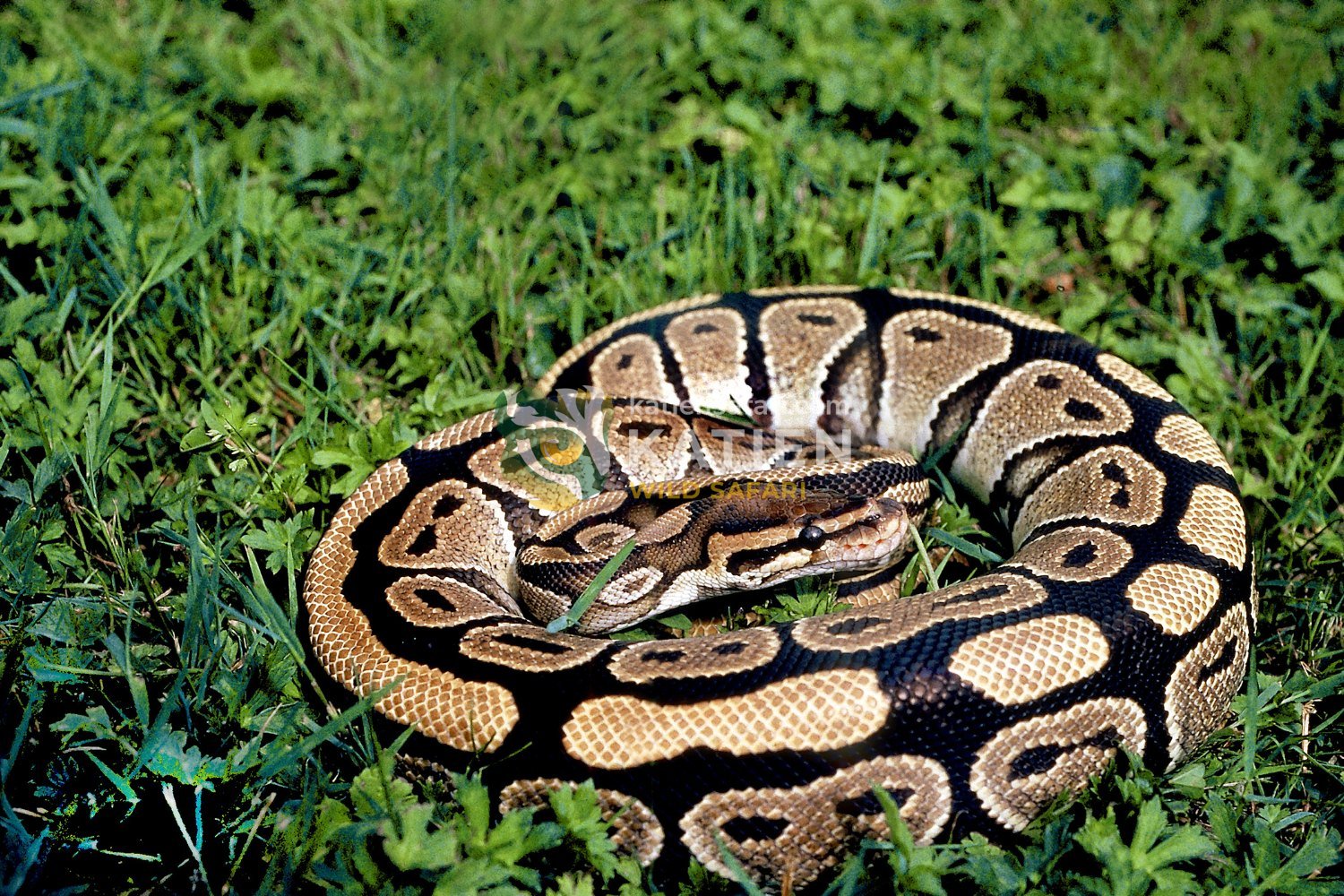
The name “reticulated” comes from its complex net-like pattern. The body shows black zig-zag lines mixed with yellow-brown and dark brown patches, with small white areas. The back has irregular diamond shapes, while the belly is pale yellow to white. These colours help it hide well in the forest, even with its impressive size and weight.
The head is long and narrow with orange eyes. Thin black lines run across the head, and the smooth dorsal scales form 69–79 rows. Heat-sensing pits on the lip scales allow the python to detect warm-blooded prey in the dark.
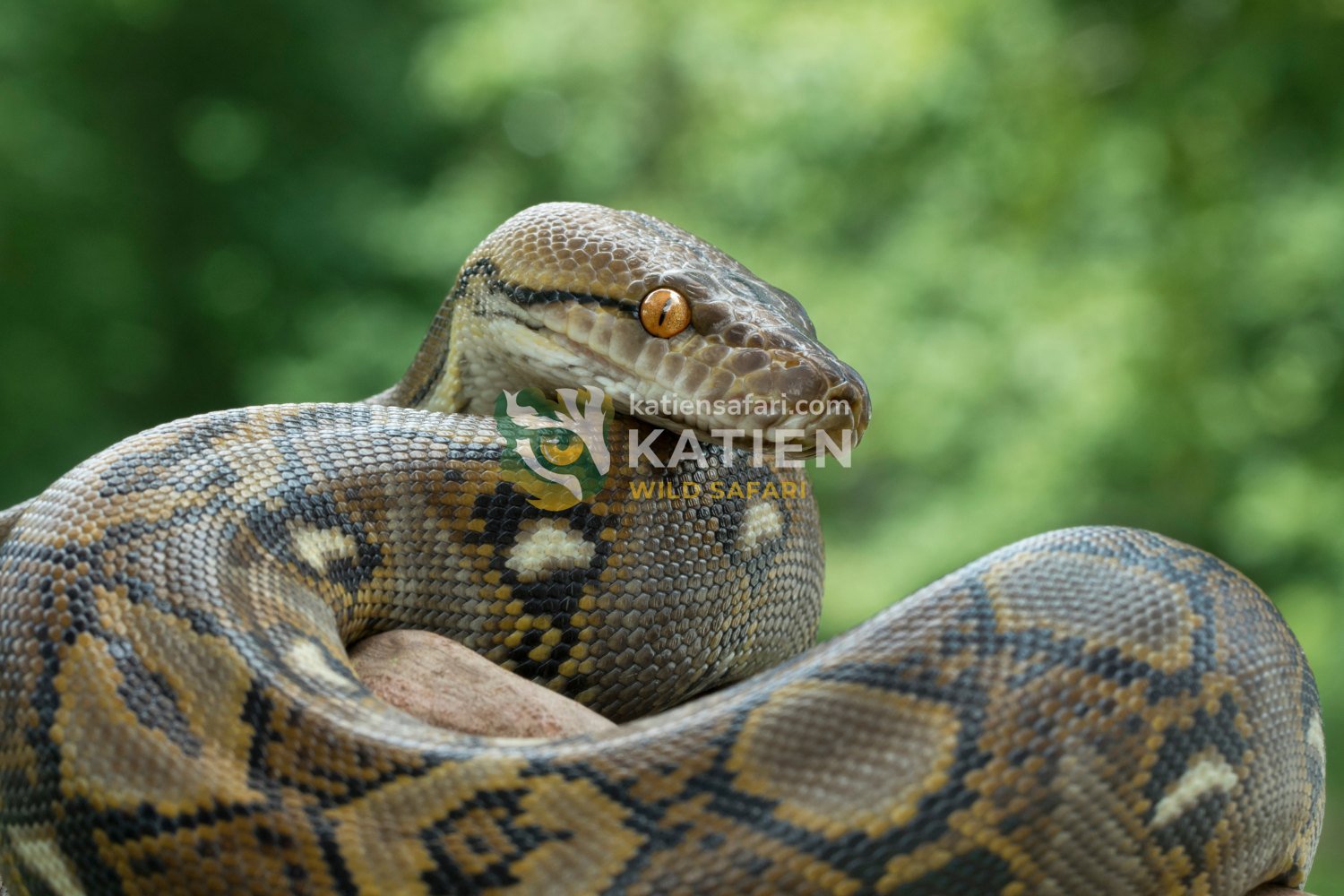
The reticulated python has a long body with gold and dark patterns.
Subspecies of Reticulated Python
There are three main subspecies in current Reticulated Python taxonomy. Each group has its own size, colour, and scale count, and they live in different parts of Southeast Asia.
Malayopython reticulatus reticulatus
This is the most widespread subspecies. It lives in Vietnam, Thailand, Malaysia, Myanmar, Sumatra, Java, and Borneo. It is also the largest group, and many adults grow well over 6 m. The body shows yellow, brown, and reddish earth tones, and the net pattern is dark but often soft and less sharp.
The eyes are bright orange, and the overall shape is long and slim. The scale count is moderate, with ventral and midbody scales not especially high or low compared to the two island forms.
Malayopython reticulatus saputrai
This subspecies has a very small range on Selayar Island and southwest Sulawesi. It is a true dwarf form and does not exceed 4 m. The body is shorter and thicker than the nominotypic group. Its colour is bright yellow to golden, with a strong and high-contrast black net pattern. It also has the highest scale count among all three subspecies. The golden eyes make this subspecies highly valued in the leather industry.
Malayopython reticulatus jampeanus
This snake lives only on Tanahjampea Island in the Selayar chain. It is the smallest of all, reaching only 2 m, and hatchlings are about 30 cm. Its colour is grey-brown or silver-brown with almost no yellow tones. The net pattern is faint and can disappear near the neck. It has the lowest scale count. Genetically, it is close to populations in the Sunda Islands and clearly different from saputrai.
Habitat and Distribution
Reticulated pythons occupy a wide range of habitats, including tropical rainforests, evergreen forests, dipterocarp forests, woodlands, and even grasslands. Although often associated with rainforest environments, they also survive well in drier habitats.
They prefer areas near water, rivers, lakes, swamps, and are powerful swimmers capable of crossing sea channels, contributing to their wide distribution. Highly adaptable, they occasionally appear near towns, drainage canals, and plantations.

It lives in rainforests, swamps, rivers, and near villages in Asia.
Global Distribution
The reticulated python has one of the widest ranges of any large snake, a point shown clearly in many distribution studies. It lives in South Asia, including the Nicobar Islands and Bangladesh. The species is also common across mainland Southeast Asia, such as Myanmar, Thailand, Laos, Cambodia, Vietnam, and Malaysia, and it appears in Singapore as well.
Its range extends across many island regions, including Indonesia (Sumatra, Borneo, Sulawesi, Java, Lombok, Sumbawa, Flores, Maluku) and the Philippines (Luzon, Mindanao, Palawan, Panay, Cebu). It is also present in Brunei and Timor-Leste.
Reticulated Python in Vietnam
The python is recorded from Hà Tĩnh in the north to Cà Mau in the south, including Quảng Bình, Thừa Thiên–Huế, Kon Tum, Gia Lai, Dak Lak, Khánh Hòa, Bình Thuận, Đồng Nai, Tây Ninh, HCMC, Long An, Kiên Giang, and more. Most sightings occur below 1000 m. One specimen (Chin Xai) contributed to genetic studies, highlighting the importance of Vietnam’s populations.
However, numbers have declined by more than 80% over the past 40 years due to hunting and habitat loss.
Reticulated Python in Cat Tien National Park
Reticulated Pythons are believed to live in Cat Tien National Park, even though the exact number of individuals is still unknown. The habitat here is ideal for them, with rivers, wetlands, and rich food sources.
Conservation teams continue to return rescued pythons to the wild. One example is a python released in Cat Tien after being confiscated from illegal trade in Binh Duong and rehabilitated at Cu Chi Wildlife Rescue Station. These efforts help strengthen the species’ presence in the park.
Diet and Hunting Habit
Diet of Reticulated Python
In the wild, Reticulated Pythons eat many types of animals, which matches the wide variety of habitats they use. Their diet includes mammals, birds, small reptiles, and sometimes amphibians. Smaller snakes under 3–4 m usually hunt rats, squirrels, and small birds that live near forest edges or farmland. Large adults over 5 m can take civets, wild pigs, monkeys, goats, and even small deer.
Thanks to their flexible skull and elastic jaw ligaments, they can swallow animals as wide as their own body. Rare but confirmed cases show that very large individuals have attacked humans in Indonesia, documented by forensic reports.
Feeding Mechanics
Because Reticulated Pythons live in the wild across many forests, their hunting style matches different environments. They are ambush predators that stay still along trails and rely on their net-like pattern for camouflage. They hunt mostly at night but may also strike at dusk.
With the help of heat-sensing pits, they can detect warm-blooded prey even in darkness. Once close enough, the snake strikes fast and wraps its body around the prey. Reticulated Pythons kill prey through constriction, not bone-breaking. The pressure blocks the heart and lungs, causing quick asphyxiation.
After the animal dies, the python usually swallows it head first. Digestion is helped by powerful enzymes that dissolve bones, fur, and soft tissue. A big meal can keep the snake full for weeks.
Their movement also supports hunting. Reticulated Python climbing ability helps them reach birds and mammals in low branches, while their strong swimming ability allows them to hunt or travel near rivers, lakes, and flooded forest.
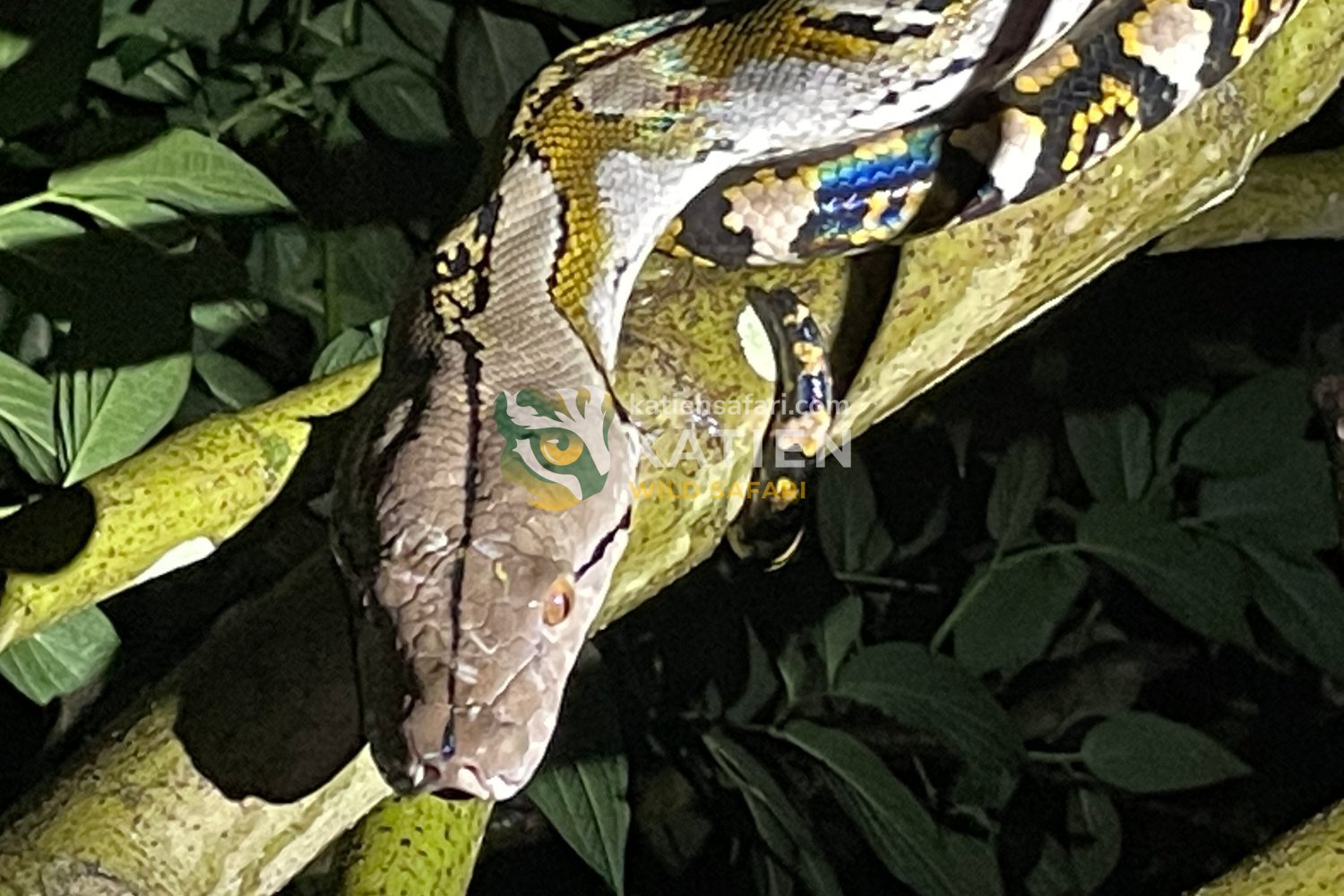
It hunts by ambush and kills prey by squeezing it tightly.
Predators of the Reticulated Python
Even though the reticulated python is one of the top predators in Southeast Asian forests, young snakes still face many threats. Hatchlings and juveniles under 2 m are hunted by large raptors, owls, Asian leopard cats, cobras, pythons, civets, mongooses, and especially water monitors, which also eat python eggs.
Medium snakes (2–4 m) may be attacked by feral dogs, large monitor lizards, or wild cats such as clouded leopards. Adults over 4–6 m have fewer enemies, but powerful predators can still kill them. King cobras may attack large pythons using their strong neurotoxic venom.
Crocodiles, saltwater, Siamese, and false gharials, are major natural threats. Clouded leopards and leopards can also kill adult pythons by targeting the head or neck.
Humans remain the greatest threat through hunting (skin, meat, and bile), conflict in farmland or cities, and road accidents in urban areas where pythons use drainage canals or water channels as part of their habitat.
Habit and Behaviour
The reticulated python is one of the strongest swimmers among tropical snakes. Its swimming ability allows it to move smoothly through rivers, lakes, and swamps by using the whole body to push through the water.
Thanks to this skill, many individuals can cross narrow sea channels and reach small islands, which explains why their geographic range is so wide. When threatened, especially younger snakes, they often slide quickly into the water and dive deep to escape.
These snakes often spend long periods soaking to control body temperature and reduce the weight they must carry on land. Water also helps them hide their large size from predators.
Besides swimming, the species is also an excellent climber. The Reticulated Python climbing ability comes from strong muscles that allow the snake to coil around tree trunks and push upward. This skill helps them hunt birds and small mammals from branches above. Many pythons rest high in trees during the day, especially near rivers where prey is common. In captivity, keepers must provide strong vertical branches to support these natural climbing behaviors.
Reticulated pythons are mainly active at night, making them a nocturnal species with a strong preference for nocturnal life. They hunt most actively after sunset, using ambush tactics and heat-sensing pits to strike prey that does not notice their presence in the dark.
It is mostly active at night, moving and hunting after sunset.
Reproduction and Life Cycle
Reproduction of Python reticulatus
Reticulated Python reproduction follows an oviparous cycle, meaning the species lays eggs and depends strongly on environmental temperature. The breeding season usually begins from September to November and may extend to March in some regions.
Females become ready to mate when they stop eating, a behavior linked to shorter days and longer nights. They reproduce slowly, with only one breeding event every 2–4 years. Mating happens mainly at night, and males may travel long distances to find a partner.
Reticulated Python egg laying does not involve building complex nests. Females choose tree hollows, caves, termite mounds, or rock crevices as laying sites. A single clutch is large, usually 15–80 eggs, and big females may produce close to 100 eggs. This is why many studies mention Reticulated Python clutch size as one of the highest among big snakes. The eggs have soft shells and need moderate humidity to prevent embryo dehydration.
The female wraps her body around the eggs in a behavior known as maternal brooding, helping keep the clutch warm. Incubation lasts 75–105 days, with an average of 88 days, and the best temperature is 31–32°C. During this period, the female does not eat and only leaves briefly to adjust body temperature. Males do not help with hatchling care.
Hatchlings and Growth Rate
Reticulated Python babies are usually 40–50 cm long at hatching, though some Sunda populations reach 60–83 cm. The island dwarf subspecies M. r. jampeanus is the smallest, with hatchlings under 30 cm. Young snakes become independent immediately after hatching.
Reticulated Python growth rate is very fast. With good food, juveniles may reach 3 m in their first year. Males reach sexual maturity at about 18 months, when they are around 3 m long. Females mature later, usually after 2.5–3 years, and must reach at least 4 m because reproduction demands large energy reserves. Adult snakes can live for 30–40+ years, giving them many breeding opportunities over their lifespan.
Threats and Conservation
Threats to the Reticulated Python
Reticulated pythons face many dangers today. In some areas, their numbers are getting smaller, and this makes people worry about their future. The two biggest threats are over-hunting and the loss of natural habitat.
1. Overexploitation & Trade
These pythons are hunted heavily in Indonesia, Malaysia, and the Philippines because their skin is valuable in the fashion industry. Their meat, fat, and gallbladder are also used for food or traditional medicine. Young snakes and rare color forms are collected for the pet trade. Hunters often target large adults, which weakens the whole population.
Even though international trade is regulated, illegal hunting and smuggling still happen. Many large cases were reported between 2019 and 2024, especially from Sumatra and Kalimantan.
2. Habitat Loss & Fragmentation
Reticulated Python habitat loss happens when forests are cut for rubber, coffee, and palm oil farms. Logging, mining, and road building also break the forest into smaller parts. River areas, where the python hunts often, are damaged by dams, pollution, and unusual water changes.
Conservation Efforts
The species now faces many serious threats in the wild. Because of this, several conservation efforts have been created to protect the remaining populations.
1. International Protection
The species has been listed under CITES Appendix II since 1975. Countries that export pythons must prove that trade does not harm wild populations. Some nations, like Singapore and Brunei, fully ban the capture of wild snakes.
2. Captive Breeding
Indonesia has started breeding programs to reduce pressure on wild snakes. Reticulated pythons reproduce well in captivity, and zoos use genetic records to keep healthy lines. Education programs also help reduce demand for wild-caught animals.
3. Habitat Protection
These pythons live in many protected areas across Indonesia. Rangers work to stop illegal hunting and restore forests and river habitats. Some regions are testing forest corridors to connect broken habitats.
4. Conservation in Vietnam
In Vietnam, the reticulated python is listed as Critically Endangered. The government controls hunting, transport, and trade. Priority actions include strengthening forest patrols, reducing illegal trade, and supporting legal breeding farms. Education and outreach also help reduce demand for python products.
Safety Tips When Seeing a Reticulated Python in the Wild
Katien Safari are working closely with the National Park Management Board to develop conservation programs for rare species such as the Reticulated Python. At the same time, Katien Safari plans to offer small-group safari experiences, giving visitors the chance to observe rare animals in a safe, respectful, and educational setting.
While encounters are rare, visitors in Cat Tien may still come across a Reticulated Python during nature walks or river activities. Here are some simple tips to stay safe and respect the animal:
- These snakes usually avoid humans and will retreat when disturbed.
- Keep a distance of 5–7 meters and avoid getting closer for photos.
- Do not touch, feed, or block the snake’s movement.
- Avoid shining strong lights directly at the animal.
- Inform your guide immediately if a python is nearby.
- Stay on marked trails and be cautious in tall grass or thick undergrowth.
- Let the snake cross the path without interference.
5 Interesting Facts of Reticulated Python
1. Reticulated pythons are one of the few snakes known to hunt and swallow adult humans. They are the only species with confirmed photos and videos of this.
2. Males sometimes gather and “combat wrestle.” They do not bite but wrap around each other and try to push the rival’s head down.
3. Their numbers grow well in palm-oil plantations because large rat populations give them plenty of food.
4. Reticulated Python has around 100 backward-curved teeth that work like tiny hooks, helping them grip prey firmly before the body begins to constrict.
5. Adult reticulated pythons shed about twice a year. Before shedding, their eyes turn cloudy blue and their vision drops, making them more defensive and likely to bite.
Reference
- Auliya, M., Mausfeld, P., Schmitz, A., & Böhme, W. (2002).
Review of the reticulated python (Python reticulatus Schneider, 1801) with the description of new subspecies from Indonesia. Naturwissenschaften, 89(5), 201–213. https://doi.org/10.1007/s00114-002-0320-4
- Kusrini, M. D., Fauzi, M. A., Riyanto, A., Sidik, I., Mumpuni, Anita, S., Herlambang, A. E. N., Rini, R. L., Chandradewi, D. S., Nugroho, J., Rahmawati, E., & Hamidy, A. (2025).
Non-detrimental findings for reticulated python (Malayopython reticulatus) in Indonesia.
Secretariat of Scientific Authority for Biodiversity, National Research and Innovation Agency (BRIN); Directorate General of Nature Resources and Ecosystem Conservation, Ministry of Forestry.
- Murray-Dickson, G., Ghazali, M., Ogden, R., Brown, R., & Auliya, M. (2017).
Phylogeography of the reticulated python (Malayopython reticulatus ssp.): Conservation implications for the world’s most traded snake species. PLoS ONE, 12(8), e0182049. https://doi.org/10.1371/journal.pone.0182049
- Nguyễn, Q. T. (2023). Malayopython reticulatus. In Danh lục Đỏ Việt Nam.
- Natural History Museum. (n.d.). Osterloff, E. What is the biggest snake in the world? https://www.nhm.ac.uk
- PetMD Editorial. (2016, March 30). Reticulated python (Python reticulatus). PetMD. https://www.petmd.com