At sunrise, a deep call echoes through the forest, followed by a rising, musical reply. Together, the two voices blend into a powerful morning duet. This is the signature song of the Yellow-cheeked Gibbon, one of the most fascinating lesser apes of Southeast Asia. Known for their bright cheek patches, incredible tree-swinging skills, and strong family bonds, these gibbons bring the forest to life with their unique behavior and striking appearance.
In this article, you will discover who they are, where they live, why their calls matter, and what makes the Yellow-cheeked Gibbon such a special species worth protecting.
| Common name | Yellow-cheeked Gibbon |
|---|
| Scientific name | Nomascus gabriellae |
|---|
| Taxonomy
|
Kingdom: Animalia
Phylum: Chordata
Class: Mammalia
Order: Primates
Family: Hylobatidae
|
| Weight / Size | Body length: 60–80 cm. Weight: 6–10 kg; Very long arms; no tail. |
|---|
| Lifespan | Wild: ~30–40 years. Captive: up to 50 years. |
|---|
| Population | Largest populations in Cambodia; declining overall due to hunting and habitat loss. |
|---|
| Habitat | Tropical evergreen and semi-evergreen forests; lowland and mixed forests with closed canopy. |
|---|
| Range | Eastern Cambodia; southern and central Vietnam; historically southern Laos. |
|---|
| Diet | Mainly frugivorous, fruits and figs (~80%); also flowers, young leaves, and insects. |
|---|
| Conservation status | Endangered (EN) – IUCN Red List; Group IB protected species in Vietnam. |
|---|
Physical Characteristics of the Yellow-cheeked Gibbon
The Yellow-cheeked Gibbon is a small and slender primate. Its body length is about 60–80 cm, and it usually weighs 6–10 kg, which makes it light and very agile in the forest.
Its arms are very long, while its legs are much shorter. This body shape allows the gibbon to swing easily from branch to branch. Like other members of the Hylobatidae family, it does not have a tail, and it often keeps its body straight when sitting or standing on tree branches.
The fur is thick, soft, and smooth. The color changes as the gibbon grows. Newborns are yellow, but they turn black when they get older.
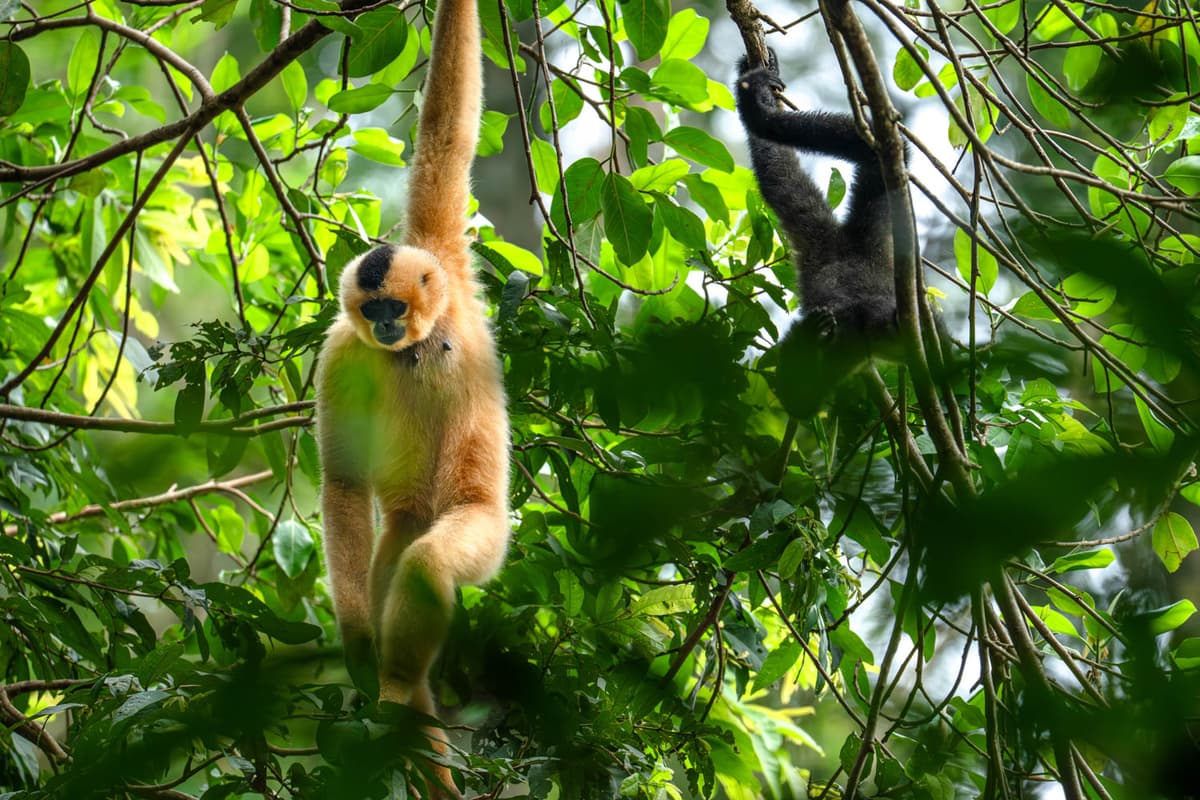
Adult males have jet-black fur with a slightly brown chest. Their most special feature is the pair of bright yellow or orange cheek patches on both sides of the face. Adult females look very different. They have light yellow to orange fur, and their face and cheek area are also yellow, giving them a softer and brighter appearance.
Both males and females have a crest of hair on the top of the head. The male’s crest is taller and sharper, while the female’s crest is smaller and darker. The cheek area forms a wide fan-shaped patch, creating the clear yellow “cheek mask” that gives the Yellow-cheeked Gibbon its name.
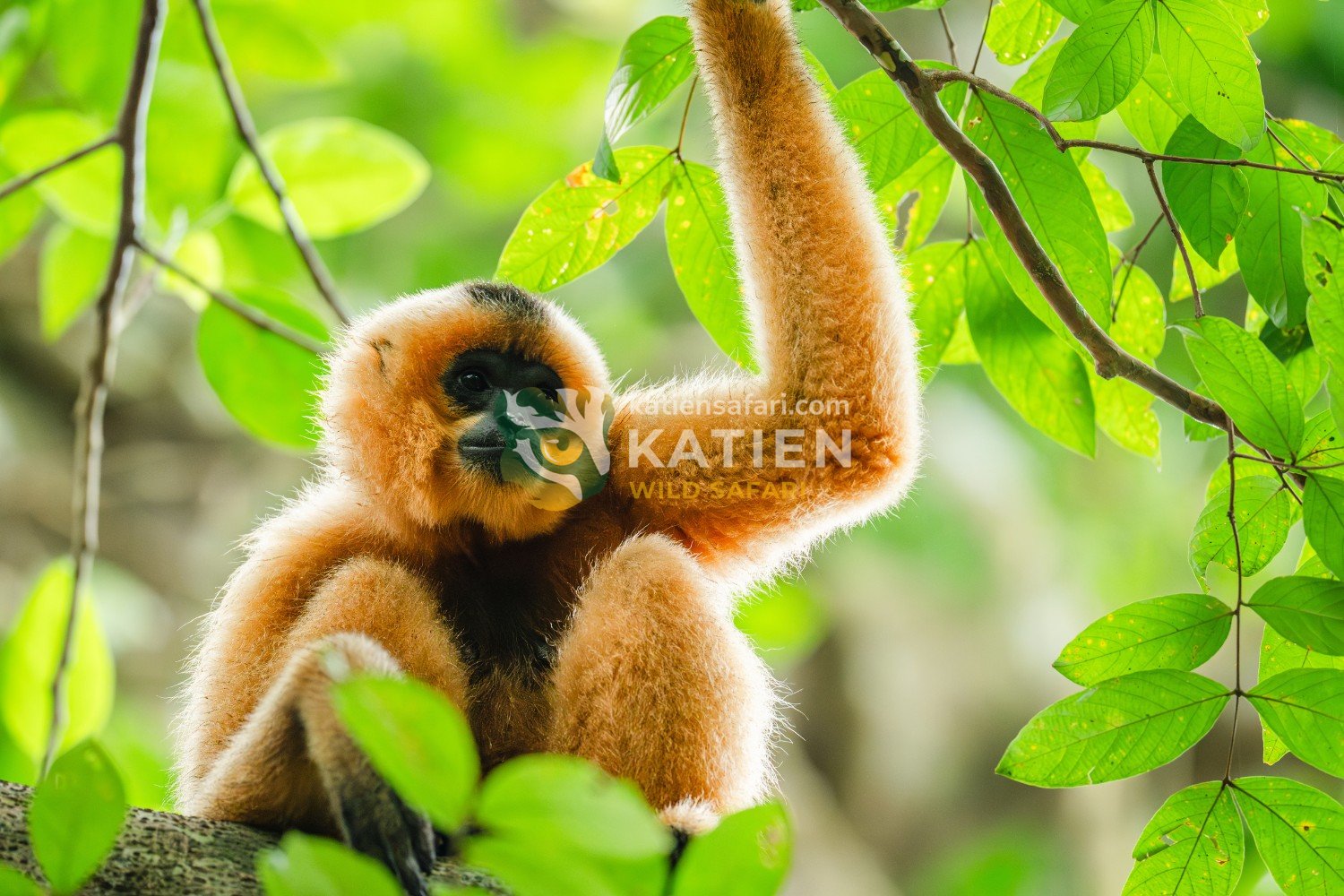
The gibbon shows golden cheeks and a slender, agile body.
Global Distribution and Habitat
Global Distribution
The Yellow-cheeked Gibbon lives in Southeast Asia, mainly in eastern Cambodia and southern Vietnam. This area is part of the Indochina region, where lowland tropical forests remain. Most groups live east of the Mekong River, in evergreen forests that are still large and connected.
In the past, the species may have reached southern Laos, but today there are very few records and no strong evidence of stable groups.
Cambodia has the largest population, especially in the Seima Forest Reserve, which many scientists describe as the global center for the species.
When looking at the Yellow-cheeked Gibbon distribution map, the core area always appears in Cambodia and southern Vietnam.
Habitat
The Yellow-cheeked Gibbon habitat is the tropical forest canopy. The species lives almost entirely in the trees and rarely comes to the ground. It prefers evergreen forests, semi-evergreen forests, and mixed lowland forests with thick canopies and tall trees.
These forests offer safe sleeping sites, stable food sources, and strong branches for brachiation. Gibbons can live in different forest types, but they use dry deciduous forests less often if there is no green forest nearby.
They are found from about 100m - 900m in elevation, but their numbers become lower in cold highland areas. This makes the species a good example of how important tropical forest habitat for gibbons truly is.
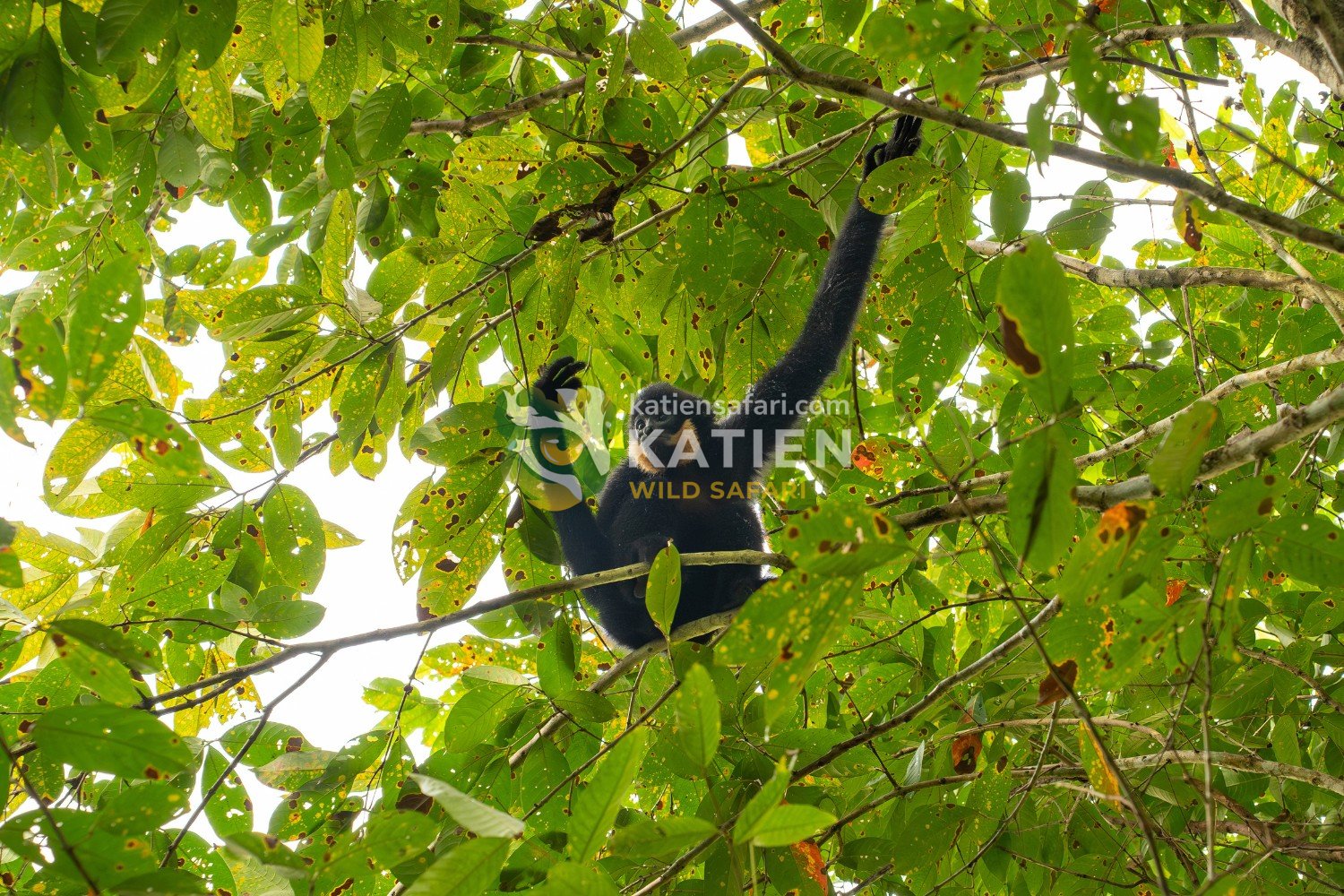
Yellow-cheeked gibbons favor high canopy zones.
In Vietnam
Vietnam is home to the southernmost population of the Yellow-cheeked Gibbon. The northern limit reaches Ayun Pa in Gia Lai, and the southern limit reaches Nui Ong in Binh Thuan. Suitable habitat covers a wide area across the Central Highlands and south-central Vietnam, with an estimated potential range of about 77,000 square km.
More than half of all gibbons found in Vietnam are Yellow-cheeked Gibbons, so the species is very important for primate conservation here. Large and stable groups live in Chu Yang Sin National Park, Bu Gia Map National Park, and Bidoup–Nui Ba National Park. These protected areas form a continuous habitat that supports the species in the long term.
When talking about gibbons in Vietnam national parks, the Yellow-cheeked Gibbon is always one of the key species.
In Cat Tien National Park
The Yellow-cheeked Gibbon in Cat Tien National Park represents one of the strongest populations in Vietnam. The park is home to more than 500 individuals and hundreds of family groups. Surveys have recorded around 149 groups living across both the northern Cat Loc area and the southern Cat Tien area.
Cat Tien has large evergreen and semi-evergreen forests, which offer a safe and stable home for the species. These forests support feeding, movement, and territorial calling every morning. Cat Tien also acts as an anchor point that connects gibbon populations across the wider region, including Dong Nai, Bu Gia Map, and the Vinh Cuu Reserve.
Its role makes Cat Tien one of the most important protected areas for the Yellow-cheeked Gibbon in the entire Indochina region.
Diet and Behavior
Diet
The Yellow-cheeked Gibbon is mainly a fruit-eater. Its diet depends strongly on ripe fruits and figs found in healthy tropical forests. In Cat Tien National Park, studies show that the diet includes about 43% fruits and 39% figs. The rest is a small amount of flowers, young leaves, and insects for extra nutrients.
Because they prefer soft and sweet foods, gibbons rely on forests that can produce fruits throughout the year. Their limited use of leaves means they need stable fruiting trees in their home range. As they eat and drop seeds across the forest, they play an important role in seed dispersal and natural forest regeneration.
Their diet also changes with the seasons. During the dry months, they spend more time searching for ripe fruits and switch to young leaves or flowers when fruits are less available. Seasonal changes in food shape how long they search for food and how they choose feeding trees. This flexibility helps them survive in forests with different fruiting patterns.
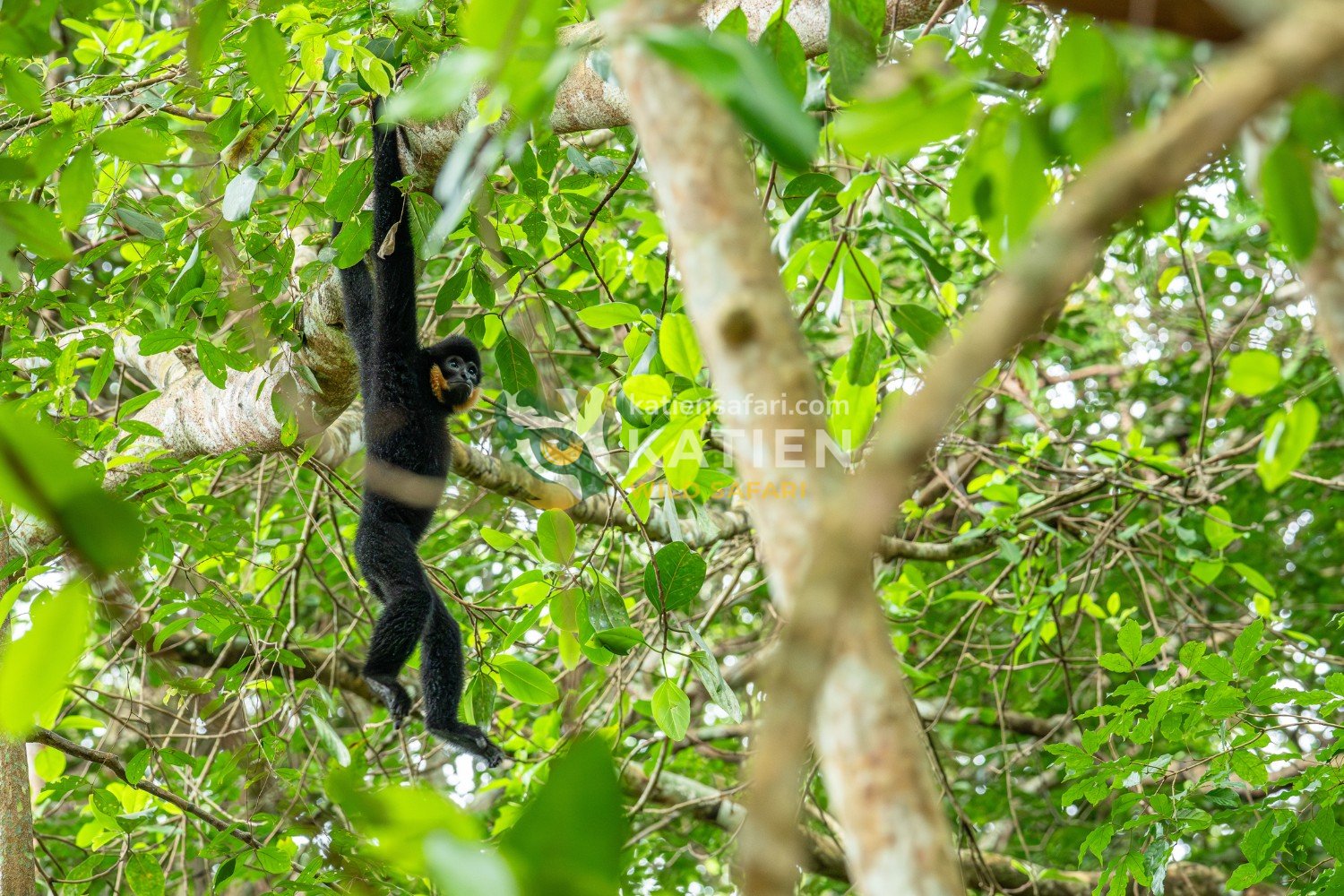
Gibbons move swiftly through treetops at sunrise.
Activity Pattern
The Yellow-cheeked Gibbon is active during the day and follows a very stable daily routine. Each family wakes up at dawn, leaves the sleeping tree, and begins the first movements of the day. Morning is the time when they are most energetic, spending many hours moving, socializing, and caring for their young.
They rest in the middle of the day when the forest becomes hotter, then continue light activities in the afternoon. Before sunset, the family returns to a tall and safe tree to sleep. Their schedule changes slightly with the weather and season, but the basic pattern stays the same.
Gibbons move mainly by brachiation, the classic swinging motion using their long arms. This style of movement helps them travel quickly and safely through the canopy without going to the ground. Their bodies stay upright while their arms move from branch to branch, giving them impressive speed and balance.
Their daily travel pattern follows the needs of the family rather than food pressure alone. Adults lead the movement, and young gibbons follow closely to learn safe routes in the forest.
Vocal Communication
Communication is one of the strongest social traits of this species. Each morning, the male and female perform a duet that can be heard across the forest. These duets help maintain pair bonds and signal to neighboring groups that the territory is occupied.
The female produces the great call, a long and rising sequence of notes. The male joins with shorter and deeper sounds that fill the gaps in her call.
Besides singing, gibbons use body posture, facial expressions, and soft calls to guide their young, show comfort, or warn about danger. Each family has a call pattern that other gibbons recognize, creating a natural “acoustic identity” for the group.
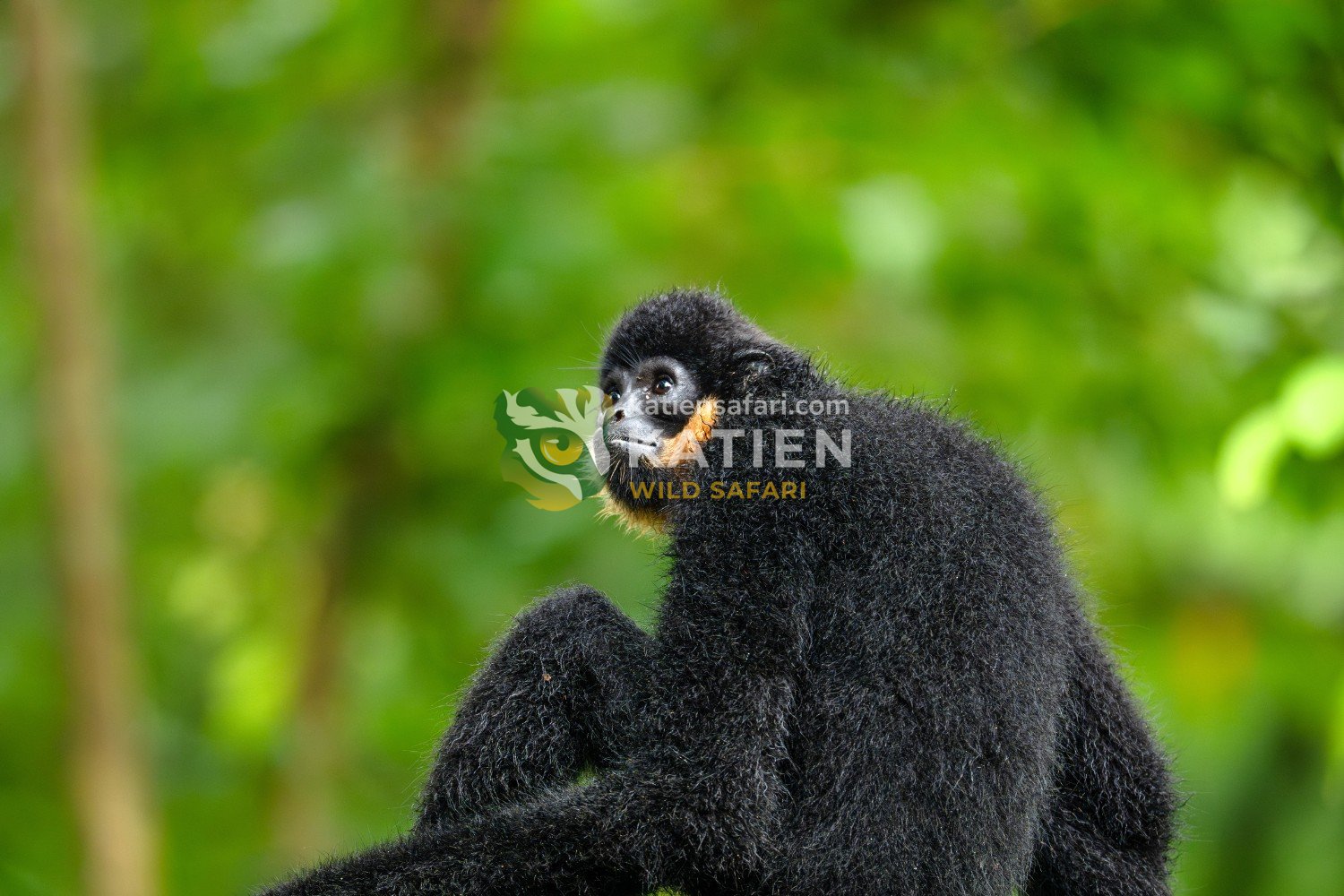
Their powerful songs rise over dark-furred silhouettes.
Reproductive Biology of the Yellow-cheeked Gibbon
Family Structure & Pair Bonding
The Yellow-cheeked Gibbon lives in a small nuclear family that includes 1 adult male, 1 adult female, and their young. These family groups are very stable, and the adults stay close together throughout the day.
This species is monogamous. A male and a female form a long-term pair bond and usually stay together for life. They travel, rest, and protect their territory as a pair. If one partner dies, the remaining adult often lives alone and does not form a new pair.
A typical group contains 3–6 individuals, depending on how many young are still living with the parents. Gibbons reproduce slowly. They reach sexual maturity at around 7–8 years old, and females can give birth once every 2 years, usually to 1 infant each time.
Infant Care & Development
Gibbon mothers give long-term care to their infants. During the first 1 year, the infant stays with the mother almost all the time. As it grows, it begins to practice climbing, learn simple calls, and explore the canopy while staying close to the parents.
Young gibbons remain dependent for about 3 years before becoming more independent, although they still live inside the family group until they reach maturity.
Young females often stay near their birth area, which helps create stable social connections across generations. Young males usually leave the area once they become adults to find a mate and start their own family group.
Threats and Conservation
The Yellow-cheeked Gibbon plays an important role in tropical forest ecosystems. It is one of the main fruit-eating primates, and it helps spread seeds across large areas every day. By carrying seeds far from the parent tree, the gibbon supports forest regeneration and keeps the forest healthy.
Because the species is very sensitive to changes in the environment, it also serves as an ecological indicator. Its presence or decline reflects the overall health of natural forests.
The Yellow-cheeked Gibbon is listed as Endangered (EN) on the IUCN Red List. In Vietnam, it is placed in Group IB, the highest legal protection level.
Even though it is the most common gibbon species in Vietnam, it is still declining in many areas due to hunting and habitat loss. The EN status means the species faces a very high risk of extinction in the wild if current threats continue.
Major Threats
Hunting with guns is the most serious threat. Gibbons stay high in the canopy and are easy to spot, so they are often the first species to disappear in exploited forests.
The capture of infants for the pet trade is another major problem. To take one baby, hunters often kill the mother, meaning each traded infant represents several lost individuals.
Habitat loss from logging and agricultural expansion creates fragmented landscapes. This reduces suitable habitat and isolates family groups.
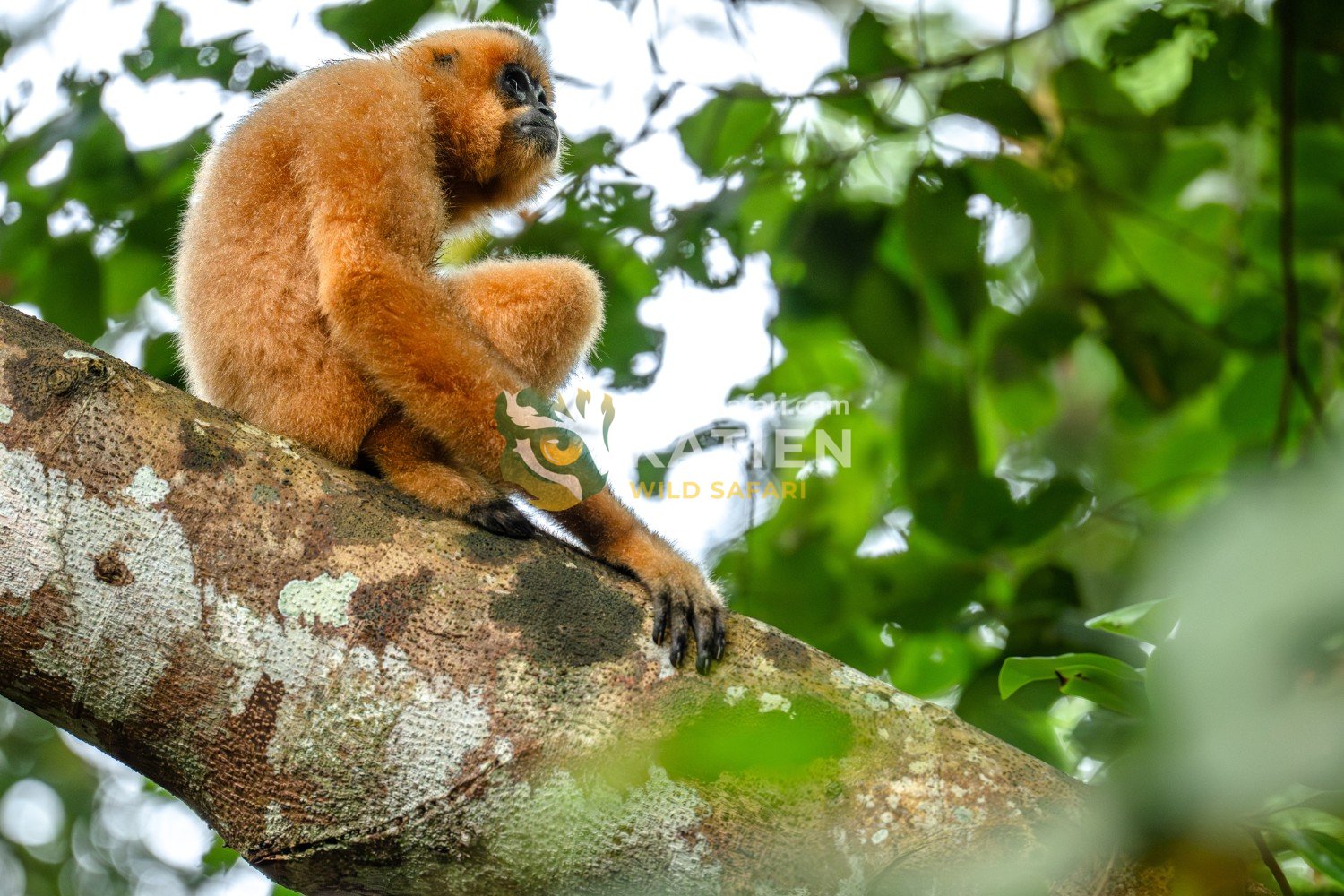
Gibbons start their day with early canopy travel.
Climate change is expected to shrink the species’ range by 40 to 66%, pushing gibbons to higher elevations where the forest is cooler and more fragmented. If this continues, long-term survival will become even more difficult.
Conservation
Many populations are now separated into small, isolated groups. These groups cannot support themselves over time and face risks of inbreeding and genetic decline.
Key conservation actions include:
Cross-border protection: Vietnam and Cambodia protect connected forests, including Bu Gia Map, Phnom Prich, and Seima, which hold the largest population of the species.
Seima monitoring program: Rangers in Seima run patrols, reduce hunting, and track gibbon groups over many years.
Dao Tien Rescue Center: The center rescues injured or confiscated gibbons, cares for them, and releases healthy individuals back to the forest.
Vietnam–China cooperation model: A joint project for the Cao Vit Gibbon shows how cross-border teamwork can help protect rare gibbon species...
Gibbon Watching in Cat Tien: A True Jungle Experience
Cat Tien National Park is the best place in Vietnam to observe the Yellow-cheeked Gibbon. The park is home to the largest population in the country, with more than 500 individuals. Katien Safari offers small-group wildlife observation tours to ensure responsible viewing and support conservation efforts.
Early morning, around 5:30 a.m., is the ideal time to hear the gibbon duet and watch the family wake up in the forest canopy. Most tours are led by forest rangers or trained local guides who understand gibbon behavior and follow strict wildlife-watching rules.
Visitors follow the morning calls to find the area where the family is moving through the trees. All observation takes place in natural forest habitat, without disturbing the animals. Yellow-cheeked Gibbons are shy and keep a natural distance from humans, which helps reduce any negative impact from tourism.
The main principle of eco-tourism here is to watch, not touch, and not interfere with the animals, especially during the breeding season. Visitors can also learn to tell males and females apart by their different calls, making the experience more educational and meaningful for conservation awareness.
5 Interesting Facts of the Yellow-cheeked Gibbon
1. Yellow-cheeked Gibbon belong to the group of tailless primates, like humans and chimpanzees, but they are much smaller, so they are called lesser apes.
2. The Southern Yellow cheeked Gibbon is the most common gibbon in Vietnam and makes up more than half of all gibbons in the country. Its large population gives it a lower extinction risk than other gibbon species.
3. This gibbon lives its entire life in the trees and almost never goes to the ground. Ground traps or snares do not affect it much.
4. It looks almost the same as the Central Yellow cheeked Gibbon even though they are not the same subspecies.
5. Many people think there are two different species because they see two coat colors. In reality the male and the female have different colors but they are the same species.
Reference
- Cao, T. H. N., Le, M., & Nguyen, T.-A. (2021). Modeling the distribution of the Southern Yellow-cheeked Gibbon (Nomascus gabriellae) using Maxent. Vietnam Journal of Science and Technology, 59(5), 589–600. https://doi.org/10.15625/2525-2518/59/5/15890
- Dang, N. X., & Vinh, N. X. (2011). Community-based monitoring of southern yellow-cheeked gibbon (Nomascus gabriellae) in Da Te forest, Lam Dong Province, central Vietnam. Vietnamese Journal of Primatology, 5, 47–53.
- Geissmann, T. (1995). The Yellow-cheeked Gibbon (Hylobates gabriellae) in Nam Bai Cat Tien (Southern Vietnam) revisited. Primates, 36(3), 447–455.
- Hai, B. T., Chen, J., Tiwari, A., & Duc, H. M. (2020). Ranging behavior of the southern yellow-cheeked gibbon (Nomascus gabriellae) in response to food resources and environmental variables. Vietnamese Journal of Primatology, 3(2), 1–22.
- Hien, N. T. T., & Binh, N. T. (2024). An overview of the yellow-checked gibbon (Nomascus gabriellae Thomas, 1909). TDMU Journal of Science, 6(02), 207–213. https://doi.org/10.37550/tdmu.EJS/2024.02.547
- Piskovska, P., Piskovsky, V., & Cheyne, S. (2025). Conservation of southern yellow-cheeked gibbons (Nomascus gabriellae) in the Anthropocene [Preprint].
- Rawson, B. M., Insua-Cao, P., Ha, N. M., Thinh, V. N., Duc, H. M., Mahood, S., Geissmann, T., & Roos, C. (2011). The conservation status of gibbons in Vietnam. Fauna & Flora International/Conservation International.