Table of Content


Have you ever heard of a thin piece of steel wire hidden under dry leaves that can kill a wild animal without making a sound? This is the danger of wire snares.
Across Vietnam’s forests, these hidden traps have become one of the most serious threats to wildlife. They are small, cheap, and difficult to see, but their impact can be devastating. Many animals, including rare and endangered species, can be injured or killed by a single snare left behind in the forest.
So why are wire snares so deadly, and what can be done to reduce the snare crisis? In this article, Katien Safari explains how wire snares work, why they are harming Vietnam’s forests, and how conservation efforts and responsible tourism can help protect wildlife.
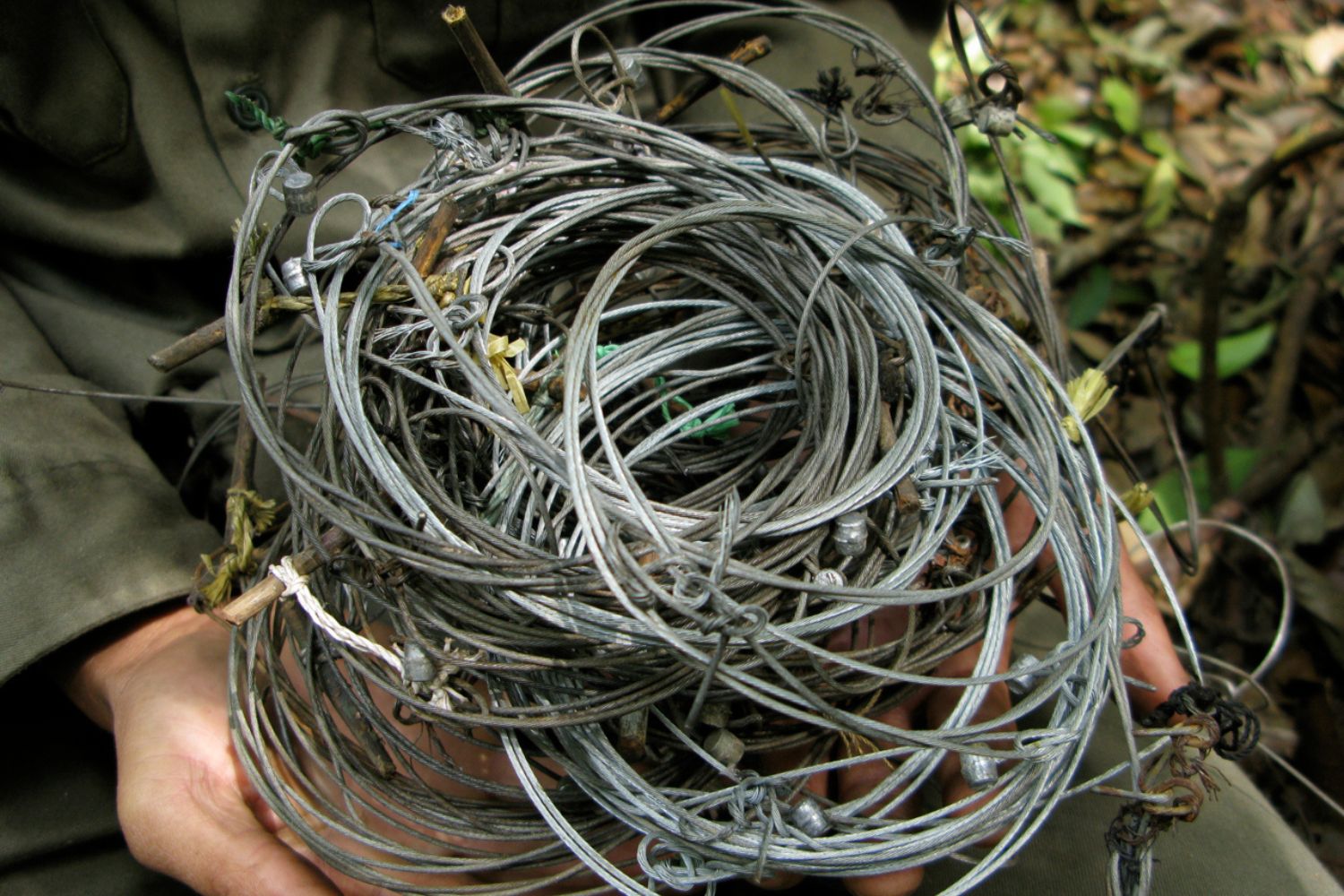
A wire snare is a simple loop trap, usually made from strong steel wire or cable. It is often placed along animal trails, near feeding areas, or in places where wildlife moves through dense vegetation. Once hidden under leaves, roots, or forest plants, it can be very difficult to notice.
When an animal steps into the loop or passes through it, the wire tightens around its leg, body, or neck. The more the animal struggles, the tighter the snare becomes. In many cases, the animal cannot escape without human help. Because wire snares cost very little and take little effort to set, one poacher can place many snares in a short time. This makes them one of the most destructive forms of trapping used in illegal hunting.
The Fight to Stop the Snare Crisis is a race against time to save endangered wildlife from silent killers.
Snares do not choose their victims. They can catch almost any animal that walks through the forest, from wild boars, deer, civets, and badgers to rare and endangered species. Young animals are also at risk because they may not be strong enough to break free or survive for long after being trapped.
The injuries caused by snares are often severe. Small animals may be caught around the neck and die quickly from suffocation. Larger animals, such as deer, wild boars, or bears, may suffer for days. The steel wire can cut deep into their skin, causing open wounds, infection, broken limbs, and slow death from pain, hunger, thirst, or exhaustion.
One of the most dangerous things about wire snares is that they can stay active in the forest for years. Steel cables can remain hidden and continue to kill wildlife long after the person who set them has left. Even forgotten snares can become deadly traps for any animal that passes by.
For this reason, anti-poaching patrols often spend many hours searching for hidden snares before they harm more wildlife. But finding them is extremely difficult. A single snare can be covered by leaves, roots, or mud, and may look like nothing more than part of the forest floor.
The forests of Southeast Asia may look peaceful, but many protected areas are facing a serious hidden threat: wire snares. These simple loop traps are often made from steel wire and placed under dry leaves or along animal trails, where they can remain active for a long time.
According to WWF’s Silence of the Snares report in 2020, an estimated 12.2 million wire snares were present across protected areas in Vietnam, Laos, and Cambodia. These traps threaten more than 700 animal species, from small birds and squirrels to deer, pangolins, elephants, and the critically endangered Saola.
The wire snare crisis is linked to several problems, including poverty, easier forest access, the bushmeat trade and the low cost of snares.
In many buffer zones around national parks, local people still have limited ways to earn a stable income. In some cases, this can make illegal snaring more likely, either for food or for extra income. At the same time, demand for bushmeat and wildlife products in towns and cities continues to drive the illegal wildlife trade.
Modern roads, hydropower projects, and other infrastructure have also made it easier for poachers to reach deeper parts of the forest. Areas that were once remote are now more accessible. Wire snares make the problem worse because they are cheap, light, and simple to set. With very little equipment, one poacher can place many snares in a short time.
Therefore, to effectively fight poaching, we need to remove snares and also reduce the reasons that lead people to set them.
Cat Tien National Park is one of Vietnam’s most important tropical rainforest areas. Covering more than 71,000 hectares of protected forest, it is home to hundreds of wildlife species, including many rare animals listed in the Vietnam Red Data Book. However, the park still faces a serious threat from illegal hunting and wire snares.
Thanks to long-term anti-poaching work by Cat Tien National Park, the number of traps recorded in the forest has dropped sharply over the years:
These falling numbers are an encouraging sign for wildlife protection. However, they do not mean the threat has disappeared.

Several types of wire snares collected by rangers at Cat Tien National Park.
Finding and removing hidden snares is difficult and time-consuming work. Forest rangers and protection teams must walk long distances through dense forest, steep terrain, and remote areas to check places where trapping is likely to happen.
In 2023, a professional Anti-Snare Patrol Team was formed under the “Sustainable Forest Management and Biodiversity Conservation” project, also known as VFBC. Funded by USAID and working closely with the Management Board of Cat Tien National Park, the team includes 9 members, including trained forest rangers and local community members from the buffer zone. Over 548 patrol days, this team removed more than 198 traps.
Cat Tien National Park has also used modern technology to make forest protection more effective:
- SMART Patrols: Rangers use the Spatial Monitoring and Reporting Tool, known as SMART, on mobile devices. This helps them record patrol routes, trap removal locations, wildlife sightings, and other important field data.
- Live Camera System: In cooperation with Oxalis Adventure, Cat Tien National Park launched a biodiversity monitoring system with 8 high-tech live cameras. These cameras operate 24/7 in active wildlife areas, allowing park staff to observe animals without disturbing their habitat. The system provides useful images and real-time data for conservation, research, education, and eco-tourism.
Removing snares can save wildlife immediately, but it is not a complete solution. Cat Tien is a large forest, while ranger teams have limited time and resources. At the same time, illegal hunting methods can change and become harder to detect.
To reduce the snare crisis in the long term, nature conservation needs more than forest patrols. It also requires stronger action against the illegal wildlife trade, better public awareness, behavior-change programs, and more sustainable livelihood options for people living near the forest. When local communities have stable and legal ways to earn income, there is less pressure to depend on trapping or illegal hunting.
In 2026, Oxalis Adventure launched Katien Safari as a sustainable, conservation-led forest experience in Cat Tien National Park. More than a sightseeing tour, it gives visitors the opportunity to explore the rainforest alongside professional guides and forest rangers while directly supporting wildlife conservation and sustainable tourism.
Walking through the jungle, you will discover animal tracks, identify signs of wildlife, and learn how rangers search for and remove illegal wire snares hidden deep in the forest. Witnessing these conservation efforts firsthand offers a deeper understanding of the threats facing wildlife and the importance of protecting their natural habitat.
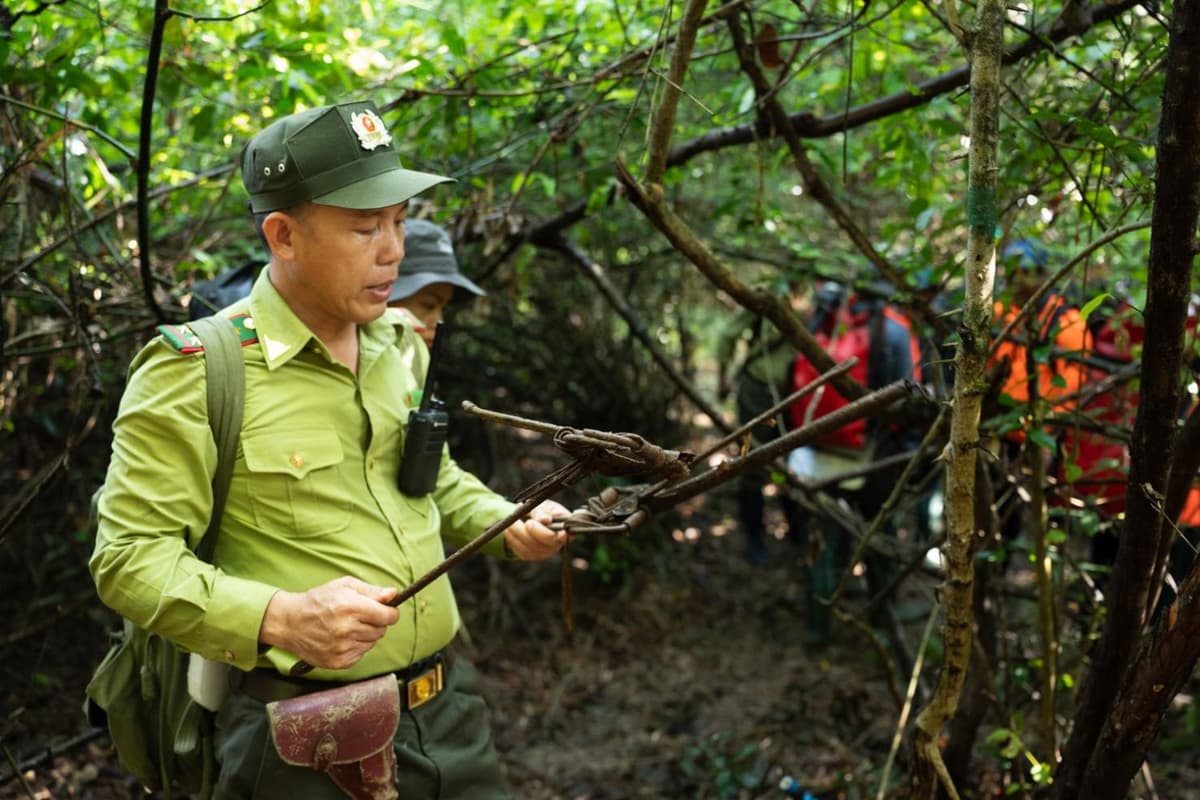
Mr. Giang, a ranger from Cat Tien National Park, is showing Katien Safari guests how to remove a snare.
Katien Safari also demonstrates how sustainable tourism can create positive impacts beyond conservation. The experience generates stable employment for people living in the park's buffer zone, reduces pressure on forest resources, and encourages local communities to become long-term partners in protecting the forest. By joining Katien Safari tours, travelers contribute to a tourism model where conservation, local livelihoods, and responsible travel work together to preserve Cat Tien National Park for future generations.
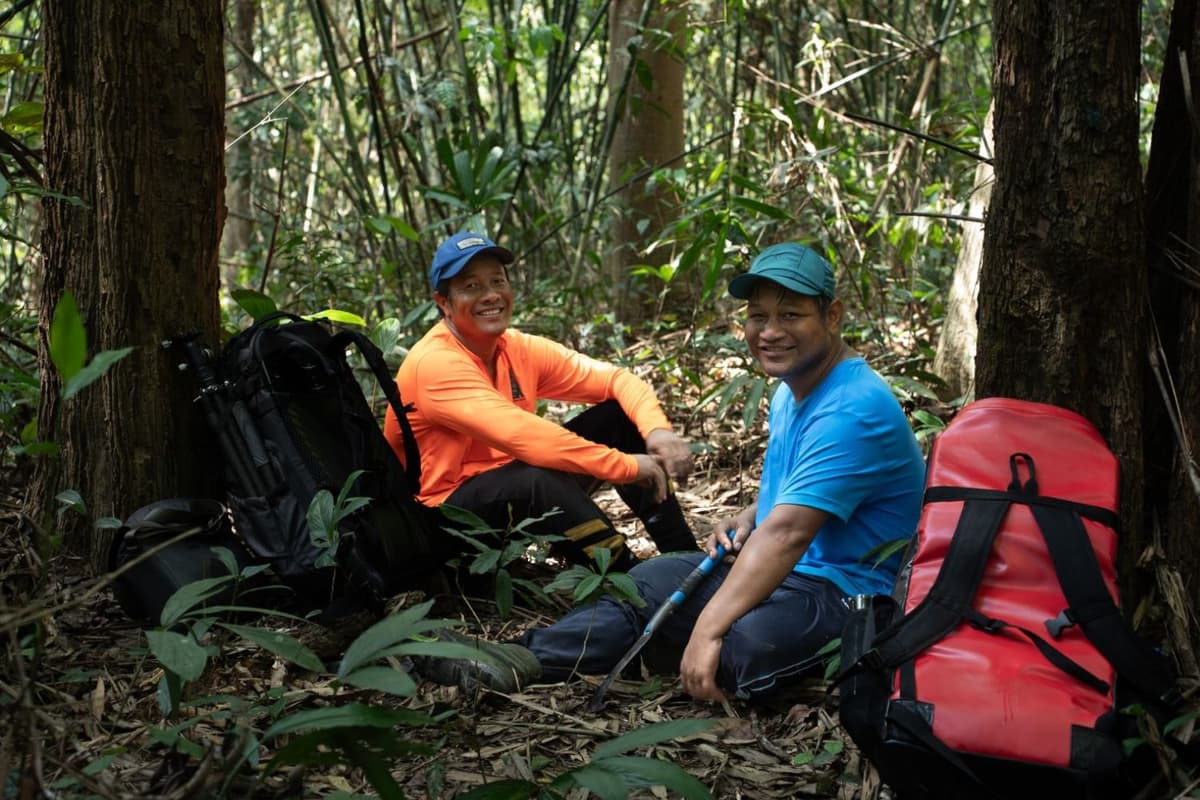
Two Ma locals work as porters on a Katien Safari tour.