Table of Content

Covering more than 72,000 hectares of tropical forest, Cat Tien National Park is widely regarded as one of Vietnam’s most important biodiversity strongholds. Over the years, international media outlets, conservation organizations, and scientific journals have highlighted the park as a key wildlife destination and research hotspot in Southeast Asia. From the discovery of species new to science and efforts to protect endangered wildlife to its recognition on the IUCN Green List, Cat Tien continues to attract global attention. These stories reveal not only the park’s extraordinary natural value but also its growing role as a model for conservation, scientific research, and sustainable ecotourism.
For decades, Cat Tien National Park has been recognized as one of Vietnam’s most important biodiversity strongholds. Covering more than 72,000 hectares of lowland tropical forest, the park protects a wide range of habitats, including evergreen forests, wetlands, grasslands, and river ecosystems. This ecological diversity has made Cat Tien one of Southeast Asia’s most rewarding destinations for wildlife enthusiasts, birdwatchers, photographers, and conservation-minded travelers.
International travel publications have repeatedly highlighted Cat Tien for the quality of its nature-based experiences. In its guide to Vietnam’s top national parks, Lonely Planet ranked Cat Tien among the country’s 8 most remarkable protected areas. The publication noted that the park offers some of Vietnam’s finest opportunities for hiking, mountain biking, and wildlife observation. One of the most popular routes leads to Crocodile Lake, a Ramsar-listed wetland where visitors may observe the critically endangered Siamese crocodile in its natural habitat. The park is also home to hundreds of bird species, making it one of Vietnam’s leading birdwatching destinations.
The park's biodiversity has also attracted international photographers and nature journalists. Cat Tien is home to more than 350 recorded bird species, making it one of the most important birdwatching areas in Southeast Asia. Its wildlife and forest landscapes have appeared in international nature coverage, including “The Guardian’s renowned Week in Wildlife” photo series. Such recognition reflects the park’s ecological significance and the effectiveness of long-term conservation efforts that continue to protect many rare and threatened species.
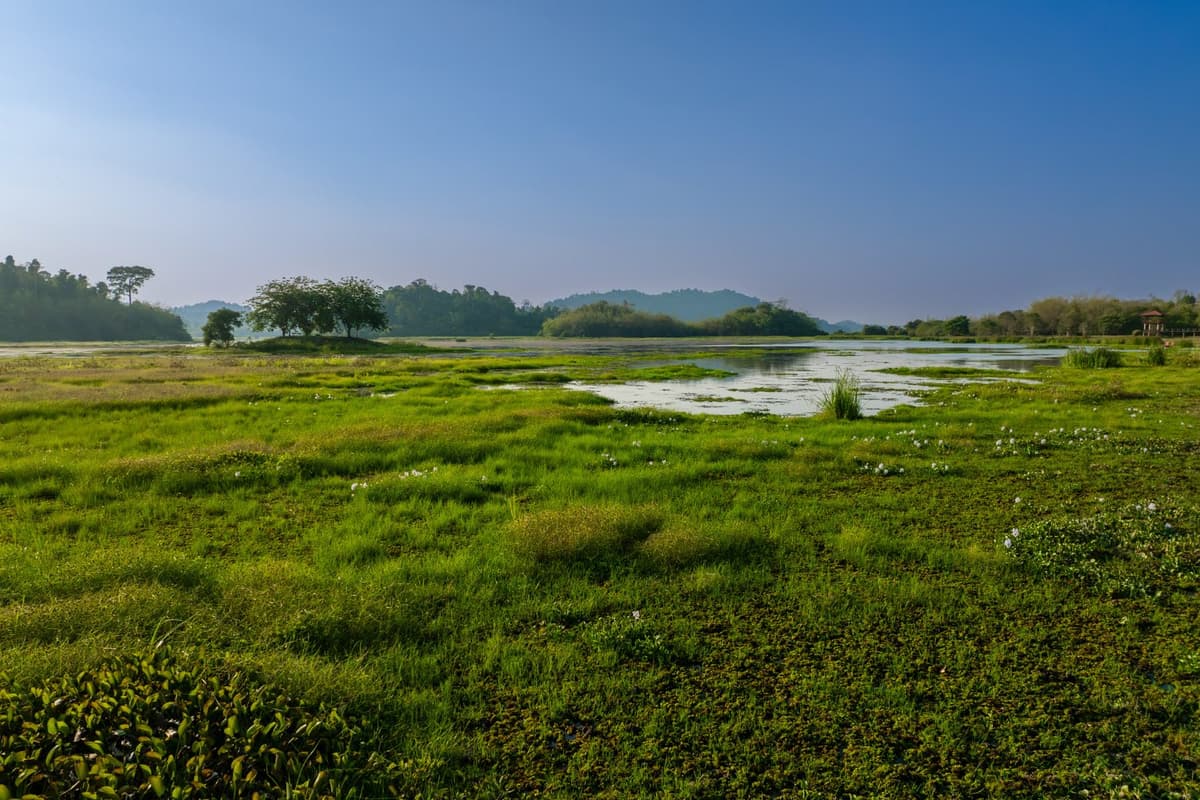
The lake is a Ramsar site, recognized for its international importance.
For travelers seeking a deeper wildlife experience, Cat Tien is also known for its night safaris and immersive conservation-based adventures. Katien Safari offers three multi-day programs that combine wildlife observation, forest exploration, conservation learning, and cultural encounters with the Ma and S'tieng people in Ta Lai.
1. Cat Tien Wild Safari Adventure (2 Days 1 Night): A short introduction to Cat Tien’s biodiversity through guided forest walks, wildlife spotting, and night safari experiences.
2. Cat Tien Wild Expedition (3 Days 2 Nights): A longer journey into the national park’s tropical rainforest, featuring trekking routes, birdwatching opportunities, and visits to key conservation areas.
3. Patrol with Cat Tien Rangers (4 Days 3 Nights): An immersive conservation experience that allows visitors to accompany park rangers, learn about wildlife protection efforts, and gain insights into the challenges of safeguarding one of Vietnam’s most important ecosystems.
These programs are designed around the outstanding values of Cat Tien’s tropical rainforest ecosystem and offer visitors a deeper understanding of both biodiversity conservation and local culture.
Wildlife conservation is one of the themes most frequently highlighted by international media when covering Cat Tien National Park. From the disappearance of Vietnam’s last Javan rhinoceros to ongoing efforts to rescue and release Sunda pangolins, the park has become a symbol of both the challenges and opportunities facing conservation in Southeast Asia.
One of the most widely shared stories involved a rescued Sunda pangolin named "Sandshrew," featured by CNN. The animal was rehabilitated by Save Vietnam’s Wildlife (SVW) before being released back into Cat Tien National Park with a radio-tracking device. Although researchers later lost contact with the animal after the transmitter detached, the story drew international attention to the complex process of monitoring wildlife after release. It also highlighted the dedication of conservationists working to protect one of the world's most heavily trafficked mammals.
The rescue and recovery efforts extend far beyond a single animal. More than 326 Sunda pangolins have been successfully rehabilitated and released into Cat Tien's forests. Conservation teams use radio telemetry, field surveys, and thermal-imaging drones to monitor animals and improve survival rates after release. These efforts have made Cat Tien one of Vietnam’s most important sites for pangolin conservation.
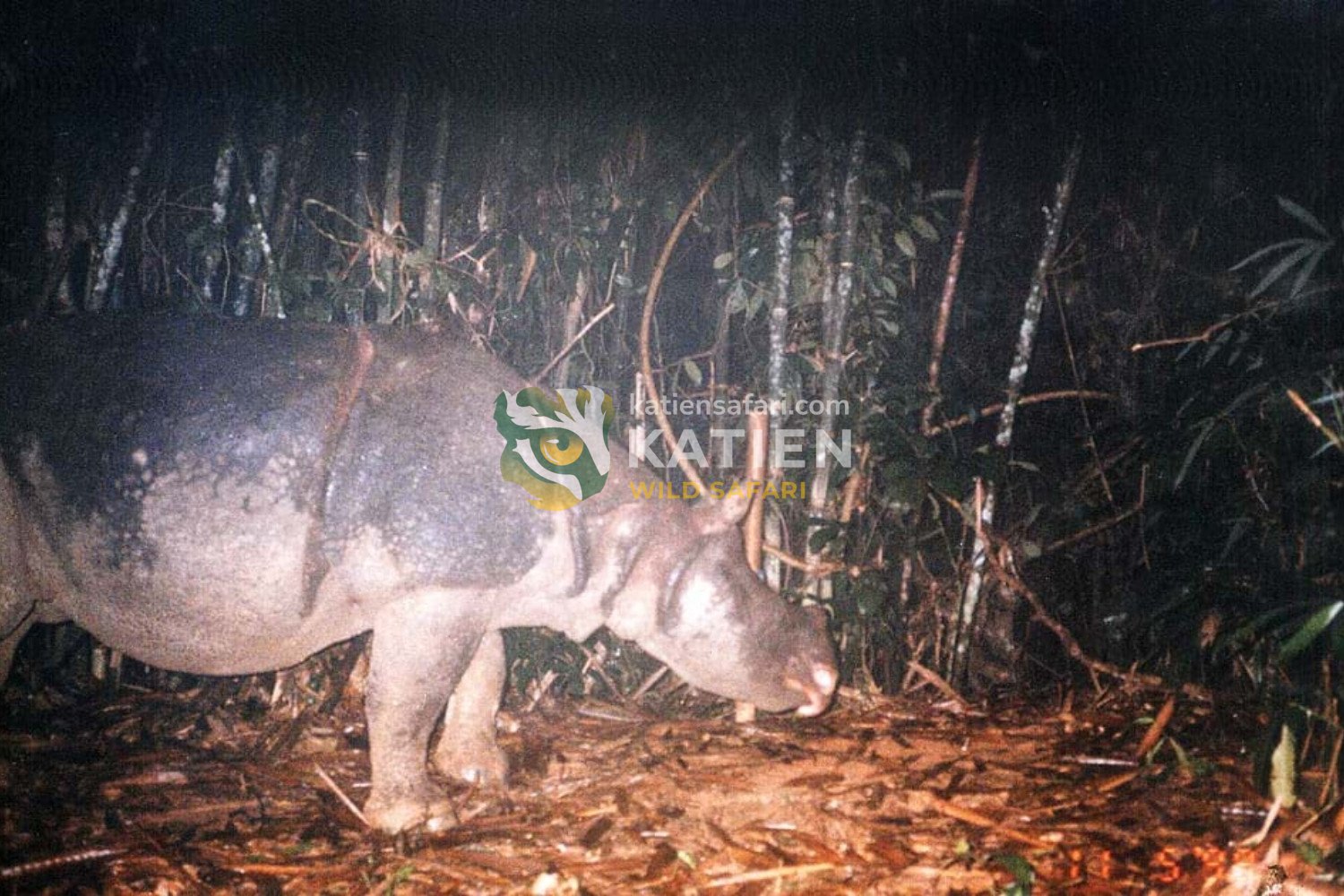
In October 2011, the World Wildlife Fund (WWF) officially declared the Javan rhinoceros extinct in Vietnam.
International media have also covered a more sobering chapter in the park’s history. In 2010, the last known Javan rhinoceros in Vietnam was found dead in Cat Tien, marking the extinction of the species in the country. Investigations revealed that the animal had been poached and its horn removed. Reports by conservation organizations, including WWF and National Geographic, identified poaching and habitat loss as the primary causes of the species' decline. Today, the skeleton of the last rhinoceros is displayed at the Cat Tien Nature Museum. It serves as a powerful reminder of the consequences of failing to protect endangered wildlife before it is too late.
Beyond pangolins and rhinoceroses, Cat Tien is also home to Dao Tien Endangered Primate Species Centre. Supported by international conservation partners, the facility rescues and rehabilitates threatened primates affected by the illegal wildlife trade. Species such as the yellow-cheeked gibbon, pygmy slow loris, silvered langur, and black-shanked douc are cared for in semi-wild forest enclosures before being considered for release. The centre has become an important example of how long-term rehabilitation can contribute to the recovery of endangered populations while supporting conservation education and research.
Cat Tien National Park is widely recognized by international scientists as one of Southeast Asia’s most important biodiversity hotspots. The park forms part of a UNESCO Biosphere Reserve and protects more than 72,000 hectares of tropical forest in southern Vietnam. Today, it supports over 1,600 plant species and more than 1,700 animal species, making it one of the country’s richest natural laboratories.
International media and scientific journals regularly highlight new species discoveries from Cat Tien. One of the most notable examples was featured by National Geographic in 2013. Researchers described a striking new lizard species, Calotes bachae, whose males display a vivid blue coloration. Genetic analysis confirmed that it was distinct from similar species found in Myanmar and Thailand. The discovery demonstrated how much of Vietnam’s biodiversity remains undocumented.
The park has also yielded several other species new to science. These include the Cat Tien bent-toed gecko (Cyrtodactylus cattienensis), the ruby-eyed pit viper (Trimeresurus rubeus), and numerous insects and invertebrates identified by international research teams. Scientists have even discovered new plants, fungi, and parasitic wasps within the park's ecosystems.
More than 20 species now carry the scientific name “cattienensis,” a tribute to the location where they were first recorded. These discoveries underline the global scientific value of Cat Tien. They also reinforce the importance of protecting the forests of the Southern Annamites, where many species may still await discovery. For researchers, birdwatchers, and nature enthusiasts alike, Cat Tien remains one of Vietnam’s most fascinating places to explore biodiversity in its natural setting.
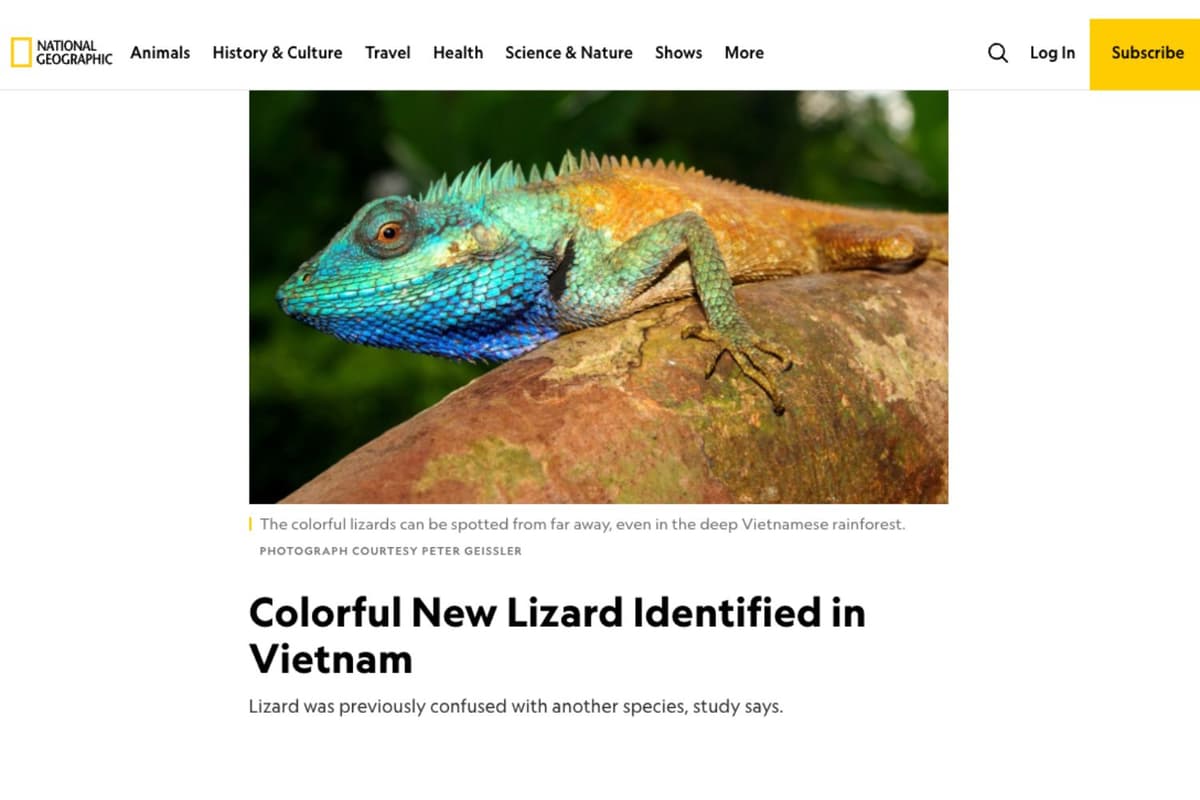
The vivid blue-headed lizard species, Calotes bachae, discovered in Cat Tien National Park and featured by National Geographic.
Cat Tien National Park is recognized not only for its biodiversity but also for its conservation management. International organizations often cite the park as one of Vietnam’s leading examples of protected area governance.
A major milestone came when Cat Tien National Park officially joined the IUCN Green List of Protected and Conserved Areas. The achievement placed the park among only 72 protected and conserved areas worldwide that met the organization’s global standards at the time. The recognition reflected years of work to strengthen biodiversity protection, improve governance, and engage local communities in conservation.
According to the International Union for Conservation of Nature (IUCN), Green List sites must meet 17 criteria and 50 indicators across four areas: good governance, sound design and planning, effective management, and successful conservation outcomes. Cat Tien underwent a rigorous assessment process that lasted nearly two years before receiving certification.
International partners also played an important role in the journey. Support from WWF-funded and USAID-funded conservation projects helped expand biodiversity surveys, strengthen ranger patrols through the SMART monitoring system, and establish community-based patrol teams. At the same time, the park worked closely with local communities to promote sustainable livelihoods, environmental education, and long-term stewardship of natural resources.
The park protects more than 1,700 animal species and over 1,600 plant species, including globally threatened wildlife such as Asian elephants, Sunda pangolins, Siamese crocodiles, and black-shanked doucs. The achievement is particularly significant given the park’s history, including the loss of Vietnam’s last Javan rhinoceros in 2010.
__638957637065594494.jpg)
Gaur in Cat Tien supports biodiversity and its IUCN Green List status.
The IUCN Green List status is valid for five years and requires continuous evaluation. For international visitors, researchers, and conservation professionals, this recognition demonstrates that Cat Tien is more than an ecotourism destination. It is a globally recognized model showing how biodiversity conservation, community engagement, and sustainable tourism can work together to create lasting conservation outcomes.