Table of Content
Stories & Updates From THE WILD WORLD


The traditional weaving craft of the Ma people in Ta Lai (Dong Nai) has been placed on the urgent conservation list by the Ministry of Culture, Sports and Tourism to protect local heritage. The handwoven fabrics represent the rich culture and spiritual life of the Ma community across many generations. However, with the changes of modern life, this craft is facing many challenges and risks fading away if it is not preserved. Read on with Katien Safari to learn more about this traditional craft and its current situation.
Generations of Ma ethnic group have lived in Ta Lai, right where the dense forests of Cat Tien give way to quiet farmlands and rural villages. As one of the region's oldest indigenous communities, their daily life is still deeply shaped by ancient traditions, stories, and craftsmanship.
To them, nature is more than just a surroundings, it is an extension of their identity. They believe that every mountain, river, rice field, and home is watched over by spirits called Yang. This spiritual bond guides how they treat the land, influencing everything from seasonal ceremonies to the quiet ways they care for the environment every day.
Historically, the community relied on farming, hunting, and foraging to sustain themselves. Alongside these survival skills, they perfected crafts like basket making and weaving. Among these, textile weaving became their most treasured art, not just because the fabric was useful, but because every thread carried their stories, beliefs, and history.
These Ma people textiles are present at every major milestone in a Ma person’s life. It marks a young woman’s transition into adulthood, sits at the heart of wedding rituals, and offers a respectful final farewell to the deceased. Each pattern reflects the patience of the weaver, keeping alive a culture that has grown alongside Cat Tien forest for hundreds of years.
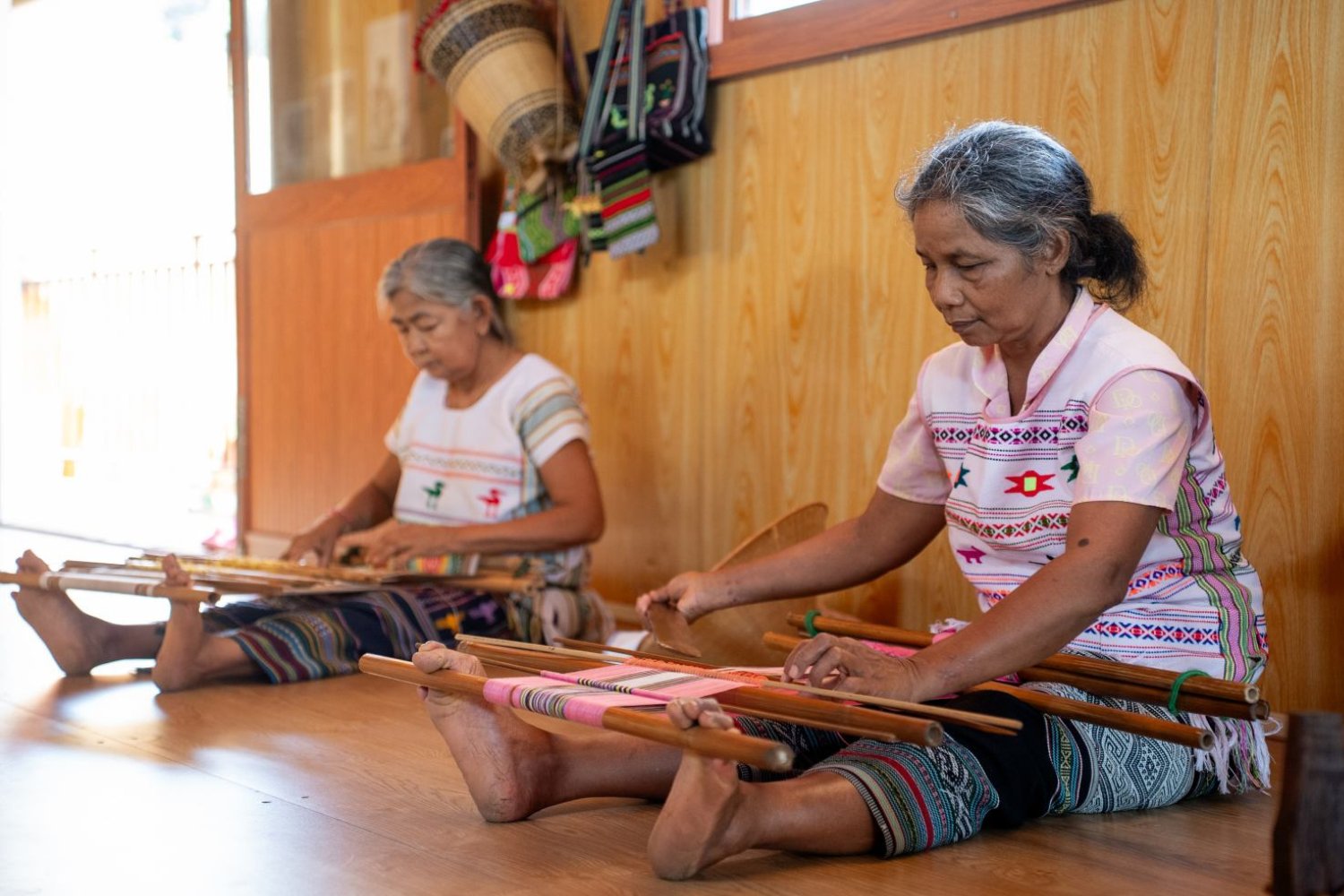
Ma brocade artisans sit on the floor as they weave textiles by hand using traditional techniques.
Weaving is a big part of daily life for the Ma people. Mothers and grandmothers pass this traditional weaving craft down to young girls, who often start learning when they are still very young. After years of practice, they don't just learn how to weave, they also learn how to use the backstrap loom and share the cultural stories behind every pattern.
For the Ma ethnic group, the patterns show the natural world, their spirits, and their connection to the forest. Every design tells a story and keeps their history alive.
In the past, these handmade cloths were very valuable. People could trade a good blanket or clothing for farm animals, and girls brought them as wedding gifts. Today, weaving is no longer the main job to earn money, but the fabrics are still very important. Families keep them carefully and only wear them during festivals, weddings, or to welcome special guests.
Today, every piece of fabric shows the patience and creativity of the woman who made it. It is not just about keeping an old craft, it keeps family stories and identity alive. Every thread holds a piece of their history.
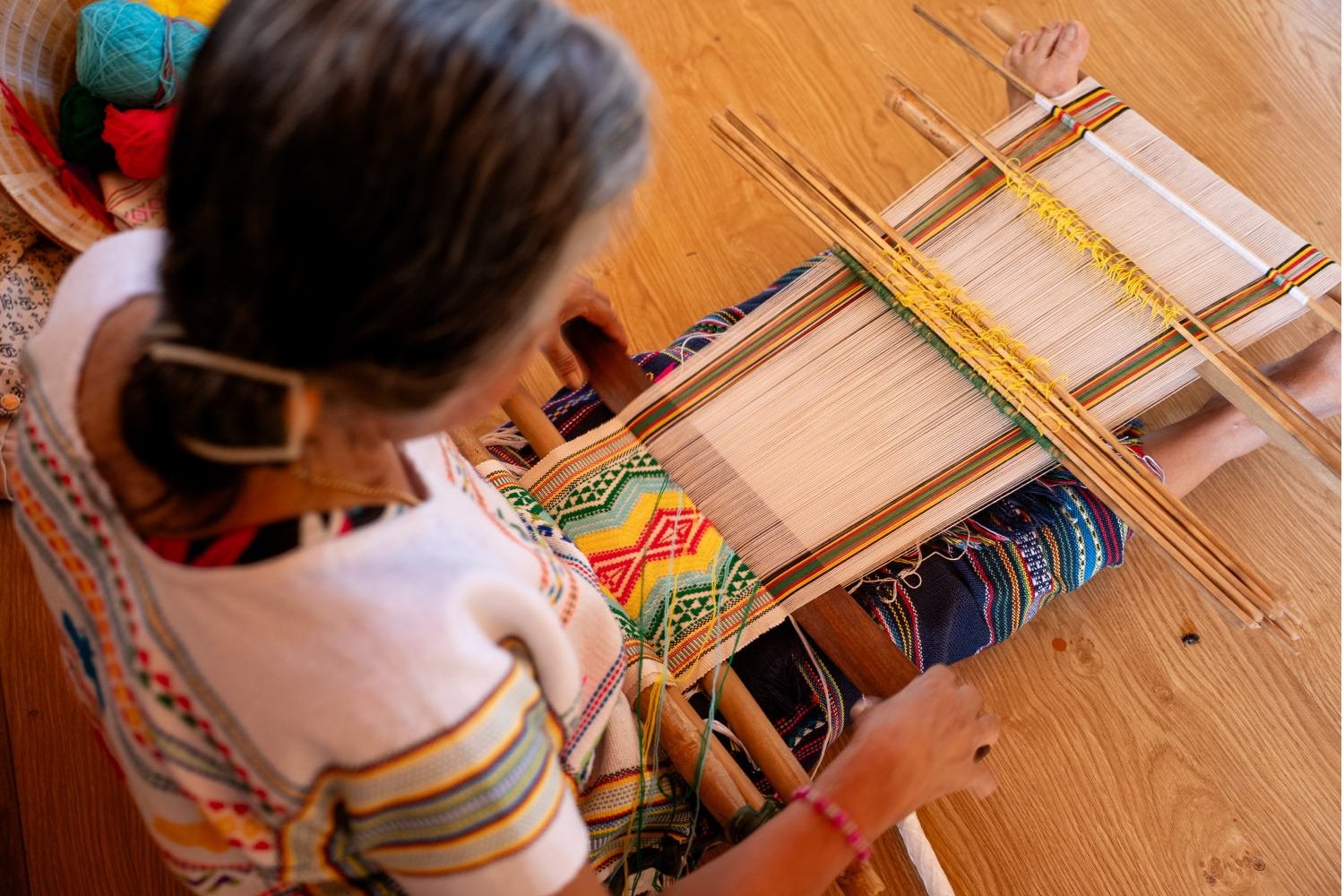
Traditional brocade weaving is one of the oldest crafts of the Ma people, preserving generations of cultural heritage and indigenous knowledge.
What makes Ma people textile designs so special is the incredible variety of ethnic brocade patterns. A single piece of cloth can feature just a few symbols or dozens of them together. These designs create a beautiful visual language that tells stories about daily life, nature, and the values of the Ma community.
Weavers find inspiration in everything around them. On the fabric, you can easily spot rivers, forest animals, plants, longhouses, and jars of rice wine. There are even shapes of spiders, butterflies, and people pounding rice. These aren't just decorations, each pattern carries a real meaning about the Ma people's respect for nature and their everyday experiences.
Every symbol has its own story. For instance, the spider represents the patience and skill needed to weave. The image of a longhouse shows family unity, and the rice wine jar is a symbol of celebration and warm hospitality. These woven symbols help the community pass down their history from one generation to the next.
Colors are just as important as the patterns themselves. Traditionally, weavers use a natural dyeing technique using ingredients from the surrounding forest. They get yellow from turmeric and the perennial climbing vine, black from indigo, brown from the bark of the barringtonia acutangula tree, and pink from the leaves of the teak plant. By using these natural materials, they create a beautiful mix of white, black, red, green, brown, and yellow.
Among all these colors, white is used the most. It appears in almost every traditional fabric to represent purity, harmony, and balance. For the Ma people, white is a reflection of how humans, nature, and the spiritual world should live together in peace.
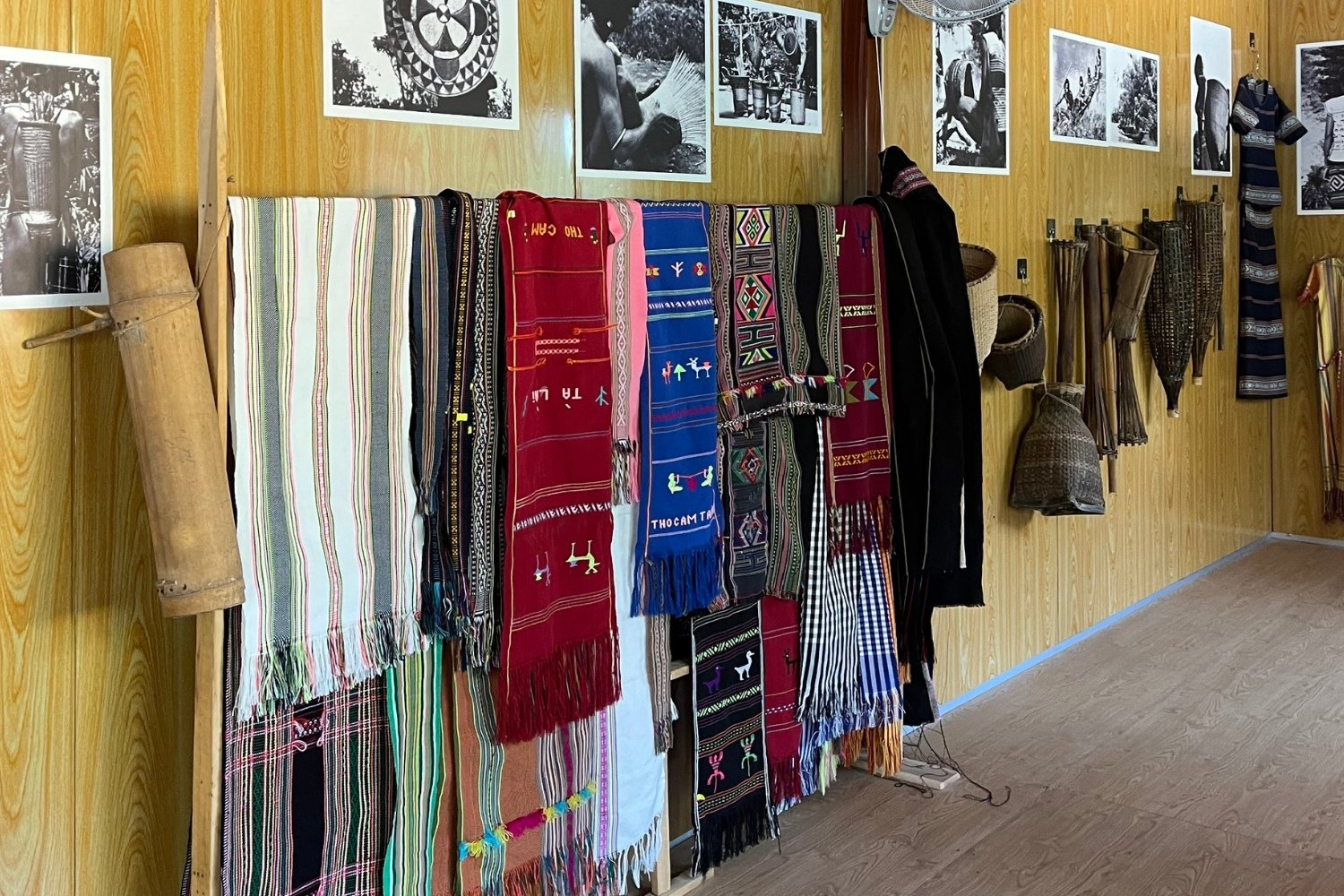
Colorful handcrafted products of the Ma people, featuring a wide variety of patterns and motifs.
There are no textbooks or written guides for the Ma's traditional weaving craft. Instead, young girls learn simply by watching, copying, and memorizing the movements of their mothers and grandmothers. Through this quiet observation, the skills of weaving and their natural dyeing technique are passed down through generations, becoming a living part of their community's knowledge.
Making a piece of fabric is a long, patient journey that starts completely from scratch. Ma’s women handle every step, from growing cotton and spinning thread to making natural dyes. To weave, they use a simple backstrap loom made of bamboo and rope. The weaver sits on the floor with the loom tied around her lower back and her legs stretched straight out, using her own body weight to keep the threads tight. Moving her hands, feet, and body in a smooth rhythm, she might spend months finishing just one traditional blanket or outfit.
What makes Ma textile truly special is that the patterns are made without any needles. As they weave, the women use their fingers to pull colored threads directly into the cloth, basically weaving and embroidering at the same time. They use regular weaving for simple geometric borders, but use their unique hand-embroidery technique for detailed shapes like people, birds, trees, and everyday objects.
Because everything is done entirely by hand, weavers rarely follow fixed templates. Instead, they improvise and add details based on their own feelings and observations of the world. This creative freedom means that no two pieces of fabric are ever identical. Each finished item is a unique work of art, packed with the weaver's time, personal style, and life stories, a human touch that modern machines can never replace.
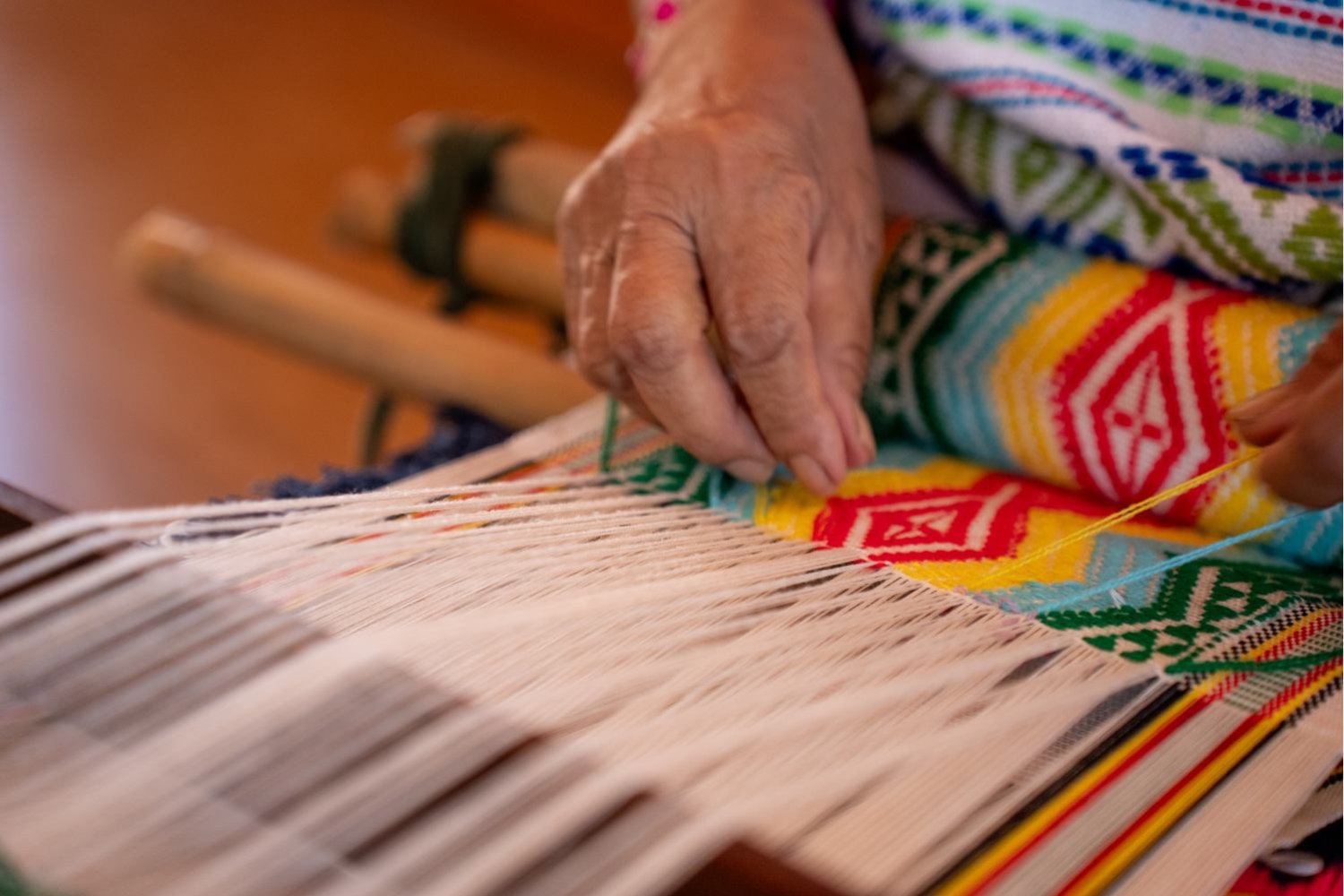
Each piece of fabric features unique patterns, brought to life through the creativity and craftsmanship of Ma artisans.
Like many traditional crafts, Ma weaving faces tough challenges in the modern world. Making a single textile by hand is a long process that can take months of hard work. This makes it difficult to compete with mass-produced factory clothing, which is much cheaper and offers more varieties. As a result, weaving no longer brings in enough income to compete with other modern jobs.
Lifestyle changes also affect how the craft is kept alive. Many young women now choose to work in factories or move to big cities for better opportunities, rather than staying home for a job that requires so much patience and time. At the same time, traditional clothes are rarely worn in daily life anymore. They are now mostly saved for special occasions like festivals, weddings, and cultural events.
Another major challenge is preserving the knowledge itself. Because Ma weaving has no written textbooks, the skills are passed down purely by mouth and hand from one generation to the next. As the number of elderly artisans who know the ancient patterns grows smaller, the risk of losing this precious cultural heritage of the Ma ethnic group becomes more real than ever.
On your journey with Katien Safari tours, you do more than just trek through the jungle and spot wild animals in Cat Tien National Park. You also visit Ta Lai ethnic village, where the Ma ethnic group has kept their traditions alive for generations. Despite modern changes, older weavers here are still actively passing down their ancient craft to the youth.
At the village, you can step inside a traditional weaving house to meet local weavers and watch them create beautiful ethnic brocade patterns right before your eyes. You can even try basic weaving yourself under their guidance, while listening to the meaningful stories behind each design and learning about their daily life.
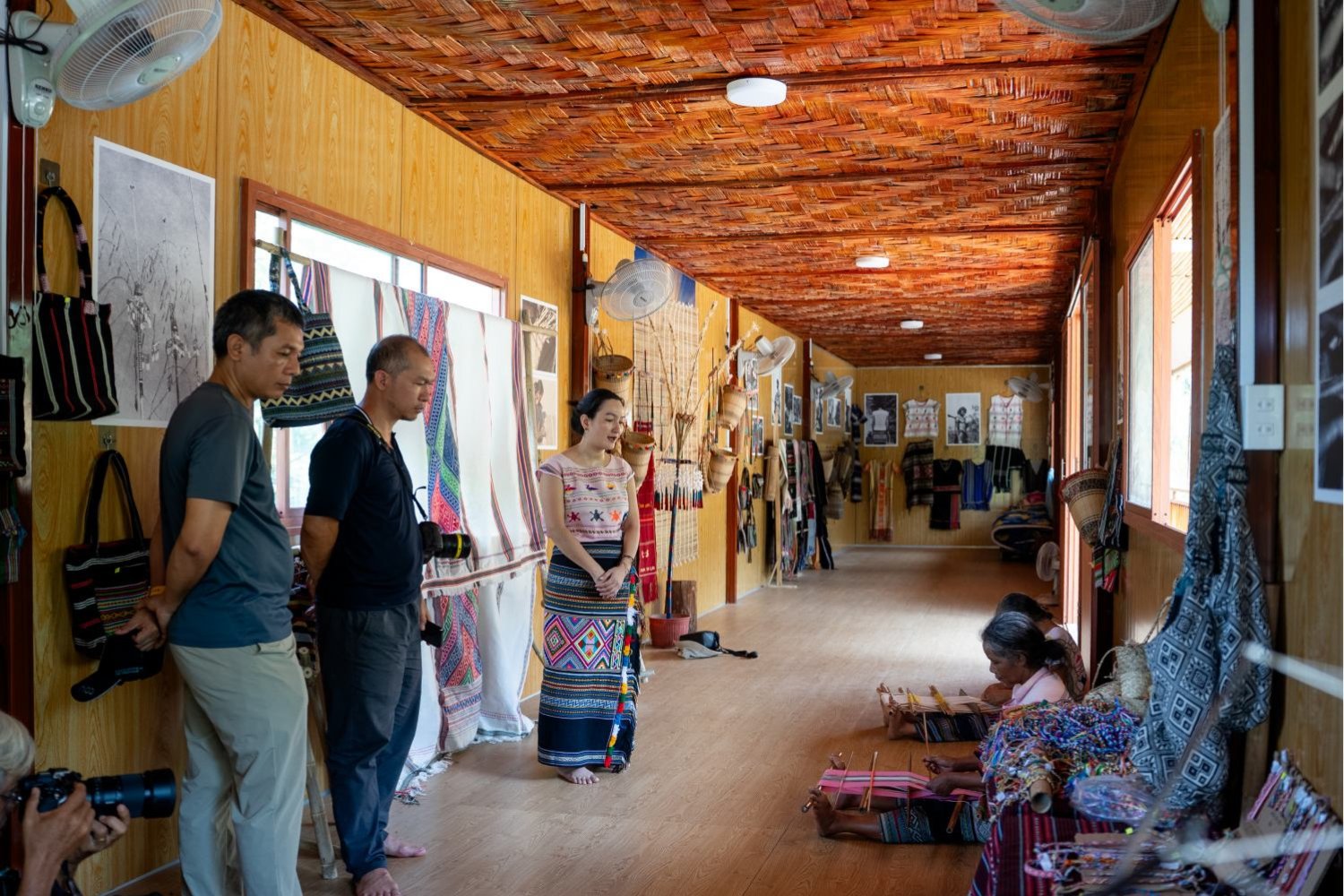
Visitors joining Katien Safari can explore a traditional Ma longhouse and learn about the community’s centuries-old weaving tradition.
This visit is a great way to truly connect with the local community. Every time you talk to a weaver or choose a handmade product, you are directly supporting a family's livelihood. This steady income gives young people a real reason to stay, learn the trade, and keep their heritage alive.
Katien Safari’s support goes beyond the weaving house. We also prioritize hiring local people as forest porters and cooks for our tours, supporting sustainable cultural tourism. This responsible tourism helps the whole community benefit from protecting their culture and nature.Thanks to your footprints, the stories woven into the Ma people textiles will continue to live on for generations to come.