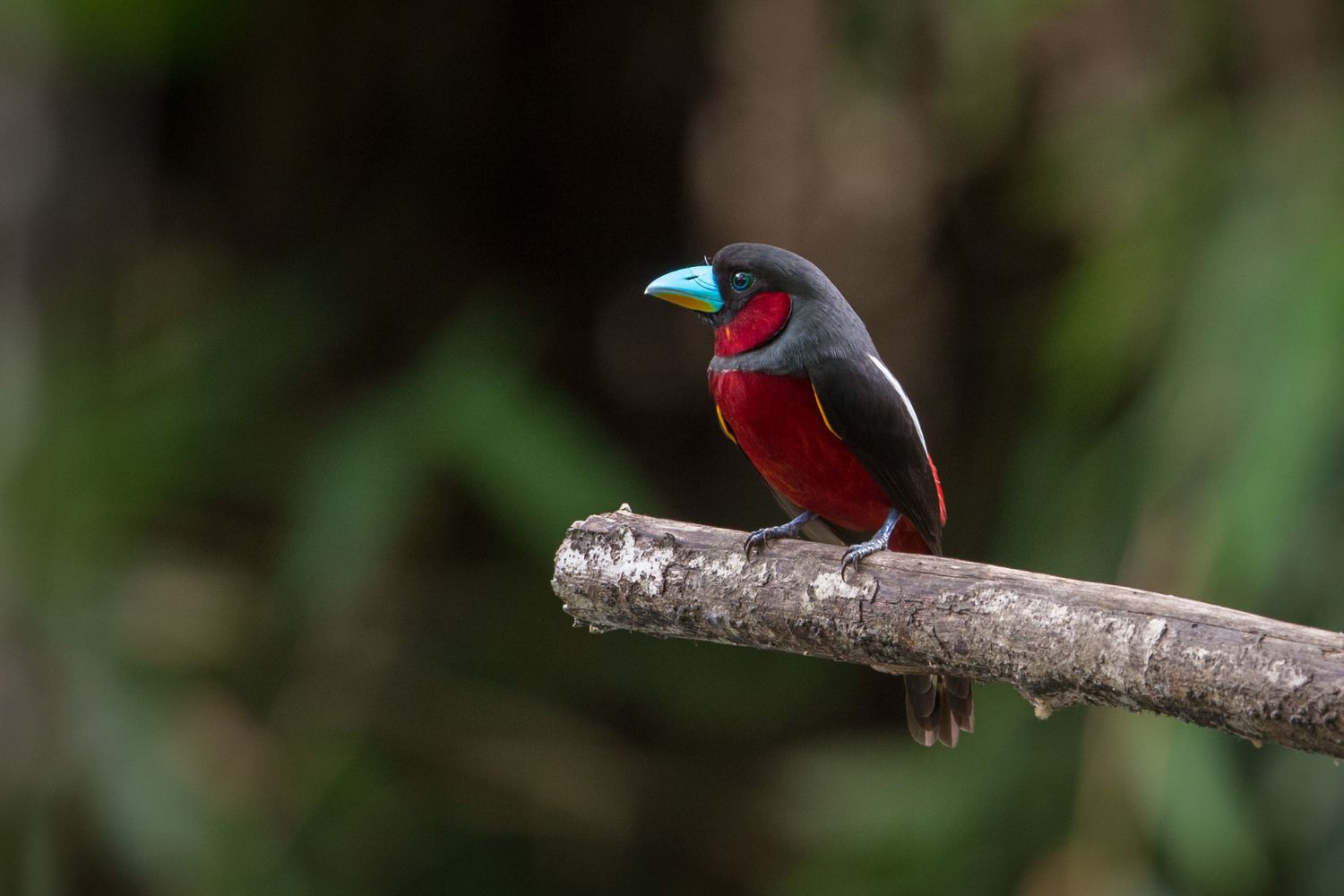
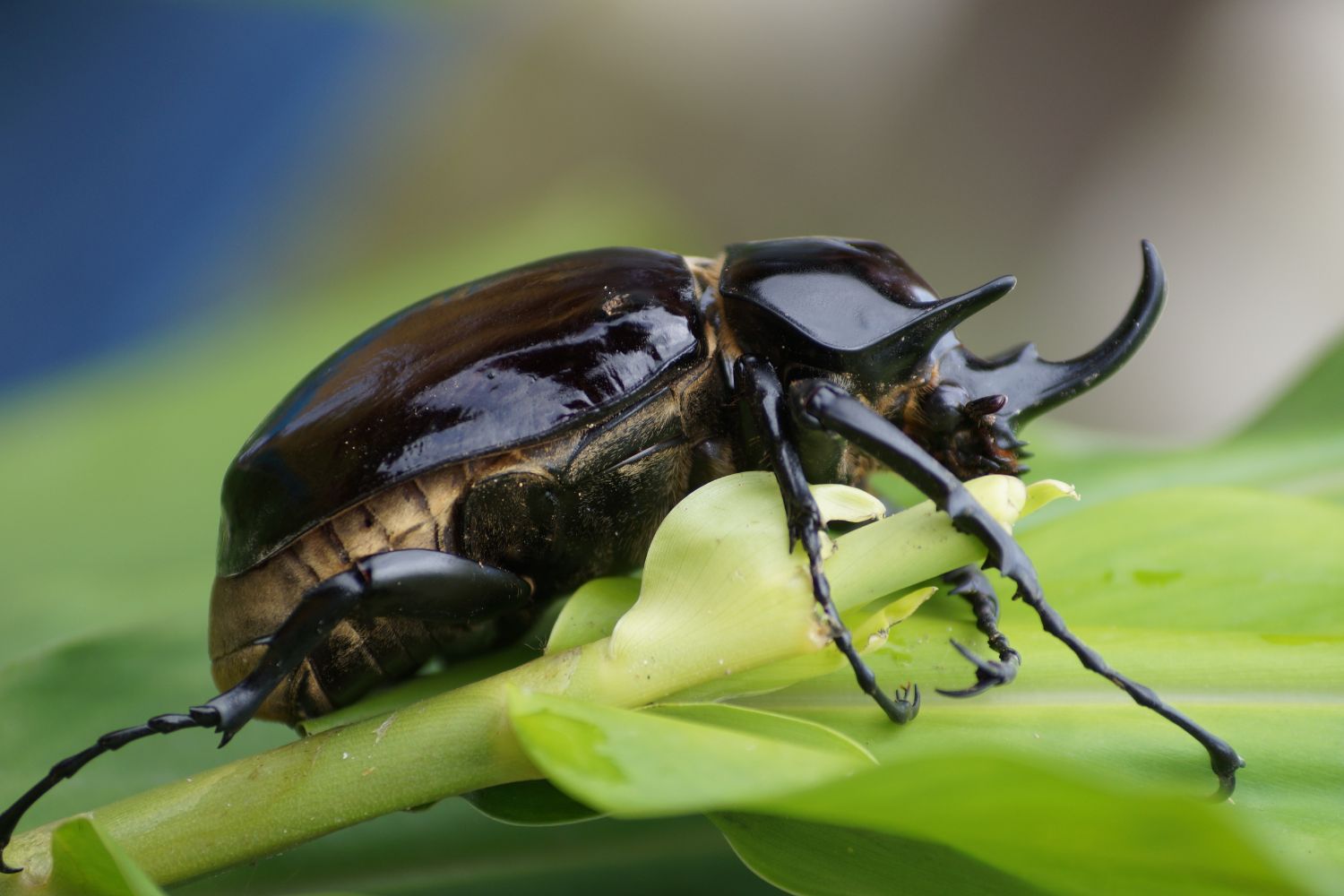
Hidden beneath the dense canopy of southern Vietnam lies a world teeming with life. In Cat Tien National Park, the calls of hornbills echo through the forest, reptiles move quietly beneath fallen leaves, and rare mammals roam deep among the ancient trees. This extraordinary ecosystem supports 97 mammal species, 343 bird species, 94 reptiles, and 37 amphibians.
With such rich biodiversity, what rare species actually call Cat Tien National Park home? And is it possible for visitors to observe them in the wild? Below are some of the most notable species that inhabit this extraordinary ecosystem.
Why choose this rare species list?
This list highlights top wildlife in Cat Tien National Park based on clear conservation criteria:
- High risk of extinction: Species listed as Critically Endangered or Endangered on the IUCN Red List or in the Vietnam Red Data Book.
- Endemic or unique value: Species found only in Indochina/Vietnam or important for evolutionary research.
- Ecosystem indicators: Animals like the Siamese Crocodile Crocodylus siamensis reflect healthy habitats.
- Rare sightings: Species with small populations or shy behavior, making them hard to see in the wild.
1. Rhinoceros sondaicus annamiticus
The Javan Rhinoceros Rhinoceros sondaicus annamiticus was once listed as Critically Endangered and considered the most threatened large mammal in the world. It was an endemic subspecies, and its story later became a tragic conservation lesson
This rhino was different from the population in Indonesia. It had only one horn and lived in lowland forests, wetlands, and river floodplains. In Vietnam, it was mainly found in Cat Loc, part of Cat Tien National Park. By 1999, only 7 to 8 individuals remained, under heavy pressure from wildlife poaching and the illegal rhino horn trade.
In 2010, the last Javan Rhinoceros individual in Vietnam was shot by poachers. This tragic event officially marked the extinction of Rhinoceros sondaicus annamiticus in Vietnam and across mainland Asia. Since that moment, the species has completely disappeared from the country.
Today, the only remaining Javan Rhinoceros population survives in Ujung Kulon National Park.
2. Siamese Crocodile
The Siamese Crocodile is listed as Critically Endangered (CR) on the IUCN Red List and is among the rarest crocodile species on Earth. This is a critically endangered reptile and an important freshwater predator in Southeast Asian ecosystems.
It was once common across the region but disappeared from most areas due to habitat loss, hunting, and hybridization. Today, small wild populations remain mainly in Cambodia.
In Vietnam, the species was lost in the wild after 1992, including at Bau Sau Wetlands. A conservation program started in the late 1990s, and from 2001 to 2005, 60 purebred crocodiles were reintroduced. The first young appeared in 2005, marking an important recovery.
Since then, the population has grown to over 500 individuals by early 2025. Today, Bau Sau is one of the most successful crocodile recovery sites in Southeast Asia. Visitors can see Siamese crocodiles at Bau Sau Wetlands in Cat Tien National Park, through the Cat Tien Bau Sau crocodile tour.
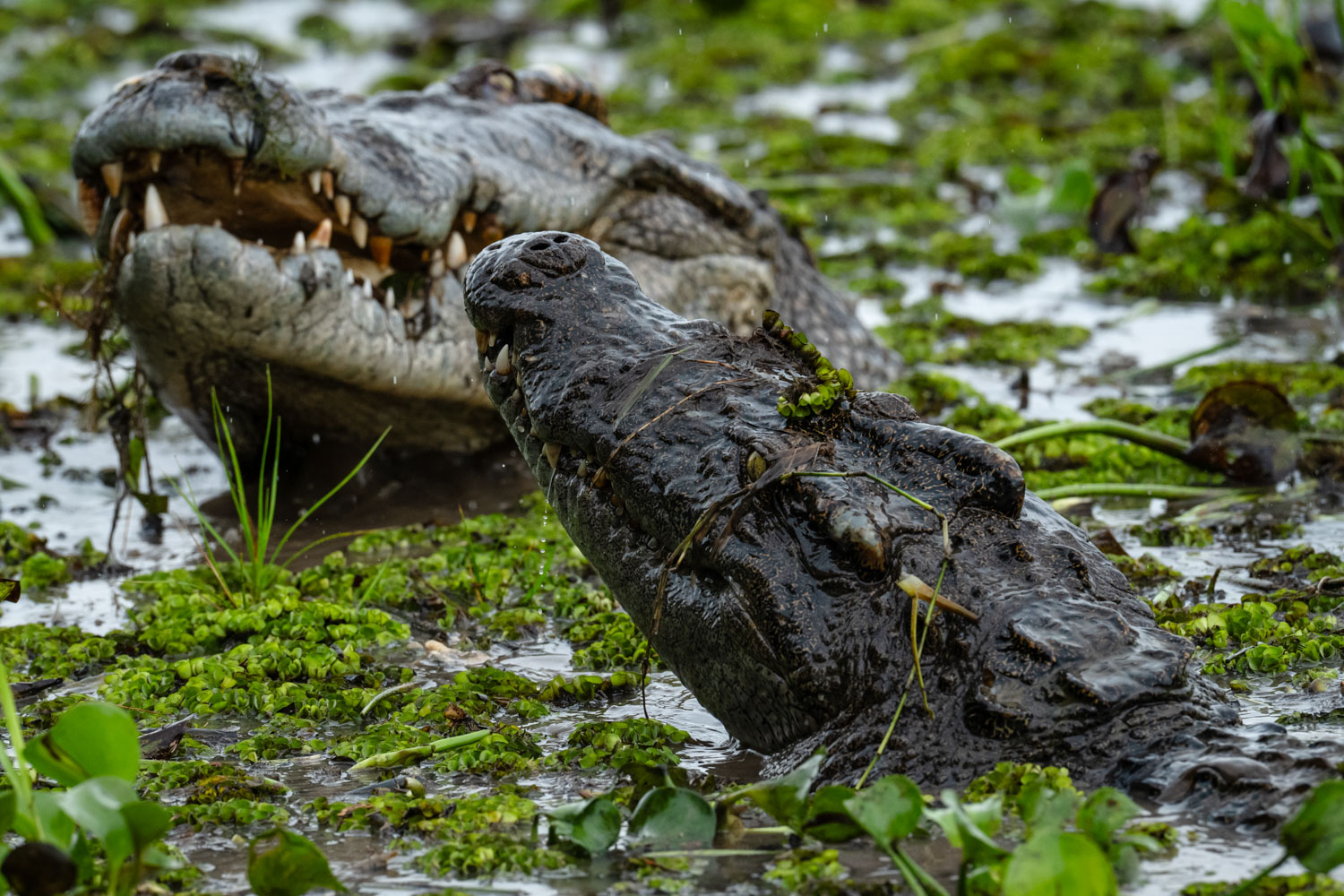
Siamese crocodile thrive in large numbers at Bau Sau Wetlands
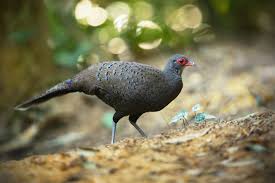
3. Orange-necked partridge
The Orange-necked Partridge (Arborophila davidi) is a bird species in the pheasant family (Phasianidae). It is listed as Endangered (EN) on the IUCN Red List and is considered globally rare because of its extremely small population and limited distribution.
Globally, this species is found only in a very small area of southern Vietnam and a tiny patch of far eastern Cambodia, making it one of the most restricted pheasant species in the world.
In Vietnam, it has been recorded in protected areas such as Cat Tien National Park, Bu Gia Map National Park, Dong Nai Nature Reserve Management Board, and forest enterprises including Vinh An, Nghia Trung, Bu Dop, Tan Phu, and Da Teh. Scientists also predict that it may occur in other areas of southern Lam Dong Province, Dong Nai Province, Binh Duong, and Binh Phuoc.
In Cat Tien National Park, the species has been found in the Cat Loc area, which is an important habitat for this rare bird. In Cat Tien National Park, the exact population number of the Orange-necked Partridge has not been clearly documented. However, scientists confirm that the species has a very small and restricted population, mainly found in and around the park.
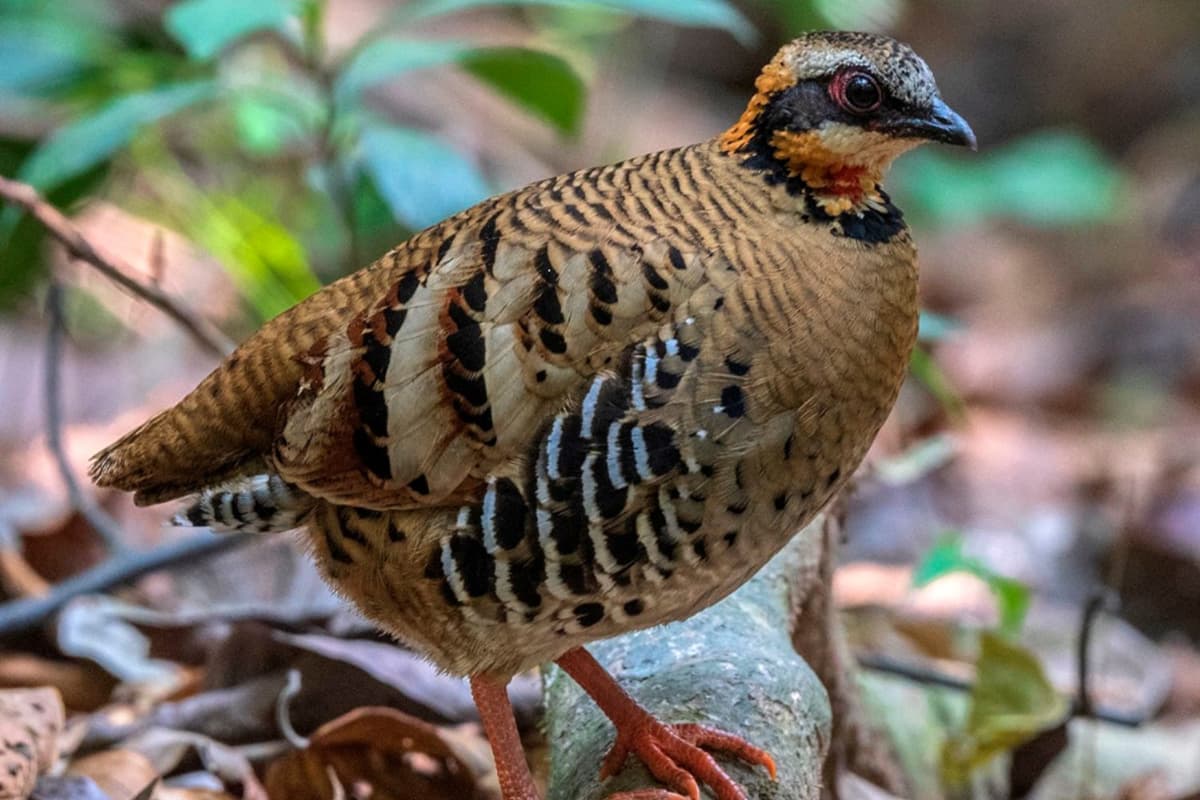
Orange-necked Partridge is an extremely rare and endemic bird species found in Cat Tien National Park. Photo source: Tim Dinh Annambirding
4. Asian Elephant
The Asian Elephant is listed as Endangered (EN) on the IUCN Red List. Across Asia, elephant populations have become highly fragmented, surviving only in scattered forest patches within 13 countries.
What makes the Asian Elephant especially significant in Cat Tien National Park is its extremely small and vulnerable population. Today, only about 9 to 11 individuals remain in the park, all living in the southern section (Nam Cat Tien). This includes two adult or subadult males and a herd of about eight elephants, with three to four adult females. Elephants disappeared from the northern Cat Loc area in the 1970s and 1980s because of hunting.
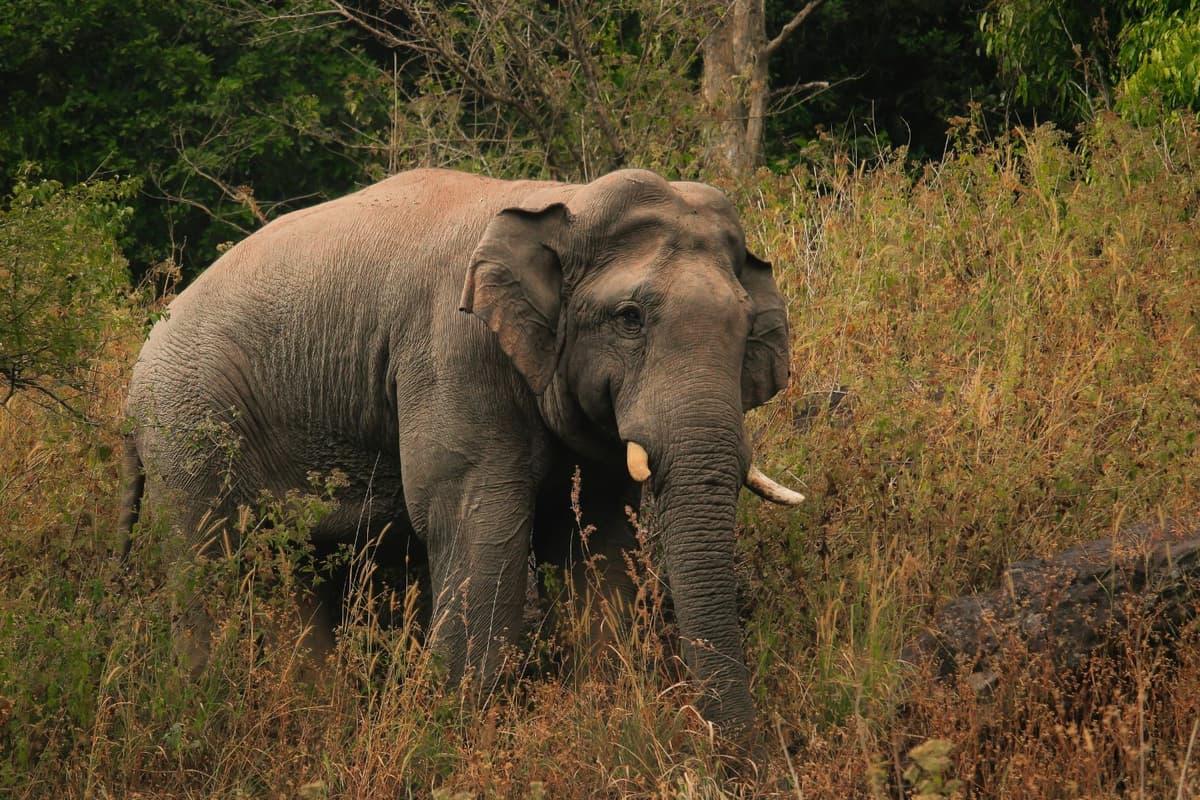
The Asian Elephant is listed as Endangered (EN) on the IUCN Red List
Such a small group is biologically fragile. Even the birth of a single calf is considered an important conservation event. Cat Tien is therefore one of the last strongholds for wild Asian elephants in southern Vietnam.
Visitors who want to observe Asian elephants in Cat Tien should join guided tours in the southern area of the park, especially near grasslands and forest edges during the dry season.
5. Yellow-cheeked Gibbon
The Yellow-cheeked Gibbon Cat Tien (Nomascus gabriellae) is one of the most important and endangered primates in Cat Tien National Park wildlife. This species is listed as Endangered due to habitat loss and illegal hunting across its range in Vietnam, Laos, and Cambodia.
Cat Tien National Park is home to more than 500 individuals, making it one of the largest and most significant remaining populations in Vietnam. Because gibbons depend on large, continuous areas of primary and semi-evergreen forest, their presence shows that parts of Cat Tien still maintain high ecological quality. In other words, they are not only rare animals but also indicators of a healthy forest ecosystem.
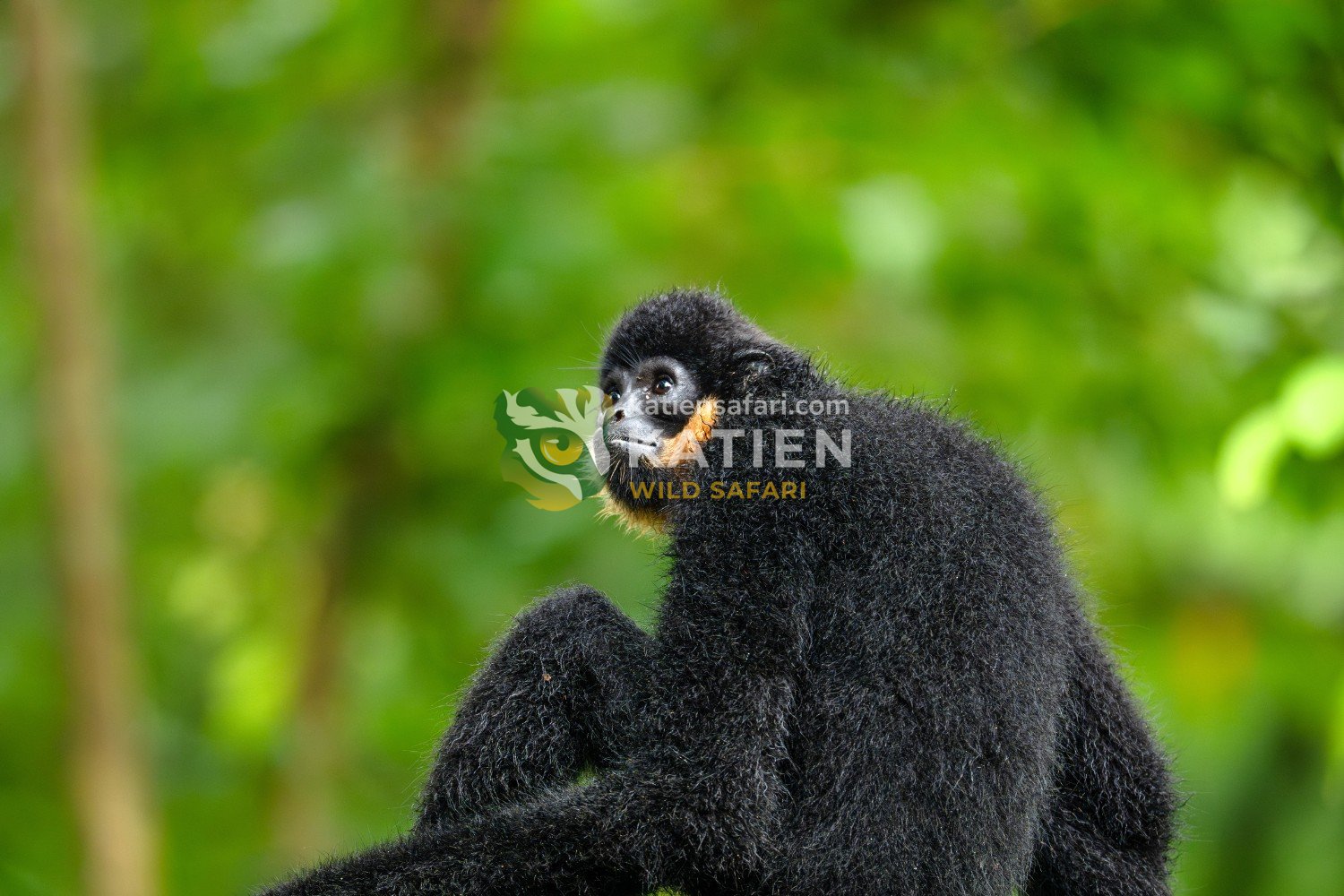
You can hear the beautiful morning songs of the Yellow-cheeked Gibbon near the management headquarters of Cat Tien National Park
The Yellow-cheeked Gibbon is especially notable for its loud morning songs, which echo through the forest at dawn. For many visitors, hearing these calls is one of the most unforgettable wildlife experiences in Cat Tien. The best time for wildlife viewing Cat Tien is early in the morning, when gibbons are most active. Visitors should always follow the Rules for animal watching in Cat Tien to avoid disturbing them and protect their natural habitat.
6. Indochinese Silvered Langur
Indochinese Silvered Langur (Trachypithecus germaini) is classified as Endangered on the IUCN Red List (2015). Also known as Germain’s silver langur or a leaf-eating monkey, it is a folivore with a specialized digestive system adapted to process leaves. The species occurs across Southeast Asia, including Thailand, Myanmar, Cambodia, Laos, and Vietnam. In Vietnam, however, its population has declined sharply, with very few confirmed sightings over the past 50 years. Cat Tien National Park is considered one of the last important forest landscapes where it may still survive.
This langur has black fur on its hands, feet, upper body, and face, contrasting with lighter grey underparts. It also has a long grey tail and distinctive white hair framing its face. The young are especially notable as bright orange infants, making them easy to identify in the wild.
In Cat Tien National Park, it is quite difficult to see Indochinese Silvered Langurs in the wild. However, visitors may have a chance to spot them at the Dao Tien Primate Rescue Centre or along the Crocodile Trail. Patience and careful observation are important when looking for this rare primate.
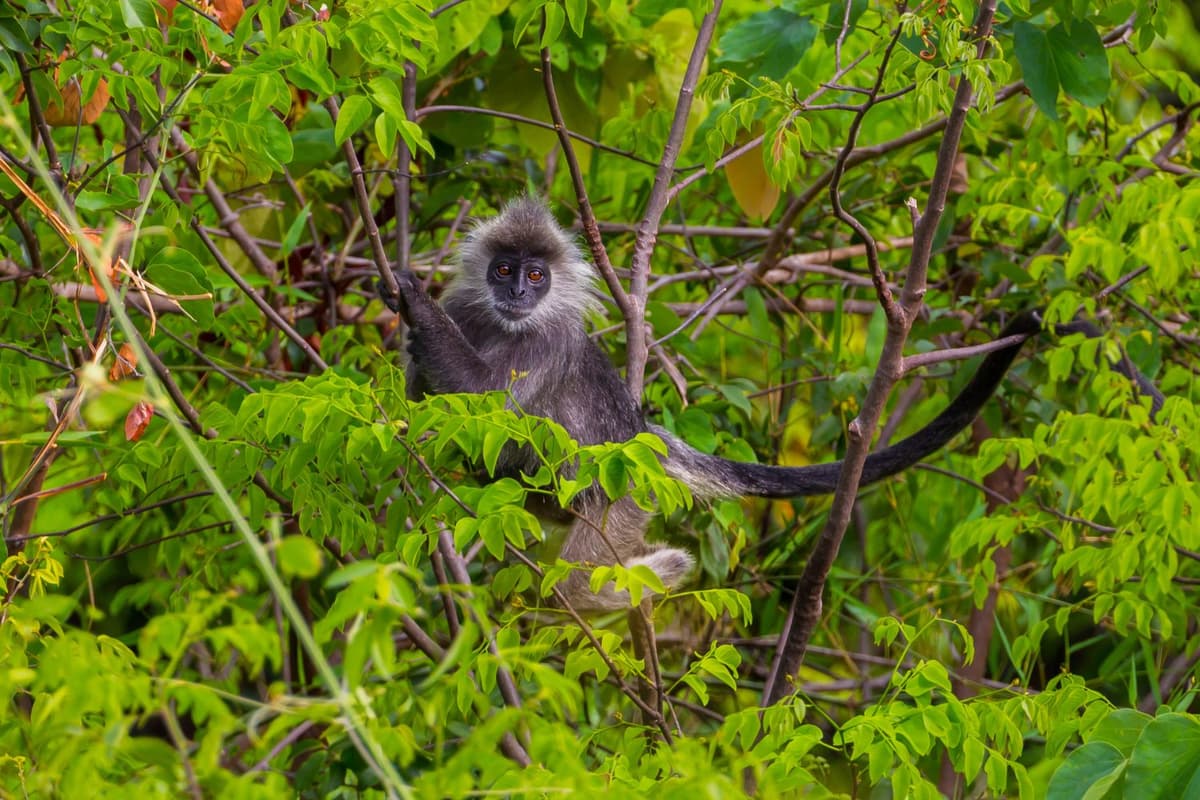
The Indochinese Silvered Langur has black fur on its hands, feet, upper body, and face, with lighter grey underparts.
7. Black-shanked Douc
The Black-shanked Douc (Pygathrix nigripes) is one of the most remarkable rare species in Cat Tien and is listed as Endangered (EN) on the IUCN Red List.
This colorful primate has grey fur, black lower legs, a white tail, and a bright orange face with light blue skin around the eyes. It is native to southern Vietnam and Cambodia and now survives only in a few remaining forest areas. In Vietnam, the species has been recorded in provinces such as Kon Tum, Gia Lai, Đắk Lắk, Lâm Đồng, Bình Dương, Bình Phước, Tây Ninh, and Đồng Nai. The Black-shanked Douc population in Vietnam has decreased by at least 50% since 1980 due to hunting, illegal wildlife trade, and habitat loss caused by deforestation and climate change.
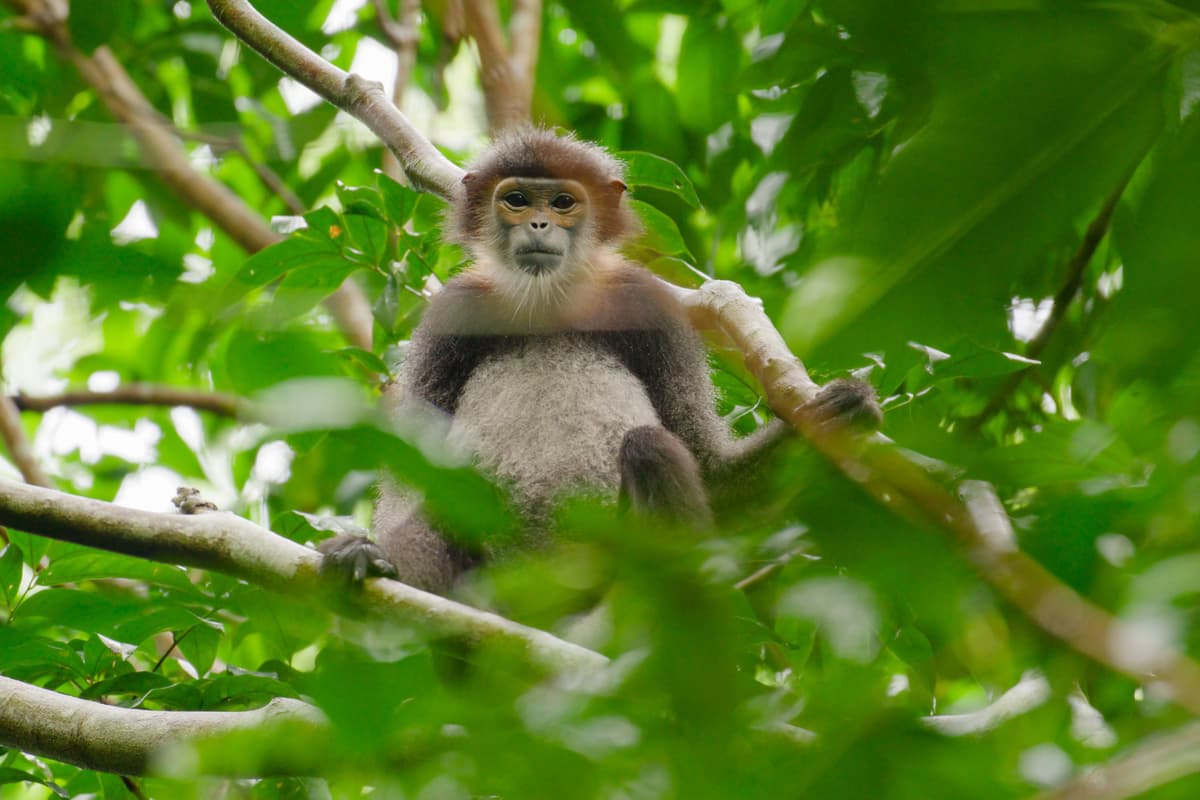
The Black-shanked Douc at Cat Tien National Park
What makes this species especially important in Cat Tien is that the park protects one of the key remaining populations in Vietnam, with an estimated 300 individuals. As the species now survives only in fragmented forest areas across southern Vietnam and parts of Cambodia, Cat Tien plays a critical role in its long-term survival.
Visitors who want to observe the Cat Tien Black-shanked Douc can try locations such as behind the bungalow area, Ben Cu Rapid, Dao Tien Primate Rescue Centre, and along the main trail. Although sightings are not guaranteed, quiet observation and patience can help visitors see this rare and beautiful primate in its natural habitat.
8. Gaur
The Gaur, also called the Indian bison, is listed as Vulnerable (VU) on the IUCN Red List. Its population has decreased in many countries because of forest loss, hunting, and habitat fragmentation. In some places like Sri Lanka and Bangladesh, gaur have already disappeared.
In Vietnam, the total wild population is estimated at only around 300 individuals, which makes the species nationally threatened. Among these, more than 120 gaur live in Cat Tien National Park, making it one of the most important strongholds for the species in the country. Nearly half of Vietnam’s remaining gaur are found here.
Gaur are the largest wild cattle species in the world. Because of their large body size, they need wide forest areas and open grasslands to survive. Today, such habitats are becoming rare. The fact that Cat Tien can still support a stable population of gaur shows that the park maintains a healthy and relatively intact ecosystem.
__638957637065594494.jpg)
A herd of Gaur was spotted in Cat Tien National Park
Visitors may see gaur along forest edges and grasslands, especially during the Cat Tien night safari tour, when they often come out to feed after sunset.
9. Pygmy Slow Loris
Pygmy Slow Loris (Xanthonycticebus pygmaeus) is listed as Endangered (EN) on the IUCN Red List and is one of the notable species in Cat Tien National Park. This nocturnal primate is also one of the few venomous mammals.
Although an estimated 72,000 individuals remain in the wild, the population is declining due to strong pressure from the illegal pet trade and ongoing habitat loss. Slow lorises are often captured because of their large, round eyes and gentle appearance, but many do not survive the process. At the same time, deforestation breaks the forest canopy they rely on for safe movement.
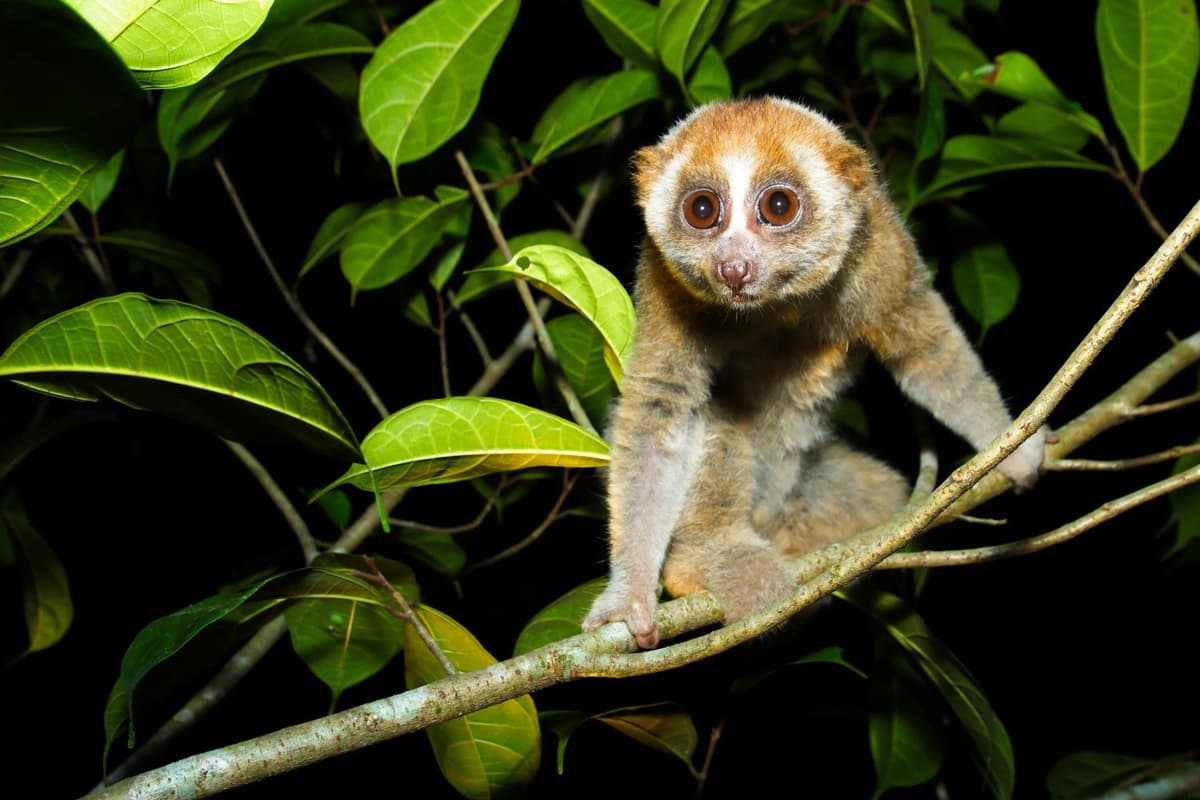
The Pygmy Slow Loris is a shy species that is highly sensitive to disturbance.
In Cat Tien, the species is rarely seen due to its quiet and secretive behavior. Active only at night, it moves slowly through the trees, making it difficult to detect even in suitable habitats.
Visitors may have a chance to encounter it during night safari wildlife experiences, especially along trails such as the Main Trail, Tung Tree Trail, or near the Lodge area. However, sightings require patience and careful observation, as this shy animal is highly sensitive to disturbance.
10. Long-tailed Macaque (Macaca fascicularis)
Long-tailed Macaque Macaca fascicularis is one of the most familiar primates in Cat Tien National Park. Widely distributed across Southeast Asia, including Thailand, Malaysia, Indonesia, Cambodia, and Vietnam, the species is now listed as Endangered on the IUCN Red List due to habitat loss, hunting, and the growing biomedical trade impact.
This monkey is highly adaptable, so it can live in forests, near rivers, and even close to people. In Cat Tien, it is often seen around the park center and along the roads. It lives in groups with a clear troop hierarchy, and in some places, it also shows primate tool use. Rescue programs have helped support the population, including the release of 11 individuals in 2020.
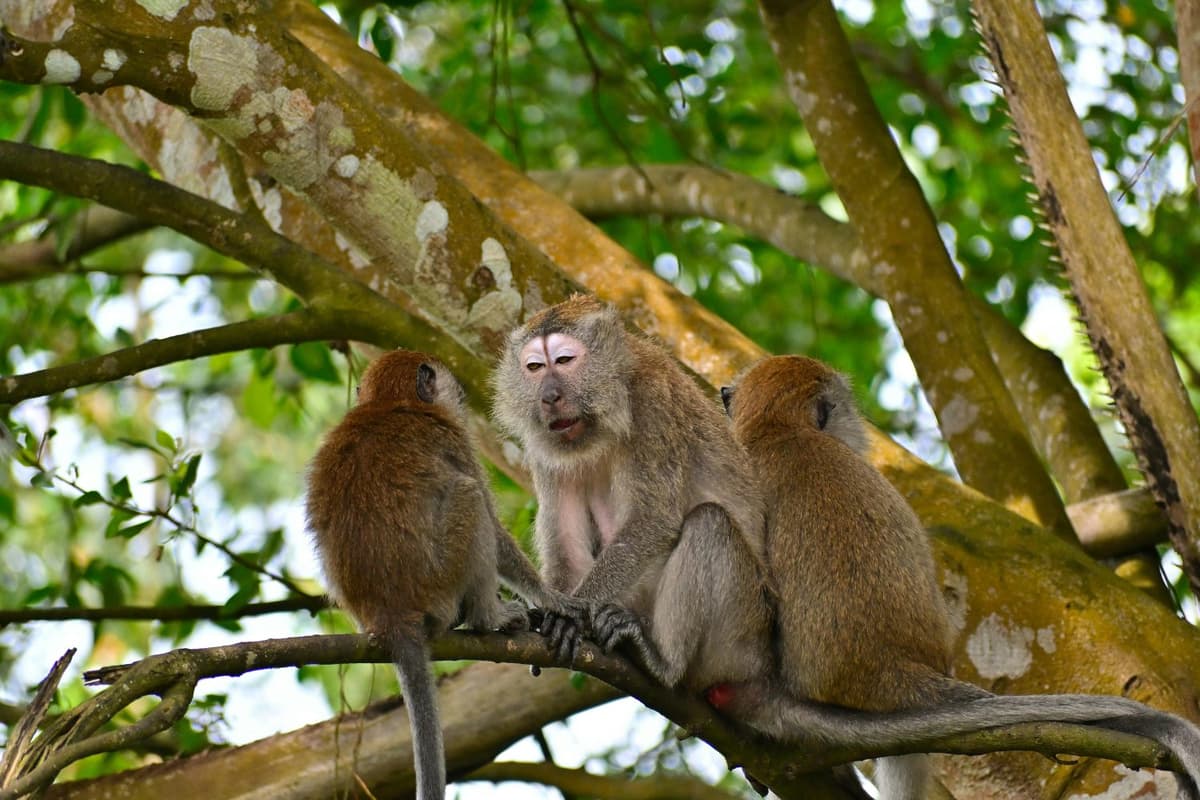
The Long-tailed Macaque is one of the primates you can most often see in Cat Tien National Park.
Because they are easy to see, these macaques are useful for teaching visitors about wildlife. Unlike more shy species like the Yellow-cheeked Gibbon or Black-shanked Douc, they are active and visible. The best time to see them is early morning or late afternoon. Visitors should not feed or touch them to keep both people and animals safe.
Conservation Activities at Cat Tien National Park
International Recognition: IUCN Green List
In June 2024, Cat Tien National Park became the first national park in Vietnam to officially achieve the IUCN Green List status. This is the highest global certification for protected areas that meet strict standards of good governance, sound design, and effective management.
Being listed on the IUCN Green List confirms that Cat Tien is managed according to international best practices and delivers real conservation results. It is considered a “gold standard” for protected areas worldwide and marks an important milestone for Vietnam’s conservation sector.
Wildlife Rescue and Reintroduction Programs
Cat Tien does not only protect existing wildlife but also actively restore ecosystems. The park cooperates with international organizations to rescue, rehabilitate, and release endangered primates such as the black-shanked douc and the yellow-cheeked gibbon.
In September 2024, the park successfully reintroduced rare Javan woolly-necked storks back into the wild - one of the most notable recent conservation achievements.
Another long-term success story is the 20-year recovery of freshwater crocodiles at Bau Sau (Crocodile Lake). From a time when crocodiles had completely disappeared, the area is now home to hundreds of individuals thanks to consistent reintroduction and protection efforts.
High-Tech Anti-Poaching and Monitoring
Technology plays a key role in protecting wildlife at Cat Tien. Rangers use SMART and EarthRanger monitoring systems to record patrol data, track forest changes, and detect illegal hunting activities. These digital tools improve patrol efficiency and allow better planning of conservation actions.
A dense network of camera traps has been installed to monitor elusive species such as the fishing cat, leopard, and Asian elephant. The collected data helps identify population numbers and activity areas, allowing the park to prioritize protection zones.
In addition, Oxalis Adventure has donated 8 real-time wildlife cameras along with television screens installed at the park’s management center. These cameras are placed in areas where animals frequently appear, allowing forest rangers to monitor wildlife live from the control room. The system strengthens protection efforts and also helps raise public awareness about conservation work.
Community-Based Conservation
Local communities play an important role in conservation. Instead of hunting, people from ethnic groups such as the Chau Ma and S’Tieng are trained to become tour guides, join forest patrol teams, or provide homestay services. These alternative livelihoods reduce pressure on forest resources while improving local incomes.
Wildlife Watching Tips for Visitors
Watching wildlife in Cat Tien National Park can be an unforgettable experience, but it requires patience, preparation, and respect for nature. To increase your chances of seeing animals in their natural habitat, it is important to understand the best time for wildlife viewing Cat Tien and follow the proper guidelines.
The best time for wildlife viewing in Cat Tien is during dusk and nighttime, when many carnivores such as fishing cats and civets, as well as hoofed animals like deer, are most active. The dry season (from December to May) is also ideal because water sources become limited, and animals gather around wetlands such as Bau Sau to drink. In addition, reptiles and amphibians often appear shortly after rainfall, making this another excellent moment for observation.
To ensure both safety and successful sightings, visitors should strictly follow the rules for animal watching in Cat Tien. Wildlife here is sensitive and elusive, so keep noise to a minimum, avoid strong perfumes or scented sprays, and never use bright white lights at night. When joining evening activities, red-filtered lights are recommended because they are less disturbing to animals.
Bringing the right equipment will improve your experience. Binoculars are essential for observing birds and mammals from a safe distance without causing disturbance. Wear neutral-colored clothing such as green or brown to blend into the forest, and consider using leech socks when trekking through dense vegetation.
One of the most popular activities is the Cat Tien night safari tour, a 12-kilometer journey through the forest by open-top vehicle. During this tour, visitors may spot deer, wild boar, and other nocturnal species under specialized lighting. Trekking to Bau Sau offers opportunities to observe freshwater crocodiles and rare water birds, while early morning walks provide the chance to see yellow-cheeked gibbons in the treetops.
Cat Tien National Park is not only home to many rare animals, but also to ancient trees and valuable plant species that create a rich and peaceful forest ecosystem. It is an ideal destination for anyone who wants to escape the busy city and breathe fresh air. Visitors can enjoy many activities such as camping, visiting the Nature Museum, cycling through forest trails, or joining an open-top jeep tour to explore deeper areas of the park. Located only about 150 kilometers from Ho Chi Minh City, Cat Tien is a perfect getaway for a short trip. If you are looking for a place to explore, connect with nature, and observe wildlife, Cat Tien National Park is waiting for you.
Reference
- Varma, S., Nguyen, X. D., Tran, V. T., & Sukumar, R. (2008). The Asian elephants Elephas maximus of Cat Tien National Park, Vietnam: Status and conservation of a vanishing population.
- Polet, G., Tran, V. M., Nguyen, X. D., Bui, H. M., & Baltzer, M. C. (1999). The Javan rhinos (Rhinoceros sondaicus annamiticus) of Cat Tien National Park, Vietnam: Current status and management implications. WWF Indochina Programme.
- Panorama. (n.d.). Successful rewilding Siamese crocodiles in Bau Sau Ramsar Site, Cat Tien National Park. Panorama Solutions. https://panorama.solutions/en/solution/successful-rewilding-siamese-crocodiles-bau-sau-ramsar-site-cat-tien-national-park
- Fauna & Flora International. (n.d.). Siamese crocodile. Fauna & Flora. https://www.fauna-flora.org/species/siamese-crocodile/
- The Primate Conservancy. (n.d.). Indochinese silvered langur. The Primate Conservancy. https://neprimateconservancy.org/indochinese-silvered-langur/
- Vietnam Forest Inventory and Planning Institute & IUCN Vietnam. (2004). Sourcebook of existing and proposed protected areas in Vietnam: Second edition (updated April 23, 2004).https://thiennhienviet.org.vn/sourcebook/pdf/southeast/Cat%20Tien.pdf
- Phạm Nhật, Nguyễn Xuân Đặng, & Polet, G. (2006). Field guide to the key mammal species of Cat Tien National Park. Rhino Resource Center