Across Vietnam’s forests, wildlife is increasingly disappearing not because habitats have vanished overnight, but because life within them is being quietly removed. Wire snares - cheap, indiscriminate traps laid across forest trails - have become one of the most widespread and destructive threats to wildlife in the country. Unlike targeted hunting, these snares do not discriminate between species. Any animal that passes through them can become a victim.
From elephants, pangolins to primates, bears and deer, Vietnam’s most iconic and endangered species are all affected in different ways. Some suffer fatal injuries deep in the forest, while others survive only to lose limbs, mobility and their place in the wild. In many areas, the result is a growing phenomenon known as “empty forests,” which describe ecosystems that still look intact but have lost much of their wildlife.
In this article, we’re going to explore the scale of Vietnam’s illegal poaching crisis through five key groups of endangered species, showing how wire snares negatively affect the future of the country’s forests and what it means for conservation today.
Asian Elephant - When curiosity becomes a death sentence
The Asian elephant (Elephas maximus) is the largest land mammal in Asia and is found across 13 countries in South and Southeast Asia. In the wild, it feeds on a wide range of vegetation, including grasses, bark, roots, leaves, and often consumes cultivated crops such as rice, bananas and sugarcane. Because elephants need to drink water daily, they are closely tied to reliable freshwater sources.
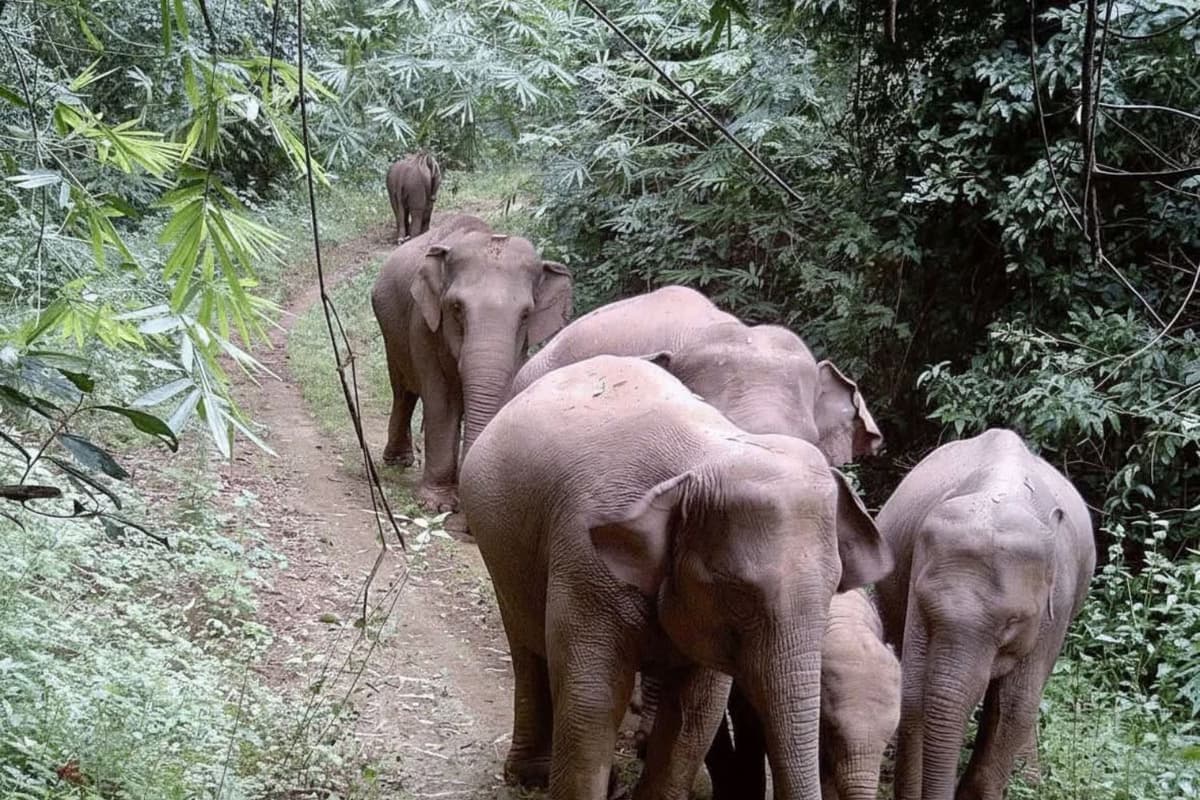
Elephants in Vietnam are now classified as Endangered and face a serious risk of extinction. Image: Đại Ngàn Cát Tiên
Despite their long-standing cultural significance in Vietnam, where wild elephants are closely associated with strength and tradition, the species is now classified as Endangered and faces a serious risk of extinction in the country.
Today, fewer than 200 wild elephants remain in Vietnam, fragmented across isolated habitats. Southern Dong Nai Province, one of the country’s largest remaining forest landscapes, supports Vietnam’s second-largest population, estimated at only 25 - 27 individuals. As forests shrink and become more fragmented, human-elephant conflict has also intensified, resulting in losses on both sides.
One of the most persistent and often overlooked threats in these fragmented forests is wire snares. While elephants are not the intended target, their large bodies and constant movement through forest corridors make them vulnerable to accidental entanglement, particularly in degraded or heavily hunted areas. Even a single snare can cause severe injury, infection, long-term disability, or death, adding a silent but deadly pressure on already fragile populations.
Beyond snaring and habitat loss, elephants in Vietnam are also affected by broader wildlife crime dynamics. The illegal ivory trade remains a significant regional issue: Southeast Asia and China account for around 90% of global seized ivory, with Vietnam has been identified as home to the largest ivory seizure in the world.
Much of the ivory carved in Vietnam is later trafficked to major markets such as China and the United States, while some products are also sold domestically to local buyers and international tourists, as well as through online channels. Despite this, many tourists mistakenly believe ivory products are legal in Vietnam. Wildlife trade in Vietnam is strictly prohibited, with penalties of up to 15 years in prison or fines of up to 2 billion VND (approximately $76,000) for offenses involving endangered and rare species.
In this regard, Vietnam has developed a National Elephant Conservation Action Plan toward 2035, focusing on reducing conflict, protecting remaining populations, restoring habitat connectivity, and promoting coexistence between people and elephants. However, progress remains difficult due to small population size, fragmented forests, and ongoing pressure on remaining habitats.
With only a few hundred elephants left in the wild, each individual plays a critical role in the survival of the species in Vietnam.
Pangolin - When nature's armor isn't enough
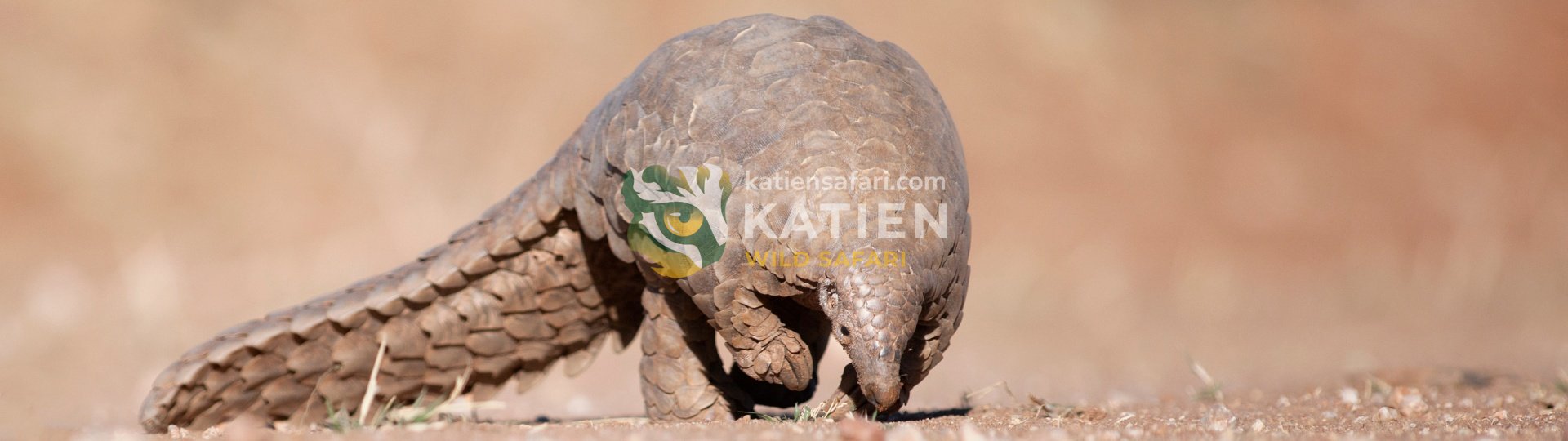
Wire snares placed along forest trails are one of the most effective threats to pangolins. These shy, nocturnal animals tend to follow regular ground pathways as they move between feeding and nesting areas. Poachers exploit this behavior by setting large numbers of snares directly along these routes, where pangolins are highly likely to be caught.
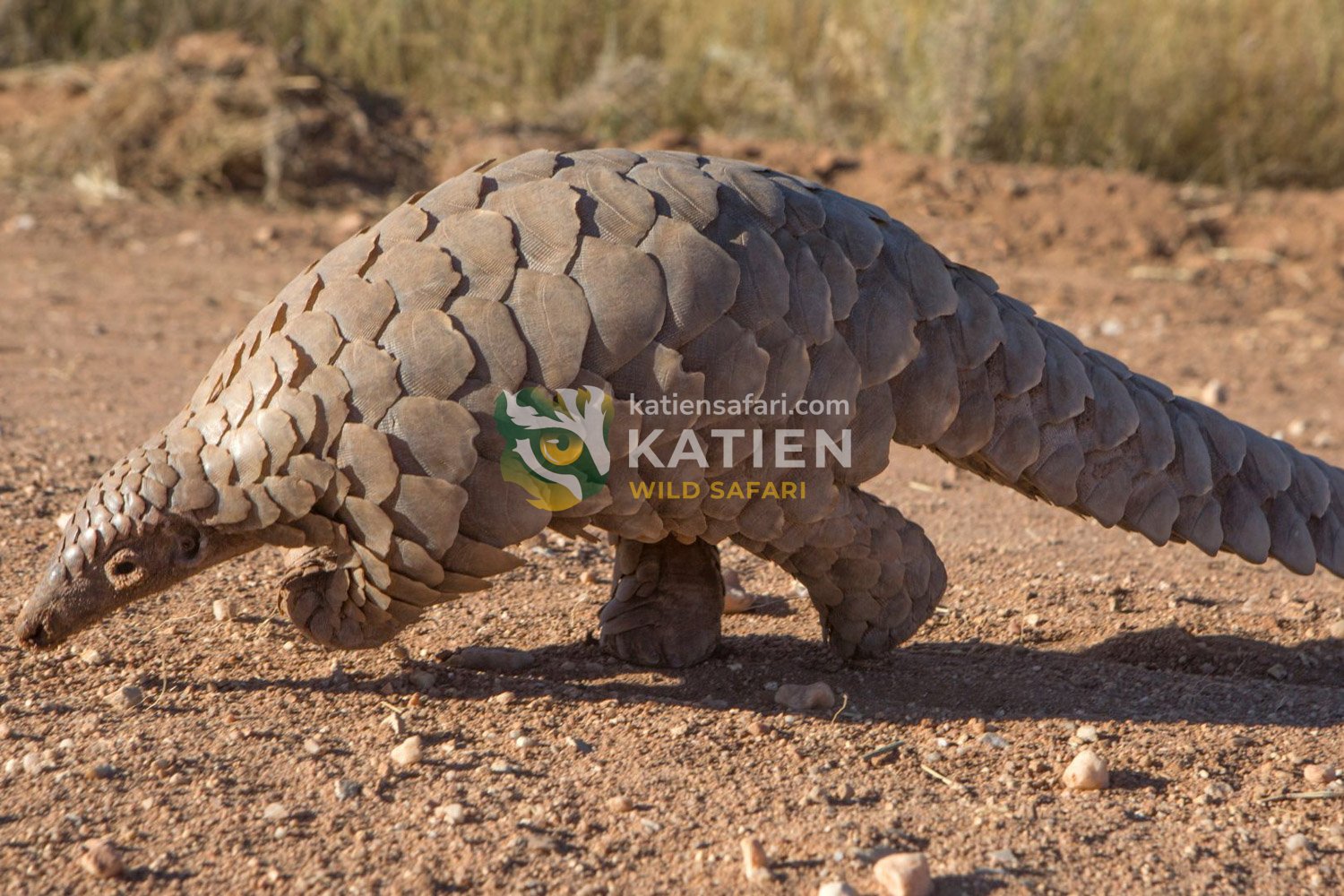
Pangolins are the most trafficked animal in the world.
The Sunda pangolin (Manis javanica) and the Chinese pangolin (Manis pentadactyla) are the only two species found in Vietnam. They are both listed as Critically Endangered on the IUCN Red List. Globally, all eight pangolin species are threatened with extinction.
Pangolins are widely regarded as the most illegally trafficked mammals in the world. It is estimated that since 2000, more than 1 million pangolins have been traded illegally at the international level. Between 2017 and 2019 alone, more than 96,000 kilograms of pangolin scales were seized across Malaysia, Singapore, and Vietnam. Their scales are especially sought after for use in traditional Chinese medicine, while their meat is also consumed as a luxury delicacy in some regions.
Despite their unique appearance and ecological role, pangolins remain one of the least understood mammals. In fact, they could disappear from the wild before many people ever realize they exist.
A major driver of demand is persistent belief in the medicinal value of pangolin products. A survey conducted by WildAid in Hue, Vietnam has shown that over 80% of respondents believe pangolin products are useful for treating at least one ailment. Also, more than half associate them with treatments for conditions such as mammary gland blockages despite a lack of scientific evidence. Although 83% of respondents are aware that pangolin trade is illegal, misconceptions about their effectiveness continue to fuel demand.
Pangolins’ physical defenses make them especially vulnerable to snares. When threatened, they instinctively curl into a tight ball, a strategy that protects them from natural predators like tigers or leopards. However, this same behavior offers no protection against wire snares. Once caught, the noose tightens as the animal struggles, often leading to severe injury or death.
Although Vietnam has implemented strict laws banning the hunting and trade of pangolins with penalties including heavy fines and imprisonment, enforcement remains challenging due to persistent demand and transnational trafficking networks.
Because pangolins are so rarely seen in the wild and so heavily exploited, conservationists warn they could vanish long before most people even realize how important they are.
Primates - From forest canopies to captive lives
Wire snares are a major threat to Vietnam’s primates, especially along forest trails and feeding routes where animals move regularly. Because snares are indiscriminate, many primates suffer severe injuries, leaving them unable to climb and drastically reducing their chances of survival in the wild. Survivors are often captured and sold into the illegal wildlife trade, either as bushmeat or as pets in urban areas.
Vietnam is home to an extraordinary diversity of primates, including several species found nowhere else on Earth, many of which are now among the world's most endangered mammals.
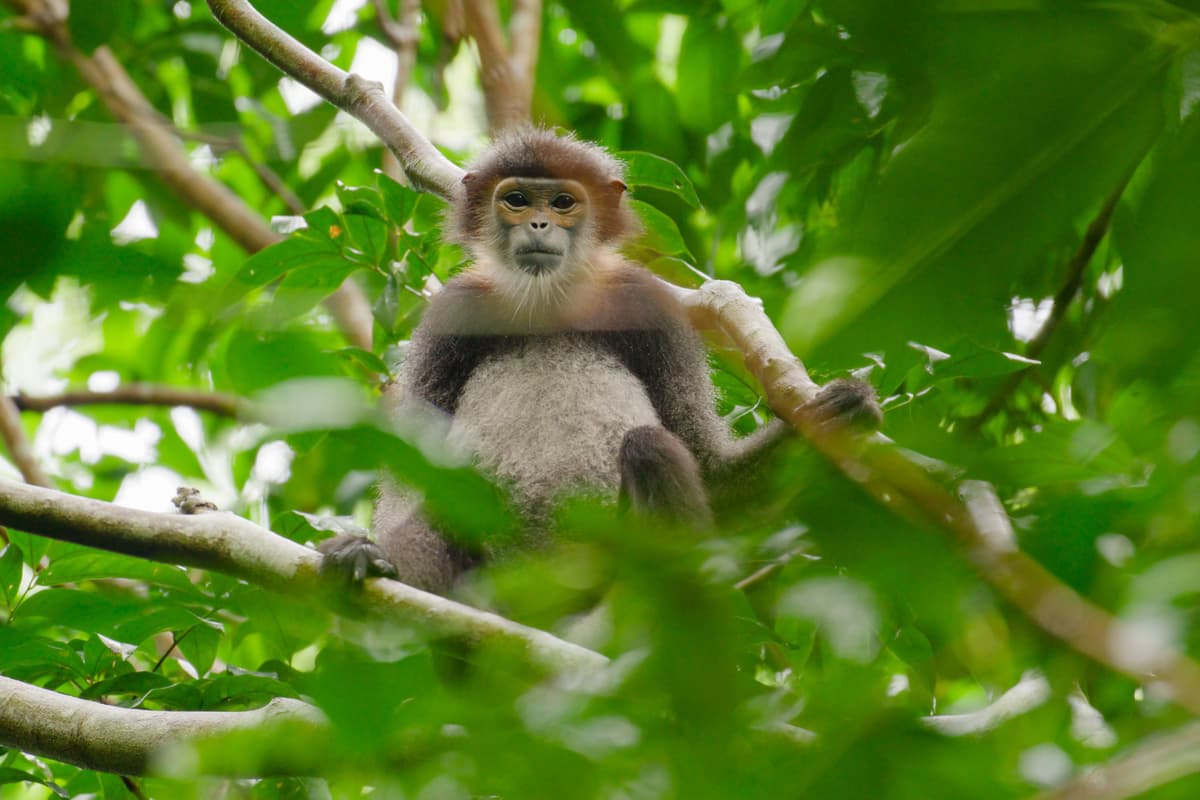
The Red-shanked doucs are listed as critically endangered by the IUCN Red List and classified under Group IB (strictly protected) in Vietnam's Red Data Book.
In southern Vietnam, Cat Tien National Park is one of the country's most important primate strongholds. Its lowland evergreen forests support key populations of black-shanked douc (Pygathrix nigripes), red-shanked douc (Pygathrix nemaeus), and long-tailed macaques (Macaca fascicularis). These species spend much of their time in the canopy where they feed, rest and move in social groups. However, they are not entirely safe from ground-based threats. Snares set along forest edges and trails can still injure or kill individuals when they descend to the ground. Macaques, in particular, are frequently targeted due to their adaptability and proximity to human activity.
One of the most dramatic primate declines in Vietnam is seen in the Cat Ba langur (Trachypithecus poliocephalus), found only in Cat Ba Island. Once numbering in the thousands, its population has fallen to around 70 individuals, largely due to historical hunting and ongoing human disturbance.
Gibbons across Vietnam are also in crisis, with several species reduced to small, isolated populations in northern and central forests. Some now survive only in a handful of protected areas where habitat loss, hunting and wire snares continue to drive population declines.
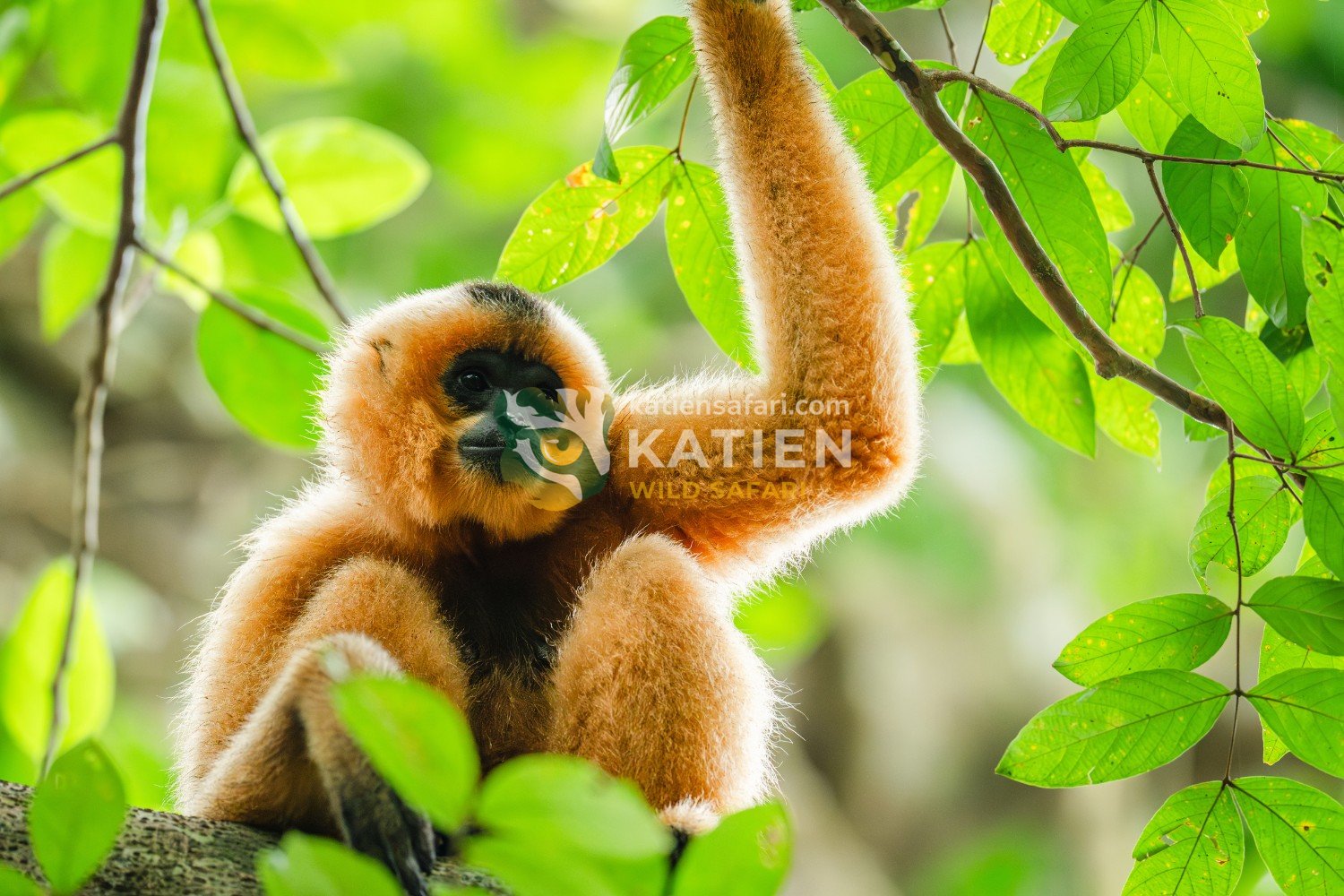
Yellow-Cheeked Gibbon found in Cat Tien is classified as Endangered according to the 2023 IUCN Red List.
Together, these species reflect a wider reality across Vietnam’s forests: even within protected areas, primates remain vulnerable to snares, hunting pressure and illegal trade. Continued protection is essential to ensure they do not follow the same trajectory as more severely depleted populations elsewhere in the country.
Bears - The high price of escaping a snare
Wire snares are particularly dangerous for bears because of their curiosity and their habit of foraging along the forest floor. When a bear is caught, it often reacts with immense strength, pulling and twisting against the snare. This struggle only tightens the wire, causing deeper wounds and severe injuries. In some documented rescue cases, bears have even attempted to chew off their own limbs in a desperate effort to escape.
Vietnam is home to two bear species: the Asiatic moon bear (Ursus thibetanus), also known as the moon bear, and the Malayan sun bear (Helarctos malayanus), the smallest bear species in the world.
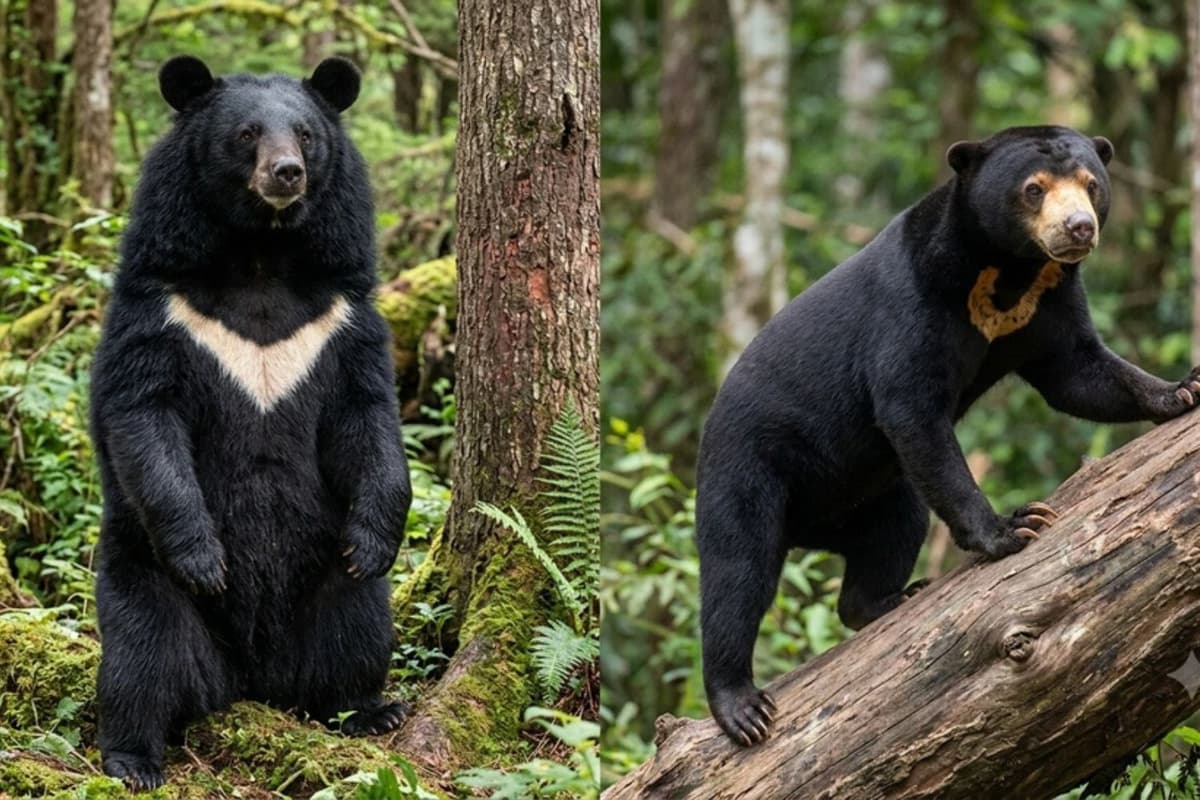
Moon bear and Sun bear. Image: Bao An Giang
For decades, bears in Vietnam have been heavily impacted by the bear bile industry. In 2005, around 4,300 bears were kept in captivity across the country. By the end of 2023, this number had fallen to about 200 individuals, a decline of more than 95%. While bear farming is now nearing its end, illegal capture, transport, and the trade of bear bile and body parts still continue in some areas.
Sun bears are less commonly milked for bile compared to moon bears, but both species are still exploited for other body parts, including paws and limbs, which are used in traditional products or soaked in alcohol. Even though bile from captive bears is often contaminated due to poor hygiene and handling, these practices continue to drive illegal trade, even as awareness and enforcement improve.
Both bear species are strictly protected under Vietnamese law and are listed as endangered and rare wildlife. Activities such as hunting, keeping, transporting, or trading bears and their parts can lead to criminal charges, with severe cases punishable by 10 - 15 years in prison. Advertising or selling bear products can also result in heavy fines. Internationally, both species are listed under CITES Appendix I, meaning all international trade is strictly prohibited.
In Vietnam, around 150 bears are still believed to remain in captivity, but voluntary transfers from private owners are increasingly seen as a positive step toward ending bear exploitation.
While bear farming is slowly declining, the continued presence of illegal trade and occasional snaring incidents shows that strong enforcement, public awareness, and sustained rescue efforts are still essential for ensuring the long-term survival of bears in Vietnam’s forests.
Sika Deer - a hard lesson from a lost wild species
Wire snares and hunting pressure have long affected deer populations across Southeast Asia, and the sika deer story in Vietnam is one of the clearest warnings of what happens when wildlife loss goes unchecked.
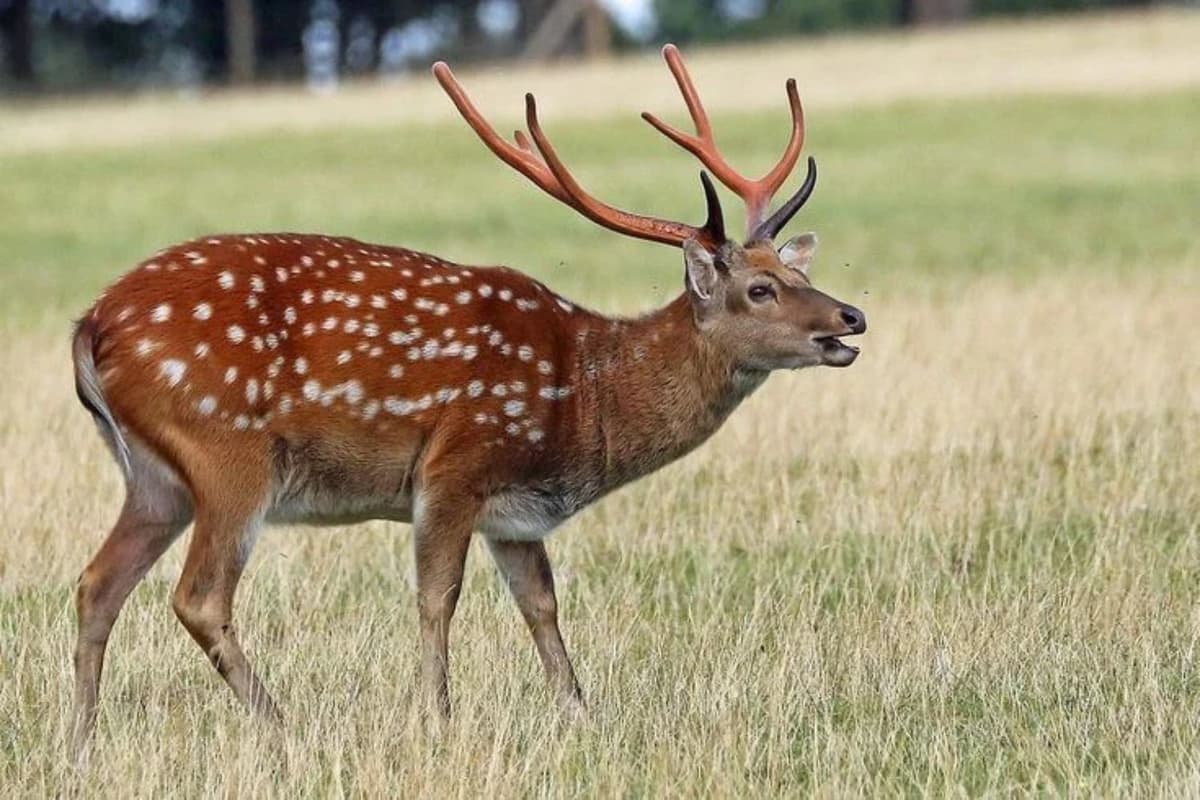
Today, sika deer are no longer considered to exist in the wild in Vietnam. Image: Vietnam.vn
The Vietnamese sika deer (Cervus nippon), a subspecies of sika deer native to Vietnam and southern China, once roamed Vietnam’s forests. However, due to habitat loss, heavy hunting, and prolonged disruption during the Vietnam War (1955 - 1975), wild populations gradually disappeared. Today, sika deer are no longer considered to exist in the wild in Vietnam, and the species in the country survives mainly under captive care in farms and managed facilities.
Sika deer are known for their seasonal coat changes. In summer, they have reddish-brown fur with white spots that provide camouflage in dappled forest light. In winter, the coat turns gray-brown and the spots fade, helping them blend into more muted environments.
Across Southeast Asia, native sika deer subspecies continue to face threats from deforestation and poaching. What was once a common forest animal has become increasingly rare, surviving only in controlled conditions in parts of its former range.
The disappearance of the sika deer from Vietnam’s forests serves as a stark warning for other species still under pressure today. It shows how quickly hunting and habitat loss, especially when combined with persistent threats like wire snares, can erase a species from the wild. In this context, it is a reminder that without strong protection, other forest animals such as elephants or pangolins could follow a similar path.
The illegal poaching crisis behind Vietnam's empty forests
Wire snares - the invisible killers of the forest
Wire snares are simple traps made from steel cable or wire that can be constructed from inexpensive materials and set in just a few minutes. Unlike firearms, they require little skill to use and can be left unattended for days or even weeks, allowing a single poacher to deploy dozens or even hundreds of traps throughout a forest.

Rangers introduce some of the wire snares often found in the forest of Cat Tien in Katien Safari’s 4D3N Patrol with Rangers tour
What makes wire snares particularly devastating is that they are completely indiscriminate. They do not target a single species but instead capture any animal that passes through them. Deer, wild boars, pangolins, primates, bears and elephants have all been documented as victims of wire snares across Southeast Asia.
Once trapped, animals often suffer severe injuries as they struggle to escape. Many die from blood loss, infection, dehydration, starvation or exhaustion, while others survive with permanent injuries that greatly reduce their chances of living and reproducing in the wild.
Across Vietnam and the wider Greater Mekong region, ranger teams and conservation organizations have removed hundreds of thousands of wire snares from protected forests over the past decade. However, the scale of the problem remains immense, and enforcement on the ground is both labor-intensive and costly.
In recent years, rangers at Cat Tien National Park alone have dismantled more than 12,452 snares and confiscated numerous illegal hunting tools. Wire snares are deceptively cheap for poachers to deploy. A single snare can cost less than 30,000 VND to set, yet locating and removing it can cost up to 18 times more. This imbalance underscores a difficult reality: conservation teams are constantly operating in a race against time and resources, trying to outpace a low-cost but highly destructive form of hunting.
Despite ongoing efforts, new snares continue to be set, making snare removal an ongoing challenge and reinforcing the need for stronger law enforcement, sustained funding and deeper community engagement to address the root causes of illegal hunting.
Empty forest syndrome - when wildlife disappears before the trees
The widespread use of wire snares has contributed to a phenomenon known as empty forest syndrome. Coined by conservation scientists, the term describes forests that appear healthy and intact but have lost much of their wildlife due to unsustainable hunting.
At first glance, these forests may seem untouched. Towering trees, dense vegetation, and flowing rivers create the impression of thriving wilderness. Yet beneath the canopy, many of the animals that once shaped these ecosystems have become scarce or disappeared altogether. Large mammals become increasingly difficult to find, ground-dwelling birds decline, and predators lose the prey they depend on.
The disappearance of wildlife has consequences far beyond individual species. Animals perform essential ecological functions such as dispersing seeds, pollinating plants, regulating prey populations and influencing forest regeneration. As wildlife populations decline, these ecological processes are disrupted, reducing the long-term resilience and health of forest ecosystems.
The effects of empty forest syndrome can also be visible for travellers and visitors alike. In some protected forests, people can spend hours walking through seemingly pristine habitats while seeing remarkably little wildlife. Conserving Vietnam's forests therefore means protecting not only the trees, but also the animals that sustain these ecosystems and keep them functioning.
In the following sections, we'll explore five endangered species that have become victims of Vietnam's wire snare crisis and examine why protecting them is essential for the future.
Action-based solutions for conservation
Protecting Vietnam’s wildlife from the escalating threats of wire snares and illegal hunting requires coordinated action from government agencies, conservation organizations, local communities and the tourism sector.
For government and law enforcement, strengthened protection and targeted conservation programs have already shown measurable impact. In Cuc Phuong National Park, dedicated efforts have supported the long-term conservation of Delacour’s langur, one of the world’s most endangered primates. Similarly, in Cat Tien National Park, ongoing protection and monitoring programs are crucial for safeguarding species such as gaurs, Siamese crocodiles and the Park’s remaining wild elephant population. These cases demonstrate that when protection is consistent and well-resourced, even critically threatened species can recover or persist.
However, enforcement alone is not enough. Many of the pressures on wildlife originate outside protected areas, making community involvement essential.
For local communities and tourism businesses, sustainable livelihood models play an increasingly important role in reducing dependence on wildlife exploitation.For local communities and tourism businesses, sustainable livelihood models are becoming increasingly important in reducing dependence on wildlife exploitation. Conservation-focused tourism, for example, provides economic opportunities while encouraging the protection of natural ecosystems.
At Katien Safari, visitors can do more than simply observe wildlife - they can join forest patrols alongside Cat Tien National Park's rangers, explore the park's diverse habitats, and gain a deeper understanding of the challenges and successes of wildlife conservation. By creating jobs linked to nature-based tourism, these initiatives provide local communities with sustainable sources of income and strengthen the incentive to protect wildlife and forests rather than exploit them.
Ultimately, long-term conservation depends on shared responsibility. Governments must continue strengthening law enforcement and habitat protection, while businesses and communities play a key role in shifting behavior and creating alternatives that reduce pressure on wildlife. Only through this combined approach can Vietnam’s forests remain home to their iconic species.
Conclusion
The story of Vietnam’s wildlife is no longer just about biodiversity. It’s also about survival under constant pressure. Wire snares, though simple and inexpensive, have proven to be one of the most effective tools for erasing wildlife from forests. Their impact is visible not only in declining populations, but in entire ecosystems where animals are becoming increasingly rare.
Yet the crisis is not irreversible. Across Vietnam, conservation efforts, law enforcement and community-based initiatives are beginning to show that change is possible. Protected areas like Cat Tien and Cuc Phuong demonstrate that with sustained protection, species can still survive, and in some cases recover.
Ultimately, stopping the snare crisis requires more than awareness, it demands long-term commitment from authorities, stronger enforcement on the ground, responsible engagement from businesses and a shift in public behavior. Only then can Vietnam’s forests remain more than just trees, and once again become living ecosystems filled with wildlife.