Table of Content
Stories & Updates From THE WILD WORLD
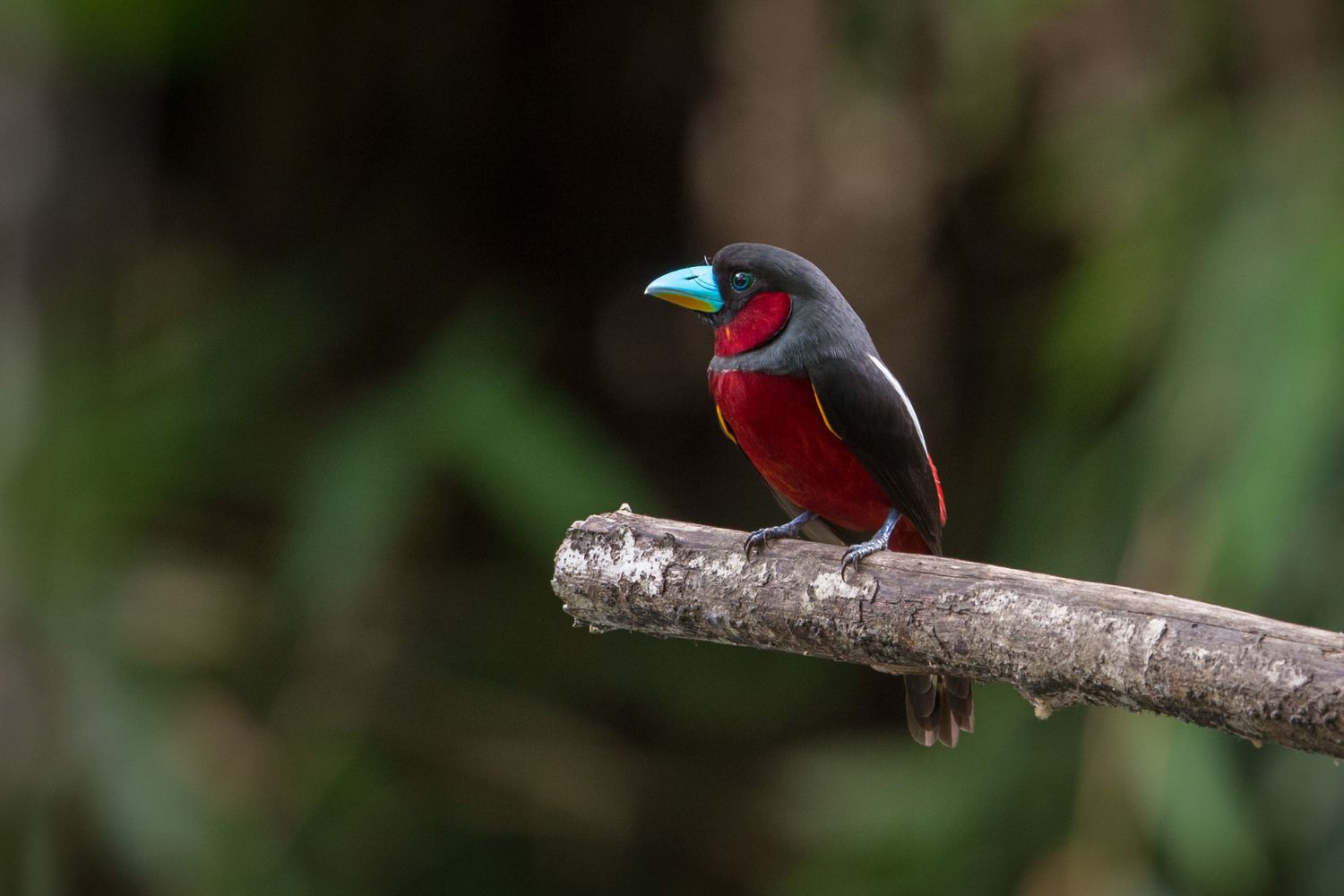

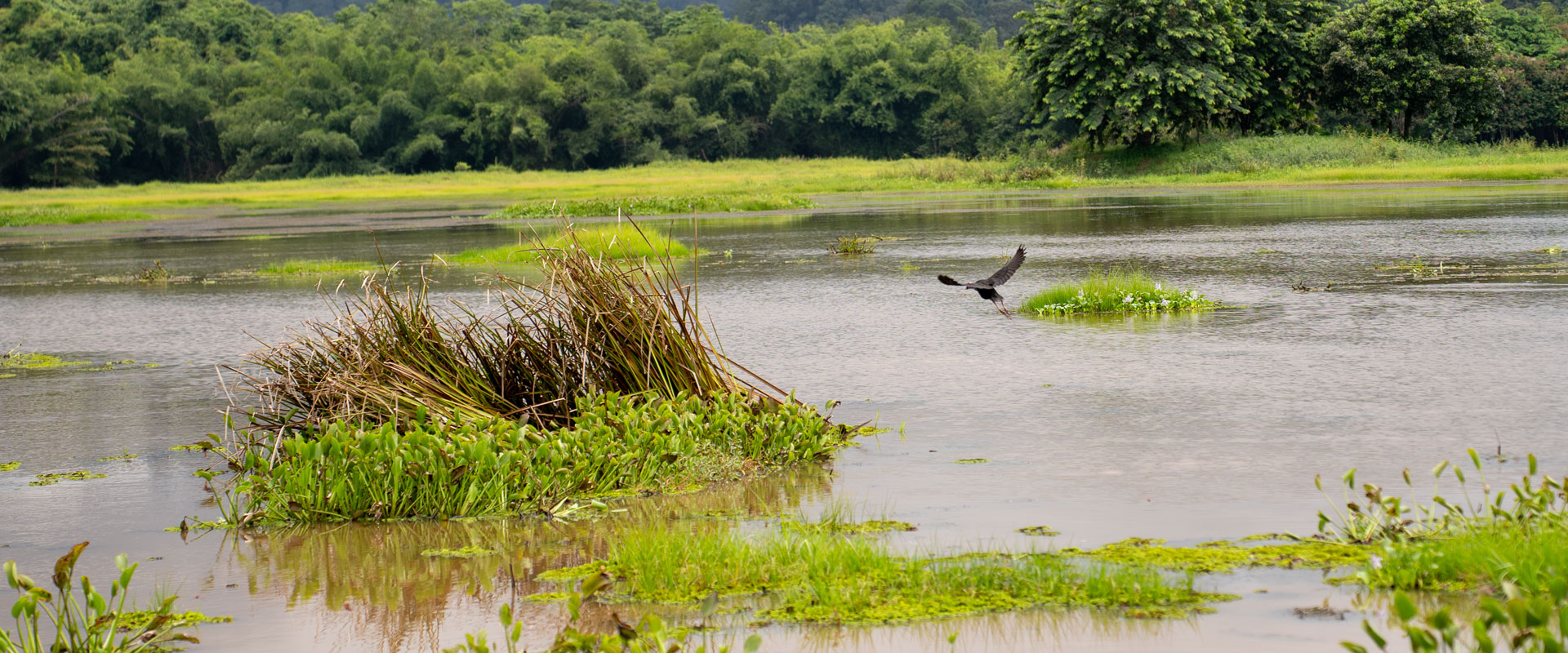
Hidden within the ancient forests of Cat Tien National Park, Bau Sau (Siamese Crocodile Lake) is one of Vietnam's most extraordinary wilderness destinations. Reached only after a journey through evergreen forest, this vast wetland is home to remarkable biodiversity, from colorful waterbirds and grazing mammals to the country's largest wild population of the Critically Endangered Siamese crocodile.
But Bau Sau is more than a wildlife hotspot, it is a testament to what conservation can achieve. Once believed to have lost its native crocodiles forever, the wetland has become the site of one of Southeast Asia's most inspiring species recovery stories. Through decades of scientific research, habitat protection, and dedicated conservation efforts, a species on the brink of extinction has made an extraordinary comeback.
In this article, we'll explore the history of Bau Sau, the remarkable revival of the Siamese crocodile, and why this unique Ramsar wetland remains one of Vietnam's most important strongholds for biodiversity.
Hidden deep within Cat Tien National Park, Bau Sau (Crocodile Lake) is one of Vietnam's greatest conservation success stories. Today, it is home to the country's largest wild population of the Critically Endangered Siamese crocodile (Crocodylus siamensis), but just a few decades ago, the species was believed to have disappeared from the wild.
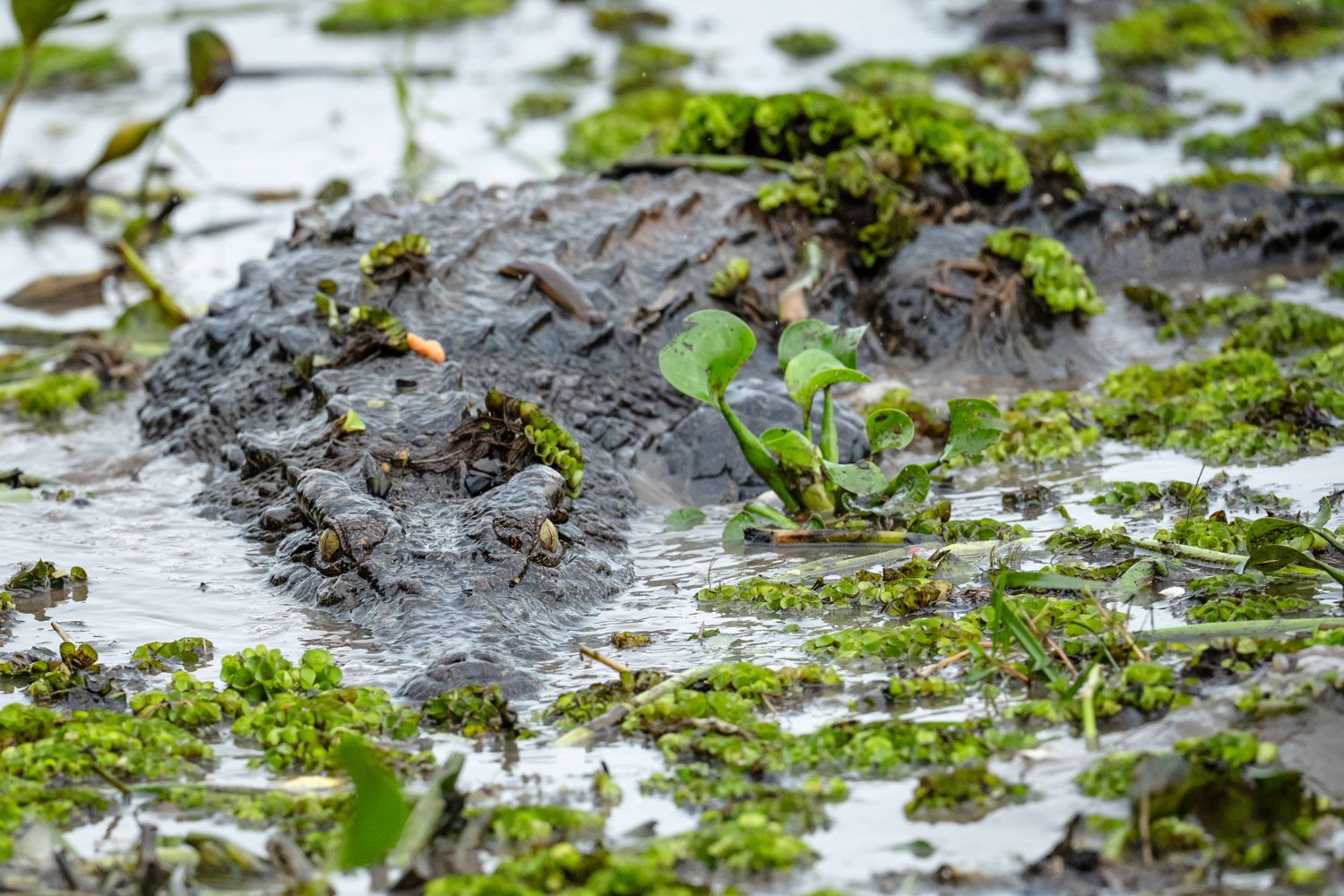
A Siamese crocodile (Crocodylus siamensis) in Bau Sau, Cat Tien National Park.
In fact, by 1992, many scientists feared that the Siamese crocodile had become extinct or was on the verge of extinction in its natural habitat. Once widespread across Southeast Asia, the species had suffered dramatic declines due to habitat loss, wetland degradation, hunting and the illegal wildlife trade. In Vietnam, no viable wild populations were thought to remain.
Determined to restore this native apex predator, Cat Tien National Park launched an ambitious reintroduction programme between 2000 and 2005. Captive-bred Siamese crocodiles were released into the protected wetlands of Bau Sau, where extensive marshes, flooded forests, and abundant prey provided ideal conditions for their recovery.
The early years required patience and careful monitoring. Following the reintroduction, only nine crocodiles were confirmed in the wild. However, thanks to more than two decades of dedicated conservation efforts by the park management, rangers, scientists, and partner organizations, the population has steadily recovered. Today, more than 600 Siamese crocodiles inhabit the Bau Sau wetlands, making it one of the most successful conservation programmes for this Critically Endangered species anywhere in the world.
Bau Sau is more than just a refuge for crocodiles. It forms the heart of one of Vietnam's most important wetland ecosystems and is recognised as a Ramsar Site, a wetland of international importance recognized under the Ramsar Convention. Its mosaic of lakes, swamps, seasonally flooded grasslands, and forests supports an extraordinary diversity of wildlife including wild gaurs, wild boars, long-tailed macaques, numerous waterbirds and many other rare and threatened species.
The revival of the Siamese crocodile at Bau Sau demonstrates what long-term conservation can achieve. From a species once believed to be lost in the wild to a thriving population of hundreds of individuals, Bau Sau has become a powerful symbol of hope, not only for Siamese crocodiles but also for the protection and restoration of Vietnam's wetlands and biodiversity.
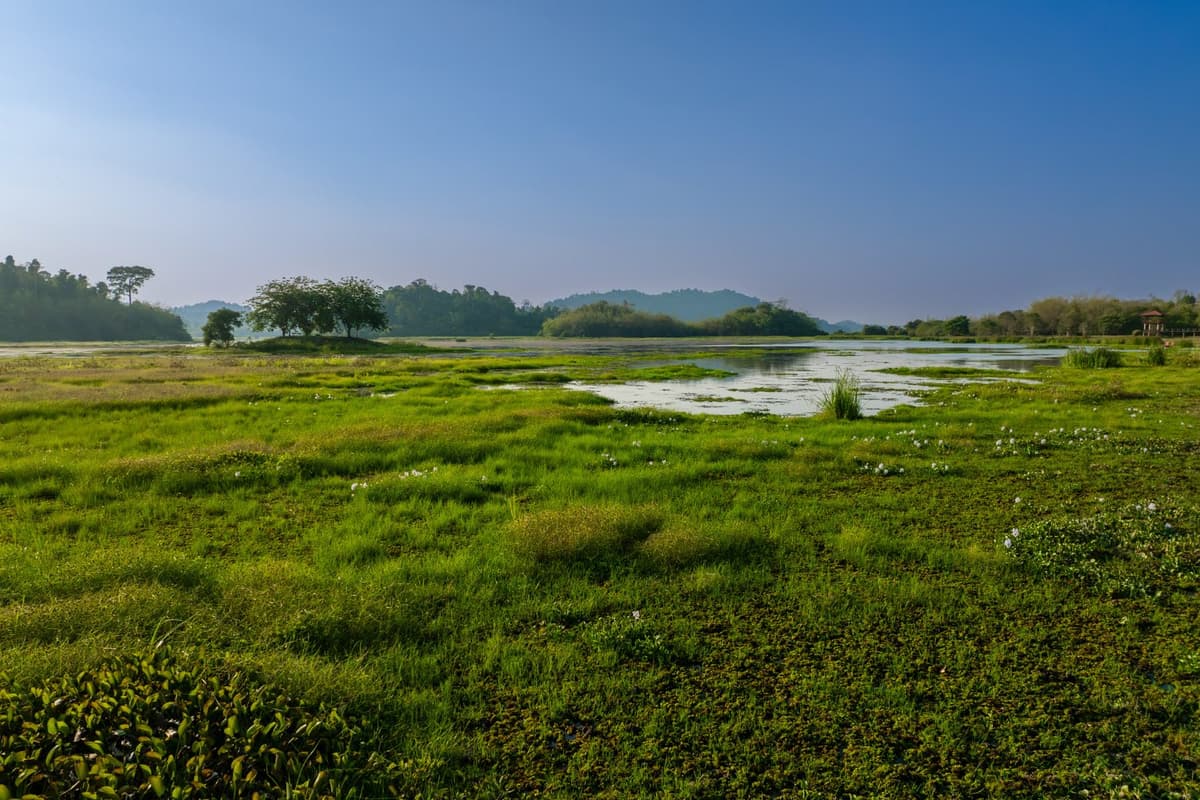
In 2005, Bau Sau was recognised as a Wetland of International Importance under the Ramsar Convention.
While Bau Sau is best known as the last stronghold of the Siamese crocodile in Vietnam, its global significance extends far beyond a single species. In 2005, Bau Sau was designated Ramsar Site No. 1499, recognizing it as a Wetland of International Importance under the Ramsar Convention. This designation highlights the exceptional ecological value of the wetland and its crucial role in conserving biodiversity.
In 2005, Bau Sau was recognised as a Wetland of International Importance under the Ramsar Convention.
Covering more than 13,700 hectares, the Bau Sau wetland forms the ecological heart of Cat Tien National Park. Its landscape is a dynamic mosaic of permanent lakes, seasonal marshes, flooded grasslands, swamp forests, and riparian habitats. During the rainy season, floodwaters spread across the floodplain, creating extensive aquatic habitats that support breeding fish, amphibians, reptiles and countless aquatic invertebrates. As water levels recede in the dry season, exposed mudflats and grasslands become important feeding grounds for mammals and waterbirds.
The Ramsar designation also recognizes the vital ecosystem services provided by Bau Sau. The wetland stores and filters freshwater, regulates seasonal flooding, captures carbon in its soils and vegetation, and helps maintain the ecological balance of the wider Dong Nai River basin. These natural functions benefit not only wildlife but also surrounding communities that depend on healthy watersheds and stable ecosystems.
Today, Bau Sau stands as one of Vietnam's most important protected wetlands and a model of successful ecosystem conservation. Its international recognition under the Ramsar Convention reflects decades of commitment to protecting both biodiversity and the ecological processes that sustain it. Combined with the remarkable recovery of the Siamese crocodile, Bau Sau demonstrates how conserving wetlands can safeguard endangered species while preserving one of Southeast Asia's richest natural landscapes.
Reaching Bau Sau (Crocodile Lake) is part of the adventure. Located deep inside Cat Tien National Park, the wetland is not accessible by private vehicle. Visitors must combine road travel with a short park transfer and a scenic forest hike.
Cat Tien National Park is located about 150 km northeast of Ho Chi Minh City and can be reached by car, private transfer, or public bus. The journey from the city usually takes around 3 - 4 hours, depending on traffic and road conditions.
By car or motorbike
The drive takes around 3 - 4 hours, depending on traffic. From Ho Chi Minh City, follow National Highway 1A for approximately 78 km to Dau Giay Junction, then turn left onto National Highway 20 and continue for another 58 km until you reach Ta Lai Junction (KM125). From there, turn left onto Phu Lap Road, which leads directly to the Cat Tien National Park Ferry Terminal.
Visitors can park their vehicles near the entrance before purchasing park admission and ferry tickets to cross the Dong Nai River to reach the park headquarters area, where visitor services, accommodation, and tour arrangements are available.
By bus
Several bus companies operate daily services between Ho Chi Minh City and Cat Tien. You can take a Phuong Trang (FUTA) bus to Tan Phu Bus Station (Dong Nai), then continue to the park by taxi, ride-hailing service, or local bus. Alternatively, operators such as Nha Be and Kim Hoan offer routes that stop directly at the Cat Tien National Park entrance. One-way fares typically range from USD 4.50 - 5.70.
The journey to Bau Sau begins at the park headquarters area. Visitors first travel by park-operated vehicle along an internal forest road to the Bau Sau ranger station. This drive takes approximately 30 - 45 minutes and passes through a variety of habitats within the national park.
From the end of the vehicle route, visitors continue on foot along a well-maintained forest trail. The hike to Bau Sau is about 5 km one way and usually takes 1.5 - 2 hours, depending on pace and trail conditions. Along the way, hikers may encounter birds, butterflies, reptiles, and signs of larger mammals such as deer, wild boar or gaurs.
Bau Sau is open to visitors throughout the year, but the experience changes with the seasons. Weather influences water levels, trail conditions, and wildlife activity. So the best time to visit depends on the type of experience you're looking for.
Dry Season (December to April): easier hiking and wildlife viewing
The dry season is generally the most popular time to visit Bau Sau. During these months, the 5 km forest trail from the ranger station is drier and easier to hike, making it more comfortable for visitors.
Lower water levels around the wetland also make it easier to observe Siamese crocodiles, which are often seen resting along the shoreline or swimming in open water. Clear weather and good visibility also create excellent conditions for wildlife photography and birdwatching.
Rainy Season (May to November): Bau Sau at its most lush
The rainy season transforms Bau Sau into a vibrant wetland. Water levels rise, surrounding forests become lush green, and the landscape reflects the ecological richness that earned Bau Sau its Ramsar designation.
Although rain can make the hiking trail muddy and more challenging, this season showcases the wetland at its most spectacular. Visitors can experience flooded forests, flourishing vegetation, and abundant aquatic habitats that support the Park's remarkable biodiversity.
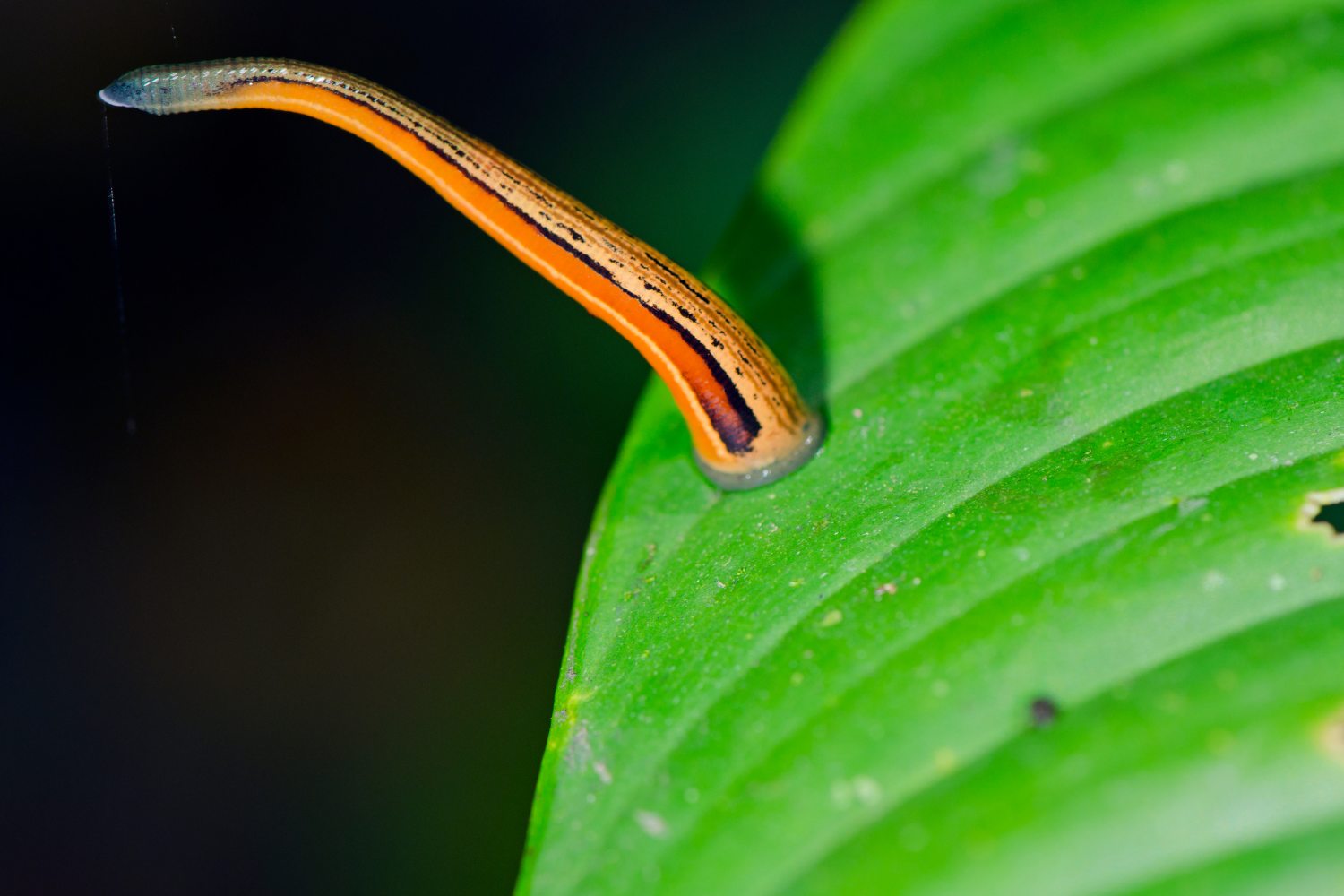
Rain showers are common but are often short, particularly during the afternoon. Bringing waterproof clothing and suitable hiking footwear will help ensure a comfortable visit and help you avoid getting bitten by the jungle leeches.
A visit to Bau Sau is much more than a chance to see Siamese crocodiles. As one of the most biodiverse wetlands in Vietnam, the area offers exceptional opportunities for wildlife watching, photography, and immersive rainforest experiences. Whether you're visiting for a few hours or staying overnight at the ranger station, Bau Sau reveals a different side of Cat Tien National Park throughout the day and into the night.
Bau Sau is one of the best places in Vietnam to observe wildlife in its natural habitat. The wetland's mosaic of open water, flooded grasslands, swamp forests, and evergreen rainforest supports an impressive diversity of species.
The main attraction is, of course, the Critically Endangered Siamese crocodile (Crocodylus siamensis). Visitors often spot crocodiles basking along the shoreline or gliding silently through the water, especially during the early morning and late afternoon when temperatures are cooler.
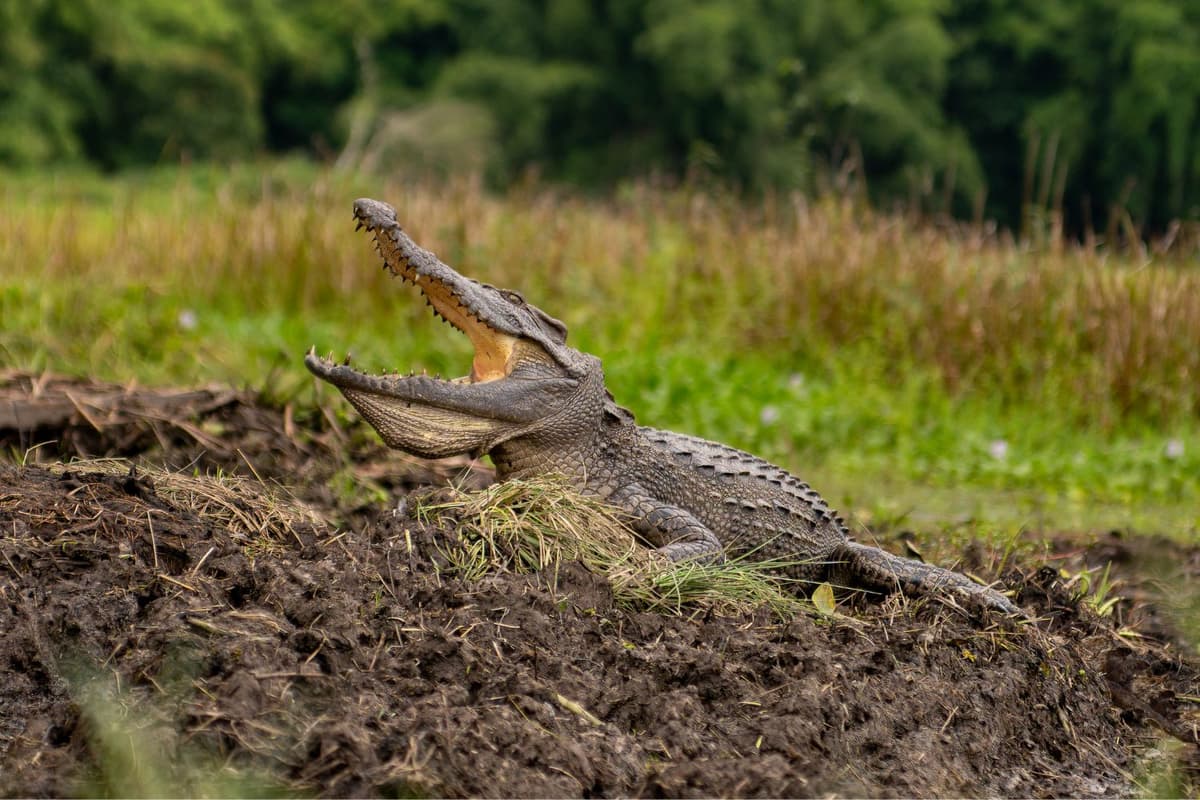
A Siamese Crocodile found basking along the shoreline at Bau Sau.
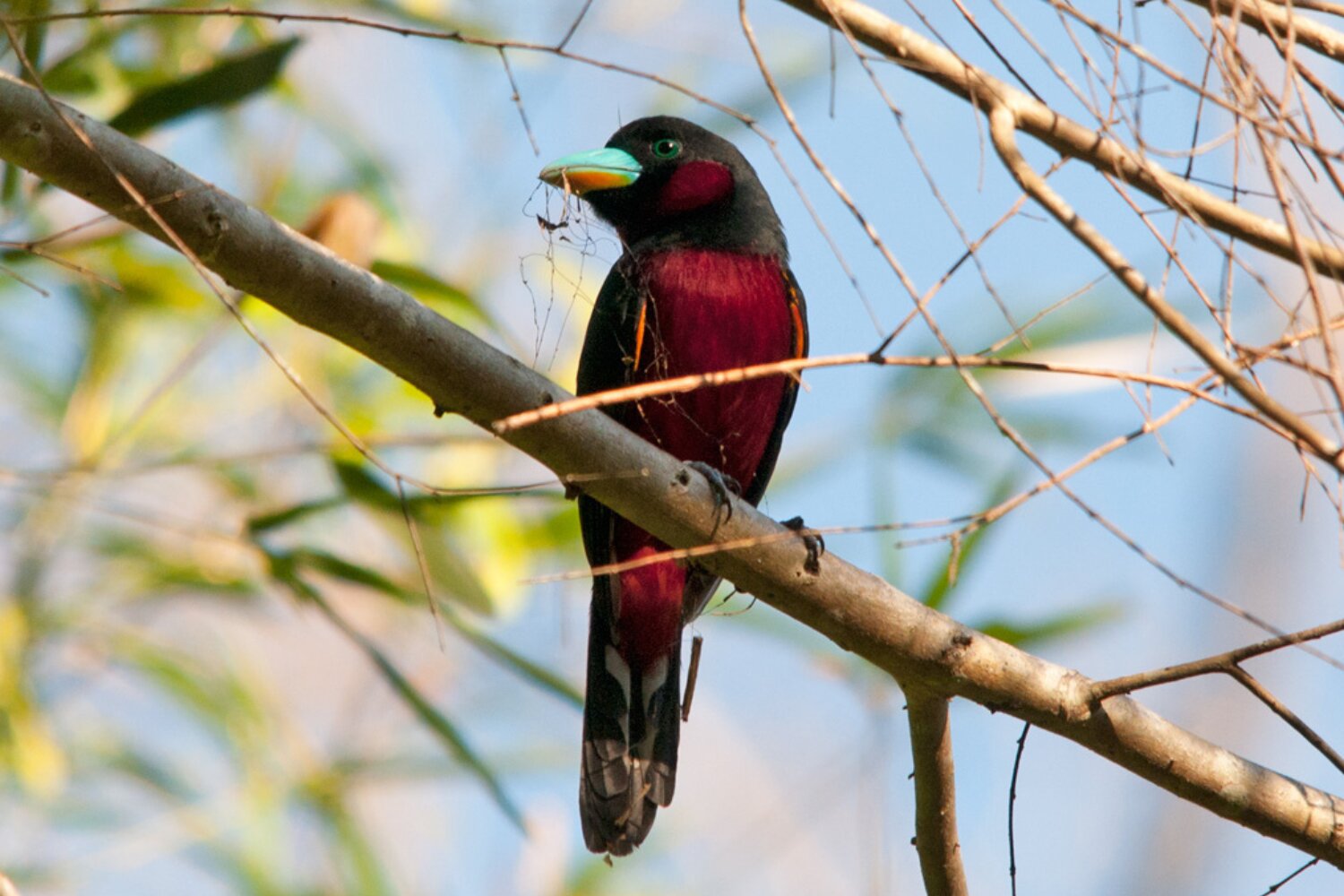
Beyond crocodiles, Bau Sau is a paradise for birdwatchers. The wetland attracts numerous waterbirds, including herons, adjutant storks and kingfishers, while the surrounding forests are home to hornbills, woodpeckers, barbets and many other resident species. During migration seasons, additional bird species may also visit the wetland.
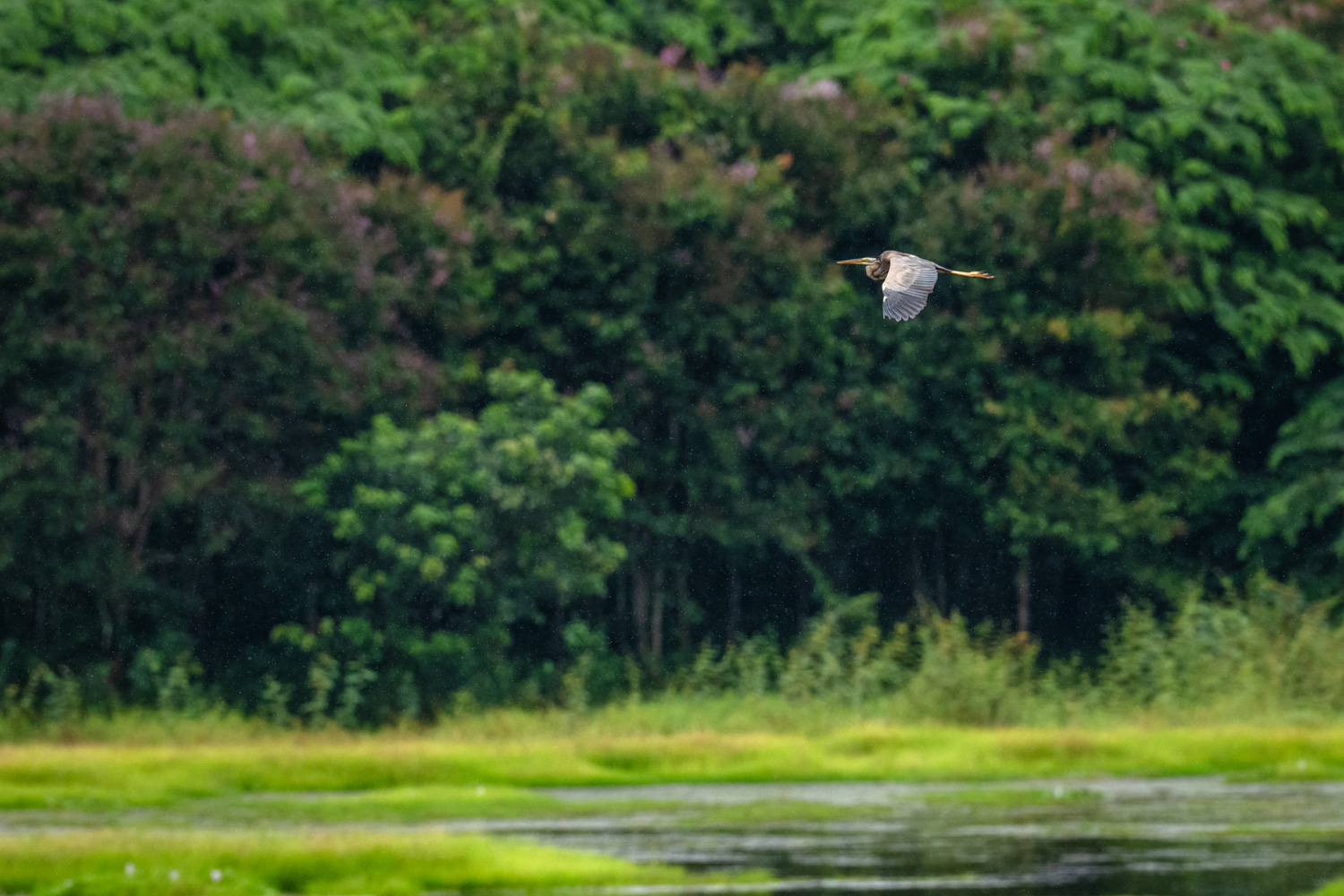
An Oriental Darter spotted in Bau Sau. This species is listed as Near Threatened in the IUCN Red List.
Mammals are frequently encountered around the ranger station and nearby forest trails. Visitors may see long-tailed macaques, wild boars, sambar deer, and, with a bit of luck, even gaurs grazing in nearby grasslands. Although many animals remain elusive, every walk through Bau Sau offers the possibility of an unforgettable wildlife encounter.
One of the most memorable ways to experience Bau Sau is from the water.
During sunrise, mist often hangs above the lake as the forest slowly comes to life. Birds begin calling from the treetops, crocodiles bask near the shoreline, and the calm water reflects the golden morning light. The peaceful atmosphere makes this one of the best times for wildlife photography.
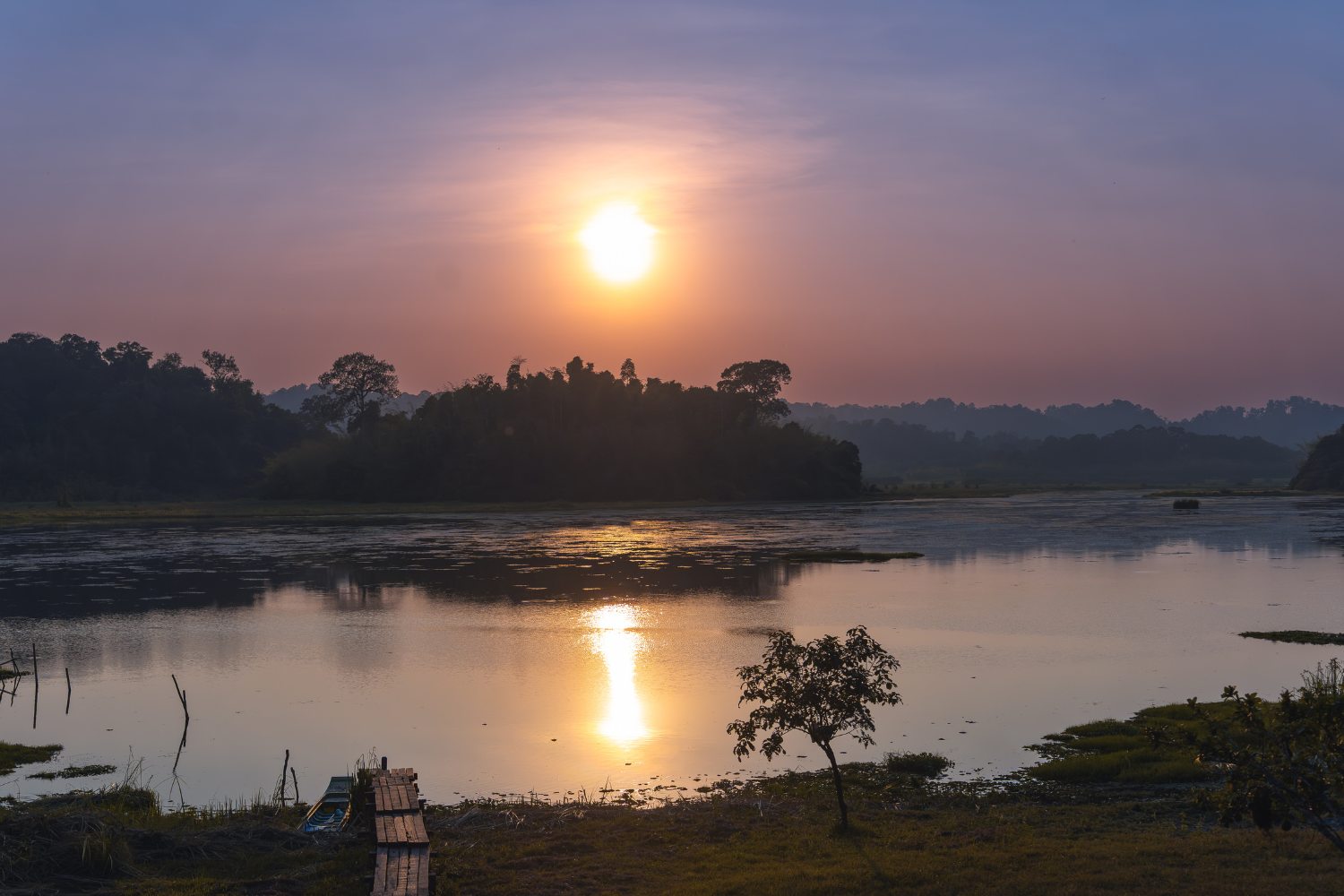
Sunset in Bau Sau.
At sunset, the wetland transforms once again. As the heat of the day fades, wildlife becomes more active. Crocodiles patrol the water's edge, waterbirds return to their roosts, and the sky glows with shades of orange and purple reflected across the lake. The combination of dramatic scenery and abundant wildlife makes sunset boat rides one of Bau Sau's signature experiences.
For visitors who want to experience the wetland beyond a day trip, staying overnight at Trạm Kiểm lâm Bàu Sấu (Bau Sau Ranger Station) offers a unique opportunity to spend a night in the heart of Cat Tien National Park.
Located beside the Bau Sau wetland, the ranger station allows visitors to experience the ecosystem throughout the day, from the first light of dawn to the sounds of the forest after dark. Early mornings offer excellent birdwatching opportunities, when many of the wetland's resident and migratory birds are most active. On the other hand, spending the night at Bau Sau allows visitors to experience the wetland when day visitors have already left, offering a quieter and more immersive connection with the rainforest.
As darkness falls, Bau Sau enters an entirely different world.
Guests joining the Cat Tien Wild Expedition (3 Days 2 Nights) continue their adventure with a 5 km guided night hike from Bau Sau back through the rainforest. Equipped with specialized wildlife headlamps and thermal imaging cameras, visitors have the opportunity to detect animals that are rarely seen during daylight hours.
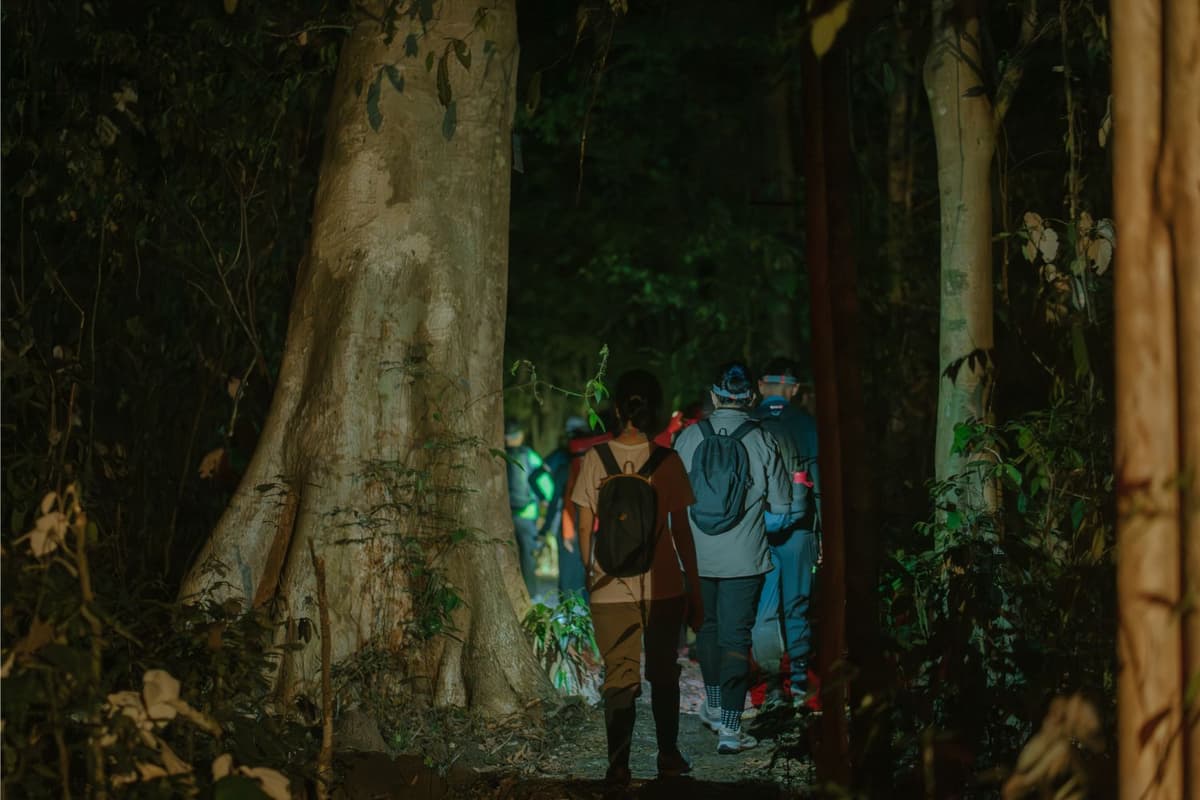
Katien Safari’s night trekking activities to observe wildlife at night from Bau Sau.
Depending on the season and weather conditions, hikers may encounter sambar deer, muntjacs, small carnivores, porcupines, civets, snakes, and a remarkable variety of nocturnal insects. Thermal cameras help locate wildlife without relying solely on visible light, allowing animals to be observed with minimal disturbance while revealing species hidden within dense vegetation.
Led by experienced guides, the night hike offers a deeper appreciation of the rainforest after sunset. It is one of the highlights of this expedition, providing an unforgettable perspective on Cat Tien's rich nocturnal biodiversity and demonstrating why Bau Sau remains one of Vietnam's most extraordinary wildlife destinations.
Bau Sau is far more than a scenic lake hidden within Cat Tien National Park. It’s a living example of how long-term conservation can reverse the decline of a species once believed to be lost from the wild. From the remarkable recovery of the Critically Endangered Siamese crocodile to its recognition as a Ramsar Wetland of International Importance, Bau Sau stands as one of Vietnam's greatest conservation success stories.
For visitors, a journey to Bau Sau is an opportunity to witness this success firsthand. Hiking through ancient rainforest, watching crocodiles in their natural habitat, observing rare birds at sunrise, and exploring the forest after dark all provide a deeper understanding of the delicate balance that sustains one of Southeast Asia's richest ecosystems.
Whether you're a wildlife enthusiast, birdwatcher, photographer, or simply looking to experience one of Vietnam's most extraordinary natural landscapes, Bau Sau is a destination that leaves a lasting impression. And with Katien Safari, your visit helps support responsible ecotourism that contributes to the long-term conservation of Cat Tien's forests, wetlands and the remarkable wildlife that calls them home.