Table of Content
Stories & Updates From THE WILD WORLD

A camera trap is an automated digital camera designed to capture wildlife without the need for a human observer. Equipped with motion and heat sensors, it remains on standby until an animal passes within its detection range, triggering the camera to automatically take a photograph or record a short video.
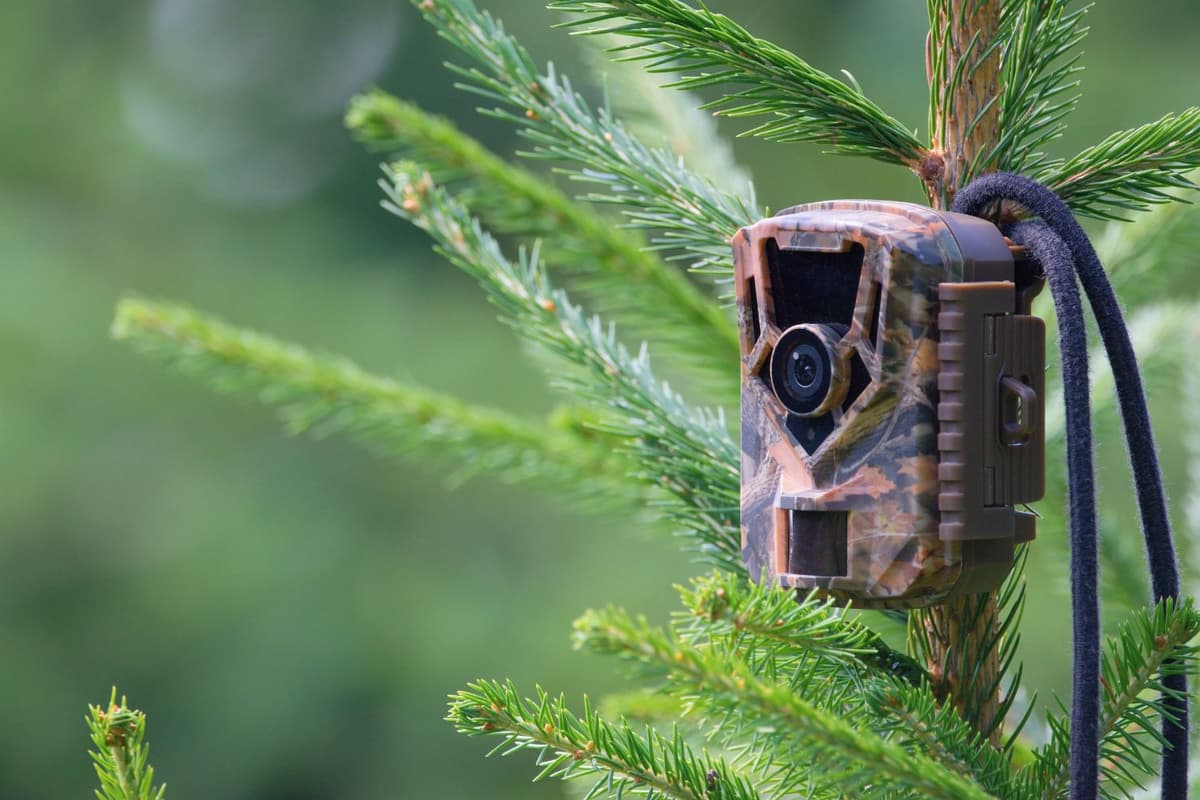
A camera trap is an automated digital camera designed to capture wildlife without the need for a human observer.
Unlike cameras operated by people or time-lapse cameras that take images at fixed intervals, a true camera trap is activated by the presence of an animal. Modern camera traps typically use passive infrared (PIR) sensors, which detect changes in heat and movement produced by warm-bodied animals. This allows researchers to document wildlife naturally while minimizing disturbance.
Because camera traps can remain in the field for weeks or even months, they are capable of recording rare and unpredictable events that would otherwise be difficult to observe. In Vietnam, for example, camera traps have captured everything from elusive chevrotains and serows to families of macaques, providing insights into wildlife behaviour that are rarely witnessed by people. At the same time, camera traps are considered wildlife-friendly because they cause little or no disturbance, allowing animals to behave naturally while creating permanent, verifiable records for research and conservation.
Although camera traps come in many models, most operate using the same core components:
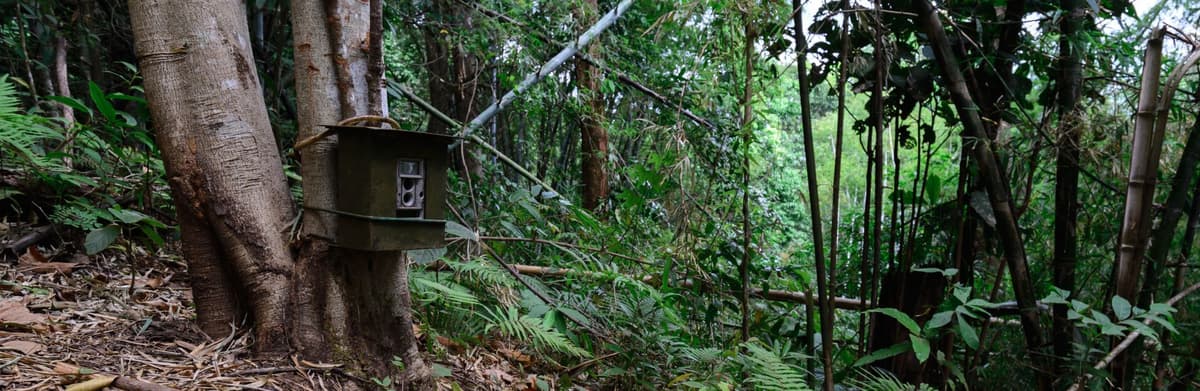
To maximize the chance of detecting wildlife, camera traps are carefully camouflaged and installed at strategic locations where animals are most likely to pass, such as along wildlife trails, near feeding areas, beside streams, or at waterholes where animals come to drink. The objective is to record their natural presence and behaviour without causing fear or altering their movements.
The height of the camera is also adjusted depending on the target species. For large mammals such as sambar deer, gaurs, or Asian elephants, cameras are typically mounted 60 - 80 cm above the ground. For smaller mammals, they are placed much lower, usually 20 - 40 cm high, ensuring the sensor aligns with the animal's body for the most reliable detection.
Many modern camera traps can also transmit images via cellular networks when signal is available, allowing conservation teams to receive real-time notifications. In remote locations without mobile coverage, images are stored on memory cards and retrieved during routine field visits.
For decades, wildlife monitoring relied heavily on direct observation, footprint surveys, and manual fieldwork. While these methods remain valuable, they are often labour-intensive, time-consuming, and limited when studying elusive, nocturnal or rare species.
Camera traps have transformed wildlife monitoring by providing a reliable, cost-effective, and non-invasive way to collect data over long periods. Because they operate continuously, day and night, they can capture wildlife activity that researchers would otherwise miss.
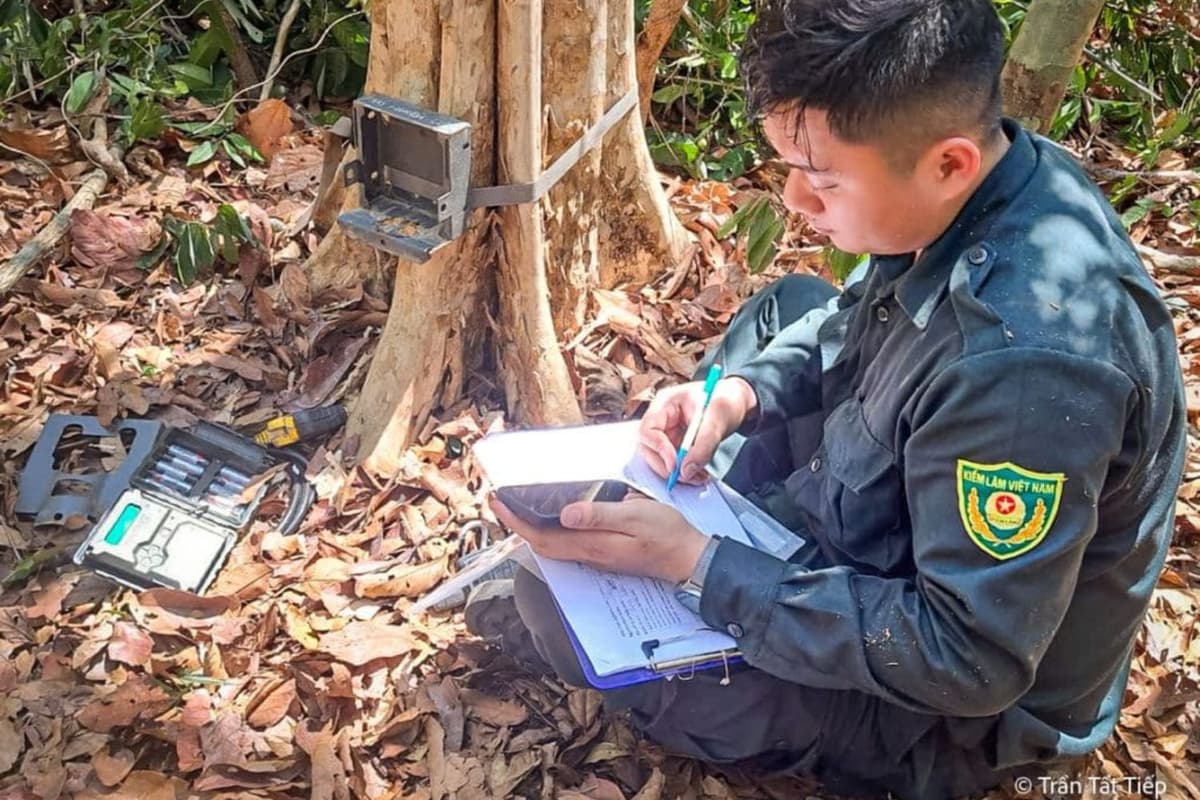
A ranger in Cat Tien National Park checks for a camera trap’s data instead of having to rely heavily on manual fieldwork. Source: Trần Tất Tiếp
Beyond simply confirming a species' presence, camera trap images can reveal valuable ecological information, including:
When individual animals can be distinguished by unique markings or identification tags, researchers can even estimate population sizes, monitor survival rates, and track movements over time.
Today, camera traps have become one of the most important tools in modern conservation. By combining automated monitoring with advances in digital technology, they provide scientists and park managers with the long-term evidence needed to understand wildlife populations, evaluate conservation efforts, detect threats such as poaching and make better-informed decisions to protect biodiversity.
Camera traps have become one of the most valuable conservation tools in Cat Tien National Park, serving a dual purpose: monitoring wildlife and protecting it from illegal activities. By continuously recording both animals and human activity, these unobtrusive devices provide park managers with reliable, long-term data that would be nearly impossible to collect through traditional field surveys alone.
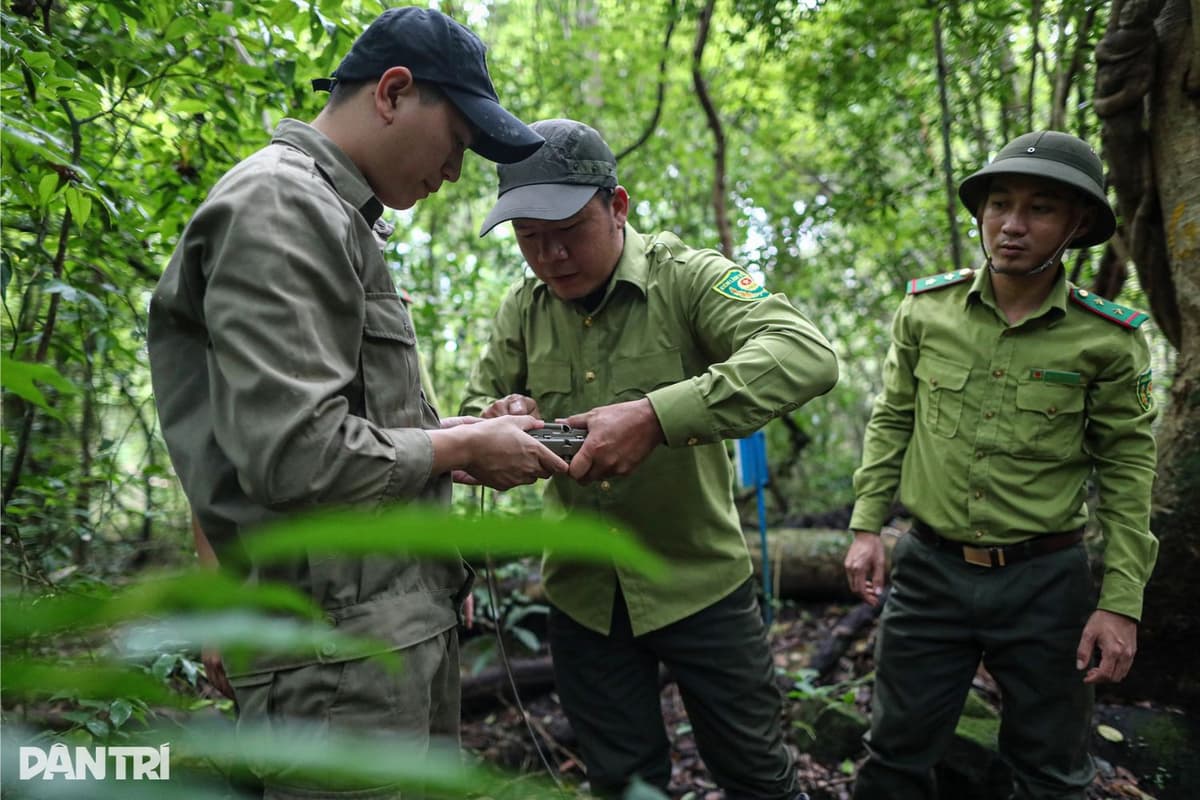
Patrol rangers install camera traps in Cat Tien National Park. Source: Dan Tri
In 2026, Cat Tien National Park expanded its camera trapping programme with 131 camera traps strategically deployed across the entire protected area, including proposed expansion zones (1). Arranged in a systematic grid to cover a wide range of forest habitats, the network targets large and medium-sized mammals, primates, ground-dwelling birds, and smaller forest species. The resulting images are integrated into a GIS database, creating a valuable scientific resource that supports biodiversity research, conservation planning and forest management.
One of the greatest strengths of camera traps is their ability to reveal not only where wildlife occurs, but also where human activities threaten them.
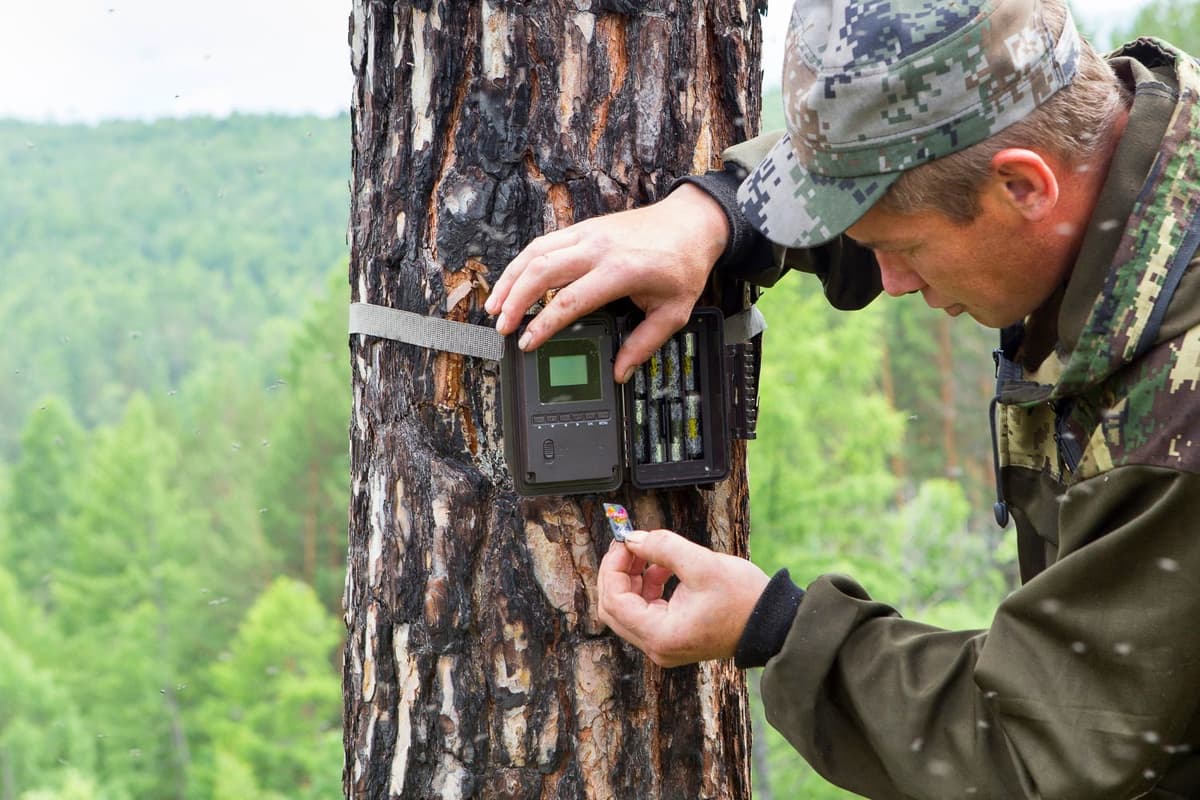
Camera traps are installed hidden in areas that are often used by animals. Source: Andrea Pistolesi
In Cat Tien National Park, cameras are strategically hidden along wildlife trails, near water sources, and in other areas frequently used by animals. Rangers carefully select these locations based on their understanding of animal behaviour and habitat use, maximizing the likelihood of recording both wildlife and illegal human activity.
Besides documenting animals, the cameras can also detect signs of wildlife crime and other disturbances, including illegal hunting, unauthorized entry into the Park's core zone, and livestock grazing inside protected forests. This information allows park managers to identify poaching hotspots, understand where threats are concentrated, and deploy ranger patrols more effectively.
The development of cellular-enabled camera traps has further strengthened anti-poaching efforts. In areas with mobile coverage, images can be transmitted to ranger teams almost immediately after they are captured, enabling faster responses to suspicious activity. Even in remote parts of the forest without signal, cameras continue recording and securely store images for later retrieval, ensuring valuable evidence is not lost.
Combined with advances in image analysis and GIS mapping, thousands of photographs collected over time help conservationists identify patterns of illegal activity, evaluate the effectiveness of patrols, and make more informed management decisions to better protect wildlife.
Beyond detecting threats, camera traps are one of the most effective tools for understanding the health of wildlife populations.
Many of Vietnam's wild animals, including civets, gaur, wild cats, Saola and other elusive mammals are nocturnal, shy or inhabit dense forests where direct observation is extremely difficult. Camera traps allow researchers to observe these species naturally without disturbing their behaviour, often capturing animals that would otherwise remain unseen.
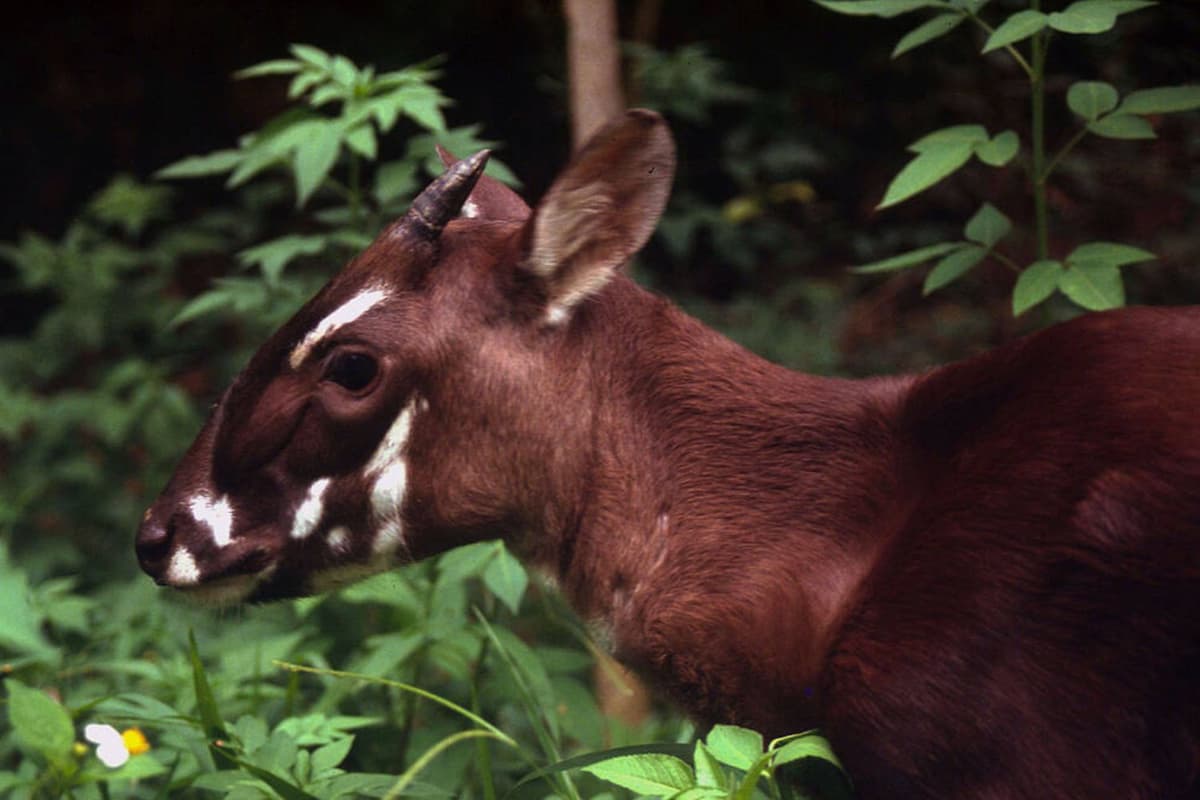
A Sao La was captured by a camera trap in Vietnam. Source: WWF
For example, in 2013, WWF and Vietnam's Forest Protection Department captured the first photographs of the critically endangered Saola in over 15 years (2). The images confirmed that the elusive species still survived in the wild, providing renewed hope and valuable information for conservation efforts.
By operating continuously for weeks or even months, camera traps generate a rich, long-term record of wildlife activity. The images provide far more than simple species lists. They reveal where animals occur, how many individuals are present, when they are active, how they interact with one another, and how they respond to human disturbance.
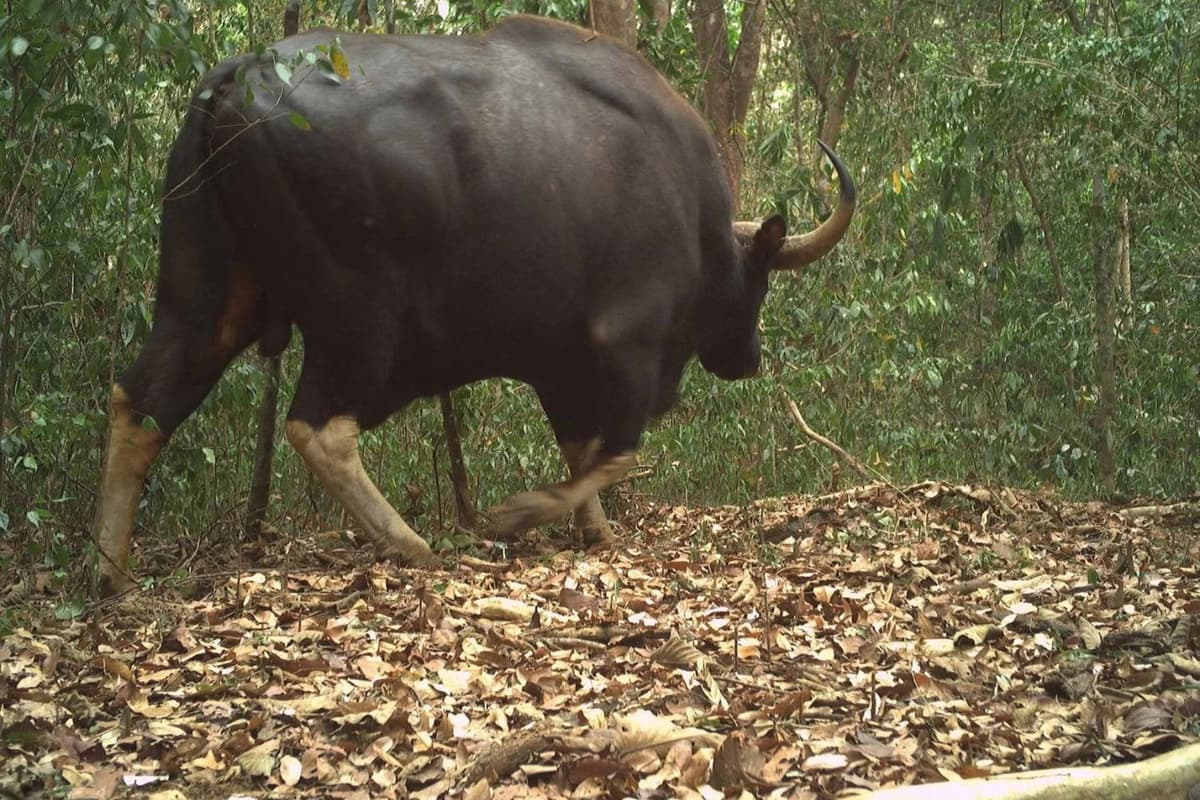
A camera trap captured an image of a wild gaur passing by. Source: WWF
Over time, these records enable researchers to monitor changes in population size, distribution, and habitat use, helping them assess whether conservation measures are working or if additional protection is needed. The data also contributes to updating species inventories, identifying priority habitats, and improving long-term management strategies for Cat Tien National Park.
Ultimately, camera traps transform individual photographs into scientific evidence. By revealing both the hidden lives of wildlife and the threats they face, they have become an indispensable tool for conserving one of Vietnam's most important biodiversity hotspots.
Camera traps have transformed the way conservationists monitor wildlife, but they are only one piece of a much larger conservation strategy. While they can reveal where animals live, record rare behaviours, and detect illegal human activity, cameras cannot stop poaching on their own. Protecting wildlife ultimately depends on the people who respond to the information the cameras provide.
In Cat Tien National Park, camera trap images help guide ranger patrols by identifying areas where threatened species are present or where illegal activities, such as poaching or unauthorized entry, are occurring. Rangers can then focus their patrols on these high-risk areas, remove snares, investigate suspicious activity, and strengthen law enforcement where it’s needed most. In this way, camera traps act as the eyes of the forest, while rangers provide the action needed to safeguard it.
Long-term conservation also relies on public support. Responsible tourism plays an important role by generating income for protected areas, creating local livelihoods, and helping visitors understand the value of preserving Vietnam's natural heritage. Experiences that are designed around conservation can also foster a deeper appreciation for the challenges faced by those working to protect wildlife.
One example is Katien Safari's forest hiking experience, which gives visitors the opportunity to explore Cat Tien National Park alongside experienced forest rangers. Rather than simply observing the rainforest, participants gain first-hand insight into wildlife monitoring, forest patrols, animal tracking, and the conservation efforts that take place behind the scenes. By connecting visitors with the people and stories behind wildlife protection, these experiences help build lasting support for conservation.
Ultimately, technology alone cannot save wildlife. Lasting conservation depends on the combined efforts of science, dedicated rangers, strong law enforcement, local communities, and responsible visitors. When these elements work together, camera traps become far more than monitoring devices. They become powerful tools in a broader effort to ensure that Cat Tien's extraordinary wildlife continues to thrive for generations to come.
(1) https://thiennhienmoitruong.vn/cat-tien-giu-mach-song-dai-ngan-cuoc-chien-pha-bay-tu-than.html
(2) https://www.theguardian.com/environment/2013/nov/13/saola-sighting-vietnam-rare-mammal