What makes Cat Tien National Park one of the most remarkable destinations for nature lovers in Southeast Asia?
For many visitors, the answer begins with wildlife: a yellow-cheeked gibbon calling at dawn, a herd of sambar deer emerging from a misty grassland, or a Siamese crocodile basking beside the wetlands of Bau Sau. But what makes these encounters possible is something even more remarkable - the extraordinary diversity of habitats that exist within Cat Tien's protected landscape.
Stretching across more than 71,000 hectares in Dong Nai, Lam Dong, and Binh Phuoc provinces, Cat Tien National Park is one of the largest remaining tropical rainforest ecosystems in Vietnam. Recognized as a UNESCO Biosphere Reserve in 2001 and added to the IUCN Green List in 2024, the Park protects a living mosaic of forests, wetlands, rivers, and grasslands that together support more than 1,700 animal species and 1,600 plant species.
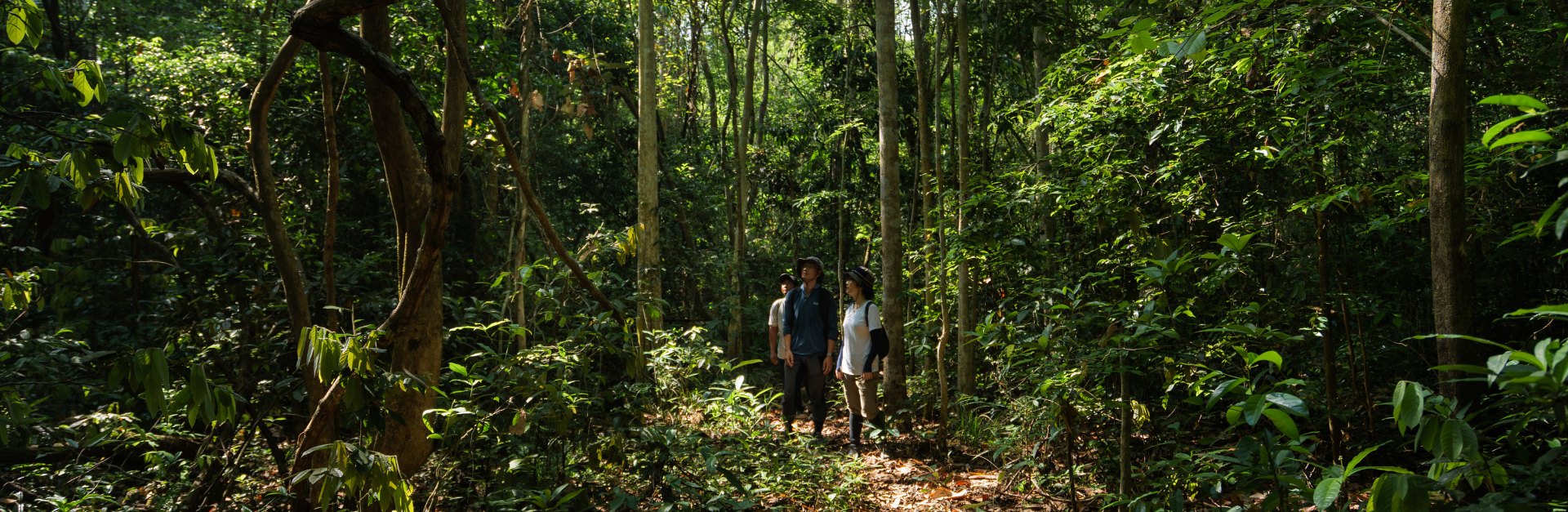
For nature lovers seeking authentic Vietnam jungle hiking experiences, Cat Tien offers far more than a single rainforest. Each habitat reveals a different side of the Park's biodiversity and tells a unique story about how wildlife survives in one of Southeast Asia's most important conservation landscapes.
One of the reasons Cat Tien National Park supports such rich biodiversity is its remarkable variety of forest habitats. Within a single day of hiking, visitors can move from towering tropical rainforest to bamboo forest, wetlands, open grasslands, and river corridors. Let’s look at each of the forest types in Cat Tien!
Evergreen Forest: Among the Giants of the Tropical Rainforest
The evergreen broadleaf forest is often the first image that comes to mind when people imagine Cat Tien National Park. Towering canopy trees rise above multiple forest layers, which creates the cool, humid conditions typical of a tropical rainforest. More than 75% of the vegetation remains green throughout the year thanks to deep fertile soils and a stable supply of moisture.
This habitat is dominated by members of the Dipterocarpaceae family, including Dipterocarpus alatus and Dipterocarpus intricatus, two iconic species of Southeast Asian rainforests. Sharing the canopy are valuable hardwoods such as Dalbergia mammosa, Dalbergia bariensis, Afzelia xylocarpa, and Pterocarpus macrocarpus. Many of these species have become increasingly rare elsewhere in Vietnam due to habitat loss and illegal logging, making Cat Tien an important refuge for their conservation.
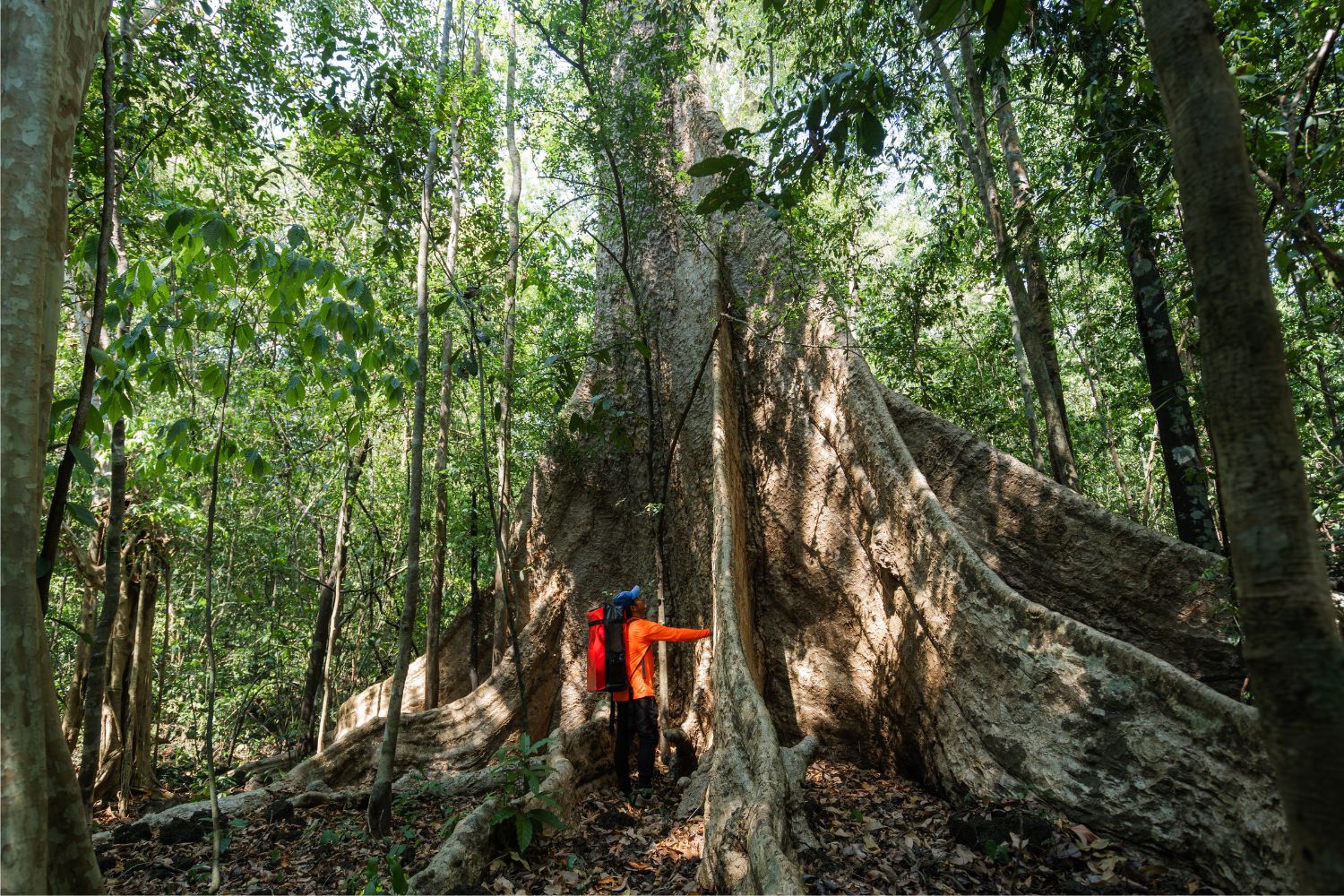
Tetrameles nudiflora (Tung tree) is one of the most iconic trees found in Cat Tien National Park.
One of the most remarkable trees found within this habitat is the ancient Tung tree (Tetrameles nudiflora). Some individuals are estimated to be around 400 years old, with spectacular buttress roots stretching nearly 20 meters across the forest floor. These giant roots help stabilize the tree while creating shelter for insects, amphibians, reptiles, and countless microorganisms.
Along the Dong Nai River and parts of northeastern Nam Cat Tien, the landscape changes dramatically with the seasons.
Semi-evergreen forests are characterized by tree species that shed their leaves during the dry season to reduce water loss. Here, species such as Lagerstroemia calyculata (Bungor), Tetrameles nudiflora (Binong tree), and Anogeissus acuminata dominate the canopy. Unlike the evergreen forest, these trees grow well on shallower soils with a higher proportion of exposed rock and often develop impressive buttress roots at their base.
During the dry months, the forest opens up as leaves fall, allowing more sunlight to reach the ground. When the first rains arrive in April and May, the habitat undergoes a spectacular transformation. Fresh green leaves emerge almost simultaneously, while Lagerstroemia speciosa blossoms color the landscape.
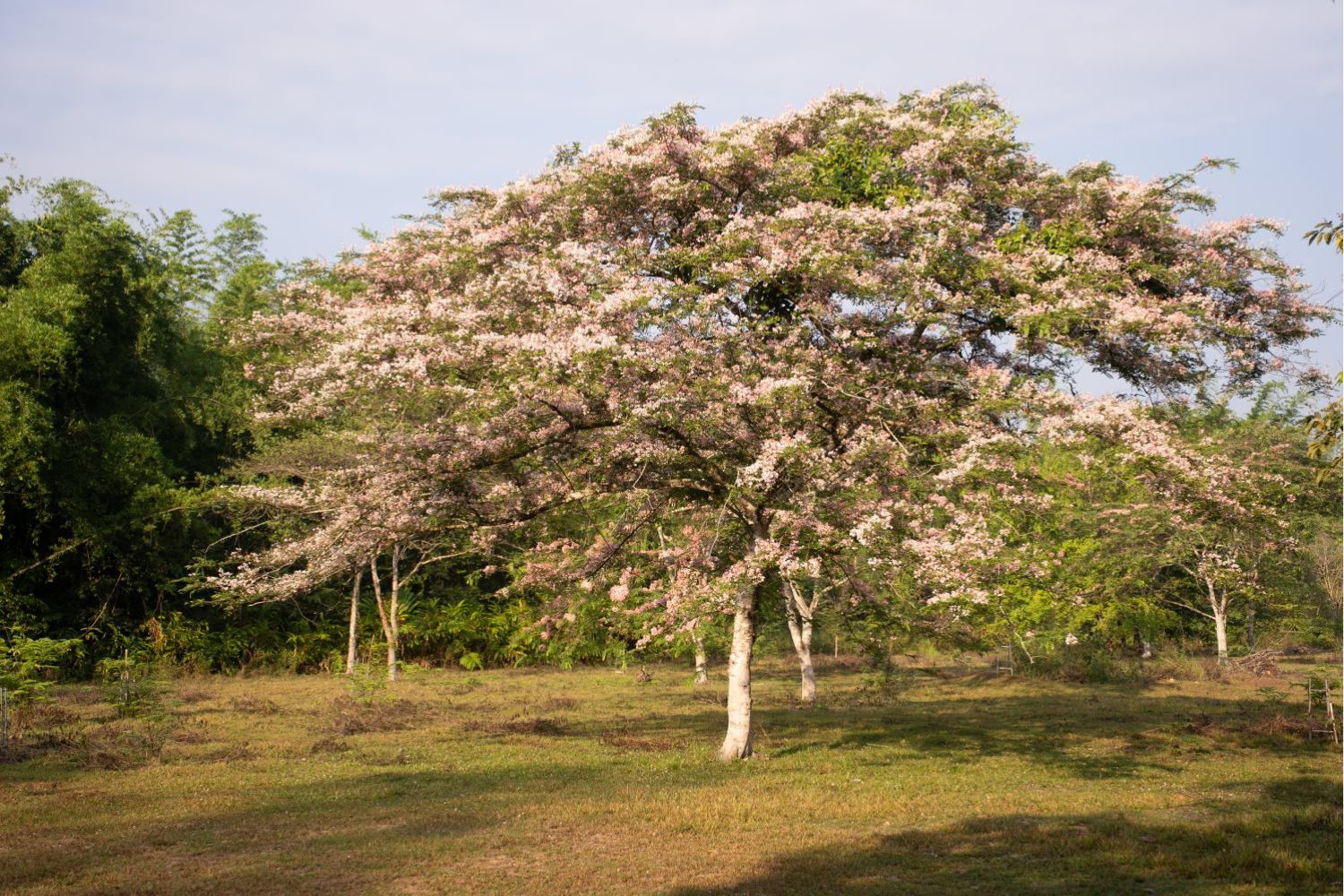
Lagerstroemia speciosa blooms throughout Cat Tien during the dry season.
This seasonal change also coincides with one of Cat Tien's most remarkable natural events: the annual emergence of millions of butterflies that gather throughout the forest, creating an unforgettable experience for wildlife photographers and nature lovers.
Mixed Timber and Bamboo Forest: A Refuge for Primates
In the eastern and southern parts of Nam Cat Tien, visitors encounter a habitat shaped by both nature and history.
Mixed timber and bamboo forests developed after disturbances such as logging, forest fires, and agricultural clearing opened the canopy. Sunlight reaching the forest floor allowed bamboo species to establish themselves alongside native trees, creating a unique transitional ecosystem.
The canopy is composed of a diverse mix of dipterocarps, oaks, and valuable hardwoods, including Lagerstroemia calyculata, Tetrameles nudiflora, Shorea thorelii, Dipterocarpus costatus, Melanorrhoea laccifera, Castanopsis hystrix, Lithocarpus species, and Dalbergia oliveri. Beneath them grows a rich layer of regenerating vegetation, including Semecarpus annamensis, Calophyllum thorelii, and Walsura robusta.
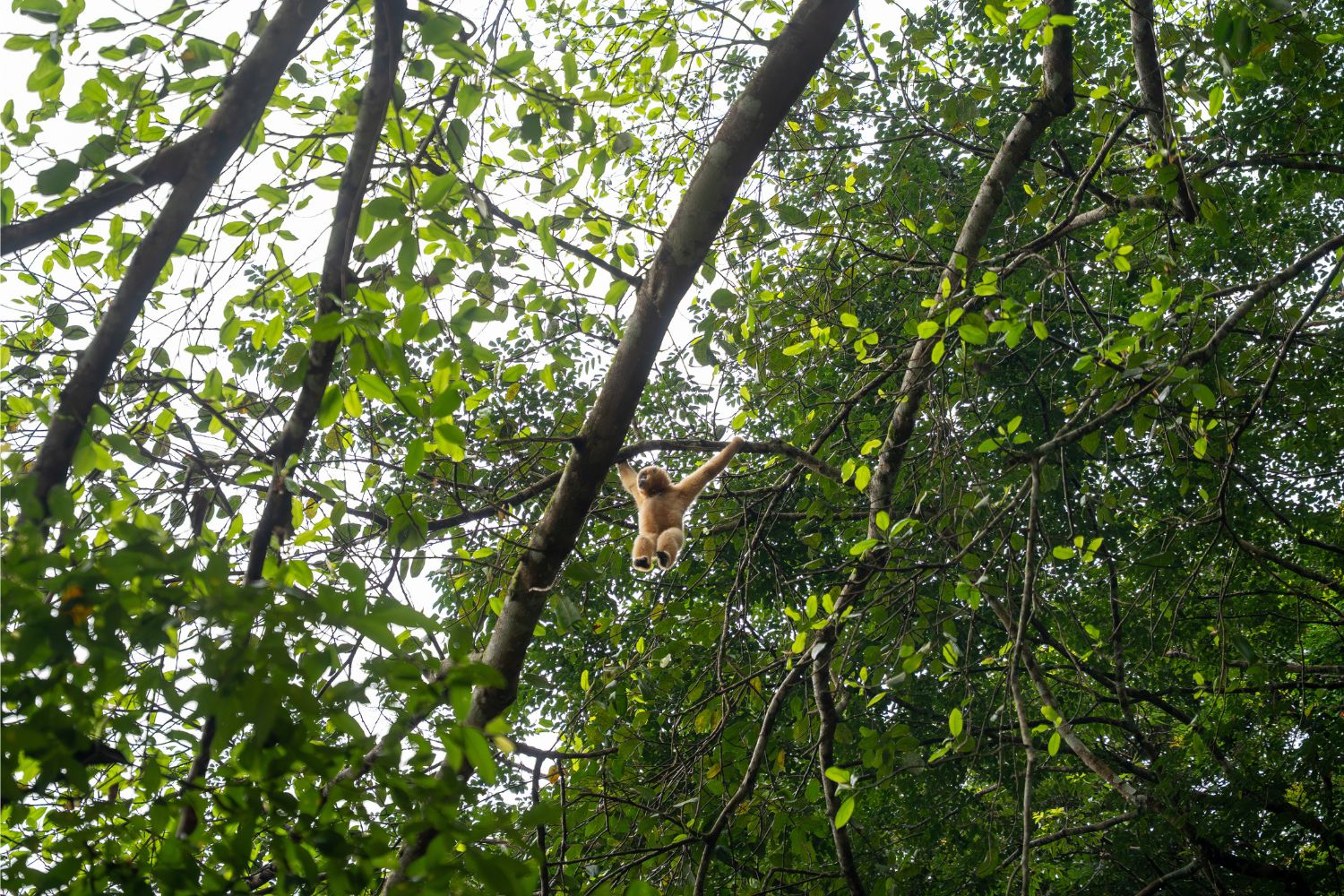
Mixed timber and bamboo forests provide excellent habitat for wildlife such as the yellow-cheeked gibbons.
This structurally diverse habitat provides excellent shelter and feeding opportunities for wildlife. At dawn, the calls of yellow-cheeked gibbons often ring through the forest between 5:30 and 6:30 as family groups establish their territories. Hornbills may also be spotted flying above the canopy, moving between fruiting trees.
Bamboo Forest: Nature's Recovery Story
Bamboo forests are among the most widespread habitats in Cat Tien National Park and tell an important story about ecological recovery.
These forests commonly develop on land previously disturbed by human activities, especially former agricultural areas that were later abandoned. Fast-growing bamboo species such as Bambusa procera, Gigantochloa multifloscula, and thorny bamboo (Bambusa blumeana) quickly colonize open ground, stabilizing soils and helping initiate forest regeneration.
Scattered among the bamboo stands are pioneer tree species including parasol leaf tree (Macaranga tanarius), Parinari annamense, chaulmoogra tree (Hydnocarpus anthelmintica), and various fig trees (Ficus spp.).
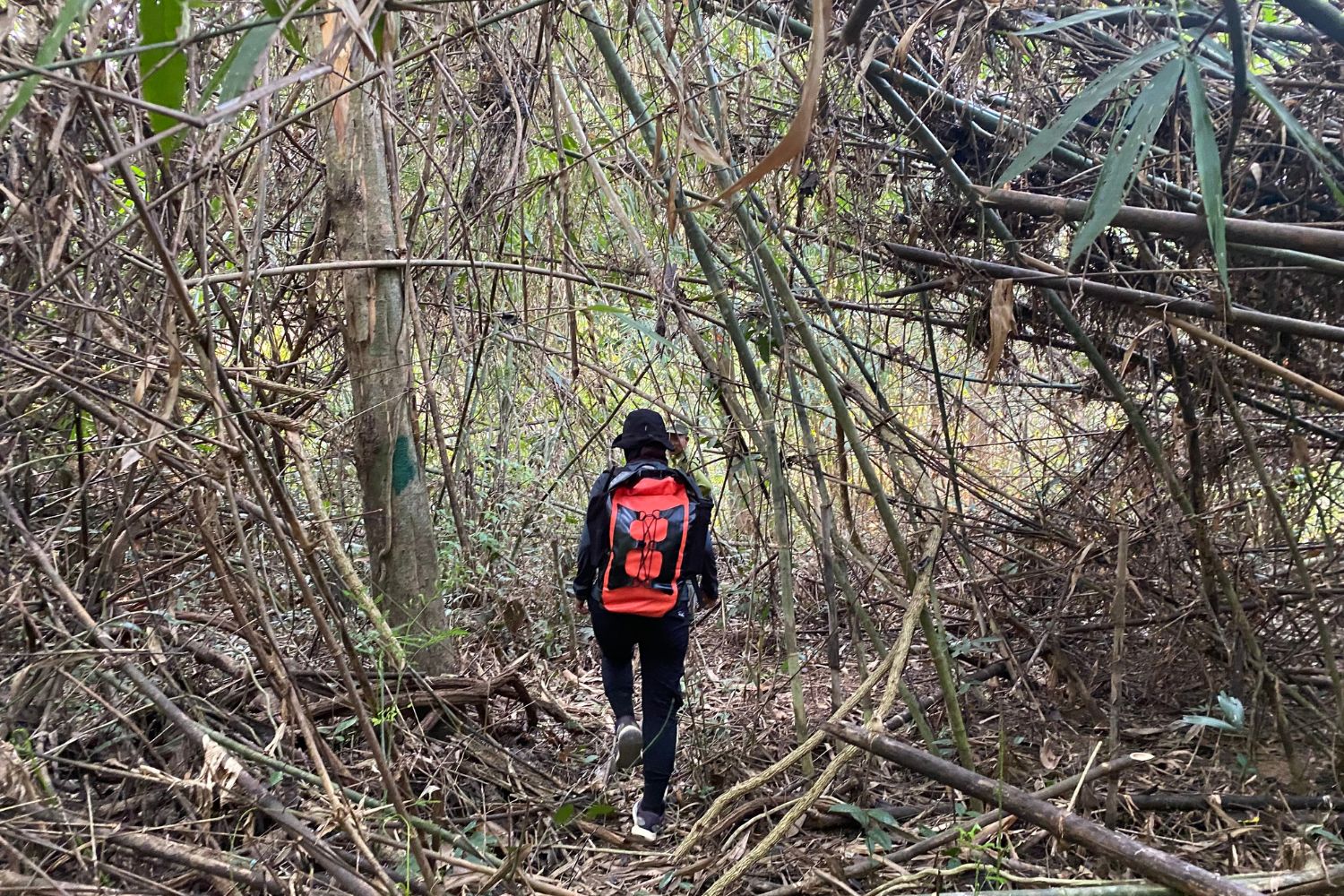
Bamboo forests commonly develop on land previously disturbed by human activities.
Although often overlooked compared to primary rainforest, bamboo forests provide important habitat for birds, reptiles, small mammals, and countless insects. The constant rustling of bamboo leaves in the wind creates one of the most distinctive soundscapes in Cat Tien.
Wetlands and Bau Sau: The Ramsar Heart of Cat Tien
At the center of Cat Tien lies one of Vietnam's most important wetland ecosystems.
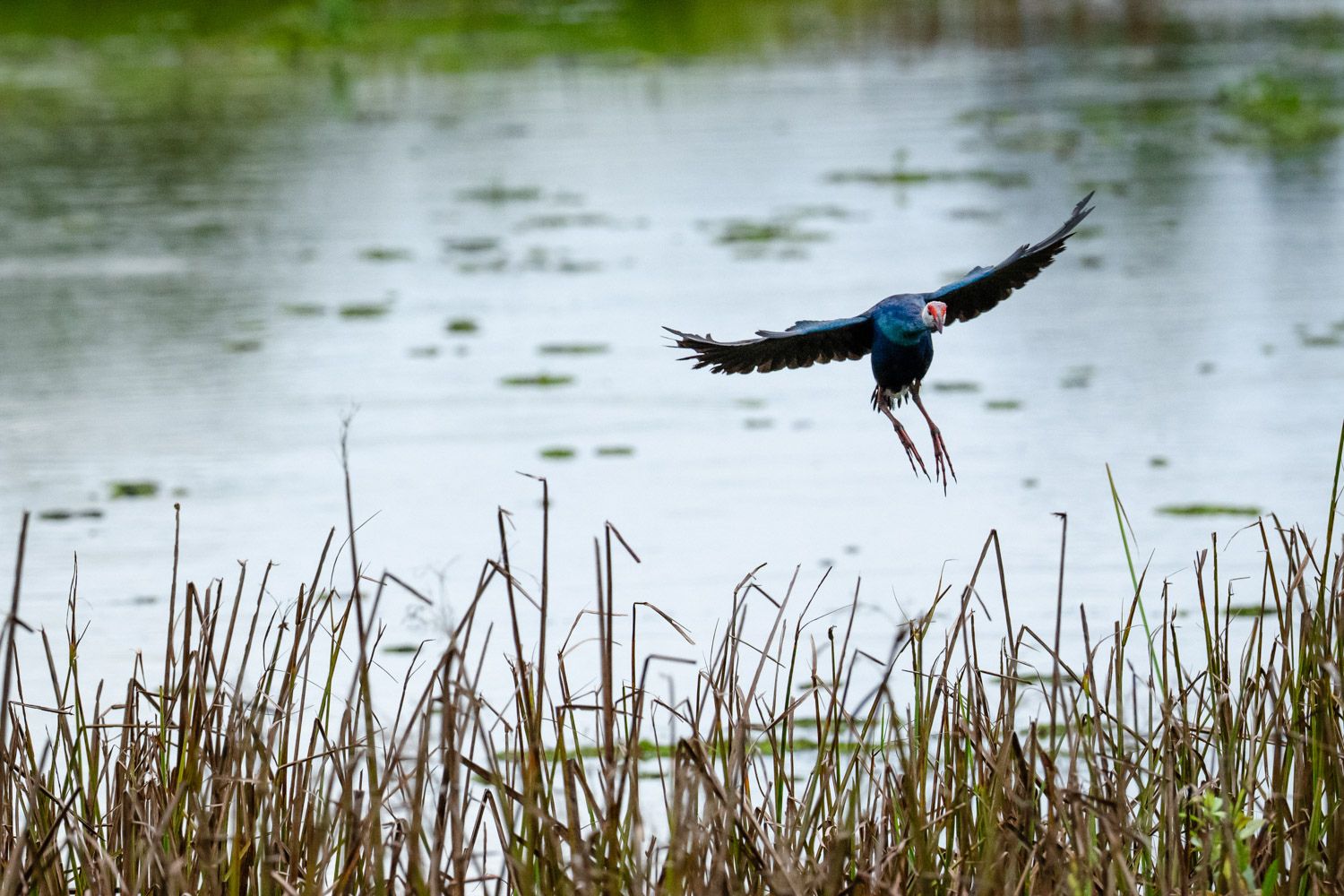
The wetlands of Bau Sau form a vast mosaic of marshes, ponds, seasonally flooded forests, and permanent water bodies. During the rainy season, large areas become inundated, while the dry season leaves behind isolated pools and mudflats that attract wildlife from across the Park.
Plant communities here are specially adapted to seasonal flooding. Dominant species include chaulmoogra tree (Hydnocarpus anthelmintica), Barringtonia acutangula, and Xanthophyllum colubrinum, growing alongside reeds, grasses, and dense stands of thorny bamboo (Bambusa blumeana). These plants help stabilize wetland soils while providing habitat for birds, reptiles, fish, and amphibians.
Recognized as Ramsar Site No. 1499 in 2005, Bau Sau covers more than 13,700 hectares, including both seasonal and permanent wetlands. It is internationally important for wetland biodiversity and supports numerous resident and migratory bird species.
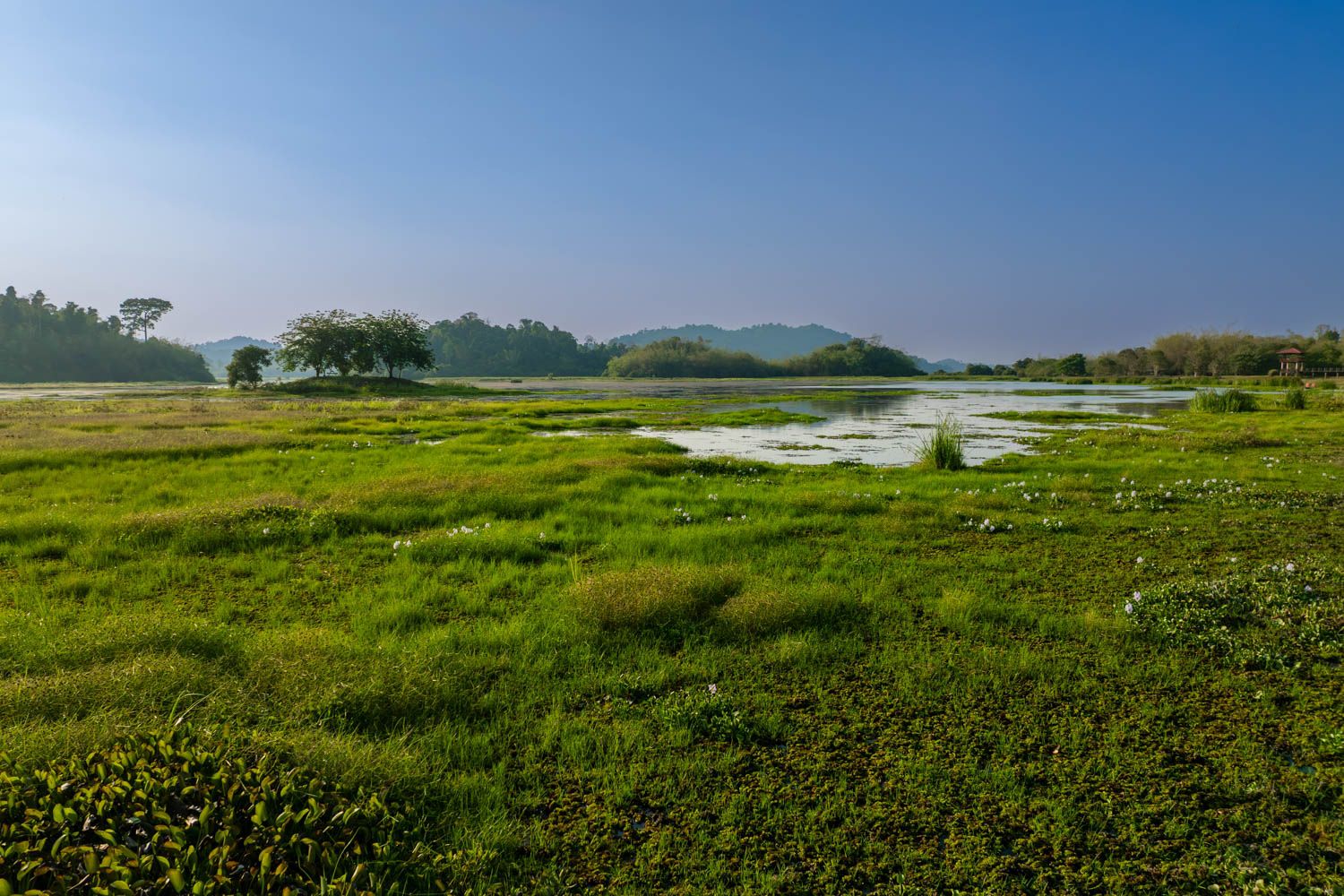
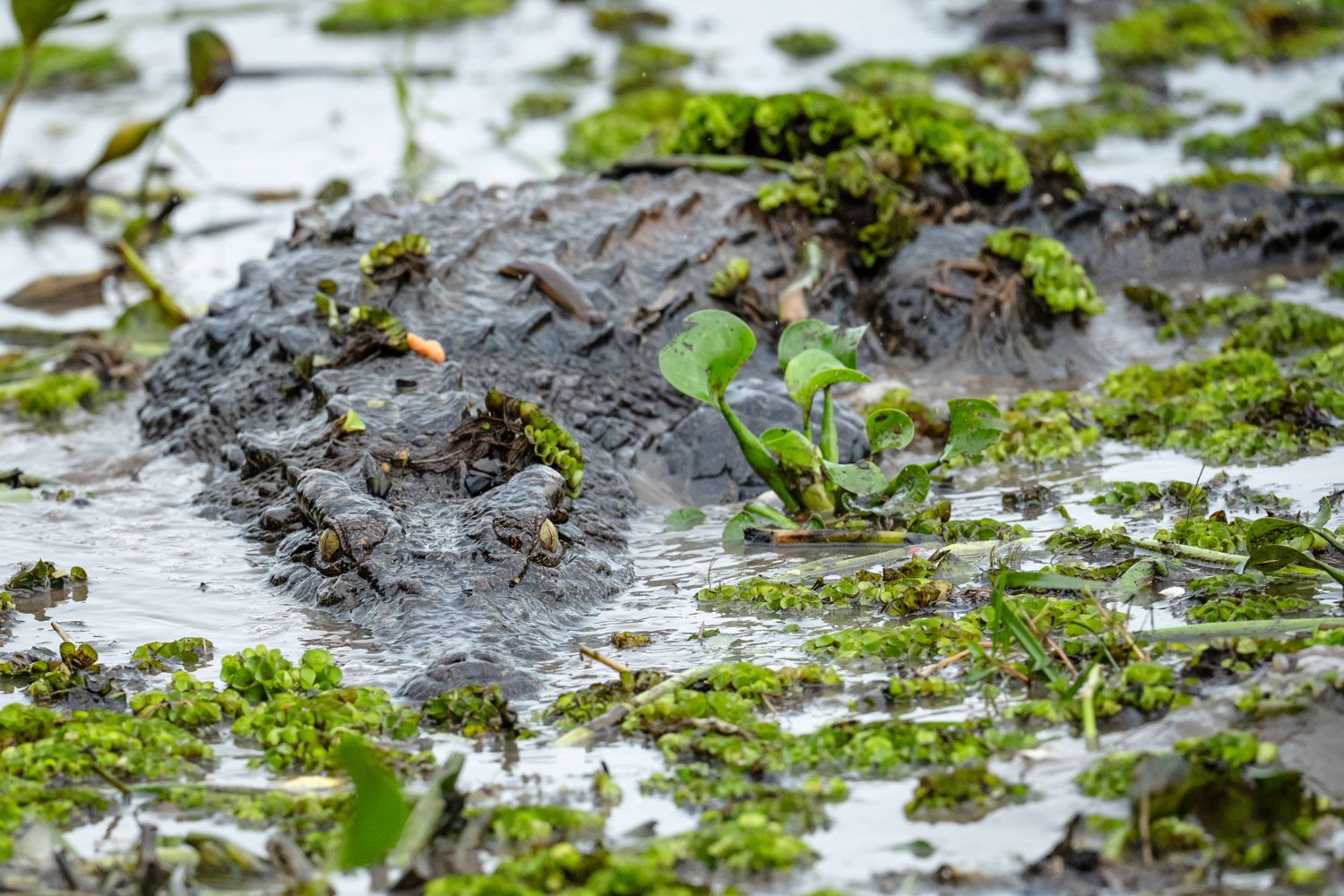
Bau Sau, also known as Crocodile Lake, covers more than 13,700 hectares, including both seasonal and permanent wetlands, and is home to over 600 freshwater crocodiles.
Most famously, Bau Sau is home to one of Vietnam's most successful conservation programs for the critically endangered Siamese crocodile (Crocodylus siamensis). From a mere 9 individuals documented after the reintroduction program conducted between 2000 and 2005, the population has recovered to more than 600 crocodiles today.
Natural Grasslands: Where Wildlife Emerges
Scattered across Cat Tien’s forests and wetlands are open grasslands that offer some of the Park’s most reliable wildlife viewing opportunities.
These grasslands form at the transition between forest and seasonal wetland, creating productive ecosystems rich in grasses and mineral resources. During the dry season, fresh vegetation draws herbivores in from surrounding habitats.
Sambar deer, green peafowl, wild boar, and gaur are frequently seen feeding in these open areas, especially in the early morning and late afternoon.
For wildlife photographers and night hikers, these habitats are among the most rewarding areas in Cat Tien. Tracks, feeding signs, and movement corridors are often visible in the soft soil, making wildlife tracking particularly productive.
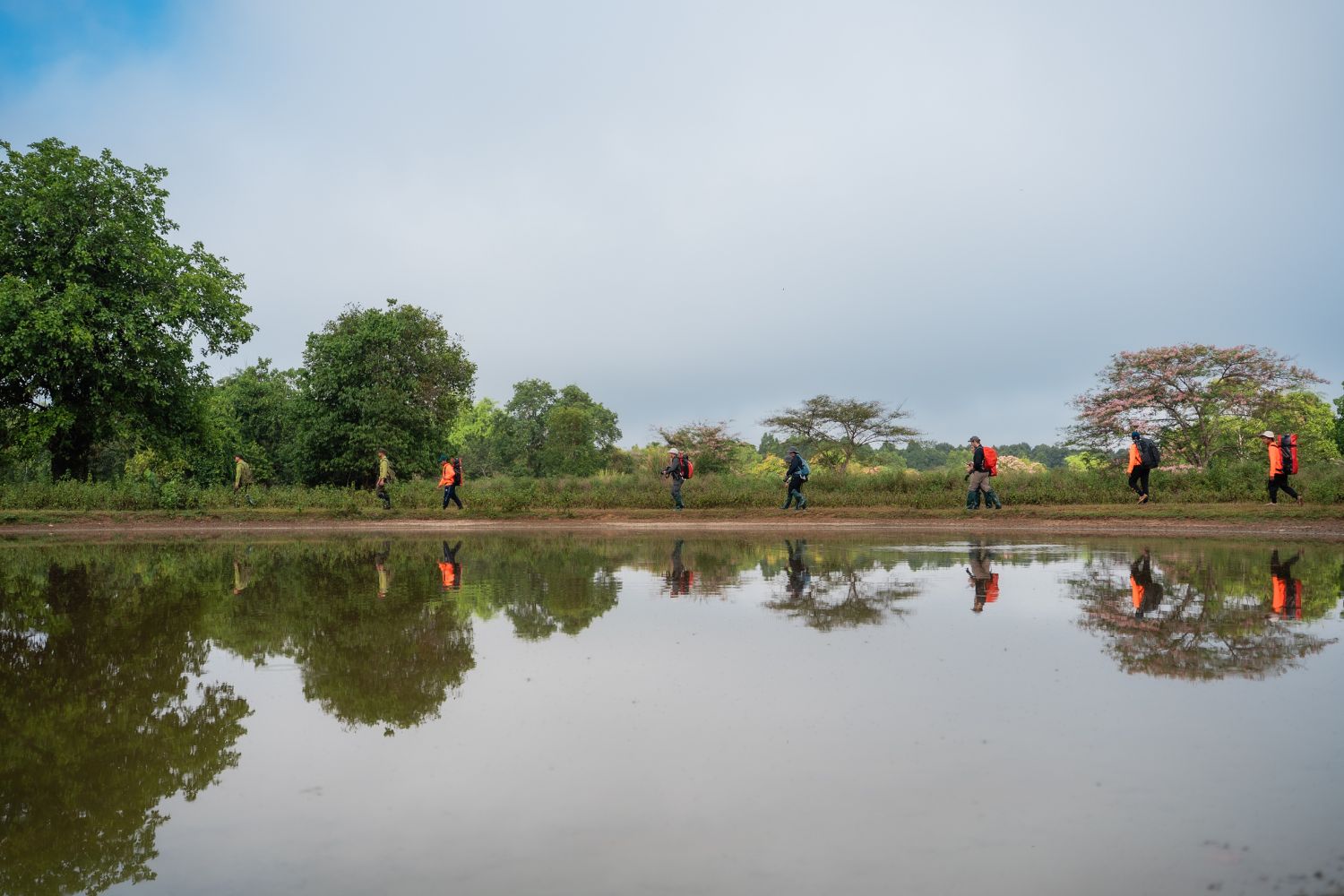
Katien Safari visitors walk along the grassland lake with Cat Tien’s patrol rangers during the 4D3N tour.
To extend these encounters beyond the field, Katien has developed a live camera system overlooking one of Cat Tien’s grasslands. The livestream allows viewers to observe wildlife activity in real time - from grazing sambar deer and foraging wild boar to occasional appearances by larger mammals - all without disturbing the animals in their natural habitat.
Riparian Habitats: Life Along the Dong Nai River
The Dong Nai River forms the eastern and southern boundary of Cat Tien National Park and serves as a lifeline for the entire ecosystem.
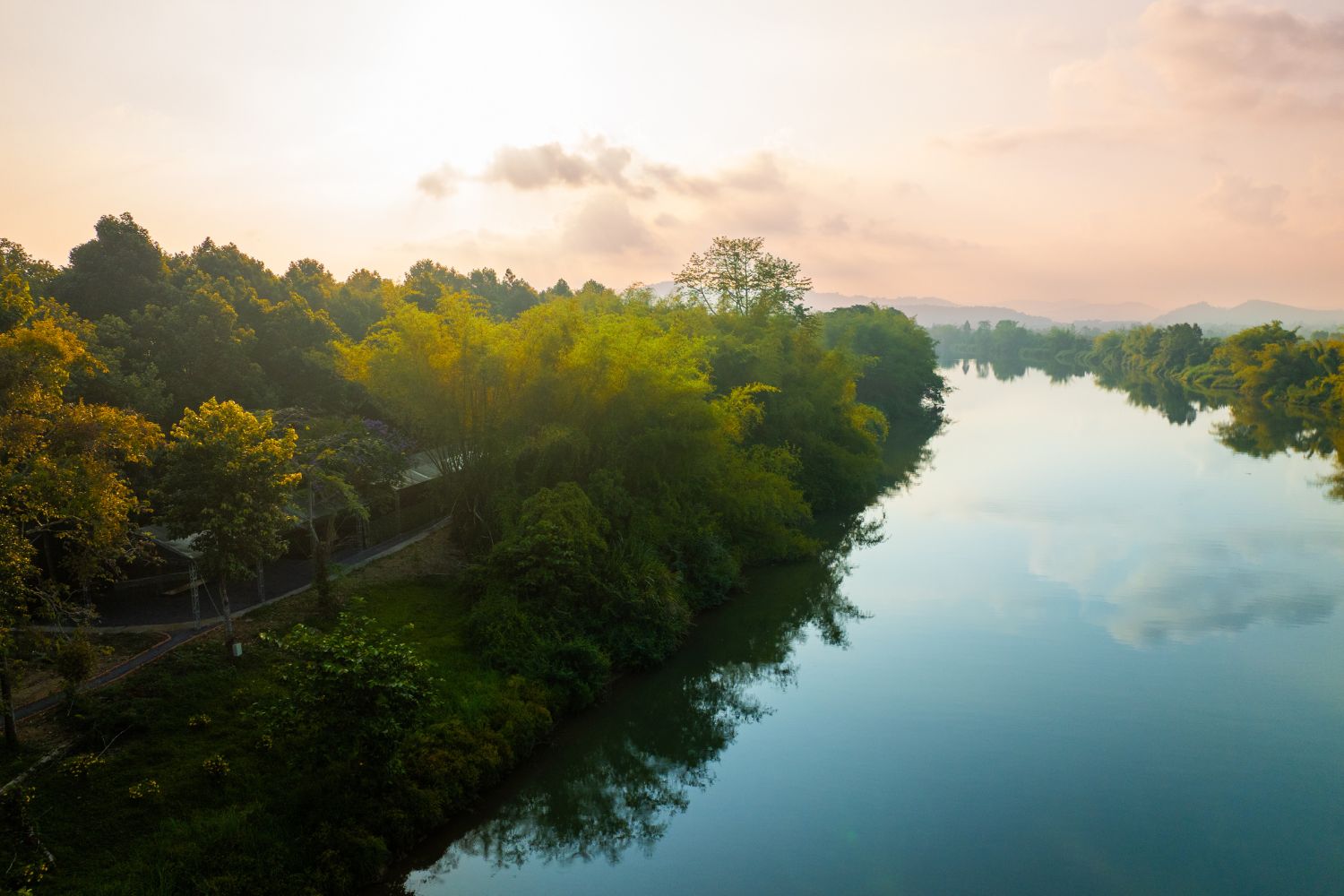
The Dong Nai River forms the eastern and southern boundary of Cat Tien National Park
Along its banks, semi-evergreen forests and bamboo stands create cool, shaded corridors that protect waterways from erosion. Massive root systems stabilize riverbanks while providing shelter for fish, amphibians, reptiles, and aquatic invertebrates.
Ancient Tung trees and giant fig trees dominate many sections of the river corridor. Their roots extend into the water, creating complex microhabitats used by countless species.
These riparian habitats function as ecological highways, connecting different parts of the Park and providing year-round access to water. Turtles, lizards, frogs, water snakes, and other reptiles thrive in these environments. Birdwatchers often observe kingfishers, herons, egrets, and hornbills foraging along streams and riverbanks.
Large mammals also depend on these habitats. Deer, macaques, and even Asian elephants use the river corridors as natural travel routes and drinking areas, especially during the dry season.
Discover Cat Tien Responsibly
The true value of Cat Tien's habitats extends far beyond what visitors can see. Together, its forests, wetlands, grasslands, and river systems support an extraordinary diversity of life, including more than 1,700 animal species and over 1,600 plant species. Protecting this biodiversity requires the ongoing efforts of forest rangers, researchers, conservationists, and local communities working throughout the Park.
Cat Tien National Park is more than a collection of landscapes. It is a living ecosystem where each habitat plays a vital role in maintaining ecological balance. From towering evergreen forests and bamboo forests to seasonal wetlands and open grasslands, these interconnected environments provide shelter, food, and migration routes for countless species.
Whether you are hiking beneath ancient forest canopies, observing wildlife in the grasslands, or exploring the wetlands of Bau Sau, each experience offers a deeper understanding of the complex relationships that sustain tropical ecosystems.
As a nature-based tourism initiative operating in Cat Tien, Katien Safari aims to connect visitors with these habitats through immersive and responsible experiences. From multi-day forest expeditions and wildlife observation to learning about conservation efforts alongside park rangers, Katien encourages travelers to engage with nature in a way that supports both biodiversity conservation and local communities.
By choosing responsible ecotourism experiences, visitors can contribute to the long-term protection of these natural habitats while helping sustain conservation-focused tourism initiatives. To learn more about Katien Safari and our three immersive nature experiences in Cat Tien National Park, visit our website Katiensafari.com or contact our team today!