Table of Content

Set along the Dong Nai River, beside Cat Tien National Park, Ta Lai is a place where nature and community life have been closely connected for generations. Its forests, river and Indigenous cultures have shaped the character of the area, where the Ma and S’tieng communities continue to preserve many traditional practices and cultural traditions.
Today, Ta Lai is gradually changing as local communities explore new ways to build sustainable livelihoods while protecting their culture and natural surroundings. This journey is opening up a new approach to community-based tourism, where local people are not simply hosts but active participants in protecting and developing their home.
Ta Lai village is located in Ta Lai Commune, Dong Nai Province, around 150 km northeast of Ho Chi Minh City. Situated along the Dong Nai River and bordering the southern area of Cat Tien National Park, the village occupies a unique setting where the lives of the Ma and S’tieng communities are closely connected to the surrounding forests and waterways. This close relationship has shaped a strong connection between local people, Indigenous culture and the natural environment of Cat Tien.
The river has long played an important role in daily life in Ta Lai, serving both as a means of transport and a source of water and livelihood. At the same time, the forests surrounding the village have been closely tied to the community’s way of life, culture and livelihoods.
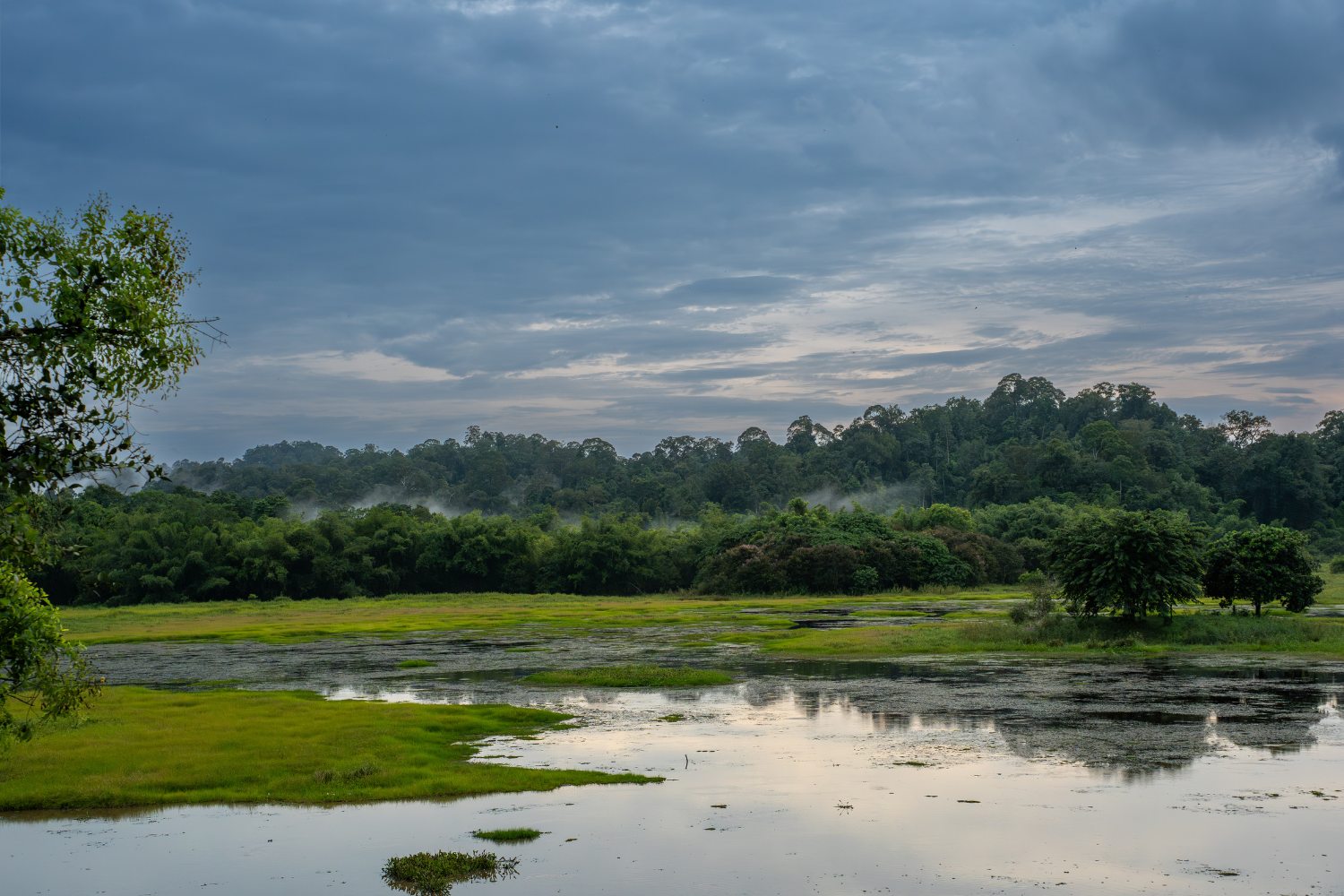
Ta Lai village lies between open rice fields and the green forests of Cat Tien National Park. The landscape changes with the seasons, from fresh green rice fields when the crops are young to golden fields at harvest time. Rows of characteristic dipterocarp trees are scattered across the landscape, reflecting the forests of southeastern Vietnam.

Ta Lai rice fields at dusk.
Surrounding Ta Lai is the diverse ecosystem of Cat Tien. With 1,568 recorded animal species and 1,610 plant species, the area is one of Vietnam’s important biodiversity hotspots. Cat Tien is home to many threatened and rare species, including Sunda pangolins, wild gaurs, sambar deer, muntjac, Siamese crocodiles and yellow-cheeked gibbons. Among its plants, species from the Dipterocarpaceae family, including dipterocarps, form part of the large-canopied forests characteristic of the area.
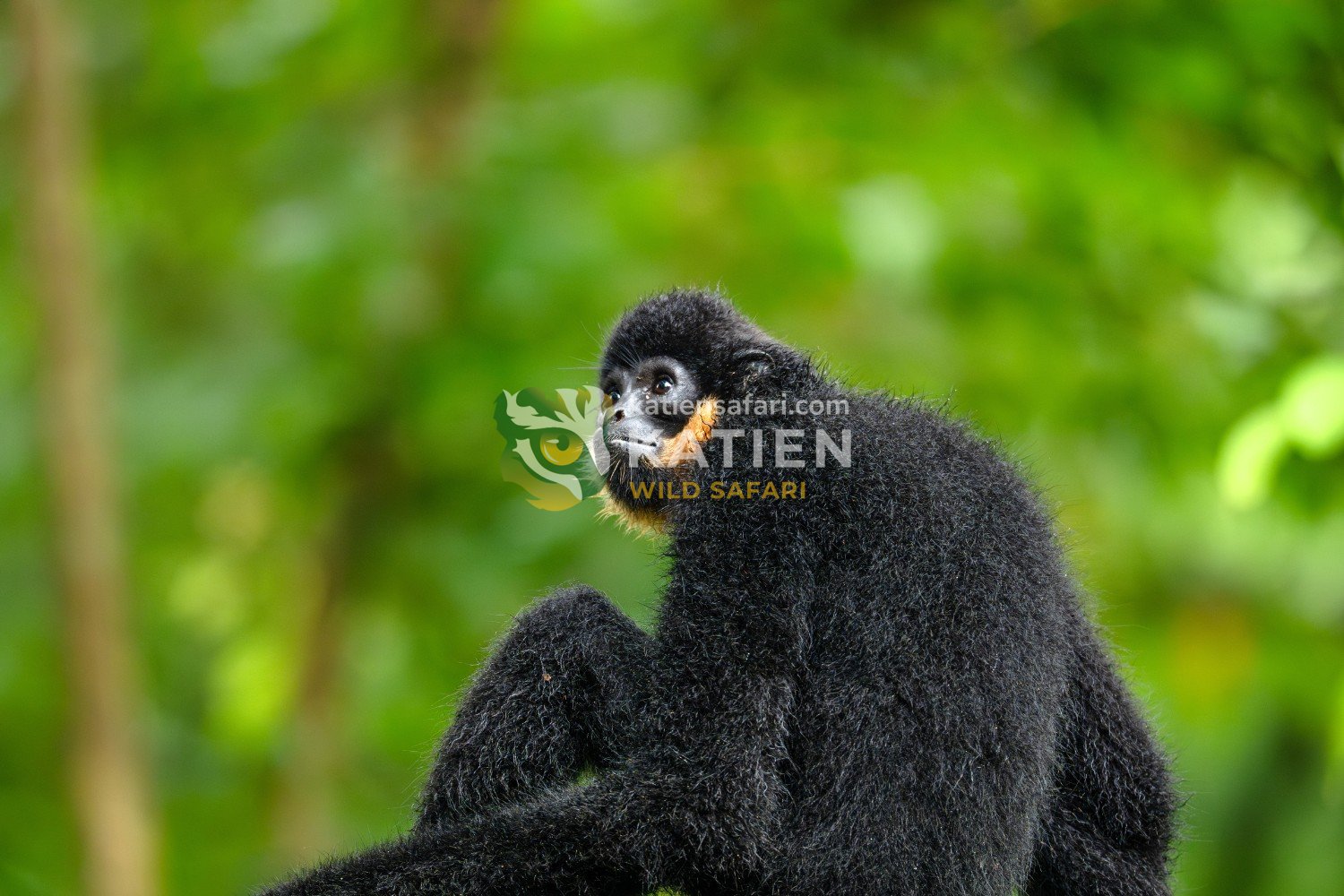
Yellow-cheeked gibbons are a primate species native to Cat Tien National Park and are listed in both the Vietnam Red Data Book and the IUCN Red List.
The meeting point of village life, farmland and forest is one of Ta Lai’s defining features, where the local community remains closely connected to its natural surroundings.
Alongside the forests of Cat Tien, Ta Lai has long been home to Ma, S’tieng and Choro communities. Over generations, their close relationship with the forest and land has shaped farming practices, everyday traditions and local knowledge adapted to the surrounding environment.
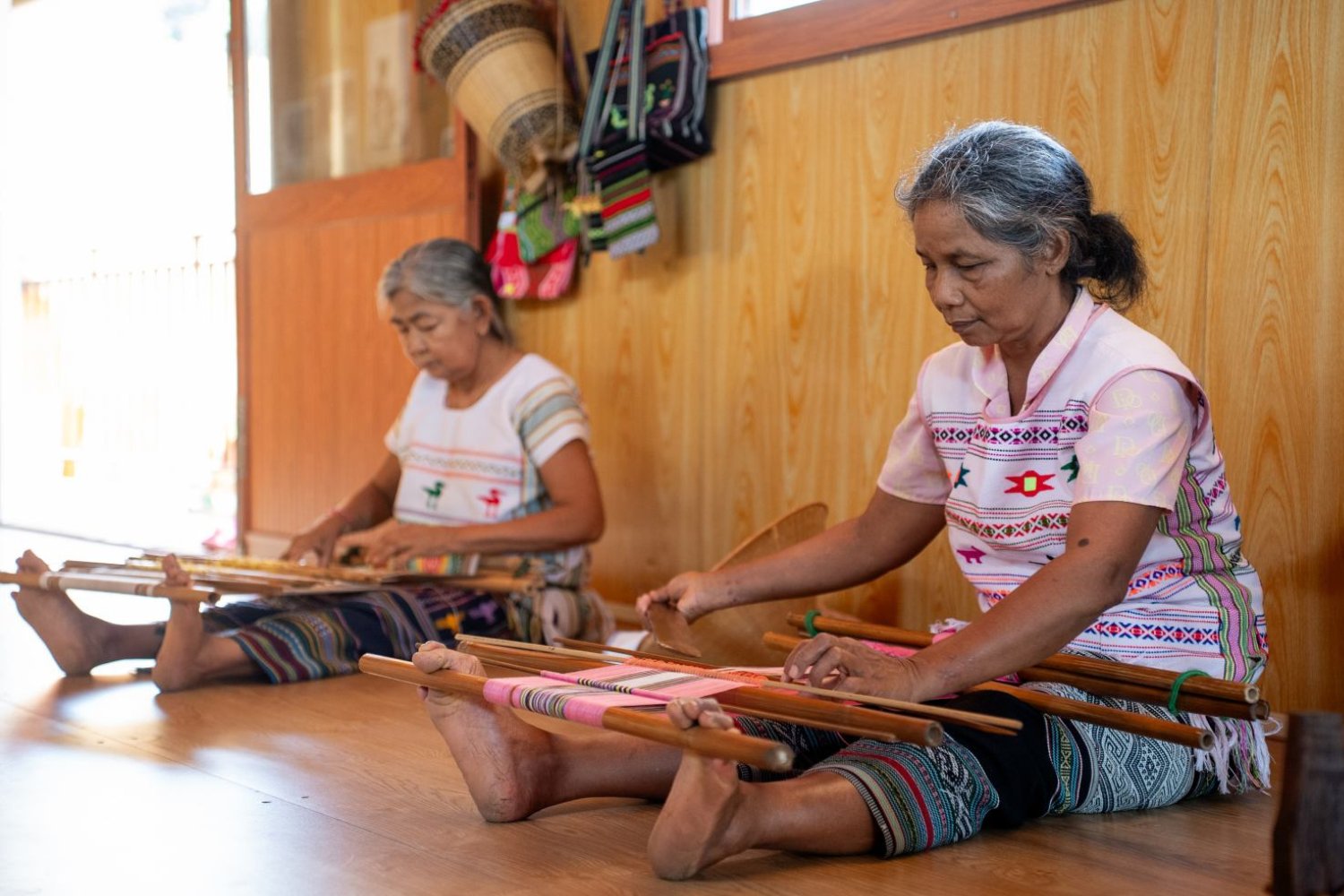
Ma artisans practising traditional brocade weaving.
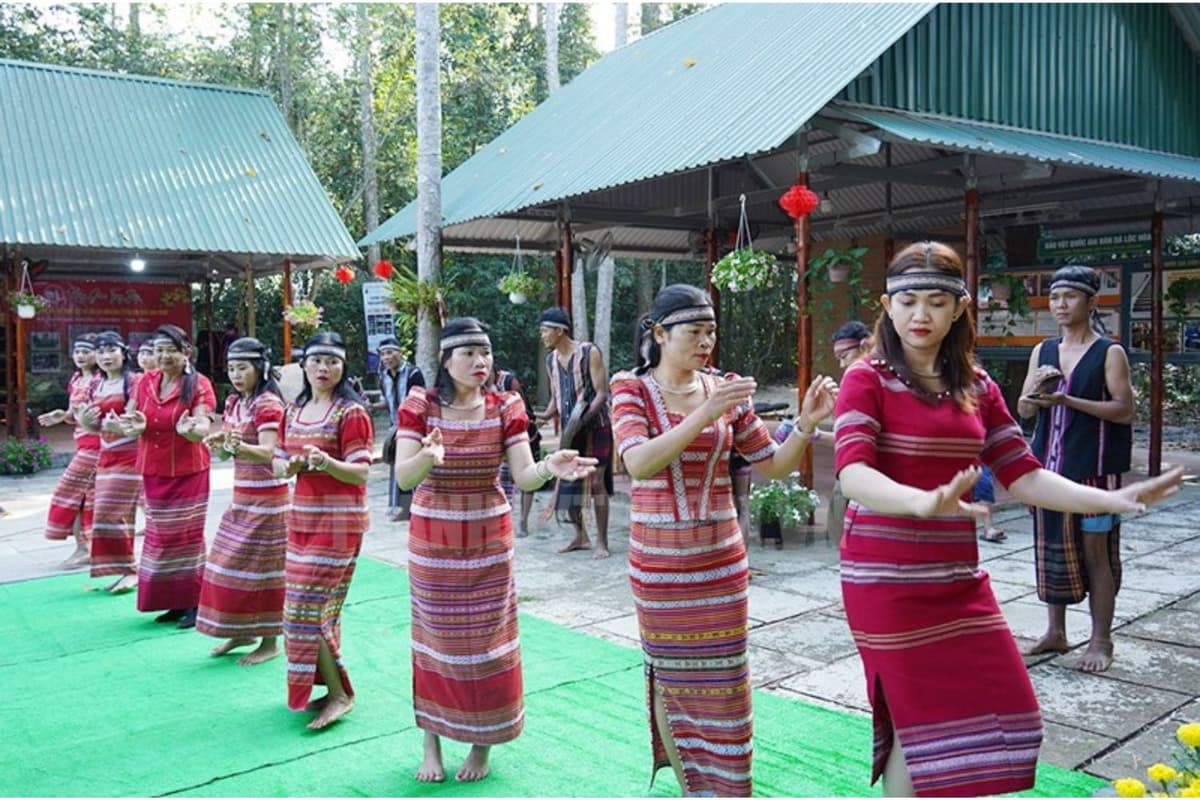
Each community contributes its own cultural identity to Ta Lai. The Ma are known for brocade weaving, longhouses and gong culture. The S’tieng preserve traditional weaving patterns, gong music and rituals connected to agricultural life, while the Choro continue to maintain traditional customs and festivals, including the Sayangva New Rice Festival.
Although each community has its own cultural traditions, their lives share a common landscape where forests, farmland and community life remain closely interconnected. These relationships have shaped local livelihoods while helping pass cultural knowledge from one generation to the next.
For generations, the Ma, S’tieng and Choro communities living around Cat Tien depended on the forest as an important part of their daily lives and livelihoods. Forest products, along with farming, gathering and the use of natural resources, helped meet the basic needs of many families. Knowledge of plants, seasons and the natural environment was also passed down through generations.
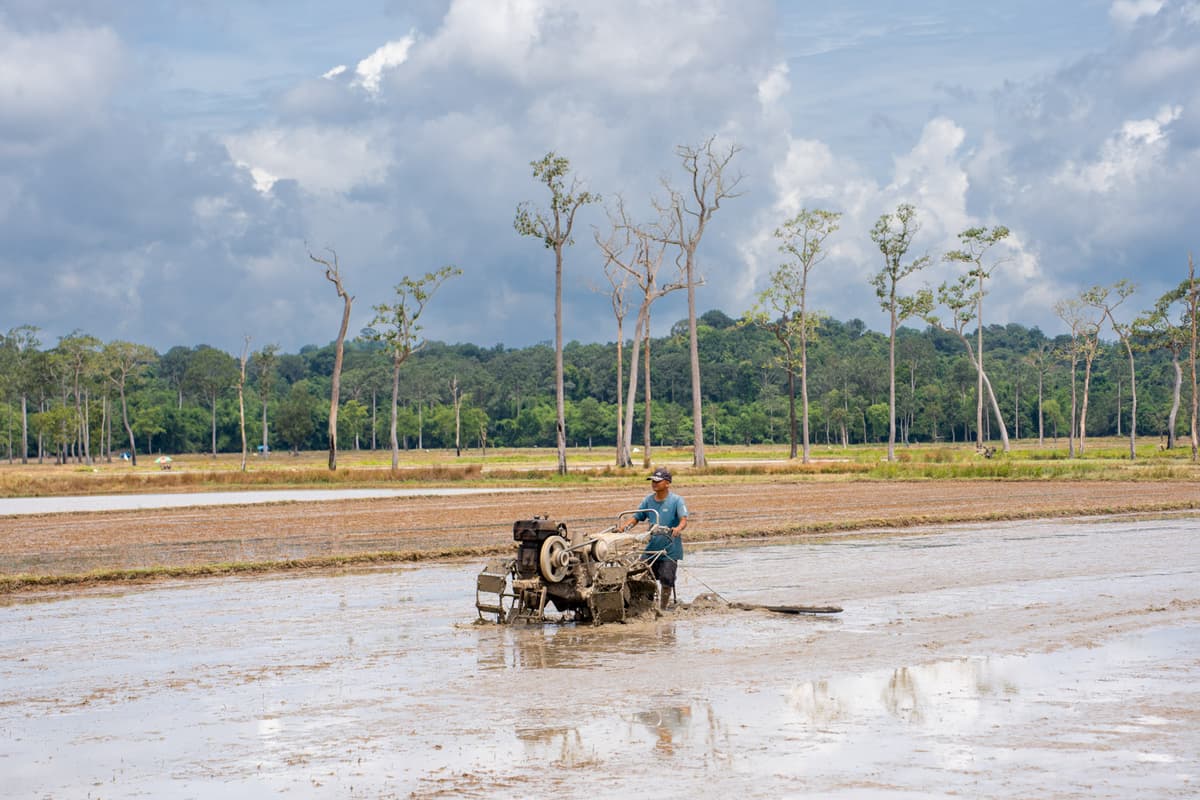
Local farmers cultivate the fields in Ta Lai.
This relationship began to change as forest conservation and protection in Cat Tien were strengthened. In 1978, the Nam Bai Cat Tien Forest Reserve was established, marking an early step in the conservation of Cat Tien. Cat Tien National Park was officially established in 1992 and expanded in 1998, forming a protected area of 73,878 hectares. As forest protection regulations became stricter, resource extraction activities that had once been part of traditional livelihoods were no longer permitted within protected areas.
This change created a new challenge for local communities: how could they help protect the forests they had lived alongside for generations while finding more stable sources of income? Alongside agriculture, new livelihood opportunities such as community-based tourism and conservation-related activities have therefore become increasingly important for communities around Cat Tien.
As conservation efforts in Cat Tien National Park have increased, local access to and use of forest resources have also become more restricted. This has created challenges for communities living around the park, particularly where stable employment and income opportunities in rural areas remain limited.
Forest conservation, therefore, is not only about protecting trees and wildlife. It also needs to go hand in hand with sustainable livelihoods. When local people have more options to earn an income, they can reduce their dependence on forest resources while having greater opportunities to participate in conservation.
This has made conservation-linked livelihoods increasingly important. Instead of directly extracting resources from the forest, local people can earn income through community-based tourism, sharing Indigenous culture, traditional crafts and local knowledge, as well as working in tourism and conservation-related roles.
For the Ma and S’tieng communities, this also creates opportunities for traditional culture to become part of local livelihoods. Brocade patterns, gong music and stories about life alongside the forest can be shared with visitors, helping preserve cultural traditions while creating additional value for the community.
As community-based tourism develops in Ta Lai, local people are gaining more opportunities to take part directly in tourism activities. Cat Tien National Park and relevant partners have gradually brought the community into the tourism supply chain, from welcoming guests, cooking and working as porters to guiding activities, introducing traditional crafts, performing cultural music and sharing stories about local life. In this way, Ta Lai’s existing cultural and natural assets become a natural part of the visitor experience while creating jobs and income within the community.
One example is Ka Huong, a Ma woman born and raised in Ta Lai. She comes from a family with three generations of brocade weavers and learned traditional weaving techniques and patterns from her grandmother and mother. After studying and working away from home, she returned to Ta Lai, becoming involved in tourism while helping preserve Ma culture through weaving, gong music and sharing her community’s heritage with visitors.
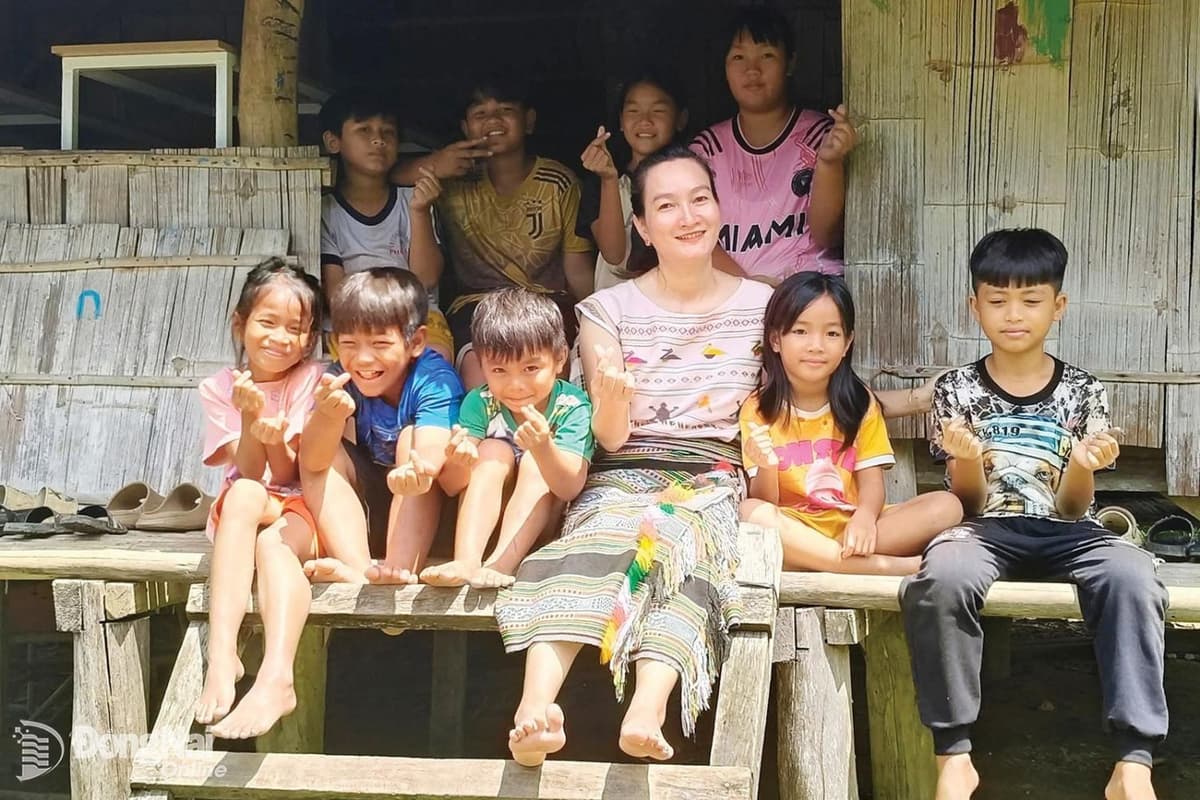
Ka Huong takes a group photo with children participating in English classes and traditional activities led by her. Source: Dong Nai Online
Like Ka Huong, other people in Ta Lai are finding new livelihood opportunities through tourism. On Katien Safari tours operated by Oxalis in Cat Tien, local people work in a range of roles, including cooks, porters and support staff, working alongside the Katien Safari team and forest rangers on journeys through the Cat Tien forest. Their knowledge of the local landscape, culture and way of life has become an advantage in their work, giving them additional sources of income without having to leave their home to find employment.
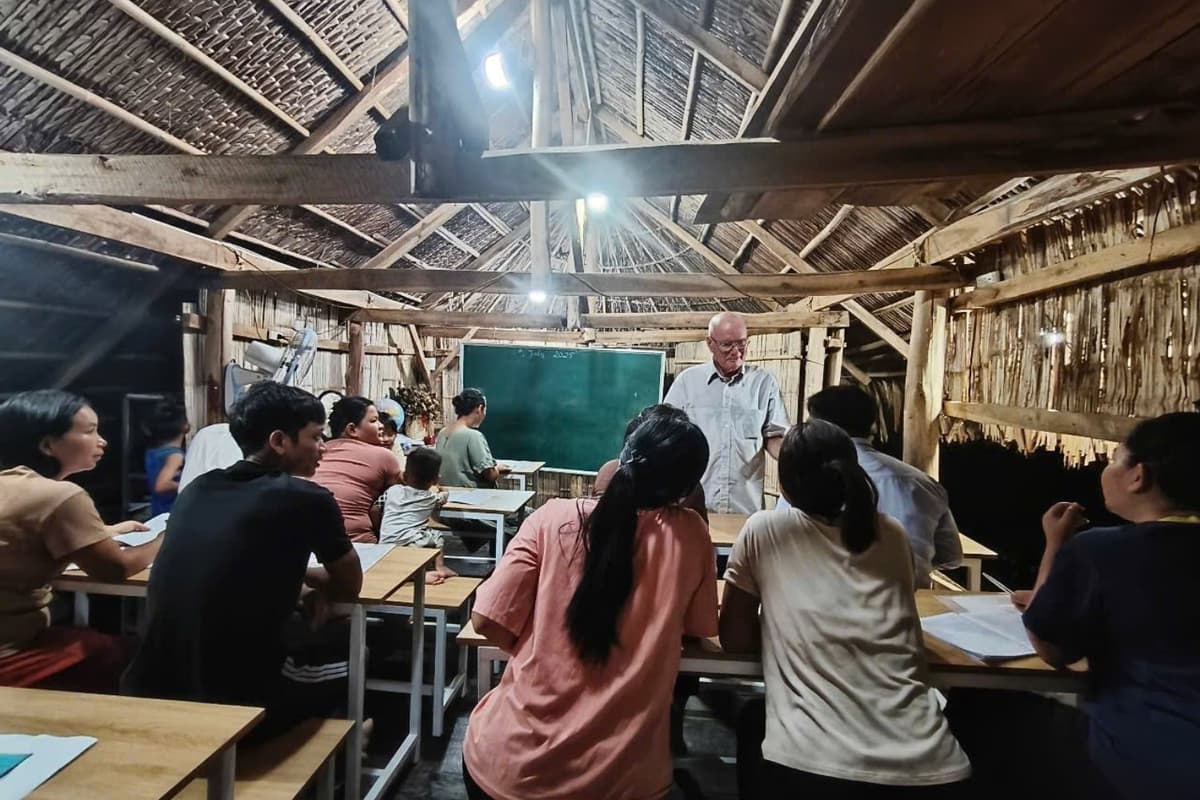
An English class for Ma people in Ta Lai.
In the past, many families depended mainly on agriculture and natural resources, leaving household incomes vulnerable to seasonal conditions and production challenges. Tourism provides another source of income, with jobs that can be carried out locally and make use of skills that residents already have. With more livelihood options, communities also have better opportunities to maintain a long-term life in their home village.
For the community to participate in tourism more independently and sustainably, The Oxalis Foundation also supports skills-development programmes in Ta Lai. In 2025, the Foundation provided VND 50 million to support an English programme for members of the Ma community in Ta Lai Commune. Alongside helping residents communicate with international visitors, these skills give them more opportunities to share the culture, history and everyday life of their home in their mother tongue.
When local people are not only providing services but can also tell the story of the place where they were born and raised, tourism can become a bridge between visitors and the community. At the same time, activities connected to the forest can give local people more opportunities to understand and participate in conservation. The forest can then be seen not only as a natural resource to protect, but also as an important part of Ta Lai’s livelihoods and future.
Changes in local livelihoods and growing community participation in tourism are creating the foundation for a new direction for Ta Lai. According to Oxalis’ development vision, Ta Lai aims to develop a model community tourism village where tourism creates livelihoods for local people while contributing to cultural preservation and the protection of the Cat Tien ecosystem. The goal is to work towards the “Best Tourism Villages” designation from UN Tourism by 2030.
The development vision for Ta Lai focuses on three main goals:
Achieving these goals will require collaboration among different stakeholders, each with a different role:
A key part of the model is placing local people at the centre of tourism. Rather than being simply a place that visitors pass through, Ta Lai aims to become a destination where the community actively creates experiences, benefits from tourism and helps protect the natural and cultural values that have developed over generations.
According to Oxalis’ development vision, the model will be developed gradually, with plans to expand products such as homestays, agricultural experiences, traditional crafts and nature-based tourism, while creating more regular employment opportunities for local workers. In this vision, Ta Lai is not simply a gateway for exploring Cat Tien, but a destination where people, culture and nature come together to shape the future of tourism.